Showing posts with label phenomenology. Show all posts

Tuesday, October 8, 2019

God of Faith and Reason

The God of Faith and ReasonThe God of Faith and Reason: Foundations of Christian Theology by Robert Sokolowski, 152 pages

In The God of Faith and Reason, Robert Sokolowski maintains that the distinctive difference between pagan and Christian theologies is that the former considers the world as somehow necessary, while the latter posits a God whose creation of the world was entirely contingent.  With pure generosity as the foundation of the world, the life of grace becomes possible, but possible only as gift.  It follows that what Sokolowski describes as a theology of disclosure is the most fruitful path for Christian theologians to pursue.

Tuesday, October 16, 2018

Real Presences

Real PresencesReal Presences by George Steiner, 232 pages

In Real Presences, philosopher George Steiner considers the causes and effects of the unprecedented postmodern divorce between the word and the world, and seeks for a path of reconciliation.  This path begins with his analysis of the aesthetic experience as not irrational but irreducible to reason - and therefore beyond both positivism and deconstruction - and proceeds with a recovery of the social, ethical, and above all metaphysical dimensions of art.

Steiner's book is neither jeremiad nor screed, but a careful attempt to find a way past the abyss of meaning opened by the deconstructionists.  He neither dismisses nor denounces his opponents, but engages with them.  In this, he models his own understanding of the connection between artist and audience, in which the freedom of creation encounters the freedom of interpretation, the self meets the other, and both are transformed.

Friday, April 20, 2018

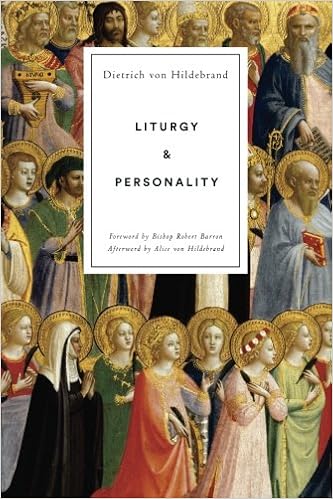
Liturgy & Personality

Image result for Liturgy and Personality Von Hildebrand, DietrichLiturgy & Personality by Dietrich von Hildebrand, 130 pages

Dietrich von Hildebrand identifies the Divine Liturgy as the worship and adoration offered by the Body of Christ, united with its Head - "through Him, with Him, and in Him" - to the Triune Godhead.  As such, it forms the supreme instance of value-response, and it is in the light of this that all of our relationships with values ought to be measured.  The liturgy, he therefore maintains, provides the ultimate opportunity for the imitation of (and transformation in) Christ, but only if it is properly understood in terms of value-response as an end in itself.  The liturgy cannot be reduced to a mere technique for self-improvement, and yet it provides the most thorough education in the disciplines necessary to the development of an authentic personality - discrimination and sacrifice.

Although he was capable of writing for a broader audience, here Hildebrand wrote like the German philosopher he was.  Although not entirely opaque, the short book is certainly challenging, but the rewards of understanding are well worth the effort.

Wednesday, February 28, 2018

Homo Viator

Image result for Homo Viator Introduction to A Metaphysic of Hope
Homo Viator: Introduction to a Metaphysic of Hope by Gabriel Marcel, translated by Emma Craufurd, 270 pages

In Homo Viator, Gabriel Marcel analyzes the nature of man as wanderer, or pilgrim, who comes into this world with much already given, journeying towards an end that lies beyond the world.  Men either recognize time and history as open, their own being as rooted in an unfathomable mystery of creative Being, and thus hope, or they imagine reality as closed in on themselves, and give themselves up to despair.

There is much in the essays that comprise Homo Viator, all of which were written in France during the Second World War, which is dense and difficult to understand.  This is particularly true of Marcel's critiques of his fashionable contemporaries, Sartre and Bataille.  A casual reader may be forgiven for skipping those essays, but should be sure to return for the masterful essays on Rilke which end the collection.

Wednesday, January 4, 2017

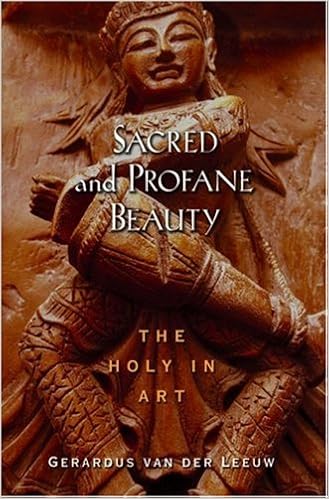
Sacred and Profane Beauty

Sacred and Profane Beauty: The Holy in Art by Gerardus van der Leeuw, translated by David E Green, 340 pages

In his masterful phenomenological analysis of the relationship between religion and art, van der Leeuw begins from the premise that religion is inherently totalizing - "Give all you have to the poor and follow me."  The religious impulse, therefore, is to subordinate everything to religion and to discard what cannot be subordinated.  The aesthetic impulse, as with the political, scientific, ethical, and philosophical impulses, demands an autonomous sphere within which it can develop and thrive on its own terms.  The result was the gradual fracturing of the primitive unity in which all aspects of human life - work, play, art, religion - were intimately intertwined.  Although modern man cannot recapture that unity, in van der Leeuw's eyes a renewed respect for the primal religious character of art will contribute to a regeneration of popular art and the end of "the idea that music must be treated as though it were meant only for connoisseurs in the concert hall and, according to which, paintings are dealt with as though they had to be preserved in a museum".

The analysis of art in Sacred and Profane Beauty begins with dance, the "art of beautiful motion", identified here as the primal art from which the other arts - drama, poetry, the visual arts, architecture, and music - emerge.  For van der Leeuw, the "path from art to theology and from theology to art" follows the sacred quest of art to make present the image of God through movement and form.

Tuesday, January 19, 2016

Body, Community, Language, World

Body, Community, Language, World by Jan Patocka, translated by Erazim Kohak, 183 pages

Czech phenomenologist Patocka was banned from teaching for most of his life by the Soviet-backed Communist dictatorship that ruled his native land throughout most of his lifetime.  He continued to mentor small groups of students as part of the "Underground University", but during the Prague Spring of 1968 he was fleetingly able to lecture publicly.  Body, Community, Language, World is a reconstruction of those lectures based upon notes taken by his students.

Patocka undertakes a phenomenological analysis of corporeity, the embodiedness of the human subject.  For Patocka, it is the body which is being-here, establishing the primary orientation of the human person towards action, which is always interaction, involving the world in its assorted potentialities.  The lectures unfold as a dialectic between the ideas of Husserl and those of Heidegger, building upon both, and drawing in other thinkers from Aristotle to Bergson in a masterful synthesis.

Tuesday, December 29, 2015

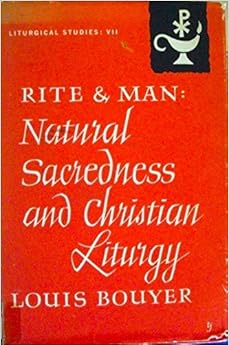
Rite and Man

Rite and Man: The Sense of the Sacral and Christian Liturgy by Louis Bouyer of the Oratory, translated by M Joseph Costelloe, SJ, 220 pages

This is another phenomenological exploration of the religious experience - in many ways, Bouyer begins where Otto (The Idea of the Holy) ends.  In his analysis, it is ritual which is the central location for an encounter with the numinous.  

In Fr Bouyer's account, far from ritual being an invention of priestcraft to interject a supernatural note into the secular world, ritual served initially as a focus for a numinous reality universally perceived - in the beginning, every slaughter of an animal was seen as something mysterious and sacred, until the establishment of ritual sacrifices formalized and thus limited this power.  The natural significance of ordinary acts - a bath, a meal - recovers its supernatural expression in the rite.  This logic underlies the entire sacramental system.

Wednesday, September 30, 2015

The Far Reaches

Cover image for The Far Reaches: Phenomenology, Ethics, and Social Renewal in Central Europe by Michael Gubser, 229 pages

If phenomenology is little known and little respected outside academic philosophical circles, much of its obscurity is no doubt due to its epistemological preoccupations, which are hardly applicable to everyday life.  Yet, as Michael Gubser chronicles in The Far Reaches, phenomenology always included ethical and social elements, planted by early figures such as Husserl and Scheler and bearing fruit most spectacularly in Central Europe in the late twentieth century, in thinkers including Vaclav Havel and St John Paul II.  In the process, Gubser also calls into question claims that the revolutions of 1989 had little intellectual originality.  The dissidents may have had an apolitical shyness born of a long experience of totalitarian rule, but their writings describe a global crisis of values that afflicted the materialist, individualist West just as deeply as the materialist, collectivist East.

In places, The Far Reaches makes for rather difficult reading - a contributing factor in the obscurity of phenomenology is its specialized vocabulary, and while Gubser does his best to ameliorate this difficulty, the reader is still left with pages of abstract language.  The rewards, both philosophical and historical, are well worth the struggle.

Monday, June 29, 2015

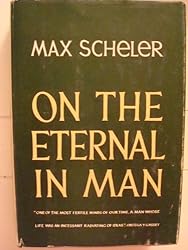
On the Eternal in Man

On the Eternal in Man by Max Scheler, translated by Bernard Noble, 448 pages

Max Scheler is not a well-known philosopher, despite being admired by thinkers as influential and diverse as Martin Heidegger and St John Paul II.

This book is composed of five complementary but distinct texts.  The first, "Repentance and Rebirth", consists of an analysis of guilt and repentance.  For Scheler, repentance is not oppression by guilt, but liberation from guilt.  It is repression which is true enslavement by guilt.  In this contrast, conversion is revealed as a necessary part of a human life.  In the course of his analysis, Scheler develops a phenomenology of time which reveals the past and future bound up inextricably in the present.  In the second text, "The Nature of Philosophy and the Moral Preconditions of Philosophical Knowledge", Scheler attempts to establish the autonomy of philosophy as, above all, the science of Being, rather than the backstop of epistemology - if philosophy is the handmaid of theology, she is queen of the sciences, if not, she is Science's slave.

The central work takes up half of the book's total length.  In "Problems of Religion", rejecting both neo-Scholastic and neo-Kantian approaches, Scheler conducts an analysis of the nature of metaphysics, natural theology, and revealed theology, and sketches an outline of natural theology.  Much of the text is taken up with criticism of other approaches to natural theology, particularly those of Kant, Schleiermacher, Fichte, and Comte.  Central to Scheler's insights is the primacy of the divine love over the role of God as Logos, as revealed in Creation.

The final two works were written and published just as the First World War ground to an end.  "Christian Love and the Twentieth Century" seeks a Christian understanding of the roots of the war and a program for recovery.  Scheler sees bourgeois individualism and nationalism as having long ago replaced Christianity as the moral center of Western life, aided by indifference on the part of Christians to the public sphere.  Only by reclaiming the social aspects of Christianity - inextricable from a religion of love - can Christians reclaim their homelands.  "The Reconstruction of European Culture" proposes a political solution to the threat of repeated war - Scheler's vision of an united Europe with Germany as its center of gravity, able to stand up to both Russia and the US, with a federal system that allows for local communities and regions to exercise considerable autonomy within the central framework, which resembles in many respects the ideal of the European Union.

Friday, May 8, 2015

Erotic Phenomenon

The Erotic Phenomenon by Jean-Luc Marion, translated by Stephen E Lewis, 222 pages

The product of a lifetime of thinking and, yes, desiring, The Erotic Phenomenon consists of a series of meditations on the nature and meaning of love.  The author finds that philosophy is nothing without love.  The essential question of metaphysics, he argues, is not "Do I exist?" but "What does it matter?", and only in love can the answer be found.  This leads Marion to replace the epistemic reduction of phenomenology with an "erotic reduction", which leads to a very different relationship to time and space and the other.

Love, for Marion, is univocal - there is no essential division between eros and agape.  Love is, for human beings, necessarily enfleshed, for it is only in the flesh that we are disclosed to each other.  Love takes different forms based on the relationship between the will and the flesh.  There is a love in which the will is subordinate to the flesh, which can only last as long as the flesh endures.  There is also a love found in discourse which is oriented to the person and eternity.  Opposed to these forms of love is a false reciprocity which subordinates the law of love to the law of exchange.

A remarkable work, so necessary for a world in which love is so often invoked and so rarely contemplated.

Monday, April 7, 2014

Christian Ethics

http://books.google.com/books?id=1fMsAAAAMAAJ&printsec=frontcover&img=1&zoom=1&imgtk=AFLRE736Io9d_8XQHzaOwwWhRPHYCZDv8rgBXlcWzEr1UT2FUkdpHbK4peVVtf68lUEPq72TeSfI88n2ZBnj4Yf-lmfcKfPqh5u71t54V4xq0GuxnTGm1FoChristian Ethics by Dietrich von Hildebrand, 463 pages
 
In this work, 20th century philosopher Dietrich von Hildebrand makes an attempt to provide a new foundation of ethics through a phenomenological analysis of the concept of value.  Value, he demonstrates, is an objective fact which is perceptible before analysis.  It follows that ethics becomes a matter responding to encountered values.  This, in turn, requires an analysis of the nature of will and freedom.  Virtues, then, exist as superactual attitudes.  Above all, this account of morality involves the transcending of subjectively satisfying goods in favor of conformity to objective, transpersonal values, a task handicapped by pride and concupiscence. 
 
Although this is an explicitly Christian work, it is also an original work of philosophy.  Von Hildebrand does not base his conclusions on dogma, rather, he uses the experiences of the Church as a source of data for his philosophical explorations.  Christianity is viewed not as the negation of natural morality, but its fulfillment.

In every way a landmark work, a masterpiece that no summary can do justice.  While it can be read with profit by itself, its full significance is as part of von Hildebrand's lifelong work, which also includes In Defense of Purity, The Nature of Love, Graven Images, and Transformation In Christ.

Wednesday, February 19, 2014

Writings of Edith Stein

http://ecx.images-amazon.com/images/I/51nXgCMr3AL.jpg
Writings of Edith Stein by Edith Stein (St Teresa Benedicta of the Cross), translated, edited, and introduced by Hilda Graef, 199 pages

Edith Stein was born in 1891 into a German Jewish family, but she became an atheist at an early age.  She attended university and completed a doctorate in philosophy under the guidance of Edmund Husserl.  After reading a copy of the Life of St Teresa of Avila, Stein converted to Catholicism, and soon entered a Carmelite convent, taking the name Teresa Benedicta of the Cross.  Under orders from her superiors, she continued her philosophical studies.  After Kristallnacht, she was transferred to a convent in the Netherlands, but after the German conquest of that country she was arrested in her convent and sent to Auschwitz, where she was gassed upon arrival.

Writings of Edith Stein is a reader composed primarily of selections from longer works, with all the weaknesses that implies.  It is divided into three sections, beginning with the most accessible works, then presenting more difficult selections.  The devotional works she wrote for her fellow nuns are solid.  Her pedagogical works are intriguing, and the best part of this book.  The selections from her longer philosophical works are excellent but incredibly unsatisfying, since the fragments included in this work cannot do more than hint at the full meaning of the works from which they are taken. 

Wednesday, February 5, 2014

Husserl's Phenomenology

Husserl's Phenomenology by Dan Zahavi, 178 pages

Cover image for Husserl's phenomenology / Dan Zahavi.Edmund Husserl was one of the most influential philosophers of the 20th century.  The founder of the school of epistemology known as phenomenology, Husserl counted amongst his students such luminaries as Martin Heidegger and St Teresa Benedicta of the Cross (Edith Stein).  Still, Husserl's reputation faded in the latter half of the twentieth century, even as his influence continued to be felt by thinkers as diverse as Jean-Paul Sartre and Dietrich von Hildebrand.

Zahavi's book is an attempt to remedy this, partially by re-presenting (there's a phenomenological word!) Husserl's thought and partially by addressing certain ingrained misconceptions and objections to Husserl's work.  He does an excellent job, especially considering that phenomenology, even more so than most German philosophy, has a tendency to invent technical terms for the purpose of precision, which tends to make it very difficult for a non-specialist to understand, and Husserl himself is famed for his "extremely involuted and, therefore, forbidding style" (in the words of Quentin Lauer, translator of Husserl's Philosophy and the Crisis of European Man).  This book is only an introduction, and it is mostly concerned with his method, but it is almost a must-read for anyone with even a casual interest in 20th century philosophy.