Showing posts with label sci-fantasy. Show all posts

Monday, August 29, 2016

Sword and Citadel

Cover image for Sword and Citadel by Gene Wolfe, 411 pages

Sword and Citadel collects the third and fourth novels in Gene Wolfe's landmark The Book of the New Sun series, the centerpiece of his Solar Cycle.  The Sword of the Lictor finds Severian plying his trade as a Torturer in the cliff city of Thrax, his life stable again for the first time since leaving the Citadel.  Needless to say, this cannot and does not last, and events - and his own conscience - conspire to force Severian to become a fugitive.  The Citadel of the Autarch begins where The Sword of the Lictor ends, and carries Severian into new, unknown lands and dangers as well as back to more familiar but, as it turns out, equally mysterious territory.

For all the high concepts and plot twists, Sword and Citadel is fairly straightforward - neither novel has the hallucinatory, disorienting quality of The Claw of the Conciliator.  Old characters and settings return, often in surprising forms, but the revelations never seem forced or arbitrary.  No character, however, surprises as much as Severian himself.  The Book of the New Sun, taken as a whole, is a masterful performance of literary sleight of hand which subverts, inverts, possibly perverts but just as possibly converts readers' expectations.

Monday, June 13, 2016

Shadow and Claw

Cover image for Shadow and Claw by Gene Wolfe, 413 pages

Shadow and Claw is an omnibus edition collecting the first two volumes of Wolfe's Book of the New Sun series - The Shadow of the Torturer and The Claw of the Conciliator.  They are ostensibly manuscripts from the far future authored by one Severian, a journeyman of the Torturers' Guild disgraced after allowing a victim to kill herself before the prescribed torture was complete.  Exiled into a world he knows hardly better than we do, Severian comes into the possession of a gem called "The Claw of the Conciliator" with miraculous but unpredictable powers, which may or may not be tied to the fading of the Old Sun and the prophesied coming of the New.

Not only does Wolfe manage to create memorable characters, he creates characters who are capable of surprising the reader without seeming to be cheating.  Indeed, throughout the entire book Wolfe seems to be playing an elaborate game with the expectations of his readers.  The Book of the New Sun can be read and enjoyed as a combination of science fiction and fantasy in the tradition of Jack Vance, but it also contains an invitation to put together the pieces of a larger puzzle, the pieces of which have the ambiguous borders of memories, dreams, and symbols.

Thursday, April 16, 2015

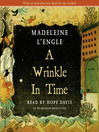
A Wrinkle in Time

A Wrinkle in Time, by Madeleine L'Engle, 211 pages 
Cover image for A Wrinkle In Time
Meg Murry is one of those young women that I certainly identified with as a kid- she's awkward, unattractive and doesn't know how to make or keep friends.  She has a baby brother, Charles Wallace, who is secretly a genius; and her dad went on some super secret science mission that went wrong and no one knows where he is.  Meg, Charles Wallace, and a host of new friends must undertake a mission involving time travel, evil beyond measure, saving the Earth, and finding their father.  This is classic science-fiction fantasy that I really feel holds up.

Monday, December 29, 2014

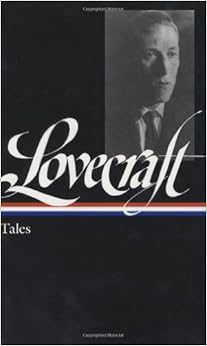
H.P. Lovecraft: Tales

H.P. Lovecraft: Tales by H.P. Lovecraft, 578 of 807 pages read

My dad would sometimes give me short stories to read as a child, and "Cool Air" by Lovecraft was one that always stuck with me. First, I hadn't read any Lovecraft since childhood, so I figured I'd revisit his works. Second, I also used to have a black cat named Cathulu (a feline appropriate rendition of Cthulhu) but I had never actually read "The Call of Cthulhu", so I felt like it needed to happen. Third, Lovecraft is considered one of the grandfathers of horror, and I have a special place in my heart for good horror. His stuff does, however, also have a sci-fantasy element to it.
I started reading this from the beginning, but then I started jumping around, reading different stories. After the first few, I honestly started to feel like each story was the same as the last. I didn't anticipate feeling this way. Lovecraft style and wording starting feeling too repetitive, which is why I didn't actually end up finishing this book. Some of the stories were also not very short, and seemed to just drag on for too long.
I enjoyed what I did read, and he definitely had a knack for creating elaborate scenes and describing in great detail the mythical beings he dreamed up for his writing. However, he didn't have enough in his head to keep from being repetitive.
I looked up Lovecraft's personal life as I sometimes do when reading an author I know little about, and I found that his works did not actually become the cult classics they've become until well after his death. He died a sad, lonely, penniless man. If only he knew how influential his work was and how many different ways Cthulhu would be referenced and drawn later on.
All in all, Lovecraft is essential for any fan of horror, and anyone who appreciates an author with a vivid imagination. Others who read his work might not find him quite as repetitive as I did.