Showing posts with label China. Show all posts

Tuesday, June 13, 2023

Chiang Kai-Shek

Chiang Kai-Shek: China's Generalissimo and the Nation He Lost by Jonathon Fenby, 505 pages

Chiang Kai-Shek rose from humble beginnings to rule over the most populous nation in the world.  In his time he fought Chinese warlords, Communists, and the army of Imperial Japan.  He was a general who throughout his career lost more battles than he won, but only in his war with Mao Tse-Tung was he irrevocably defeated.  For the remainder of his life he plotted his return, and even in death his body remains unburied, awaiting a final rest in a restored Kuomintang China.

In his biography, Jonathan Fenby has attempted to tell the story of Chiang's rise and fall, ending with the retreat to Taiwan.  He does so passably, providing a broad, readable biography without much depth or special insight.  The real matter is implied in the second half of the subtitle.  In Fenby's estimation, it was Chiang Kai-Shek who lost China, and no one else, certainly not the American and British allies who demanded Chiang support their goals and worldview.  How he could have saved it is another matter, and here Fenby only offers some weak gestures in the direction of a Western-style liberalism that he acknowledges would have likely accelerated the disintegration of the Kuomintang government.  For some readers, the dogmatic insistence that China had to Westernize, with the only choice being between liberal "reforms" and Marxist revolution, will only sharpen the poignancy of the tale.

Monday, January 23, 2023

"Peach Blossom Spring" by Melissa Fu


Peach Blossom Spring by Melissa Fu

400 pp

Peach Blossom Spring covers the years 1938-2005 in the lives of a family.  The story starts in China during the war with Japan (the early days of WWII) and follows his wife and son as they travel through China to meet his brother to find safety from the Japanese bombers.  Meilin (the wife) has a valuable scroll that her husband took in trade so that she and he could have their own business someday.  She uses this scroll to tell her son stories through much of the book.  Meilin and her brother-in-law and his family come together for some time, but when one of the nieces dies, Meilin is blamed and she decides to sever ties.  They make their way to other parts of China eventually coming to settle in Taiwan.  Her son goes to school and is a good student.  He goes through high school and college in Taiwan, but gets the opportunity to go to the US for his master's degree.  Meilin sees her brother-in-law while she is working at a party and gets him to help her son qualify to go to the US.  The story then mainly follows the son who takes the Americanized name Henry when he goes to the US.  Henry eventually marries an American woman and they have a child named Lily.  The story they follows Lily after she goes to college, but has brief interludes with Henry and Meilin.

This was an excellent story.  I particularly liked the stories from the scroll that were native to China. There is also a part set in St. Louis since the woman the son marries family is from here. The author is a woman with a background from China and the US Southwest, but who lives in Great Britain now.  Were I to give it stars, it would definitely make four our of five for me.


Thursday, September 8, 2022

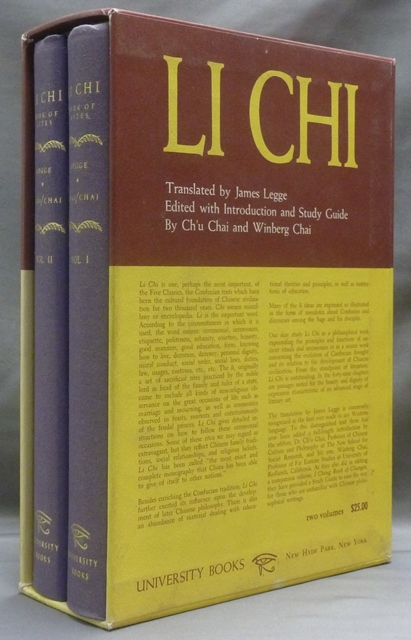
Li Chi

Li Chi: Book of Rites, translated by James Legge, 949 pages (2 vols)

The Li Chi (pinyin Liji) is a collection of Confucian texts compiled in the Han dynasty dealing with matters of classical Chinese ceremonial.  Much of it concerns the minutiae of proper observance, including difficult questions when unusual circumstances impose conflicting obligations.  Other texts consider the nature and value of ceremony against those who would reject it as mere outward show, maintaining that ritual is essential to the proper ordering of emotion, evoking the proper feelings in those who lack them and restraining the passions of those who cannot control themselves.

The Li Chi is one of the "Five Classics" of Confucian philosophy.  As such, it has been studied, interpreted, glossed, and debated by legions of scholars for thousands of years.  Legge attempts to condense some of this conversation into the footnotes, along with notes on difficult translations and the claims of textual critics, and he succeeds in doing so without burying the text in the commentary.  Most readers will find it to be primarily of antiquarian interest, which is hardly surprising given that the motives of the authors and compilers was itself antiquarian, a search into the past, not due to idle curiosity or academic ambition, but out of a love of wisdom and a deep need for models to be imitated.  

Monday, May 10, 2021

In Such Hard Times

In Such Hard Times: The Poetry of Wei Ying-wu by Wei Ying-wu, translated by Red Pine, 359 pages

Wei Ying-wu lived in hard times indeed.  The eighth century saw the crisis of the An Lushan rebellion, which forced the Tang court to flee Chang-an, and even the final suppression of the revolt only seemed to increase the power of the regional warlords.  Wei himself lived a life full of disappointments - a born aristocrat but a middling scholar, his career as a civil servant never equaled his early promise.  How much of this was a cause and how much a result of his desire for a retired, ascetic life is an open question.

     reports neglected for days
     no one dealing with ink or words
     it must be because of the quiet
     or because I met a man of the Way

In medieval China, poetry was the language of social discourse, and most of Wei's poems look to past meetings or present ones or future encounters, or all of these simultaneously.

     we met and got drunk among the flowers
     we were going in different directions but not very far
     what the evening tide took away the morning tide brought back

Wei's status as a man of culture with at least aspirations to virtue moving in and out of an imperial administration is one he shared with a number of celebrated figures in Chinese history, many of whom he acknowledges as models.  It gives him a certain sensitivity to human foibles.

     the price of a single cup was a hundred sacks of grain
     it was strong at first and then thin and finally robbery
     but patrons knew its name and nothing of its taste

The world was hardly clamoring for an English translation of the poetry of Wei Ying-wu.  That Red Pine took the task upon himself is itself evidence of the way the life and work of the poet resonate with those of his translator, and the latter's excellent commentary makes it available to the receptive reader.

     whistling out loud I hike past towering trees
     admiring the heights his footsteps have reached

Wednesday, March 17, 2021

Nine Songs

 The Nine Songs: A Study of Shamanism in Ancient China by Yuan Qu, translated by Arthur Waley, 61 pages

The "Nine Songs" were probably written down in the 3rd or 4th century BC, although the songs themselves are clearly older than that.  The eleven short poems are ritual hymns intended to aid a shaman in summoning a spirit or god.  Interestingly, they are love songs, with the god often described as a fickle lover and the shaman as the longing, forsaken partner.  As Waley suggests in his introduction, the closest Western equivalent is likely the Song of Songs, and similarly to that work the Nine Songs have been given a variety of allegorical interpretations down through the centuries, including many which literal-minded moderns will no doubt find impossibly tendentious.

Tracing the influence of the Nine Songs in Chinese cultural history is not Waley's aim, however.  Rather, he is interested in presenting them in something resembling their original context.  To this end, not only has he supplied an excellent introduction to the series as a whole, but each poem also gets its own brief but informative commentary.

Wednesday, February 17, 2021

The Analects

The Analects by Confucius, translated by D.C. Lau, 248 pages

Summary from Goodreads: This lively new translation with clear explanatory notes by one of the foremost scholars of classical Chinese provides the ideal introduction to the Analects for readers who have no previous knowledge of the Chinese language and philosophical traditions.

"How dare I claim to be a sage or a benevolent man?"

By constructing the philosophy expressed through The Analects, Confucius might well dare to make such a claim. The Analects are a collection of Confucius' sayings, compiled by his pupils shortly after his death in 497 B.C., and they reflect the extent to which Confucius held up a moral ideal for all men. The aim is the perfection of one's moral character, the method one of arduous pursuit of such moral attributes as benevolence, wisdom, courage; the result is no recompense either in this life or the next – to follow the Way must be its own reward. A harsh philosophy perhaps, but shining through it is the splendid intellect and spirit of one of the most reasonable and humane thinkers of all time.

This introduction in this edition helps prepare you for the text. However, I think the second appendix, which covers his disciples in the text, should have come before the text. It would provide background for a lot of the names you encounter along the way.

I would recommend this book to those that are interested in philosophy, especially those interested in Chinese philosophy or the origins of Confucianism.


Tuesday, August 18, 2020

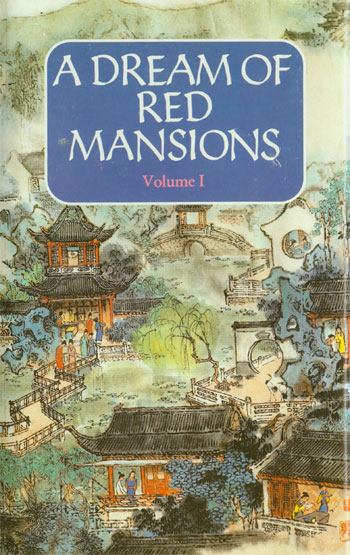
Dream of Red Mansions

A Dream of Red Mansions (3 Books) | Chinese Books | Literature ...A Dream of Red Mansions (Volume I) by Cao Xueqin, translated by Yang Hsien-Yi  and Gladys Yang, 599 pages

A Dream of Red Mansions, alternatively titled Dream of the Red Chamber or The Story of the Stone, follows the lives of a group of young people growing up among the aristocracy of 18th century Peking.  At the center is Pao-yu, born with a piece of jade in his mouth which is, unbeknownst to him, a sentient stone from the heavenly realms and the key to his destiny.  Surrounding Pao-yu are dozens of cousins and servants, all living, loving, eating, drinking, working, studying, brawling, and generally amusing themselves in the luxurious shadow of the imperial court.

A Dream of Red Mansions is one of China's "Four Great Classical Novels".  In its entirety, it consists of 120 chapters, the first 80 of which were written by Cao Xueqin and the last 40 completed by others after his death.  The 1978 Foreign Languages Press edition conveniently divides it into three volumes of 40 chapters each, but burdens it with a barbaric Maoist introduction.  Casual readers are likely to be frustrated by the sheer number of characters and the lack of a strong, unified plot, unless they are enchanted by the rich setting, elegant characters, and natural interplay of the physical and spiritual.

Friday, June 19, 2020

Forbidden City

The Forbidden CityThe Forbidden City by Geremie R Barme, 191 pages

"The Forbidden City."  The very name is surrounded with an aura of power and mystery.  It summons up shadowy thoughts of secret splendors and hidden harems, as well as more concrete ideas about faceless tyranny and an exotic East.  As Geremie Barme explains in his historical guide, the Forbidden City has borne all these meanings, and a great many others besides.  Built in the 15th century by the native Ming dynasty but almost entirely rebuilt piecemeal, like Jason's ship, by the Qing conquerors, the Forbidden City was intended as a microcosm of both the Middle Kingdom and the universe as a whole, designed both to reflect and reinforce the cosmic harmonies among men and within nature, on earth and in the heavens.  Indeed, the history of the Forbidden City is the history of modern China writ small.

Part of Harvard's "Wonders of the World" series, The Forbidden City is both entertaining and enlightening.  Barme is particularly skillful at orienting his readers both spatially and temporally.

Tuesday, March 3, 2020

First Masterpiece of Chinese Painting

First Masterpiece of Chinese PaintingFirst Masterpiece of Chinese Painting: The Admonitions Scroll by Shane McCausland, 139 pages

In the aftermath of the Boxer Rebellion, an officer from the Bengal Lancers approached the experts at the British Museum seeking someone who could repair an old scroll he claimed to have received as a gift from a high-born Chinese lady.  Recognizing the value of the object, the Museum proceeded to purchase it at a very reasonable price.  The scroll, the Admonitions of the Instructress to the Court Ladies, contains the text of the poem of that name, written in 292 AD by the courtier Zhang Hua as an admonishment to the Empress Jia, as well as ink paintings illustrating the themes of the poem.  The scroll, calligraphy as well as painting, was traditionally held to be the work of the classical genius Gu Kaizhi, but this is no longer believed to be true, with scholarly opinion divided on whether it is a copy of one of Gu's works or entirely unconnected to him.  Whatever its provenance, it is an undoubted masterpiece of Chinese art from the first millennium that has been held up as a model for both court women and Chinese painters for centuries.

If the beauty of the paintings are obvious to all, for most Westerners (and no doubt for most of today's Chinese) it will prove difficult to understand the Admonitions as a coherent whole, much less fully appreciate its historical value as a pedagogical tool and cultural exemplar.  Although necessarily only scratching the surface, Shane McCausland's short book at least lessens the difficulties.  Unfortunately. the color images of the scroll itself are somewhat muddy (other works, including later copies of the Admonitions, are better presented), but, as the author himself notes, there are much better reproductions readily available online.

Thursday, May 30, 2019

Imperial Twilight

Imperial TwilightImperial Twilight: The Opium War and the End of China's Last Golden Age by Stephen R Platt, 452 pages

As late as the beginning of the nineteenth century, China was regarded as one of the world's great powers.  Europeans marveled at the sophisticated administration that governed a nation far larger than any in the West, supported by a culture of incredible subtlety and antiquity.  By imperial decree, contact was limited to designated areas of Canton and Macao on China's southeastern coast, far from the capital, and foreigners were forbidden from learning the Chinese language.  From the Chinese perspective, whatever goods they had to offer, Westerners ultimately came to the Middle Kingdom as supplicants pleading for a share in her riches and refinement.  A few decades later all of this had changed.  Europeans now considered China to be a backwards nation mired in superstition, ripe for exploitation and in desperate need of Enlightenment.  Increasingly, the Chinese elite themselves would insist on the necessity of a modernization which was synonymous with Westernization.  The turning point was the Opium War, when the Chinese Empire was humiliated by the might of the Royal Navy - as Tolstoy put it, Progress had been brought to China "by means of powder and cannon-balls."  

Yet, as Stephen Platt relates, none of this was inevitable.  The opium trade was deeply unpopular in England, and the government barely survived a vote attempting to forestall the war.  The Chinese, for their part, understood that the opium trade was ultimately driven by internal demand rather than external supply.  Relations between the nations had weathered other crises in the past, with each government placing the responsibility on their own representatives to avoid conflicts which might endanger existing arrangements.  The Opium War, then, was the result of a breakdown of the status quo rather than its logical culmination.  In telling this crucial but oft-misunderstood story, Platt deftly manages to balance detail and narrative drive, with a particular focus on the intriguing personalities that populated the intersection where East met West.

Wednesday, February 6, 2019

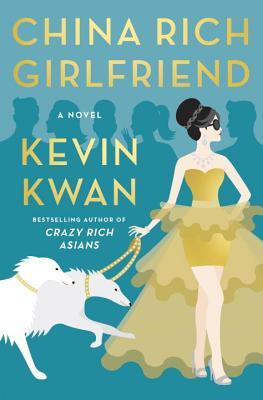
China Rich Girlfriend

China Rich Girlfriend by Kevin Kwan  (Book 2 in the Crazy Rich Asian Series)      Audio Book:  15 hours, 4 mins       Paperback Book:  496 pages           

Another excellent book by Kevin Kwan.   The story picks up with Rachel and Nick a few years after the end of the first book.      Rachel and Nick are now married, living in New York City and surviving on their teacher salaries.   In this story, Nick and Rachel go back to visit China again spending a lot of time with Rachel’s relatives this time.    Nick’s mother is shame-faced when she finds out that Nick is back in the country but refuses to have anything to do with his family after they treated Rachel so disdainfully last time and refused to accept her into the family (his mother and grandmother) doing their best to break them up.   Nick’s mother is determined to see her son regardless of his going against family wishes and marrying Rachel.   Lots of events transpire and there is much ado in Nick’s cousin Astrid’s home and many betrayals and unrequited love.   Events transpire to work in Rachel’s favor trying to locate her father and a whole lot of ups and downs, smiles and tears occur.      Great story, I enjoyed it just as much as the first one and I believe anyone reading this book will feel the same way.    Your emotions will be tugged along the way and the amazing gadgets and architecture described is mind boggling.   GOOD, GOOD story, yes, I definetly recommend this book and author Kevin Kwan to anyone looking for a good read.   Who knew there were so many billionaires in China?   Well done, once again, Kevin Kwan.   Now I have to track down the third book in this series.   Can’t wait to see what happens next.

 - Shirley J.

Sunday, October 7, 2018

Nomonhan, 1939: The Red Army’s Victory That Shaped World War II

Nomonhan, 1939: The Red Army’s Victory That Shaped World War II by Stuart D. Goldman            Hardcover: 185 pgs.             Genre: History, World War II, Mongolia, China, Japan, Soviet Union

     Nomonhan is a Mongolian village straddling the boundary between Mongolia and Manchuria.  Today, Mongolia is an independent country and Manchuria is part of China, but in 1939, on the eve of World War II, the former was a client state of the Soviet Union, while the latter region was controlled by Japan.  The border between them was hotly disputed at the time— so hotly disputed, in fact, that an undeclared war erupted between the Japanese and the Soviets near the small village.  In this book, author Stuart Goldman makes the case that this forgotten border war significantly influenced World War II.  As a result of being soundly defeated by the Russians in the conflict, Goldman contends, Japan turned its attention toward expansion into Southeast Asia, putting it on a collision course with America and resulting in the Pearl Harbor attack.  Hence, the so-called “Nomonhan Incident” (also known as the Battles of Khalkhyn Gol) had a major influence on America’s entry into the war.  Another effect of the decisive Soviet victory, according to the author, was enabling Russia to survive the German invasion of 1941 and ultimately drive the Germans out of their country and all of Eastern Europe, helping to win the war for the Allies.  Goldman gives us a look at the diplomatic strategies of Britain, France, Nazi Germany and Russia leading up to the Second World War, allowing this reader, at least, to better understand the Nazi-Soviet Pact and the Rome-Berlin-Tokyo Axis agreement.  The author paints Stalin, especially, as a very shrewd leader.  I found these passages fascinating, but they make up less than half of the book.  Most of the book, understandably, talks about the conflict itself (the movement of armies on both sides), but in a very detailed, academic way that I found boring and hard to slog through.  I’m sure military historians and military personnel would find this part fascinating, but I think the average reader would agree with my assessment.  My opinion about the book, then, is divided: one “thumb up” for the diplomatic history and descriptions of grand strategy, but the other “thumb down” for an overly-detailed narrative of the conflict itself.

Wednesday, February 14, 2018

Souls of China

The Souls of ChinaThe Souls of China: The Return of Religion After Mao by Ian Johnson, 400 pages

As the twentieth century began, religion was endangered in China.  Chinese intellectuals considered the country's traditional beliefs as either symptom or cause of the nation's backwardness, while opposing foreign religion as the tool of imperialism.  Even before the Communists came to power in 1949, religion was denounced in education, the rights of religious organizations were limited, and much of the country's sacred landscape had been demolished.  Then came Mao, who attempted to impose socialism and atheism at the cost of tens of millions of lives.

As the twenty-first century begins, religion is booming in China.  The government actively subsidizes the study and practice of traditional Chinese religions and philosophies, even promoting them overseas.  Meanwhile, Protestant Christian churches, some of the few public institutions existing outside of Party control, are booming, with the result that China now hosts the seventh largest Christian population in the world.

This continuing change is the subject of Ian Johnson's The Souls of China.  This is not a statistical overview, however, but a look at the nature, causes, and future of China's "Great Awakening" through personal stories, including a family of traditional yingyang men, a family running a reborn pilgrimage society associated with a Daoist shrine, the followers of a Buddhist sage, and the leadership of an evangelical Christian church, all arranged and revisited through the framework of the traditional Chinese year.  The result is remarkable and fascinating.  Johnson brings sympathy and understanding to his study, which is sensitive and nuanced.  His treatment of the secular rituals of the Communist party is particularly interesting, highlighting their quasi-religious nature and further demonstrating why the Chinese, having lost faith in Marxism, have found progress impossible without religion.

Monday, November 27, 2017

Killing Wind

The Killing WindThe Killing Wind: A Chinese County's Descent into Madness During the Cultural Revolution by Tan Hecheng, translated by Stacy Mosher and Guo Jian, 464 pages

Jiang Xiaochu was a 22 year old engineering student when the Cultural Revolution began in Hunan.  As his father, a former teacher, had been censured for supposedly holding counterrevolutionary views and relegated to farm labor several years earlier, the entire Jiang family were considered suspect "black elements".  Fearing for his safety as turmoil enveloped the university, Xiaochu returned to his native town.  Ever since his father's censure, the Jiang family had devoted themselves to Mao Zedong Thought, and he believed that their conspicuous loyalty would persuade their neighbors to overlook their past.  So strong was his faith that when his father and brother were arrested, Xiaochu went to the local authorities to argue for their release.  He was arrested as well, and killed beside them.  His mother and sister were gang-raped by the executioners, but survived to tell their story to investigators - including journalist Tan Hecheng - two decades later.  Tan's original article chronicling the investigation was censored by China's Communist authorities, but became the germ for his exhaustive study, The Killing Wind, where the story of Jiang Xiaochu and his family joins the stories of nearly 5000 other victims of the Cultural Revolution in the small county of Daoxian.

Stalin is famously supposed to have said, "One death is a tragedy, a million is a statistic."  The number of people killed in the Cultural Revolution is unknown, but almost certainly over a million, and possibly several millions.  Tan Hecheng, chronicling the violence in a single county, manages to combine the statistics with personal stories that preserve the tragic, human scale.  Unfortunately, the sheer scale and disorder of the killing wind inevitably makes the narrative difficult to follow at times.  Tan intended his report as a reckoning with history, insisting that the horrors committed cannot - must not - be forgotten, not only out of a sense of justice for the victims and survivors, but also due to a commitment to the truth.  Meanwhile, on the other side of the Pacific, where many Americans increasingly regard their political opponents as irredeemable deplorables against whom violence is acceptable, Tan Hecheng's study of how what Che Guevara famously described as the "extremely useful hatred that turns men into effective, violent, merciless, and cold killing machines" is fostered and exploited is as timely as it is powerful.

Wednesday, September 20, 2017

Boxer Rebellion

The Boxer RebellionThe Boxer Rebellion: The Dramatic Story of China's War on Foreigners That Shook the World in the Summer of 1900 by Diana Preston, 360 pages

In the summer of 1900, an obscure Chinese religious sect - known as Boxers after their belief that certain martial arts rituals could render them invulnerable to bullets - grew into a major movement.  The Boxers demanded that the foreigners who had polluted and despoiled China be exterminated along with all those Chinese who followed their alien ways - especially the hundreds of thousands of Chinese Christians.  Soon, the Boxer movement exploded into violence, with Boxers torturing, raping, and murdering their way across northern China.  The Empress Dowager allied herself with the movement, and the foreigners resident in the capital of Peking found themselves besieged in their legations by a combination of Boxers and imperial troops.  The defenders - Europeans, Japanese, and Chinese - held out through months of desperate if sporadic fighting until relieved by a multinational expeditionary force.

Preston admirably sifts through a mass of diaries, papers, and memoirs left behind by the Europeans trapped in Peking, which provide a wide range of sometimes conflicting perspectives.  Unfortunately, the upheavals of the twentieth century have destroyed most of the primary sources on the Chinese side, and this means that the Chinese experience of the Rebellion remains largely a mystery.  Dramatically, this is satisfying, as it places the reader in the shoes of the besieged, but it is devastating historically.

Thursday, September 7, 2017

One Child

One Child: The Story of China’s Most Radical Experiment by Mei Fong, 250 pages

“An intimate investigation of the world's largest experiment in social engineering, revealing how its effects will shape China for decades to come, and what that means for the rest of the world. When Communist Party leaders adopted the one-child policy in 1980, they hoped curbing birth-rates would help lift China's poorest and increase the country's global stature. But at what cost? Now, as China closes the book on the policy after more than three decades, it faces a population grown too old and too male, with a vastly diminished supply of young workers. Mei Fong has spent years documenting the policy's repercussions on every sector of Chinese society. In One Child , she explores its true human impact, traveling across China to meet the people who live with its consequences. Their stories reveal a dystopian reality: unauthorized second children ignored by the state, only-children supporting aging parents and grandparents on their own, villages teeming with ineligible bachelors, and an ungoverned adoption market stretching across the globe. Fong tackles questions that have major implications for China's future: whether its "Little Emperor" cohort will make for an entitled or risk-averse generation; how China will manage to support itself when one in every four people is over sixty-five years old; and above all, how much the one-child policy may end up hindering China's growth. Weaving in Fong's reflections on striving to become a mother herself, One Child offers a nuanced and candid report from the extremes of family planning.” This was a fascinating look at the Chinese policy of one child per family.  I had no idea how strictly and how inequitably it was enforced, or that some of the adoptions were little more than human trafficking.  It was sad but anyone that that has an interest in the subject matter will be glad that they read this book.

Monday, July 3, 2017

Poems of the Masters

Poems of the MastersPoems of the Masters: China's Classic Anthology of T'ang and Sung Dynasty Verse, translated by Red Pine, 464 pages

This is a translation of the classic collection of 224 poems called Chienchiashih or Poems of a Thousand Masters - the translator chose to drop the "Thousand" in deference to his more literal-minded modern audience.  The collection, compiled in the 13th century, consists of short poems in four different standard forms.  As suggested by the fact that the reputation of the anthology has endured for eight centuries, many of the poems are masterpieces, although a few were included for personal reasons or as exemplars of form, which makes them especially disappointing in translation.

Each poem receives a paragraph of commentary to describe the author and context.  The critical importance of this commentary is illustrated by Wang Chi's "Gazing across the Countryside":

     Watching dusk fade at Tungkao
     I look for something to lean on
     every tree is the color of fall
     peak after peak loses its light
     cowherds lead their calves home
     hunters ride by with their prey
     I look but don't know their faces
     I sing about gathering ferns

The meaning seems clear enough even without knowing that Tungkao was the name of the poet's retirement cottage.  The reader's understanding will be incomplete, however, without the knowledge that the last line is an allusion to the story of two recluses who sang about gathering ferns when asked to enter the emperor's service.

The vast majority of these poems were written by courtiers and concentrate on their concerns, with themes of exile, of virtue unrewarded or even punished, and the difficulty of finding peace in a world of troubles dominant.  There are lighter moments as well, as with the poem Written on a Screen by Liu Chi-sun, left on his office wall as a notice that he was taking the medieval Chinese equivalent of a "personal day":

     Twittering swallows gossip in the rafters
     why do they disturb my daydream reverie
     the clerk beside me shrugs when I ask
     I grab my staff and jug and head for Mushroom Mountain 

Anyone who loves poetry should read this book.

Friday, April 21, 2017

From the Ruins of Empire

From the Ruins of EmpireFrom the Ruins of Empire: The Intellectuals Who Remade Asia by Pankaj Mishra, 310 pages

In From the Ruins of Empire Pankaj Mishra examines the careers of three prominent Asian intellectuals from the end of the nineteenth and the beginning of the twentieth century, all of whom struggled with the cultural, economic, and military dominance of the West - not only as such power was deliberately, oftentimes violently, exercised, but also as the uncritical embrace of the mechanistic, utilitarian Western worldview by modernizing elites in their homelands.  Each of the three represents a third of non-Russian Asia - itinerant journalist Jamal al-Din al-Afghani for the Islamosphere, scholar and activist Liang Qichao for the Sinosphere, and Nobel laureate Rabindranath Tagore for the Subcontinent.  Each sought freedom for his people, but also a form of modernity that preserved the values of his own culture.

It is possible to go on at great length about the problems of perspective in this book, problems that are only somewhat excused on the grounds that the perspective is that of the subjects.  Understandably, in writing about anti-colonialists Mishra concentrates on the negative impact of colonialism on Asian nations and cultures, but at times he oversimplifies to the point that he falsifies - even a casual reading of Finkel's Osman's Dream (which Mishra cites in his bibliography) demonstrates that the problems of the Ottoman Empire were not only - or even primarily - the result of Western imperialism.  That the reality was somewhat more complicated than Mishra's default narrative of Asians fighting for liberty from Western injustice is implied in the fact that both al-Afghani and Liang were persecuted by their native governments, and both took refuge in the oppressive, racist West - the only one of the three who was consistently safe in his homeland was Tagore, who lived under British rule (and was celebrated in the West, lecturing to packed halls and winning the Nobel Prize for Literature in 1913).

It is possible, again, to go on at great length about the problems of perspective in From the Ruins of Empire, but to do so would obscure the very real value of the book.  Beginning in the eighteenth century, the great civilizations of Asia were confronted with the reality that they were not, after all, the center of the world or of history.  How they adapted not only helps explain the world of today, it also has lessons to teach the West as it begins to discover the same truth.

Wednesday, March 22, 2017

Last Confucian

The Last Confucian: Liang Shu-ming and the Chinese Dilemma of Modernity by Guy S Alitto, 233 pages

Liang Shu-ming was twenty-five years old when his father, noted civil servant and scholar Liang Chi, killed himself as a protest against the destruction of China's traditional culture.  Liang Chi had himself been an advocate of Westernizing reforms, and his son's education had prioritized learning English over studying the Analects.  Yet the student Liang Shu-ming, captive of revolutionary politics and utilitarian philosophies, grew to become perhaps the greatest champion of Confucianism in the twentieth century.

Alitto successfully navigates the difficult intersection of history, biography, and philosophy.  He places Liang's Confucian traditionalism in the context of other anti-modernist and anti-Western movements, from German Romanticism to Hindu nationalism.  Liang opposed what he saw as an alienating, individualizing Western intellectualism with the Chinese intuitionism of Confucius, which seeks balance and harmony rather than riches and domination.  This understanding of Confucius' life and thought enabled Liang to propose a kind of reform Confucianism which broke with the traditional schools by claiming to recover the authentic spirit of the master, while it simultaneously connected his Confucianism with contemporary European philosophical and cultural movements.  This last was vitally important, for Liang believed that if Chinese culture was to survive, it needed to become a global culture.  No ivory tower intellectual, Liang had nothing but contempt for those who believed that "an essay or report written was a task accomplished", and Alitto emphasizes Liang's active application of his philosophy, especially his intensive efforts to inspire a rebirth of virtue among the Chinese peasantry under pressure from foreign domination, militant nationalism, and civil war, until the Japanese invasion and then the triumph of the Communists put a practical end to his efforts.

As Alitto tells it, this end was present in the beginning, as Liang's entire life was shadowed by that of his contemporary Mao Zedong.  It is unfortunate that at times the author seems predisposed to judge the former by the standards of the latter, and it would be interesting to know if the passage of time would have produced a different perspective - the book was published in 1979, only three years after Mao's death and nine years before Liang's.

Monday, May 30, 2016

Shanghai Redemption

Shanghai Redemption by Qiu Xiaolong.  320 pages.

For many years, Chen Cao has managed to balance the interests of the Communist Party in China and the promises made by his job.  Both the deputy party secretary of the bureau and Chief Inspector of Special Investigations of the Shanghai Police Department, he was a rising star in the Party.  However, he has investigated one too many controversial cases and now finds himself stripped of his job duties (although under the guise of a new promotion and title).  As if this isn't enough, it now seems that someone is trying to set him up for public disgrace.

This is the ninth Inspector Chen Cao mystery, and the first one I have read. In this case, Chen Cao is technically in charge of a corruption case of a "Red Prince," who has connections and power that deflect Chen Cao's attempts to bring him to justice.  While set in today's China, there are elements from China's past that keep surfacing, which have dangerous overtones.  For example, "Red" songs from the time of the Cultural Revolution are becoming popular again.

While I wasn't familiar with this series, or the main character, I found the story pretty easy to follow.  It is steeped in Chinese history and tradition, and I found myself remembering what I have read and learned about the Great Leap Forward and the Cultural Revolution. I think that if you have familiarity with this period in China's history, what drove both of these events, and what happened during and after them, you may feel more connected to the story.  However, if you know nothing about Chinese history, I think the story will still be interesting.  The author does a nice job of weaving together many elements and steadily increasing the pace of the story, while underscoring the feeling of unease and danger that Chen Cao is facing.  I'm tempted now to go back and try the first one in the series and see how I like it.