Saturday, January 25, 2014

Courting Greta


Courting Greta by Ramsey Hootman  376 pages

This debut novel by Hootman is about two people who are misfits in their own way, finding love with each other unexpectedly.  Samuel Cooke is a computer programmer who quits his job to become a substitute teacher at the same school when Greta Cassamajor is the gym teacher.  While Sam is a small disabled man, Greta is the stereotypical brusque gym teacher that everyone fears to some extent.  Only by taking a chance, do the two begin an awkward courtship.

For a first novel, the reader will find some rough spots where the writing loses its thread but overall the novel is a charming, tender work you'll finish to find out if the two can find happiness.

Murder in E Minor

Murder in E minor by Robert Goldsborough  196 pages

Nero Wolfe and his sidekick Archie Goodwin were created by mystery writer Rex Stout, who wrote 47 titles in the series about this overweight, genius private investigator.  When Stout died in 1975, readers thought that might be the end of the series but author Robert Goldsborough came through with another 7 titles, this is the first of that series or number 48. 

After number 47, Nero Wolfe was seemingly in retirement, despite the protests of Archie.  But he is drawn into a new mystery when the niece of one of Wolfe's old acquaintances seeks help for her uncle who has been receiving threats to remove him from the position of director of the New York Symphony.   Shortly thereafter, the director is murdered and it is up to Archie and Wolfe to uncover the true culprit.

Goldsborough keeps in tradition with Stout's original creation and fans won't be disappointed.  When we spend so much time following the new books, sometimes it is fun to go back and read an older series.  It may be enough to make you read the first Nero Wolfe book!

Head Games


Head Games (Locke and Key Pt 2) by Joe Hill, 144 pages
If you read my earlier review of part one of the Locke and Key series I predicted that it could only get weirder from here. Boy was I right. Head Games introduces a new key. One that makes the top of your head disappears so it forms a basin. You are then able to look into, insert, and remove memories.
Of course Bode is the one who finds the key and shows it off to his brother and sister. They test everything they can think of. First they insert an entire cookbook into his head and he instantly knows all the recipes. Next they remove a memory only he has from the first book and he instantly forgets that ever happens. They put the memory back and take the key from him, saying they want to experiment with it more.
While experimenting his sister, Kinsey, removes herself doubt and her fear. Their brother, Tyler, uses the ability to “read” a couple books for school that he had been ignoring. Eventually the villain of the story gets a hold of the key and uses it to remove thoughts and memories. I know that is very vague, but I don’t want to ruin any of the story for you.
I must confess I would love to have that key. Imagine being able to instantly learn anything. Need to learn French? No problem, just insert the book into your head. Want to become an expert car mechanic? Insert book. Want to blog about 300 books a day? Just insert the books into your brain, though not sure that counts as reading it… As far as the book shows there is no downside or side effects so it would be the ultimate learning tool.
I am really starting to enjoy this series. They keys are an interesting way to allow anything to happen, but still retain some sort of plausibility. Will definitely keep reading!

Squirrel Seeks Chipmunk

Squirrel Seeks Chipmunk: A Modest Bestiary by David Sedaris, illustrations by Ian Falconer, 159 pages

David Sedaris is best known for his essay collections, and for the NPR-inclined, his segments on This American Life. This book marks his first foray into fiction writing, and filled with modern fables featuring the everyday lives of anthropomorphic animals. There's the story of the Ugly American warblers who fly south to Guatemala every winter, complaining to their friends how insulting it is that none of the Guatemalan birds can speak English. There's the misguided mouse who "rescues" a baby snake and keeps it as a "companion" ("pet" doesn't begin to describe the connection she feels to the snake). And don't forget about the two mother storks discussing the best way to respond to their chicks when they ask where babies come from. Yes, the stars of these stories are animals, but their personalities hit close to home. I'll bet that everyone can think of someone these creatures remind them of.

This is fun, funny, and quick. Additional props to Falconer's illustrations, which are perfect for Sedaris' dry and acerbic humor.

Hoodlum's Priest

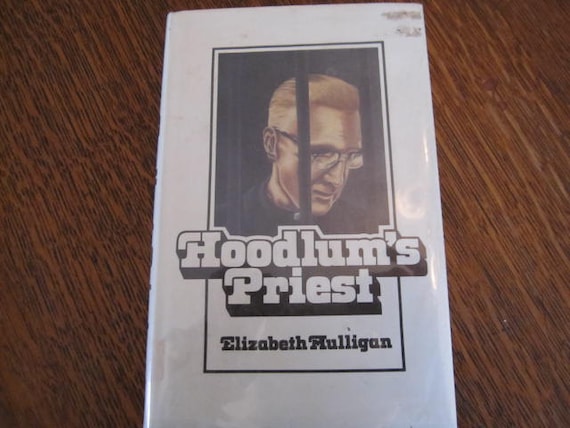
Hoodlum's Priest by Elizabeth Mulligan, 169 pages

https://img0.etsystatic.com/042/0/8754371/il_570xN.581938914_6s5l.jpg The subject of this biography is Father Charles "Dismas" Clark, SJ, a Jesuit priest who spent much of his life working with those inside and recently released from prison.  His work led to the founding of Dismas House in St Louis in 1959, one of this country's first halfway houses.  Neither a romantic nor a cynic, Father Clark understood the evil of crime, but felt obliged to criticize a system he believed contributed to the hardening of criminals by denying them opportunities to change.  A tireless activist featured in many print, radio, and television reports on prison reform and recidivism, he achieved the height of his fame with the 1961 release of "Hoodlum Priest", a fictionalized movie account of his ministry, but a film which he personally loathed.

This is not a conventional, objective biography, but rather a memoir by a close friend, more a collection of anecdotes than a detailed record.  In many of the passages one can almost hear the voices of other friends of Father Clark sharing their own stories with the author.  Mulligan does not attempt to hide Clark's rough edges, whether relating his impatience with others less passionate about his cause, or the occasional rhetorical excess which sometimes alienated some of his own supporters.  By the end, the reader does not know all the details of Father Clark's remarkable life, but knows what it was like to know him.

Find Me

Find Me by Romily Bernard, 307 pages

Wick Tate is the daughter of a con artist. The police are searching for him and meanwhile, she and her sister are in a foster home. What the cops don’t know is that she is also a hacker and has started a business helping women investigate their cheating or battering spouses. Someone leaves Tessa Waye’s diary on her porch with a post-it that says “Find me”. Wick’s certain that Tessa didn’t leave it because her body has been found. The police believe she’s committed suicide and Wick finds out that Tessa was raped. Even worse, she thinks the rapist is coming after her little sister next.

Picture Me Gone

Picture Me Gone by Meg Rosoff, 239 pages

Mila is going to New York with her father over Easter break to visit her father’s friend, Matthew. However, right before they leave, they find out that Matthew has disappeared. Mila and her father go anyway, thinking that Matthew will probably turn up soon, or they can help find him. During their search for Matthew, they find more than they bargained for.

Friday, January 24, 2014

Welcome to Lovecraft


Welcome to Lovecraft (Locke and Key pt. 1) by Joe Hill, 185 pages
Joe Hill is a recently found author for me. Joe Hill specializes in horror fiction and is the son of Stephen King. He was suggested by fellow blogger wysterria, and the novel NOS4A2, pronounced nosferatu. I loved reading the book and quickly read everything else he had published, except the Locke and Key series. There was no personal reason for not reading Locke and Key, it was just the library didn’t own a copy. Much to my disappointment they finally bought only the first of six parts. Not wanting to read just one part I was forced to wait until now when the rest of the series has been bought and I can read it all.
The Locke and Key series revolves around a premise that certain keys, when used on the right keyholes can produce unusual results. Welcome to Lovecraft opens up with the very graphic killing of a couple people that results in the family moving to the town of Lovecraft. Bode the youngest in the family discovers a key that opens the ghost door. When you walk through the ghost door your spirit leaves your body and technically you die. But your spirit can return and revive you. From there the novel only gets weirder and creepy.
Bode is easily my favorite character as his yearn for knowledge and to try out keys brings excitement to the story. Hill’s style of writing shows through bringing you a sense of unease and foreboding as you can see what evil is in store for the characters. I look forward to continue reading the rest of this series though I know it is only going to get stranger from here.

The Lightning Thief


The Lightning Thief by Rick Riordan, 377 pages

My desire to read this book came from two sources. The first was my brother had read this book series and had enjoyed it enough to actually acquire copies of the books. Since he reads a lot but does not tend to buy books I knew this series was something special. My second motivation comes from the fact that they are making this series into movies. So far they have only made the first two books, but as far as know they intend to continue.
The series is basically a half-blood, half god and half human, named Percy is trying to save the world from destruction. In this novel the source of that destruction is a coming war between Zeus and Poseidon, Percy’s father. Percy’s quest takes him through Camp Half-Blood, which is the training site for all half-blooded creatures and people, the Underworld and Mount Olympus.
Through all this we meet a couple different gods and it’s strange to see them presented in a modern setting. An example is Ares the god of war is presented as a beefy biker instead of his armored, sword wielding look of old. The differences in perspectives make the gods seem almost comical at times. Percy also has a sarcastic trend that brings humor to a semi-serious book.
While I found it to be nothing special in terms of writing, it was enjoyable to read. I will likely read the rest of the series if nothing else for Percy’s sarcasm and to see how the rest of the gods are modernized

Thursday, January 23, 2014

All Our Yesterdays

All Our Yesterdays by Cristin Terrill 360 pages

The future is not good. Apparently the invention of time travel and meddling with the past has create a United States where individual liberties have been sacrificed for security.  Two prisoners can go back and change this, but only if they are willing to follow the final instruction, found in the cell. 

An interesting concept but a flawed presentation.  Jumping between characters is confusing and lack of character development causes the book to fail to engage the reader. 

Steelheart

Steelheart- Brandon Sanderson  386 pages

This book is an excellent example of why several young adult books make good reading for adults as well.  Although the protagonist is a young male, the storyline, ancillary characters and writing style create a book that keeps the reader engaged to the very end.

10 years ago people started showing extraordinary powers and were called Epics.  One such epic was Steelheart, a seemingly invulnerable despot, with the ability to turn any inorganic material to steel.  As the leader of what was once Chicago, Steelheart rules over the ordinary mortals with a heavy hand. 

One person has seen Steelheart bleed and vowed revenge upon him for the death of his father.  Only by joining a rebel group called the Reckoners will David have any chance of achieving this revenge.

Hell To Pay

Hell to Pay -  Simon R Green  264 pages

Simon Green has created a world called the Nightside, a city within a city, filled with all manner of creatures, gods and magic.  John Taylor is a private investigator whose special gift is the ability to find anything.  His case this time is to find the missing granddaughter of one of the richest and most powerful men in the Nightside.  Only this time something is blocking his talent and he only has 24 hours to find her.

If you are a fan of Jim Butcher's Dresden files, you'll probably enjoy Green's series.  The main character is a wise cracking, world weary guy who seems to be the last bastion of decency in a world gone to the dogs.  Green has created a world rich in detail, with memorable characters.  This is not a deep or thought provoking read, but like a potato chip, a satisfying junk food read to refresh your brain.


Something Real

Something Real by Heather Demetrios, 416 pages

An ex-TV star finds her attempts to regain her private life derailed by a new season of her family’s Reality TV show.

I think I liked this better than A.S. King's Reality Boy. This is the story of a girl regaining control of her life from a controlling mother and a runaway TV show that used her as the Drama Magnet. Her blossoming relationship with her boyfriend is super sweet, but her friendship and solidarity with her brother really made this story stand out.

Hull Zero Three

Hull Zero Three by Greg Baer,  307 pages

A small band of humans on a long journey wake up to find themselves light years from known space, on a ship that has gone mad. The ship is an unmanned terraformer, designed to bring life to dead planets, but not to transport the living. Now, five humans find themselves struggling to understand how they came to be here and just where it is they are going. They must find a way to survive in these cold, dark halls, hunted by monsters out to kill them.

This is the first book I’ve read by Baer, but I loved it. The action was fast-paced, and the hero is a gentle teacher, kind and curious. His guide through the cold bleak ship world is a young girl who turns out to be intricately connected to the mystery of the ship’s problem. She tells him to find His Book, and when he does, the book explains many mysteries but creates even more questions. There were some bleak horror moments that I had to skim past. The surprise creepy twist is wonderful, and the ending is surprisingly happy.

How Excellent Companies Avoid Dumb Things

How Excellent Companies Avoid Dumb Things: Breaking the 8 Hidden Barriers that Plague Even the Best Businesses by Neil Smith, 226 pages

In this business book, Smith describes several problems businesses face that block good ideas from being implemented, and offers ways to break through them. The barriers range from avoiding controversy, to poor management of time, to organizational silos, and a lot of them seem pretty obvious once Smith points them out. However, he does offer some great personal anecdotes to illustrate these issues and the potential solutions to them. Toward the end of the book, Smith also offers the principles he and his company (which is a consulting firm that helps companies institute change) abide by, and he details his 100-day process for creating the plans for these changes. Again, the principles are logical and seem like common sense once you read them, but Smith's description of his process is pretty boring.

Smith did a good job holding my attention through most of the book, but once he got to that process and started throwing in acronyms left and right, he lost me. Another problem I had with this book is that it's aimed almost solely at the CEOs and other higher-ups at large companies (and by large I mean 15,000+ employees). I chose this as a book for the Business Reads discussion group, and while some of the elements may be applicable to smaller businesses or non-management employees, a lot of it won't be.

One last quibble: I don't think this book is accurately named. Yes, the title makes you giggle a bit, but there's nothing about avoiding dumb things; it's all about creating opportunities or righting dumb processes that are already there.

The Wishing Thread

The Wishing Thread by Lisa Van Allen  385 pages

The Van Ripper family has been present in Tarrytown for centuries as keepers of the Stichery.  People's wishes can be granted with an appropriate sacrifice to help create magical scarves, mittens and hats.  But the 3 Van Ripper sisters aren't close anymore and with the Stichery threatened with destruction, it may take more than magic to save it, and the Van Ripper legacy.

This book didn't do much for me.  I knew going in it was chancy as I have zero interest in knitting but when the review compared it to works by Sarah Addison Allen it sounded interesting.  On the surface they are similar, magical happenings, estranged family members and an overwhelming obstacle.  It checked off all the requisites.  However Allen failed to engage me and have me give 2 hoots whether the Stichery was saved or not.


The Invention of Wings


The Invention of Wings by Sue Monk Kidd  373 pages


If I tell you this is a Oprah 2.0 book club pick, you might immediately discount it.  However it doesn't have the usually amount of misery and hopelessness you find in an Oprah pick, and Kidd has proven herself to be an able writer so give it a chance.  Set in the early 19th century, the book is nominally about the lives of two true-life sisters Sarah and Angelina Grimke who were early abolitionists with southern plantation roots.  But the true story is between Sarah and the slave Hetty (Handful) who was gifted to Sarah on her 11th birthday.

The novel deals with the choices and limitations that were placed on women in that day and age and how each character deals with those limitations.  Handful sums it up best when she tells Sarah that Sarah's body is free but her mind is enslaved, while Hetty's body is enslaved but her mind is free.  The book is filled with instances where both characters are beaten down by the institution of slavery and the expectations of society towards females.

Besides the relationship between Hetty and Sarah, Kidd richly illustated the relationships between Sarah and her mother and Hetty and her mother.  The novel does get a little bogged down in the last 3rd as Sarah moves north and her interactions with Hetty grow fewer but comes back in the end. 


Watcher of the Dark


Watcher of the Dark by Joseph Nassise  301 pages

Every once in a while I try a new author, hoping to find a new series to read.  It is even better if there are some previous books, so if I like the title, I can go back and read the earlier works.  However, this book is not going to do it for me.

In this supernatural series Jeremiah Hunt has lost his normal sight in exchange for ghost sight.  He can see the supernatural world and all its attendant entities.  Now in Los Angeles, Hunt is blackmailed into helping local tough guy Carols Fuentes in a quest to gain power.  While the premise is interesting, Nassise’s world lack detail and the plot is superficial.  While not every book can create a world as detailed and rich as Rowling’s Harry Potter, in the vast supernatural genre, an author needs to come up with much more if he hopes to compete with myriad others.

Ghost Hawk

Ghost Hawk by Susan Cooper, read 275 out of 325 pages

At the end of a winter-long journey into manhood, Little Hawk returns to find his village decimated by a white man's plague and soon, despite a fresh start, Little Hawk dies violently but his spirit remains trapped, seeing how his world changes.

 I enjoyed the journey of Little Hawk, and, while sad when he dies 1/3 through, I also like the story of the English boy who witnessed his death. But when the story of that boy followed him into manhood and middle age, I lost interest. I love Susan Cooper, but this story needed better focus.

Firebrand


Firebrand by Antony John, 293 pages

In this exciting sequel to Elemental, Thom and his family and friends struggle to reach Sumter, another colony.  They manage to get there, but not without some casualties.  And their powers are much weaker, the farther they get from home.  The adults really have no power at all.  And when they finally do reach Sumter, instead of the haven they hope, it may more dangerous than the home they left behind.