Showing posts with label 1970s. Show all posts

Sunday, September 10, 2023

Who Killed Jerusalem?

Who Killed Jerusalem? by George Albert Brown  576 pages


How could I resist a novel whose main characters are Ickey Jerusalem and Ded Smith? Especially with this elevator pitch: “A rollicking murder mystery based on William Blake’s characters & ideas updated to 1970s San Francisco.” You’re right; I couldn’t. But what made me think that I would, all of a sudden, understand and adore Blake since I could do neither of those things when I was in college twenty-five years ago? What I was thinking! Unless it was the characters’ names, the setting is one of my favorite cities and I won the book from Bookishfirst.com.


Here's what synopsis from Amazon:


In 1977, Ickey Jerusalem, San Francisco's golden-boy poet laureate, is found dead in a locked, first-class toilet on an arriving red-eye flight.

Ded Smith, a desperately unhappy, intelligent philistine with a highly developed philosophy to match, is called in to investigate the poet's death. Thus begins a series of hilarious encounters with the members of Jerusalem's coterie.

Ded soon realizes that to find out what happened, he must not only collect his usual detective's clues but also, despite his own poetically challenged outlook, get into the dead poet's mind. Fighting his way through blasphemous funerals, drug-induced dreams, poetry-charged love-making, offbeat philosophical discussions, and much, much more, he begins to piece together Jerusalem's seductive, all-encompassing metaphysics.

But by then, the attempts to kill Ded and the others have begun.

Before Ded's death-dodging luck runs out, will he be able to solve the case, and perhaps in the process, develop a new way of looking at the world that might allow him to replace his unhappiness with joy?


I loved Chapter One, in which author Brown drops us right into the middle of the action. Ickey died a gruesome death there in the plane’s bathroom.  But by Page 5, I was so lost I found myself reading words and wondering WTH?


And I will admit to reading every blast word of this 576-page tome and only understanding about a fifth of it. Afterwards, I jumped on Amazon and perused the review section. This is what I wanted the book to be, from a review by Maddogish:


The book is loosely based on William Blake's poetry, characters and ideas... fortunately you do not have to be familiar with any of Blake's work to love this book. If anything it opens the world of poetry in an accessible manner so that maybe more people will learn to love epic poetry and romantic era classics. The book centers on the mysterious death of San Francisco Poet Ickey Jerusalem and his wild and crazy group of cohorts. An insurance adjuster, Ded Smith who is known as Dr. Death for his uncanny ability to determine cause of death and solve murders, is on board the flight when Jerusalem is found dead. He is initially asked to help the police with interviewing the suspects as a friendly courtesy, but when it is discovered that Ickey took out a life insurance policy a month before his death, Ded is called in to rule if the case a suicide or murder in an official capacity. While he investigates each of the suspects and the crime itself, he finds himself caught up in a web of philosophy, intrigue and murder. The poet not only collected delightfully weird friends the stand out on the page; he had seemed to develop strange ideas on life and existence in general. I can honestly say the author had me guessing until the end who the killer was, while at the same time weaving so much philosophical information and poetry that I found my self in awe of how he tied all of it together. This is a truly magical and unique book that will take readers on an epic journey.


But all I got was a series of headaches, a lot of re-rereading, so much that it took almost a month for me to get through this novel. I'm going to put it back on the shelf and tackle it again in a few years. Best of luck to anyone who tries to decipher this novel. Who Killed Jerusalem? receives 2 out of 5 stars in Julie’s world.


Tuesday, April 12, 2022

The Lost Girls of Willowbrook

 The Lost Girls of Willowbrook by Ellen Marie Wiseman 304 Pages 

Author Ellen Marie Wiseman’s new novel opens with one of the best first sentences I have come across in a long time: “People still search the woods for the remains of lost children.” WOW! That sentence grabbed me by the throat and didn’t let go until I got to the end. And as I read, Wiseman’s story became more and more horrifying. Stephen King doesn’t write stories as scary as this one. 

The novel is set in the real-life Willowbrook State School, a state-supported institution for children with intellectual disabilities located in the Willowbrook neighborhood on Staten Island in New York City from 1947 until 1987. The school was designed for 4,000, but by 1965 it had a population of 6,000. When the novel takes place, it is 1971 with a population of 8,000. Many New York parents threatened to send their misbehaving children there.

“State School” is a misnomer. There was no teaching going on in the forty-building campus; It was a dumping ground for mental, physical, and emotionally disabled children. Every scary story you have ever heard about these places comes out in this novel: beatings drugs, sexual abuses, starvations.  


The novel opens with sixteen-year-old Sage Winters on her way to Willowbrook. She has recently learned that not only her twin sister, Rosemary, whom she thought was dead, is still alive, but she has spent the last six years there, plus she is now missing. Sage doesn’t know much about Willowbrook, but she knows she cannot rest until her sister is found. 


Sage is headed there to form a search party, or whatever needs to be done to find Rosemary. But when she arrives, the staff believe that she is her sister and treat her as such. She is sedated and thrown into Rosemary’s routine. It was an easy way to get inside, true, but the place is a nightmare.  The book’s publisher, Kensington Books, says that is “conjures “Girl, Interrupted” meets “One Flew Over the Cuckoo’s Nest.”  


There is, however, one bright spot: Eddie, one of the janitors, can tell the girls apart. He vows to help her get out of there. The trip to the tunnels that beneath the building is as terrifying as what goes on above them. 


This is not a beach read. It's a hard read, but one that I could not put down. Some of the descriptions of the conditions there made me gag.  “The Lost Girls of Willowbrook” receives 6 out of 5 stars in Julie’s world. 


Tuesday, July 13, 2021

Nothing Lasts Forever

Nothing Lasts Forever by Roderick Thorp, 188 pages

The time is the late '70s.  Joe Leland is a retired New York City detective and World War II vet visiting his big-shot corporate daughter in LA.  The Christmas party at his daughter's office, high in the skyscraper headquarters of the Klaxon corporation, is even more festive this year, thanks to a massive deal with the Chilean dictatorship that has just been finalized.  Leland isn't terribly impressed by the deal, but he is impressed by the murderous German terrorists, led by the psychopathic Anton Gruber, who expertly seize control of the building and take the partygoers, including Leland's daughter and grandchildren, hostage.  Slipping away in the confusion, he wages a one man war against the terrorists, using elevator shafts and air conditioning ducts to stay one step ahead of his enemies, his only uncertain allies the police outside.  The same police now laying plans for a frontal assault on the terrorists, plans that put Leland and his loved ones in the middle of the crossfire.

Nothing Lasts Forever is, of course, the novel that became Die Hard.  Obviously, many things changed in the adaptation - most obviously some of the names, the age of the protagonist, turning the terrorists into thieves, and switching an estranged daughter for an estranged wife.  Much is the same - the friendly police sergeant (although here a much younger man), the prickish police captain, a terrorist enraged when his brother is the first to die, extended conversations between hero and villain over the radio.  One of the greatest differences, however, is that the novel is entirely focused on Leland.  Scenes in the film featuring secondary characters greatly aided their development, but in the novel that is all missing.  This is most obvious in the case of Anton, who despite being a smart and canny adversary lacks the dangerous charm of Hans, even setting aside that he doesn't have the advantage of being portrayed by Alan Rickman.  This also adds to the second great difference, the '70s grimness of the novel, which becomes more a test of Leland's endurance than of his inventiveness.  Nor is all his suffering physical, for not only do the novel's more progressive terrorists include a number of women, but events will prove that everyone, including Leland himself, is deeply morally compromised.

On its own, Roderick Thorp's novel is a fine diversion with vague aspirations to be something more.  The connection to Die Hard adds an entire other level of interest, providing material for hours of reflections on storytelling choices, the differences between novels and film, shifting social mores, the excellence of Alan Rickman, and the patience of long-suffering wives.

Tuesday, June 9, 2020

In Our Time

In Our TimeIn Our Time by Tom Wolfe, 119 pages

In Our Time collects a number of sketches written or drawn by Tom Wolfe in the years leading up to 1980, with most of the drawings having appeared in the "In Our Time" feature in Harper's magazine.  Together, they present a portrait of America, and especially New York, that is as amusing as it is incisive.

For Wolfe, the hidden significance of the '70s was that it was the decade when the counterculture of the '60s became the culture.  If the '60s witnessed the rise of the young barbarians, the '70s saw their triumph.  Just as importantly, it was when they began, despite their own best efforts, to grow old.

Thursday, March 2, 2017

I'll See You in Paris


I’ll See You in Paris by Michelle Gable   400 pages

One of my all-time favorite books is Michelle Gable’s debut novel, A Paris Apartment. I loved that story; if memory serves me correctly, I read it in three evenings. So naturally I was excited when Gable’s second novel, I’ll See You in Paris, was released. I purposely waited a while to read it as I was afraid that if it wasn’t as good as the first one, I would be horribly disappointed. I’m glad I waited. I’ll See you in Paris is not as good and at times was a difficult read.

Like A Paris Apartment, I’ll See in Paris has dualing timelines with the narrative weaving between 2001 and 1973. One of the biggest issues I have with this book is that the 1973 sections felt more like 1930s or ‘40s.  It just seemed like the timeframe was off.

The story has four main heroines. First there is Annie. She’s gotten herself engaged to a young man she barely knows who has joined the Army and is headed off to Afghanistan shortly after 9/11. Her mother, Laurel, is less-than enthusiastic about this development. Laurel is our second heroine.

Laurel and Annie are about to leave for the English countryside to settle some business that Annie doesn’t really understand, but the reads figure it out pretty quickly. Right before their departure, Annie discovers a book her mother seems to be interested in, yet the only thing Laurel reads is legal briefs.

Then the story shifts to our third heroine, Pru Valentine. She is in desperate need of employment and answers a want ad. There in the English countryside, Pru becomes a companion/assistant to an eccentric woman in her early nineties, our fourth heroine, who has a penchant for running around waving a gun and not wearing a blouse.

This would seem too far-fetched is the woman wasn’t the real-life Gladys Deacon Spencer-Churchill. There is a mystery surrounding Gladys. Is she the Duchess of Marlboro who disappeared forty years earlier? It was that mystery that kept me reading, and the one that I didn’t figure out so easily. Gladys felt like a caricature to me.

The main theme of the novel seems to be people are probably not who you think they are. And that is certainly true for the male protagonists in this tale.


Although reading this review, it doesn’t sound like I cared for this work. I admit, again that I was disappointed that it was an excellent as A Paris Apartment. I’ll See You in Paris receives 3 out of 5 stars in Julie’s world.

Monday, December 5, 2016

The Bronx Is Burning

Ladies and Gentlemen, the Bronx Is BurningLadies and Gentlemen, the Bronx Is Burning: 1977, Baseball, Politics, and the Battle for the Soul of a City by Jonathan Mahler, 339 pages

In 1975, New York City, in many ways the capital of the modern world, teetered on the brink of collapse.  The bankrupt city government was refused a federal government bailout, sanitation workers held a ten day strike during which garbage piled up on the sidewalks, and laid off policemen rioted, shutting down the Brooklyn Bridge during rush hour.  The city bounced back in '76, serving as the focal point for the nation's bicentennial celebrations, hosting a successful Democratic National Convention, and cheering the Yankees into the World Series.  The subsequent sweep of the Yankees by the unstoppable Big Red Machine might have served as an omen for '77.  

As author Mahler chronicles, the momentous events of 1977 represented the convergence of a series of trends.  Rupert Murdoch's New York Post continued to change New York's media landscape.  Disco broke big, while punk grew in the East Village and hip hop conquered the Bronx.  Pudgy postman David Berkowitz terrorized the city as the ".44 Caliber Killer" and then as the "Son of Sam", killing 6 and wounding 7 in a series of random shootings that lasted twelve months.  A cascading series of failures in the city's power grid led to a blackout in mid-July that plunged the entire city into darkness, triggering widespread looting and arson.  Most obviously, the future of the city was weighed in the Democratic primary for mayor, which pitted incumbent technocrat Abe Beame against irrepressible radical Bella Abzug, opinionated loudmouth Ed Koch, and political Hamlet Mario Cuomo.  Yet for Mahler, the great story of '77 is the Yankees' championship season, throughout which manager Billy Martin fought his own personal demons as well as team owner George Steinbrenner and brash slugger Reggie Jackson. 

Mahler's account is written in a readable, straightforward documentary style, but the material is loaded with a symbolic importance far greater than the bare facts.  It is to the author's credit that he does not force interpretations onto these facts.  The Martin-Jackson feud can be seen as representative of an insecure, unhinged white establishment trying desperately to deny the legitimate achievements of rising blacks, or as locally-rooted working class ballplayers being eclipsed by mercenary free agent superstars, or neither, or both.  The Son of Sam murders certainly evoked the horror of urban anonymity (even as the discotheques promised the pleasures of that same anonymity), but also involved the hype of sensationalistic journalism.  The result is genuinely poetic, both a revelatory history and a love song to the city and its legendarily outsized personalities.

Monday, September 12, 2016

Looking for Mr Goodbar

Looking for Mr Goodbar by Judith Rossner, 284 pages

On New Years Day 1973, schoolteacher Roseann Quinn was stabbed to death in her New York City apartment by John Wayne Wilson, an unbalanced drifter she had met only a couple of hours earlier in a local bar.  The crime, surrounded by a haze of sordid rumors about the life of a single woman in the depths of the sexual revolution, became an immediate tabloid sensation.  Coverage of the case inspired novelist Judith Rossner to write Looking for Mr Goodbar, which begins with the capture of the murderer of Theresa Dunn, a New York City schoolteacher.  The killer, Gary Cooper White, is nonplussed when he learns of her profession - "Boy, some of the people they got teaching kids, I'm keeping mine out of school."

The novel then retraces the life of Theresa from early childhood to violent consummation.  Rossner's imaginative reconstruction of Quinn is remarkable for its ambiguity.  Theresa's first sexual relationship, with a manipulative professor, is a case in point - although the professor is a thorough (and thoroughly believable) bastard, Theresa is not a simple innocent victimized by an older man in a position of authority, but neither is her sexual awakening a purely positive experience.  Her double life is lampshaded by the lives of her two sisters - one, married and boring, the other, liberated but miserable.  The same dichotomy is expressed in the two men with whom she carries on simultaneous relationships in the latter half of the novel - James, the caring lawyer who connects with her emotionally, and Tony, the violent hoodlum who both arouses and satisfies her lust.  It is this lust which connects her to Gary and his world, but it is her fear of losing an empty freedom which drags her down to her end.

Wednesday, November 4, 2015

God's Forever Family

Cover image for God's Forever Family: The Jesus People Movement in America by Larry Eskridge, 284 pages

It was inevitable, in hindsight, that the rising tide of Evangelical Christianity, which surged in the '50s and '60s, should encounter the counterculture explosion of the late '60s.  It was equally inevitable that some of the spiritual seekers of the counterculture would find their search leading to Christianity, particularly in some of its more enthusiastic, experiential forms.  At the time, however, to the long-hairs on the streets of Haight-Ashbury and the Sunday-best faithful listening to Billy Graham on the radio equally, it seemed unthinkable.  How it happened, how drug culture casualties seeking a fresh start and square missionaries seeking to connect with disaffected youth came together to become the "Jesus Freaks" or "Jesus People", is the subject of God's Forever Family.

The Jesus People are generally understood as either a footnote of evangelical history or a footnote of countercultural history, one of the many ephemeral phenomena of the '60s and '70s.  In addition to chronicling the movement's brief peak in the early '70s and its rapid disappearance from American cultural consciousness in the late '70s, Eskridge emphasizes its lasting aftereffects, on individuals as much as on the wider society, especially in the creation of a vibrant evangelical subculture and the rise of the seeker-oriented megachurch.

Sunday, September 13, 2015

Days of Rage

Cover image for Days of Rage: America's Radical Underground, the FBI, and the Forgotten Age of Revolutionary Violence by Bryan Burrough, 548 pages

Beginning in the late sixties and continuing into the eighties, American revolutionaries waged a remorseless campaign of terror aimed at overthrowing the US government.  Motivated by radical nihilism, hundreds of men and women detonated thousands of bombs (for an eighteen month period in '71 and '72, domestic bombings averaged nearly five a day), robbed dozens of banks, and imagined themselves the heroic champions of the same people they were busy robbing, maiming, and killing.

How and why an element of the civil rights movement metastasized into terrorist cadres is the subject of Bryan Burrough's excellent history of some of the most famous (Weatherman, the Symbionese Liberation Army, FALN) and more obscure (NWLF, the Family) organizations.  Not that Burrough is an Establishment apologist - the book is also peppered with brutal cops and rights-violating FBI agents, from COINTELPRO to the murder of Fred Hampton by Chicago police.  Based largely upon extensive interviews with participants on both sides of the law, Days of Rage is a surprisingly intimate portrait of a time when idealism served as a mask for anger and ignorance, when hatred and arrogance rhymed.

Saturday, May 16, 2015

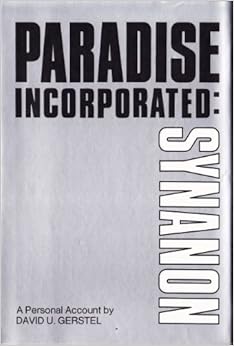
Paradise Incorporated


Synanon began life as a group within Alcoholics Anonymous in Santa Monica that developed a form of group criticism they dubbed "the Game".  After breaking with AA, they began their own rehabilitation program centered on communal living and playing the Game.  As the group's successes with addicts garnered publicity, Synanon grew rapidly, and attention and power increasingly accrued to the charismatic leader, Charles Dederich.  As it grew, the group became less effective at reforming and retaining addicts, but also began to attract non-addicts experimenting with encounter groups and communal living.  This adjusted the goals of the organization, which began to aim at a general moral reform of society as a whole.   

The cult of personality surrounding "the Founder", Dederich, likewise grew, along with his ambition.  Synanon went into decline, which triggered ever-greater demands on members, which further shrank the group down to a dedicated core willing to defend their way of life by any means necessary.  Dederich became increasingly controlling, erratic, and paranoid, mandating shaved heads and vasectomies, ordering harassment, abuse, and beatings against enemies internal and external, real and imagined.

Author Gerstel was a member of Synanon for a number of key years at the peak of its success.  Although his history of the group, before, after, and during his own involvement, provides little insight into the development of such groups generally, the book shines as an unpretentious personal account of how an idealistic, intelligent, educated young man could find himself a member of such an organization, how normal the abnormal can be made to seem, and how difficult it can be to leave.

Thursday, February 12, 2015

Interior Desecrations: Hideous Homes From The Horrible ‘70s


This book is hilarious.  The photos of the rooms alone would make a lot of people laugh but the author’s commentary throughout the book really enhances the humor.  The 1970s were truly awful for décor and this book has found some of the best (or worst, depending on how you look at it) examples of the era.  Features are rooms that are almost entirely one pattern, including the walls, floors, drapes and furniture, patterns and colors that make people want to gouge out their eyes, and ridiculous styling techniques that just make you say, “What the what?!”  This book will probably be funnier to those of us that lived through the 1970s but I think that younger people might be able to appreciate it also.

Saturday, November 16, 2013

Instructions for a Heatwave

Instructions for a Heatwave by Maggie O'Farrell, 289 pages

Robert and Gretta Riordan are your typical retired couple: Robert putters around the house quietly (but with a strict schedule, set from years working at a bank), while Gretta spouts off a running commentary of everything going through her head as she bakes soda bread and laments the fate of their three grown-up children, who have woefully strayed from their Catholic upbringing. Then, one day, in the midst of England's record-setting heatwave of 1976, Robert doesn't return from his morning trip to the newsstand. Gretta's inconsolable, and the three Riordan children return home to help find their father, each bringing along trunks of emotional baggage and a reticence to communicate.

This is a textbook example of a dysfunctional family. As odd as it may sound, I liked this book, but I hated it. I liked how well O'Farrell wrote, but I hated most of these characters (Aoife, the youngest daughter, was the least maddening to me, and so was my favorite). At several points in the book, I wanted to reach into the book, grab the Riordans by the back of the neck and force them to talk about the skeletons in their closets. I also wondered several times if their lack of communication would result in some catastrophe for Robert. That's not to say, however, that O'Farrell didn't write a wonderful story; she did. There is something to be said for writing characters so three-dimensional that they're able to be so infuriating in so short of a novel. O'Farrell also keeps the reader guessing when it comes to plot points and the true nature of everyone's secrets (because they've ALL got them).

So a gold star for O'Farrell. Good for those who like a good family fight and frustrating characters.