
Showing posts with label Paris. Show all posts
Showing posts with label Paris. Show all posts
Sunday, April 28, 2024
The Titanic Survivors Book Club
The
Titanic Survivors Book Club by Timothy Schaffert
320 pages
Don’t
be like me! If you want to read anything about the Titanic, this novel
is going to be a major league disappointment.
The
survivors are not Titanic survivors at all. They are people who were supposed to
be on the doomed liner and at the last minute were not able to board. Okay, I
can go along with this. Fascinating plot. The survivors, eleven in total, were
mostly men, surprisingly. However, the novel focuses on three main
characters: Yorick (who was supposed to
be the ship’s Second-Class Librarian), Zinnia (of Japanese descent and a candy-making
heiress) and Haze (a photographer who takes shelter anywhere he can). The
toymaker, designer of souvenir toys for the liner, brings these survivors
together in Yorick’s Paris bookshop.
In
a book that was supposed to be about books, only a small fraction is about
books. The plot mostly centers around Yorick who is in love with Haze who is in
love with Zinnia and Yorick who is in love with both men. It should be
complicated, but Schaffert does a remarkable job in keeping the three separates
while creating a convoluted tale.
I
must admit that although my hopes were high for an intriguing story, I was
bored. The three seem to only scheme how to get their hearts’ desires and
constantly try to thwart the other two.
The
Titanic Survivors Book Club receives 1 out of 5
stars in Julie’s world.

Sunday, July 9, 2023
The London Seance Society

The London Seance Society by Sarah Penner 352 pages
When I teach fiction writing, one of my classes is devoted to the first sentence. If the author doesn't grab the reader's attention right away, there is a slim chance the reader will continue. I love the first sentence in this book: "At an abandoned chateau on the outskirts of Paris, a dark seance is about to take place, led by acclaimed spiritualist Vaudeline D'Allaire." That a beaut, isn't it? However, that was the best part of the book.
D'Allaire is the toast of Paris and London when spiritualism is at its height. Her specialty is conjuring murder victims to tell her who killed them.
Lenna Wickes is mourning the death of her younger sister, Evie. She has come to Paris to enlist Vaudeline's aide. Lenna becomes Vaudeline's understudy.
Meanwhile, back in London, a powerful men's organization is also trying to uncover the murder of their president. Oddly enough, the two murders happened on the same night, October 31.
The novel is interestingly told by two voices, but it's odd. Lenna's story is told in third person, while their contact at the Society, Mr. Morley, is told in first person. I found it jarring. It takes a while for the reader to figure out exactly what the connection between the two dead people are, but the story does finally come around to a smooth conclusion.
Vaudeline and Lenna go back to London and try to solve the cases. Sometimes the plot was intricate, sometimes simple. There were times the story was a page-turner and times the story plodded along. Many times, I was able to figure out what was going to happen well before t did.
I was disappointed in this second outing by novelist Sarah Penner of The Lost Apothecary. Here's hoping that her third book returns to the skillfulness she displayed in Apothecary. The London Seance Society receives 3 out of 5 starts in Julie's world.
Wednesday, September 14, 2022
The Steal

The Steal (Book 1in To Catch a Leopard series) by C. W. Gortner and M. J. Rose 135 pages
I was drawn to this
novella because of the cover. The woman reminded me of Grace Kelly and Cary
Grant when they made the movie “To Catch a Thief.” However, the movie is not
based on this book as it was published in 2021.
When readers first arrive in Cannes for the 1957 film festival, they see the
area through Jerome Curtis’ eyes. But he hasn’t come to enjoy the scenery, gawk
at the film stars, play in the casinos or to watch the new movies. Instead,
Jerome is there to investigate a jewel robbery. A robbery that, if he cannot
solve, will cost the company he works for millions of dollars. He is confident
that he can solve the case.
The jewels have been stolen right under the nose of their owner, Ania Thorne.
Her father is the world-famous jeweler, Virgil Thorne. Ania has studied under
him since she was child, and at 29 has also designed iconic pieces and is ready
to take over the company’s majority.
Jerome is not the suave, elegant Cary Grant figure; he is more of a Colombo.
Immediately he suspects a notorious jewel thief whose moniker is The Leopard
because he always leaves a leopard print glove behind. Naturally, there is no
such glove at this crime scene, which happens to be the fabled Carlton Hotel.
Jerome and Ania work every lead and every suspension that comes their way,
whether it be in Cannes, Paris or New York. Their arrival in New York unearths
startling evidence and gets them close to the thief.
Of course, I cannot forget the attraction that leaps between the Ania and
Jerome. It’s fun to watch them steer around each other, trying to maintain
their professionalism.
I’m looking forward to reading Book 2, “The Bait.” “The Steal" receives 5 out of
5 stars in Julie’s world. “The Steal” receives
5 out of 5 stars in Julie’s world.
Monday, August 8, 2022
Dinner for One: How Cooking in Paris Saved Me

Dinner
for One: How Cooking in Paris Saved Me
by Sutanya Dacres 352 pages
I
enjoy most foodie memoirs/biographies. If y’all haven’t read and of Ruth
Reichl’s series of growing up and working around food, I highly recommend them. They are simply wonderful, as is the one
novel she wrote, “Delicious.”
I
thought I was getting kind of the same things when I picked up “Dinner for One:
How Cooking in Paris Saved Me.” Well, I read, and read, and read, and read, and
read. Took me almost a month to finish this book. I was bound and determined to
finish it and find that nugget that would have made it all worthwhile. The book
contained almost one hundred pages of recipes, so I just knew that it
would be unputdownable.
I
was wrong. It starts out well enough, with Dacres meeting her husband, who is
only referred to TFM (The French Man) through all 352 pages, in the New York. They had a long distant relationship for
three years before they married. Dacres
left everything and everybody she knew and loved to move to Paris.
The
honeymoon didn’t seem to last long. Dacres knew no one in Paris, didn’t know
her way around, and barely spoke the language. I would have thought that she
would try to learn the basics before she moved to Paris, but she didn’t. French
is not an easy language to learn, and Dacres didn’t seem that interested. TFM
had his own set of friends, was a native Parisian, and a job. Dacres seemed
alone most of the time.
Readers
must watch Dacres and TFM’s marriage fall apart for more than two thirds of the
book. It got old after a while. Normally
I would have bailed, but I was really waiting for the good part. Mostly after Dacres and TFM separated we had
to watch as she drank too much and had a series of one-night stands.
She
does decide that she is spending too much of her time trashed and starts cooking,
but it is too little too late. There isn’t much about cooking in this memoir
and not a mention of the recipes that she includes. I was extremely disappointed in this
narrative, and equally as irritated at myself for hanging on to the very last
word, especially since it put me seven books behind toward my Goodreads goal.
Therefore “Dinner for One: How Cooking in Paris Save Me” receives 1 out of 5
stars in Julie’s world.
Friday, July 15, 2022
Mastering the Art of French Murder

When
I first read the title of this new mystery series, I swear I could hear Julia
Child’s real-life voice. I had no idea that the kitchen magician herself was
going to be a secondary character in this new series. I was so delighted!
Set
in the Paris of 1949, Tabitha Knight has come to the City of Lights from
Detroit to find herself. She’s twenty-nine years old, recently broken her
four-year engagement to Henry and has lost her job at the Willow Run Bomber
Plant where she helped to build B-24 Liberator planes. She was a real Rosie the
Riveter! And on top of all the that, the woman---her grandmother-- who helped
raise her has died. She is lost and decides to go spend some time with her
grandfather, who still lives in Pari with his best friend.
Tabitha
made friends with Julia, who happens to live across the street and down the
block. They became fast friends although Tabitha can barely boil an egg. Julia’s
sister, Dort lives with the Childs’. Dort works for the American Club Theater,
which performs at Theater Monceau. The cast and crew are often at Julia’s
apartment after shows or rehearsals.
After
one such evening, the body of one of the other theater employees, Therese,
turns up brutally murdered----in the basement of the Childs’ apartment building.
Tabitha was the last person to see her alive and is immediately a suspect.
Concerned
that she will be arrested and impatient with police procedures, Tabitha begins
her own investigation. And the bodies begin to pile up. I was surprised by so
many bodies that dot the pages.
This
first book in the series is simultaneously funny and creepy. The opening scene
about the mayonnaise was a delight! I could hear Julia’s real-life voice booming
from the pages. I also liked that she was the sidekick and not the main
character. I did wonder if there were some gay undertones between Tabitha’s
grandfather and his best friend, Oncle Rafe (Tabitha’s honorary uncle), but it
doesn’t matter.
The
descriptions of the food and wine were spot-on…not too much nor too little. I
was salivating through the entire book. However, there is only one thing, no
two things, missing: The recipes for the perfect roasted chicken and
mayonnaise! “Mastering the Art of French Murder” receives 5 out of 5 stars
in Julie’s world.
Publishing date April 2023
Saturday, April 17, 2021
Flowers of Darkness

Flowers of Darkness by Tatiana de Rosnay 256 pages
I’m still thinking about this novel almost a week after I finished reading it. It’s creepy and disturbing!
The story is set in the near-future in Paris (I peeked at other online reviews, and they guess the time frame to be somewhere anywhere from 10 to 50 years ahead.). Life on the whole has not really changed that much, except that many of the world’s most recognizable landmarks are gone---having been bombed (The Eiffel Tower and the Sistine Chapel are two that are mentioned.) years earlier and climate change is in full bloom.
Clarissa Katsef has left her husband of twenty years because of his infidelity. She has applied for residency at one of the most high-apartment buildings in Paris, not that far from where the Eiffel Tower once stood. It’s a residence meant to encourage art---from musicians, to painters, to writers, to sculptors. Clarissa is a writer with several notable book to her name. She is accepted, to her surprise, and snags the top eighth floor apartment.
The apartment in very, very, very high-tech. It comes with a personal assistant, whom she has named Mrs. Dalloway, after her favorite writer Virginia Woolf. Mrs. Dalloway is creepy al by herself! The residents are filmed at all times (for “security reasons”), except when they are in the toilet room and hit the option of “intimate mode” for sex while in the bedroom.
Clarissa is trying to figure out what direction her life should take. She has her daughter, Jordan, and her granddaughter, Andy, her first husband, Toby, and a cat named Chablis. Her current Francois is trying desperately to get her to come home. Clarissa had just walked out, leaving all her possessions behind.
It is Andy who first mentions the clicking noise and other odd happenings that Clarissa thought were the result of trying to write another book and the break-up of her marriage. Now Clarissa must investigate what in the heck she has gotten herself into. She makes friends with another resident, but he promptly disappears.
Intermixed with all this drama are a few journal entries where Clarissa tries to find Francois’ mistress, and what she discovers is horrifying and disturbing. I won’t even get into that part of the novel.
Technology is great, it’s wonderful, but de Rosnay gives readers a peek into what our future holds that doesn’t really appeal to me.
I don’t know really how to score this novel. I want to give it 5 stars since it has stuck with me; 3 stars for it’s creepy and disturbing nature. I can’t say I would recommend it, but I wouldn’t say whatever you do, don’t read this one. Therefore, Flowers of Darkness receives 4 out of 5 stars in Julie’s world.
Saturday, February 13, 2021
The Paris LIbrary

The Paris Library by Janet Skeslien Charles 368 pages
This fabulous novel explores the meaning of friendship, loyalty, and most important, the need--- and the desire---for information. It illustrates how important libraries are, even in these days of Google and the internet.
The library in this novel is The American Library in Paris. A real, still-functioning library in Paris’ 7th arrondissement, ten minutes from the Eiffel Tower, celebrated its 100th anniversary in 2020. From their website: “The American Library in Paris was established in 1920 under the auspices of the American Library Association with a core collection of books and periodicals donated by American libraries to United States armed forces personnel serving their allies in World War I. The Library has grown since then into the largest English-language lending library on the European continent. It operates as a non-profit cultural association…”
I loved looking at the website photos to help clarify my visions of what the library looked during the novel’s time frame (1939-1944). That is one timeline in this fabulous story. The other is 1986-87 and takes place in Montana.
The war years’ part of the story mostly takes place in the library. There is a whole cast of employees and patrons that readers get to know as the noose of the German Occupation grows tighter and tighter. However, the main protagonist is Odile (Oh-deal) Souchet. The Montana part of the story gives readers full-circle about what happened after the war.
Odile has just landed her dream job at the library. She is so happy to be there, she doesn’t even mind that her parents are desperately trying to find her a husband. Her dad, a police commissioner, is always bringing single officers home for Sunday dinner. Odile has no interest in marriage.
As the Nazis goose-step down the Avenue des Champs-Élysées, most Parisians flee the city, except for the library employees and a few faithful patrons. The employees stay behind because they believe in their mission, to provide information and entertainment.
What happens in this novel is not unlike what is happening at libraries in 2021. They are doing their best to stay open and meet patrons’ needs. I work at a library (not on the frontlines though) and felt a symbiotic relationship with Odile and the others. Even when they were in danger (as our staff is with the coronavirus running amuck), they showed up to complete their mission---even if that meant home deliveries and hiding patrons of a certain religious persuasion.
I cannot recommend this novel highly enough. I also recommend visiting The American Library in Paris; website at americanlibraryinparis.org.
The Paris Library receives 6 out of 5 stars in Julie’s world.
Monday, September 21, 2020
The Black Swan of Paris

The Black Swan of Paris by Karin Robards 480 pages
Fans of Kate Quinn’s “The Alice Network” and Pam Jenoff’s “The Lost Girls of Paris” will love Karen Robards’ latest novel, “The Black Swan of Paris.”
Paris 1944. The French Resistance is in crisis. One of its leaders, Baron Paul de Rocheford is dead following an air raid and his wife, Lillian, has been captured and sent to Germany. The Nazis are certain that Lillian knows the exact time and date of the upcoming Allied Invasion and will stop at nothing to get the information out of her.
British officer Max Ryan has been given the assignment to rescue Lillian…or kill her if a rescue cannot be carried out. No matter what, Lillian cannot give the information to the Nazis or the world is doomed.
Genevieve reaches out to the Resistance, and she joins their efforts without Max’s knowledge. The Resistance puts Genevieve in contact with her sister, Emmy, and the two plot on how to free their mother.
The first half of the novel didn’t flow as fast as I had wanted it to, but something told me to keep reading. And I’m glad I did! The second half ripped and roared to a stunning conclusion. Therefore, “The Black Swan of Paris” receives 4 out of 5 stars in Julie’s world.
Tuesday, July 30, 2019
The Girl Who reads on the Metro

I
consider myself well-read, but when the author started listing titles and books
I’ve never heard of, I felt stupid. Maybe that set the tone for me for this
book.
Juliette
lives in Paris. She has an ordinary life and an ordinary job. On her commute to
her ordinary job, she is always interested in the books her fellow commuters
are reading. Desparate for a change, Juliette gets off the metro at a stop
unfamiliar to her. As she wandes through this new area, she discovers a gate
held open by a book.
Entranced,
she venture through the gates and discovers a small but very crowded bookstore.
This was creepy if y’all ask me. The store is run by a man named Soliman, who
lives on the premises with his young daughter. Soliman was creepy. He never ventures
out of his compound, yet he has a gaggle of passuers
that seem to do his bidding. Their goal is to match a book with the right
person. I was never really sure how that
worked. The general gist was that they should follow the person, get to know
their habits, etc., so they could be matched with the perfect book.
“The Girl Who Reads
on the Metro”
isn’t my cup of tea, and that is why it receives 2 out of 5 stars in Julie’s world.
Tuesday, July 23, 2019
The Last Collection: A Novel of Elsa Schiaparelli and Coco Chanel

The Last Collection: A Novel of Elsa Schiaparelli and Coco Chanel by Jeanne Mackin 352 pages
This
fascinating, detailed historical novel details one of most intense rivalries in
the world of haute coutour. Most people today still recognize the name Coco
Chanel, thanks to her perfume and purses that are still highly sought after and
every expensive. Every woman who has a little black dress in her closest has Coco
to thank.
But
the world has largely forgotten Elsa Schiaparelli. Know has Schiap, her designs were outrageous.
Sporting vivd colors and geometric patterns, to me, the surreal and experimental
clothing sounded extremely uncomfortable. Imagine wearing a har shaped like a
shoe?
In
1938-39, the two women were fighting for dominance in the fashion world. Paris was
getting ready for a war that would surely come. And although the book is based
on the two real-life women, it is narrated by a completely fictional character:
Lily Sutter.
Lily
is a young American widow, still traumatized by the sudden death of her husband
two years earlier. She receives a telegram from her brother, Charlie, who is
living in Paris, urging her to come. After a bit of consideration, she packs
her bags and grabs the nearest steamer. He is dismayed by her wardrobe and
offers to buy her a dress, inparticulary a Chanel design. However, Lily prefers
Schiaparelli. When Charlie must divert his girlfriend/model who is joining them
from Coco’s house to Schiap’s house, Lilly ges drawn into the raging battle.
Lilly
actually becomes friends with both women. Lilly has a flair all her own. She
goes undercover at the Chanel house for Schiap.A secret-shopper type of spy.
Then over at Coco’s, Lilly begins to believe that Coco’s politics and loyalties
might not lie with the French. Or do they?
One
of the most shocking events of the novel is when Schiap, Coco and Lilly are at
the same gala and Coco pushes her rival too close to the candle flame which
sets her costume on fire.
I
really like the use of lots of color in the descriptions throughout the novel.
The book is divided into three parts: Blue, Red and Yellow. The color
descriptions left the imagery dancing in my mind.
As
much as I loved this book, it had a slow, slow start. I was about 100 pages in
before it really grabbed my by the throat and wouldn’t let go. And that’s why “The Last Collection: A Novel of Elsa Schiaparelli and Coco Chanel” receivs 4 out of 5 stars in Julie’s world.
Friday, June 7, 2019
The Girl Who Reads on the Métro

"Big-hearted, funny, and gloriously zany, The Girl Who Reads on the Métro is a delayed coming-of-age story about a young woman who dares to change her life, and a celebration of the power of books to unite us all." (from the Goodreads summary)
Juliette leads a very ordinary life in Paris, working at an office job she finds boring, dating some "not-quite-right" men and feeling a little blue about her future. The bright spot in her days are her rides on the Metro to and from work, watching people reading and making up stories to herself about them.
One morning, avoiding going into the office, Juliette gets off at a different stop and finds herself on a street she's never been on. Seeing a book wedging open a rusty gate, she goes in and discovers a shop filled with books, a man named Soliman and his young daughter Zaide. Soliman assumes Juliette is there as a passuer, a person he has hired to take books from his shop and into the world, matching books to readers. Before she can help herself, Juliette agrees to do this, leaving her job and moving into Soliman's story to become a passeur and to take care of Zaide while Soliman is away.
Okay, so what happens then I will leave up to you to discover. Suffice to say, things happen and Juliette's life is changed forever.
While I thought this book was okay, I didn't find it funny or big-hearted and definitely didn't find it to be "gloriously zany." Maybe it is to the readers who first encountered this book in Europe? But I feel like this is a variation on a story I have read before, where there is a mysterious/enchanting/intriguing bookstore, a woman whose life is forever changed by these books . . .
Color me meh on this one.
Thursday, May 9, 2019
Mistress of the Ritz

Mistress of the Ritz by Melanie
Benjamin 384 pages
When
I was able to get my hands on an Advanced Reader’s Copy of her latest, “Mistress
of the Ritz,” I truly had no idea of what it would be about…and didn’t care.
From the cover, I gleaned that it was set in 1940, and of course, the story
takes place in Paris. The mere mention the Ritz evokes imagination pictures of
elegance and opulence.
I
had no idea that the central characters of Benjamin’s were based on a real-life
couple until I read the author’s notes at the end.
A
Frenchman, Claude Auzello, is the Ritz’s director. He lives on-site with his
American-born wife, Blanche. Claude oversees all the details of running the
most glamorous hotel in Paris, and Blanche mingles with the guests. They seem
happy, but behind closed doors, the Auzello’s marriage is falling apart.
Then
the Nazi’s marched into Paris. The fear that gripped Paris was palpable and
jumped off the page. The Auzello’s, like the rest of the Parisians, did what
they had to do, whether it was serving the Germans with a smile or tryin to
stay out of their way.
The
story isn’t a page-turner nor is it slow and plodding. It’s a look at life
among the Germans in the occupied city. Readers get to truly know the
characters, their fears, their personalities, what makes them tick.
Both
Claude and Blanche are recruited by the Resistance, and they gladly, although
unknown to each other, serve their country. There were some tense moments and
awkward situations, but I always felt that they would overcome any obstacle.
Until there was only less than one-third of the book left that is. Then, BAM!
BAM! BAM! BAM! BAM! BAM! Let’s just say all hell breaks loose, and the book has
an ending that I never, ever saw coming. Yeah! As I turned the last page, I
almost fainted, I as was unconsciously holding my breath.
I
highly recommend “Mistress of the Ritz,” and it receives 5 out of 5 stars in Julie’s world.
Tuesday, April 9, 2019
First Decadent
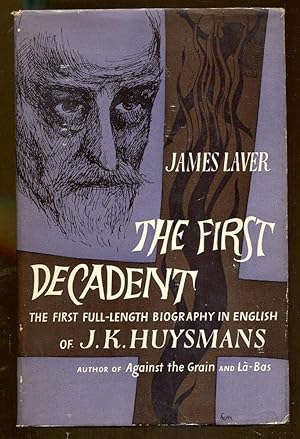 The First Decadent: Being the Strange Life of JK Huysmans by James Laver, 267 pages
Nabokov insisted quite rightly that Proust was a novelist rather than a memoirist, and warned that the reader should therefore guard against conflating Marcel the character with Marcel the author. The same could be said of other authors as well - Dante being the obvious example. Despite this, when dealing with a novelist as assertively autobiographical as Huysmans a solid biography can be an invaluable aid. Thankfully, that is exactly what James Laver delivers.
There are two great temptations when dealing with the life of a man like JK Huysmans. The purely aesthetic literary admirer is unlikely to be sympathetic to Huysmans' spiritual journey, and is likely to imagine that it impoverishes rather than enriches his work. The pious biographer, on the other hand, is likely to want to sanitize Huysmans' life and work for fear of alienating his intended audience, thus ironically minimizing the importance of the same journey. Laver somehow manages to avoid both traps, capturing the erotic charge the young Huysmans derived from the scent of a cluster of streetwalkers whose services he was unable to afford as well as the transcendent shock he found in the sound of perfect plainchant. The result is, however, likely to be disturbing to the sensitive (there are passages here that are as black as any in La Bas), a quality it fittingly shares with its subject.
Sunday, March 3, 2019
Lost Roses
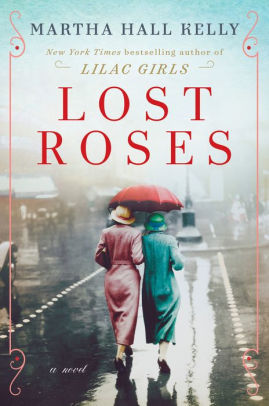
Have you read “Lilac
Girls” by the same author who wrote this book?
If you haven’t, I highly recommend it!
Martha Hall Kelly’s
second novel, “Lost Roses,” is not quite as good as Lilac, but it’s a great read.
I had trouble getting into it, but once I got to about page 50, it took off
like a rocket.
The story begins in
1914 and ends in 1921. It’s less about World War I and more about the Russian Revolution. The story focuses on three women. First there
is Eliza Ferriday. A real-life heroine, Eliza, spent many years doing her best
to help the “White Russians,” immigrants from Russia who had been aristocrats,
but who lost everything when the Bolshevicks came into power. Eliza organized
the American Central Committee for Russian Relief by finding them homes,
including her own New York City apartment and Southhampton cottage.
Eliza’s BFF is Sofya
Streshayva. While not a real-life person, she is a combination of many of the
former aristocrats Hall Kelly researched in writing this novel. Her part of the
story is the most compelling. Her distant relation to the Romanov family isn’t
helpful during this time period. The scenes were she and her family are
captured by the Bolshevicks are intense and some rather disturbing.
The third woman, and
my least favorite, was Varinka, a Russian peasant with ties to the Red Army. At
first she is a sympathetic character, but when she takes the one thing Sofya loves
the most, she becomes the novel’s antagonist, along with the Russian
Revolution. Varinka is completely fictional.
Ultimately this story
is about friendship, love, and loss during one of the most turbulent times of
the 20th Century. I enjoyed the different voices of the three women.
I found them easily distinguishable. This, to me, is another one of the forgotten
stories of human beings and the bonds they forge during difficult times. “Lost Roses” receives 5 out of 5 stars in Julie’s world.
Thursday, January 31, 2019
The Rain Watcher

The Rain Watcher by Tatiana de Rosnay
240 pages
Most readers will recognize de Rosnay as the author
behind “Sarah’s Key,” which ranks right up with “Rebecca” as haunting stories
that stick with readers for years after they were first read. The four novels
that came after “Sarah’s Key,” never afforded de Rosany the same success. Now four years after her last novel, that
bestselling success is so close, yet so far away.
Set in contemporary times, “The Rain Watcher”
takes place in Paris. The Malegarde family has come together to celebrate
parents’ Lauren and Paul’s fortieth wedding anniversary as well as Paul’s
seventieth birthday. Lauren is an
American by birth, Paul is French, They have two children, Tilia who is caught
up in an unhappy marriage and resides in France. Linden is an internationally
known photographer and calls San Francisco home.
It’s been raining in Paris for weeks and the
Seine is rapidly rising. The waters are expected to rising well above the
historic flooding of 1910. As the Seine rises, so does the tension. Each of the
four characters has secrets they are hiding. The family, already partially
estranged, is at a breaking point. When illnesses strike, the family must learn
to let go. It’s a hard lesson for those involved.
Most of the writing was beautiful. De Rosany
did a wonderful job in describing the flood waters and the rain. Every time
they were mentioned, virtually on every page, a new image seemed to present
itself. Kudos for that.
On the down side, de Rosnay provides readers
with an agonizing detail of the Paris streets and androissments. It would have
help had there been a map on the inside front and back covers. I felt lost when
she began naming streets and neighborhoods that I had no concept of location. I
don’t believe that de Rosnay writing for an international audience…or at least
am American one. The overload of French words also got in the way.
Still the beauty of the writing, sans the above
problems, help me give “The Rain Watcher” receives 3 out of 5 stars in Julie’s world. I wanted so bad for this to be a novel
that would capture my soul the way “Sarah’s Key” did, but---heavy sigh---it
just didn’t happen.
Saturday, December 29, 2018
French Exit: A Novel

French Exit: A Novel by Patrick DeWitt Audio Book: 6 hours, 53 minutes Hardback Book: 256 pages
I loved this book. The banter between mother, Frances Price and her son Malcolm is so witty and so funny I was sorry to see this story come to an end. The Price family is insanely rich but Mr. Price (Frank) is a total womanizing rogue who dies and while Mrs. Price is packed and ready to pull off on a fantastic trip to join friends and kick up her heels (the Prices didn’t have much in common anymore and each went their separate ways) but forgets something and comes back in the house to find her husband laying dead. She figures there is nothing that she can do at that point and the car is waiting so she continues on with her trip. The story is so full of hilarious dialogue and situations it is a joy throughout. Mrs. Price does go to jail over the death and lack of reporting it to authorities when she returns but all of the twists and turns along the way are hysterical. The relationship she has with her son, Malcolm is also comical. I absolutely love the repartee between them – the humor is so dry in their remarks to one another and oh yes, there is a stray cat that wonders in one day and gives Frances the eye. He makes himself at home no matter that neither Frances nor Malcolm like cats. Frances becomes sure that the cat is her husband reincarnated coming back to haunt her. She names the cat, “Little Frank,” and continues throughout the story to refer to him or when he comes in from his all night wonderings (much like his namesake) she greets him with, “Hello, A**hole!” This story is too good, kudos to Patrick DeWitt, I adored this book. After getting out of jail and losing their huge fortune to bankruptcy due to “Big” Frank’s philandering Frances and Malcolm see no way out as they have been scandalized by all that has transpired so far lots happens, but, Frances decides she Malcolm and Little Frank will move to Paris to start a new life. They do, lots more happens, Little Frank disappears and while neither Frances nor Malcolm like the cat, Frances feels the need to find him as she thinks it is somehow her penance to make sure the cat is cared for, secretly she may have developed a sort of bond to the cat. She had been having conversations with him as talking to her husband “through” the cat who continues to react in ways his namesake did. Frances hires a detective to find Little Frank by hocking some more of her jewelry and keepsakes. She even ends up encountering a psychic through her son’s endeavors (that term is used loosely in this context). The psychic is spot on and actually conjures up Big Frank it is so humorous the way it all plays together. I’ve already given too much away but I highly recommend this book to any one – the writing is magnifique’! This story will have you roaring with laughter it is that good. Excellent read – so funny and you won’t believe the twists. A total riot. Like I said earlier, I LOVE THIS BOOK.
- Shirley J
Tuesday, December 18, 2018
The Lost Girls of Paris

The Lost Girls of Paris by Pam Jenoff 384 pages
From the author of “The Orphan Train” and
several other novels come another story set in the World War II era, Pam
Jenoff. She takes another small,
forgotten true story from the war and creates a real-page turner that often
left me breathless.
The story opens in 1946, Manhattan. Cutting
through Grand Central Station on morning, Grace Healey stumbles upon an
abandoned suitcase, battered and worn.
No one seems to be around to claim it. Grace takes it upon herself to
open it, looking for some sort of identification. There is a word, Trigg, scrawled on the side. In addition
to the normal items that would be contained in a suitcase, Grace finds the
photographs of twelve young women who appear to be in their very late teens or
early twenties. The only identifying marks on the photos are first names, which
Grace assumes are the women’s names.
Then the story jumps back to London, 1943.
Eleanor is heading up a division of Special Operations Executive (SOE), a
British operations organization designed to conduct espionage, sabotage and aid
the local resistance movements in occupied Europe.
Eleanor’s job is to recruit and train young
women to go undercover in France to transmit radio correspondence between London
and France, particularly in the outskirts of Paris. Eleanor has selected twelve
young women for the job.
The story weaves back and forth between
Grace, determined to learn who the women are and what happened to them, and
Eleanor has the group’s leader, and one of the girls, Marie.
I was disappointed that readers only get to
know Marie intimately and another operative, Josie, superficially. Some of the
other girls’ names were mentioned, but not all. I understand that it would have
been too confusing, and too lengthy, to try to write about all twelve. Still,
it was a wonderful read, compelling, and each story reached toward its climax,
I found myself gasping at twists I didn’t expect. I want to give “The Lost Girls of Paris” 5 out of 5 stars, but the lack of information about the other ten girls
forces me to give this novel 4 out of 5 stars in Julie’s world.
Wednesday, December 5, 2018
THE MORTAL WORD
THE MORTAL WORD by Genevieve Cogman

433 pages
https://slpl.bibliocommons.com/item/show/1423249116#
Reviewed by Rae C.
The fifth book in the Invisible Library series, and the best one so far!
There are multiple worlds, and in each there are different levels of technology (order, ruled by Dragons) and magic (chaos, ruled by The Fae). Each earth has different versions of the same stories, reflecting the different development and history of that particular world.
The Library exists at the center of all the worlds, and is outside of time. By collecting the different versions of stories, the Library keeps the worlds bound together. Also Librarians are able to speak The Language, and therefore in each world have a power different from either Fae or Dragon. The Language is a pure command, the essence of all earth languages on all the different versions of earth. For example, if a Librarian commands water to boil in The Language, the water will boil.
There is an ongoing conflict between Dragon and Fae, and neither species can tolerate too much of the other. So Fae suffer in the order of Dragon worlds. And Dragons lose strength in chaotic Fae worlds filled with magic and Story. (The Fae themselves are dominated by Story. In fact, sometimes they are bound by the rules of the Story and/or their characters. Both this book and The Masked City display this feature of Fae power.)
In this book there is a peace conference underway between Dragon and Fae, and the Librarians are officiating. The main protagonist, Irene Winters, is currently Librarian in Residence in a world that is steampunk, and at roughly the 1920's in its timeline. One of her companions is a real life Sherlock Holmes, named Peregrine Vale. (In some worlds Sherlock Holmes is not just a story.) Her other companion is a Dragon Prince, Kai Strongrock.
All three of them are summoned to the top secret peace conference after a Dragon is murdered. The conference and peace in all the worlds is in jeopardy. Like the other four books, this is a great adventure, with "unguessable" twists and turns. Cogman always has something up her sleeve!
I especially enjoyed the interim with Vale's POV. This is the first time there has been a POV other than Irene's. My understanding is this series grew partly out of the author's love of Sherlock Holmes (as well as Dungeons and Dragons), so to have Vale highlighted was a treat! In fact, Irene's name was chosen from Irene Adler in Conan Doyle's "Silk Stocking." Cogman did a good job of recreating a solid Sherlock Holmes in an unfamiliar world ruled by Fae and Dragons, and powered by ether.
The alternate Paris the story is set in retains all of the history of our worlds' Paris, and includes a very exciting scene in the Grand Guignol. And the added spectacle of the Blood Countess, Elizabeth Bathory, running the show.
Kind of sorry I finished it so fast because now it is another long year of waiting for book six!!!
433 pages
https://slpl.bibliocommons.com/item/show/1423249116#
Reviewed by Rae C.
The fifth book in the Invisible Library series, and the best one so far!
There are multiple worlds, and in each there are different levels of technology (order, ruled by Dragons) and magic (chaos, ruled by The Fae). Each earth has different versions of the same stories, reflecting the different development and history of that particular world.
The Library exists at the center of all the worlds, and is outside of time. By collecting the different versions of stories, the Library keeps the worlds bound together. Also Librarians are able to speak The Language, and therefore in each world have a power different from either Fae or Dragon. The Language is a pure command, the essence of all earth languages on all the different versions of earth. For example, if a Librarian commands water to boil in The Language, the water will boil.
There is an ongoing conflict between Dragon and Fae, and neither species can tolerate too much of the other. So Fae suffer in the order of Dragon worlds. And Dragons lose strength in chaotic Fae worlds filled with magic and Story. (The Fae themselves are dominated by Story. In fact, sometimes they are bound by the rules of the Story and/or their characters. Both this book and The Masked City display this feature of Fae power.)
In this book there is a peace conference underway between Dragon and Fae, and the Librarians are officiating. The main protagonist, Irene Winters, is currently Librarian in Residence in a world that is steampunk, and at roughly the 1920's in its timeline. One of her companions is a real life Sherlock Holmes, named Peregrine Vale. (In some worlds Sherlock Holmes is not just a story.) Her other companion is a Dragon Prince, Kai Strongrock.
All three of them are summoned to the top secret peace conference after a Dragon is murdered. The conference and peace in all the worlds is in jeopardy. Like the other four books, this is a great adventure, with "unguessable" twists and turns. Cogman always has something up her sleeve!
I especially enjoyed the interim with Vale's POV. This is the first time there has been a POV other than Irene's. My understanding is this series grew partly out of the author's love of Sherlock Holmes (as well as Dungeons and Dragons), so to have Vale highlighted was a treat! In fact, Irene's name was chosen from Irene Adler in Conan Doyle's "Silk Stocking." Cogman did a good job of recreating a solid Sherlock Holmes in an unfamiliar world ruled by Fae and Dragons, and powered by ether.
The alternate Paris the story is set in retains all of the history of our worlds' Paris, and includes a very exciting scene in the Grand Guignol. And the added spectacle of the Blood Countess, Elizabeth Bathory, running the show.
Kind of sorry I finished it so fast because now it is another long year of waiting for book six!!!
Tuesday, December 4, 2018
Josephine Baker's Last Dance

I was attracted to this biographical novel simply for its subject: Josephine Baker. I knew a little about her. An African-America woman, she left the Jim Crow-era America and was singing and dancing in Paris’s nightclubs by the time she was sixteen. That’s about it. Readers get an insightful and well-researched novel about Baker---singer, dancer, movie star, French Resistance member during World War II and Civil Rights activist---that is at times slow, at times despairing yet a fascinating story of a groundbreaking woman, well before her time.
The story starts off in Paris, in April 1975. Josephine doesn’t know if, but readers get a glimpse of her final performance. Then the story skips ahead to her childhood in St. Louis. She is considered an ugly child. Her mother, a bitter woman, forces her to work for the neighbors by the time she is seven years old, making only a pittance, none of which Josephine ever sees. Life was so incredibly difficult that Josephine tries to blot it from her mind and tells anyone who might ask that she is from New Orleans. It’s heartbreaking to read about the line of abusive people in her life, from both her parents to every man she seems to meet.
By 1915, young Josephine has a new employer, one that treats her like a person, not an animal. But her security doesn’t last long. By 1919, she has spent two years singing, dancing, playing instruments with the Jones Family Band.
The story continues to recount her time in Paris. Sometimes it drags a bit as the tediousness of her life in the theater evolves. The World War II breaks out, and Josephine wants to do her part. She joins the French Resistance. I didn’t feel this section was deep enough, but maybe there isn’t enough documentation or evidence out there to make it more compelling.
It doesn’t matter though, I enjoyed this book thoroughly, couldn’t put it down. That’s why “Josephine Baker’s Last Dance” receives 5 out of 5 stars in Julie’s world.
Thursday, October 4, 2018
The Collectors Apprentice

The
Collector’s Apprentice by B. A. Shapiro 352 pages
I
thoroughly enjoyed B. A. Shapiro’s novel “The Muralist.” The plot and
characters stuck with me for a long time. If you haven’t read it, I highly
recommend it. Shapiro is back with another art-centered novel, “The Collectors
Apprentice.” It’s not as good as “The Muralist,” but it’s still a good read. The basis for this novel was inspired by Albert Barnes who created the
collection currently housed by the Barnes Foundation in Philadelphia.
The
story takes place between 1922 and 1929. In the Belgium countryside during 1922,
nineteen-year-old Paulien Mertens has been banished from her home after he fiancé,
George, pulled a conducted a major Ponzi scheme on her family which costs them
millions in stolen art.
Paulein
goes to Paris, but she is alone and broke. She must reinvent herself, and she
does so by taking the name Vivienne Gregsby. She manages the connected with the
art world, but her biggest fear is that someone will recognize her as Paulien.
Her family had been big collectors. She and her father had planned to open a
museum. Her main goal is to return her father’s art collection
Now
rubbing elbows with the art-elite, Vivienne must be careful not to appear as knowledgeable
as she is. One of the artists whom she becomes friends with is Henri Matisse
and the two become romantically involved. One of the people she meets is an
eccentric and wealthy American art collector, Edwin Bradley.
Edwin,
inspired by the newly-created Vivienne, hires her to help him gobble up as much
art as he can---paintings, sculptures, drawings—and take them to Philadelphia
where he is building his post-Impressionist museum. In a twist of fate, Edwin
now owns the seven paintings that Vivienne is desperate to retrieve.
Then
George, who now goes by Benjamin, is trying to get back into Paulein/Vivienne’s
life so that he can swindle Edwin.
Winding
through the plot are chapters simply labeled “The Trial” and are in an
all-italics font. This serves to create that dueling timeline that is plot’s
structure. It took a while, but eventually I figured out that Paulein/Vivienne
is on trial for Edwin’s murder!
The
book went into a little too much, for my taste, about studying art, its lines,
shapes, colors, etc. It also went a little too much in Matisse’s life, which I’m
not sure if it is fiction or fact.
Therefore, “The Collector’s Apprentice” receives 3
out of 5 stars in Julie’s world
Subscribe to:
Comments (Atom)