Showing posts with label monks. Show all posts

Monday, July 31, 2023

Winchester Cathedral Close

Winchester Cathedral Close: Its Historical and Literary Associations by John Vaughan, 275 pages

This is not a history of the cathedral itself, but of the monastic enclosure that surrounded it for centuries prior to the Reformation, elements of which survive to this day.  John Vaughan, a resident canon in the early years of the 20th century, follows these traces through to his own time, covering not only the buildings but also the flora and fauna of the cathedral precincts, as well as the scriptorium and the library collection.

Vaughan's intimate knowledge of his surroundings breathes a special vitality into what might otherwise be a very dry work, at times suggesting the sweet odour of contemplation that once incensed the air here.  Few, perhaps, will care about details of the alterations to the undercroft, but anyone looking for a testament of love of place will be enchanted.

Saturday, July 1, 2023

Early History of Glastonbury

The Early History of Glastonbury by William of Malmesbury, translated by John Scott, 83 pages

The Early History of Glastonbury is a translation of William of Malmesbury's 12th century history De Antiquitate Glastonie Ecclesie, accompanied by the Latin text as well as commentary and notes. William undertook this project at the behest of the monks of Glastonbury, at least partially as a supplement to four Lives of Glastonbury saints he had written (of which only the Life of Saint Dunstan survives), but the primary aim seems to have been a catalogue of the various charters and bequests associated with the monastery.  Indeed, the short book is generally more of a legal record than a conventional history, as rights and privileges awarded to the abbot and monks are thoroughly documented - in the uncertain period following the Norman conquest, this was a necessity.

For a modern reader this focus proves something of an obstacle, as it does not make for particularly entertaining reading.  To the kind of reader who is likely to even consider reading a 12th century monastic history, however, the rewards will almost certainly be worth the price.

Tuesday, July 16, 2019

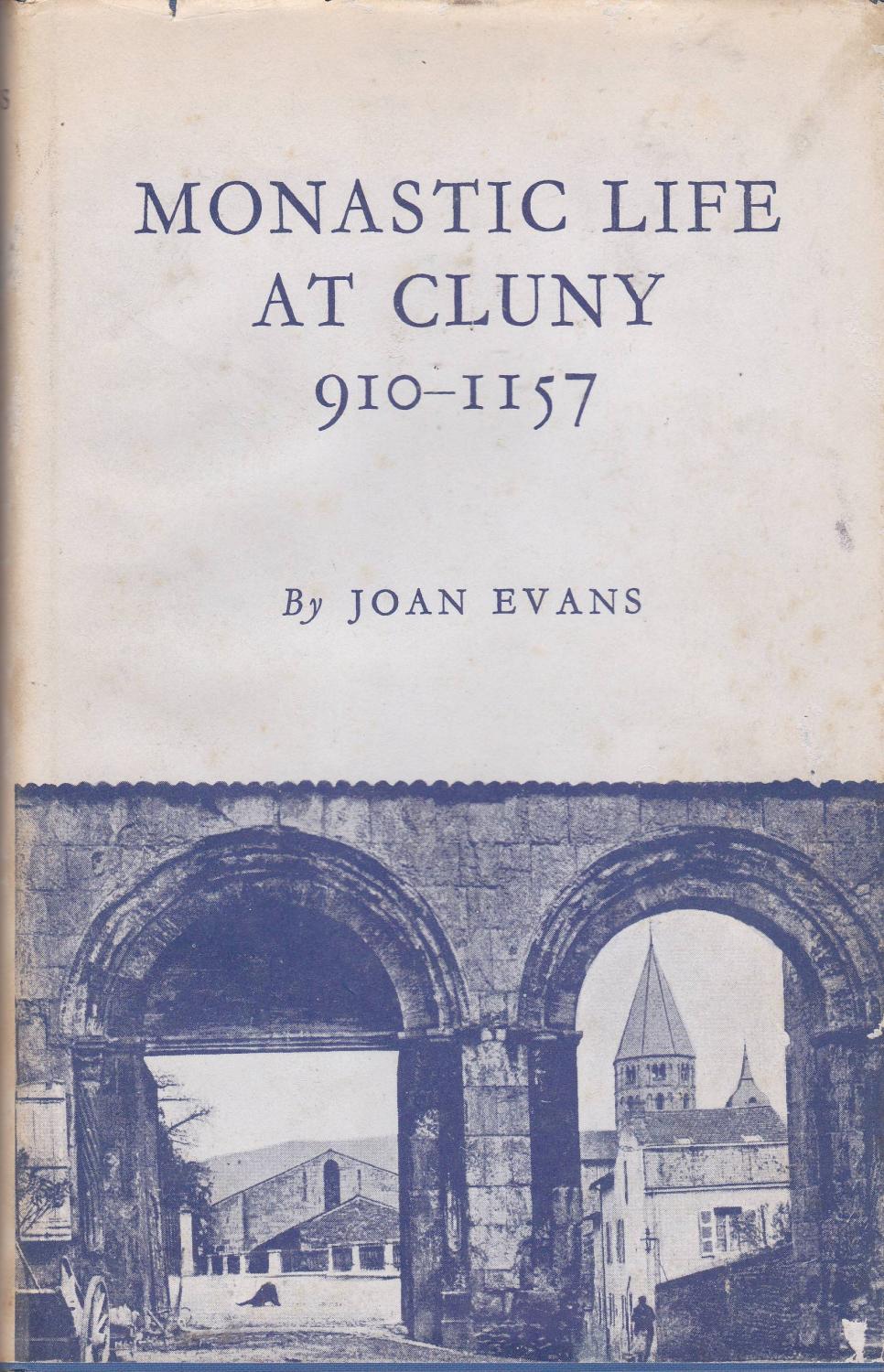
Monastic Life at Cluny

Image result for Monastic Life at Cluny joan evansMonastic Life at Cluny 910-1157 by Joan Evans, 130 pages

As Rome fell and the medieval world rose, Christian monasticism flourished.  As time passed, however, the same monasteries that served as fortresses of the faith fell into decadence and dissolution.  The Carolingian reform established the Rule of St Benedict throughout Western Europe, but the corruption was great and the workers few.  In 910 William of Aquitaine gifted a portion of his hunting preserve to the reforming abbot of Baume, St Berno, on which the monastery of Cluny was founded.  Adhering to strict interpretation of the Rule, dedicated to the celebration of the liturgy, and directly subject to the Pope, under a series of saintly abbots Cluny became the center of the 10th century monastic reform that ushered in the High Middle Ages.  

The Cluniacs were eventually overshadowed by the rise of the Cistercians, an eclipse which was perpetuated by posterity.  Joan Evans' short book does nothing to reverse this, indeed, it is barely interested with Cluny's role in the broader reform movement.  Instead, Monastic Life at Cluny is a more modest description of the history of the particular monastery of Cluny and the daily life of the monks.  It is no less valuable for that - it was through this life and for the sake of this life that the world-historical work of reform was carried out.

Tuesday, April 9, 2019

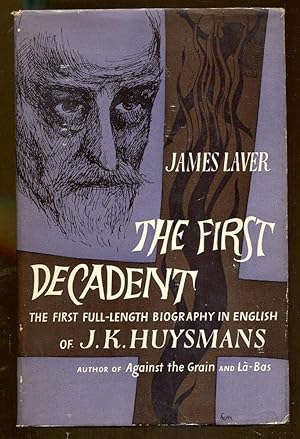
First Decadent


Nabokov insisted quite rightly that Proust was a novelist rather than a memoirist, and warned that the reader should therefore guard against conflating Marcel the character with Marcel the author.  The same could be said of other authors as well - Dante being the obvious example.  Despite this, when dealing with a novelist as assertively autobiographical as Huysmans a solid biography can be an invaluable aid.  Thankfully, that is exactly what James Laver delivers.

There are two great temptations when dealing with the life of a man like JK Huysmans.  The purely aesthetic literary admirer is unlikely to be sympathetic to Huysmans' spiritual journey, and is likely to imagine that it impoverishes rather than enriches his work.  The pious biographer, on the other hand, is likely to want to sanitize Huysmans' life and work for fear of alienating his intended audience, thus ironically minimizing the importance of the same journey.  Laver somehow manages to avoid both traps, capturing the erotic charge the young Huysmans derived from the scent of a cluster of streetwalkers whose services he was unable to afford as well as the transcendent shock he found in the sound of perfect plainchant.  The result is, however, likely to be disturbing to the sensitive (there are passages here that are as black as any in La Bas), a quality it fittingly shares with its subject.

Tuesday, November 13, 2018

Laurus

LaurusLaurus by Eugene Vodolazkin, translated by Lisa C Hayden, 362 pages

Laurus is a beautiful, subtle novel set in a vividly recreated Medieval Russia.  It tells the story of Arseny, called Rukinets and Ustin and Amvrosy and Laurus, a doctor, a penitent, a pilgrim, and a hermit, not successively but progressively, as he and his world are poisoned by sin and healed by grace.  

In her introduction, translator Hayden candidly discusses the difficulties of bringing Vodolazkin's deliberately inconsistent use of archaic language into English - without being able to experience the original, it seems that she has done an excellent job, reinforcing the story's intimations of the relationship between time and eternity, the living and the dead.  This is only one of many profound themes in this marvel of a novel - richly imaginative, empathetic without being sentimental, historically authentic and yet timeless.

Monday, May 7, 2018

Pro Vita Monastica

Image result for Pro Vita Monastica An Essay in Defence of the Contemplative VirtuesPro Vita Monastica: An Essay in Defence of the Contemplative Virtues by Henry Dwight Sedgwick, 155 pages

Even before Christianity, there were those who rejected the world and sought to live outside of its boundaries, for ends it could not comprehend.  The hallmark of medieval civilization, monasticism was rejected - and murderously suppressed - by the Enlightenment as useless and antisocial, a criticism internalized even by many in the Church.  Henry Sedgwick argues that, apart from any religious value, the ascetic's withdrawal from the world is something the world needs to counteract its own tendency to materialism.  Indeed, in his account, every contemplative act is a taste of the monastic life.

For Sedgwick, the true monk is a Platonic figure who escapes from the universe of appearances and calculations into higher realms of pure Idea.  Unfortunately, this emphasis on the universal tends to blind him to the extent to which the monk is also immersed in the particular.  This culminates in a definition the virtue of "holiness" which is synonymous with "other-worldliness".  If his vision of monasticism, and particularly Christian monasticism, is somewhat skewed, he admittedly writes convincingly and movingly from that perspective.

Wednesday, July 12, 2017

A Canticle for Leibowitz

A Canticle for LeibowitzA Canticle for Leibowitz by Walter M Miller, Jr, 334 pages

St Isaac Leibowitz was one of the scientists who made Armageddon possible, and hoped that it would never become actual.  When human folly unleashed unimaginable destruction, he took shelter from the aftermath in a secluded monastery, emerging to found a religious order dedicated to preserving whatever could be preserved.  Down through the centuries, the spiritual sons of Leibowitz dare to defy both bloodthirsty simpletons and amoral sophisticates, barbarians who believe that by erasing history they can prevent it from recurring and barbarians who believe that their command of science makes history irrelevant.

A Canticle for Leibowitz is an adaptation and expansion of a series of short stories following the history of the Albertian Order of Leibowitz in the millennia following a devastating nuclear war.  One of the classics of science fiction, the heavy use of irony conceals one of the most compassionate and genuinely humane novels of the twentieth century.

Monday, June 26, 2017

Jerome

JeromeJerome: His Life, Writings, and Controversies by JND Kelly, 339 pages

It sometimes seems as if the number of biographies of St Augustine of Hippo could fill a small library by themselves, with his own Confessions remaining the best.  By contrast, there are very few biographies of his interlocutor and rival St Jerome.  This is certainly not because he lived an uneventful life - to the contrary, wherever Jerome went, controversy swirled around him.  As Kelly ably reveals, this was the result of a character as passionately loyal to his friends as he was hostile to his enemies, "violently opinionated" with an "habitual tendency to exaggerate".  Jerome is best known as the translator who produced the bulk of the definitive Latin version of the Bible, the Vulgate, but in Kelly's biography this is secondary to Jerome's involvement in a range of contemporary disputes both theological and personal.  The result is a work which manages to be both lively and eminently scholarly.

This is not to say that Kelly lacks weaknesses - particularly troublesome is his consistent chronological snobbery that smirks at Jerome's sexual morality and airily waves about the latest word in biblical criticism as if it were the last word.  Throughout, it is clear that Kelly's own views are the yardstick by which he measures Jerome's successes and failures, and this colors somewhat his analysis of Jerome's mindset and motives.  Nonetheless, his solid scholarship compensates for these flaws, as the book is anchored solidly enough for the reader to dissent from Kelly's evaluations.

Saturday, February 4, 2017

Journey to Carith

Journey to Carith: The Story of the Carmelite Order by Peter-Thomas Rohrbach, OCD, 366 pages

The Order of the Brothers of the Blessed Virgin Mary of Mount Carmel was founded in the twelfth century on Mount Carmel, biblical home of the prophet Elijah, who at one time was commanded by God to "Go, and hide yourself by the torrent of Carith, east of the Jordan."  The medieval Carmelites, claiming Elijah's legacy for themselves, took this as a commandment to pursue charity and remove themselves from the sinful world.  Journey to Carith follows their quest to fulfill this vocation across nine centuries, through the heights of holiness and the squalid swamps of decadence, while noting those flowers of Carmel that bloomed in the latter as well as the former.

Journey to Carith was first published in the mid-'60s, and it bears the marks of its era.  Rohrbach seems uncomfortable with contemplation as an end in itself, and is therefore a bit too eager to insist on its value as a complement to the active life.  Likewise, Rohrbach is decidedly rationalistic - he flatly declares that the story of Elijah's ascension into heaven on a fiery chariot is merely a metaphor for his death - although this is an asset when dealing with the early history of the Carmelites, as shrouded in legend as it is.  The greatest strength of Journey to Carith, however, is Rohrbach's understanding of the Carmelites not primarily as an institution but as a family of prayer extending down through the centuries.

Monday, January 9, 2017

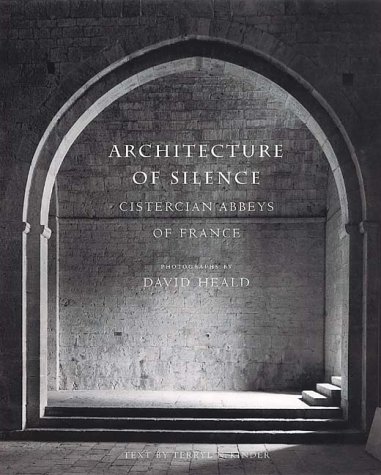
Architecture of Silence

Architecture of Silence: Cistercian Abbeys of France, text by Terryl N Kinder, photographs by David Heald, 137 pages

The Abbey of Citeaux was founded at the end of the 11th century by a group of Benedictine monks attempting to live according to a strict interpretation of the Rule.  Within a hundred years over 500 new monasteries had been founded across Europe in imitation of it.  With the Cistercian way of life came a distinct approach to art and architecture, its simplicity highlighted by the contrast with the contemporary splendor of Gothic.

Architecture of Silence is primarily an album showcasing David Heald's striking photographs of French Cistercian abbeys, with a brief but informative introduction by Terryl Kinder providing background and context.  The beautiful black and white photographs of the abbeys in varying stages of repair and disrepair perfectly capture the stillness that both produced Cistercian architecture and was produced by it.  Although nothing in this world lasts forever, these buildings were designed for eternity and even in ruins seem so naturally part of the landscape that it is possible to believe that they were always there and will always be there.

Monday, June 27, 2016

Gregory the Great

Cover image for Gregory the Great: Perfection in Imperfection by Carole Straw, 260 pages

Sixth century Italy was a turbulent place.  The Gothic kingdom of Theodosius was reconquered by the Roman Empire under Justinian, but the Emperor ruled from the capital at Constantinople, never setting foot in Italy.  Much of Imperial Italy was then conquered by the Lombards, leaving only Ravenna, Rome, and a thin strip of land connecting them in Roman hands.  The Emperor's representative, the exarch, resided in Ravenna, and the Eternal City became increasingly dependent on the papacy for patronage and even basic governance.  One pope was deposed by Justinian's general Belisarius, another was imprisoned by Justinian until he gave his assent to the rulings of the Second Council of Constantinople - and the conditional assent he eventually gave led to a significant schism, with the formation of a new church in northern Italy supported by the Lombards and headed by the bishop of Aquileia.

St Gregory the Great was born into an aristocratic Roman family in the midst of this turmoil.  After years of public service, he found peace in a monastery, but his gifts resulted in him being pressed into ecclesiastical service as a papal emissary, and later elected pope himself.  During his fourteen year reign St Gregory organized the defence of Rome against the Lombards, dealt with plague outbreaks, dispatched St Augustine of Canterbury to Kent to begin the reevangelization of England, inaugurated the papal title "Servant of the Servants of God", and, most enduringly, reformed the Roman liturgy - legend would associate him with the origins of "Gregorian" chant.

Straw is only passingly concerned with this biography - her interest is in the saint's thought, as it is expressed in his extensive writings.  St Gregory is a Doctor of the Church, and is commonly identified as the figure who marks the definitive transition between the classical and medieval worlds.  His eventful life was marked by the dual search for equilibrium, found in reason, and stability, found in love of God and neighbor.  For Gregory, the cosmos is founded in harmony, a harmony which is disturbed by sin and restored by sacrifice.  Sacrifice finds its ultimate significance in the sacrifice of Christ, both on the Cross and in the Mass, which unites heaven and earth.  This distinguishes the Christian saint from the Stoic philosopher, for while the latter pursues an ultimately solitary perfection, the saint is drawn into an often painful communion with others.  As Straw explains it, Gregory's Christian worldview is marked by an understanding of the ambiguity of a fallen world and the hidden complementarity of seeming opposites - prosperity and adversity, solitude and community, sorrow and joy, fear and love, flesh and spirit, God and man.

Friday, June 26, 2015

Brother Odd

Brother Odd by Dean Koontz, 449 pages


Cover image for St. Bartholomew’s Abbey sits quietly in peaks of California’s high Sierra, it is a safe place for children whom the world has abandoned, and who have nowhere else to go, and a place of refuge for those seeking insight. Odd Thomas has come here to find peace and to learn to live again after the events of the first book. Among the eccentric monks, their other guests, and the nuns and young students of the attached convent school, he is beginning to find peace as the spirits of the dead have been mostly absent. However trouble seems to have a way of finding Odd and soon a pack bodachs, dark spirits who feed on upcoming pain and tragedy, have come to the children living in the abbey. Soon Odd is facing an enemy more dangerous than than anything he has yet encountered, fearing that he will be doomed to fail those he seeks to protect.

The Odd Thomas series continues to have all the horror, humor, and suspense that got me started reading it. This series also continues to introduce some interesting characters such as a former mob enforcer turned monk, and the mysterious Russian from Indiana. This series continues to be a good read with the perfect mix of suspense and humor.