Showing posts with label women's history. Show all posts

Saturday, March 27, 2021

Vintage Black Glamour


 Vintage Black Glamour by Nichelle Gainer  208 pages

Summary from Goodreads:The original, highly acclaimed, silk-covered edition of Vintage Black Glamour. Packed with rarely seen photographs of Black actors, models, writers and entertainers of the early part of the 20th century, many of whom have been sorely neglected—until now—it was judged by Oprah.com to be one of their top ten books to buy & keep.


Alongside profiles and the photographs of world-renowned Black stars such as Josephine Baker, Dorothy Dandridge and Diana Ross are less-known but hugely important artists such as opera singer Margaret Tynes, Cotton Club star Margot Webb, pioneering model Ophelia De Vore, and many, many more.

And here's what I thought: I really liked this book and found the combination of writing and images to be interesting, and it made me want to learn more about some of these women. I had discovered this title when looking for something else in the catalog and I wasn't disappointed -- it's an interesting read. Not only it is a view into women's fashion, but into women's history. 

Sunday, February 28, 2021

Patently Female


 Patently Female: From AZT to TV Dinners, Stories of Women Inventors and Their Breakthrough Ideas by Ethlie Ann Vare, Greg Ptacek  220 pages

This book covers all kinds of inventions and patents, from automatic dishwashers, COBOL, drip coffeemakers, Kevlar and much more. Some of the entries are longer than others, but it makes for really interesting reading. And, it's easy to find more information on all of these women if you want to learn even more about them --- especially if you look up what their patent drawings look like.

Wednesday, December 23, 2020

The Jet Sex: Airline Stewardesses and the Making of an American Icon


 The Jet Sex: Airline Stewardesses and the Making of an American Icon by Victoria Vantoch  287 pages

Summary from Goodreads: In The Jet Sex, Victoria Vantoch explores in rich detail how multiple forces--business strategy, advertising, race, sexuality, and Cold War politics--cultivated an image of the stewardess that reflected America's vision of itself, from the wholesome girl-next-door of the 1940s to the cosmopolitan glamour girl of the Jet Age to the sexy playmate of the 1960s. Though airlines marketed her as the consummate hostess--an expert at pampering her mostly male passengers, while mixing martinis and allaying their fears of flying--she bridged the gap between the idealized 1950s housewife and the emerging "working woman." On the international stage, this select cadre of women served as ambassadors of their nation in the propaganda clashes of the Cold War. The stylish Pucci-clad American stewardess represented the United States as middle class and consumer oriented--hallmarks of capitalism's success and a stark contrast to her counterpart at Aeroflot, the Soviet national airline. As the apotheosis of feminine charm and American careerism, the stewardess subtly bucked traditional gender roles and paved the way for the women's movement. Drawing on industry archives and hundreds of interviews, this vibrant cultural history offers a fresh perspective on the sweeping changes in twentieth-century American life. 


What I thought:  I saw this book at the library when I was looking for something else and thought it looked interesting. I didn't know anything about the subject, and it was actually a pretty interesting read. The author did a huge amount of research on the subject, so there are a lot of details here --- but it's not dry at all. I found it really interesting to read about how this job was created for women and became an opportunity for women who really wanted to be pilots (a job out of their reach completely), who then found a way to fly. It was also really interesting to read about how structured these jobs were -- it wasn't just all about image, although that was a huge part of it.  Stewardesses often spoke several languages and had degrees. Which means if you wanted to get this job, you not only had to fit an extremely specific body size/type, specific body measurements, hair color, hair style, etc. -- you had to be educated.  And of course, for a long time, you had to be White. Reading about the first Black stewardess was very interesting -- and as you'd expect, she had to show she was always perfect at work because the standards for her were even higher than for anyone else.  Definitely a book to read if you're interested in women's history, especially women in the working world.  This was an unexpected good read.

Monday, December 30, 2019

Women: The National Geographic Image Collection

Women: The National Geographic Image Collection   509 pages

Not just a stunning book of photography, but essays on women's history, this fantastic book pulls from 130 years of National Geographic photography to showcase the past, present and future of women. Organized around themes, each chapter focuses on topic like "Grit" and "Joy" and includes commentary for notables such as Melinda Gates, Roxane Gay, and more.

I had anticipated this would be a great coffee table book of photography, but hadn't realized there would be so many fascinating essays and commentary. Having the chapters done by theme, sometimes surprisingly, makes the photographs resonate even more strongly.  Definitely a wonderful book if you're interested in women's history (or absolutely stunning photography).

Grass

Grass by Keum Suk Gendry-Kim   471 pages

This adult graphic novel tells the true story of a Korean "comfort woman" and documents how the atrocity of war devastated women's lives.  Telling the life story of a girl names Lee Ok-sun who was forced into sexual slavery for the Japanese Imperial Army during World War II, this book unflinchingly gives the compelling and horrifying details of what she went through, as well as other "comfort women."  Using an art style that is detailed, and heavy on black ink brushwork, the author/artist brings her interviews with Ok-sun into compelling detail. 

I had read a review of this book and was interested in the topic, and was curious about the treatment that a graphic novel would give to this first-person narrative. It's a very good book, although the topic is quite serious and at times, I had to close the book and just think and reflect a bit -- because it was sometimes tough to get through.  Definitely an interesting book for students of World War II history who are not familiar with this particular bit of history, or what these women went through.

Monday, July 22, 2019

Gateway to Equality


Gateway to Equality: Black Women and the Struggle for Economic Justice in St. Louis by Keona K.Ervin, 269 pages

Ervin frames the book with two national protests in which black women in St. Louis organized an effective worker strike in 1933 and a renters strike in 1969. Before and between those major successes, Gateway to Equality identifies the backgrounds and passions of about a dozen major female organizers in St. Louis who had national experience and impact. The book highlights major justice work in the twentieth century and the central roles of female St. Louis activists during this time. 

Before cell phones and text messages, hundreds of women organized a strike across different plants because their wages were unlivable at $4.60 per week and had been lowered six times. Despite the general conceptual and organizational divide between church and communist perspectives, the women combined insights, organizing and emotions in their leadership. They organized to focus on issues of survival and justice, and to include rather than isolate different perspectives. 

Gateway reviews movements where women led in CORE and Southern Tenant Farmers Union; organized strikes for garment workers; organized boycotts and strikes for jobs against a defense contractor, banks, drug stores and neighborhood shops; ran effective campaigns for city and state political positions; created fair housing legislation; wrote reports on Missouri prisons; and organized unions.

In 1969 black working-class women led thousands of public-housing tenants from Pruitt-Igoe, Carr Square, Vaughn and Cochran developments in a strike against St. Louis Housing Authority (SLHA). The substance of their strike was an expression of dignity and a public demand for respect: the public needed to know that working women who made $75 a month in wages could not afford to pay $55 per month to house, feed, clothe and transport themselves and their children. They and their supporters carried signs that read “Sure Fire Riot Control—Lower Rent,” “March Now—Eat Later,” “Make the Roaches Pay Rent Too!” They demanded lower rents, increased representation on housing board commissions, improved maintenance, better pest control and police protection, improved utility services and financial transparency of the SLHA. Their protest was covered by national news, drew from a rich history of organizing by black women, gained almost all of its objectives, and influenced local, state and national housing policies.

Keona Ervin’s Gateway to Equality is important justice history, women’s history, and St. Louis history.

Saturday, April 13, 2019

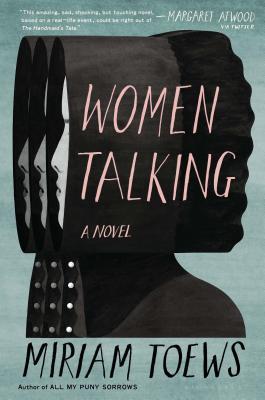
Women Talking

Women Talking by Miriam Toews   216 pages

Told through the "minutes" taken in secret meetings, this story tells of how eight Mennonite women make the biggest decision of their lives.  For the past two years, each of these women and more than 100 other girls in their colony have been repeatedly violated in the night by "demons coming to punish them for their sins." In reality, there were no demons. Men from their colony were drugging and assaulting them.  And now, these women are determined to protect themselves and their daughters from future harm. The question is: should they stay in the only world they've ever known or dare to leave?

This story is based on real events and is a powerful, moving novel.  Admittedly, I found it hard to read at times because I found it difficult to get over what had happened to these women and girls. It's a slow read because of the way it's written and because I think there's a lot to contemplate in this story.  I very much appreciate that the author took these events and gave a voice, even though it was through fiction, to these women. The different perspectives of the women are what give this story a lot of weight and even though they can be difficult to understand or identify with, and this is not an easy read, I think it's an important story. 

Tuesday, January 29, 2019

American Princess

American Princess by Stephanie Marie Thornton    488 pages   Read a galley - book is due out March, 2019

I usually don't read a lot of historical fiction, but Julie's review of this book was really good. So when Julie offered to lend me her copy, I thought I'd give it a try.  And, I wound up really enjoying this book!

Since Julie already did a summary on this book, I'll just say that the book is based on the life of Alice Roosevelt, the daughter of President Theodore Roosevelt. I knew a little about Alice, mostly that she was a darling of society and was also outspoken and daring in her behavior. However, beyond that, I didn't know that much. I found myself enjoying the book so much that I was frequently putting it down, grabbing my phone, and looking up people that were in Alice's life. She definitely was a fascinating woman who knew who she was, was comfortable with who she was, and who inevitably found the strength to face her challenges (and challengers).  As the book progresses through her life, you not only get a feel for what her life was like, but what politics were like throughout the years. Alice married a politician who eventually became Speaker of the House, so you have that perspective in addition to her father's political life.

Definitely a fascinating read! 

Monday, August 27, 2018

Rosie's Mom: Forgotten Women Workers of the First World War

Rosie's Mom: Forgotten Women Workers of the First World War by Carrie Brown 254 pages 

I really enjoyed this book! It starts with pointing out how many of us know "Rosie the Riveter," but all of the women who preceded her, who worked in industry during World War I, remained unknown. For example, who made the gas masks for American soldiers facing chemical warfare for the first time? Who filled and shaped millions of cartridges?  Who assembled planes, sewed uniforms and worked in meatpacking factories to keep soldiers fed? More than a million women!!

The author goes back to pre-World War I to explore women working in all kinds of industries and how these women left those jobs to work in munition plants and other jobs to help the war effort. She also is quite clear that the jobs they left (working in garment factories, etc.) were just as dangerous as their new jobs where they were exposed to explosives, toxic chemicals and hostile male co-workers. I appreciated that the author wrote about women who helped the labor movement and how their work continued on, even as World War I came to an end. The author also spends time documenting how Black women faced even more challenges, taking jobs that were too dirty and dangerous for White women (and even White men).  The author's discussion of how the Chicago Defender newspaper drove people from the South to go North to find work is unsparing in describing the hardships that people faced. She points out that except in the peanut and tobacco industries, most factories were closed to Black women and men alike and that when Blacks did get into factories, they inevitably earned less than their White counterparts.

While there were a lot of obstacles in the way, women kept at it, determined to continue working and also continue working towards a living wage. The author does discuss unions and how women entering the job force in the war actually led to improved working conditions for many workers (men included).  Brown includes quotes from people who advocated on behalf of working women, including this one which struck me as something which could come from someone in today's society (but was from 1919):

Dr. Anna Howard Shaw, one of the most respected leaders of the woman suffrage movement, addressed the National War Labor Board and said, "Is it  not astonishing, gentlemen, that women are not quite as interested in their own moral conditions as men can be for them, and is it not quite remarkable that women may not know what kind of employments they are adapted to as well as men can tell them? . . . Let me say that the time has come when it is neither the right of men nor the duty of men not justice for men to decide these problems for women . . . "

Friday, June 15, 2018

The Radium Girls

The Radium Girls: The Dark Story of America's Shining Women by Kate Moore     496 pages

The Radium Girls fully illuminates the inspiring young women exposed to the "wonder" substance of radium, and their awe-inspiring strength in the face of almost impossible circumstances. Their courage and tenacity led to life-changing regulations, research into nuclear bombing, and ultimately saved hundreds of thousands of lives.


Wow, wow, wow. This story is powerful! Fate brought Kate Moore to this story and thank goodness it did because she has done a great service to woman's history by bringing this story back into the light. This was not a story I was familiar with at all - not even in my periphery - and so with each page, I became more and more incensed at the horrors these women suffered at the hands of ruthless, unfeeling businessmen and their corporations who couldn't be bothered to care about the health and safety of their female workers.

The sheer amount of time Moore spent on this story shows - in her author's note she mentions coming to America to visit with the families of the radium girls and their grave sites, the countless hours of library research, reading everything she could of what the actual women themselves wrote. This book was amazingly researched and delves deeply into the history of the women's lives before and after, not just focusing on the court cases that made them famous. All the key figures are given their due time and it was fascinating to hear so many first-hand accounts of not just the families of these women, but the women themselves, remarking on what was happening to them and how the felt.

Needless to say, I would highly recommend this book to anyone. It's an important story in American history and these women did so much to secure workplace safeties that our modern world enjoys as well as offering themselves up to science for future studies done to better understand radioactive substances and what they can do to the human body.

Though this work is a piece of non-fiction, it's narrative quality makes it a real page-turning story that you only wish was fiction. The devastating illnesses these women suffered make you wish you could go back in time and warn them. This story truly moved me to tears.

I listened to the audiobook of this story, which was well read and I enjoyed listening to it. 

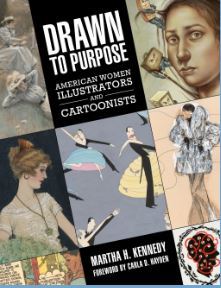
Drawn to Purpose: American Women Illustrators and Cartoonists

Drawn to Purpose: American Women Illustrators and Cartoonists by Martha H Kennedy   255 pages

This book was published in partnership with the Library of Congress and is a presentation of women in American illustration from the late 19th into the 21st century.  The author focuses on forms that haven't received much attention before, including political cartoons, editorial illustrations and cover designs, to show off the contributions of many women whose work has been overlooked.  She breaks down the book into sections, so you read about women who did cover designs, advertising work, etc. The book focuses on 80 women who created these works and you learn about their stories, artistic training, their experiences of gender bias in the workplace and much more.

I found this book fascinating!  I knew about some of these women, but I didn't know about a lot of them ---- and being able to learn about them and their work in the context of the societal norms of their day was really interesting. 

Monday, April 30, 2018

Good Night Stories for Rebel Girls

Good Night Stories for Rebel Girls: 100 Tales of Extraordinary Women by Elena Favilli and
Francesca Cavallo     212 pages

A children's book that reinvents fairy tales, inspiring girls with the stories of 100 great women from Elizabeth I to Serena Williams.

This is a great introductory book to the lives of women. The book covers historically famous female figures as well as contemporary figures, giving a brief story-like overview of their life and accomplishments. While the stories are only a page long, they are a great starting place to get any child excited about a particular figure and in this way inspire them to seek more in-depth biographies. 

I love the illustrations for this book. Each woman has a different artist's portrait of them and all are beautiful, colorful, and capture their subject very well. The book is laid out well and covers a very diverse range of women from all over the globe and a wide variety of ages. 

I would highly recommend this book to young children, but even as an adult, I highly enjoyed reading this book myself and learning about the lives of women I myself had never heard of until this book. It was a wonderful read.

Friday, February 23, 2018

The Devil's Rooming House

The Devil's Rooming House: The True Story of America's Deadliest Female Serial Killer by M. William Phelps     303 pages

The Devil's Rooming House tells the story of Amy Archer-Gilligan, America's most prolific female serial killer. Through his study of first-hand documents and accounts of people close to Amy and who were part of the investigation that brought her to trial, M. William Phelps tells the story of Amy's life as the matron of one of the first homes for the elderly, where she most likely had a hand in killing at least 50 inmates.

Boy, was I excited to read this book. It's been on my to-read shelf for a while, but what first sparked my interest was the connection to "Arsenic and Old Lace," one of my favorite movie comedies. The stage play of the same name was loosely based on the life of Amy Archer-Gilligan, America's deadliest female serial killer.

And with that kind of title, you'd expect to be in for the read of your life - except, this book was quite difficult to get into. For one thing, it was slow to get going. Phelps takes a LOT of time setting up the scene, what the time was like in the early 1900s, a bit of Hartford, CT history. But it went on, and on. For a while I though it was just going to be about the excessive heat wave that killed hundreds in 1911. The first five or six chapters were devoted to it, with occasional mentions of the characters that would soon be coming into play.

I thought once the set up was finished, the story might then become engrossing. It didn't really. The majority of people might consider non-fiction to be boring. I have read many non-fiction titles that I found to be just as exciting and interesting as fictions, but this book would support the "boring" feeling about non-fiction. For such an interesting story, it was told in a very muddled way. The story took a long time to take shape, the facts weren't relayed in a very interesting or conversational tone, and much of the author's personal opinion of the subject (Amy, herself) really showed at the end.

All in all, I felt the book was a poorly handled written attempt to tell the story of one of America's most interesting female criminal figures. I'd much prefer to watch the very fictional, over the top "version" of the story through "Arsenic and Old Lace."

I would not recommend this book.