Thursday, January 31, 2019

FREDERICK DOUGLASS IN BROOKLYN


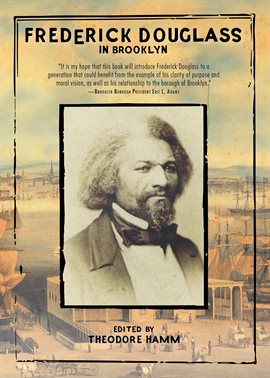
Frederick Douglass In Brooklyn

Edited by Theodore Hamm  222 pages

https://slpl.bibliocommons.com/item/show/1387932116

Reviewed by Rae C.


I try to read anything that Douglass has written or texts of speeches he has given and this book is fantastic!  Douglass at his best, with a lot of Brooklyn history as well.  This is an imprint of Akashic, a truly unique publisher.  All fans of Douglass should read this.  Some of the material will be familiar, but much won't.  Not to be missed is Douglass' speech on John Brown, including his esteem for Brown as a family man (apparently the men and the women cleared the dinner dishes).

And his speeches on Lincoln, while a little bit of blind hero-worship, also illustrate the contrast between how Lincoln related to Douglass, compared to other powerful men, i n particular one abolitionist:
On one occasion a well-known abolitionist said to me. “Come, Douglass, let’s walk down Broadway together.  I’m never ashamed to walk with a Negro.”  It never occurred to him that I might be ashamed to walk with him. 

Sources of Danger to the Republic is as relevant today as it was then.  And What Shall Be Done with The Negro? is still all to frighteningly relevant.
…Inferior race! It is an old argument. All nations have been compelled to meet in in some form or the other since mankind have been divided into strong and week, oppressors and oppressed.  Whenever and wherever men have been oppressed and enslaved, their oppressors and enslavers have in every instance found a warrant for such oppression and enslavement in the alleged character of their victims.  The very vices and crimes which slavery generates are usually charged in the peculiar characteristic of the race enslaved.  When the Normans conquered the Saxons, the Saxons were a coarse, unrefined, inferior race.  When the United States wants to possess herself of Mexican territory, the Mexicans are an inferior race.  When Russia wants a share of the Ottoman Empire, the Turks are an inferior race, the sick man of Europe.  So, too, when England wishes to impose some new burden on Ireland, or excuse herself for refusing to remove some old one, the Irish are denounced as an inferior race.  But this is a monstrous argument.
                Now, suppose it were true that the Negro is inferior instead of being an apology for oppression and proscription, it is an appeal to all that is noble and magnanimous in the human soul against both.  When used in the service of oppression, it is as if one should say, “That man is weak; I am strong, there I will knock him down, and as far as I can I will keep him down.  Yonder is an ignorant man. I am instructed, there I will do what I can to prevent his being instructed and to withhold from him the means of education.  There is another who is low in his associations, rude in his manners, coarse and brutal in his appetites, therefore I will see to it that his degradation shall be permanent, and that society shall hold out to him no motives or incitements to a more elevated character.”  I will not stop here to denounce this monstrous excuse for oppression.  That men can resort to it shows that when the human mind is once completely under the dominion of pride and selfishness, the reasoning faculties are inverted if not subverted.

                I should like to know what constitutes inferiority and the standard of superiority.  Must a man be as wise as Socrates, as learned as Humboldt, as profound as Bacon, or as eloquent as Charles Sumner, before he can be reckoned among superior men?  Alas! if this were so, few even of the most cultivated of the white race could stand the test. 

It is so well put together, the source and footnotes help to really paint a full picture of the world Douglass was living in and the challenges he faced every time he was invited to speak somewhere. For example, Tilton's comments on the 5 directors of Brooklyn Academy of Music who (unsuccessfully) opposed Douglass speaking engagement February 8, 1866:
"We understand the names of the five dissenting directors are to be written on shells and deposited in the Brooklyn Historical Society's collection of Long Island fossils."

The Pig is in the Pantry, the Cat is on the Shelf

The Pig is in the Pantry, the Cat is on the Shelf by Shirley Mozelle          Hardback Book:  32 pages                 

When Mr. McDuffel, the farmer, has to go run some errands, and forgets to lock his door on the way out.  The animals out in the barnyard decide to go inside his house for some fun.    Mr. McDuffel’s cat who lives in the house, freaks out and jumps up on the shelf watching the menagerie come in and take over (the cow, the goose, the horse, the duck, the goat, the pig,  etc.) .   The pig goes in and starts pulling stuff out of the pantry and makes them all some biscuits from the ingredients he found, they all pitch in and come up with enough food for a good filling buffet meal for all of them.   After that they play and seeing clothes decide to play dress-up pulling clothing out of the closet and drawers in the bureau, etc.    They have a lovely time dressing up in shirts, ties, scarves, etc. and dance as though they were attending a fancy dress up ball.   They are so full and have played so much that they get sleepy and all spread out around the living room finding good nap spots, the cow in the recliner, the horse on the sofa, the duck laying on top of the horse’s chest,  the others finding spots on the floor to snuggle up under blankets and on pallets they made of the clothes they had dressed up in.   The time is recorded on the top corner of the pages showing what Mr. McDuffel is up to and what the animals are up to at the same time.    Before you know it Mr. McDuffel is back home and comes in to find, clothes strewn here and there and all the barnyard animals in different places around the room taking a nap.   He is not pleased and makes all the animals leave and go back outside.   At least the horse had swept the kitchen floor and the cow had done the dishes after they had eaten.   Things weren’t too untidy just in slight disarray from the strewn clothes they had been playing with.   All in all I think everybody had a good time, but, I bet Mr. McDuffel remembers to lock the door next time.   The cat was glad to have the house back to him and Mr. McDuffel.     Cute book, yes, I recommend this and think it would be a fun storytime book.   I would have a blast with this one – we would be up acting it out along with the animals.   J

- Shirley J.

Best Organizing Solutions

Best Organizing Solutions: Cut Clutter, Store More, and Gain Closet Space by Reader’s Digest     Paperback Book:  143 pages               

I see books like this and all I want to do is grab some tools, go to pick up the materials I need and start creating things that will make my life better.    That is what I WANT to do.   The projects in this book looks so simple and the photos are great and show you and tell you just what to do to make the a reality, however, I just don’t have the faith in my carpentry skills to make them come to pass.   That is why God made brothers.    My brother has the skill set I can show him what I want or tell him what I would like and he can conceptualize it and the next thing I know he whips out his powerdrill and my requests become vertical realities.    I love DIY books so much though.    I can often work out ideas I am trying to come up with that someone else has already laid out measurements etc. all for me.   These books inspire me with all their closet and utility room organizing projects.   I love them and I hightly recommend this one, too.   The solutions offered here for getting your house in order with quick and relatively easy instructions is inspiring.   And I have always loved to see other people’s take on something I may be considering.   I have been able to cabbage so many creative ideas and put my spin on them to come up with creative outcomes for my living space.   Love it!   I do highly recommend this book for DIYers and novice wannabes like myself.   Like having a friend there with you saying, “You can do this and here is how.”

 - Shirley J

There are No Children Here: The Story of Two Boys Growing Up in the Other America

There are No Children Here: The Story of Two Boys Growing Up in the Other America by Alex Kotlowitz    323 pages

Alex Kotlowitz spent three years with Lafayette and Pharoah, and their family and friends, and wrote this book based on his numerous interviews, discussions and reflection. The boys lived with their family in the Henry Horner Homes public housing in Chicago, and this account shows how they struggled to survive in a dangerous and inhospitable environment.

Beyond the story of the two boys, this is an exploration into urban youth in society, where children as young as thirteen are engaged in violence, drug dealing and gangs.  It's also a view into the horrible living conditions in the Henry Horner Homes, showing how the Chicago Housing Authority failed the families living there. The City officials were no better, corrupting the budget intended for the betterment of the building occupants. The police were also not always looking out for the welfare of building residents.  All of the factors combined meant that these boys were growing up in an environment where they had almost no chance of successful futures. The near constant trauma means that children age quickly, becoming emotionally scarred and understanding that death is a near presence where they live.

However, Kotlowitz does find hope here, showing that if children are given a chance and support, that they can succeed.  Pharoah in particular is an example of this, taking school seriously and studying hard.

The title of the book comes from a quote from Lafayette and Pharoah's mother, LaJoe, who said, "But you know, there are no children here. They've seen too much to be children."

I found this book to be a very moving read. As I have been reading more about the Chicago public housing projects, it has been particularly compelling to read people's accounts of their lives in these buildings. Reading this book, set over a period of time when I was in high school, made me extremely aware of just how different my life was from that of these two boys.  Living in a suburb of Chicago, with parents who worked in the city, I was aware of the public housing projects. I remember reading about them in the newspaper, seeing reports of crimes, and driving past the buildings with my family on our way to somewhere in the city.  However, until I started reading more recently about these buildings and about the history of public housing, I had no idea of the extent of how awful the living conditions and violence were.  I appreciated that Kotlowitz gives an epilogue at the end of the book and also that he used money from the sales of this book to not only set up a trust fund for the two brothers and some of their friends, but he sent the two boys to private school.

If you'd like to know more about the Henry Horner Homes, I included a link above. There is also this sobering article from the New York Times, titled "What it's like to be in Hell."  While the Henry Horner Homes were not the largest public housing project (an honor that goes to the Robert Taylor Homes, which stretched for 2 miles), it was one of the most troubled and violent projects.


Annie Leibovitz at Work

Annie Leibovitz at Work   259 pages

While this book is a book of photography, it's also a memoir.  Leibovitz describes her start in photography and also explains how her pictures were made, including her work with Rolling Stone magazine.  She covers portraiture, including the intricacies of photographing Queen Elizabeth and the stories behind some of her most well-known photographs.  She also discusses lighting, digital cameras, reportage, and more.

I have a few books of her photography, but I hadn't picked up this book. It was really interesting to learn about how she got started in photography and how she uses different kinds of lighting and cameras.  It was also interesting to read the stories of some of these photographs.  For example, the photo of Dan Ackroyd and John Belushi was a shoot that just wasn't producing what Leibovitz wanted --- until the idea of painting their faces blue was brought up; but apparently, Belushi really wasn't happy with that. Reading about her photographs of Queen Elizabeth was also really interesting.  I think a lot of us can look at a photo and enjoy it, but not always understand all the work that goes into making that one perfect image.


Elements of Japanese Design

Elements of Japanese Design  by Boye’ Lafayette De Mente            Paperback Book:  142 pages                    Genre:  Adult Non-Fiction    Japanese Philosophy,  Japanese Culture, Western influence on Generational interaction,     Contemporary vs. Traditional Behavior

Beautiful book giving deep insight into Japanese culture, traditions and the changes occurring today between centuries old traditions and new contemporary ideas and lifestyles.   Lots of discussion on various design concepts in short reader friendly chapters.   The author introduces Japanese phrases and the concepts behind them introducing the reader to several concepts both simple and complex but put to the reader in such understandable language that I think the reader will be completely surprised at how easy it is to discover the concepts offered here are not way over your head but easily understood and immediately able to learn and grow from each mini chapter.    I was amazed at just how easily relatable the information here is and how clearly the author expresses these design concepts.   It covers the similarities between the Japanese wabi sabi principles that can improve one’s understanding of the good and the bad of life and how one can achieve contentment by allowing our minds to grasp the serene in life and how down sizing our things to a point of simplicity will help us to grow and not get caught up in the accumulation of things but just the opposite going along with the less is more concept.     The less we have the more we can see and appreciate that which we have when we suffer from over abundance it takes our focus away.   We become over whelmed by all the stuff but when we choose to get back to basics, we can appreciate the silence of the tea ceremony we share with friends and feel sorrow for the loss of cherry blossums in the Fall.    Beautiful book.   It will change the way you look at things and will give you understandings of the deep emotions evoked by the simplicity in Japanese pieces of art which are mini snapshots artists share with us of moments in time so beautiful that the magnitude, though still will lift one’s spirits.   I recommend this book to anyone interested in finding the humble beauty in life, I recommend these concepts to anyone familiar with the Chinese concept/philosophy of feng shui, I recommend this book to anyone who loves the Japanese culture and language.   Like sitting at the feet of a Buddhist Monk and learning the lessons of appreciating silence and simplicity.   Good book.

 - Shirley J.

In Pieces: A Memoir

In Pieces: A Memoir by Sally Field         Audiobook:  10 hrs., 41 mins.       Hardback Book:  416 pages                  

First off, I have to say, I like biographies but this is the most depressing biography I have read.   As the saying goes, “No one know what goes on behind closed doors.”  There has always been a sadness around Sally Field, though her early t.v. work showed a smiling,  vibrant young woman there was always a deep melancholy in her eyes like there was so much more to her than what her persona revealed.   Now, after reading her life story, I see what her eyes were trying to tell.    First of all her father was one of her mother’s teachers, her parents never married.   Sally didn’t know her father until she had grown up and was on t.v. when her father contacted her.   He talked a good game to get her to come to his house so he could meet his little girl.   Trouble was, it really wasn’t her he wanted to meet,  he thought with her celebrity being on t.v. he could hit her up for money, which he often did over the years.    She had an older brother who she was really close to.   Her brother was bookish, wore glasses and was over weight which meant he got hassled a lot at school.   They lived in California and her mother did some acting and landed a few roles in films and at one gig, met the stuntman turned actor, Jock O’ Malley,  they fell in love and married.    Jock was an athlete and he determined the family was going to be athletes, too.   He built contraptions for them to do stunts,  he set up a 3 story high diving board forcing and shaming the kids into going off the high dive though Sally cried until he got aggravated and went up and pushed her off into the water.  Jock’s behavior darkened over the years, he would get particularly annoyed with her brother and strong arm him into doing exaggerated feats to toughen him up.   No Sissy’s in his household and that included Sally.   There was something else going on, too.   From the time Sally was 2 years old Jock started having her walk on his back, then he started rolling over so she could walk on his front, too.    Sally knew even then this wasn’t right but her mother would often call to her that her “Dad” (Jock) wanted her to come walk on his back.   Though she hated it, she would make the awful ascension up the stairs and into the bedroom where Jock lay naked on the bed with a sheet tossed across himself.   She didn’t want to, but, she was intimidated by him and even though he began putting his hands on her little body she endured it silently and her mother continued to drink to the point of becoming an alcoholic but again, this was accepted as just who she was and another thing to be endured.  The molestation continued through her teenage years.   When she began to have boyfriends her relationships were never what she wished they would be and she always seemed to lose herself in catering to the needs and going along with whatever her boyfriend wanted    It infuriated her, but, she couldn’t seem to change including when she dated Burt Reynolds.   They were each damaged by their pasts and she adored Burt and was sure she had found her true soulmate anxious to share their experiences and finally have someone she could talk to about her troubled past, unfortunately, Burt didn’t want to hear about her issues, nor did he want to speak about his own beyond the bit he shared with her on their first date.    She liked to cuss, he didn’t want his lady to cuss.    She had been married and had 2 young sons.   Burt didn’t really want the kids around.   He didn’t want to be reminded of her other life with other men.   So she would go over to his house and spend the night after the boys went to bed while her mother babysat, then she would get up and go home early in the morning to be home to make breakfast for the boys when they got up.    She was wearing herself out trying to accommodate everyone except herself.    Burt would send her out on errands but he didn’t give her money to pick stuff up for him.    She finally told him she would need some cash to pick up his requests and he told her his manager only gave him a thousand dollars a week to spend and if he gave her $200 that would only leave him with $800 to spend.   She felt so guilty she never asked for money again and continued to pay for his stuff out of her pocket but being with him so much she wan’t working steadily and was getting low on money herself and still had to pay her house payment and keep food on the table for the boys.   A showdown came between her and Burt when she took an edgy role to break her typecasting of the girl next door type.   Burt accused her of wanting to play a whore and started making wacky accusations.   She finally realized it was time to put space between her and Burt and get out of the relationship all together.    In this book, Sally names names discussing casting couch sessions she endured, etc.    Like I said, there is so much here that is really sad, bad or unfortunate that it outways anything nice or good – very little of that mentioned here.   It is well written.   It is blunt but honest.   But when you come to the end you think man, what a downer that was a really depressing book.   It takes you a couple of days to shake that feeling off but, with that, you get the feeling that you have looked behind the façade and now know the real person, flawed, silently suffering and in her 60s and still striving to be liked, hence the no one knows what goes on behind closed doors analogy.   I would recommend this to readers who enjoy biographical reads.   I would recommend it to anyone who likes Sally Field and who would like to learn about her life with the caveat that people are complex and be ready to learn a lot of things that you might not want to know.    I would liken this book to someone ripping a bandage off and showing you the wound underneath.  Maybe you can look at the wound and not be phased by it, but, maybe not.   A good book but a sad life.

 - Shirley J.

Wednesday, January 30, 2019

Bethlehem

Image result for Bethlehem Faber, Frederick WilliamBethlehem by Frederick William Faber, 421 pages

Bethlehem is both an extended reflection on the first phase of the Incarnation and a consideration of the nature of true devotion.  Father Faber warns against "spiritual tourism", against a superficial search for a change of scenery as a substitute for living in and through the mysteries.

Fifty years after the publication of Bethlehem, Chesterton had the Virgin Mother say

     And any little maid that walks
     In good thoughts apart,
     May break the guard of the Three Kings
     And see the dear and dreadful things
     I hid within my heart.

This is the plan of Father Faber, following the Incarnation itself from the bosom of the Father to the bosom of the Virgin, journeying to the filthy manger with the wise kings and simple shepherds, the rejoicing angels and the faithful Joseph, then on through the Immaculate Heart to the Sacred Heart and the incomprehensible Love of the Almighty.

Tuesday, January 29, 2019

American Princess

American Princess by Stephanie Marie Thornton    488 pages   Read a galley - book is due out March, 2019

I usually don't read a lot of historical fiction, but Julie's review of this book was really good. So when Julie offered to lend me her copy, I thought I'd give it a try.  And, I wound up really enjoying this book!

Since Julie already did a summary on this book, I'll just say that the book is based on the life of Alice Roosevelt, the daughter of President Theodore Roosevelt. I knew a little about Alice, mostly that she was a darling of society and was also outspoken and daring in her behavior. However, beyond that, I didn't know that much. I found myself enjoying the book so much that I was frequently putting it down, grabbing my phone, and looking up people that were in Alice's life. She definitely was a fascinating woman who knew who she was, was comfortable with who she was, and who inevitably found the strength to face her challenges (and challengers).  As the book progresses through her life, you not only get a feel for what her life was like, but what politics were like throughout the years. Alice married a politician who eventually became Speaker of the House, so you have that perspective in addition to her father's political life.

Definitely a fascinating read! 

Night School

Night School: Book 21 in the Jack Reacher series by Lee Child     Audio Book: 13 hours, 7 mins.     Paperback Book: 496 pages             

I’ve heard of Jack Reacher, I think some years ago I watched a film with Tom Cruise playing the part of Jack Reacher, but, this is the first book with Jack Reacher as lead character I have experienced and I am now a fan of Jack Reacher.    I’m usually not big on spies nor espionage stories but this one intrigued me although I didn’t realize I was #21 in a series, but, this is surely a stand alone story as I imagine they likely all are, though, the reader probably picks up a good bit of background on John Reacher with each succeeding tome.   Mr. Reacher seems like a pretty fun guy, I like his sense of humor a lot.   And his assistant is like the Army’s Wonder Woman.    The story starts off with Mr. Reacher receiving accolades and a(nother) medal that morning then he is assigned to attend Night School that same evening.  He is wondering why Night School?   But goes along with his orders.   When he gets to class there are 2 other agents there.   One from the FBI and one from the CIA.   It seems the Government ie. the President wants a cooperative mission between the Army which Jack Reacher is a highly placed special operative in and the other two agencies being the FBI and CIA.    The President wants them all to play nice, work together, share information that each has specific access and specialization in and find a loose cannon who sources have alerted that Jihadists are working with to buy a hundred million dollars worth of “something,” and the Jihadists are willing to pay the price for whatever it is.     The mission is to find out who has whatever it is for sale then find out what in particular are they selling?    The story keeps the reader’s attention from beginning to end.   It is fascinating how the info is tracked between all of the agencies and how much can be accomplished with all of the contacts at each agency’s disposal.   Jack Reacher is this strong presence yet very down to earth and witty who will drop to his favorite thing – street fighting – with very little provocation.    Jack Reacher is a very likeable character someone you would be able to have a beverage with and a few laughs before he had to go fight bad guys and save the world.   This story takes the reader along from Langley, Virginia to Jalalabad, Afghanistan to some very miltant cells of Reichers working toward raising the 4th Reich in Germany and are not at all shy about their anti-Semitic tendencies.   Searching and researching for who, what and when goes global with stop offs in Kiev, Ukraine, Saudi Arabia and other global hot spots for arms dealing.    It really is a good well told story and I enjoyed getting to know the character Jack Reacher.    Lots of possibilities as to what is going on and author Lee Child swoops you up in all the action and carries you right along as if you are decked out in full armour to face any faction lurking in the shadows, sand dunes, or at the local bar or bistro.    Excellent story telling here.   I think I might just check this series out, I like Jack Reacher.    I would definetly recommend this series to anyone who likes Mission Impossible type stories, military stories, spy,  suspense, iintrigue or an open mind to be introduced to something you might never check out on your own, but might find Lee Child’s writing to your taste.   I would not have sought this story out.    I was just browsing when I came across it and decided to check it out.   I’m glad I did.    It is a worthy story.    I highly recommend it.

 - Shirley J.

How To American: An Immigrant’s Guide to Disappointing Your Parents

How To American: An Immigrant’s Guide to Disapointing Your Parents by Jimmy O. Yang           AudioBook:  6 hours, 5 min    Hardback Book: 240 pages          

Jimmy O. Yang and his family immigrated from China to the United States when he was 14 years old.    He didn’t speak a lot of English when he got here, his mother never learned to speak English or understand it fluently and eventually she moves back to Shanghai to go back to a good executive position whereas in America she was reduced to lowly positions because of her lack of grasp on the English language.   Jimmy’s first culture shock was when he went to his first gym class.  Gym was his favorite class back home and exceedingly easy but when he got L.A. he teased mercilessly for wearing tighty whities (briefs instead of boxers)   and terrified of being gang-raped like he had seen in American Prison films back in Shanghai, when the guys in his gym class semi-circle around him like a pack of ravaging wolves and tell him to pull down his pants.   Jimmy was freaking out but he was outnumbered and didn’t know what to do, he might be able to fight 3 of them if he was lucky but, there were way more than 3 of them.   He slowly began to obey when one of the guys said, “Hey Man!  What are you doing!   Don’t pull them down that far, you just want them to sag and show the tops of your underwear that is the style here.   Those tighty whites have got to go.   Get you some boxers.”    And that is how he went from being terrified to being in fashion with the other guys in his school.    He learned to speak English by watching the BET channel on cable.  After which he made some friends, Pershians, Black, and Hispanic with the occasional Asian – he didn’t want to limit his chances at fitting in by hanging exclusively with other Asians and becoming unapproachable in the eyes of the other students, plus, there weren’t that many Chinese kids at his school, mostly Koreans.  He tells how his life went from then until now.   Lots of funny events,. Like the rap group called the Yellow Panthers that he and his crew (the Persians, Hispanic, and Black friends mentioned above) formed,  how he learned to beat box and come up with his own tunes which got a little play though he admits he wasn’t very good at but wanted to be a rapper so bad he kept trying.   He did actually sell one of the rap tunes he wrote himself to a guy that made porno films who had heard some of his tunes and particularly liked one of them and paid Jimmy to use it in one of his films.    He talks about living in L.A. and surviving his mother leaving him, his brother and his Dad to move back to China for work, he shares so many hilarious stories about the jobs he had over the years, his one-time dream job – to be a D.J. in a stripper bar he was able to achieve, then how he found his passion doing stand-up comedy.   His parents wanted him to go to college, get a degree in Economics and work on Wall St. but that wasn’t his path.   It was hard for him to tell them that he didn’t want to go to college, he didn’t want to study economics – he wanted to become a stand-up comedian.    His Dad said, “But Jimmy you are not funny.”   Always getting the unbridled true sentiments from his parents, jimmy didn’t let that stop him, he kept pursuing his dream of doing stand-up and he began to go to comedy clubs paying $5.00 for 5 minutes on stage to the club owners.   He invited his old boss from the stip club for his first paid stand-up comedy gig and the owner brought several of the strippers to the show.    They all hooted and hollered for him and the owner of the strip club remained a close friend and supporter as were the strippers who thought he was the most honest and kind person they knew.   Jimmy eventually did stints on “It’s Always Sunny in Philadelphia,”  and other shows eventually ending up with a recurring starring role on the HBO series, “Silicon Valley.”     There are so many funny moments described here and Jimmy gives a true look at the immigrant experience and describes for the reader what he had to go through when visiting Mexico with his buddies and trying to get back across the border before he got his green card.  He nearly got deported.   He talks about what he had to go through to become an American citizen.      Fun read and very informative on the immigrant experience and how to make it in Hollywood complete with recommended agent and agency who got him primo roles from the git go.     I highly recommend this book to anyone looking for something that will make you laugh and go hmmmm at the same time.   It is an illuminating look into how Americans are perceived from a Chinese immigrant’s perspective – he was very disappointed in the fast food restaurants in America – in Shanghai they also serve fish dishes and duck and here in America where the restaurants originated they don’t!  Funny tales about bringing his lunch from home that was made up of homecooked Asian cuisine while his fellow students were gorging on French fires, and burgers, pizza, etc.  while he had grown up on the food and liked it that his Dad cooked for them, it got many odd looks from others in the school cafeteria.   Lots of amusing tales here.    I highly recommend this one.   Lots of laugh out loud humor and humor found in serious situations.  

 - Shirley J.

Godfather

The GodfatherThe Godfather by Mario Puzo, 479 pages

The Godfather tells the colorful story of mob boss Vito Corleone and his children - volatile eldest son Santino, gentle middle child Fredo, unfortunate daughter Connie, and rebellious youngest son Michael, who turns out to be the most ruthless of all.  With the films being the cultural touchstones they are, the basic tale will be well known to most, although there are some differences between page and screen.  The book includes details of Vito's rise to power that were used as the basis of his story in The Godfather Part II, but does not include any of Michael's parallel story from that film.  The book fleshes out a number of supporting characters to varying degrees, notably Joey Fontane and Lucy Mancini, and although their subplots have little to do with the main narrative, they do explore the way the Corleone empire of influence operates.  On the other hand, with the book ending where it does, Fredo is almost a complete nonentity.

Mario Puzo had a long and successful career as a pulp writer, and it shows here, in his crude effectiveness or effective crudity.  All of the lyricism of the films is absent from the novel, replaced with a fixation on sex and genitalia, especially male genitalia.  There is also a great deal of artless repetition - the narrator tells us exactly what Woltz paid for his prize racehorse, for example, only a few pages before Woltz tells us himself.  If this artlessness has an unexpected positive side, it is that it strips the central themes naked.  The confrontation between the values of the Family and the values of America is presented with a minimum of subtlety.  Bonasera wanted to leave behind the obligations of the traditional patron-client relationships for the rootless freedom of his adopted homeland.  The movie producer Woltz uncomprehendingly ponders the values of men who would destroy a six hundred thousand dollar thoroughbred just to send a message.  Michael only grows to understand his father by being involuntarily immersed in Sicilian culture.  The novel is, if anything, less confident that bourgeois morality will prove superior to the feudal ethic, a lack of confidence highlighted by Kay's arc.

Thursday, January 24, 2019

Mindfulness For Beginners

Mindfulness For Beginners by Jon Kabat-Zinn            AudioBook: 2 hours, 24 minutes         Hardback  Book:  184 pages                   


Jon Kabat-Zinn takes the reader to a place where consciousness transcends to awareness.   In this book, he instructs the reader on how to go so fully into your meditation that you become so aware of your surroundings, a place where heart and mind come together, where the reader can learn to step out of time through his teachings on achieving mindfulness.    His teaching is to be fully present in the moment.   To notice things so many others don’t pay attention to and neither do we normally, but through being in the moment and noticing your breathing, giving freedom to your thoughts – let them go where they will then ease them back to what it is you are focusing on.   He doesn’t tell the reader to clear your mind, or focus only on one thing, Kabat-Zinn says if you try to stop your thoughts you will only get a headache, it is o.k. to let your thoughts fly where they will for a time then slowly bring them back to concentrating on your breathing then to the subject you are meditating on.   Creative thoughts are often delivered to you in this way.    While letting your thoughts dwell on climbing Kilamanjaro when you started out meditating on the obstacle in your path, perhaps in your pursuit of climbing Mt. Kilamanjaro the answer will be delivered to you as to what you should be doing to rise in your career path or how to overcome the obstacles along the way to get there (someone who is jealous who is trying to block your path, or your need to learn certain skills that are currently not in your skill-set but which you could learn by taking some classes that would teach you what you need to know to even the playing field.    Being in the moment, taking the quiet time to concentrate to use your Beginner’s Mind allowing it to be free of distractions so it show you what it is you seek and what it is you need to know.  In this way you are resting in not knowing what we don’t know.   He teaches that Buddhist Monks take each moment as fresh.  Often starting their talks with, “I know nothing.”   It is not a false modesty  Kabat-Zinn says,  they really do see each moment as fresh in practicing mindfulness or being fully in the moment letting their breath, the life force flow into and out of even through their bodies as they befriend mind and heart thereby touching awareness – full awareness of self within each breath within each heartbeat.   Just sitting silently in your awareness of all that is and your place therein allowing the chi or lifeforce surround you and become a part of you as you take it into yourself.    This experience will take you outside of time and outside yourself merging or becoming one with the universe.   Like an empty mirror you know the quality of awareness that gives you a whole other dimensionality to live in and a calm you didn’t have before you learned this technique to become one with the universe, and gain this deeper understanding of spirituality and your place within those separate concepts now joined into one.   Our thoughts are liberated and begin to heal us by connecting to what is going on in our lives then through our awareness tap into what is going on and what we can do to heal the situation and make our lives better by providing the insight which provide answers offering instruction into clear and reliable solutions when we seek shifting what is to what we want the outcome to be in the way that is best for us providing a loving connection with ourselves and the world.   He teaches mindful meditations on breathing, eating, focusing on your body, focusing on objects, he also teaches what he calls are the Attitudinal Foundations of Mindfulness on Non-Judging, Patiene, the Beginners Mind, Trust, Non-Strife, Acceptance and Letting Go.   His basic premise is:  Mindfulness Meditation is letting the doing come out of the being right now in this moment.   He says that the word mindfulness in all Asian languages is the same word for mind and heart.    He says that meditation is about awareness and that wisdom is knowing reality without being caught up in our own value systems.    Discernment is clear seeing, openness, kindness, paying attention, caring or our heart’s intrinsic compassion – not what we have but what we are, your sense of where you are in time.   He notes that we should be good listeners to all around us and that often sounds draw us back in our pasts.     Lots of interesting concepts shared here in getting to that oneness with awareness, in being mindful in the moment and curing whatever we are up against and tuning in to what our subconscious wants to bring to our attention.    Good book.   I would recommend it to anyone who would like to de-stress and gain control of their lives focusing on the simplicity of the moment and who would like to tap into their inner consciousness for guidance.

 - Shirley J.

The State of Affairs: Rethinking Infidelity

The State of Affairs:  Rethinking Infidelity by Esther Perel         AudioBook:  12 hours     Paperback Book:  352 pages           


Excellent book on the psychology behind why while in romantic relationships, marriages or agreed upon monogamous arrangements one partner sometimes both or more if in a multiple partner relationship (3 people or 4 people) stray from the original agreed upon arrangement and seek other partners outside of the original parameters.  Perel does a very thorough and thoughtful delving into the psychology behind all the trespasses discussed here.   Relationships of any kind are fraught with emotion, attachments or on the other end of the spectrum lack of attachment.    Some reasons are boredom,  curiosity, flattery, escapism, mentally assigning parental or Madonna roles to the female partner, being turned of by changes that come with childbirth, with the onset of aging, with the partner getting too relaxed and no longer feeling the need to monitor how they look or filter what they say to or within hearing of a partner,  growing apart in their experiences and desires, one person loses interest and the other still needs to have contact, etc.   so many reasons big or small can drive a wedge between former lovers who no longer communicate adequately and if not rectified can be the end of a relationship or if those involved in the relationship want to try to revive the love and desire for one another they once felt then therapy sessions such as those held by Esther Perel can find the root of the disturbance in their life, name it then find a resolution for it.    Sometimes that resolution is ending the relationship if it really is irrepairable but most often once the true cause that severed the bond between them is discovered and addressed, solutions can be arrived at, worked on and if the partners are committed to each other emotionally, worked out.   Family and friendships roles in support of and destruction of is discussed as is the difference between a dalliance and a full-blown love affair with someone outside the original partnership.   Obliteration of trust is deeply probed as this affects one’s self-esteem, is he/she treating me like a doormat or am I a doormat?   Am I paying more attention to my own needs and ignoring my partners?  Is my supporting their career and putting mine on hold breaking us apart?   Do we resent where our life has gone when we had all these dreams we used to plan together and now we hardly speak?    Is it cheating if it is virtual reality or just a fantasy?   We always told each other the truth and now I realize my partner has been lying.   When did we lose touch with one another?    I used to love my partners touch and now not only do I not want it anymore, I can’t stand to hear my partners voice.    I’ve been faking it so long it is frustrating to think of continuing this farce any longer.   So much more.   I think this is a must-read for everyone.   You learn such great life lessons here that cheating and betrayal are far more involved than just oops, I don’t know why I did that but I will never do it again if you forgive my trespass this time.    There is always a WHY behind every act of disloyalty.    Find the WHY and it is possible the relationship can be worked through and strangely even helpful at times (examples discussed) before it is too late to reclaim and restore lost love.   Excellent book.  It is an eye-opener proving that nothing is as it seems or as dire if people will come together to reason and hold fast to that elusive thing we call love.   Not recommended for children but, teens to adult who are in relationships or getting ready to be in one and certainly anyone in a relationship that is being tested could benefit from the wisdom and insight found here.   A galaxy of stars for this book.  Even if you are in what you think is a solid, stabile relationship this book delivers information that will open your mind and help you to keep it that way as much as possible by delivering information on things that may be without meaning to us but will teach you to see from your perspective AND your significant other’s.  A great read-between-the-lines and look past your interpretation to how your actions might be perceived by others without your intentionally meaning to leave such an impression.   Very open and very in your face but all of it is very worthy.   Good stuff to be found here.  Perel performs the work of a mentor of romance and how quickly it can be lost.  Bravo!

 - Shirley J.

Before the Devil Breaks You: The Diviner Series Book #3

Before the Devil Breaks You: The Diviner Series Book #3 by Libba Bray        AudioBook: 21 hrs, 26 mins       Hardback Book: 560 pages             

OMgosh!   I love this series.    I am so happy to find out today that while it was originally said there were 3 books in this series turns out there will be 4!   Yippee!   I love this series.   Libba Bray you open the door to the authentic Roaring 20s!   The language and slang of the time is spoken so genuinely, reader, you will feel like you have been transported back in time.    The core characters are so real and believable, you come to feel so close to them you can’t wait to find out what happens to them next.   Glad Mabel found love.   I’m just saying… in this book the dead are chomping at the bits, the bits of people they can snatch up and eat that is!   Man, for entities that say they want people to remember them, that is a hair-raising way to get attention!    The group spends some time in a mental institution out on Ward’s island in a storm can’t you just feel the rain and wind, geez!   And a poor Irish Lad who does his best to keep the ghosties away by constantly counting being sure to leave out the number 6 because it is bad.   The Diviners hone their particular skills and like many groups of superheroes before them find there is strength in their power when they join together to fight the common enemy – the King of Crows.    Things bubble up and boil over with our heroes all on the same page but everyone pursuing a unique path – hold on cause your head may spin by the end of this one.   Halleluiah there is another book coming!   LOVED IT!!!   LOVE THE SERIES!!!   EVERYBODY READ IT I RECOMMEND IT TO EVERYONE! 

 - Shirley J.

Meg, Jo, Beth and Amy

Meg, Jo, Beth and Amy: The Story of Little Women and Why It Still Matters by Anne Boyd Rioux       Audiobook:  9 hours, 39 mins.     Hardback Book:  288 pages.        Genre:  Biography of Louisa May Alcott,  Discussion of her characters and writings based on her own family members,  discussion of films and portrayals of Little Women,  Relevance to today and discussion of required reading statistics today

Good book.    I found out so much about Louisa May Alcott that I never knew before.   The gal had a hard time of it coming up.   Her father considered himself a transcendentalist philosopher and throughout his life followed his muse wherever it led him, whenever he felt led.   He often left the family – his wife and four daughters, to fend for themselves while he took off wherever the wind blew him to pursue whatever quest he chose.   Louisa’s mother took in laundry and sewing doing whatever she could to get scraps of food and manage to clothe them all and try to keep a roof over their heads.  Louisa took on the role of the “man” of the family during these times and did her best to find work or sell her writings while also working in the fields anything and everything to get money to help her mother provide for the family.   It is mentioned in this book that the fathers in Louisa’s books took peripheral background roles where they were mentioned but seldom seen-hmmm-writing from what you know there, Louisa?   Often male characters were flawed, weak, or having peculiar features, dull so much so that the strong female characters shine even brighter in comparison.   Louisa and her sisters adored their dear mother, who worked from sunup to sundown to support her family.   Louisa was always praised highly by both of her parents on her writing and storytelling abilities and writing always seemed her strongsuit as a career.   Marriage was never on her agenda as she never wanted to be stuck in a situation like her mother.   After establishing herself as a successful author, her publisher asked her to write a book about girls as there seemed to be such a glut of books about boys having been written over the years.   Her publisher thought the writing market needed to be evened out with more stories about females.   Louisa balked at the thought of it.    She had found a niche in writing thrillers where people became opium or heroin addicts and females fell prey to the influence of harsh men and drugs.  LOUISA MAY ALCOTT?   WHAT?   Things you never knew about her will come to light in startling ways here.   A very good read once you are a few pages in and know where this book is taking you.   It is really quite interesting and gives you the feel of the times, comparisons of all kinds of thoughts being developed, theories, religion versus agnosticism, gender roles and how they could be made pliable yet still acceptable even in those times as she herself always wanted to be a boy and lived the tomboy life until her mother made her wear dresses when she began her menses which signified a girl was of marrying age in those days and the going from childhood pants and leggings to long dresses with swept up hair told the story like a beacon on what was happening inside her.   Alcott spoke with her own sisters before writing, “Little Women,”   asking if they were alright with her using them as models for her characters, the March sisters.   They were fine with it even offering ideas on the things their characters, liked, would do and would say.   The book practically wrote itself as Louisa sat in her attic garret her father had fixed up for her complete with a desk he made for her.   He did have his good points which kept them all loving him, but, come on Dude, leave something to live on for your bairn and wifey when you decide to go on walkabout for a year or two at a time.   And sending something home money-wise now and then would have been the decent thing to do as husband and father.  But I digress.   This book talks about films and plays that have been done over the years and how closely and how far-a-field some have been.   It also talks about the relevance of the book and the life teachings it offers and the look into the female perspective.   While there have been boys and men who have read the book it has predominantly been perceived to be a book for girls and was not required reading in most classes as many males found it too feminine for their tastes while other males found it to be quite insightful as to the character of women in order to understand them better.    I did enjoy this book and I always enjoy learning new things about people and new bits of trivia about historical and literary characters.    Learning the story behind the story is a special interest of mine and this book gives you that and much, much more.      I highly recommend it to anyone curious about the book Little Women because this is a very well-rounded discussion of many of the facets that brought it to be and continue keeping it in the public eye and the reasoning behind its relevance today.


 - Shirley J.

Wednesday, January 23, 2019

The Rook

The Rook by Daniel O'Malley   496 pages

"The body you are wearing used to be mine." So begins the letter Myfanwy Thomas is holding when she awakes in a London park surrounded by bodies all wearing latex gloves. With no recollection of who she is, Myfanwy must follow the instructions her former self left behind to discover her identity and track down the agents who want to destroy her.   (summary from Goodreads)

This book was a re-read for me, but because I hadn't picked it up for a while, parts of the story felt completely new again. This is one of my favorite books, full of snarky, dark humor.  It's clever and engaging, with a main character that I enjoyed more and more as the story progressed. Myfanwy (pronounced Miffany ... like Tiffany but with an M) wakes up with no recollection of who she is. Luckily, her previous self has left her all kinds of notes, which tell her a bit about herself, and her work. I really loved this idea, that a character is discovering who they are, while we are, based on notes left by themselves. And the world O'Malley has created here is our world, with just that bit of a supernatural twist to make it fun. So there are plenty of things that are recognizable, and then new things thrown in (kind of like the show Supernatural... or Sanctuary). I liked how the author gave us this secret organization, full of its own odd characters (some likeable, some dangerous... some both), and a mystery to figure out. Going through it, I had my suspicions about who might have wanted Myfanwy dead.... and then would frequently change my mind and choose another person. Loved it.

And Myfanwy? She's a treat of a character -- practical, clever, a bit ruthless once she becomes comfortable with herself, and with a good sense of humor. It's obvious that the Myfanwy we meet at the beginning is not really the same woman she was before. It's almost like she's able to shed the somewhat timid person she was before, and just be a bit more confident --- after all, she doesn't have much to lose. As her previous self explains, she has risen to the top ranks in the organization by being a superior administrator ---- but it turns out that there is much more to Myfanwy than meets the eye. As she discovers things about herself (not just from the notes and letters and large binder of material she's left for herself), she really turns out to be quite extraordinary.

I think the author did a great job with not only the storyline, characters, and pacing .... but he also does an exceptional job of writing a female main character. What I mean is: I never stop believing her for a moment. What I sometimes find in stories, when authors write a main character of the opposite sex, that there is something that gives me pause, or gets me stuck momentarily. It is a fact that men and women use language differently (linguistics), and this is the kind of thing that can happen where I'm reading along and suddenly there's a trip ...... I think to myself, a woman (because I'm female), just wouldn't say that that way. The one example that always stands out in my mind is Robert Hellenga's book, The Sixteen Pleasure, where all was going swimmingly until the main character said something so ... male. This never happened in this story. That's one of the things that really made this a wonderful read for me.

Blueprint for Disaster

Blueprint for Disaster: The Unraveling of Chicago Public Housing by D. Bradford Hunt  392 pages 

This book examines the well-intentioned but misguided policy decisions that paved the road to failure for Chicago's public housing projects.  When the projects were originally designed, replacing dangerous slum buildings, they were seen by some as a great solution for housing. People were on waiting lists just to be able to get into one of the buildings.  But what went wrong? That's what Hunt examines here, looking at the history of public housing in Chicago. 

I found this to be a really fascinating read, coming from the Chicago area. Hunt spares no detail in explaining how projects like the Robert Taylor Homes and Cabrini-Green projects were doomed to failure from the very beginning, but how administrators weren't deterred by these problems. Hunt also explains how the very high ratio of children to adults meant that there would be social disorder, which would be further exacerbated by the design of the high-rise buildings.  That was something I had not learned about before, and I found it made perfect sense. The combination of multiple elements like design flaws, this unbalanced ratio, and a lack of funding would have doomed these projects even if the Chicago Housing Authority (CHA) had not been so poorly run.  The CHA was, in fact, so poorly run that the federal government eventually stepped in to take care of things. The CHA is still a huge mess, even years after these tall public housing buildings have been torn down.

St. Louis' Pruitt-Igoe homes are mentioned briefly because that project suffered from some of the same issues and flaws as the Chicago projects. I did watch the DVD of The Pruitt-Igoe Myth after finishing this book, and it was a really interesting film.  Comparing St. Louis and Chicago, there were a lot of differences, but many similarities.  At least St. Louis had the sense to realize that Pruitt-Igoe was not working and tore the buildings down after a relatively short period of time, unlike Chicago.  One detail that I kept coming back to was how large the Pruitt-Igoe housing development was, especially when the area was shown at a distance.  However, these paled in comparison to the Robert Taylor Homes in Chicago, which were 28 buildings and which spanned two miles.  Yes, two miles --- it felt like those buildings went on forever.

Definitely an interesting book, especially when combined with the DVD about the project in St. Louis.

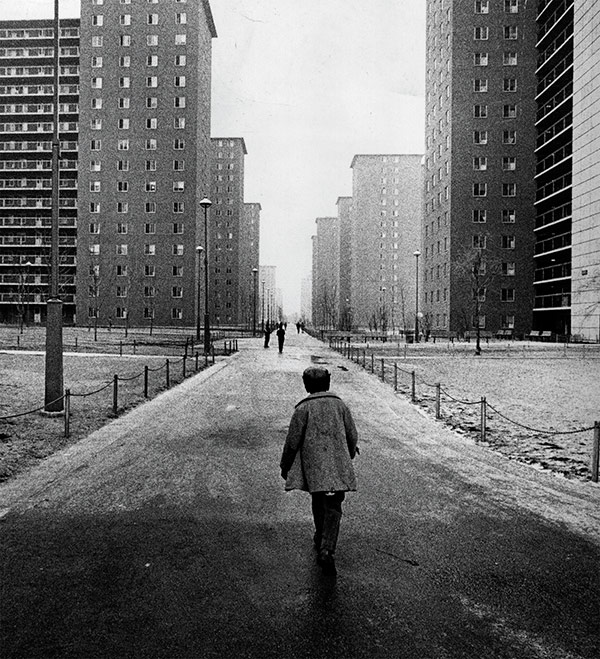
Image of Robert Taylor Homes in Chicago


Saturday, January 19, 2019

Inventing Eastern Europe

Image result for inventing eastern europe larry wolffInventing Eastern Europe: The Map of Civilization on the Mind of the Enlightenment by Larry Wolff, 374 pages

In this survey of 18th century travel literature, Larry Wolff explores how Enlightenment authors charted the domains of civilization and barbarism, making Western Europe the focus of the former and Eastern Europe - or, more evocatively, the European Orient - as the frontier.  For the progressive writers of the eighteenth century, the eastern nations were clearly behind the West on the univocal path of human development, and eastern backwardness served the Western intellectual elite not only as reassurance of their own status but as an inspiration to great "civilizing" projects, to be undertaken with or without the agreement of the peoples concerned.  This division of the continent, Wolff contended in 1994, underlay but was not effaced by the later Cold War division, and with the Cold War now over, the older division would resurface.  

Inventing Eastern Europe is a triumph of postmodern scholarship - obvious and tendentious.  With considerable skill and intelligence Wolff conquers the eighteenth century writers who conquered the East, taming them to his narrative.  Wolff's case is strengthened by his prescience, as today's enlightened Western elites regard Eastern populists with the same familiar smug revulsion.  It also serves as a model for understanding those journalists who have, especially since 2016, embarked upon adventures in Middle America in search of confirmation of their own biases.

Friday, January 18, 2019

All Things Shining

All Things Shining: Reading the Western Classics to Find Meaning in a Secular Age by Hubert Dreyfus and Sean Dorrance Kelly, 254 pages


The premise of this book is that in the Western world we lack meaning. According to the authors we live in an age of nihilism.

After the introduction, the authors examine this nihilism through David Foster Wallace and draw some links to Elizabeth Gilbert (of all people).

Next, they go back in time to the Greeks and move forward in time. They examine the Greeks' polytheism through Homer. As they move forward in time they look at the rise of monotheism via Aeschylus and Augustine. After that, they analyze Dante and Kant to show the attractions and dangers of autonomy. Their last stop is to consider Herman Melville. Mostly, they describe several aspects of Moby Dick including fanaticism and polytheism.

It isn't until the conclusion that they turn to how we find meaning. Unfortunately, while their answer may be valid it isn't well argued or elaborated.

I found some of their examinations of the Western classics to be insightful. I didn't enjoy the one of Moby Dick but I didn't like that book so that probably makes some difference. I think there is some value in what they authors have to say but I can't recommend this book.

American Princess


American Princess by Stephanie Marie Thornton    488 pages

I know it’s only the second week of January 2019, but I’m going to make a prognostication: “American Princess” is going to be one of 2019’s must read books. I haven’t felt such an intensely intimate reading experience since the 2013 publication of Melanie Benjamin’s “The Aviator’s Wife.”

“American Princess” tackles Alice Roosevelt Longworth, oldest daughter of Teddy, cousin to Eleanor and Franklin. Readers are taken inside one of America’s most intriguing characters. She was so popular that song and a color (like Alice Blue)) was named after her. She adored her Cuban pearls.

The story opens in 1970. Alice is being prepped for surgery. She knows she’s lead a life that most people only dream of, but that doesn’t mean it had been easy.

Her mother and paternal grandmother died on the same day, hours apart, in 1884, when she was two days old. Teddy was so distraught that immediately after the funerals, he packed his bags and left for the Dakota Badlands. Her aunt tried to get him to hold her, but he pushed her away, saying I can’t. She has her eyes…I just can’t. Alice spent the rest of Teddy’s life “trying to clamber onto his lap.” Eventually, the two became good friends and confidents.

Readers will learn that no-so-lady-like Alice, the snarky, “gun-chewing, cigarette-smoking, poker-playing First Daughter,” had a mind of her own and wasn’t afraid to speak it. Readers get to experience the highs and lows of a high-profile life, her world travels, her marriage to a swashbuckling congressman, the birth of her daughter, her affairs her love for her father and the bond they ultimately shared, and her keen insight into politics.

After Teddy’s death in 1919, Alice led the campaign against America’s membership of the League of Nations. So politically savvy was she that the Republican Party briefly considered her for vice-president on Herbert Hoover’s ticket in 1928.

There is so much detail in this epic story that it feels as if Alice has written a memoir. Author Thornton must have spent decades researching Alice’s life. One of my favorite parts was the epigraph that begins Part 3: “If you can’t say something good about someone sit right here by me.” That pretty well sums up Alice’s unreserved personality.

Alice lived to be 96 years old, dying in 1980. She had seen sixteen president’s and was often called Washington’s other monument.  “American Princess” is a tribute to Alice’s life. I enjoyed this novel so much that it receives 6 out of 5 stars in Julie’s world.


Thursday, January 17, 2019

While You Sleep

While You Sleep by Stephanie Merritt  389 pages    I read a galley - book due out 3/5/19

So you think you know psychological thrillers? Think again. This story starts with a chill and never warms up, and combined with a steadily increasing pace and an unreliable narrator, is a book that will stay in your mind long after you've finished the last page.

Zoe Adams has left her husband and son for a bit of a break, choosing a remote Scottish island for her refuge. The McBride house appears to be a peaceful retreat...until the first night Zoe is there and in the throes of a dream, is sure someone is in the house. And is she hearing singing?  This is the beginning of a series of disturbing events, when Zoe feels she is being watched, especially at night. But if she is alone in the house, how does she explain the sounds? And the increasingly erotic and disturbing dreams she is having? The locals believe the McBride house holds echoes of its dark past, but is there a real person behind what has been happening to Zoe? Is this a ghost story or something much more sinister?

This is the perfect kind of disturbing, unsettling story for readers who like A.J. Finn's The Woman in the Window and books by Claire MacIntosh and Ruth Ware. Basically, if you like unsettling stories that may be ghost stories (or may be a story of paranoia) mixed with a bit of erotica, this is your book.

I found myself constantly surprised by this story, wondering if Zoe is an unbalanced person, or just someone suffering from some kind of grief, and also wondering just what the hell is happening in the McBride house. Is there a dark force in the house that is at work and responsible for the strange things happening to Zoe? What about the locals? The man who owns the house seems nice enough, but he's nervous when he's in the house. The man who owns the bookshop has done a lot of research on the McBride family and he seems to have a feeling of what's happening to Zoe, especially when she uncovers a diary and brings it to him.  But the real question I kept asking myself wasn't whether or not some of the local people were to be suspected, but if Zoe was in her right mind. I found her an interesting character: sympathetic, yet prickly enough at times to be irritating. She's clearly believing what she's hearing, seeing and feeling ---- but as a reader, you start to wonder if some of this is just in her mind.  By the time I reached the end of the book, I still wasn't sure.  I actually put the book to the side for a few days before writing this post because I couldn't figure out what to say about the book.

Definitely an interesting read and a story that stuck in my mind!

The Girl In the Spider’s Web

 The Girl In the Spider’s Web by David Lagercrantz       AudioBook: 13hrs, 30 min          Library Binding: 544 pages                         Genre:  Adult Fiction     Suspense,    Superhackers,  Autism,  Savauntism

This is the fourth book in the Millenium Series, which began with the Girl with the Dragon Tatoo.   Seems she has another tattoo – that of a spider which designates her to be one of a super sleuth group of superhackers that find their way in to most any system in the world they choose.    However, Salander or WASP as she is known in the hacker network is the most super of the superhackers and she breaks the code on information that has government, spies and super criminals wanting to catch her each with their own agenda.    A lot of Salander’s background is given as trackers on both sides (good and evil) go on quests to discover who WASP is and then to pierce her shields to find out not only who she is but every bit of information on her that they can.    Seems her childhood was dysfunctional to the extreme, her father is a brutal Russian crime boss who beats her mother to a pulp every time he comes home which fortunately isn’t every night but when he does come home, he is usually drunk and continues to drink throughout dinner and into the night at which point he gets even uglier disposition-wise he starts by making cracks about his young daughters asking his favorite why she is so beautiful and her sister so hideous looking and other verbal assaults.   Then he would lock the girls in their bedroom where they were forced to listen to their mothers screaming in pain and hear the sounds of his fists punching her in the face and all over her body.   As she would be buckled to the floor in excruciating agony terrorized by this huge brute then he would rape  her calling her vile names increasing in intensity and degradation as he climaxed.   Then he would either fall over in a drunken stupor or leave the house again unlocking the door and telling his daughters their mother was behaving now.    Traumatic circumstances are interpreted by children in a number of ways.   The favored sister felt their mother was weak and deserved to be beaten, she would even punch her mattress and smile at the sound of every punch heard of their father landing his fist against their mother’s flesh.   More story line here, possibly the next book in this series.   Salander hated their father and grew up hating men that beat women or children and would retaliate on any such male she came across that happened to be a woman or child beater doling out vigilante justice on the males.    Solander was edgy and elusive learning everything she could in both computer technology, martial arts, boxing and street fighting.    She was a brilliant mathematician,  and good at whatever she set her mind to.    When her mentor and favorite professor is killed and his autistic savant son also brutalized by the same men, she is on a mission to kill them and take down every one involved from the top crime figures to the top government intelligence agencies working together throughout the world.   There is much to this story as to why anyone would be after her mentor, there is background on the group of students her mentor hand selected for their special abilities that he referred to as his spiders much more on that in the story.    Salander will team up with her journalist friend to track down the whereabouts of the savaunt boy to try to save him from the murderers of his father and other elite agencies who want to use him as bait.    One of those heart pumping thrillers, the reader will feel the adrenaline pumping as this well written book races and rages to its end.    Good book.   I recommend starting the series with the first book as the characters will make more sense, although, each book in the series could stand on its own the continuity will flow better if read in sequence.

 - Shirley J