 Foxglove Summer by Ben Aaronovitch.325 Pages "When two young girls go missing in rural Herefordshire, police constable and wizard-in-training Peter Grant is sent out of London to check that nothing supernatural is involved. It's purely routine--Nightingale, Peter's superior, thinks he'll be done in less than a day. But Peter's never been one to walk away from someone in trouble, so when nothing overtly magical turns up he volunteers his services to the local police, who need all the help they can get. But because the universe likes a joke as much as the next sadistic megalomaniac, Peter soon comes to realize that dark secrets underlie the picturesque fields and villages of the countryside and there might just be work for Britain's most junior wizard after all. Soon Peter's in a vicious race against time, in a world where the boundaries between reality and fairy have never been less clear...." The series remains strong and leaves the reader waiting for the next book. What I enjoy about the books is that the hero of the story doesn't go through beating after beating and yet overcome the odds. Peter Grant just steadily does his job and sometimes he ends up on top and sometimes gets his heinie handed to him.
Wednesday, July 22, 2015
Foxglove Summer
Foxglove Summer by Ben Aaronovitch.325 Pages "When two young girls go missing in rural Herefordshire, police constable and wizard-in-training Peter Grant is sent out of London to check that nothing supernatural is involved. It's purely routine--Nightingale, Peter's superior, thinks he'll be done in less than a day. But Peter's never been one to walk away from someone in trouble, so when nothing overtly magical turns up he volunteers his services to the local police, who need all the help they can get. But because the universe likes a joke as much as the next sadistic megalomaniac, Peter soon comes to realize that dark secrets underlie the picturesque fields and villages of the countryside and there might just be work for Britain's most junior wizard after all. Soon Peter's in a vicious race against time, in a world where the boundaries between reality and fairy have never been less clear...." The series remains strong and leaves the reader waiting for the next book. What I enjoy about the books is that the hero of the story doesn't go through beating after beating and yet overcome the odds. Peter Grant just steadily does his job and sometimes he ends up on top and sometimes gets his heinie handed to him. 
Apocalypse Cow
 Apocalypse Cow by Michael Logan
347 Pages
"If you think you've seen it all -- WORLD WAR Z, THE WALKING DEAD-- you haven't seen anything like this. From the twisted brain of Michael Logan comes "Apocalypse Cow," a story about three unlikely heroes who must save Britain . . . from a rampaging horde of ZOMBIE COWS "Forget the cud. They want blood." It began with a cow that just wouldn't die. It would become an epidemic that transformed Britain's livestock into sneezing, slavering, flesh-craving four-legged zombies. And if that wasn't bad enough, the fate of the nation seems to rest on the shoulders of three unlikely heroes: an abattoir worker whose love life is non-existent thanks to the stench of death that clings to him, a teenage vegan with eczema and a weird crush on his maths teacher, and an inept journalist who wouldn't recognize a scoop if she tripped over one. As the nation descends into chaos, can they pool their resources, unlock a cure, and save the world? Three losers. Overwhelming odds. One outcome . . . Yup, we're screwed."
MOOOOOO!! How could you pass up a book with this title? It is actually a pretty good read, not really a zombie novel and more of a pandemic book.
The mechanical
 The Mechanical by Ian Tregillis
471 Pages
"In an early 20th century where history took a decidedly different turn, the world is divided in two: the realm of the Dutch and their mechanical servitors in the empire ruled by the Brassworks Throne and the battered and pathetic remnants of France living in exile in the New World. Jax is a Clakker, a mechanical man built to obey the will of the humans who used alchemy to set him in motion. When a quirk of chance frees him from the geas ("alchemical binding") that usually controls all Clakkers absolutely, he will do anything to retain his free will. Meanwhile, in New France, Berenice is the spymaster charged with finding a way to defeat the Dutch, but she overreaches when she tries to capture a Clakker."
An interesting start to what might be a new series. Tregillis not only creates a fascinating alternate world but explores free will and self-awareness.
Where they Found Her
 Where They Found Her by Kimberly McCreight
326 Pages
"At the end of a long winter in well-to-do Ridgedale, New Jersey, the body of an infant is discovered in the woods near the town's prestigious university campus. No one knows who the baby is, or how her body ended up out there. But there is no shortage of opinions. When freelance journalist, and recent Ridgedale transplant, Molly Anderson is unexpectedly called upon to cover the story for the Ridgedale Reader, it's a risk, given the severe depression that followed the loss of her own baby. But the bigger threat comes when Molly unearths some of Ridgedale's darkest secrets, including a string of unreported sexual assaults going back twenty years. Meanwhile, Sandy, a high school dropout, searches for her volatile and now missing mother, and PTA president Barbara struggles to help her young son, who's suddenly having disturbing outbursts. Told from the perspectives of Molly, Barbara, and Sandy, Kimberly McCreight's taut and profoundly moving novel unwinds the tangled truth about the baby's death, revealing that these three women have far more in common than they realized. That the very worst crimes are committed against those we love. And that--sooner or later--the past catches up to all of us."
A pretty good story with some red herrings to keep you in suspense until the end.
Governor's Wife
 The Governor's Wife by Michael Harvey
237 Pages
"When Illinois Gov. Raymond Perry is sentenced to prison for fraud and racketeering, he enters an elevator in Chicago's Dirksen Building and disappears. Soon afterward, PI and ex-cop Michael Kelly gets an anonymous email offering him $200,000 to find Perry, no questions asked. Naturally, he begins with Mrs. Perry, an enigma who fears that her husband is dead. Further probing, with help from a cop friend, leads to a mysterious construction conglomerate where Kelly is violently warned off. It appears that a shadowy political cabal is behind a decades-long skimming of road construction funds with the governor so much involved that $60 million has gone missing with him. The ruthless pols are eliminating anyone involved while they pressure Kelly to find the money."
Harvey's books are similar to Michael Connelly and early Robert Parker. I highly recommend any in his series. The only fault I have with the book is that it is too short.
Gone and Done It
 Gone and Done It by Maggie Toussaint
275 Pages
"While planting a cherry tree, landscaper and pet-sitter Baxley Powell digs up a skull. As she waits for the cops, she dreamwalks to identify the victim. Once her findings prove helpful, the sheriff agrees to pay her for consulting, if she closes cases.A widow and single mom, Baxley needs this consulting gig. Her in-laws want custody of her daughter, so she has to be self-sufficient. Complications arise when a fresh body is found on Baxley's jobsite, planting her in the suspect pool. Concurrently, her father steps down as county dream walker, passing the honor to her. Some honor. People need help, and she barely knows what to do.With a killer dogging her heels and spirits nipping at her mind, Baxley follows her dreams."
An interesting twist on mysteries but the book can't decide whether to be humorous or serious
Something Beautiful for God
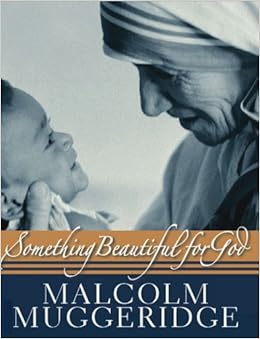 Something Beautiful for God: Mother Teresa of Calcutta by Malcolm Muggeridge, 110 pages
When television personality Malcolm Muggeridge took a documentary film crew into the slums of Calcutta to film the work of a little Albanian nun as she cared for the poorest of the poor, she reluctantly accepted the imposition with the words, "Let's do something beautiful for God." Mother Teresa had left behind the Sisters of Loreto, with whom she had taught girls from India's growing upper class, years earlier, to toil in obscurity. She was joined by a few disciples, most of them former students. The sisters took in orphans, lepers, and those rejected by the local hospitals as beyond hope. Their aim was not only to provide what material help they could, but, more importantly, to incarnate the love of God for those forgotten by society.
This book, a companion and extension of the documentary, chronicles Muggeridge's time with Bl Teresa of Calcutta. It is very much Muggeridge's story, a merely Christian portrait of a saintly nun aimed at people who, like Muggeridge himself at the time, are attracted by her but less sympathetic towards her Church. The author never bowdlerizes Bl Teresa's Catholicism - to the contrary, her eucharistic devotion and attitude towards suffering are presented as central to her life and work.
A vital portrait of a saint, an explanation of what her example meant for Christians in the late twentieth century, and what it means for Christianity today.
Tuesday, July 21, 2015
Patriot Games
Patriot Games by Tom Clancy, 540 pages

This is the first Tom Clancy book I have read, and I am ashamed to admit that I saw the movie before I read the book (please don't judge; I wouldn't do that to you). While Harrison Ford kicked butt as the main character, Jack Ryan, in the movie version, I will stick to the somewhat new adage of "the book was better."
Not only was the book better, it was also significantly different than the movie. I think I even read a tidbit of trivia that stated how Tom Clancy disassociated himself with the film after he read the script.
Tom Clancy is altogether a different bird than what I'm used to reading. While the book is packed full of action, you don't really get the sense of action-packed due to the extreme introspections and reflections each character goes through. I will admit, it did make the book go by faster for me (see 540 pages) once I figured that out and was able to skim through the sections that had little bearing on understanding the plot.
Overall, I am not disappointed that I read Patriot Games. It definitely takes patience, and one has to admire Clancy's gumption with the plot (assassination attempt of the royal family...come on!).
The Little Paris Bookshop

The
Little Paris Bookshop is quite an unusual bookstore with an
equally unusual proprietor. Monsieur Jean Perdu’s bookstore is floating barge
along the Seine. Perdu considers himself a literary apothecary.. He can
prescribe just the write book to meets the needs of the buyer.
However, there is one person Perdu cannot ease the
symptoms of what ails him, no matter what book he selects. That person is
himself. He is heartbroken. Twenty-one years ago, his true love, Manon, left
him. She sent a letter which he has never opened because he is sure it contains
usual lines: “it’s not you, it’s me;” “I’m not ready for the love you have to
give;” yada, yada, yada.
But now things are changing in his apartment building.
A new tenet has arrived with only the clothes in her back. The building manager
asks all the residents for a donation. Perdu has been assigned a table.
Yes he has a table, but that means entering the
lavender room he shared with Manon, which has been sealed shut for twenty-one
years. Torn between his reluctance to enter the room and his desire to help his
new neighbor, Catherine, he wills himself to enter and takes the table across
the hall.
Catherine find Manon’s letter and returns it. Faced
with its actual presence again, Perdue opens it. Manon’s words shock him to his
core; what she says and requests is nothing, nothing, like he imagined.
Perdue decides to go looking for Manon to learn for
himself if her words were true. He casts off the lines of his barge and begins
the long trek south to Manon’s home. He is joined by his two cats, and at the
last second, by another apartment-building neighbor, Max, who is looking to
escape his sudden fame and complete writer’s block.
The story of the journey takes up roughly two-thirds
of the book. I didn’t care for the slapstick antics that ensued. It didn’t help
that an Italian chef, also looking for a long-lost love, joined the merry cast.
The slapstick got in the way of the story for me, making the story seem
somewhat unbelievable. I also felt lost with all the names of the villages that
the characters traveled through, even though the author supplied one. All in
all, I really like the first and last fourths of the story. The characters
evoked empathy in these sections.
Monday, July 20, 2015
Mosquito Coast
 The Mosquito Coast by Paul Theroux, 374 pages
It is the early '80s, and America is falling apart, drowning in the garbage of its consumerist excess, splitting apart along racial and class lines, sweating in terror of an implacable enemy. Allie Fox sees this, even if no one else does, and transplants his family from rural Massachusetts to the Honduran jungle, seeking a fresh start and a better way. Brilliant and fiercely determined, nothing will stop Allie from building his version of heaven or hell.
Teenaged Charlie Fox suffers being the focus of his father's attempts to force human nature to conform to his will. As the narrator, he shares with us his struggle to find sanity in a world ruled by madness.
An uncomfortable, haunting tale.
Friday, July 17, 2015
Losing Mum and Pup
 Losing Mum and Pup: A Memoir by Christopher Buckley, 251 pages
In twelve months, Christopher Buckley (author of Thank You for Smoking and Boomsday) lost first his mother Patricia Buckley (famed socialite and member of the International Best-Dressed Hall of Fame) and then his father, William F Buckley, Jr (founder and editor of National Review, host of Firing Line for 33 years, author of over 50 books). Both died after long illnesses, with William's condition deteriorating rapidly after his wife's death. As their only child, much of the burden of care fell upon Christopher. Losing Mum and Pup is the story of that year, and, seen through it, all the years before, three remarkable lives entangled together, not always happily.
Author Buckley is well aware that losing parents is not a unique event, and that a successful author from a wealthy, distinguished family is not generally a suitable object of pity (pity and sympathy are, of course, different things). Some of the passages, taken by themselves, would seem horribly egocentric - if it was possible to make such a judgement of a man as he told you of his last words to his dying mother. Buckley is primarily a satirist, and he is deftly able to defuse the pathos with humor before it becomes overwhelming.
A touching book about life, love, and loss that also happens to be really funny.
Thursday, July 16, 2015
Pieces And Players


This book brings together several characters from previous
books to help solve the mystery of the stolen art from the Farmer Museum. Thirteen pieces of art were stolen and no one
knows how but Calder, Petra, and Tommy have experience in this area. With the help of Zoomy and Early, they plan
to solve the mystery and recover the art.
They may be only thirteen, but they’re smart and resourceful. I liked the book. Kids that like realistic fiction about kids
who can get things done will enjoy this book and probably Balliet’s other books
as well.
Golden Fool

Golden Fool by Robin Hobb, 520 pages
This is the second book in The Tawny Man series. So far,
I've really liked everything I've read by Hobb and this book was no
exception. Fitz has been reluctantly trying to teach Prince Dutiful the
Skill, and while he is considering the idea that letting the Skill die might be
a good thing, Chade is trying to find more people with the Skill to form a
coterie for the Prince. Fitz has a lot of personal distractions, which is
bad because the Piebalds are still around and people who are Witted are still being
persecuted. The Prince's betrothal may be in jeopardy, and a coalition
from Bingtown wants the Six Duchies to enter into their war against
Chalced. The Queen wants Fitz's council on some of these matters and Fitz
needs to keep his wits about him but when his son is acting out in town and his
former lovers are vying for attention, Fitz has some trouble focusing on
everything he needs to. This book definitely was a little more based in
all of the intrigue and relationships between characters but there was still
some action. Overall, I enjoyed it a lot.
Fairest
 Fairest by Marissa Meyer, 222 pages
This the backstory of Levana from the Lunar Chronicles, and how
she became queen. While we have all come to hate Levana, who has been
nothing but evil in the Lunar Chronicles series so far, it's hard not to feel
some compassion for the girl who was clearly mistreated as a child, especially
by her older sister, and who was clearly better suited to rule. If she
had been brought up slightly differently, it's even possible that she wouldn't
have turned into the nasty piece of work she became. I really liked this
early glimpse into Levana's life and anyone who's liked the series so far will
want to read this. Teens that like fairy tale type stories also
might enjoy this book, whether they've read the series or not.
Kissing Ted Callahan And Other Guys
 Kissing Ted Callahan And Other Guys by Amy Spalding, 312 pages
Riley is a drummer for her band and since she and Reid found the
other two members making out, they've decided they need to get more experience
with members of the opposite sex. The two of them start a journal where
they keep track of their experiences and advice for each other about
relationships and girls and guys in general. Riley has a huge crush on
Ted Callahan and is trying to make sure that Ted is aware of her but in the
meantime, she's finding out that other guys find her attractive as well.
What will happen to her newly budding relationship with Ted if he finds out
that she's been seeing other guys? This is a light-hearted romance for
teens that is well written and fun.
Deception's Princess

Deception's Princess by Esther Friesner, 324 pages
Maeve is the youngest child of the High King, who has all
daughters. She is also his favorite. Maeve has always been spirited
and her father admires that but also wants to keep her protected. Maeve
fights against her father's overprotection, but her father, as king, almost
always gets his way. Maeve needs to find a way to be her own person
without damaging her or her father's reputation and hopefully, keeping their
relationship intact. This was pretty typical of Friesner's books.
Although her princesses are not real people, the historical parts of the
stories are true to the times, for the most part and her heroines are always
strong female characters. These are good reads for teens who like this
type of book.
Wicked Charms
 Wicked Charms by Janet Evanovich & Phoef Sutton, 308 pages
Another fun-filled Lizzy and Diesel novel that made me laugh out loud a couple of times. This time, while pursuing the Stone of Avarice, Lizzy and Diesel encounter a man, Martin Ammon, who thinks he is harboring the demon Mammon and needs the Stone, along with a few other items, to release it. While our protagonists don't believe that the release of Mammon is real, they still need to find the Stone first. Also, it doesn't help that Ammon's henchmen keep breaking into Lizzy's place to kidnap her or look for items they need. And when it's not Ammon's men, it's Wulf or his sidekick, Hatchet, breaking in or kidnapping her. I really enjoyed this addition to the series and am looking forward to the next.
Wednesday, July 15, 2015
Great Disruption
 The Great Disruption: Human Nature and the Reconstitution of Social Order by Francis Fukuyama, 282 pages
Beginning in the late '50s, a massive shift occurred across the western world. Crime soared, the family disintegrated, and fertility plummeted. These changes were not localized in a single nation, and so cannot be explained by local events or movements, but they did not take place in East Asia and were less potent in Latin America and Southern Europe, and so cannot be explained by purely technological or economic developments. In the first half of The Great Disruption famed social theorist Fukuyama (The End of History and the Last Man) conducts a statistical investigation into the nature and causes - cultural, technological, economic and demographic - of these changes. Central to his account is the dwindling supply of social capital, the faith people have in their neighbors and fellow citizens.
The second half of the book is more interesting. Fukuyama sides with the sociologists over the economists to support a theory of social development that sees human beings as innately predisposed towards cooperation, rather than rational sociopaths. Human nature's fundamentally social and political orientation encourages the emergence of cooperative structures to fill needs. Technological and social change, Fukuyama suggests, now favor these emergent networks over less flexible hierarchies.
Ultimately, Fukuyama asserts that society will regenerate because it must. Writing in the late '90s, he discerned a turn towards renewal - the fall of communism, the triumph of moderate liberalism with Clinton and Blair, an increasing recognition of the superiority of stable two parent families for child rearing, the upstart dotcoms challenging the old corporate giants. The twenty-first century has thus far not continued those trends, from increasing political and economic centralization to a further decline of the family to growing tribalization. There is an alternative to renewal Fukuyama does not consider: collapse.
Monday, July 13, 2015
From Vision to Book
 Julian of Norwich's Showings: From Vision to Book by Denise Nowakowski Baker, 166 pages
This is an analysis of the works of Julian of Norwich, with a concentration on Julian's theological analysis of her mystical experience. Baker capably explicates the theological background of the age, although knowing precisely what is relevant to understanding Julian is more difficult due to the paucity of information about her life and education.
The decision to approach Julian primarily as a theologian, rather than a mystic, establishes her as a strong individual voice, but also leads to neglecting the mystical component of Julian's work, and overemphasizing the novel elements. It seems to misunderstand Julian on a fundamental level to ignore the mysterious component of her mystical identification of the two Adams, or the unity of Christ and the Church.
Saturday, July 11, 2015
Julian of Norwich
 Writings of Julian of Norwich: A Vision Showed to a Devout Woman and A Revelation of Love by Julian of Norwich, edited by Nicholas Watson and Jacqueline Jenkins, 381 pages
Julian of Norwich was an anchoress. For some forty years she lived in a solitary cell attached to St Julian's Church in Norwich - the name by which she became known was taken from the church, her birth name having been surrendered by her upon entering the cell, when she "died to the world." She is the first woman known to have written in English. She wrote two works that have survived, A Vision Showed to a Devout Woman (sometimes called The Short Text) is an account of visions she received during a severe illness around the age of 30. A Revelation of Love (aka The Long Text) was written decades later, and is an account of the same visions with the added benefit of years of reflection, meditation, and learning. Long obscure, she experienced a twentieth century revival, notably inspiring TS Eliot.
Julian wrote in English, but Middle English, and it is the original text presented here, with notes on the facing pages to assist the reader. This avoids the pitfalls present in either a partial updating or a full translation, and increases the sense of encounter with the woman behind the text. Extensive critical materials are also included, to be used or ignored according to the desires of the reader.
Subscribe to:
Posts (Atom)