Thursday, February 20, 2014

A Permanent Member of the Family

A Permanent Member of the Family by Russell Banks  228 Pages

This series of short stories revolve around a common theme, people who don't quite fit in with their families or society in some way.  In the story Former Marine - the father is supporting himself by robbing banks, rather than be a burden to his sons.  Another story "Blue" is about a black woman who goes to buy a used car but finds herself accidentally trapped in a used car lot after hours with a pit bull threatening her.  

I'm not usually a fan of short stories since I always want to know what happens next to the character but Banks is a masterful writer and these stories are an easy read.  


The Storm of Swords


Storm of Swords by George R.R. Martin, 973 pages                          

After seeing how many main characters die in this volume of the Song of Ice and Fire series, I am starting to wonder if any characters will make it to the end. It also seems that Martin realized what his readers would want and actually killed off some of the people we wanted to see die. Sadly I am developing a disconnect between some of the characters as they get added as any that I end of liking seem to die.

The Storm of Swords also marks a turning point in the theme of the novels as well. The previous books tended to focus on the customary middle ages. By that I mean sword fights, kings, political weddings etc. This volume introduces more magic then the previous two and actually uses magic to kill of some characters. Storm of Swords also starts to bring the different religions to the forefront. Where people would only go so far as to pray in the previous books, here we get sacrifices and killings to appease and worship the new gods.

While the adding of more themes, and more characters, brings a new outlook on the kingdom and takes it more in the sci-fi designation it has, I hope we don’t end up completely leaving the middle ages themes behind.

The Mark of Athena


Mark of Athena by Rick Riordan, 586 pages       
                            

The Mark of Athena continues Riordan’s Heroes of Olympus series. The book opens with a bang and keeps the action coming throughout. We continue to learn about more mythological beings, giants, minor gods and history but at a slower and easier to digest pace then we were seeing in the first couple novels.

There is also more of an underlying theme of individuality then I recall seeing in the previous books. Here it’s not just the group of three or five heroes succeeding together, but also each one accomplishing major achievements on their own. Considering that some of the characters are becoming young adults now it makes sense that they would be wanting to not only go out on their own, but to also prove themselves.

I look forward to continuing this series especially with the cliff hanger Riordan ended Mark of Athena on.

Wednesday, February 19, 2014

The Sword Edged Blonde

The Sword-Edged Blonde by Alex Bledsoe 308p

Private Detective/Sword Jockey Eddie LaCrosse starts out this adventure searching for a missing princess.  Before he can wrap up that case, he becomes embroiled in another mystery that requires his returning to his homeland, renewing old acquaintances, and facing old memories that were deeply buried.  He must prove that the wife of his childhood friend didn't kill her child.  The only way to do this is to retrace his steps from years ago and face truths he previously avoided.

I've been reading the series willy nilly and while it doesn't really matter if you read them in order it helps to get the back story that is referred to in almost every volume.  This is the first book of the Eddie LaCrosse series and I finally get the full story of Eddie's past. 

Dark Jenny

Dark Jenny by Alex Bledsoe  348 pages

Eddie LaCrosse recounts a past case he had when a coffin is delivered to the pub he in which keeps his office in the dead of winter.  A tale based upon Arthurian legend, Eddie tells of how he had been active on a case for a client in Grand Braun when he finds himself embroiled in a poisoning and must clear Queen Jenny's name on behalf the King Marcus Drake. 

By putting his own spin on the tale of the death of Arthur, Bledsoe is able to keep the reader engaged to the end of the book and its fun to see characters renamed and re imagined.  This whole series is light and quick to read but highly enjoyable with its mix of fantasy and hard-boiled detective fiction.

Wake of the Bloody Angel

Wake of the Bloody Angel by Alex Bledsoe 350 p

Eddie LaCrosse is back and investigating what happened to his landlady's old flame, turned pirate twenty years ago.  No trail is too cold to follow though and with the aid of an ex-pirate captain, Eddie is soon sailing the high seas in search of the long-lost lover and his treasure.

Another entry in the series,  this one doesn't fail to satisfy with its mix of fantasy and mystery.  The plot is well thought out and the novel maintains a good pace to the end.  Because Bledsoe isn't trying to be historically accurate, he can use modern language and humor.


Writings of Edith Stein

http://ecx.images-amazon.com/images/I/51nXgCMr3AL.jpg
Writings of Edith Stein by Edith Stein (St Teresa Benedicta of the Cross), translated, edited, and introduced by Hilda Graef, 199 pages

Edith Stein was born in 1891 into a German Jewish family, but she became an atheist at an early age.  She attended university and completed a doctorate in philosophy under the guidance of Edmund Husserl.  After reading a copy of the Life of St Teresa of Avila, Stein converted to Catholicism, and soon entered a Carmelite convent, taking the name Teresa Benedicta of the Cross.  Under orders from her superiors, she continued her philosophical studies.  After Kristallnacht, she was transferred to a convent in the Netherlands, but after the German conquest of that country she was arrested in her convent and sent to Auschwitz, where she was gassed upon arrival.

Writings of Edith Stein is a reader composed primarily of selections from longer works, with all the weaknesses that implies.  It is divided into three sections, beginning with the most accessible works, then presenting more difficult selections.  The devotional works she wrote for her fellow nuns are solid.  Her pedagogical works are intriguing, and the best part of this book.  The selections from her longer philosophical works are excellent but incredibly unsatisfying, since the fragments included in this work cannot do more than hint at the full meaning of the works from which they are taken. 

Never Let Me Go

Never Let Me Go by Kazuo Ishiguro, 288 pages

Imagine knowing your life has only one purpose: organ donation. Such is life for Kathy and her friends Tommy and Ruth. Their younger years are spent in Hailsham, a boarding school run by "guardians". They find out little by little what their purpose in life is, and are surprisingly okay with this idea. They fantasize about how they wish their life could be, but it won't happen. Once they are finished with boarding school, they move on to the Cottages, until the time for their training to be carers. The final stop is donations. Some people only make it through one or two donations before they "complete".
This book is told by Kathy and begins with her as a carer. Her story proceeds in loops as each prior memory she recalls reminds her of another.
This was one of those books that while I didn't necessarily dislike it, after I finished it I was left feeling a little empty.

Ghost of the Mary Celeste


The Ghost of the Mary Celeste by Valerie Martin 306 pages

 Despite the title, the ship Mary Celeste is only plays a minor role in this novel set in the 19th Century.  Its role is more of how the mystery of the abandoned ship with it's missing crew affected the lives of supposedly unrelated people, Sallie Briggs, Phoebe Grant, Arthur Conan Doyle and spiritualist Violet Petra.  Each section is almost an unrelated vignette and we skip among each person recounting a history and as the book progresses we start to see how loss has shaped each person's lives.

If you are expecting a solution to the mystery of the Mary Celeste you will be disappointed as the book offers no concrete solution and ends rather mysteriously and abruptly.  Instead you'll be enthralled by the lives and action of each of the main characters and the heartbreak of loss.

What Makes This Book So Great

What Makes This Book So Great by Jo Walton 446 Pages

Jo Walton has collected a series of blog posts about Science Fiction books that she originally posted at Tor.com.  These posts covered a variety of books, older and newer and are among Walton's favorites.  She states that most of the books are those she rereads over and over again and her posts are not critical reviews of the books but rather similar to what we do on this blog.  In the last post of the book she says the following: 

"I am talking about books because I love books.  I am not standing on a mountain peak holding them at arm's length and issuing Olympian pronouncements about them.  I'm reading them in the bath and shouting with excitement because I have noticed something that is really really cool."  

This collection of posts is not for someone looking to find the best books of the Science Fiction genre, since many of the books that Walton talks about are not easy to find and certainly wouldn't appear on most people's lists.  However the book is great if you are looking for some new books to read.


Tuesday, February 18, 2014

Chosen

Chosen by Benedict Jacka 294 Pages

This book is part of a series about a mage diviner called Alex Versus.  In this novel Versus must comes to grips with his past as an apprentice of a Dark Mage as a group of vigilantes come after him to punish him for past crimes.  He must determine what parts of his past to accept and what parts to deny.

This is an enjoyable urban fantasy series with Jacka continuing to grow and develop this fantasy London.  Often suggested as an alternative for fans of Butcher's Harry Dresden series.

Sunday, February 16, 2014

He Drank and Saw the Spider

He Drank and Saw the Spider by Alex Bledsoe 317 pages

Part of a series of books about Eddie Lacrosse, sell sword, this latest installment has Eddie failing to save a man from a bear but bening entrusted with the baby the man was carrying.  Leaving the infant girl in a sheep herding village Eddie goes about his lift for 16 years, until his vacation brings him back to the area.  Curious about what happened to the baby, Eddie finds himself embroiled in a plot involving Kings and Sorceresses and must save the girl Isidora. 
 
Fans of Jim Butcher and Simon R Green will be at home in this series with a wise ass hero with a ready quip.   Very nicely written escapist fiction.

Under the Wide and Starry Sky


Under the Wide and Starry Sky by Nancy Horan 474 Pages

Horan returns to historical fiction with this novel about the relationship between writer Robert Louis Stevenson and Fanny Van de Grift Osbourne. Fanny has traveled to Europe with her 3 children to study art, but more to escape her philandering husband.  In her travels she meets Robert Louis Stevenson and the book fleshes out their relationship until Stevenson's death at 44.   Presented in a dual narrative, each character presents their history and from a factual point of view it is interesting.

The book is uneven in its character development of the two and we are often left wanting more emotional attachment to Fanny and RLS.  Horan fails to bring the couple to life completely. 

Last Enchantments

The Last Enchantments by Charles Finch 323 Pages


Nominally a story about a 25 year old putting off adulthood for one more year, Will travels to Oxford to spend a year studying literature after working on the disastrous John Kerry campaign.  He will meet a variety of characters, supposedly forming life changing ties while cheating on his girlfriend and lying about it.  Martin is an excellent writer and it is easy to enjoy his writing style and overlook the fact that the main character is a vapid self-absorbed twit.  

 Now I’ll admit I might be prejudiced by age and a reader closer to college age may be more nostalgic about recent college experiences but Martin fails to have any relationship in the book get past hooking up and drinking and vice versa.  The most enjoyable part of the book was the petty politics of the common room committee and its characters seemed the most true

Saturday, February 15, 2014

Will Grayson, Will Grayson

Will Grayson, Will Grayson by John Green and David Levithan, 310 pages

Will Grayson and Will Grayson might have the same name, but their lives seem drastically different.  They'll find that they have more in common than they thought when their lives intersect one evening in Chicago.

I had some concerns going into reading Will Grayson, Will Grayson because I’m typically a fan of John Green’s writing, but I’m usually not a fan of David Levithan’s and I knew that they’d be alternating chapters. I’ve read a couple other YA novels where authors alternate chapters and I’ve found that sometimes the structure works, and sometimes it doesn’t. I was happily surprised to find that the alternating pattern worked so well in WG, WG. Both Wills had distinct and recognizable voices; I think that the voices were distinguishable enough that Levithan didn’t need to use the no-capitalization gimmick in his chapters. In some ways, the lack of capitalization worked with Levithan’s Grayson’s voice because so much of his story took place in chats and through texts (where non-standard grammar rules are the norm), but I felt that carrying it throughout the entire chapter wasn't necessary to distinguish the change in POV.

I started the book by identifying strongly with Green’s Grayson and his friends but found Levithan’s Grayson’s angst fairly off-putting and annoying. However, by the end of the book I ended up liking Green’s Grayson somewhat less, and Levithan’s Grayson a lot more than I had at the outset. I think that Levithan’s Grayson definitely displayed the most character growth throughout the course of the novel, his major turning point being the Grayson/Grayson intersection. Tiny Cooper was without a doubt my favorite character in the book. He fits pretty neatly into the “manic pixie dream girl” trope (except for turning the trope’s gender expectation on its head) which is generally a character type that I strongly dislike. I’m still trying to figure out why I liked Tiny so much when the character trope is one that I typically dislike; do I like him because of the genderbending nature of having a male character fill a typically female role? I’m not sure.

Ink Is Thicker Than Water

Ink Is Thicker Than Water by Amy Spalding, 285 pages

Kellie isn’t as smart or as beautiful as her older sister, Sara. She doesn’t have a boyfriend, either (yet). But she has a best friend and a pretty decent family, even if her family is a little weird. Her mom and dad are divorced and her mom is remarried to a tattoo artist and now works with him in his tattoo shop. Her dad is dating someone but won’t tell his daughters about her, even though they know. Her mom and stepdad have a little boy too. Mostly, this is fine, great even, but lately, Kellie feels like Sara is slipping away from her family. When Sara turns 18, she finds her birth mom (she is adopted) and starts spending a LOT of time with her. Kellie gets a boyfriend, which is good (but kind of confusing), but her best friend starts hanging out with the cool crowd and blowing her off. Kellie is also getting interested in the school paper and making some new friends there, but it doesn’t make up for all of the turmoil with her sister and best friend. This was a very good book about family relationships, set in St. Louis. Teen girls, especially those from St. Louis, will love this book.

Steadfast

Steadfast by Mercedes Lackey, 298 pages

The most recent Elemental Masters novel, this book follows Katie, who is running away from the circus. Katie has been a part of the show with her parents for most of her life. After her parents died, the head of the circus convinced her to marry the strongman, Dick. Finally fed up with Dick beating her and cheating on her, Katie left and found refuge with another show. As a magician’s assistant, she has freedom, her own funds, and friends. Not to mention, she has become aware that she has real magic and she has found a teacher for that too. But she lives in fear that Dick will track her down. This was a very good book and fans of fantasy and fairy tale retellings will enjoy it.

Thursday, February 13, 2014

The Impossible Knife Of Memory

The Impossible Knife Of Memory by Laurie Halse Anderson, 391 pages

Hayley is in a real school again for the first time in five years. Her father says she needs to spend her senior year in a real school to help her get ready for college, so instead of riding along in her dad’s big rig being homeschooled, they are back in her grandmother’s house, where she lived until she was seven. The other reason they are there is that Hayley’s dad never really recovered from the war, and now he is getting worse. Driving the truck wasn’t an option anymore. Unfortunately, he’s having trouble holding down any kind of job. Hayley is afraid for her dad and despite having friends at school, including Gracie and Finn (boyfriend or not?) she doesn’t really feel like anyone can help. Laurie Halse Anderson tells another great story about an issue that many teens could be dealing with today. This book could appeal to many teens, both girls and boys. Despite the fact that the main character is a girl, boys could easily relate to the issues and enjoy the story.

The Reece Malcolm List

The Reece Malcolm List by Amy Spalding, 308 pages

Devon’s father died three months ago and now she’s on her way from St. Louis to Los Angeles to live with the mother she’s never met. Devon has a list of things that she knows about her mother, Reece Malcolm, that is depressingly short, and doesn’t grow very quickly after she meets her. Reece is hard to get to know, but her boyfriend, Brad, is great, and she has some friends who help make Devon comfortable. Devon’s new school is awesome because it focuses on the performing arts and musical theater is Devon’s love and ambition. Also, Devon makes some amazing friends, including, maybe, a possible boyfriend. Many teen girls would love this amazing book. Amy Spalding has written a fairy tale that actually seems plausible.

Wednesday, February 12, 2014

The Griff

The Griff by Christopher Moore, art by Ian Corson, 160 pages

Let me start this review by saying that Christopher Moore is a genuinely funny writer of some of my favorite books. Lamb: The Gospel According to Biff, Christ's Childhood Pal is easily one of my five desert island books, and most of his others are nothing to sneeze at either, with funny (and often absurd) situations, great characterizations, and are just generally well-written.

Then there's The Griff. This is Moore's first, and hopefully last, attempt at a graphic novel. Moore and Corson present us with the disjointed tale of dragonlike alien beasts (the titular Griff) that have, for some reason, attacked Earth. In the foreword, Moore notes that this graphic novel is the result of a story idea he had that he felt would be better served in a visual medium, preferably a movie. So he and Corson created a script for The Griff and then shoved it in a drawer and forgot about it until he felt like taking a stab at a graphic novel.

The thing is, it shows. The dialogue is thin at best (most of the noises in the book are onomatopoeia), and the art seems much more like story boarding than actually moving the plot along. The characters and artwork are equally bland, while the storyline consists of disjointed action sequences. Rather than a graphic novel, this story would be better served as a SyFy Channel movie a la Sharknado (though that would probably be better than this).

Bottom line: Don't read this book unless you're a masochistic Christopher Moore completionist (like yours truly). If you want to read a Christopher Moore book, read Lamb, or Bloodsucking Fiends, Sacre Bleu, or Coyote Blue, or Practical Demonkeeping. Anything but this.

Constable & Toop

Constable & Toop by Gareth P Jones.  391 Pages

Sam Toop's father works as an undertaker which is appropriate since Sam himself is able to see and talk to ghosts.  Known as a "talker"  Sam often finds himself trying to help ghosts complete last requests so they can hear "the knock" and move on. 

At the same time, a ghost known as Lapsewood, a underling in the ghost Bureau, which regulates ghost-related matters.  He is tasked with finding a missing haunted house officer in London but finds a much larger problem.  Someone is exorcising the ghosts from these haunted houses allowing the Rot to set in, opening the door for a demonic force that's hungry for ghosts.  It will be up to Sam and Lapsewood as well as a whole bunch of interesting characters to save London. 

Cataloged as juvenile fiction, this book is very well written and is somewhat similar to Neil Gaiman's work.  If there is a fault, it is that Jones attempts to cover a lot of elements and that slows down the plot slightly.  


Conrad II

Conrad II 990-1039: Emperor of Three Kingdoms by Herwig Wolfram, translated by Denise Kaiser, 475 pages

Conrad II was crowned Holy Roman Emperor in Rome in 1027.  At that point, he was already the ruler of the Frankish kingdoms of Germany and Italy - in 1033, he became King of Burgundy as well.  Upon his death in 1039, he passed the imperial title on to his son, Henry III, thus inaugurating the Salian dynasty.

Disappointingly for Conrad II, its subject was not a terribly interesting monarch.  He was neither a great conqueror nor a great saint.  Although he was not the direct heir of his predecessor as emperor, there were no major rivals competing for the title.  Changes were afoot during his reign - a shift towards a transpersonal monarchy, the beginnings of monastic reform - but nothing abrupt.  There is little excitement in this book.  Where Wolfram shines is the picture he gives of the reign of Conrad as an era rather than as a narrative.  I particularly appreciated the chapters on the imperial regalia and Conrad's ecclesiastical policies.

This is a rather scholarly (as opposed to popular) biography, and as such, it is a success.  Those with a scholarly interest in Conrad will find it a terrific source.  Those looking for information on life in the Holy Roman Empire in the 11th century will be greatly edified.  Those looking for a enjoyable read will not be entertained.

Royal Airs

Royal Airs by Sharon Shinn  386 pages


Royal Airs is the 2nd book of local author Sharon Shinn's Elemental Blessings series.  We meet up with familiar characters from the first book Troubled Waters with a few new ones as well.  In the kingdom of Welce, people are divided into 5 elemental classes based upon the blessings they receive.  Much as we would have set characteristics for our zodiac, the blessings are separated into air/soul, wood/bone, fire/mind, water/blood and earth/flesh.  Each  class is led by a prime that has power over that element. 

At the same time there is an early industrial revolution occurring, which creates an unique world setting.   Rafe is a gambler who becomes involved with one of the princesses of the kingdom and the book follows the development of their relationship amidst royal intrigues and mysteries.  Shinn has done a good job of creating her world and characters but the plot weakens some in the middle until the last third of the book when Shinn wraps things up in a Dickensian finale.

Dirty Magic

Dirty Magic by Jaye Wells 416 pages

 Dirty Magic is the first of a new series of author Jaye Wells and the author has created a world where magic is part of life but use of magic can be considered either good (legitimate) or dirty.  Kate Prospero is a cop whose job it is to fight dirty magic and prevent  the spread of addicting bad magic.  However her background as a former member of the magic cartel is preventing her from being promoted until she gets a place on a special task force looking to stop a new and dangerous designer magic with deadly outcomes. 

If you took out the work magic and substituted drugs, the novel is a fairly straightforward police procedural with plenty of action.  Character development is fairly shallow outside the main character and there is certainly plenty of room for the storyline to be improved in subsequent books.

Tuesday, February 11, 2014

Fallout

Fallout by Todd Strasser, 258 pages

Scott’s dad has built a bomb shelter, just in case the Russians decide to start a nuclear war. Several people in the neighborhood think he’s crazy, but when the worst happens, they have nowhere else to go. Now there are ten people in a space built for four and those ten are faced with the knowledge that most of their friends, neighbors, and other family members are probably dead. Told from Scott’s perspective 6th grade perspective, this is a very realistic tale about what might have happened if the Cuban Missile Crisis had ended with war. A very good story for about 4th to 6th grade, kids who like realistic, survivalist stories that focus on relationships will love this book.

I Am Malala

I Am Malala by Malala Yousafzai with Christina Lamb, 327 pages

This is a very well written story by a very courageous young woman. Malala, who doesn’t remember much about her actual ordeal, speaks about the history of her country and standing up for her rights as a female, specifically, her right to a good education. Although all of this is from her perspective, she seems to have a good grasp of the political unrest in Pakistan and is able to relate a lot of pertinent information in an interesting way. Anyone interested in learning more about this young girl will find this an entertaining read.

Drums of Autumn

Drums of Autumn by Diana Gabaldon, 880 pages

This is the fourth book in Gabaldon's time-traveling historical adventure romance Outlander series. This book finds 20th century British doctor Claire and her 18th century Scottish Highlander husband Jamie traveling through the British colonies and settling in South Carolina in the late 1760s and dealing with the trials and tribulations that come with homesteading, including wild animals and dealing with Native Americans. Meanwhile, Claire and Jamie's daughter Brianna is watching the 1969 moon landing with her own Scottish boyfriend Roger, while both Brianna and Roger are researching historical documents to find out what happened to Claire and Jamie in the past. When they discover the death dates of Claire and Jamie, Brianna heads back through time to see if she can prevent the accident from occurring, with Roger hot on her heels. Throw in some pirates, a blind aunt, and more than a few festering wounds, and you've got yourself Drums of Autumn.

Gabaldon does a nice job balancing the multiple storylines, mixing up the adventure and romance, as well as the time periods. What drives me nuts about this series (and this book is no exception) is that Gabaldon generally uses first person in scenes from Claire's point of view and everything else (including some scenes that Claire is in) is written in third person. It's confusing, and I really wish that Gabaldon would just make everything in third person. Aside from that, the story is a good one. Not as magical as the first book, but way better than the second. I look forward to reading the fifth book in this series, now that it's come back into its own after the "sophomore slump." Fans of adventure, historical fiction, and more realistic romance would enjoy this series.

The Son of Neptune


The Son of Neptune by Rick Riordan, 521 pages

Book two of the Heroes of Olympus series and Percy Jackson has made his triumphant return. This book focuses on Percy as he meets the Roman equivalent of Camp-Half Blood. This camp is completely different and is divided into cohorts and is student run. There are also families living there and is more of a city than a summer camp.
Percy arrives at the camp after being chased by a pair of gorgons and is accepted into the fifth cohort. The fifth cohort is one of the worst and has the worst record in camp. Despite being on probation Percy ends up on a quest with Hazel, daughter of Pluto or Hades, and Frank, son of Ares or Mars. The quest introduces more new giants and mythological beings, see a pattern yet?
Where The Lost Hero touches on the different personas of the gods as seen from the Greek and Roman perspective, this book dives in almost overwhelmingly. As Percy is at the roman camp, the roman god names are used almost exclusively. This can make it difficult to follow at times but it’s worth sticking to it. My favorite character is the horse that eats gold and uses profanity.  

Monday, February 10, 2014

Broke, USA

http://garyrivlin.com/wp-content/uploads/2010/05/Broke-USA-200x300.jpg

James Baldwin famously observed, "It's expensive to be poor in America," and it is certainly true today.  In this book, Gary Rivlin demonstrates that it is also big business.  In 2008, payday lenders charged their customers over 7 billion dollars in fees.  Rent-to-own shops made a similar sum.  Pawnbrokers made $4 billion, check cashers $3 billion, money-wiring services $6 billion.  And then there are the title loan businesses, the instant tax refund businesses, and sub-prime credit businesses.  Today there are more payday lender outlets in Missouri than there are McDonald's.

Rivlin understands that these businesses fill a real need, since more reputable lenders often fail to lend to the poor and minorities.  Further, few are willing to make the kinds of small, short term loans people living from paycheck to paycheck sometimes need, and charge more for bounced checks and overdrafts than payday lenders do for loans.  But payday loans are often made with interest of over 300 percent APR.  Rent-to-own stores make two or three times as much profit per item as ordinary retailers.  Some sub-prime credit cards charge over 70 percent interest.  When does service become exploitation?

Broke USA is, above all, about the people who work for and against "Poverty Inc."  It is very readable and relatable, the personalities are engaging, and the economics involved are easy to understand.

Risked

Risked by Margaret Peterson Haddix, 308 pages
In the newest installment in The Missing series, Jonah and Katherine are again time traveling, this time to 1918, when Alexie and Anastasia Romanov were kidnapped. The biggest problem is this time they have been kidnapped themselves by Alexie, who believes that they are all headed for the future, not his past, so that his blood disease can be cured and he can live a normal life. Now, they, with Chip and Anastasia (Daniella in the 21st Century) are all in 1918, on the day that Romanov family is supposed to be killed. All they have is one Elucidator that only has the power to send them to 1918 and make them invisible or visible. Daniella and Gavin (Alexie) are determined to also save their family and loyal servants. Jonah, Chip, and Katherine are desperately trying to come up with a plan that will allow them to do just that. This is a great, action-packed book that fans of the series are sure to love. The book could be read alone, but kids are likely to want to read the others in the series, even if they start with this one.

The Trap

The Trap by Andrew Fukuda, 309 pages

This is the third and final book in The Hunt trilogy. Gene and Sissy and their friends end up in the Metropolis, surrounded by vampires, just as they feared. Gene and Sissy are both heralded as saviors by a small group of scientist who know they are the Origin and that their blood can be used to turn vampires to humans. Unfortunately, the scientists want to use them and don’t see them as people and are willing to hurt their friends to get their way. Also, gene has caught the attention of the Ruler, the head vampire, who wants Gene to perform a task. Assuming Gene can accomplish it, the Ruler promises to let them all go, but Gene isn’t sure he wants to take on this task, and doesn’t believe the Ruler will keep his promise anyway. This book does answer many questions and sums up the series pretty well. Teens who like scary stories, especially vampire stories, will really enjoy this series, and it would be better to read them in order.

The Clash of Kings


The Clash of Kings by George R.R. Martin, 1009 pages

This book continues the Song of Fire and Ice Series that started with Game of Thrones. This series is amazing and worth reading. However, I would not advise getting too attached to any of the characters because they tend to die rather frequently. The only ones that seem not to die are the ones that you can’t stand. King Joffrey would be a perfect example. While I hoped he would die numerous times, so far no one has been able to kill the brat. But there are still more books to go so my fingers are crossed.
This series has just about everything that a science fiction series needs. It has epic battles, magic, monsters, and everything in between. This book and this book series does contain adult themes and are NOT appropriate for younger readers. In movie ratings it would likely by rated R. 

The Lost Hero


The Lost Hero by Rick Riordan, 557 pages
The Lost Hero continues where the Percy Jackson and the Olympian series left off. It keeps some of the same heroes from the previous series, but also introduces some new fresh faces. The three main ones being Piper, the daughter of Aphrodite, Leo, the son of Hephaestus, and Jason, son of Zeus or more accurately son of Jupiter. The Lost Hero and The Heroes of Olympus series focuses on both the Greek and Roman gods.
While the two cultures have most of the same gods, they have some differences. The Lost Hero explores the two different personas and explains why the gods are seen differently in each culture. I am not as fluent in my Roman mythology so at times the crossovers were hard to follow. There are also some new titans, minor gods and giants that we haven’t met yet and to wrap it all up a giant bronze dragon…
The book is filled with excitement and action but it almost feels like Riordan is trying to incorporate too much mythology at once. That overload takes away from the overall story slightly but still worth the read, if you enjoyed his previous series.

Friday, February 7, 2014

Mr. Churchill's Secretary

Mr. Churchill's Secretary by Susan Elia MacNeal, 373 pages


Mr. Churchill's Secretary is the first book in a series about a young woman by the name of Maggie Hope. An English citizen raised in the United States, Maggie finds herself in London at the beginning of WWII in order to settle her grandmother's estate. In order to help with the war effort, she lands a job as one of Winston Churchill's typists.

Reading the author's notes in the book, the actual work conditions as a typist for the late prime minister as described in the book are factual. MacNeal read typists' biographies and was actually in contact with one of the typists before she died. Besides the working conditions and the over-arching situation of WWII, that's about where the historical facts end.

However, it is an absolutely delightful novel. The character of Maggie Hope becomes the character of James Bond, only with estrogen! Even though you will find this in the fiction section, I really think it has all of the elements of a good mystery. I also found that, everytime I thought that the book was about to end, another twist was added that made me want to turn each tantalizing page until the end. I spent many late nights with this book!

Wednesday, February 5, 2014

Husserl's Phenomenology

Husserl's Phenomenology by Dan Zahavi, 178 pages

Cover image for Husserl's phenomenology / Dan Zahavi.Edmund Husserl was one of the most influential philosophers of the 20th century.  The founder of the school of epistemology known as phenomenology, Husserl counted amongst his students such luminaries as Martin Heidegger and St Teresa Benedicta of the Cross (Edith Stein).  Still, Husserl's reputation faded in the latter half of the twentieth century, even as his influence continued to be felt by thinkers as diverse as Jean-Paul Sartre and Dietrich von Hildebrand.

Zahavi's book is an attempt to remedy this, partially by re-presenting (there's a phenomenological word!) Husserl's thought and partially by addressing certain ingrained misconceptions and objections to Husserl's work.  He does an excellent job, especially considering that phenomenology, even more so than most German philosophy, has a tendency to invent technical terms for the purpose of precision, which tends to make it very difficult for a non-specialist to understand, and Husserl himself is famed for his "extremely involuted and, therefore, forbidding style" (in the words of Quentin Lauer, translator of Husserl's Philosophy and the Crisis of European Man).  This book is only an introduction, and it is mostly concerned with his method, but it is almost a must-read for anyone with even a casual interest in 20th century philosophy.

Days of Anna Madigral


The Days of Anna Madrigal by Armistead Maupin  270 pages

 What it is about:  Is is supposedly the last book of a series that was originally published by The San Francisco Chronicle.  Extremely popular, Maupin created 8 novels prior to this one and spawned a mini-series on Showtime starring Laura Linney.  In this novel, the beloved characters are back as 92 year old Anna Madrigal remembers her early life at the Blue Moon brothel and various characters converge at the Burning Man.

Should you read it?  If you'd read the others you'll probably want to read this one as well.  I'll admit I read it just for this reason and was disappointed.  While some parts are good, there is never a big reunion of the main characters, something I was expecting, and many of the stories outside of Anna's are uninteresting.  This is one case where I felt the TV show was actually better than the book. I would definitely recommend seeing Showtime's Tales of the City.

Belle Cora


Belle Cora by Phillip Marguilies,  594 pages


What it is about:  This historical fiction novel is the story of Arabella Goodwin and how she went from a well to do young girl in 1830's Manhattan, to a Madame of one of the most popular brothels in San Francisco.  The novel opens on the occasion of the 1906 earthquake in San Francisco where Belle Cora has set up a comfortable life as a respectable widow.


Should you read it?:  If you are a fan of historical fiction you won't be disappointed by Marguilies' recreation of New York City during the 1830's and San Francisco during the Gold Rush.  Arabella is a strong female character, albeit sometimes unlikeable,  who uses her limited resources to succeed in life.  That being said, it is a long book and there are spots that drag.  In the end however, you'll be glad you read it.

Tuesday, February 4, 2014

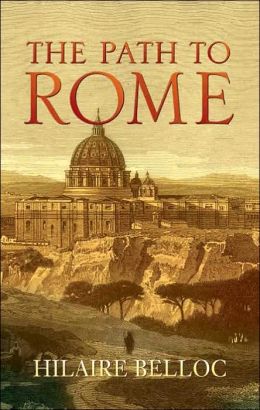
The Path to Rome

The Path to Rome by Hilaire Belloc, 448 pages

In 1901, Hilaire Belloc made a vow that he would walk from Toul, where he had served in the French army as an artilleryman, across Lorraine, over the Alps, and through northern Italy to Rome.  The Path to Rome is the tale of that pilgrimage, day by day, town by town,

"Across the valleys and the high-land
With all the world on either hand

Drinking when I had a mind to,
Singing when I felt inclined to;
Nor ever turned my face to home
Till I had slaked my heart at Rome."

For Belloc, Rome is not only his destination, but something to be found everywhere on his journey, a presence synonymous with civilization.  There is no real narrative thrust to this book, and other than a brief passage involving a perilous mountain ascent the only tension involves Belloc trying to make it to Milan before his money runs out.  Belloc mocks literary conventions, promising to tell a story about a bandit, for example, then, 200 pages later, writing merely that the bandit died a long time ago.  This book is a long walk with a remarkable man, listening to his perspectives, touching on history, philosophy, theology, poetry, and oenology, amongst many, many other topics.  Yet Belloc never stays with a subject long enough for a lecture or debate, since he is, as he sees it, merely observing what any reasonable person would observe, and if there's a problem, it's that there are so few truly reasonable people.  The book is enjoyable if, like me, you find Belloc a fascinating and entertaining companion.  If not, he probably wouldn't want to share the path with you, either.

Monday, February 3, 2014

January Totals


The January totals are in, and newcomer Krista R has taken it by a landslide, with a whopping 52 books and 17,944 pages!!

Check out the January stats below, as well as in the Monthly Reporting tab.


January Stats:

Blogger Books Pages
Krista R 52 17,944
Jason S 24 7,333
Ed W 17 5,970
Kara K 8 2,664
Tiger R 5 1,917
Dennis M 5 1,432
Beth K-D 3 998
Lauren B 2 716
Karen Y 2 533
Jessalyn L 1 418
Steve J 1 289
TOTALS 119 40,214

Hollow City

Hollow City: The second Novel of Miss Peregrine's Peculiar Children by Ransom Riggs  399 Pages


The second book of Miss Peregrine's Peculiar Children continues where the first left off.  Jacob and the tenants of Miss Peregrine's orphanage have escaped the wights bent on their destruction and managed to bring Miss Peregrine with them.  However, she is stuck in bird form and unless they can find safety and get her help, Jacob will remain stuck in 1940.  As the band of misfits travels, they encounter new allies and new threats as well.

Riggs continues to use vintage photos to expand and illustrate the book.  I felt however, that they weren't as good in moving the plot along as those used in the first book.  It sometimes would feel forced as Riggs tried to incorporate a new photo into the narrative.


Lost Lake

Lost Lake by Sarah Addison Allen, 296 Pages


Allen comes through again with a light whimsical novel that readers have come to expect from her.  In this work, Kate and her daughter Devin visit her great aunt Eby who runs a collection of lakeside cabins called Lost Lake.  Kate remembers her favorite summer, spent here when she was twelve.  However, Eby has decided to put Lost Lake up for sale.  Others gather at Lost Lake to find things missing from their lives and work to determine the future of the camp.

This novel should appeal to those who enjoy feel-good fiction, where a touch of magic leads to a happy ending.  Allen maintains a light hand in all aspects of the book and while romance is present, the reader isn't subject to heaving breasts and undue bodice ripping.