Wednesday, January 21, 2015

House of the Rising Sun

House of the Rising Sun by Kristen Painter
435 Pages

"Every vampire has heard rumor of the mythical place where their kind can daywalk. But what no vampire knows is that this City of Eternal Night actually exists. And its name is New Orleans. For centuries, the fae have protected the city from vampire infestation. But when the bloodsuckers return, the fragile peace in New Orleans begins to crumble. Carefree playboy Augustine, and Harlow, a woman searching for answers about her absent father, are dragged into the war. The fate of the city rests on them --- and their fae blood that can no longer be denied."

This was an okay book and as a series has potential.  When I was reading the book I kept feeling as if I had missed the first volume of the series but this is actually the first book.  In my mind that means that the world is not fully created yet by Painter. 

Tuesday, January 20, 2015

The Book of Strange New Things

The Book of Strange New Things by Michel Faber
500 Pages

"Peter, a devoted man of faith, as he is called to the mission of a lifetime, one that takes him galaxies away from his wife, Bea. Peter becomes immersed in the mysteries of an astonishing new environment, overseen by an enigmatic corporation known only as USIC.; His work introduces him to a seemingly friendly native population struggling with a dangerous illness and hungry for Peter's teachings--his Bible is their "book of strange new things." But Peter is rattled when Bea's letters from home become increasingly desperate: typhoons and earthquakes are devastating whole countries, and governments are crumbling. Bea's faith, once the guiding light of their lives, begins to falter.; Suddenly, a separation measured by an otherworldly distance, and defined both by one newly discovered world and another in a state of collapse, is threatened by an ever-widening gulf that is much less quantifiable.; While Peter is reconciling the needs of his congregation with the desires of his strange employer, Bea is struggling for survival."

I found the book to be an examination of faith and of the relationships between two people and how those relationships determine success as a human being.  Definitely worth reading.

Wonder of All Things

The Wonder of All Things by Jason Mott
303 Pages

"On an ordinary day, at an air show like that in any small town across the country, a plane crashes into a crowd of spectators. After the dust clears, a thirteen-year-old girl named Ava is found huddled beneath a pocket of rubble with her best friend, Wash. He is injured and bleeding, and when Ava places her hands over him, his wounds disappear. Ava has an unusual gift: she can heal others of their physical ailments. Until the air show tragedy, her gift was a secret. Now the whole world knows, and suddenly people from all over the globe begin flocking to her small town, looking for healing and eager to catch a glimpse of The Miracle Child. But Ava's unique ability comes at a great cost, and as she grows weaker with each healing, she soon finds herself having to decide just how much she's willing to give up in order to save the ones she loves most."


Mott's follow-up to the Returned (a book that was made into a tv series) continues in the paranormal vein.  Mott has an engaging style of writing and while the ending is somewhat predictable I would still recommend this book to others.


Distracted

Cover image for Distracted: The Erosion of Attention and the Coming Dark Age by Maggie Jackson, 266 pages

In the twenty-first century, Americans (and others) have nearly instant access to an amount of information and entertainment undreamed of even a few decades ago.  The average person is bombarded with messages on all sides, surrounded by insistent claimants for attention.  The result is that real attention, care, is vanishingly rare.  Deep understanding, the product of slow study and quiet contemplation, has been replaced by shallow acquisition of facts, which is, in turn, rapidly being replaced by the mere knowledge of where to find data.  Worse, the constant clamor of the external world results in the withering of any kind of interior life.

This is an interesting subject, and Jackson presents a great deal of information on recent brain research and technological developments.  Ultimately, however, Distracted suffers from the very same disease it diagnoses in society.  Coming from a journalism background, the author has packed her book with so many human interest stories and mini-profiles designed to hold our interest that the result is diffuse and confused.  In the end Jackson is reduced to the absurd promise that science will invent a pill that will restore our ability to care.

Readers would be better off exchanging Jackson's cutting edge science for Neil Postman's decades old works Technopoly and Amusing Ourselves to Death.

Sunday, January 18, 2015

One More Thing: Stories & Other Stories

One More Thing: Stories & Other Stories
by B.J. Novak, 276 pages
I'm not typically a reader of short stories, though if intriguing enough, I will. The author is from "The Office" but I've only watched a handful of  episodes, so that wasn't enough of a draw. This book got great reviews, though and it's been circulating well since we received it, so I decided I'd give it a go. I started out listening to this on audio, because it was another lovely humor writer reading his own work, and this one also has guest readers, such as Mindy Kaling and Lena Dunham. Unfortunately, my checkout expired before I got through it and someone else was waiting, so I had to let it go. I finished it up reading the actual book, but I still plan to go back and listen to the portion I didn't finish. This book was that good.
The stories in this are not typical short stories. They are also not anecdotal ones, such as the likes of Augusten Burroughs or David Sedaris. This is just Novak showing us a bit of his warped sense of humor, short story style. Some are just a line or two. I don't think any were more than 20 pages.
This book was laugh out loud funny, you get to know Mr. Novak a little, as some stories were clearly based on parts of his life, and these are off the beaten path enough without being too weird. The book does contain a good amount of profanity (lots of f-bombs), so I wouldn't recommend it to the very young or the very old (unless your grandma likes this sort of thing).
Highlights:
 Julie & the Warlord: a young woman is on a date with a man she met online. Who is he? A merciless warlord from a 3rd world country. This story is just their dialogue, as they sit at a restaurant, eventually ordering chocolate cake for dessert.
The Man Who Invented the Calendar : suffice it to say, we could have ended up with 1000 day, 25 month years.
And probably my favorite of the whole book,  
Pick a Lane, which shows us the all too familiar scenario of one driver swerving between lanes, while another experiences road rage and continuously screams, "pick a lane!" You get inside the head of the person swerving, who, it turns out, really just can't decide which lane to drive in, as they both offer reasons to drive in them. I cannot count the number of times I've been that raged out person, screaming "pick a lane!" inside my car.
This is a quick, funny read for anyone who likes humor with a bit of the profane, and it's definitely worth checking out on audio.


The Circle

The Circle by Dave Eggers, 491 pages

First book I've read by Dave Eggers. It clipped along at a steady pace, and it evoked more <negative, but in a good way> emotion in me than anything I've read in some time. It was our book discussion title for the month and we had a heated and opinionated discussion.
The story revolves around Mae, who has gotten a job at a company called the Circle, thanks to her friend Annie, who is a top employee there. Basically, this is a story about technology and the Internet growing to be an all-encompassing force more powerful than the government. It quickly works to be a part of every single thing people do, and it also gains control of every aspect of people's lives. It has all your information and is constantly monitoring you, suggesting things for you, but more importantly, watching you. If everyone is always being watched, there is complete accountability. No more crime, etc. etc. etc. The peak of this idea is transparency, where an individual chooses to have a camera attached to their person almost 24/7. It can only be turned off in the bathroom (and then only the sound) and after 10pm.
This book was scary because we are already heading so much in this direction with Google and the like. The character of Mae was such a weak and spineless female, willing to do any and everything to keep her job. They realize this and use her as an example to teach with and eventually, essentially as their pawn. There were so many points in this story where I wanted Mae to just stand up and scream, "Enough is enough!" but it never happened. This was exactly what kept the story moving along, however.
An intense and emotional read, that will have you wanting to rip your hair out at parts. If things ever get to where this book goes, I hope that I will have the resolve to resist. I hope you will too.

Friday, January 16, 2015

Cleaving of Christendom

The Cleaving of Christendom by Warren H Carroll, 744 pages

In the fourth part of The History of Christendom, Carroll covers the period from the beginning of the Protestant Reformation to the death of Cardinal Mazarin.  These years of war and struggle saw Muslim battle Catholic, Catholic battle Protestant, and Protestant battle Protestant.  It was an era of armies and armadas.  It was the time of Martin Luther, Henry VIII, John Calvin, Good Queen Mary and Bloody Bess, France's three Henrys, Thomas and Oliver Cromwell, Charles V and Philip II, Gustavus Adolphus and his daughter Christina, Cardinal Richelieu, and two False Dmitrys.

The Cleaving of Christendom follows seamlessly in the steps of The Glory of Christendom, in ways both good and bad.  Carroll deftly interweaves multiple narrative threads to bring unity to the historical record, distilling vast amounts of information into digestible packets.  At the same time, there is a tendency to focus on the purely political elements of history - understandable when discussing Christendom in the age of cuius regio, eius religio - and Carroll's definition of Christendom includes only those areas that kept the Catholic faith.

Thursday, January 15, 2015

Another Day As Emily

Another Day As Emily by Eileen Spinelli, 224 pages


Suzy’s brother, Parker, is a hero.  He found a neighbor collapsed on the floor and called 911.  He is only four and everyone is making a fuss over him, making him cookies, newspaper interviews, parade invitations.  Suzy is happy for him but a little jealous.  As part of the summer program at the library, Suzy learns about Emily Dickinson and dresses up to give a report on her.  After a terrible birthday experience (ruined by Parker, of course) and not getting cast in a part in the community play, Suzy decides to become a recluse, just like Emily.  But being a recluse is harder than she thought.  This is a sweet story, told in verse about a girl trying to grow up and figure out her life.  Give this to kids who like real life stories told in verse.

Legion

Legion by Brandon Sanderson, 87 pages


Stephen Leeds isn’t crazy.  He’s well aware that the people surrounding him are hallucinations.  Nevertheless, these aspects are brilliant, experts in very specific fields and often help Stephen help other people.  Most people who petition Stephen for help are just looking for a story but some are genuine and a few Stephen even agrees to help.  When a woman, Monica, shows up with photographs that were taken of people and things that existed before photography, she offers him a chance to find someone who has been missing for ten years.  The photographs were taken by a camera that takes pictures of the past.  The camera has been stolen and Monica is trying to recover it.  This is a good short novella.  The story is compelling and although it’s a little complicated, the set-up is quick and clear.  Fantasy fans will enjoy this story.

Saving Baby Doe

Saving Baby Doe by Dannette Vigilante, 230 pages


Lionel and his best friend, Anisa, find a baby abandoned on a construction site.  They save her life but it seems like everyone is mad at them.  First, they think the baby is Anisa’s and that Lionel is the father.  Then, Anisa’s mom blames Lionel and doesn’t want them to hang out together anymore.  And Lionel’s mom gives him “THE SEX TALK” and doesn’t want him to leave the apartment building.  Lionel is determined that the baby they found grows up knowing that someone loves her.  He doesn’t want her to go to a foster home.  He wants to keep her, even if he has to kidnap her to make it happen.  He’s even willing to go into business with a local dealer to make money to be able to afford to take care of the baby.  This is a pretty good coming of age story with a surprise ending that a lot of kids would enjoy.

The Family Romanov: Murder, Rebellion & The Fall Of Imperial Russia


Although not one of my favorite historical periods, I’ve always had a small fascination with the whole “missing princess” story.  I hadn’t read many non-fictional accounts of the Romanov family so I didn’t know a lot of what was happening in Russia during this time.  This book was well written and kept everything pretty simple so I got a much clearer picture of how Nicholas was ignoring and sometimes exacerbating the problems that the poor were facing in Russia, which certainly went a long way towards explaining why the Russian Revolution happened.  Actually both the October and May Revolutions were pretty well explained.  I also felt like I had a better grasp on why World War I actually started and how the various powers became involved.  Before reading this book, if someone had asked me, I would have said “an archduke got shot” but this book actually pretty simply explained the land situation and who was allied with who and why.  I’m not sure that I learned a lot of new information about the family themselves, because I knew more about them going into the book, but there were some interesting tidbits about them, especially the children, as well.  Overall, I’d have to say that I really enjoyed the book and would definitely recommend it to anyone with an interest in this time period or Russian history.

Don’t Panic: Douglas Adams & The Hitchhiker’s Guide To The Galaxy


This is a biography of Douglas Adams and the story of his body of work.  As far as novels go, Adams wasn’t very prolific, but the Hitchhiker’s Guide, which started as a radio program, has also been made into a television series, a movie, a graphic novel, and a game and Adams did other television writing as well.  For example, he wrote some of the episodes for Doctor Who.  There is a lot of information about Adams here.  I didn’t know much about his personal life.  Although I’ve read his books and seen the movie, I didn’t know about the computer game or the television and radio series.  I especially liked a little anecdote about how Adams once got a 10 out of 10 on a short story he wrote for a class.  The teacher was a notoriously hard grader and everyone complained that he didn’t give any good grades.  Apparently, Adams was the only one.  Adams’s work has so much impact that the last third of this biography is about things that happened after he died.  Gaiman is a good writer and does a good job telling about Adams.  I would definitely recommend this to anyone who has liked any of Adams’s books.

Rumble

Rumble by Ellen Hopkins, 546 pages


Told in verse, as all of Hopkins’s books are, this tells the story of Matthew, who has lost not only his faith in God, but faith in most of the human race also.  His brother, Luke, committed suicide a few months ago.  He was being bullied because he was gay.  Matthew blames his parents, the kids at school, and would even blame God, if he believed in God anymore.  But mostly Matthew blames himself for not being there when his brother needed him most.  This is the story of Matt’s journey through this process, including his parents’ marital problems, his problems in his own relationship with his girlfriend, and his struggle with his lack of belief in God.  Give this to teens who like books about issues and who like books in verse.

The Job

The Job by Janet Evanovich & Lee Goldberg, 289 pages


This is the third book in the Fox and O’Hare series about master thief Nick Fox and FBI agent Kate O’Hare.  In this newest installment, someone is impersonating Nick and stealing some very expensive artwork.  Nick told Kate it wasn’t him and Kate believed him because the heists simply don’t look like Nick’s work.  Catching the actual thief leads to a new major job involving taking down a major crime boss and drug lord, Lester Menendez.  Unfortunately, Menendez has had plastic surgery and disappeared.  No one knows where he is or what he looks like.  Nick, however, has a scheme in mind that will not only locate Menendez, but will bring him to financial ruin and get him stuck in jail, which is exactly what they want to do.  It’s a great plan, as long as it doesn’t get Nick and Kate killed.  Told with Evanovich’s signature humor, this is a fun addition to this series and fans of humorous adventure stories will enjoy it.

The Infernals

The Infernals by John Connolly, 309 pages


This is the second book in the Samuel Johnson trilogy, the sequel to The Gates.  After defeating the demons sent from hell to try to take over the world, Samuel and his dog, Boswell, are trying to settle back into a normal life.  Nurd, the demon who helped him, is also trying to settle back into his normal life.  However, that is going to be difficult for both of them.  Mrs. Abernathy, the demon responsible for the near takeover of the earth really wants revenge on Samuel and manages to open a portal that brings through not only Samuel and Boswell but also four lazy drunken dwarves, an ice cream man and two police officers.  Nurd, who has a connection to Samuel, senses that he is in hell and rushes to find him before Mrs. Abernathy does.  A wacky adventure ensues with much comic relief from the dwarves and the footnotes, in which Samuel and Nurd must once again defeat Mrs. Abernathy.  These are funny fantasy adventures that a lot of teens and adults would like.

Unhinged

Unhinged by A.G. Howard, 387 pages


The sequel to Splintered focuses much more on the relationships between the various characters and a little less on the details of Wonderland.  However, there is plenty of magic and enough of the Alice story to keep those fans reading.  Alyssa is just trying to live in the human world but Wonderland, according to Morpheus, is eroding.  He has been trying to get Alyssa to come back and help Wonderland.  In this story it appears that Queen Red has escaped and is in the human world, determined to hurt Alyssa and her family.  Alyssa needs to figure out how to save both Wonderland and the human world, and save her family and friends at the same time.  This is a solid sequel and teens who enjoyed the first book should like it.  Give this series to teens who like fantasy, especially fans of Alice in Wonderland.

The Expeditioners And The Treasure Of Drowned Man’s Canyon


The three children of famous explorer, Alexander West, discover a map that their father left behind.  West has been missing and presumed dead for several months and the three kids, Kit, Zander and M.K., decide to follow the map.  Unfortunately, several people from the government seem keen to take the map away from them and claim the treasure they expect to find for themselves.  The trio manages to evade capture and, accompanied by the daughter of another famous explorer, they are able to set out and make an amazing discovery.  Unfortunately, the government agents are hot on their tracks and it’s up to the kids to keep them from the discovery.   This was a fun adventure story, set in a futuristic time that is very different from most imagined futures.  A lot of kids who like adventure stories will enjoy this beginning of a new series.

The Young Elites

The Young Elites by Marie Lu, 355 pages


A blood fever ran rampant through the nation of Kenettra, killing all of the adults who contracted it.  Although some children were spared death, several were left physically disfigured, changing hair color and leaving discolored scars on their skin.  It also changed some of the children so that they had special powers, to create fire, control winds, even control people’s feelings.  People call the ones with special powers the Young Elites, but no one knows their real identities.  Adelina is one of the unfortunate children left scarred.  She is missing an eye but, until she is 16 and finds out that her father is planning to force her to be the mistress of a man willing to pay her father a lot of money, shows no other signs of any powers.  That night, Adelina runs away, and when her father chases her, she uses her power of illusion to cause his death.  Charged with his murder and sentenced to death, Adelina is rescued by the other Young Elites in the nick of time.  Asked to join them only if her talent proves to be strong and she proves she can control it, Adelina is also approached by Teren, the leader of the Inquisition, who is dertermined to stop the Young Elites.   Teren is holding Adelina’s sister hostage and if Adelina refuses to help him, he will hurt her sister.  Adelina must choose, betray her sister, or the Young Elites?  This is a really good start to a new fantasy series that a lot of teens would like. 

Bewitched In Oz

Bewitched In Oz by Laura J. Burns, 255 pages


Zerie and some of her friends have discovered that they can do magic but magic is forbidden in the Land of Oz, except to the Wizard, Glinda, and Ozma herself so Zerie and her friends have found ways to practice in secret.  Unfortunately, one day they are betrayed and one of her friends, Tabitha, is captured by Ozma’s winged monkeys.  Afraid that they will be captured next, Zerie and her two other friends, Vashti and Brink, leave their village.  On the advice of the Glass Cat, who they meet outside of the village, they decide to head to the palace of Glinda, and ask her for her help to get the laws about magic changed in Oz, so that people can practice magic without being arrested.  Of course, they have many adventures along the way, encounters with other odd Oz folks and the strange landscapes and many dangers besides the winged monkeys.   I really enjoyed this story and thought it stayed pretty true to the original Oz stories until the end when the author appears to completely change one character’s purpose and temperament.  However, this book clearly is not the end of the whole story.  Since there will be sequels, I will try to reserve judgment and hope that the author takes that part in a different direction.  Generally, I think that fans of the Oz books and fans of fantasy will probably like this book.

Wednesday, January 14, 2015

A Touch of Stardust


A Touch of Stardust by Kate Alcott               304 pages

Alcott has made a career out of writing book whose backstories are near an anniversary day. Her second novel, The Dressmaker (a fabulous read BTW), was published during the 100th anniversary year of the Titanic’s sinking. Her new novel, A Touch of Stardust, comes out on the heels of the 75th anniversary of the movie Gone With The Wind release.

Protagonist Julie Crawford wants nothing more than to become a Hollywood. After graduating from Smith College, she leaves her hometown of Fort Wayne behind and heads west. We first meet Julie in 1938. She has a menial job with David O. Selznick Studios. She is making her way to one of the backlots with an important message for Selznick. Julie founds herself on the set of GWTW’s burning of Atlanta set.

When she finally finds the director, he’s atop a tower, watching the action. After climbing to deliver her message, Julie gets to meet a lovely young woman, Vivien Leigh; the King of Hollywood, actor Clark Gable; and screwball comedy sensation, actress Carole Lombard. That night she also meets Andy Weinstein, Selznick’s right-hand man.

Alcott’s novel has many layers. First there is the Old Hollywood connection before WWII.  Second is the love story of Rhett Butler and Scarlett O’Hara. Third is the love story between Gable and Carole. Fourth, the one between Julie and Andy. Five, the story the Jews and WWII.

I wouldn’t call this a romance novel, not by any means. I felt as if I was at Selznick Studios watching the filming of that remarkable movie. I felt as if I was a witness to the great love Gable and Lombard shared.

I give A Touch of Stardust 5 out of 5 stars.

Legacy of the Second World War

Cover image for The Legacy of the Second World War by John Lukacs, 191 pages

It can be argued that World War II defined the twentieth century.  From the division of Europe into American and Soviet spheres of influence to the introduction of atomic weapons to the delegitimization of racialism, the consequences of decisions made during the conflict are still being felt.  Lukacs is well aware of the contingency of many of these decisions, and analyzing how and why they were made - and how they could have been made differently - is the theme of this book.

Lukacs has some odd ideas - he seems to imagine that a German invasion of England in 1940 was plausible - and sometimes seems simply wrong in his assertions - Germany was not obligated by its treaty with Japan to declare war on the US.  Yet he is penetrating in his analysis of larger issues - on the pragmatism of Stalin and Hitler, for instance, or the consensus of American leaders on a Germany-first strategy.

A few days ago, the Ukrainian Prime Minister sent out a tweet that referred to the "Soviet invasion of Ukraine and Germany."  The Second World War is still with us, in ways that Lukacs barely touches on in this illuminating but too short book.

Tuesday, January 13, 2015

The Cartographer of No Man's Land


The Cartographer of No Man’s Land by P. S. Duffy             595 Pages

I won a copy of The Cartographer on No Man’s Land back in the early Fall 2014 from Shelf Awareness. Immediately, I read the first couple of chapters. As I read, I knew that this was a book that I want to save until holiday vacation time. The beauty and depth of those first chapters made me aware that this was not a novel to be rushed through---although at times it was tough---but to be savored and enjoyed. This debut novel is all those things…and more

It’s 1917. World War I is raging across Europe, especially in the trenches in France. Back in Nova Scotia, Angus McGrath sails the coasts fishing and hauling as his father has done before. Ebbin, his brother-in-law, joined up and hasn’t been heard from in months. His wife, Hettie, is beside herself with grief.

 Angus enlists, going in search of Ebbin. He has been assured that he will not be in the thick of battle, but that he will be behind the lines, probably based in London as a cartographer. This surprises Angus as no one has ever thought his drawings were good.

Seems the Canadian recruiters are much like the American recruiters. They’ll promise young people anything to get them to sign on the dotted line. Needless to say, Angus winds up in the trenches, where replacement officers are needed.

Readers will get a true sense of war from this story. The landscape is decimated and dangerous by bomb craters, divided by the trenches and barbwire. The towns and farms are deserted. Forests are charred. Artillery shells burst around and over the soldiers. Clouds of gas roil obstruct the ghastly view.

Oscillating between Angus’s point of view and what’s happening back home, readers can almost get a true sense of the war and its toll on the families.

Although Duffy is a journalist, this haunting, debut novel is beautifully written and seductive as it pulls readers further and further into the story.  I would give The Cartographer of No Man’s Land six stars if I could.

Monday, January 12, 2015

Aeneid

Cover image for The Aeneid by Publius Virgilius Maro, translated by Robert Fitzgerald, 417 pages

The Aeneid is, of course, the poetic epic of Rome, self-consciously created as a Latin counterpart to Homer and as a paean to the glories of Augustus.  Unfortunately, the reputation of Virgil's masterpiece has suffered as a result of these origins, leading to it being considered by some as an inferior imitation and the flattering work of a court toady.  

It may be these things, yet it is a remarkable artistic creation as well.  The character of Dido outshines Calypso, Circe, Nausicaa, and even Penelope.  The survivors' account of the fall of Troy evokes horror as nothing in Homer does.  Most remarkably, the diabolical pride of Turnus, who is driven to fight Aeneas even when he knows he is clearly outmatched, who would rather die in battle than be second to anyone, becomes unexpectedly poignant when viewed in the light of the civil wars that convulsed Rome in the half century before Augustus.

Saturday, January 10, 2015

Food: a Love Story

Food: a Love Story by Jim Gaffigan, 340 pages

Another entertaining audio book, read by the author himself. I recently reviewed Gaffigan's other book, Dad is Fat , which I also listened to in audio, and I found this one to be much funnier. This is probably because, as he points out himself, a fat man writing about food is just good.
Basically, this is just Gaffigan paying homage to all sorts of food, what he likes, what he doesn't, what he will eat even if it ends up killing him.
The food-related portion of his standup is by far his funniest material, so this book is just like an extended standup routine. It doesn't deliver quite as well as watching him, as his facial expressions are part of his humor, but it is still a quick and hilarious read/listen.
There is also a section where he highlights major cities he's toured and the great foods they're known for. Sadly, when he mentions St. Louis, toasted ravioli is the highlight, and I think St. Louis has much better to offer than that.
Any fans of humor or Gaffigan will enjoy this, and the audio is definitely worth the listen.

This Side Of Salvation

This Side Of Salvation by Jeri Smith-ready, 368 pages


David’s parents are convinced that the Rush (or Rapture) is coming on May 11.  Since David’s older brother died, the entire family has been grieving.  At first, David got angry and acted out, but then he found God and everything seemed a little better at first, until his parents went even more extreme and decided that the Rush was coming and they had to prepare.  David’s 17 year old sister, Mara, flatly refuses, but David, after some thought, agrees to give up everything, if, after the Rush doesn’t happen, his father agrees to get counseling.  His father has been hit hardest and has only been speaking in Bible verses for quite a while.  His parents agree.  However, David sneaks out on prom night to go to an after prom party, which also happens to be the same night as the Rush.  They get back late and find that their parents are gone.  The story goes between the story now, and the past, leading up to now, until the two stories catch up to each other.  This was a captivating, compelling story that a lot of teens who like realistic fiction would enjoy.

Lies My Girlfriend Told Me

Lies My Girlfriend Told Me by Julie Anne Peters, 246 pages


Alix’s girlfriend, Swanee, dies suddenly of a heart attack.  After her death, Alix finds out that Swanee was cheating on her with a girl named Liana, who also thought that Swanee was her girlfriend.  Although both girls are shocked and feel betrayed at first, eventually Alix and Liana begin to work through their feelings together and find out that they may have feelings for each other.  Unfortunately, Alix led Liana to believe that Swanee was alive through a series of text messages before they met, but Liana doesn’t realize that Alix was the one texting her so their entire relationship is based on a big lie.  Alix isn’t sure how to tell Liana the truth without ruining what their relationship and friendship.  This is a good romance and a good story about death and grieving.  Teens, especially gay teens, will probably enjoy this story a lot.

Dangerous Deception

Dangerous Deception by Peg Kehret, 192 pages


Emmy’s mom works for a local department store that runs a contest every year that gives entrants a chance to win something from the store.  Each person writes what they most want and why.  Although the contest is only open to adults, this year Emmy happens to see some of the entries and one is from a girl about her age who is asking for food because her little sister cries from hunger every night.  Emmy wants to help but her mom explains that she can’t.  In the past, the store has been able to pass along information to a local charity that is then able to help people like this but this year the charity has already used most of its budget.  Emmy decides to try to help on her own and gets her classmates involved in a group project to feed the girls.  They collect donations and drop them off at their apartment.  Unfortunately, this good deed could end up with terrible consequences when the family seems to disappear and Emmy discovers what could be a criminal in the act in a nearby apartment.  This wasn’t actually a very scary story, it’s definitely more of a realistic fiction with a little bit of scare and adventure thrown in near the end.  However, the realistic part of the book was very good and kids who like that type of story will enjoy this.

Popular: Vintage Wisdom For A Modern Geek

Popular: Vintage Wisdom For A Modern Geek by Maya Van Wagenen, 259 pages


This is a memoir by Maya, who, right before her eighth grade year, discovers a 1950’s popularity guide written by former teen model, Betty Cornell.  At her mother’s suggestion, Maya decides to follow the advice in the book and keep notes to see if the advice from the 1950’s would hold true in today’s world.  Maya is someone who considers herself unpopular, one of the social outcasts in her school.  Each month she takes a different chapter from the book and follows the advice from that chapter.  She changes her diet, hairstyles, and clothes and starts wearing makeup.  She also starts to talk to kids she never would have approached before.  This book is written in a diary format and follows each month through so we get to see which changes Maya is trying to bring about and how they are affecting her life.  This book is actually very funny and extremely well written, especially for such a young person.  I really enjoyed reading it and think that a lot of teens as well as adults would probably enjoy it.

Malala Yousafzai And The Girls Of Pakistan


This is a nonfiction book for young readers about the efforts of Malala Yousafzai to bring education to girls in Pakistan and all over the world.  She has won a Nobel Peace Prize for her efforts, the youngest person ever to do so at seventeen.  This is very simply told but covers all of the basics: her early life and desire to go to school, speaking out for girls’ rights to education, being shot by the Taliban and her subsequent recovery, and her continuing efforts since.  Although simply told, it will help younger readers understand something about the dangers people face and their struggles and give them a basic knowledge of Malala’s life and goals.  A simple solid effort that will benefit and be of interest to younger readers.

Uglies

Uglies by Scott Westerfeld, 425 pages


Tally has been anxiously awaiting her 16th birthday when she can have the operation that will turn her from an ordinary ugly to a pretty.  Pretties have all of the fun and besides, everyone knows that evolution means that people are predisposed to look for certain types of symmetry and beauty in people so if everyone is the same, no one has to argue.  Until Tally meets Shay, another ugly who will turn 16 the same day as Tally.  But Shay isn’t sure that she wants to be pretty and she knows a place she can go to get away from the city and stay ugly for the rest of her life.  She wants Tally to come along but Tally can’t understand why anyone would want to be ugly.  After Shay leaves, something goes wrong with Tally’s operation and Tally is forced to make some difficult decisions about betraying Shay and whether or not being pretty is really what she wants.  I waited a long time to start on Westerfeld’s books because everyone raved about them and since I always have so much to read I wasn’t sure if I was ready to get caught up in his series, figuring I’d want to read all of his books once I got started.  However, I finally caved and have started reading the Uglies series.  I liked it but I’m not sure that it lived up to the hype for me.  I definitely want to read the rest of the series because it is a good, well written story but I expected to feel almost compelled to keep reading and I don’t.  However, I think that a lot of teens who like the dystopian novels will enjoy this story.

The Red Pencil

The Red Pencil by Andrea Davis Pinkney, 308 pages


This novel, told in verse, is the story of Amira, a little girl growing up in Southern Darfur.  She dreams of being able to go to school but her mother is against it.  Her father believes that she is capable but won’t go against her mother’s wishes.  Except for this one wish, Amira is actually pretty happy, until the day the Janjaweed come and destroy their village.  Amira and her family are forced to go to a displaced persons camp in Sudan where Amira loses her voice.  This story is a very powerful one about a very real issue that is happening today.  Because the Amira in the story is also an artist the book is filled with drawings that are supposed to be hers.  This is a well done, compelling story that a lot of kids would enjoy reading.

The Bone Gatherer

The Bone Gatherer by Jennifer Adele, 318 pages


This is the story of Kat, having recently graduated from college, who is thrilled to have found a job as a hostess at the Bixby Estate.  It’s in her field and pays enough for her to live on, especially since room and board are included and allows her to keep her two dogs.  She hopes to stay there long enough to establish a good reputation in her field, despite the rumors about the estate.  What she doesn’t know is that some of the rumor may be true.  Tobias, the caretaker, is descended from the original caretakers of the estate and his grandmother and father were practitioners of voodoo, the knowledge of which has been passed on to him.  Despite his lack of social graces, Kat finds Tobias charming, and the two of them are soon embroiled in a relationship, although she is also attracted to the local sheriff, Leo, who is clearly interested in her as well.  The biggest problem is that, although Kat believes she and Tobias are alone on the property, there is another person there as well.  Although Victoria has been dead for many years, she is still in the house and has been Tobias’s lover for some time and Victoria is determined to keep what’s hers.  This is a good story.  I had a few issues with the writing, which distracted me a little in a few parts of the story, but overall, I thought this was a good read.  People that like a little supernatural horror in their romance will like this book.

Everything Leads To You

Everything Leads To You by Nina LaCour, 307 pages


Emi has been pretty fortunate most of her life.  She has a great internship working on sets in the film industry, a great family that is comfortably well-off, and a great brother who has allowed her and her best friend, Charlotte, the use of his apartment while he is overseas for two months with just one stipulation: that they do something epic with it.  She has just graduated high school, and even has a real job as the production manager for an independent film.  The only problem Emi has is with her love life.  But when she and Charlotte discover a letter that leads them to a mystery and a beautiful girl named Ava, Emi feels like she might really be on the right track to something truly epic; love.  This is a sweet love story for teens with minor conflict, just enough to make the story interesting.

My True Love Gave To Me

My True Love Gave To Me edited by Stephanie Perkins, 321 pages


This is a collection of twelve holiday stories by young adult authors.  Not all of the stories are about Christmas.  A couple are about Hanukkah and at least one is about New Year’s Eve, but all center around the winter holidays.  There is a story about a boy who dresses up like Santa Claus to help convince his boyfriend’s younger sister that Santa is real and a story about a girl who thinks she’s looking for a voice to use in her film and ends up with a Christmas tree and the chance to regain her home and family.  There are a couple of stories that are more like fairy tales and one that is actually kind of scary, but all of the stories end up being romances, one way or another.  I actually liked every story in this compilation, which is kind of unusual.  There is usually one or two that I don’t care for but I found something appealing in every story and really loved almost all of them.  For teens that like romance stories, this would be a great collection to give them.

Unmasking of Oscar Wilde

Cover image for The Unmasking of Oscar Wilde by Joseph Pearce, 398 pages

Oscar Wilde was, undoubtedly, one of the most elusive literary figures in history.  Few writers have so reveled in artifice, in being serious about frivolity, in the wearing and discarding of masks.  Yet, to believe Joseph Pearce, this artificiality was a feature of Wilde's public persona, and although his private life was full of sordid deception, it was earnestly so, while in his art he was consistent, honest, and above all moral.

Pearce's book functions mainly as a corrective to Richard Ellmann's magisterial biography of Wilde, and more generally to what he describes as over a century of misinterpretations by "the prurient and the puritan", both of whom reduce the man to his vices, whether celebrated or deplored.  Pearce situates Wilde in the context of the wider Decadent movement, illuminating his path by the lights of Huysmans and Verlaine, Thompson and Dowson and Beardsley.  Like them, his life would end either "at the point of a gun or at the foot of the Cross."  Only by grasping this can the man behind the masks be uncovered.

The Elevator Ghost

The Elevator Ghost by Glen Huser, 166 pages


When Carolina Giddle comes to live at the Blatchford Arms, she starts to babysit all of the children in the building and she tells them stories.  Carolina is an excellent storyteller and an excellent cook as well, because she always brings the best snacks and treats.  She often tells ghost stories and somehow always seems to bring out the best in the kids.  Nobody knows exactly how Carolina is tied to the Blatchford Arms and nobody knows that there are ghosts in the building.  Carolina knows, and that’s enough.  This is a good story for kids who like ghost stories but don’t like them to be too scary.

The Fourteenth Goldfish

The Fourteenth Goldfish by Jennifer L. Holm, 195 pages


Ellie’s grandfather has figured out the secret to eternal youth.  He has turned himself into a teenager again.  Of course, now he looks like a kid and needs adult supervision, so he has moved in with Ellie and her mom.  Ellie’s mom is not interested in science at all, despite her father’s profession.  Instead, she became interested in the arts and works as a high school drama teacher.  Ellie’s mom and grandfather have always argued a lot and that hasn’t changed since he moved in with them.  However, Ellie has started to get to know him and has found that she has an interest in science.  The more she learns the more she wonders just what her grandfather’s discovery could really mean for the world.  This was a really nice, fun story about a girl growing up.  Although there is a science fiction bent to the story, it isn’t the main focus.  Older elementary and middle school age kids who like science or realistic fiction would probably like this book.

Seventh Grave And No Body

Seventh Grave And No Body by Darynda Jones, 322 pages


Ed recently reviewed this book so I’m not going to go into plot summary.  I loved this book.  There was one part that I hated about the book, but it’s a spoiler so I’m not going to talk about it except to say that while I can understand why a certain event took place, I really hated it.  However, overall the book was really good and people who like Jones’s humorous romantic adventures will enjoy this addition to the series.

Revival

Revival by Stephen King, 403 pages


Ed already recently reviewed this so I’m not going to talk about the plot of this book again.  I really enjoyed it.  Unlike Ed, I didn’t hate the ending.  I thought that the whole book, including the ending was pretty typical of how King operates.  That being said, I think that King has mellowed some in recent years.  His books seem to have moved away from blood and gore and gone into a more psychological thriller direction than his earlier works.  I like both styles, but since I generally find the psychological writing scarier than the gory, the newer books are pretty satisfying to me, including this new story.  Fans of King and horror will probably like it.

Wednesday, January 7, 2015

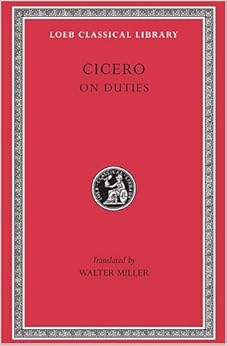
De Officiis

De Officiis by Marcus Tullius Cicero, translated by Walter Miller, 202 pages

In De Officiis (literally "On Duties" or less literally "On Moral Obligations"), Cicero attempts a concise summary of his ethical views, in the form of a letter to his son studying at Athens.  The whole is divided into three parts, considering in turn whether an act is moral, whether an act is expedient, and what ought to be done when morality and expediency conflict.  His argument with regard to the last question is that they cannot conflict in reality, only in appearance - immorality is always inexpedient, and morality always expedient.

Tully's consideration of morality follows the traditional model of the four cardinal virtues - prudence, justice, fortitude, and temperance - but "prudence" he considers a subset of "wisdom", founded on the quest for Truth, the highest of human aspirations and the first duty, but one which few can really pursue.  The other three he sees as necessary for sustaining human communities, without which, he maintains, no life worth living is possible.

The Loeb Classical Library edition includes the Latin original with the English translation on facing pages.

Tuesday, January 6, 2015

The Feasting Season


The Feasting Season by Nancy Coons  370 Pages

I picked this novel up mainly because I was intrigued with the title…and it’s about food. What can be wrong with a novel that centers on a travel writer exploring the regions of France?

American-born Meg Parker is a travel writer who lives with her husband and two children in the Lorraine region of France. Her home office is a fruit cellar where she keeps her mementos of her grandfather. Plugging away on yet another guidebook, she receives an offer from her publisher to write a book about French history. She’ll have to work with a photographer, but that’s okay.

Meanwhile Meg’ husband is Nigel is out drinking with his friends more often than not. Her kids are whiny. It doesn’t take much for Meg to agree.

The photographer assigned to the project is Jean-Jacques Cahbol. From the first e-mail, the relationship explosive. J-J as he’s known to his friends has one vision for the book, Meg has a completely different view. Meg is a rather uptight American, while J-J has a devil-may-care attitude about life.

As the two hop around France, they enter a torrid love affair that leaves Meg questioning what she really wants in life. Peppered with France’s gastronomical history and wine, the graphic love scenes make for some interesting reading.

I give this book 5 out of 5 stars.

Monday, January 5, 2015

Impulse Society


The character of Veruca Salt was first introduced in the 1964 book Charlie and the Chocolate Factory, but she received her definitive anthem: "Don't care how, I want it now!" in the 1971 film adaptation.  By then a whole generation of Verucas (and Verucos) had grown to adulthood.  The social changes that shaped their characters were chronicled by Lasch in The Culture of Narcissism and Rieff in Triumph of the Therapeutic.  It is now Paul Roberts' task to illuminate the world they have made.
Although Roberts touches on social and psychological developments, his primary focus is on the distortions impulsive consumerism produces in the economic and political spheres.  In the former, it is incarnate in the quick buck mentality of the financial sector (which trickled down into the subprime mortgage crisis), while in the latter it finds its natural home in a tribalized polity based on knee-jerk reactions rather than considered ideas, catered to by a media which feeds the audience a daily slate of news items on which they must form an opinion and take a stand, whether trivial or vital.

Roberts goes out of his way to attempt to be fair - he is clear that his loyalties lie left of center - but he fails, probably unconsciously - the left is considered reasonable even when wrong, while the right is caricatured.  This is ironic, considering that it is exactly the sort of bias that results from the kinds of epistemic bubbles he criticizes elsewhere.  A greater flaw lies in Roberts' shallow approach.  The book never faces the root of radical atomistic individualism in the Enlightenment idea of society as rules of engagement in a buried but ongoing war of all against all.  In a culture where morality has been reduced to questions of power relations, true community is impossible.  Problems based on philosophical presumptions cannot be solved by policy wonks. 

This is a good book, a part of an important ongoing conversation, but one that ultimately fails to contribute much of substance.

Saturday, January 3, 2015

December Totals


Congrats to Krista R, winner of both pages and points in December and Ed W, winner of the random drawing!  We will be in touch soon about claiming your prizes.

I hope that you've all resolved to read even more books this year so we can hang on to our lovely trophy which spent the month of December at Schlafly branch.

December Stats:
BloggerBooksPagesPoints
Krista R289,09328
Ed W186,11918
Jason S183,86218
Dennis M143,52817
Jeff S93,2579
Molly P92,55715
Terra S62,1566
Tiger R41,2204
Kara K51,1275
Julie E-C27972
Maryann B14982
Karen Y13451
TOTALS11534,559125

Friday, January 2, 2015

Provence, 1970: M.F.K. Fisher, Julia Child, James Beard, and the Reinvention of American Taste


When I was a kid, I always admired my grandmother, who shopped daily for the family and the priests she for whom she cared. It seemed cool and at the same time, like a lot of work.  I’m a Baby Boomer from the late 1950s. During my childhood, and up until say about twenty years ago, food and its preparation was focused on quick and easy. No one wanted to cook anymore, everything was canned, frozen, and drive-through. I vividly remember the first Banquet frozen TV dinner that Momma put in the oven after weeks of begging for it.  It was ghastly. I’ve never eaten one since.

But back in the 1970s, people like M.F.K. Fisher, Julia Child, James Beard were trying to bridge the gap between the between the exotic, complicated gourmet cooking and cooking for every day. Julia is perhaps the most famous of these chefs, thanks to television. But the others were making their mark.

Barr, having access to his great-aunt M.F.K. Fisher’s papers, has given readers a look back at those who were changing the way we eat. The story centers around the six best known food writers of the 1970s: M. F. K. Fisher, James Beard, Julia Child, Simone Beck, Judith Jones, and Richard Olney. They found themselves in Provence, France, at roughly the same time, meeting with, and talking to one another.

Their influence on getting back to natural products, cooking from scratch, and not being afraid to try new things that is still influencing professional and home chefs today.

Barr’s book gives is a history but reads like a novel. It’s an intricate look at the six chefs and how they worked, ate, played, and their interactions with each other. The climax of the book that week in December 1970, when the six gathered at Julia and Paul Childs’ vacation home in France. I would have loved to have been a fly on the wall. The downfall of the book, to me is a personal one. I'm not familiar with French cooking. Therefore, when the menu was presented in French terms, I often had no idea was what being served. 

I received this book for free from Blogging for Books for this review.

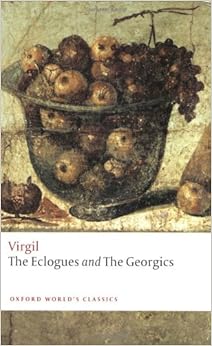
Georgics and Eclogues

The Georgics and Eclogues of Virgil by Publius Virgilius Maro, translated by Theodore Chickering Williams, 166 pages

This is a translation of some of the lesser pastoral poetry by the master of The Aeneid, praising the beauties of nature and the simplicity of country life, in the tradition of Hesiod rather than Homer.  The Eclogues were written in Virgil's youth, the Georgics in his maturity, and most readers are likely to admire the latter more than the former.  Most of the Eclogues are presented in the form of dialogues and exchanges of poetry (the famous Fourth is somewhat of an exception), which makes them irritatingly disjunct.  The problems might be eased in Latin or with more familiarity with the poetic template.  The Georgics are much more readable, although some readers may be bored by the long sections of agricultural advice (and I have my doubts as to the extent of Virgil's practical farming expertise), which is a shame, because the passages, whether discussing horse breeding or beekeeping or where and when to plant grape vines, all contribute beautifully to the greater themes of the work.

Williams' verse translation is excellent.