Showing posts with label Baroque. Show all posts

Saturday, February 15, 2020

Age of the Baroque in Portugal

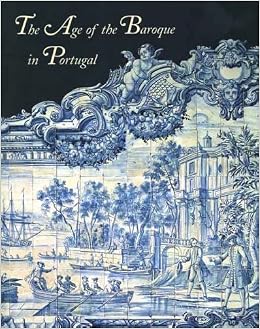
Image result for The Age of the Baroque in PortugalThe Age of the Baroque in Portugal, edited by Jay A Levenson, 295 pages

If the seventeenth century witnessed the Spanish Golden Age, it is reasonable to treat the eighteenth - and particularly the reign of John V - as having hosted an analogous, albeit somewhat more modest, Portuguese flourishing.  Certainly, it saw the height of Portugal's colonial empire, and a corresponding attempt to transmute the riches of the world into glory for God, country, and king.  This catalogue of the 1993 exhibition at the National Gallery of Art (fittingly, staged a year after the Columbian quincentennial) presents a wide array of beautiful and intriguing objects from the period, from furniture to jewelry to azulejos to a complete custom coach commissioned by the Portuguese ambassador to the Holy See.

Tuesday, June 25, 2019

Annibale Carracci in Bologna

Image result for Annibale Carracci in Bologna Visible Reality in Art After the Council of TrentAnnibale Carracci in Bologna: Visible Reality in Art after the Council of Trent by AWA Boschloo, translated by RR Symonds, 364 pages (2 vols)

The doctoral dissertation of noted Dutch art historian Anton Boschloo, Annibale Carracci in Bologna is, as its title declares, an analysis of the paintings the most celebrated of the Carraccis created in their hometown prior to his move to Rome.  Boschloo carefully traces both Annibale's influences and his departures from those influences, especially the other members of the Carracci family, not only the painters but also the tradesmen, whom Boschloo credits with helping inspire Annibale's interest in common people and concrete realities.  This, in turn, complemented the needs of the Catholic Reformation, at least as interpreted by the contemporary reforming archbishop of Bologna, Gabriele Paleotti.

This work was published in two volumes, with the first containing the text, the second the notes and plates, which has the advantage of making it possible to always directly compare the two.  Disappointingly, however, none of the plates are in color.

Saturday, May 25, 2019

How Catholic Art Saved the Faith

How Catholic Art Saved the FaithHow Catholic Art Saved the Faith: The Triumph of Beauty and Truth in Counter-Reformation Art by Elizabeth Lev, 295 pages

Every Catholic knows (or ought to know, but, times being what they are, likely doesn't) about the great saints who led the Catholic Reformation customarily, but misleadingly, called the Counter-Reformation: Charles Borromeo and Robert Bellarmine, Teresa of Avila and John of the Cross, Thomas More and John Fisher, Philip Neri and Francis de Sales, Ignatius Loyola and Peter Canisius, and many others.  Along with this litany, however, there was a corresponding movement in the arts, which boldly reasserted the claims of the Catholic Church in the works of artists including Caravaggio and Bernini, Titian and Rubens, Guido Reni and Artemisia Gentileschi.  In How Catholic Art Saved the Faith, Elizabeth Lev demonstrates how the art of what she calls the Catholic Restoration incarnated doctrine and thus used beauty to convey truth.

Lev has an intimate familiarity with the great art of Rome, and this enables her to not only present the works themselves, but present them in their proper spatial and devotional as well as historical context.  This alone would make the book worthwhile, although her focus on Rome means that she omits a great deal of art produced elsewhere - notably in Spain - and her focus on the visual arts means that other arts are barely mentioned - St Philip's role in creating the oratorio, for instance.  Amusingly, where Catholic medievalists, mostly based in northern Europe, have tended to disparage the Baroque (and therefore the churches of Rome), Lev slights the Gothic.  The book is printed on high-quality paper with full-color illustrations liberally sprinkled throughout, but unfortunately some of these reproductions, taken from public domain sources, are disappointingly poor in quality.

Monday, November 13, 2017

The Escorial and San Ildefonso

The Escorial; The Royal Palace at la Granja de San Ildefonso by Juan de Contreras y Lopez de Ayala Marques de Lozoya, translated by James Brockway, 156 pages

Philip II commissioned the Escorial to serve many purposes - a tomb for himself, his father, and their descendants; a monument to the glories of the Habsburgs; a palace for the reigning Spanish monarch; and a monastery and church where they would be uplifted in prayer both before and after death.  The spiritual vision which unites these purposes is exemplified by the patronage of St Lawrence, the third century Roman deacon renowned for his service to the poor, and is reflected in the design of the entire complex in the form of a grid, evoking the griddle on which the saint was martyred.  For Philip, rulership was service to the common good, and a kind of martyrdom, a dying to self.

This is not a point stressed in the little text of The Escorial and San Ildefonso (the latter being, in many ways, the more ostentatious and less impressive Bourbon equivalent of the Habsburg Escorial), although it is a truth proclaimed by the plentiful images.  It is unfortunate that almost all of these are in black and white, which only accentuates the severe design of the building by subtracting the vivid colors of its decoration.  It is likewise regrettable that more space is not devoted to its tapestries, furniture, and clerical vestments, which further tie together all aspects of its internal life in their Baroque expressiveness (although tapestry is an area where the section on San Ildefonso shines).

Saturday, September 16, 2017

Spanish Baroque

Spanish Baroque Art, with Buildings in Portugal, Mexico, and Other Colonies by Sacheverell Sitwell, 108 pages

Sacheverell Sitwell's guide to the Baroque architecture of the Iberian nations and their colonies is not a book of art history so much as it is a travelogue, as the author takes the reader on an international tour of interesting sites and sights that fit his theme.  The word "indescribable" appears repeatedly.  The book includes only a few black and white photographs illustrating the subjects - luckily, the 21st century provides easy access to better images.  Sitwell certainly suggests plenty of interesting things to admire, including many secreted away in the Spanish countryside far from the tourist centers, while also reminding the reader of the truly global appeal of the Baroque.

Saturday, May 27, 2017

Borromini and the Roman Oratory

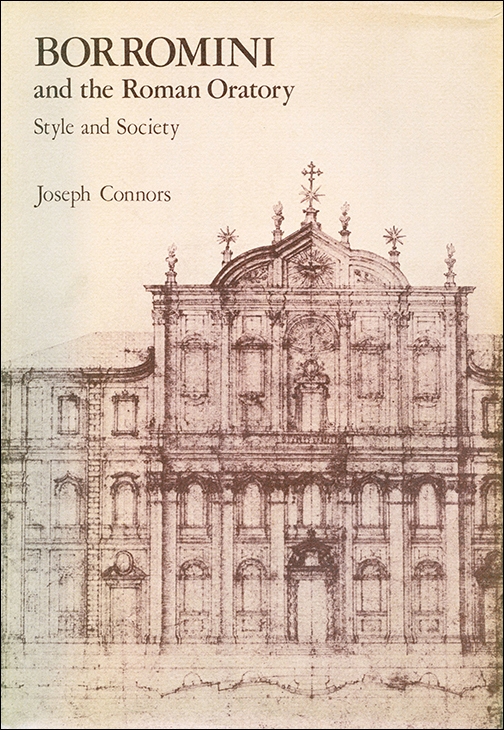
Borromini and the Roman Oratory: Style and Society by Joseph Connors, 112 pages

The construction of a new complex to house the followers of St Philip Neri began even before the saint's death in 1595, but the main work did not take place until some four decades later.  At that time, the Oratorians hired a then-unknown young architect, Francesco Borromini, to complete the design.  Borromini not only faced the difficulties of integrating his own ideas into the previous plans and the work that had already been completed, but also a struggle between the Oratorians' desire for modesty and his own stylistic exuberance, the latter only heightened by his youthful desire to distinguish himself.  Distinguish himself he did, and the Oratory, particularly its famous facade, is still admired as a masterpiece of Baroque architecture.

Connors documents the development of the Oratory project through a detailed exploration of the available sources.  In his telling, the development of the Oratory is revealed, not as a static act of creation on an inert object, but as a dialogue between the buildings and the people who lived, worked, and prayed within them, shaping and being shaped by one another, and between the complex and the city surrounding it, and, ultimately, between matter and spirit.

Friday, March 24, 2017

Bernini and the Art of Architecture

Bernini and the Art of ArchitectureBernini and the Art of Architecture by TA Marder, 321 pages

When Maffeo Cardinal Barberini became Pope Urban VIII in 1623, one of the first messages he sent was to his favorite artist, Gian Lorenzo Bernini:  "It is a great fortune for you to see Barberini made Pope, but our fortune is even greater to have Bernini alive in our pontificate."  Bernini was not only known throughout Europe as a great sculptor, he was also recognized as the greatest practitioner of the characteristically Baroque art of bel composto, the unified use of painting, sculpture, and architecture.  

It is fitting, therefore, that there should be an extensive study of Bernini's major architectural projects written for a mass audience.  That is precisely what TA Marder delivers in Bernini and the Art of Architecture - an accessible in-depth examination of Bernini's career as an architect, studying not only his great surviving works such as his Fountain of the Four Rivers, the Cornaro chapel, and his magnificent contributions around and within St Peter's Basilica, but also showcasing lesser known works and projects that were never completed, such as his design for the bell towers at St Peter's and planned renovations of the Pantheon and the Louvre.

As much a biography as it is a survey of artworks, Marder's book emphasizes Bernini's development as an architect and his struggles with the caprices of fortune, fame, and patronage, and the book is both more enlightening and more interesting as a result.

Monday, October 3, 2016

Massacre of the Innocents

Cover image for The Massacre of the Innocents by Giambattista Marino, translated by Erik Butler, 111 pages

Generally regarded as the greatest Italian Baroque poet, Giambattista Marino's reputation has waxed and waned along with that of the Baroque more generally.  Celebrated in his own time by figures as varied as Monteverdi and Milton, he was vilified in the eighteenth and nineteenth centuries before being rehabilitated in the twentieth by admirers including Benedetto Croce and Jorge Luis Borges.  

The Massacre of the Innocents was not published during Marino's lifetime.  It is an epic retelling of the slaughter of the infants on the orders of Herod the Great after the birth of Christ, as told in the Gospel according to St Matthew.  The story is, of course, heavily embellished - Marino has Herod construct a special pavilion for the massacre and also inserts a subplot which introduces an element of poetic justice.  This gives the poet freedom to craft elaborate scenes of horror and bloodshed, which he does with skill and energy.  Unfortunately, the excessive brutality does not effectively connect with his broader theme of the triumph of innocence.  Ultimately, despite certain superficial touches, Marino's poem resembles Virgil more than Dante, focused on "arms and the man" rather than the cosmic significance of events.

Saturday, November 14, 2015

Spectacular Rubens

Cover image for Spectacular Rubens: The Triumph of the Eucharist edited by Alejandro Vergara and Anne T Woollett, 81 pages

This is not, as some might think, a cookbook about constructing the most spectacular Ruben sandwiches, but rather an analysis of a series of tapestries designed by Peter Paul Rubens for the Monasterio de las Descalzas Reales, the Poor Clare "Convent of the Barefoot Royals" in Madrid.  It was to this convent that Rubens' patroness, the Infanta Isabel Clara Eugenia, half-sister of Phillip III of Spain and ruler of the Spanish Netherlands, intended to retire after the death of her husband, although political necessity required that she remain in the Low Countries.

The exhibition which occasioned this book reunited six of Rubens' painted models with four of the finished tapestries.  The tapestries were primarily designed for use as hangings in the convent chapel on the feast of Corpus Christi, the annual celebration of the mystery of the Real Presence of Christ in the Eucharist, a feast with great political and devotional significance to the Habsburgs particularly and to the Church in general during the Reformation.  Rubens crafted a masterwork of baroque illusion, integrating a sense of movement mirroring that of the Corpus Christi procession, framing his scenes with exotic pillars suggesting a fantastic architecture within the real chapel walls, and creating fictive tapestries within the real tapestries. implying multiple layers of reality like those of substance and accident.

As with any art book, it is the illustrations that matter most, and these are spectacular.  The text is neither overly dull nor uninformative, detailing the commission, preparation, construction, and arrangement of the tapestries, and it does not sneer at the religious beliefs of the artists and their patron.
Wednesday, September 3, 2014

Bach Among the Theologians

Bach Among the Theologians by Jaroslav Pelikan, 140 pages
 
http://d.gr-assets.com/books/1347784519l/566670.jpgJaroslav Pelikan was undoubtedly one of the most important American theologians of the twentieth century.  As a young man, however, he had seriously considered pursuing a career as a concert pianist.  His love of music and theology combine to make this short study of the religious context and content of the work of JS Bach both lively and enlightening.
 
Pelikan carefully explicates Bach's position in the struggles between the Pietist and Orthodox factions within eighteenth century Lutheranism, and how the composer managed to reflect the best characteristics of each theological approach through his unique musical genius.  Furthermore, Pelikan demonstrates how Bach reached back through Luther to embrace and transfigure centuries of Christian faith and music.
 
A wonderful portrait of Bach, his life, his faith, his music, and his world.

Sunday, August 31, 2014

Music in the Castle of Heaven

Cover image for Bach : music in the castle of heaven / John Eliot Gardiner.Bach: Music in the Castle of Heaven by John Eliot Gardiner, 558 pages
 
Johann Sebastian Bach has few peers in the history of music, and all of them seem more interesting on the surface.  When asked the secret of his musical genius, his response was, "I was obliged to be industrious; whoever is equally industrious will succeed equally well."  This has none of the romance of Wagner's egomania, or Beethoven's torment, or Mozart's seemingly effortless prodigality.  They don't make many movies about the thrill of hard work and discipline.  Bach's thorough religiosity, leading to his reputation in Germany as "the Fifth Evangelist", makes his life even more alien to sophisticated audiences.
 
The man revealed in this book is more interesting, and more conflicted, than the popular image of Bach would suggest.  Though Bach held that political authority had a divine origin and must be respected, he also believed in his responsibility to defend his vocation, which in practice meant interminable squabbles with his employers over salary and responsibilities.  Although Bach always conceived himself as laboring "to please God", his genius flowed between secular and sacred, each enriching the other.  Even so, it is not the man who is the main focus of this book, but his works, even if the two can never be wholly separated.  Bach's work remains vital not only because it possesses technical greatness, but equally due to his deep empathy and feel for the human condition as it wrestles with questions of sin, death, and eternity.
 
The author, John Gardiner, is himself a legendary performer of Bach's works, the founder of the Monteverdi Choir and a prime mover in the trend towards the use of period instruments to play Baroque pieces.  Although there are some bits that jar - he subscribes to a theory of religious development which harkens back to Fraser's Golden Bough and Wells' Outline of History filtered through Dawkins and Pullman, and he seems at times to seriously propose the existence of a genetic origin for musical genius - but he is forthright about his own biases - he is interested primarily in Bach's choral works, and spends little time on purely instrumental pieces.
 
Gardiner's description and interpretation of the music of Bach is deep and compelling, even for those of us who have little musical talent.  He teaches us not only the story of how the music was composed, but how it should be heard.