Showing posts with label Russia. Show all posts

Thursday, October 21, 2021

Crime and Punishment

 Crime and Punishment by Fyodor Dostoevsky, translated by Constance Garnett, 484 pages

"...a fantastic, gloomy business, a modern case, an incident of to-day when the heart of man is troubled, when the phrase is quoted that 'blood renews,' when comfort is preached as the aim of life.  Here we have bookish dreams, a heart unhinged by theories.  Here we see resolution in the first stage, but resolution of a special kind: he resolved to do it like jumping over a precipice or from a bell tower and his legs shook as he went to the crime."

It is difficult to imagine a better description of Crime and Punishment than that which Dostoevsky offers through the voice of one of his own characters, especially as the form - a prolonged monologue - is how much of the novel's action unfolds.  Raskolnikov is a failed student languishing in late nineteenth century St Petersburg, possessed by the notion that he can, by a single decisive act, break totally with the past and enter a realm of absolute freedom.  What he slowly and painfully discovers is that that realm is found in an entirely different direction, at the end of a radically different path, than he imagined.

It is difficult to say anything new about Crime and Punishment.  Obviously, it is not for everyone.  It is dreary and disorienting and merciless towards the reader.  Just as obviously, it is a work of genius, an incredible artistic achievement as well as an antidote to much of the existentialist sophistry that followed in its wake.

Friday, June 5, 2020

Spiritual Life

St. Theophan the Recluse - WritingsThe Spiritual Life and How To Be Attuned To It by St Theophan the Recluse, translated by Alexandra Dockham, 320 pages

In the middle of the nineteenth century, a young Russian woman in the grips of a profound spiritual crisis approached a holy monk for advice.  The resulting correspondence was preserved and collected in this book, which quickly became a Russian Orthodox classic.  St Theophan's balance of holy zeal and humane sympathy fully justifies this judgement of posterity.

For Latins, the obvious comparison is with St Francis de Sales, and indeed The Spiritual Life closely resembles the Introduction to the Devout Life in its attempt to chart a path to God for those living in the secular world.  If the Frenchman's work is more developed, the Russian's is more accessible, at least partially due to having been written two centuries closer to our own time.

Saturday, May 30, 2020

I Was Anastasia

I Was Anastasia by Ariel Lawhorn   332 pages

For those unfamiliar with the controversy that surrounded the basis of this novel, this book will be very interesting. It is a bizarre and fascinating story. I found this fictional version entertaining, but it was difficult to follow. 

This novel follows two characters. Anastasia's story is told chronologically from start to finish while Anna's story is told in reverse, making it very difficult to understand where in the story I was and how exactly the two connect. Perhaps I was just waiting too hard for the connection to happen that I was distracted from the story?

Overall, the descriptions and characters were decent and the story line is entertaining. If you have read other books about the Romanovs and know the outcome of this debate (no spoilers), then this book probably isn't for you. 
Posted by:   Regina C.  

Tuesday, August 20, 2019

Judgment in Moscow

Judgment in MoscowJudgment in Moscow: Soviet Crimes and Western Complicity by Vladimir Bukovsky. translated by Alyona Kojevnikov, 626 pages

Usually, when a criminal regime is removed from power, there is a reckoning, whether in the form of war crimes trials or truth and reconciliation commissions.  When the USSR collapsed, however, there was no judgment passed upon the men and women who had brutally tyrannized millions for generations.  In the opinion of dissident Vladimir Bukovsky, there could be only one reason for this lapse - the criminals had not really been defeated.  To the contrary, they remained at the levers of power, fully prepared to reassert themselves in time.  And so it happened.

Judgment in Moscow was originally published, in Russian, in 1996.  It was soon translated into a number of languages, but English was not one of them - until now.  In Bukovsky's account, this was due to the unwillingness of his publishers at Random House to market a book documenting  how Western elites fundamentally misunderstood the Soviet nightmare, deliberately or accidentally supported its continuation, and finally helped its engineers escape justice.  This unwillingness was itself a demonstration of the urgent need for an honest accounting for the history of Soviet tyranny and the struggle against it, a need which has tragically continued to be unmet.  The long-delayed publication of Bukovsky's book is at least a small step in that direction.

Tuesday, April 16, 2019

Way of a Pilgrim

Image result for The Way of A Pilgrim And The Pilgrim Continues His WayThe Way of a Pilgrim and The Pilgrim Continues His Way by Anonymous, translated by RM French, 224 pages

Sometime in the 1850s, an anonymous Russian peasant attending Divine Liturgy heard St Paul's injunction to "pray without ceasing" and went in quest of a method to put it into practice.  In time, he found this in hesychasm - the practice of praying, with every breath, the Jesus Prayer: "Lord Jesus Christ have mercy on me."  The purported record of his journeys, both physical and spiritual, was supposedly discovered some time later in a monastic library, and circulated widely among Russian monks before being discovered by the outside world.

In the opening passages of this memoir, the author rejects the sound advice of a variety of holy men on growth in the spiritual life, as none of them are able to offer him a concrete technique to accomplish his specific goal of living in a state of perpetual prayer.  This is the danger of the book - it is easy to ignore the repeated insistence on the necessity of spiritual direction and seize upon hesychasm as a shortcut or "simple trick to grow closer to God".  This danger is heightened by the apparent speed of this pilgrim's progress, but will be avoided by the careful reader.  Such a reader is also likely to notice that the sequel is very different in style and tone from the original, lending credence to the claim that one or both is a pious fable rather than a genuine memoir.  This in no wise detracts from a genuinely moving story of faith and growth in holiness.

Sunday, March 3, 2019

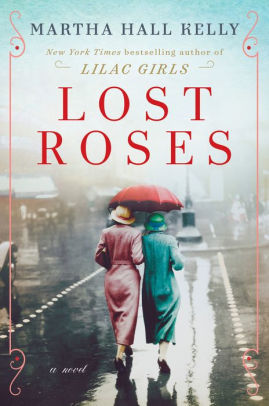
Lost Roses

Lost Roses by Martha Hall Kelly    448 pages


Have you read “Lilac Girls” by the same author who wrote this book?  If you haven’t, I highly recommend it!


Martha Hall Kelly’s second novel, “Lost Roses,” is not quite as good as Lilac, but it’s a great read. I had trouble getting into it, but once I got to about page 50, it took off like a rocket.


The story begins in 1914 and ends in 1921. It’s less about World War I and more about  the Russian Revolution.  The story focuses on three women. First there is Eliza Ferriday. A real-life heroine, Eliza, spent many years doing her best to help the “White Russians,” immigrants from Russia who had been aristocrats, but who lost everything when the Bolshevicks came into power. Eliza organized the American Central Committee for Russian Relief by finding them homes, including her own New York City apartment and Southhampton cottage.


Eliza’s BFF is Sofya Streshayva. While not a real-life person, she is a combination of many of the former aristocrats Hall Kelly researched in writing this novel. Her part of the story is the most compelling. Her distant relation to the Romanov family isn’t helpful during this time period. The scenes were she and her family are captured by the Bolshevicks are intense and some rather disturbing.


The third woman, and my least favorite, was Varinka, a Russian peasant with ties to the Red Army. At first she is a sympathetic character, but when she takes the one thing Sofya loves the most, she becomes the novel’s antagonist, along with the Russian Revolution. Varinka is completely fictional.


Ultimately this story is about friendship, love, and loss during one of the most turbulent times of the 20th Century. I enjoyed the different voices of the three women. I found them easily distinguishable. This, to me, is another one of the forgotten stories of human beings and the bonds they forge during difficult times. “Lost Roses” receives 5 out of 5 stars in Julie’s world.


Saturday, January 19, 2019

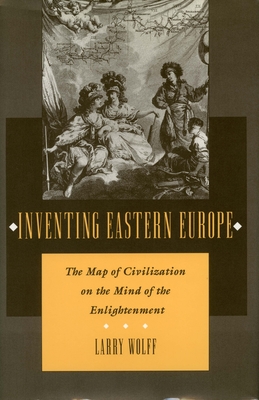
Inventing Eastern Europe

Image result for inventing eastern europe larry wolffInventing Eastern Europe: The Map of Civilization on the Mind of the Enlightenment by Larry Wolff, 374 pages

In this survey of 18th century travel literature, Larry Wolff explores how Enlightenment authors charted the domains of civilization and barbarism, making Western Europe the focus of the former and Eastern Europe - or, more evocatively, the European Orient - as the frontier.  For the progressive writers of the eighteenth century, the eastern nations were clearly behind the West on the univocal path of human development, and eastern backwardness served the Western intellectual elite not only as reassurance of their own status but as an inspiration to great "civilizing" projects, to be undertaken with or without the agreement of the peoples concerned.  This division of the continent, Wolff contended in 1994, underlay but was not effaced by the later Cold War division, and with the Cold War now over, the older division would resurface.  

Inventing Eastern Europe is a triumph of postmodern scholarship - obvious and tendentious.  With considerable skill and intelligence Wolff conquers the eighteenth century writers who conquered the East, taming them to his narrative.  Wolff's case is strengthened by his prescience, as today's enlightened Western elites regard Eastern populists with the same familiar smug revulsion.  It also serves as a model for understanding those journalists who have, especially since 2016, embarked upon adventures in Middle America in search of confirmation of their own biases.

Tuesday, November 13, 2018

Laurus

LaurusLaurus by Eugene Vodolazkin, translated by Lisa C Hayden, 362 pages

Laurus is a beautiful, subtle novel set in a vividly recreated Medieval Russia.  It tells the story of Arseny, called Rukinets and Ustin and Amvrosy and Laurus, a doctor, a penitent, a pilgrim, and a hermit, not successively but progressively, as he and his world are poisoned by sin and healed by grace.  

In her introduction, translator Hayden candidly discusses the difficulties of bringing Vodolazkin's deliberately inconsistent use of archaic language into English - without being able to experience the original, it seems that she has done an excellent job, reinforcing the story's intimations of the relationship between time and eternity, the living and the dead.  This is only one of many profound themes in this marvel of a novel - richly imaginative, empathetic without being sentimental, historically authentic and yet timeless.

Saturday, July 21, 2018

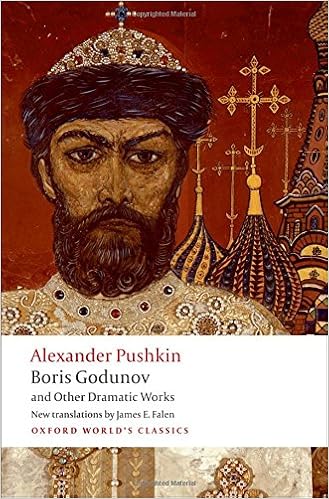
Boris Godunov

Image result for boris godunov alexander pushkinBoris Godunov by Alexander Pushkin, translated by Philip L Barbour, 80 pages

The historical Boris Godunov was an influential courtier under Ivan the Terrible, and the brother-in-law of Ivan's feeble-minded son and successor Fyodor.  After Ivan's death, Godunov reigned in Fyodor's name, and was widely accused of having ordered the murder of Fyodor's half-brother and heir, Dimitri.  When Fyodor died heirless several years later, Godunov was himself crowned as Tsar, but around the same time a man claiming to be Dimitri but identified by others as Grigori Otrepyev, a renegade monk, appeared in Poland, where he gained the confidence of the Polish-Lithuanian nobility and launched a war to press his claim to the Muscovite throne.  After Godunov's death, the Russian boyars deserted his son in favor of the pretender, sealing the fate of the Godunov line.

In writing Boris Godunov, Pushkin was clearly influenced by Shakespeare's history plays.  As in those, a few smaller moments are planted in the midst of the grand tragedy of Godunov, including scenes of romance and comedy, complete with an aloof princess and bumbling soldiers.  Interestingly, Pushkin portrays both the cynical imitation of sincerity for political advantage and the cynical perception of genuine sincerity as political calculation.

Tuesday, May 8, 2018

Need to Know

Need to Know by Karen Cleveland   304 pages

Vivian is a dedicated CIA analyst assigned to uncover the leaders of Russian sleeper cells in the U.S. She's hard at work, sifting through data and information to identify agents who appear to be normal people, living in plain sight. One day, she accesses a folder of deep-cover agents in America and then makes a confusing discovery: one of the photos is of her husband, Matt. Confusion turns to horror as Vivian discovers that Matt has been lying to her since they met, and has been working for the Russians the entire time.  Now, their lives and the lives of their children, hang in the balance while Vivian tries to figure out what to do and who to protect.

I thought this book was okay, although I kept reading more out of curiosity than a compulsion to know what was going to happen. I found some elements of the story predictable, although I did like that Vivian kept going through her past, uncovering details that when viewed in the light of the new information about Matt, showed just how much about him she didn't know.  The pacing definitely picks up as the story continues and the author's own background as a CIA analyst definitely comes through, as those parts of the story are written well and are very believable.

Thursday, July 27, 2017

Symphony For The City Of The Dead

Symphony For TheCity Of The Dead: Dmitri Shostakovich And The Siege Of Leningrad, 456 pages

"National Book Award winner M. T. Anderson delivers a brilliant and riveting account of the Siege of Leningrad and the role played by Russian composer Shostakovich and his Leningrad Symphony. In September 1941, Adolf Hitler's Wehrmacht surrounded Leningrad in what was to become one of the longest and most destructive sieges in Western history--almost three years of bombardment and starvation that culminated in the harsh winter of 1943--1944. More than a million citizens perished. Survivors recall corpses littering the frozen streets, their relatives having neither the means nor the strength to bury them. Residents burned books, furniture, and floorboards to keep warm; they ate family pets and--eventually--one another to stay alive. Trapped between the Nazi invading force and the Soviet government itself was composer Dmitri Shostakovich, who would write a symphony that roused, rallied, eulogized, and commemorated his fellow citizens--the Leningrad Symphony, which came to occupy a surprising place of prominence in the eventual Allied victory. This is the true story of a city under siege: the triumph of bravery and defiance in the face of terrifying odds. It is also a look at the power--and layered meaning--of music in beleaguered lives. Symphony for the City of the Dead is a masterwork thrillingly told and impeccably researched by National Book Award--winning author M. T. Anderson." This was hard to read because of the subject matter.  Anderson doesn't stint on writing about the hardships the people of Leningrad endured or on the brutality of Stalin's government.  However, it was well written and Anderson makes the subject matter fascinating, even in the midst of the horror.  I would definitely recommend this to history buffs.

Wednesday, July 5, 2017

Crimean Nexus

The Crimean NexusThe Crimean Nexus: Putin's War and the Clash of Civilizations by Constantine Pleshakov, 170 pages

Geographically, the Crimea offers a gateway to - and from - the Eurasian heartland.  Climatically, it brings the sub-tropical Mediterranean into contact with the northern steppes.  Culturally, it is one of the great crossroads of civilizations.  Colonized in turn by the Greeks, Romans, Goths, Byzantines, Mongols, Turks, and Russians, by the nineteenth century it was said to be the home of over fifteen nationalities, a place where every town spoke a different language, but like so many places in the "bloodlands" between the Volga and the Elbe its ethnic history was largely rewritten in the first half of the twentieth century.  Under Khrushchev, the Crimea was incorporated within the Ukrainian Soviet Socialist Republic, and it remained part of the Ukraine when the USSR dissolved despite its large Russian population and strategic importance to Russia.  Meanwhile, despite Kiev's status as the first city of the Rus, the Ukraine has had little experience as an independent nation, having been under the rule of the Poles, the Ottomans, the Habsburgs, and especially the Russians, who dubbed the territory "Little Russia".

In many ways, Russia's undeclared war with the Ukraine, including the seizure of the Crimea, follows the now-familiar pattern of ethnic war, but that bloody pattern is further complicated by the direct involvement of great powers and the resurgence of Russian exceptionalism.  In Constantine Pleshakov's telling, "Putin's war" was the predictable consequence of a long sequence of events, but it is not the end of the sequence.  Pleshakov's short, readable guide to the region, its history, people, and significance is an excellent primer for whatever happens next.

Friday, April 7, 2017

Rasputin

RasputinRasputin: Faith, Power, and the Twilight of the Romanovs by Douglas Smith, 680 pages

Grigori Yefimovich Rasputin was born into a peasant family in a small town in Siberia.  In early middle age, he took up the life of a "holy wanderer", undertaking several long pilgrimages to holy shrines every year.  His piety was recognized by others, and soon he was associating with distinguished churchmen in St Petersburg, then acting as a spiritual advisor to a circle of aristocrats, and finally being treasured as a living saint by the tsaritsa.  Meanwhile, Rasputin indulged in all manner of vices, drinking too much and sleeping with his female admirers.  Eventually he was brutally murdered by a conspiracy of aristocrats who believed his influence was leading Russia to ruin.

Such are the facts.  The legend is something else - the dark force at the beginning of the twentieth century, the cartoon sorceror, the mad monk who was, in reality, neither mad nor a monk.  As Douglas Smith reveals, Rasputin was a legend even in his own time, and the myths surrounding him were the cause of his rise and the cause of his downfall.  Indeed, according to Smith, even much of the accepted biography of Rasputin is based primarily on rumor and gossip.  In this atmosphere of suspicion Rasputin became the explanation for every ill that befell Russia, simultaneously encouraging the enemies of the tsar and alienating his supporters even as crisis followed crisis.

Smith's fascinating biography of Rasputin is long but continuously interesting.  He touches on many of the cultural factors that shaped the life and times of Rasputin - Russian industrialization and modernization, the mania for spiritualism, the romanticization of the narod, the paradox of a tsar who sought to be both an absolute monarch and a private citizen - while giving due respect to the complexity of events and the agency of individuals.  There are a few odd moments, as when he advances the eugenicist view that the tsarevich Alexei would have been better off not being born rather than being born a hemophiliac, or when he sniffs contemptuously at the devout Grand Duchess Elisaveta's approval of Rasputin's murder, but these disagreeable passages do not affect the bulk of the book.  That stands as simultaneously a corrective to the legends surrounding Rasputin and a portrait, through those legends, of Russian society at the dawn of the twentieth century, a society on the brink of destruction.

Wednesday, July 27, 2016

Plot to Kill God

Cover image for The Plot to Kill God: Findings from the Soviet Experiment in Secularization by Paul Froese, 199 pages

When the Bolsheviks seized power in 1918, their Communist ideology predicted that with the destruction of the old political order religion would gradually but inevitably wither away - an especially plausible theory for Russians, for whom the Orthodox Church and the tsarist regime were virtually indistinguishable.  When this did not happen, the Soviet perspective on religion shifted from that of symptom to that of disease, resulting in a more active persecution.  Attempts to destroy religious belief ranged from the desecration of churches and mass murder of clergy to the integration of atheist propaganda with every subject in the school curriculum and the institution of atheist rituals to replace the traditional religious ceremonies solemnizing birth, marriage, and death.

Froese takes the results of this Soviet attempt to impose atheism on its population as an empirical test of various theories of secularization.  In his view, the Soviet experience invalidates theories which attribute religious belief to ignorance, indoctrination, political utility, social pressure, or mass enthusiasm.  According to Froese's economic model, although the Soviets were somewhat successful in diminishing the supply of religion from traditional institutions, they were utterly unable to eliminate the demand for religion.  This suggests that the Soviet regime never correctly understood the nature of that demand.

The Plot to Kill God is not a history of Soviet anti-religious policies, but an analysis of the results of those policies.  There are a number of typographical problems ("Protestants sects", "League of Militant Atheist", "ingenuity in alluding authorities"), but those mostly disappear after the first dozen pages.  There are also some suspect claims and sweeping generalizations ("secular alternatives to religious marriage ceremonies, for example, have always existed") somewhat sloppily thrown about without support.  Neither of these flaws affects Froese's argument, which is strong enough to deserve more thorough study.

Friday, July 15, 2016

One Day in the Life of Ivan Denisovich

One Day in the Life of Ivan Denisovich by Alexander Solzhenitsyn, translated by Ralph Parker, 158 pages

One Day in the Life of Ivan Denisovich delivers exactly what the title promises - the description of an ordinary day in the life of Ivan Denisovich Shukhov, a prisoner in an Arctic gulag.  During the course of the day, he manages to avoid any severe punishment for the numerous minor rule violations he is forced to make in order to survive, gets enough food to maintain his poor health, enough heat to avoid freezing to death, and is even able to secure some tobacco.  Not of least importance, he is able to do all this without losing his self-respect and the respect of his fellow prisoners.

This is not a novel about overt horror and atrocity, but about steady, unrelenting oppression.  Instead of genocide, the aim of the gulag - indeed, the entire Communist system - is rehabilitation through dehumanization, and resistance is a daily struggle.

Saturday, May 28, 2016

Homo Sovieticus

Cover image for Homo Sovieticus by Alexander Zinoviev, translated by Charles Janson, 206 pages

Homo Sovieticus is an unconventional novel - there is no plot, and the characters are caricatures with names like "Enthusiast" and "Writer".  The book is divided into small - half a page to two page long - anecdotes in which the narrator, a cynical Soviet emigre who describes himself as an Agent of the Soviet State, reflects on the life of an ASS in the Soviet Union and the life of an ASS in the West.

Zinoviev's perspective, driven home in one cynical, self-important vignette after another, is that something resembling the dialectic of Marxism is at work in history, but rather than a force for liberation, it is an idiot god fumbling about with human lives.  The individual is insignificant, rather, it is the masses that decide things, and the masses are venal, blind, and cruel.  The only meaningful difference between East and West is that in the USSR a desire to be free of the masses makes one an individual, while in the West such a desire only buries one deeper within the mass.

Monday, May 2, 2016

Winter Is Coming

Cover image for Winter Is Coming: Why Vladimir Putin and the Enemies of the Free World Must Be Stopped by Garry Kasparov and Mig Greenguard, 267 pages

Garry Kasparov is indisputably one of the greatest chess players in history - he become the youngest ever World Champion at the age of 22 and held the title for fifteen years, during which he set a record for consecutive tournament victories.  Since his retirement from competitive chess in 2005, he has divided his time between coaching, charitable work with his Kasparov Chess Foundation, and political activism.  It is to the last category that this book belongs.

Much of the book is taken up by an extended expose of Putin's crimes against democracy and peace, his victimization of the Russian people and their neighbors.  This is not an objective report, but a passionate denunciation of what Kasparov describes as a "mafia state", a lawless regime run solely for the benefit of those at the top.  But the real heart of the book is Kasparov's scathing indictment of decades of indifference and enabling by a toothless international community.  In Kasparov's view, this has been caused less by the increasing strength of economic ties due to globalization than by a general deterioration of civilizational confidence throughout the West.  

Kasparov's case is thoroughly convincing even if his presentation is disorganized, jumping around chronologically in a manner that is sometimes confusing, but held together by his personal experience and passion.  Unfortunately, in the final chapter, when the time comes to present a positive program for change, all he can muster is empty cliches about the importance of education, a fizzle of an end to an explosive book.

Monday, March 9, 2015

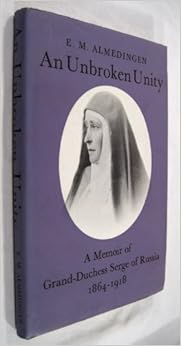
Unbroken Unity


Elisabeth was born into the royal house of Hesse, and married Grand-Duke Sergei of Russia, an uncle of the future Tsar Nicholas II.  She was related in one way or another to all the royals of Europe - Queen Victoria was her grandmother - but the ties to the Romanovs were stronger than others - her aunt was the wife of Tsar Alexander II, while her sister was the Alexandra who married Nicholas II.  After several years of marriage, Elisabeth joined the Russian Orthodox Church, a move which inevitably influenced her sister, whose reluctance to convert from Lutheranism was an impediment to her proposed marriage to the Tsar.  

Elisabeth's conversion was not primarily dictated by political or family pressures - she fully embraced her new faith, without losing her own Western perspective.  After her husband was murdered by socialist terrorists in 1905, she founded an order of nuns following a rule she devised herself, modifying the Basilian rule standard in Russian convents.  The order was devoted to the service of the poor, primarily by operating a hospital, an orphanage, and outreach in the slums of Moscow.  After the Bolsheviks seized power, she chose to remain in her convent, and was ultimately arrested and brutally murdered by being savagely beaten and thrown down a mine shaft.

Almedingen has constructed a solid hagiography, writing about a time and place that she knew well.  As a hagiography, it has certain limitations, and more cynical readers will find plenty to roll their eyes at.  Yet the most compelling elements are also the most undeniable.

Thursday, January 15, 2015

The Family Romanov: Murder, Rebellion & The Fall Of Imperial Russia


Although not one of my favorite historical periods, I’ve always had a small fascination with the whole “missing princess” story.  I hadn’t read many non-fictional accounts of the Romanov family so I didn’t know a lot of what was happening in Russia during this time.  This book was well written and kept everything pretty simple so I got a much clearer picture of how Nicholas was ignoring and sometimes exacerbating the problems that the poor were facing in Russia, which certainly went a long way towards explaining why the Russian Revolution happened.  Actually both the October and May Revolutions were pretty well explained.  I also felt like I had a better grasp on why World War I actually started and how the various powers became involved.  Before reading this book, if someone had asked me, I would have said “an archduke got shot” but this book actually pretty simply explained the land situation and who was allied with who and why.  I’m not sure that I learned a lot of new information about the family themselves, because I knew more about them going into the book, but there were some interesting tidbits about them, especially the children, as well.  Overall, I’d have to say that I really enjoyed the book and would definitely recommend it to anyone with an interest in this time period or Russian history.

Monday, September 29, 2014

Notes From Underground

Cover image for Notes from underground / Fyodor Dostoevsky ; translated from the Russian by Richard Pevear and Larissa Volkhonsky [sic] ; with an introduction by Richard Pevear.Notes from Underground by Fyodor Dostoevsky, 153 pages

The nameless narrator of Notes from Underground, Doestyevsky's first mature work and shortest novel, is an entirely pathetic figure, alienated from the world and himself, sick unto death.  There is a very little plot - a meeting with some old schoolmates and a trip to a brothel adequately convey the brokenness of the narrator, after which there is nothing of importance left to relate.  Notes from Underground fits snugly into the genre of confessional literature - if Rousseau felt pride for sins for which St Augustine felt shame, the Underground Man is proud of his shame, since that is the very sign of his consciousness.  He feels nothing but contempt for the modern world, but he has no escape from it, only himself and his books, and neither suffices.

Painfully true to life, this is not a book I enjoyed, but one that I admire greatly.