Showing posts with label Japan. Show all posts

Thursday, August 14, 2025

Emperor of Japan

Emperor of Japan: Meiji and His World, 1852-1912 by Donald Keene, 723 pages

When the 122nd Emperor of Japan ascended the Chrysanthemum throne in 1867 at the age of 14, no Japanese emperor had exercised real power for nearly seven centuries.  A year later, the last shogun resigned his position and the man who would be known as Meiji became the actual as well as symbolic ruler of Japan.  The country was dominated by a feudal aristocracy, educated according to Confucian principles, and threatened by the greed of the Western powers.  When Meiji died 45 years later, Japan had rapidly Westernized, adopted a parliamentary system, defeated China and Russia in successive wars, annexed Korea, and established itself as a major power on the global stage.  It had, however, lost something which is less tangible.

It is unclear how much influence the Meiji emperor actually exercised over the seismic changes that occurred in Japanese culture and politics during his reign.  Indeed, it is difficult to say much of anything about the personality of the emperor, given the reverential protectiveness of all those in a position to know him.  The few candid accounts of the man were provided by foreign dignitaries whose access was necessarily limited.  Understandably, then, Donald Keene's biography is as much a portrait of the era as of the emperor who gave the era its name, although discerning readers may sense the spirit of the man moving throughout.  Keene himself seems devoted to the fashionable cult of "progress", but his devotion does not become fanaticism, indeed, some of the most memorable passages concern Ulysses Grant's role in the preservation of No drama and the European derision of Western-style dance halls in Tokyo.  The result is a compelling, rich tale of an era of momentous change, both for better and for worse, told through the refracted image of the man who was its symbol.

Wednesday, May 18, 2022

Last Samurai

The Last Samurai: The Life and Battles of Saigo Takamori by Mark Ravina, 214 pages

In 1877, Saigo Takamori died in battle against the army of the Emperor of Japan, an army he had once commanded and an emperor to whom he had pledged his life in service.  Even before his end, he was already popularly portrayed as a semi-divine figure transcending mere politics, and after his death he would continue to be celebrated by generations of Japanese romantics and reactionaries dissatisfied with the march of modernity.

Yet in Mark Ravina's telling Saigo had a crucial role in that march.  Not only was Saigo a key player in the overthrow of the shogunate after Progress was brought to Japan in the mouths of American cannons, he was central in the subsequent disempowerment of the daimyo, including his own liege lord, who had backed the ousting of the shogun.  Although it is impossible, at least from the material Ravina provides, to know exactly what Saigo believed would follow, it is difficult in hindsight to imagine anything other than a bourgeois democracy filling the resulting vacuum.  This is consistent with a view of Saigo's character that sees him as addicted to the grand gesture, the type of man who could sway the fortunes of a nation with a dramatic action at a pivotal moment, but who is uninterested in the minutiae of actually governing a modern state.  It is possible to judge this as foolishness or even indiscipline, or imagine it to be the disinterested pursuit of virtue and the selfless leadership of a true hero.  Whether deliberately or by accident, Ravina leaves that decision to the reader.

Thursday, May 12, 2022

Leaving the Hermitage

Leaving the Hermitage by Rohan Koda, translated by Jiro Nagura, 195 pages

Leaving the Hermitage is a collection of poems collectively telling the story of a poet who seeks refuge in a hermitage in order to escape the distractions of the passing world and draw from the deepest part of his heart the purest poetry, but who eventually discovers that poetry fills the mundane world as well.

Koda was better known as a novelist than a poet, and Leaving the Hermitage is a kind of novel of poetry, as the poet considers his lot and encounters a series of challenges to his repose.  The quality of the poems as poems is not that high, but it is impossible for anyone who does not read Japanese to know whether this is a failing of the poet or the translator, while the narrative flow has an undeniable charm.

Friday, May 14, 2021

Sixty-Nine Stations of the Kisokaido

 The Sixty-Nine Stations of the Kisokaido by Keisai Eisen, Utagawa Hiroshige, and Sebastian Izzard, 157 pages

Nineteenth century Japan saw an intense interest in travel, and a corresponding market for travel books and prints, whether sold as guides, mementos, or as objects of art.  Among the main routes for travel was the Kisokaido, a highway running down the center of Honshu from the Tokugawa capital of Edo to the imperial capital of Kyoto.  The artist Keisai Eisen was commissioned to create a series of prints depicting the route, but he only completed 24 prints before abandoning the project, which was then handed over to Utagawa Hiroshige, whose fame as a master of ukiyo-e was destined to eclipse that of Eisen.

The Sixty-Nine Stations of the Kisokaido collects the best reproductions of the original prints and offers both an opportunity for aesthetic appreciation and a vicarious journey through 19th century Japan.  Izzard offers his guidance for each of these paths, commenting on the sites depicted and on the history of the prints themselves.  Whatever the motive, the journey is certain to be a rewarding one.  

Saturday, October 26, 2019

Samurai

Image result for The Samurai A Novel Endō, ShūsakuThe Samurai by Shusaku Endo, translated by Van C Gessel, 272 pages

When a samurai is ordered by his lord to undertake a mission, he has no choice but to accept.  So although Hasekura would like nothing more than to remain with his family in their marshland home, he is compelled by his master to travel to the ends of the earth as an emissary to Spain and Rome.  His guide is Fr Velasco, a Franciscan friar determined to bring about the conversion of Japan, a desire equally the product of ambition and faith.  Hasekura will discover many odd new things in his travels, but he will find nothing as strange and repulsive as the wretched figure the foreigners worship.  Whatever the lords they choose to serve, the priest and the samurai must each, in the end, face a reckoning, though not necessarily those they expect.

Endo's novel is "based on a true story" in that he has taken actual historical events about which little certain is known and given them an imaginary context.  In the process, he crafts a compelling and remarkably subtle tale of faith and suffering, hope and power, salvation and sacrifice.

Tuesday, September 3, 2019

Poetry of Nature

The Poetry of NatureThe Poetry of Nature: Edo Paintings from the Fishbein-Bender Collection by John T Carpenter and Midori Oka, 201 pages

In 2012 Estelle Bender and T Richard Fishbein contacted the Metropolitan Museum of Art in New York about donating the extensive collection of Edo era Japanese paintings the couple had acquired over the previous three decades.  The consummation of that gift was the occasion for this 2017 exhibition, although sadly Fishbein had died in the interim.  

As the title suggests, Fishbein and Bender, who began their collection in search of decorations for their New York City apartment, favored nature painting, which has long been a popular genre for Japanese artists.  Natural subjects are also very accessible - appreciating the beauty of the crows on the cover, for example, does not require any knowledge of their significance in Japanese culture or the ways in which the artist both echoed and deviated from previous depictions.  Yet such understanding certainly deepens the appreciation, especially given the rich allusive tradition of Japanese painting and the inclusion of poetry on many of the pieces.  Indeed, the most fascinating theme of the catalogue is how the Three Perfections - painting, poetry, and calligraphy (themselves three-quarters of the Four Gentlemanly Accomplishments, with the addition of board gaming) - were integrated by the Edo era artists.

Tuesday, June 18, 2019

Traditional Japanese Poetry

Traditional Japanese PoetryTraditional Japanese Poetry: An Anthology, translated by Steven D Carter, 456 pages

This anthology collects 1157 poems written by Japanese poets between the 7th and 20th centuries.

     Hearing the echo
          of a bird-scarer announcing
               "He is here no more,"
     I am saddened by the loss
          of the world that went before.

Japan may be unique among the great cultures of the world in lacking an epic poetic tradition.  Famously, however, the Japanese developed the short poem to extreme levels of subtlety and refinement.  Along with the familiar haiku, which is a relatively late form, this collection includes a number of other established traditional forms, including linked poetry, each verse of which, often written by different poets, connects obliquely to those before and after.

     One can not be sure of living
          even until the evening.

     In the dim dawn light
          I watch the waves in the wake
               of a departing boat.

Carter provides short explanatory introductions to each section, and has even included several complete poem sequences, demonstrating the distinct art of compilation and arrangement.  The sheer scope of this collection will enrich even the casual reader, who can then, in turn, provide an answer to Shunzei's question.

     Far in the future,
     will someone remember me
          with a tender heart -
     sharing with me the habit
          of musing on the past?

Sunday, October 7, 2018

Nomonhan, 1939: The Red Army’s Victory That Shaped World War II

Nomonhan, 1939: The Red Army’s Victory That Shaped World War II by Stuart D. Goldman            Hardcover: 185 pgs.             Genre: History, World War II, Mongolia, China, Japan, Soviet Union

     Nomonhan is a Mongolian village straddling the boundary between Mongolia and Manchuria.  Today, Mongolia is an independent country and Manchuria is part of China, but in 1939, on the eve of World War II, the former was a client state of the Soviet Union, while the latter region was controlled by Japan.  The border between them was hotly disputed at the time— so hotly disputed, in fact, that an undeclared war erupted between the Japanese and the Soviets near the small village.  In this book, author Stuart Goldman makes the case that this forgotten border war significantly influenced World War II.  As a result of being soundly defeated by the Russians in the conflict, Goldman contends, Japan turned its attention toward expansion into Southeast Asia, putting it on a collision course with America and resulting in the Pearl Harbor attack.  Hence, the so-called “Nomonhan Incident” (also known as the Battles of Khalkhyn Gol) had a major influence on America’s entry into the war.  Another effect of the decisive Soviet victory, according to the author, was enabling Russia to survive the German invasion of 1941 and ultimately drive the Germans out of their country and all of Eastern Europe, helping to win the war for the Allies.  Goldman gives us a look at the diplomatic strategies of Britain, France, Nazi Germany and Russia leading up to the Second World War, allowing this reader, at least, to better understand the Nazi-Soviet Pact and the Rome-Berlin-Tokyo Axis agreement.  The author paints Stalin, especially, as a very shrewd leader.  I found these passages fascinating, but they make up less than half of the book.  Most of the book, understandably, talks about the conflict itself (the movement of armies on both sides), but in a very detailed, academic way that I found boring and hard to slog through.  I’m sure military historians and military personnel would find this part fascinating, but I think the average reader would agree with my assessment.  My opinion about the book, then, is divided: one “thumb up” for the diplomatic history and descriptions of grand strategy, but the other “thumb down” for an overly-detailed narrative of the conflict itself.

Friday, July 27, 2018

Battleship Yamato

Battleship Yamato: Of War, Beauty, and Irony by Jan Morris, 96 pages
Battleship Yamato

The Yamato was the largest and most powerful battleship ever built.  She played a minor role in two battles before being ordered, in the final months of World War II, to launch a Special - suicide - Attack against the American fleet assaulting Okinawa.  This mission was not expected to have any success, rather, it was intended to distract the Americans and provide an opening for a simultaneous kamikaze sortie.  The Yamato was tracked from the moment she left the Inland Sea and sunk barely halfway to her destination.  Over two thousand Japanese sailors died with her.  The attacking American planes suffered minimal losses.

In her brief, lyrical account, Jan Morris describes the Yamato as a beautiful ship, "a Dreadnought of Dreadnoughts", but obsolete before she was even finished.  The pride of the Imperial Japanese Navy, she was too valuable to be risked in battle, and so conserved until the war was lost, then sacrificed in a futile gesture.  Sacrificed with her were the imperial ambitions of the homeland whose name she bore.

Monday, June 25, 2018

Art in Japanese Esoteric Buddhism

Image result for Art in Japanese Esoteric BuddhismArt in Japanese Esoteric Buddhism by Takaaki Sawa, 151 pages

Esoteric Japanese Buddhism, in contrast to the exoteric variety, maintained that the substance of Buddhist teaching exceeded the intellect's powers of comprehension, and therefore sought to embody it in ritual practice.  For this very reason, the tradition produced a rich array of art and architecture to aid in the expression of mysteries that lie beyond (and behind) words.

Art in Japanese Esoteric Buddhism ably showcases a wide selection of medieval Japanese buildings, sculptures, paintings, and mandalas, many of which benefit from remaining in their intended cultural and religious context.  Inevitably, the book touches on obscure elements of Japanese Buddhism, unfortunately, it does not have the space necessary to explain them.

Wednesday, June 20, 2018

Temple of the Golden Pavilion

The Temple of the Golden PavilionThe Temple of the Golden Pavilion by Yukio Mishima, 262 pages

"Ever since my childhood, Father had often spoken to me about the Golden Temple."  From an early age, then, the ideal of the Golden Temple of Kinkaku-ji dominated Mizoguchi's imagination, but what is a portal for the father becomes a barrier for the son.  Distanced from others by his stutter, convinced of his own essential unloveliness, Mizoguchi comes to hate the Golden Temple more the more he is captivated by its beauty.  After the death of his father, he becomes a novice at the Temple, and it becomes the ultimate symbol of his father, his religion, his country, his traditions, his future, and everything that stands in the way of his freedom to be a beast.

Based on the true story of the novice priest who burned down the Golden Temple in 1950, The Temple of the Golden Pavilion is full of Mishima's characteristic alternately achingly beautiful and shockingly brutal enigmatic vignettes.  The novel - part biography, part prose poem, part koan - is an enchanting tragedy both personal and civilizational.

Friday, June 15, 2018

Mishima

Image result for Mishima A Vision of the VoidMishima: A Vision of the Void by Marguerite Yourcenar, translated by Alberto Manguel,152 pages

Early in her short study of the life and works of Yukio Mishima, Marguerite Yourcenar notes how, in our progressively illiterate society, the lives of artists have come to overshadow their works.  In Mishima's case, however, it is impossible to dismiss the former in order to concentrate entirely on the latter, as his life and death were themselves self-consciously artistic.  Indeed, the artist-hero's enthusiasm for traditional Japanese culture has about it an atmosphere of play, not only due to the undeniably strong influence Western culture had on him but, more fundamentally, the patent impossibility of entering voluntarily into a tradition that can only be received, never chosen.  And yet, as Yourcenar maintains, his final gesture was intended as a consummation, an act which fulfilled his desire to enter fully into that tradition.  Throughout his life and work, Mishima treated identity as something transitory and ephemeral, an attitude only reinforced by Buddhist teachings on the illusory nature of the world.  For Yourcenar, Mishima's suicide is the final punctuation on his lifelong existential project of making his own meaning in the void of the absurd, although the interpretation suggests itself that his was a search for something solid on which to rest his faith amidst the great sea of liquid modernity.

Friday, March 9, 2018

Cardcaptor Sakura Vol. 1

Cardcaptor Sakura Vol. 1 by CLAMP (Mangaka Group)     200 pages

From Clamp comes the thrilling adventures of Sakura, a fourth-grader who accidentally finds an enchanted book called The Clow. The book once contained a set of magical Clow Cards, but they all escaped while the guardian of the book fell asleep. Now, Sakura is thrust into a mystical journey to capture all the cards before they wreak chaos and destruction!
I remember watching the anime of this as a kid and I loved it! Sakura was so cool, fighting magical creatures and saving the world. The manga is perhaps less cool, because it doesn't have the same vibrancy and action, but it's basically the show, just in stills. I enjoyed reading this because it was like a return to childhood.

A few things make it a bit creepy/strange:

1. I do not remember Sakura's mother being 16 (!!!) when she gets married to Sakura's dad (who is 25!!). That's a bit creepy, to me. If they were both adults, the age gap wouldn't seem so bad, but a 25 year old man marrying a 16 year old girl (who is still in high school), seems wrong to me (even if this is Japan and cultural acceptance might be different there).

2. I totally forgot that Sakura is in 4th grade while she's doing this. I remember a strong romance element that happens later in the series (anime), which, to me, seems a little funky for an elementary student story. There wasn't much romance in this first volume (except for Sakura crushing hard on her brother's best friend). I checked out my library's copy of this series and it's shelved in YA, which, for me, is weird because Sakura is in 4th grade. The only think I can think of as a reason for this is because there are some (very minimal) more mature woman figure drawings in the book (their Clow card creatures) or that they like to put most manga in YA just because. Either way, it seems a bit bizarre.

All in all, this was an enjoyable read and I will definitely read the rest of the manga out there!

Thursday, September 7, 2017

The Suffering

The Suffering by Ran Chupeco, 313 pages

“Breathtaking and haunting, Rin Chupeco's second novel is a chilling companion to her debut, The Girl from the Well. The darkness will find you. Seventeen-year-old Tark knows what it is to be powerless. But Okiku changed that. A restless spirit who ended life as a victim and started death as an avenger, she's groomed Tark to destroy the wicked. But when darkness pulls them deep into Aokigahara, known as Japan's suicide forest, Okiku's justice becomes blurred, and Tark is the one who will pay the price...” Chupeco’s books are deliciously creepy.  They are almost too much to be YA, but stop just short of that.  I highly recommend these to teen horror fans.

Wednesday, July 26, 2017

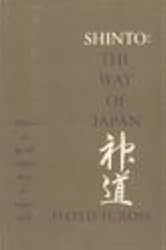
Shinto

Shinto: The Way of Japan by Floyd H Ross, 171 pages

Although few Japanese identify themselves as "Shintoists", Shinto rituals and festivals remain extremely popular in Japan.  According to Floyd Ross, this is entirely consistent with the fundamental orientation of the religion towards practice rather than doctrine.  As a result, in this study Ross concentrates on the study of "Shrine Shinto", the religion as expressed in formal worship and associated popular festivals, rather than "Folk Shinto", the traditional beliefs of the Japanese countryside, or "State Shinto", the reformed religion developed during the Meiji era and dismantled by the Allied occupation, although he is also clear that the various forms of Shinto are interrelated.

Unfortunately, despite his own explicit statement of distrust in the infallibility of the social sciences, Ross relies on them in practice, to the point of assuming that, when the myths do not fulfill the theories of comparative religion, the myths must have been changed.  This dovetails with his preoccupation with a Shinto purified of foreign - primarily Buddhist and Confucian - influences, a Shinto which may never have actually existed and is certainly not the Shinto of today.  This results in a presentation which. while interesting and informative in places, overall fails to satisfy, revealing as it does more about the author than the subject.

Thursday, August 11, 2016

Up From The Sea

Up From the Sea by Leza Lowitz   272 pages

On March 3, 2011, the Tohoku Earthquake and Tsunami happens. It was a disaster of epic proportions where “approximately 15,889 people died, 6,152 were injured, and 2,601 people are still missing. And 127,290 buildings were destroyed, with a million more severely damaged.”

Leza Lowitz, who lives in Toyoko, used that premise as the basis for her powerfully haunting novel about a teenage boy and the devastation that rocks his costal Japanese village.Kai is at school when the earth begins to shake. A 9.0-magnitude quake rattles and rolls his small village. The aftershocks, which number 11,106, often measured over 7.0.

This scenario would make an excellent novel, but Lowitz doesn’t take the easy way to tell of Kai’s life. Instead she has chosen a novel-in-verse.

Readers run with Kai as he heads for high ground with his teachers and classmates. We feel his weary arms cling to a tree as a wave hits. We reel at the loss of his mother, grandmother, and grandfather, his village, his friends, everything. Everything.

The only bright spot is that Kai’s estranged dad live in New York City; he hopes he can make contact with him, and that, somehow, they can be reunited.

Watching Kai search for his family’s remains and to try to pick up the pieces of his village is eerily reminiscent of watching New Yorkers combed hospitals, leave notes and pictures in the hours and days after 9/11. One thing I learned from this tale is that to the Japanese, 3/11 conjures the same type of painful memories that Americans feel every time 9/11 is mentioned.

Kai is selected to go to New York to participate in the 10th anniversary of 9/11. That part of the story was not delved into enough for me. It almost sounded like a vacation.

I read Up From the Sea in less than two hours. The prose is highly visual and emotionally gut- wrenching. I could not put the book down until I learned how Kai came to terms with what he had endured.


I give Up From the Sea 5.5 out of 5 stars. The whole 9/11 thing could have been left out without hurting the story at all.

Friday, February 26, 2016

Deadman Wonderland 1 to 6

Deadman Wonderland Volumes 1 to 6 by Jinsei Katoka, (6 books - 1186 pages)

Cover image for Ganta’s life already sucks, first he lost nearly everybody he knew in the big earthquake ten years ago and now a grinning psychopath massacred everyone in his class at school except him. He quickly gets tried, convicted, and sentenced to death at Deadman Wonderland, a prison/amusement park. Upon arrival he gets fitted with a collar that will kill him unless he eats a piece of “candy” every so often. The warden and guards control only give out this “candy” if you stay useful to them and help entertain the amusement park guests. But Ganta soon realizes that the prison is not entirely what it seems and he has special powers that could be very useful. Well useful if he can stay alive long enough to figure out how to use them.

Cover image for Deadman Wonderland, despite its violent and gory opening, starts off rather dull. I feel that I saw that a lot with manga and graphic novels but I cannot help but feel that way. Maybe there is something about entire books being devoted to setting the scene and character development that makes them feel slow. This feeling is likely enhanced when you realize that you have read 200 pages and all that has happened is Ganta has been sent to prison. I know that if that same amount of text was condensed it likely would not even reach 20 pages, but something in my brain is already bored.
The series really picks up from there and becomes more of the action packed, gory mess that I picked it up and wanted to read it for. Some of the plots are a still a little shaky, and the character development is odd at best, but it wasn’t awful and killed some time. Think of it as a cartoon, not the best thing you have ever watched, but something you will watch more of to pass the time.

Monday, December 14, 2015

What Did You Eat Yesterday? vol. 1

What Did You Eat Yesterday?, Volume 1What Did You Eat Yesterday?, vol. 1, by Fumi Yoshinaga, 200 pages

This is a mash-up of three types of manga that I thought worked really well together- slice-of-life, gay romance, and food.  Combining those three distinct genres made for a really subtle work that didn't feel like any specific one of the genres.  Shiro and Kenji appear to be pretty different- Shiro is a hard-working, serious, closeted lawyer, while Kenji is a fun-loving, openly gay hairstylist.  But what matters the most is that Shiro loves to cook elaborate, thoughtful Japanese dishes and Kenji loves to eat them.  The story here is not much of anything, being a slice-of-life, but there are recipes throughout that sound delicious and it offers a sort of fascinating glimpse into a section of contemporary Japanese culture.

Saturday, September 5, 2015

Acts of Worship

Image result for mishima acts of worshipActs of Worship: Seven Stories by Yukio Mishima, translated by John Bester, 205 pages

The modern tendency to focus on the biographies of writers rather than their works is certainly on full display with the man who wrote under the name Yukio Mishima, who is better known for his spectacular suicide than for anything he wrote.  Acts of Worship, a collection of seven short stories first published in Japan in the '60s, forms an interesting counterpoint to this tendency, suggesting that identities are crafted, consciously or unconsciously, rather than discovered.  Most of the stories center on young adults as they struggle to build themselves in the face of the gaze of their peers, with the exception being the title story, which forms an elaborate capstone through its depiction of a celebrated poet and his middle-aged housekeeper as they, too, manufacture their identities in the twilight of life.

Tuesday, March 31, 2015

Scary Book

Cover image for Scary Book by Kazuo Umezu, 231 pages

This is a manga book recommended by the same person who gave me Stargazing Dog, so I was hoping for something that would awesomely follow in its footsteps. Sadly it did not live up to my hype.

Scary Book is comprised of two stories. The first is Reflections and comprises most of the book. The second is Vengeance Demon. In Reflections a girl falls in love with her reflection and does everything she can to make herself look beautiful. What she doesn't know is that the reflection she sees is really an evil spirit that is waiting to escape and take over her life. Vengeance Demon was a little more convoluted. There a prince is living with the kings master swordsman while his castle is under siege. The swordsman also has a son that he hopes will befriend the prince. Except the prince is cruel and abusive to the point where his son almost dies. But by saving his son the prince gets injured and the kings wrath is great.

These were not bad stories per se but they were not what I was expecting. For starters I could not find anything that was particularly scary about Vengeance Demon and Reflections is more of a psychological horror that either effects you or doesn't. While I found the stories to be lacking, I really enjoyed the art, especially in Vengeance Demon and some of the landscapes and panoramas he creates.