Showing posts with label food. Show all posts

Tuesday, May 14, 2024

The Paris Novel

The Paris Novel by Ruth Reichel 288 pages


Food! Fashion! Art! It’s all there in this magical realism tale set in 1980s Paris. But before we get there, we must start in New York City.


Stella lives an extremely structured life. She is a copy editor at a small publishing house. She believes she loves her job, and she is good at it. It’s a lonely life; Stella is estranged from her mother, the only family she has. She never knew who her father was. Her mother claimed she didn’t know, but reading between the lines, I believe that is why she sent her to Paris. To find him.


When her mother dies, Stella is surprised, nay shocked, that her mother left her anything, especially a letter address to “My Daughter.” Inside Stella finds a one-way ticket along with a note that merely says, “Go to Paris!” She is reluctant but her boss talks her into it. With lots of vacation time, Stella packs a small bag and heads to the City of Lights.


Stella’s well-oiled lifestyle follows her. But when she stumbles upon a vintage store, her deepest inner self begins to emerge. She tries on a vintage Dior gown that fits like it was made for her. The old woman who is the shopkeeper takes her into paying the $6,000 for it with the caveat that she can return if the dress doesn’t change her. The shopkeeper gives her a list of things she must do.


First, she eats oysters at Les Deux Magots. There she meets Jules, an older man with a passion for art who knows anyone and everyone in Paris. He knows great food, exceptional wine, the writers, the painters. Slowly, she sheds herself of all the things that have held her back. She quickly realizes that she enjoys this new life and never wants to go back to the old Stella.


Stella visits Shakespeare & Company Bookstore. The bookstore has much more to offer than books. Could Stella have found a new home, a new sense of belonging when she becomes one of the “tumbleweeds,” one who drifts in and out of the bookstore.


Then there is the small mystery surrounding her father and the Manet painting that her mother had hanging in her home.


For me, every page was a masterpiece of experience! Therefore, The Paris Novel receives 5 out of 5 stars in Julie’s world.


Wednesday, June 20, 2018

The Bad Food Bible

The Bad Food Bible: How and Why to Eat Sinfully by Aaron Carroll, MD.     Audio Book:  7hrs. 11 mins    Hardback Book:  272 pages              


Really good book, I am so glad to have gleaned the knowledge that Dr. Carroll imparts here.   First of all, I fell madly in love with him when he admitted the dirty little secret of doctors is when diagnosing patients they give their best guess.     I realized this some years ago, but, to actually hear a doctor say it – he had me in the palm of his hand for the rest of the book.    And it is a good book.    He talks about the different types of studies and surveys that people tend to believe and why they shouldn’t      If a finding is based on animal testing he says like the saccharin studies that say saccharin causes cancer in lab rats, don’t give up coffee, msg, or any number of other foods, because in the labs they dose the animals with multiple mega doses of whatever it is the study is based on and besides the study tells you it is done on rats not people.    He says never believe any study done on animals.   Also, don’t believe short terms studies on small groups of people.    Only pay attention  to studies done on huge groups of humans that are blind, random procedures, ie. somebody gets the real thing, somebody else gets a placebo throughout the thousands of people with differing lifestyles, different cultures, different ages, different eating habits, those who are obese and those who are not, those who have type 1 Diabetes and those who do not have Diabetes in other words, really random like real life is and the study must go on over a long period to be of value.    If 7 people are studied for 1 week that is basically useless information.   The trial hasn’t gone on long enough to really make any type of evaluation other than speculation rather than causation.    In one of his classes at Indiana State University he asked his students to go online and find studies on 40 different foods that promote their beneficial and/or healing qualities, then he asked them to go back online and look for studies showing how each of these same 40 foods cause cancer.    Each of the 40 foods were said to make you live longer then each food was shown in other studies to cause cancer in various parts of the body.    A wise person told me once, you can’t get funding to study the same thing someone else did, you have to take the opposite approach if you want backing.   Hence why the assignment Dr. Carroll assigned his students proved that out.    He dispels the rat tests, the coronary analysis, and multitudinous other studies that are familiar from the media promotions over the years berating a thing one day then praising it for its benefits the next.   He says there is nothing wrong with enjoying a nice steak (red meat) or fish said to contain mercury that will poison you – it won’t.   Dr. Carroll says a person would have to consume so much each day for msg, aspartame, caffeine, alcohol, glutten, you name the offending ingredient, to do the outrageous claims made that it would be humanly impossible to do so.  He says salt is not bad for you, unless, your blood pressure happens to be outrageously high, then you might want to cut down, but, none of the foods we are told are bad for us can really hurt us unless like the poor beasts injected with mega doses we gorge ourselves to extinction which is not going to happen.    No one is going to overindulge every day for the rest of their life on any suspect ingredient.    He recommends savoring the food and beverages we enjoy until we come across a double-blind study of every human being following  the course of their eating habits for a couple of decades – that would be believable.   And he discusses the pros and cons of organic food and food grown wherever by whoever using pesticides, weed killers and more on their crops, and free-range verses factory farms/ slaughterhouses.      There is no real difference proven statistically that shows one is bad and one is good for you, nothing proving one is better for you than the other.   Natural honey is not better for you than sugar substitutes.    He is really entertaining and interesting in how he explains the ins and outs of the food trade, food myths and how the public has been force fed bad information so long that we come to believe it even though it is absolutely not true.   Dr. Carroll promotes enjoying Chinese food, eating a muffin loaded with glutten smothered in real butter, chased down by a diet soda or Scotch.     It turns out nothing is bad for you in moderation which is how most of us eat anyhow.   Dr. Carroll promotes enjoying life and savouring food and stop worrying about the latest food findings (information can be manipulated any way you want it to and statistics can be made to reflect whatever the person compiling them wants them to whether they are honestly true or not.    The one thing he says is true is that smoking is bad for you and yes, it does cause cancer.    So put the cigarettes down and treat yourself instead to your favorite meal guilt-free.

Wednesday, March 21, 2018

The Hundred-Foot Journey

The Hundred-Foot Journey  by Richard Morais   245 pages

Born above his grandfather's modest restaurant in Mumbai, Hassan Haji first experienced life through intoxicating whiffs of spicy fish curry, trips to the local markets, and gourmet outings with his mother. But when tragedy strikes, the Hajis leave India and embark on a journey around the world, eventually opening an Indian restaurant in a small town in the French Alps. The family takes the village by storm, provoking the ire of their neighbor, Madame Mallory, the proprietress of an esteemed French relais. Only after waging culinary war with the immigrant family does Madame Mallory finally agree to mentor young Hassan, leading him to Paris and a host of new adventures.
This is a story that will appeal to a gourmand given the incredible descriptions of the exotic ingredients and culinary processes and exotic ingredients involved in the selection and preparation of meals from common Indian fare to elaborate French cuisine. Although I am not a vegetarian, I am squeamish when it comes to raw meat – the sight, the smell, the feel, oh my! –the hunting, slaughtering, and preparation details were so vivid as to make me uncomfortable.
Although food figures prominently in the story, it is ultimately the story of the personal and professional journey of Hassan as he navigates the culinary world, a journey that returns him back to where he began, having learned the moral that no one makes the journey through life alone. The author could have explored this concept more thoroughly, but fails to do so. In spite of the vivid details throughout the story, the conclusion feels hurried and confused – an unfortunate ending to an otherwise engaging read.
Posted By:   Regina C.


Thursday, January 25, 2018

Independence Days

Independence Days: A Guide to Sustainable Food Storage & Preservation, Sharon Astyk, 368 pages


A compelling guide to building a deep, robust pantry, for those who have their own garden and those who just want to spend less time or money at the grocery store. This is a beautifully written book; Astyk draws upon her own experiences and her Jewish faith to paint a picture of a society made independent from the grocery store (or at least less dependent on it) and more centered on community. Whether because of a desire for sustainability, a fear of disaster (most grocery stores have only three days’ worth of food on their shelves, leaving us only “nine meals from anarchy”), a moral opposition to the food industrial complex, or whatever motivation, Astyk believes it is a community duty to create a store of locally produced food and regularly use it and share it.

Independence Days explains how to dehydrate, can, ferment, and use a root cellar to extend the usefulness of a harvest, as well as how to procure and store a large supply of staples (unmilled wheat, corn, or whatnot), as well as a variety of recipes for incorporating these stored and preserved foods into a varied and healthy diet. More importantly, though, it is an argument for the importance of food security, thoughtfully and kindly written (Astyk repeatedly mentions that for many people even a small amount of food storage is financially or logistically impossible, an easily-omitted but much-appreciated aside). This book would be good for just about anyone to read.

Wednesday, December 28, 2016

Cooking for Picasso

Cooking for Picasso by Camille Aubray  400 pages

I’m not a Picasso fan, but I am a foodie. The “Cooking” in the title is what initially drew me to this novel. When reading the back cover, I was hooked. The first sentence tells me that this novel is “for readers of Paula McLain, Nancy Horan, and Melanie Benjamin”---three of my favorite authors. Further on I learn that there are dueling timelines (1936 and present day). I adore dueling timelines. So I settled in for an awesome read and was not disappointed.

Cooking for Picasso takes place during a little-known episode in Picasso’s life in 1936. He’s not burned out or blocked; the art just isn’t coming. He sneaks away to a seaside village on the French Riviera, Juan-les-Pins. He hires one of the local cafés to provide lunch for him, provided they can keep his secret.

At the Café Paradis, seventeen-year-old Ondine works with her mother in the kitchen. Daily, her mother sends her to Picasso’s villa with the meal and strict instructions to not speak to him. Ondine is also directed to keep a notebook of what he like and doesn’t like.

Eighty years later, Celine has come from Los Angeles to spend the holiday with her mother, Julie, in Connecticut.  During their conversations, Celine learns that her grandmother had cooked for the infamous artist. Her mother also gives her the notebook that Ondine kept, and alludes to a unknown painting that Picasso had given her.  

Julie had planned to go on a cooking holiday with her sister-in-law, Matilda. Julie has a stroke and is unable to travel to France, her mother’s land, so Celine goes instead.

The plot eaves back and forth between 1936 and current time, but it is mostly Ondine’s story. Still this family saga about three generations of women was simply unputdownable! Part mystery, part treasure hunt, part love story, part travelogue, parts food and art, Cooking for Picasso is a novel that pulls in readers from the beginning and doesn’t let go until the end.
A number of plot twists left me surprised (yeah!). I was disappointed when the story ended. The only missing from this riveting tale was some of Ondine’s recipes.


Cooking for Picasso receives 6 out of 5 stars in Julie’s world. I received this novel in exchange for this review from Blogging for Books.

Monday, December 14, 2015

What Did You Eat Yesterday? vol. 1

What Did You Eat Yesterday?, Volume 1What Did You Eat Yesterday?, vol. 1, by Fumi Yoshinaga, 200 pages

This is a mash-up of three types of manga that I thought worked really well together- slice-of-life, gay romance, and food.  Combining those three distinct genres made for a really subtle work that didn't feel like any specific one of the genres.  Shiro and Kenji appear to be pretty different- Shiro is a hard-working, serious, closeted lawyer, while Kenji is a fun-loving, openly gay hairstylist.  But what matters the most is that Shiro loves to cook elaborate, thoughtful Japanese dishes and Kenji loves to eat them.  The story here is not much of anything, being a slice-of-life, but there are recipes throughout that sound delicious and it offers a sort of fascinating glimpse into a section of contemporary Japanese culture.

Saturday, January 10, 2015

Food: a Love Story

Food: a Love Story by Jim Gaffigan, 340 pages

Another entertaining audio book, read by the author himself. I recently reviewed Gaffigan's other book, Dad is Fat , which I also listened to in audio, and I found this one to be much funnier. This is probably because, as he points out himself, a fat man writing about food is just good.
Basically, this is just Gaffigan paying homage to all sorts of food, what he likes, what he doesn't, what he will eat even if it ends up killing him.
The food-related portion of his standup is by far his funniest material, so this book is just like an extended standup routine. It doesn't deliver quite as well as watching him, as his facial expressions are part of his humor, but it is still a quick and hilarious read/listen.
There is also a section where he highlights major cities he's toured and the great foods they're known for. Sadly, when he mentions St. Louis, toasted ravioli is the highlight, and I think St. Louis has much better to offer than that.
Any fans of humor or Gaffigan will enjoy this, and the audio is definitely worth the listen.

Thursday, October 23, 2014

Year of No Sugar

Year of No SugarYear of No Sugar, by Eve O. Schaub, 303 pages

In this latest in the trend of "My Year of Doing a Thing" books, Schaub watches a video on Youtube that convinces her that sugar is a toxin that is in everything we eat and we would all be better off without it.  Which is way easier said than done.  As Schaub and her family discover, sugar is in the sweets, but also in the crackers, mayonnaise, vegetable broth, bacon, and salad dressing (among others).  More significantly, sugar is also how we tell people we care ('I baked you these brownies'), how we reward ourselves, and a far more powerful symbol than we think.

This is an interesting endeavor, especially because she really does not make it a whole year without sugar.  Since she is doing this undertaking with her whole family, two young children included, it makes sense that she makes some compromises, but it felt a little less than genuine.

Saturday, September 13, 2014

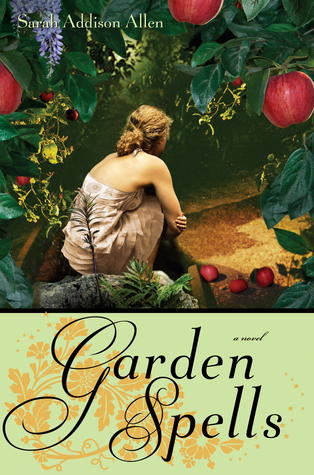
Garden Spells

 Garden Spells, by Sarah Addison Allen, 304 pages

Garden SpellsIn this work of magical realism meets romance, Practical Magic meets Chocolat, Claire Waverley has the gift of making food that has magical effects on those who eat or imbibe them.  But Claire lives a lonely life, afraid to let in love or strangers or anything that may go away. Things change when Claire's sister, the lively Sydney, returns to town with her daughter and a shady past in her wake.  Both sisters are forced by circumstances to come to terms with their pasts and their futures.  This is a fairly tame romance with a happy ending.

Thursday, July 31, 2014

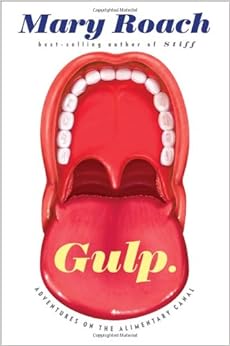
Gulp: Adventures on the Alimentary Canal

by Mary Roach, 352 pages.

Gulp takes us on a journey through the strange history of human digestion.  If the human stomach can break down the things I eat, why doesn't it also eat itself?   Who decides which parts of an animal are tasty, and which are inedible?  What's the purpose of saliva, and why is it always falling out of my mouth when I see a pizza commercial?

Gulp was a really interesting read, and Roach's writing is very accessible and often hilarious.

Animal lovers beware: many chapters highlight the terrible things humans have done to animals in the name of science.  Yikes.

Thursday, July 3, 2014

Delicious!


Delicious! by Ruth Reichl   380 pages

Billie Breslin left her northern California home for New York to take a job at one of the most icon food magazines in the country, Delicious! She's barely settled into her position as assistant to the editor when the staff receives the startling news that the magazine is ceasing publication. 

Billie lucks out and gets to stay on, answering the phone and continuing the Delicious! Guarantee, where readers who have tried the recipes and didn’t like them can get their money back. But she isn't the only one left behind. Sammy, the travel writer, has been off on one of his jaunts and has not cleaned out his office. Upon his return, they explore the building, finding a kitchen full of rotting products and a library that has been opened in decades.

While exploring the library, Sammy stumbles upon a secret door that leads to a room full of files with a card catalog smack in the middle of the room. Upon examining the cards, Billie and Sammy discover a filing system that leads them to a series of letters written by a spunky twelve-year-old girl, Lulu Swan, to legendary chef James Beard during World War II. Together Sammy and Billie hunt go on a treasure hunt for the letters. The novel moves back and forth between Billie’s story and the letters.

Foodies rejoice!  If you love food, you’ll love learning the history of food. And, if you’ve come to love, like I have, Reichl memoirs, you’ll devour Delicious!. While set in contemporary New York, Reichl seamlessly returns readers to the war years of Lulu’s time. Reichl also gives readers a sense that they are walking the streets of contemporary New York  City.

Reichl's debut novel defies genre; it's part historical fiction, part contemporary fiction, part mystery, part romance, part World War II and all wonderful!  I simply LOVED Delicious!

Wednesday, May 14, 2014

The Hamburger: A History

The Hamburger: A History by Josh Ozersky, read by Nick Williams, 160 pages, 3 1/2 hours on audio

In this relatively fast-paced book, Ozersky offers up a fairly balanced history of the hamburger in America, starting with its chipped-beef sandwich ancestors and carrying all the way through to the uber-expensive gourmet hamburgers that have found traction in high-end restaurants in recent years. Ozersky understandably places a lot of focus on fast food, particularly on White Castle, McDonalds, and Burger King, as those were the innovators and biggest players in this relatively short history.

A major problem I had with this book is the narrator of the audiobook, which I listened to. He pronounces some words and phrases oddly, and sounds something like humanesque computer. It detracted from the information, and the narrative flow. It did not, however, stop me from craving a cheeseburger and french fries.

Thursday, March 27, 2014

Too Many Cooks

Too Many Cooks by Rex Stout, 179 pages

Another book I read to go along with my research on culinary mysteries, this is the first Rex Stout I've ever read. I know many consider him to be one of the best mystery writers to have picked up a pen. This is chosen by some to be the first true culinary mystery.
Nero and his "Watson", Archie, are in West Virginia(?!) for a gathering of some of the best chefs in the world, who will be cooking but will also be exposed to some of the best cuisine America has to offer. Nero will lecture them about America's contributions to fine cuisine. Of course, a chef gets murdered during the activities and Nero is called upon to discover the murderer, much to his reluctance. He just wants to eat and drink.
I found it interesting that the story was told from Archie's perspective, and his descriptions of Nero present him as quite an odd character.
The best line in the book is from Nero, sleep-deprived and hungry,
when he asks Archie, "Do you realize that that fool is going to let that fool make a fool of him again?", referring to one of the chefs getting involved with his adulterous ex-wife again.


Tuesday, November 12, 2013

Relish: My Life in the Kitchen


Relish: My Life in the Kitchen by Lucy Knisley, 173 pages
  
I’m a comic book reader, not a cookbook reader. I’d seen Relish receiving rave reviews in various journals and blogs, but wasn’t sure it was for me. Luckily for me, Lucy Knisley hones in on not just cooking, but all the wonderful memories and relationships food can foster.

Knisley presents her life in a series of vignettes, each centered on a specific meal or other food-related memory. She grew up under fairly exceptional circumstances, with globetrotting gourmets for parents, food played an integral role in her childhood that has continued into her adult life. Her culinary experiences range from selling locally grown produce at the farmers’ market to eating at five-star Michelin restaurants abroad.

After checking this book out from the library and devouring it (ha! pun!), I went out and purchased my own copy - the recipes at the end of each chapter look mouth-wateringly delicious and I want to try making all of them! Kitchen-avoiding-me actually wants to try the recipes in this book! I’d love to see Relish start a new graphic-novel-cookbook trend, the illustrated recipes resonated with me in a way that standard cookbooks do not.

Wednesday, October 23, 2013

Food Rules: An Eater's Manual

Food Rules: An Eater's Manual by Michael Pollan, illustrated by Maira Kalman, 203 pages

Pollan has become something of a food guru, with his bestselling In Defense of Food and The Omnivore's Dilemma. Food Rules presents some simple suggestions culled from Pollan's books, as well as from his readers and others in the organic food, slow food, and nutrition community. Pollan presents 83 "rules," as well as simple explanations. For example, "don't eat anything your grandmother wouldn't recognize as food" (warning off the Go-gurts of the food world) or "it's OK to eat junk food, as long as you make it yourself" (the idea being that junk food takes so much work to make deep-fried Twinkies that you won't make them very often). He notes in the foreword that these are rules that he's come up with, but they're more suggestions, and he doesn't expect anyone to abide by all of them. Rather, he hopes that a handful will stick with his readers, and make them think the next time they go grocery shopping.

Pollan's rules are punctuated by some fantastic artwork by Maira Kalman. I'll admit that Kalman's work is a large reason that I picked up this short volume. I was captivated by her work in Daniel Handler's young adult novel, Why We Broke Up, (which is also worth picking up), and in this book, she doesn't disappoint. Check out this short volume, and enjoy Kalman's quirky, funny art working perfectly with Pollan's simple writing style. It's well worth the hour that you'll spend reading it.