Showing posts with label priests. Show all posts

Monday, October 6, 2025

Life of Robert Southwell

The Life of Robert Southwell, Poet and Martyr by Christopher Devlin, 324 pages

Born into a well-connected family in England in the middle of the sixteenth century, as a teenager Robert Southwell, possibly under the influence of recusant relations, converted to Catholicism and departed to the Continent where he could practice his faith freely, beyond the reach of Protestant persecution.  Attracted, like many devout young men of the time, to the Society of Jesus, he entered the Jesuits after an initial rejection and became first a student and later a professor at the English College in Rome.  He left behind this position to become a missionary in his homeland, where he managed to minister to the Catholic community for several years before finally being cornered, captured, tortured, and executed.  Southwell's poetry, much of it written while in hiding, would serve as an inspiration to Shakespeare, Jonson, Donne, and Hopkins, among others, while his holy life and martyrdom led to his canonization in 1970, 14 years after this biography was published.

In the author's note that begins this biography, Christopher Devlin connects Southwell with St Edmund Campion, the illustrious Jesuit scholar and martyr of the preceding generation, and refers readers to the "brilliant study" of Campion by Evelyn Waugh.  Just as Southwell lived happily in the shadow of Campion, so Devlin writes in the shadow of Waugh.  While Devlin cannot match Waugh's literary genius, he compensates with thorough scholarship, something sorely needed when the historical record is so fragmentary.  

Wednesday, September 10, 2025

Cardinal Manning

Cardinal Manning: A Biography by Robert Gray, 327 pages

Henry Manning did not set out to become a clergyman.  Financial pressures forced him away from a promising future in law and politics into a clerical career in the Church of England.  He did not set out to become a Catholic.  A long process led him from his upbringing in the heart of Evangelical piety into a more grounded, apostolic faith, and only a genuine crisis of conscience drove him out of Anglicanism.  Having become Catholic, however, and a Catholic priest, he did set out to take a leading position in the Catholic Church in England.  Conscious of his own considerable gifts, he was not reluctant to use them to guide the Church and society in the direction he thought best.

In his own time, Manning was highly esteemed.  Although his conversion cost him many of those dazzling friendships he had made in his youth, his tireless efforts for the working classes of England won for him an admiration far broader and no less genuine.  This was enhanced by his emaciated appearance, which seemed to be a visible record of long decades of prayer and fasting - Chesterton recalled seeing him in his cardinalatial robes looking like "a ghost clad in flames."  Subsequent generations were not so kind.  Comfortable secular scoffers had Lytton Strachey's infamous hackiograpy, which depicted Manning as an ambitious hypocrite.  Among Catholics, Manning's troubled relationship with St John Henry Newman caused his reputation to decline even as that of Newman grew.

Robert Gray's biography, then, is an important recovery.  For Gray's even-handed account of Manning's life, thought, and work reveals a man who was, indeed, ambitious and driven, yet fully aware of these tendencies in himself and determined to fight against them and, where possible, bend them towards good.  In the end, the reader is likely to echo the sentiment of the author, "if Henry Manning is not saved seventy times seven times, God help the rest of us."

Tuesday, August 3, 2021

Christus Vincit

Christus Vincit: Christ's Triumph Over the Darkness of the Age by Bishop Athanasius Schneider and Diane Montagna, 421 pages

In the relatively new but vital tradition of book-length interviews of Catholic prelates, popularized by Cardinal Ratzinger and continued by Cardinal Sarah, Christus Vincit is an expansive, free-ranging conversation with the auxiliary bishop of Nur-Sultan, the capital of Kazakhstan.  It might understandably be asked what this man of the peripheries has to offer the Church and the world.  Quite a bit, as it turns out, and if little of it is new, most of it is excellent.

The heart of Bishop Schneider's message is that the naturalistic turn the Church took in the twentieth century has been a disaster pastorally, evangelically, and theologically.  To counter this, he calls for a renewed emphasis on the supernatural and the transcendent.  Again he reminds us that human beings are embodied creatures rather than pure spirits, that history is not Providence but has a providential aspect, and that while all earthly economic and political arrangements, debates, and crises are passing, there is a Kingdom which is eternal.  Unfortunately, there is also a certain amount of conspiratorial thinking, mostly involving the Freemasons, some of which may be true but which generally seems out of place and fantastical.

Thursday, April 29, 2021

The Day Is Now Far Spent

The Day Is Now Far Spent by Robert Cardinal Sarah and Nicolas Diat, translated by Michael J Miller, 343 pages

The hour is late indeed, says Cardinal Sarah in this book-length interview with his favorite interlocutor, Nicolas Diat.  The Church, he tells us, is riven by dissension, compromised by unbelief, and stained with sin.  Meanwhile, the decadent ruins of Christendom are in the grip of a "fundamentalist liberalism" that pursues wealth and power (often under the guise of "justice" and "liberation") while treating the sacred with indifference and contempt.  The irony is that, by attempting to place himself at the center of the world, modern man has created a world in which he is increasingly superfluous.  Not content in its iconoclasm with the destruction of its own past, the neo-colonialist West actively works to erase the cultures of Africa and Asia even as it plunders their lands of their natural resources.  

It is necessary, then, for faithful Catholics to resist the temptations of compromise and despair.  This demands the cultivation of virtue and excellence - "The Church does not have the right to be mediocre."  Fittingly for the author of The Power of Silence, while Sarah's message is urgent, it is not primarily a "call to action", but a call to prayer and contemplation.  "Your mission is not to save a dying world... Your mission is to live out with fidelity and without compromise the faith you received from Christ."

Friday, June 28, 2019

Woman of the Pharisees

Image result for Woman of the PhariseesThe Woman of the Pharisees by Francois Mauriac, translated by Gerard Hopkins, 241 pages

Brigitte Pian is a wicked stepmother.  She is all the more wicked because she is so widely admired for her goodness, a goodness which she pursues tirelessly.  Yet it is goodness sought not for its own sake but a cramped, loveless drive for perfection rooted in the desire to dominate and control.  Thus, in the end, all of her good deeds turn to ashes.

The story practically writes itself: the religious hypocrite is, after all, a common trope in Western culture, and one that is ideally suited to the ideological demands of modernity.  Thankfully Mauriac is too good a writer for cliche.  Brigitte does not sin through the open embrace of evil but through a perversion of the good.  Were it otherwise, she would not be so pitiable, nor her example so salutary.

Wednesday, July 18, 2018

Parish Priest

Parish PriestParish Priest: Father Michael McGivney and American Catholicism by Douglas Brinkley and Julie M Fenster, 207 pages

In 1882, Fr Michael McGivney, an associate pastor at St Mary's parish in New Haven, Connecticut, founded the Knights of Columbus with a handful of men from his congregation.  Over thirteen decades later, there are nearly two million Knights scattered across a half-dozen countries, continuing to provide fraternal support and a financial safety net to new generations.  Yet, as Douglas Brinkley and Julie Fenster emphasize, the Knights were not a distraction from, but a vital part of, McGivney's work as a parish priest.  Although considerable attention is paid to the work for which McGivney is best remembered, it is placed in the context of the ordinary work of his vocation - comforting widows and orphans, visiting the sick and imprisoned, baptizing and catechizing, marrying and burying.

This may have only been a serendipitous accident - the records covering the early years of the Knights are sparse, as is often the case with seemingly insignificant beginnings whose importance is only clear in retrospect.  The authors fill the space with human interest stories whose only connection is the involvement of Fr McGivney - a family that faces poverty and separation after losing its breadwinner, a cop-killer facing execution, a Protestant clergyman's daughter contemplating conversion.  The result, designed or not, illustrates beautifully that McGivney's heroic virtue was expressed not in some great singular work, but in doing ordinary things with extraordinary love.

Wednesday, June 20, 2018

Temple of the Golden Pavilion

The Temple of the Golden PavilionThe Temple of the Golden Pavilion by Yukio Mishima, 262 pages

"Ever since my childhood, Father had often spoken to me about the Golden Temple."  From an early age, then, the ideal of the Golden Temple of Kinkaku-ji dominated Mizoguchi's imagination, but what is a portal for the father becomes a barrier for the son.  Distanced from others by his stutter, convinced of his own essential unloveliness, Mizoguchi comes to hate the Golden Temple more the more he is captivated by its beauty.  After the death of his father, he becomes a novice at the Temple, and it becomes the ultimate symbol of his father, his religion, his country, his traditions, his future, and everything that stands in the way of his freedom to be a beast.

Based on the true story of the novice priest who burned down the Golden Temple in 1950, The Temple of the Golden Pavilion is full of Mishima's characteristic alternately achingly beautiful and shockingly brutal enigmatic vignettes.  The novel - part biography, part prose poem, part koan - is an enchanting tragedy both personal and civilizational.

Monday, September 18, 2017

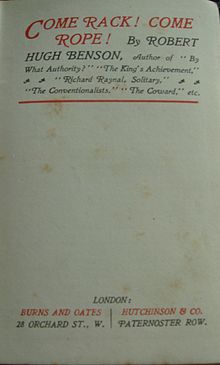
Come Rack! Come Rope!

Come Rack!  Come Rope!  by Robert Hugh Benson, 377 pages

The only son of a proudly recusant Catholic family in the reign of Elizabeth, Robin is devastated when he learns that his father intends to recant and join the state church.  Perhaps even more surprisingly, his beloved Marjorie reveals to him her growing conviction, despite her own wishes to the contrary, that it is the will of God he should become a priest.  Robert Hugh Benson's classic novel follows the pair on their separate journeys of love from this initial sacrifice to the ultimate consummation.

Although the primary characters are fictional, a number of historical personages make appearances in Come Rack!  Come Rope!, including St Edmund Campion and Mary Stuart.  Benson evokes the historical period with a casual ease, conveying its peculiarities without belaboring them.  The novel focuses on the characters and lacks a strong central plot - the primary antagonists barely appear - and, unfortunately, those characters are not strong enough or interesting enough to carry the book.

Friday, August 25, 2017

Laurels and the Tiara

The Laurels and the Tiara: The Life and Times of Pius II, Scholar, Poet, Statesman, and Renaissance Pope by RJ Mitchell, 237 pages

Aeneas Sylvius Piccolomini led a life of struggle, conflict, and, finally, disappointment.  Born into an impoverished Sienese noble family, one of eighteen children of whom only three survived to adulthood, he rose to occupy the highest office in Christendom.  He was raised in a rural backwater but became famed for his urbanity.  He was so immersed in the literature of pagan antiquity that he likely chose the name Pius after Virgil's hero, "pius Aeneas", rather than the second century martyr St Pope Pius I, but he was also devout enough to walk ten miles barefoot through the snow while on pilgrimage in Scotland.  He was a key player at the renegade Council of Basel but repudiated the conciliar theory long before he became Pope.  He undertook to personally lead a crusade to liberate Constantinople despite the persistent illnesses that left him virtually crippled, only to see the project evaporate in the last months of his life.

The very human story told in The Laurels and the Tiara combines international intrigue, Renaissance culture, and high moral purpose, epitomized by a colorful College of Cardinals which included the notorious Rodrigo Borgia alongside famed scholars Basilios Bessarion and Nicholas of Cusa.  The biographer's task is greatly eased by the fact that Pius II wrote an extensive autobiography, supplying him with an abundance of material including a number of amusing anecdotes and revealing trivialities.  Throughout, Mitchell keeps his narrative moving briskly along, even when it might benefit from lingering, and unfortunately this ultimately results in the biography resembling a sketch more than a complete portrait.

Monday, June 26, 2017

Jerome

JeromeJerome: His Life, Writings, and Controversies by JND Kelly, 339 pages

It sometimes seems as if the number of biographies of St Augustine of Hippo could fill a small library by themselves, with his own Confessions remaining the best.  By contrast, there are very few biographies of his interlocutor and rival St Jerome.  This is certainly not because he lived an uneventful life - to the contrary, wherever Jerome went, controversy swirled around him.  As Kelly ably reveals, this was the result of a character as passionately loyal to his friends as he was hostile to his enemies, "violently opinionated" with an "habitual tendency to exaggerate".  Jerome is best known as the translator who produced the bulk of the definitive Latin version of the Bible, the Vulgate, but in Kelly's biography this is secondary to Jerome's involvement in a range of contemporary disputes both theological and personal.  The result is a work which manages to be both lively and eminently scholarly.

This is not to say that Kelly lacks weaknesses - particularly troublesome is his consistent chronological snobbery that smirks at Jerome's sexual morality and airily waves about the latest word in biblical criticism as if it were the last word.  Throughout, it is clear that Kelly's own views are the yardstick by which he measures Jerome's successes and failures, and this colors somewhat his analysis of Jerome's mindset and motives.  Nonetheless, his solid scholarship compensates for these flaws, as the book is anchored solidly enough for the reader to dissent from Kelly's evaluations.

Wednesday, May 31, 2017

Murder in the Cathedral

Murder in the CathedralMurder in the Cathedral by TS Eliot, 88 pages

Murder in the Cathedral is TS Eliot's dramatic retelling of the return of St Thomas Becket to Canterbury and his subsequent murder at the behest of King Henry II.  In examining its protagonist and his struggles with enemies both physical and spiritual, Eliot questions the relationship between Church and state, but also and more importantly, between God and man, for "the true martyr is he who has become the instrument of God, who has lost his will in the will of God, and who no longer desires anything for himself, not even the glory of being a martyr."

Murder in the Cathedral is perhaps the best example of a modern play in the classical style, which is to say a play which uses some of the elements and techniques of classical drama without attempting to be a classical drama.  This only heightens the effect when the knights break the fourth wall to appeal to, and implicate, the audience.  This is, in turn, no postmodern gimmick, but the consummation of the play as liturgical drama, existing in a no-time which is neither present nor past.

     We do not know very much of the future
     Except that from generation to generation
     The same things happen again and again.

Eliot powerfully makes the audience (or reader) and St Thomas into contemporaries - or reveals that we already were.  His struggles are our struggles, his temptations our temptations, and his fate our fate, even if we are sometimes lulled by superficialities and distracted by the illusion of the merely visible.

     You shall forget these things, toiling in the household,
     You shall remember them, droning by the fire,
     When age and forgetfulness sweeten memory
     Only like a dream that has often been told
     And often been changed in the telling.  They will seem unreal.
     Human kind cannot bear very much reality.

Friday, March 10, 2017

Edmund Campion

Edmund CampionEdmund Campion: A Scholarly Life by Gerard Kilroy, 396 pages

St Edmund Campion grew to adulthood during the successive reigns, and successive religious revolutions, of the children of Henry VIII.  After a brilliant academic career at Oxford, he was faced with the necessity of committing himself to one of these visions of the truth.  Taking St Patrick as his patron, he chose to leave behind a promising career in the Church of England to serve Christ in the Society of Jesus.  After a decade on the Continent - studying in Douai, being ordained in Rome, teaching and writing in Prague - he was ordered to return to England to minister to the Catholics living under persecution there.  After a year he was betrayed and arrested, taken to the Tower of London for torture and trial.  A series of semi-public disputations were held between Campion and Protestant scholars, and despite his being fresh from the rack and bereft of books it was generally conceded that he more than held his own.  At his trial he further embarrassed Her Majesty's government by revealing that he had been offered a bishopric if he would join the established church, demonstrating that he was being persecuted for his religion and not for any alleged treason.  As he was being drawn and quartered, a drop of his blood landed on the coat of the young lawyer Henry Walpole, who subsequently eulogized Campion in his poem "Why doe I use my paper, ynk and pen", immortalized in music by William Byrd:

     Saynt Marie churche can tell, and all the scholes do know,
     the walles may yet resound his praise, where he excelled soo
     how scharpe yn science sound, how rype yn skyll was he?
     how sweate for toung, how grave for trowthe, how deape for memoree? 
     how skyll yn antique writers, how rare yn everie arte, excelled.
     And that wich most appearde, yet rarest for to fynde,
     the more of learnyng he possest, more humble was hys mynde.

Kilroy's biography is thorough and impeccably researched, a scholarly biography of a scholarly man.  Unfortunately, this also necessarily means that the book is a less than thrilling read, as the author carefully makes his way through the sources.  Kilroy places Campion's mission to England in the context of the Sander expedition which sought to drive the English from Ireland with papal support, climaxing in Campion's arrest by troops mustered to defend England from Sander and his allies.  Indeed, Kilroy uses Dr Sander as St Edmund's foil, as determined to restore Catholicism in Britain by military force as Campion was by the power of persuasion and the sacraments.  Kilroy also briefly touches upon the immediate explosion of literature celebrating Campion and condemning the English government, published at underground presses in Britain and openly abroad, which establishes Campion's execution as a landmark in the increasing isolation of post-Reformation England from the culture of the Continent.  Throughout, however, Kilroy keeps the focus on the person and personality of Edmund Campion, along the way proving the truth of Walpole's tribute, "the more of learnyng he possest, more humble was hys mynde."

Saturday, October 1, 2016

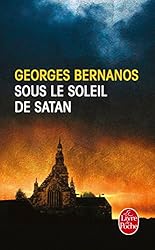
Under the Sun of Satan

Under the Sun of Satan by Georges Bernanos, translated by Harry Lorin Binsse, 253 pages

"O you who know nothing of the world except colors and sounds without substance, soft hearts, lyric mouths in which harsh truths would melt away like a sugar candy - small hearts, small mouths - this is not for you."

Written nine years before his masterpiece, The Diary of a Country Priest, Under the Sun of Satan (originally translated into English as The Star of Satan) shares many similarities with the later work.  Both concern a saintly priest single-mindedly pursuing holiness, unmistakably modeled on St Jean Vianney.  In both novels, the priest is mentored by an older, worldly priest and conquers temptation through a rigorous course of asceticism which endangers his health.  In both novels, the saint is entirely misunderstood by the bourgeois world that surrounds him.  Most obviously, in both novels the protagonist wins his greatest triumph - the salvation of a single soul - but the victory is not only unknown to the world but becomes a source of scandal when the convert dies soon thereafter, with the priest's actions being singled out for censure.

There are considerable differences as well.  While the protagonist of the later novel dies young, Fr Donissan lives to old age.  Mouchette, the young woman Fr Donissan counsels, hates herself for her sins, where the Countess' sin was her anger at God for the death of her son.  Most importantly, the earlier novel uses a third person perspective, and therefore does not enter as fully into the mind of the protagonist.  While this allows for more definite, clearly drawn distinction between the saintly priest and the world, it lacks the delirious quality of the later novel.  To read Under the Sun of Satan is to wade in the waters, to read The Diary of a Country Priest is to be immersed, and risk drowning.

Monday, June 27, 2016

Gregory the Great

Cover image for Gregory the Great: Perfection in Imperfection by Carole Straw, 260 pages

Sixth century Italy was a turbulent place.  The Gothic kingdom of Theodosius was reconquered by the Roman Empire under Justinian, but the Emperor ruled from the capital at Constantinople, never setting foot in Italy.  Much of Imperial Italy was then conquered by the Lombards, leaving only Ravenna, Rome, and a thin strip of land connecting them in Roman hands.  The Emperor's representative, the exarch, resided in Ravenna, and the Eternal City became increasingly dependent on the papacy for patronage and even basic governance.  One pope was deposed by Justinian's general Belisarius, another was imprisoned by Justinian until he gave his assent to the rulings of the Second Council of Constantinople - and the conditional assent he eventually gave led to a significant schism, with the formation of a new church in northern Italy supported by the Lombards and headed by the bishop of Aquileia.

St Gregory the Great was born into an aristocratic Roman family in the midst of this turmoil.  After years of public service, he found peace in a monastery, but his gifts resulted in him being pressed into ecclesiastical service as a papal emissary, and later elected pope himself.  During his fourteen year reign St Gregory organized the defence of Rome against the Lombards, dealt with plague outbreaks, dispatched St Augustine of Canterbury to Kent to begin the reevangelization of England, inaugurated the papal title "Servant of the Servants of God", and, most enduringly, reformed the Roman liturgy - legend would associate him with the origins of "Gregorian" chant.

Straw is only passingly concerned with this biography - her interest is in the saint's thought, as it is expressed in his extensive writings.  St Gregory is a Doctor of the Church, and is commonly identified as the figure who marks the definitive transition between the classical and medieval worlds.  His eventful life was marked by the dual search for equilibrium, found in reason, and stability, found in love of God and neighbor.  For Gregory, the cosmos is founded in harmony, a harmony which is disturbed by sin and restored by sacrifice.  Sacrifice finds its ultimate significance in the sacrifice of Christ, both on the Cross and in the Mass, which unites heaven and earth.  This distinguishes the Christian saint from the Stoic philosopher, for while the latter pursues an ultimately solitary perfection, the saint is drawn into an often painful communion with others.  As Straw explains it, Gregory's Christian worldview is marked by an understanding of the ambiguity of a fallen world and the hidden complementarity of seeming opposites - prosperity and adversity, solitude and community, sorrow and joy, fear and love, flesh and spirit, God and man.

Saturday, June 11, 2016

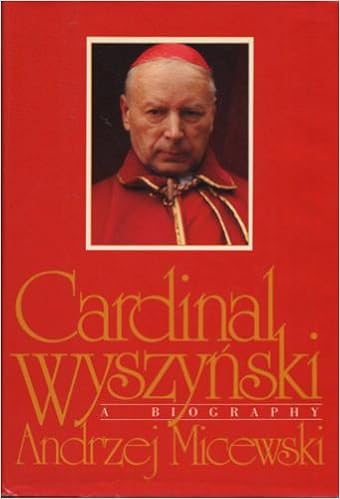
Cardinal Wyszynski

Cardinal Wyszynski: A Biography by Andrzej Micewski, translated by William and Katarzyna Brand, 463 pages

Stefan Wyszynski became Archbishop of Warsaw and Primate of Poland in 1948.  He remained in that position for 33 years, all of them spent under an aggressively atheist totalitarian dictatorship.  During that time, he lead the Church in Poland through his nine-year Great Novena of the Millennium (the first millennium of Polish Christianity, 966-1966) to the consecration of Poland to the Virgin Mary "to bring aid to the universal Church and the family of man."  Although he died in 1981, he survived long enough to see his junior colleague, the Archbishop of Cracow, elected Pope, and in many ways St John Paul II carried forward Wyszynski's program into the universal Church. 

The author describes his nearly 500 page book as merely a "sketch of his biography... intended only as initial research into his life."  A large portion of the text is taken up by paraphrases of the minutes of committee meetings - hardly the exciting, dramatic material one might hope for in a record of over three decades of resistance to tyranny.  Yet Micewski repeatedly makes the obvious comparison between Wyszynski and Cardinal Mindszenty of Hungary in order to contrast their approaches to Communist oppression, the former attempting to accommodate the authorities wherever possible without compromising core principles, while the latter refused to even speak of dialogue with his persecutors.  This starkly demonstrates Micewski's central theme, that Stefan Wyszynski not only had the courage to be a martyr, but also the wisdom to be a true pastor.

Friday, June 3, 2016

Church of Spies

Cover image for Church of Spies: The Pope's Secret War Against Hitler by Mark Riebling, 250 pages

Church of Spies is a history of the clandestine contacts between German anti-Nazi circles and the Vatican of Pope Pius XII, centering on the combative Munich lawyer Josef Mueller, nicknamed "Joey Ox", who worked as a go-between for Admiral Wilhelm Canaris, head of German Military Intelligence, and Church leaders in Germany and Rome.  Between Mueller's connection to Canaris and a circle of Jesuits working with General Ludwig Beck, the pope and his agents - dubbed the "Black Chapel" by the SS - were tied directly or indirectly to virtually every German resistance group, including Claus van Stauffenburg's conspiracy, Dietrich Bonhoeffer, and the White Rose.

There are some surprises in Riebling's book, especially how early the alliance between the Pope and the anti-Hitler plotters was forged - already during the Phoney War of 1939 contacts were established with the British government for a Vatican-brokered peace agreement in the event of Hitler's overthrow.  Unfortunately, the book is marred somewhat by Riebling's sensationalistic tendencies (Catholic Action is described as "a practice" used "to cultivate influence agents" and form "'front' groups"), a fault which is exacerbated by his sloppiness (he tells the story of the Scholls without even mentioning their comrade Christoph Probst, who was arrested and executed with them).  These flaws do not stop the book from being consistently interesting and intensely dramatic, but the book would have been superior if it had dealt less with the remarkable personal story of Mueller and more with the discussions within the resistance concerning the aftermath of a successful coup which, Riebling hints, laid the groundwork for post-war Germany and Europe.

Wednesday, August 26, 2015

St Philip Neri

St Philip Neri: An Informal Biography by Marcel Jouhandeau, translated by George Lamb, 129 pages

St Philip Neri was born in Florence in the early sixteenth century, but he moved to Rome at the age of 18 and remained there until his death 62 years later.  Renowned in equal measures for his deep piety and joyful spontaneity, he attracted a circle of admirers who would gather for music, prayers, lectures, and discussions.  In time, this was formalized as the Congregation of the Oratory.  Neri's humility and humor made him equally at home with common laborers and princes of the Church, while his mystic ecstasies he kept hidden from the world.

Jouhandeau's unconventional biography is roughly divided into two halves - a personality sketch and a personal history.  This matches the saint's own unconventional, prankish behavior, such as shaving only one side of his face or dancing during audiences with Cardinals.  The author writes less like a biographer than an admiring contemporary, painting a vivid, attractive portrait of the man but being somewhat unjust towards some of those around him - Oratorian and historian Caesar Baronius and Pope St Pius V in particular.

Tuesday, August 25, 2015

Legion

Legion by William Peter Blatty, 269 pages

Legion is Blatty's sequel to his best-known work, The Exorcist (Legion was eventually adapted into The Exorcist III, which Blatty directed himself, although the studio insisted on adding elements to justify the Exorcist title).  Detective Kinderman returns, investigating a series of murders that seem to be the work of a serial killer known to have been killed decades ago.  Father Dyer, Father Damien's best friend and fellow Jesuit, also returns, having forged a bond with the surly detective in the years since Damien's death.

Where The Exorcist held out the hope that the existence of supernatural evil implies the existence of supernatural good, Legion asks why natural evil seems to pervade the human world and whether there is any hope against it.

Unfortunately, the novel's problems run deep.  Kinderman, while initially charming in his endless, garrulous, rambling monologues, eventually becomes tiresome.  The Gemini killer is a silly Hollywood caricature of a serial killer.  The ending is absurdly anti-climactic, although it is thematically appropriate.  This is one of those instances where, against stereotypes, the movie is better than the book.

Wednesday, April 22, 2015

Art of Political Murder

Cover image for The Art of Political Murder: Who Killed the Bishop? by Francisco Goldman, 357 pages

In April of 1998, the Recovery of Historical Memory Project, a group within the Archdiocese of Guatemala City's Office of Human Rights, published a massive work entitled Guatemala: Never Again, documenting decades of human rights abuses during the country's civil war.  Two days later, Bishop Juan Gerardi, the chief architect of the report, was found bludgeoned to death in his garage.  The police centered their investigation on a priest who shared the rectory with the bishop, speculating that the bishop had caught the priest in the midst of some sexual misdeeds.  Others theorized that Gerardi had run afoul of local gangs or uncovered evidence of embezzlement by prominent ecclesiastics.  The victim's own human rights investigators, meanwhile, conducted their own independent investigation, following leads that implicated powerful figures in the Guatemalan military.

Part history of Latin American oppression and corruption, and part true crime thriller, The Art of Political Murder is both informative and interesting.  Goldman spent much of his childhood in Guatemala, and his easy familiarity with the country, its language and customs grants the book an added layer of authenticity.  His judgement is, perhaps, a bit less sure - a serious problem when reporting on a case with minimal physical evidence, unreliable witnesses, and surrounded by rumor and gossip.  While Goldman seems certain of his conclusions, readers may find themselves more doubtful.

Friday, April 10, 2015

Diary of a Country Priest

Diary of a Country Priest by Georges Bernanos, 255 pages

Written and published in interwar France, this remarkable novel takes the form of the intermittently kept, sometimes self-edited diary of a young priest recently assigned as the pastor of a small rural parish.  The unnamed priest must deal with indifferent peasants, deceitful merchants, malicious children, a dysfunctional family of aristocrats, an atheistic doctor, and one of his colleagues who has abandoned the priesthood.  Some of his flock believe him to be a drunk, others a fool, or a weakling, or all three.  In fact, he is a saint, although he himself cannot imagine this to be true.

In Diary of a Country Priest Bernanos created one of the greatest portraits of sanctity, and the world's disdain for sanctity, in the history of literature.