Showing posts with label art. Show all posts

Wednesday, January 7, 2026

Masaccio's Trinity

Masaccio's Trinity, edited by Rona Goffen, 138 pages

In the early 15th century, the artist Tommaso Guidi, better known as Masaccio, painted a fresco of the Trinity represented as the Throne of Mercy, flanked by the Blessed Virgin, St John the Apostle, and a pair of donors.  The fresco was covered up by renovations in the late 16th century, but was uncovered in the 19th, at which time it was detached from the wall and moved to another location in the church of Santa Maria Novella.  20th century renovations uncovered another part of the fresco in the original location, and the whole was reunited with considerable difficulty.  Even as damaged as it is, Masaccio's Trinity remains a striking work of art, remarkable for its use of perspective and fictive architecture.

The present book was published in 1998 as part of the Masterpieces of Western Painting series.  Predictably, perhaps unavoidably, the quality of the included essays are uneven, but all of them contain at least some interest.  The highlight is the essay "Time and the Timeless in Quattrocento Painting" by French poet Yves Bonnefoy. 

Tuesday, May 14, 2024

The Paris Novel

The Paris Novel by Ruth Reichel 288 pages


Food! Fashion! Art! It’s all there in this magical realism tale set in 1980s Paris. But before we get there, we must start in New York City.


Stella lives an extremely structured life. She is a copy editor at a small publishing house. She believes she loves her job, and she is good at it. It’s a lonely life; Stella is estranged from her mother, the only family she has. She never knew who her father was. Her mother claimed she didn’t know, but reading between the lines, I believe that is why she sent her to Paris. To find him.


When her mother dies, Stella is surprised, nay shocked, that her mother left her anything, especially a letter address to “My Daughter.” Inside Stella finds a one-way ticket along with a note that merely says, “Go to Paris!” She is reluctant but her boss talks her into it. With lots of vacation time, Stella packs a small bag and heads to the City of Lights.


Stella’s well-oiled lifestyle follows her. But when she stumbles upon a vintage store, her deepest inner self begins to emerge. She tries on a vintage Dior gown that fits like it was made for her. The old woman who is the shopkeeper takes her into paying the $6,000 for it with the caveat that she can return if the dress doesn’t change her. The shopkeeper gives her a list of things she must do.


First, she eats oysters at Les Deux Magots. There she meets Jules, an older man with a passion for art who knows anyone and everyone in Paris. He knows great food, exceptional wine, the writers, the painters. Slowly, she sheds herself of all the things that have held her back. She quickly realizes that she enjoys this new life and never wants to go back to the old Stella.


Stella visits Shakespeare & Company Bookstore. The bookstore has much more to offer than books. Could Stella have found a new home, a new sense of belonging when she becomes one of the “tumbleweeds,” one who drifts in and out of the bookstore.


Then there is the small mystery surrounding her father and the Manet painting that her mother had hanging in her home.


For me, every page was a masterpiece of experience! Therefore, The Paris Novel receives 5 out of 5 stars in Julie’s world.


Wednesday, September 14, 2022

The Poet's House

The Poet’s House by Jean Thompson 320 pages

Author Jean Thompson is new to me. I really enjoyed her writing, and in reading about her and this book in various book newsletters and magazines, it sounds as though I am missing something by not reading her work.

While poetry is at the heart of this novel, this book is not about poetry. Art, yes. Poetry. No. There is also a mystery in the story that mostly stays in the background until near the conclusion.

Twenty-one-year-old Carla is a landscape artist. She has no plans; nothing seems to excite her, except hard work. A community college dropout, Carla feels stupid and unteachable. Unfortunately, she is suffering from un-diagnosed form of dyslexia; she doesn’t process the written word as others do. 

Carla likes her job. It makes sense to her. However, she life is drastically changed when she hears one of her clients, Viridian, reading her poetry aloud. She gets it!

Like Viridian’s friends and colleagues, Carla is drawn to the seventy-ish Viridian. She just wants to be around her, and Viridian notices her. For the first time in her life, Carla feels noticed. She begins to find excuses to go to Viridian’s where she meets all kinds of interesting and quirky people.

And if art is the heart of this novel, the mystery of a lost collection of poetry is its pulse. Viridian’s past lover---the great poet, Mathias---supposedly burned his last poetry collection. But no one seems to believe that he would do such a thing. Most people believe that Viridian has hidden it. But no one can claim to have ever seen it or where it could possibly be. And most don’t understand why Viridian doesn’t haul it out and put it on the auction block, since she is struggling financially. And as her physical health declines, what will become of the lost masterpiece?  Only readers of the book will know.

I enjoyed reading “The Poet’s House,” and it receives 4 out of 5 stars in Julie’s world. 


Thursday, October 7, 2021

The Personal Librarian

The Personal Librarian by Marie Benedict & Victoria Christopher Murray 341 pages

 I love historical fiction. It teaches me things I never knew, and it sends me down rabbit holes, searching for more information. Marie Benedict & Victoria Christopher Murray’s new novel did those two things and more.

Belle Marion Greener is the daughter of Richard T. Greener, the first man to graduate from Harvard, and Genevieve Fleet Greener. The family left Washington, D. C. to escape the racial tensions that had been growing since the end of the Civil War for New York. There Genevieve decided that she and her children---Belle, her brother, and two sisters---would “pass.”  Mr. Greener, an activist, refused and left the family.

The family struggled, until Belle got a job as the personal librarian to financier J. P. Morgan. Belle knew that Morgan would never hire a Black woman, so she changed her name to Belle da Costa Greene, a woman of Portuguese decent, which explained her ‘dusty” complexion. Her job was to help Morgan build the most extensive library of rare books and manuscripts, antiquities and the finest art collection in the world.  

Taking place in the early 1900s, this novel is about the guilt that Belle carried; terrified that someone would discover her secret. After goggling images of her, I could understand why she was so scared.  But the book is also about how a hard working young woman became one of the most powerful and influential women in the art world. She was able to travel alone in New York and in Europe.

I had a little trouble with the first third of the novel as rare works that I had never heard of made me feel rather stupid. But Belle’s story is one of the most interesting period pieces I have read.

Another interesting tidbit on this novel is the collaboration of the white Marie Benedict and the Black Victoria Christopher Murray. Personally, I could not tell which section of the novel each writer championed, but the two together created a deep, lush narrative that I found irresistible.

 “The Personal Librarian” receives 4 out of 5 stars in Julie’s world. 


Tuesday, July 27, 2021

Word and Image

Word and Image: An Introduction to Early Medieval Art by William J Diebold, 148 pages

In Word and Image, William Diebold describes the development of early medieval art in the context of the interplay of the appeal of the visual arts and the Christian fear that such appeal might lead to idolatry.  Beginning with St Gregory the Great's famous defense of images as "the book of the illiterate", Diebold demonstrates how the language of images essentially differs from that of words, and how the Christian West made peace with those differences.

Diebold's argument is interesting and his writing clear.  The book is full of excellent (though inevitably mostly monochrome) illustrations.  Unfortunately, the text seems to present medieval Christianity as primarily a matter of certain intellectual propositions only incidentally reflected in practices, and likewise to consider writing as primarily a vehicle for rational argument rather than affective narrative.  Perhaps these deficiencies could have been eliminated had the book been a bit longer and deeper.

Saturday, July 17, 2021

Tintoretto

Tintoretto: Artist of Renaissance Venice, edited by Robert Echols and Fredrick Ilchman, 222 pages

Tintoretto seems to be one of those artists who needs to be rediscovered in every generation.  John Ruskin saw in him the perfect artist, Henry James claimed that he had reached the "uttermost limit of painting", yet he remains overshadowed by Titian, Veronese, and the Florentines.  The five hundredth anniversary of the artist's birth in 1518/9 gave a new generation their own opportunity to be surprised by Tintoretto's genius, with a joint exhibition in his native Venice and Washington, DC. 

For those of us unable to see the exhibition in person, there is the catalog, which is thoroughly excellent, with essays touching on every aspect of Tintoretto's life and art, demonstrating the remarkable degree to which he succeeded in his life's work of combining "the draftsmanship of Michelangelo and the coloring of Titian."

Wednesday, May 26, 2021

Forgotten Empire

Forgotten Empire: The World of Ancient Persia, edited by John E Curtis and Nigel Tallis, 263 pages

The Achaemenid Persian Empire, the empire of Cyrus, Darius, and Xerxes, may not be entirely forgotten, but it is certainly overshadowed by the Hellenistic empires that followed.  When it is remembered, it is usually through other eyes, as the great enemy of the Greeks or as the great friend of the Jews.  Although the empire was the largest the world had ever seen up to that time and endured for over two centuries, even in Persia itself its memory swiftly eroded, in large part due to the vandalism of Alexander and his successors.

This exhibition, then, put on by the British Museum with the cooperation of the Iranian government, represents a welcome opportunity to explore the world of the Persians from within.  It is unfortunate that it is rather underwhelming.  The objects themselves are largely indifferent, and the essays included in the catalogue tend to be mind-numbingly technical, focused more on describing the archaeology of ancient Persia rather than making it live.  There are some interesting essays, just as there are some interesting exhibits, but on the whole it is somewhat disappointing.

Friday, May 14, 2021

Sixty-Nine Stations of the Kisokaido

 The Sixty-Nine Stations of the Kisokaido by Keisai Eisen, Utagawa Hiroshige, and Sebastian Izzard, 157 pages

Nineteenth century Japan saw an intense interest in travel, and a corresponding market for travel books and prints, whether sold as guides, mementos, or as objects of art.  Among the main routes for travel was the Kisokaido, a highway running down the center of Honshu from the Tokugawa capital of Edo to the imperial capital of Kyoto.  The artist Keisai Eisen was commissioned to create a series of prints depicting the route, but he only completed 24 prints before abandoning the project, which was then handed over to Utagawa Hiroshige, whose fame as a master of ukiyo-e was destined to eclipse that of Eisen.

The Sixty-Nine Stations of the Kisokaido collects the best reproductions of the original prints and offers both an opportunity for aesthetic appreciation and a vicarious journey through 19th century Japan.  Izzard offers his guidance for each of these paths, commenting on the sites depicted and on the history of the prints themselves.  Whatever the motive, the journey is certain to be a rewarding one.  

Tuesday, March 9, 2021

John Ruskin

 John Ruskin: The Argument of the Eye by Robert Hewison, 212 pages

Midway through his life's journey, Ruskin wrote, "Once I could write joyfully about beautiful things, thinking to be understood; - now I cannot any more; for it seems to me that no one regards them."  Ruskin was, in fact, one of the most famous public intellectuals in the Anglophone world, but it was not fame he sought but understanding, and he had failed to gain many adherents for his more radical ideas, as he complained in another place: "I can get no soul to believe that the beginning of art is in getting our country clean, and our people beautiful."  Instead, Victorian England remained the prisoner of its own "greed for money, lust for food, pride of dress, and the prurient itch of momentary curiosity for the politics last announced by the newsmonger, and the religion last rolled by the chemist..."

Robert Hewison's task, then, is to facilitate a real understanding of the totality of Ruskin's thought, not as it stood at any one time as a complete, coherent doctrine, but as it changed and developed through what Ruskin himself admitted were a series of contradictions.  In Hewison's view, such understanding begins with the recognition that Ruskin was a visual thinker whose lifelong mission was to teach others how to see what he saw.  As such, his ideas are allusive and derive their power from analogy rather than logic.

Tuesday, December 22, 2020

Tissot

Tissot: The Life and Work of Jacques Joseph Tissot 1836-1902 by Christopher Wood, 155 pages

Tissot was a very financially successful painter in his own lifetime - first as a portraitist and painter of society life in London, later as a religious painter in Paris - and yet even then he was always something of an outsider - in exile he was a bit too French for the English and upon his return a little too Anglicized for the French.  Critically, too, he is slighted as a minor painter who borrowed everything interesting about his work, or remembered fondly but passingly for his depictions of Victorian elegance. 

Wood does little to dispel any of these views - in fact, he reinforces them.  He moves rapidly through his subject's life and work, pausing only briefly to consider a particular piece or moment in time.  Certainly, he never tries the patience of his readers, and he is quite candid about what he sees as Tissot's artistic shortcomings.  Less attractively, he is also rather determined about how we, as more-modern-than-moderns, ought to see Tissot's life and work.  It is no doubt for all these reasons that the chapter considering Tissot's famous illustrations of the Bible is quite abbreviated, and none of the relevant works are reproduced in color, a rather glaring contrast to the rest of the book.

Thursday, December 3, 2020

Altarpiece in Renaissance Venice

 The Altarpiece in Renaissance Venice by Peter Humfrey, 317 pages

As the title declares, in this book Peter Humfrey traces the development of altarpieces in the cultural sphere of Venice during a period roughly corresponding to the career of Giovanni Bellini.  It was a time rich in accomplishments in what he identifies as a unique genre, driven by liturgical changes, the burgeoning wealth of the Republic, and crises of war and plague.  Humfrey not only celebrates the work of artists including the Vivarinis, Cima, Carpaccio, Durer, and Titian, but also explores the nature of the genre, explicating the purpose of these works, how and by whom they were commissioned, and how they were conceived and realized.  The result is a solid if unspectacular guide to these works of surpassing beauty, created in a very specific time and place to serve a very specific function.

Thursday, November 5, 2020

The Talented Miss Farwell

The Talented Miss Farwell by Emily Gray Tedrowe   352 pages

Two hours south of Chicago is the small town of Pierson, Illinois. Becky Farwell is a quiet, single woman who is the town’s treasurer and accountant.  She knows the books by heart. She is always able to find some money by juggling the books to fund whatever project the town needs funding. Her one outlet is art, and soon she begins collecting it.

However, Becky doesn’t want to be quiet intelligent Becky. She wants to be sophisticated, well versed in the art of conversation, especially art. So she re-invents herself, going by the name Reba Farwell.  She has a different wardrobe and a completely differently personality than Becky.

Becky/Reba becomes obsessed with collecting art and making as much money as she can. She is tired of struggling in her small farming community and trying to run the family farm-equipment business. The problem is, Becky/Reba needs money to feed her new obsession.  She begins siphoning money from Pierson’s different account.

This goes on for years. She buys and sells art all the while replacing what she has “borrowed” from Pierson. However, at one point, she is almost three million dollars behind returning the money.

Readers don’t have to be accountants to understand what Becky is doing, nor do they have to know art to understand Reba’s mania. This heist thriller had me on the edge of my seat for most of it.

 The Talented Miss Farwell receives 5 out of 5 stars in Julie’s world. 


Friday, August 21, 2020

Stealing Rembrandts

Stealing RembrandtsStealing Rembrandts: The Untold Stories of Notorious Art Heists by Anthony M Amore and Tom Mashberg, 203 pages

In 1990, thieves stole three Rembrandts from the Isabella Stewart Gardner Museum in Boston.  When he became the head of security at the museum in 2005, Anthony Amore set out to solve the crime, and in addition to analyzing that specific theft, also embarked upon a study of the thefts of other Rembrandts around the world.  Unsurprisingly, there are many - Rembrandt combines a large body of work with a household name and headline-making prices at auction.  As Amore relates, museums are easy targets - designed for exhibition rather than protection, with security more accustomed to providing directions to the bathroom than thwarting thefts.  Also unsurprisingly, however, art thieves are unlikely to ever earn anything close to the value of the works they steal, as there does not exist a real market for recognizable, stolen art, and the biggest paydays seemingly come to those who ransom their loot back to the rightful owners.

In their book, Amore and Mashberg compile a list of over 80 Rembrandt-related thefts over the course of a century.  Only a fraction of these receive much attention in the text itself, but each one proves to be unique in its methods - from an elaborate operation involving car bombs and a getaway boat to a pair of criminals casually boosting paintings in full view of unconcerned museum goers lulled by their nonchalance and matching windbreakers - and remarkably diverse in their motivations - from simple greed to political ideology to an attempt to leverage the loot into a lighter sentence for another crime.  The matter is fascinating, but unfortunately the presentation is somewhat lacking - the authors' flat writing seems contrived to diminish the drama rather than accentuate it.  Worse, they repeat themselves frequently - the International Foundation for Art Research is introduced twice in the span of twenty pages.

Tuesday, July 28, 2020

Decline and Fall of Western Art

The Decline and Fall of Western Art by Brendan MP Heard, 319 pages

It is not particularly hard to say that the emperor has no clothes.  It is easy enough to notice when he flaunts his nakedness with the same assertiveness with which the modern art world flaunts its ugliness.  It is more difficult to explain why this deranged naked man is dancing his way through our museums and public spaces.  It is even more difficult to imagine how we can get him to stop.

To his credit, it is the difficult things that Brendan Heard attempts in The Decline and Fall of Western Art.  The extent to which he succeeds is another matter.  His account of the historical breakdown of Western art is tentative and somewhat superficial, with Picasso, Duchamp, and Kandinsky as the expected villains.  However, Heard is canny enough to understand that our cultural ruin has its roots in political and theological disorders, and his analysis of the impact of materialism and feminism on art is better developed, although more vituperative.  Heard's solutions hinge on a metaphysical revival, to which end he proposes a kind of mere neo-Platonism compatible with a wide variety of religious commitments.

Heard sets his ambitions high, but his scanty one-page bibliography is one sign that his reach exceeds his grasp.  He writes with passion and wit, but certain errors suggest that he is parroting second-hand (and possibly second-rate) sources rather than speaking from personal experience - although St Thomas Aquinas was doubtless more of a Platonist than is commonly supposed, he was certainly not a believer in a "universe-as-God Neoplatonic philosophy".  As this is Heard's first book, it can be hoped that there will be sequels, and that he and his writing will grow deeper and broader with time.

Tuesday, March 3, 2020

First Masterpiece of Chinese Painting

First Masterpiece of Chinese PaintingFirst Masterpiece of Chinese Painting: The Admonitions Scroll by Shane McCausland, 139 pages

In the aftermath of the Boxer Rebellion, an officer from the Bengal Lancers approached the experts at the British Museum seeking someone who could repair an old scroll he claimed to have received as a gift from a high-born Chinese lady.  Recognizing the value of the object, the Museum proceeded to purchase it at a very reasonable price.  The scroll, the Admonitions of the Instructress to the Court Ladies, contains the text of the poem of that name, written in 292 AD by the courtier Zhang Hua as an admonishment to the Empress Jia, as well as ink paintings illustrating the themes of the poem.  The scroll, calligraphy as well as painting, was traditionally held to be the work of the classical genius Gu Kaizhi, but this is no longer believed to be true, with scholarly opinion divided on whether it is a copy of one of Gu's works or entirely unconnected to him.  Whatever its provenance, it is an undoubted masterpiece of Chinese art from the first millennium that has been held up as a model for both court women and Chinese painters for centuries.

If the beauty of the paintings are obvious to all, for most Westerners (and no doubt for most of today's Chinese) it will prove difficult to understand the Admonitions as a coherent whole, much less fully appreciate its historical value as a pedagogical tool and cultural exemplar.  Although necessarily only scratching the surface, Shane McCausland's short book at least lessens the difficulties.  Unfortunately. the color images of the scroll itself are somewhat muddy (other works, including later copies of the Admonitions, are better presented), but, as the author himself notes, there are much better reproductions readily available online.

Saturday, February 15, 2020

Age of the Baroque in Portugal

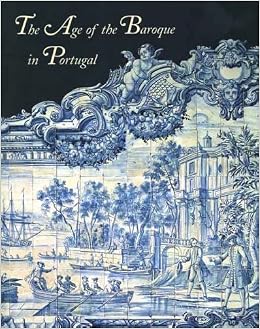
Image result for The Age of the Baroque in PortugalThe Age of the Baroque in Portugal, edited by Jay A Levenson, 295 pages

If the seventeenth century witnessed the Spanish Golden Age, it is reasonable to treat the eighteenth - and particularly the reign of John V - as having hosted an analogous, albeit somewhat more modest, Portuguese flourishing.  Certainly, it saw the height of Portugal's colonial empire, and a corresponding attempt to transmute the riches of the world into glory for God, country, and king.  This catalogue of the 1993 exhibition at the National Gallery of Art (fittingly, staged a year after the Columbian quincentennial) presents a wide array of beautiful and intriguing objects from the period, from furniture to jewelry to azulejos to a complete custom coach commissioned by the Portuguese ambassador to the Holy See.

Friday, January 24, 2020

Rossetti

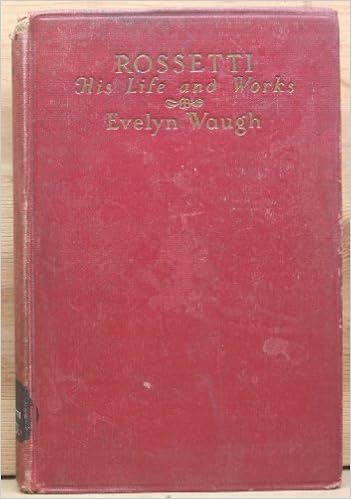
Image result for Rossetti, His Life and Works Waugh, EvelynRossetti: His Life and Works by Evelyn Waugh, 227 pages

In this biographical study Evelyn Waugh seeks to understand both Dante Gabriel Rossetti's success and his failure.  The former, he concludes, demands a spiritual aesthetics that transcends formal analysis, while the latter is best explained by the artist's personal tragedies and character flaws.  Rossetti spent his career pursuing an ideal of the feminine, but was sabotaged by his own indiscipline and irresponsibility.

Rossetti was Waugh's first full-length book, but if his development is certainly not complete the voice is already unmistakable his.  Especially delightful are his account of Rossetti and Whistler's shared mania for blue china and the ethics of reviewing the books of one's friends, although equally characteristic is his vivid description of his subject's isolation, paranoia, and despair.

Tuesday, January 7, 2020

Painted Glories

Painted GloriesPainted Glories: The Brancacci Chapel in Renaissance Florence by Nicholas A Eckstein, 208 pages

The frescoes painted by Masolino and Masaccio in the Brancacci chapel of Florence's Santa Maria del Carmine have been drawing admirers since they were painted in the early fifteenth century, although, as Nicholas Eckstein relates, their intended influence was not merely aesthetic, but simultaneously devotional, memorial, and didactic, shaped in both their conception and reception by a continually changing social and religious context.  Most notably, Eckstein contends, the chapel was transformed after Florence's defeat of a Milanese army in 1440, a victory that was attributed to the intercession of Sts Peter and Paul and the Florentine Carmelite Bl Andrea Corsini.

Little documentation of the creation of the Brancacci chapel has survived down to the present, leaving a number of intriguing mysteries which Eckstein attempts to solve with a combination of careful deduction and informed speculation.  The result is a vibrant portrait of Florence in the midst of the Renaissance.  If there is a major flaw to the book, it is that the focus sometimes seems lost, so that the art begins to disappear behind the history.

Saturday, October 12, 2019

Petrus Christus

Petrus ChristusPetrus Christus: His Place in Fifteenth-Century Flemish Painting by Joel M Upton, 114 pages

Petrus Christus, long unknown, has typically been regarded as entirely inferior to the great geniuses of fifteenth century Flanders, Jan van Eyck and Rogier van der Weyden.  Provocatively, Joel Upton argues that Christus' works are personally engaging in a way that those of the better known artists of the previous generation were not, reflecting the inward turn of the devotio moderna.

Books are seemingly unavoidably commercial products, and as such economic considerations dictate their form.  Even so, it is a shame when such an intriguing and well-developed argument is accompanied by black and white reproductions of the works it discusses. 

Tuesday, September 3, 2019

Poetry of Nature

The Poetry of NatureThe Poetry of Nature: Edo Paintings from the Fishbein-Bender Collection by John T Carpenter and Midori Oka, 201 pages

In 2012 Estelle Bender and T Richard Fishbein contacted the Metropolitan Museum of Art in New York about donating the extensive collection of Edo era Japanese paintings the couple had acquired over the previous three decades.  The consummation of that gift was the occasion for this 2017 exhibition, although sadly Fishbein had died in the interim.  

As the title suggests, Fishbein and Bender, who began their collection in search of decorations for their New York City apartment, favored nature painting, which has long been a popular genre for Japanese artists.  Natural subjects are also very accessible - appreciating the beauty of the crows on the cover, for example, does not require any knowledge of their significance in Japanese culture or the ways in which the artist both echoed and deviated from previous depictions.  Yet such understanding certainly deepens the appreciation, especially given the rich allusive tradition of Japanese painting and the inclusion of poetry on many of the pieces.  Indeed, the most fascinating theme of the catalogue is how the Three Perfections - painting, poetry, and calligraphy (themselves three-quarters of the Four Gentlemanly Accomplishments, with the addition of board gaming) - were integrated by the Edo era artists.