Showing posts with label Steve Jones. Show all posts

Friday, April 15, 2016

The Lost

Cover image for The Lost by Sarah Beth Durst, 350 pages

For a great plot synopsis, see Krista's review: here.

The Lost has three fairly distinct acts, with (sadly) each one being slightly worse than the last. It starts out very strongly, with a legitimately creepy tone and an interesting setting. It's hard to pull off creepy - especially for extended lengths of time - and The Lost does the best job of it that I've seen recently. It changes pretty quickly to a survival story - well written, and bringing more complexity to the characters - but the transition is a bit jarring. It would have been amazing to maintain the creepy atmosphere while moving into survival territory, but it... doesn't. Eventually the narrative changes again (though when and how is spoiler-y). While it's categorized as an adult novel, the author's YA roots show through pretty plainly - there's only three male characters with any real story relevance, and two of them are over-the-top handsome men with (inexplicable?) crushes on the main character.

I should emphasize that I really did like the book, even in the final act. It just lost (pun intended) a lot of its impact as it went on.

Thursday, March 31, 2016

Six of Crows

Cover image for Six of Crows by Leigh Bardugo, 465 pages

Six dangerous (to varying degrees) teenage criminals team up and hatch a plot to infiltrate an impenetrable fortress and rescue (or kidnap? or murder?) a high-value prisoner, for glory and huge amounts of cash.

This ranks up there with The Raven Cycle as one of the best, most interesting YA series I've read - certainly the best ones still in progress. That's not to say that it's perfect, but most of my criticisms are minor and spoiler-heavy.

The characters are diverse and well-defined, the action is over-the-top and exciting, the world itself is creative and complex. It tackles themes of prejudice and unhealthy (to varying degrees) relationships with a deft touch. While it occasionally succumbs to a "Summer blockbuster" mentality, there's so much to like that even with my minor complaints, it's still a huge success. Highly recommended - I'm already anxiously awaiting the sequel.

Monday, February 22, 2016

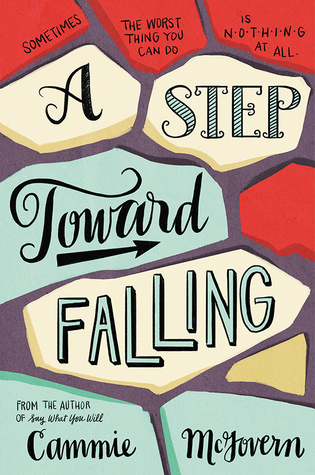
A Step Toward Falling

A Step Toward FallingA Step Toward Falling by Cammie McGovern, 364 pages

This book reminded me of Will Grayson, Will Grayson, in quite a few ways. While it does tackle some very serious subject matter, this is a relatively light, easy read. Still, the characterizations are good. On the surface, there are obvious themes here - don't judge others on appearances, forgive others and seek forgiveness, treat others with dignity and compassion, and "Choose carefully the people whose approval you seek." (pg. 350) - but thankfully, they all go a bit deeper than that.

Worth noting, the characters who have special needs aren't put on a pedestal, perfect in every way apart from their disability - they get angry and make mistakes just like any of the other characters. If Belinda (the main character with special needs) weren't as richly painted, it would be hard to take the book seriously. Emily (the main character without special needs), on the other hand, comes across as a pretty typical YA lead. The real depth of the book comes from alternating between the two, showing that while society labels them differently, they are both human, with at least as many similarities as differences.

Tuesday, January 26, 2016

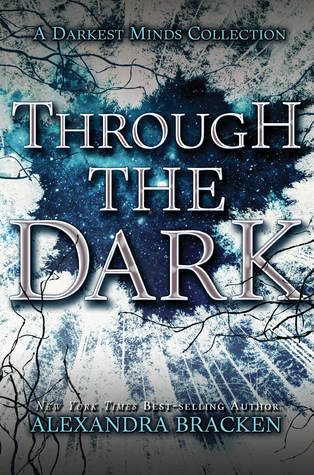
Through the Dark

Through the Dark (The Darkest Minds, #1.5, #2.5, #3.5)Through the Dark by Alexandra Bracken, 400 pages

I feel similarly about this series of three novellas (which fit after each of the books of the main trilogy, as entries 1.5, 2.5, and 3.5) to how I feel about the original three books (which began with The Darkest Minds). The first novella, "In Time," is the best of the three, and not only has the strongest message, but also the strongest emotional core. The second novella, "Sparks Rise," has at least one very peculiar plot point, and paints a picture so bleak that the tragedy almost gets repetitive. The third novella, "Beyond the Night," tries to strike a kind of balance between the two, only partially succeeds, and ends a bit too cleanly, given everything that leads up to it.

Taken as a whole, the three books and three novellas create a very well-realized world. At its best, it creates characters that you'll love and root for, and compelling (if not entirely unique) struggles for them to work through together. At its worst, it becomes predictable, dour, and almost (but not!) lifeless. In the end, though, even the weakest points kept me reading, and the best points make this a series worth recommending for those not already burnt out on YA dystopia.

In the story itself, quotes like this occasionally feel forced, but this one in particular does sum up the series as a whole:

"...we are stronger for what's happened to us... We have been given the gift of understanding that we can come through struggle and pain... We have learned that life is one journey, and the purpose is not to reach some treasure at the end of it, but to find the courage to decide which paths to take, who to travel with, and to let things fall into place as they should and will." -Beyond the Night, p.365

Wednesday, May 27, 2015

OCD Love Story

Cover image for OCD Love Story by Corey Ann Haydu, 341 pages

There are a lot of reasons that you could be scared away from this book: from the bright yellow and pink cover with a not-great, somewhat out-of-context quote on the back, to the disappointingly generic start (you know the drill: go to school, argue with parents, talk about cute boys, etc.). Assuming you get past those initial hurdles, you could also be turned away by main character Bea's slow descent into increasingly troubling behavior.

The longer that you can stick with it, though, the more you'll be rewarded. This is a novel that's both informative and touching, heartbreaking and full of hope. The ending may be a bit clean, given everything that happens before it, but it's also necessary, like letting out a breath.

This is the kind of novel that is difficult to recommend broadly, but will be irreplaceable for those that struggle through.

Tuesday, April 14, 2015

All the Bright Places

Cover image for All the Bright Places by Jennifer Niven, 388 pages

First, read Krista's review for a better plot synopsis than I could give.

Shortly into this book, I thought to myself: maybe I'm getting sick (no pun intended) of this genre (YA misfit romance involving some degree of tragedy). Maybe I am, maybe I'm not. But at very least I didn't love this book. It's not without its redeeming qualities, but there are massive peaks and valleys. Sometimes there are chapters, moments, characters, etc. that stand out as touching, interesting, and more complex than expected. Other times, a scene that's clearly meant to be emotionally powerful just... flops.

As evidenced by the "Author's Note" at the end of the book, the author clearly has her heart in the right place - she's not only trying to deliver a powerful story, but also an important message - but more often t
han not, only the latter succeeds.

Thursday, April 2, 2015

We Should Hang Out Sometime: Embarrassingly, a True Story

Cover image for We Should Hang Out Sometime: Embarrassingly, a True Story by Josh Sundquist, 326 pages

This is a book about how bad Josh Sundquist is at relationships. Repeatedly, unknowingly bad.

But more importantly, this is a charming, (sadly) relatable, funny book about overcoming disability, learning about yourself, making true friends, and finding out that the biggest hurdle we face is often our own unwillingness to communicate - due to fear of rejection, fear of awkwardness, or in some cases, fear of acceptance. And it's all delivered in an entertaining way that lets you laugh at (or along with?) the author, and perhaps, at yourself.

I enjoyed this book enough that I feel like I should write my usual 2-page-long essay, but really, there's not much more to say. It's fun, it's honest, and it made me laugh.

Thursday, March 5, 2015

The Disenchantments

Cover image for The Disenchantments by Nina LaCour, 308 pages

I'm not sure I should be allowed read books like this. For the first 1/3 or so, it has this all-too-familiar feeling, where main character Colby is in a fight with a friend - someone that he cares about too much to leave or do anything against - and thus is left with only one option: batten down the hatches and pout. It may sound like I'm making fun of him, but I'm actually so familiar with the tactic (and the book is written well enough) that it basically transferred that mood, that feeling, to me. I was reading the book, pouting on Colby's behalf, as though I were the one in an argument with no leverage. That's a strong statement, when a book makes you empathize that way.

The characters all start as disheartening band-on-a-roadtrip stereotypes, but break out of them pretty quickly, and all but shatter those stereotypes by the end. There are a few too many instances of "sage characters with a lesson to impart," and the last chapter or so feels like it can't decide if it's gotten its message across, so it keeps throwing out "profound statements" hoping one sticks. But everything in the B section of this A-B-A journey is intelligent and emotionally resonant, and most of the As aren't bad either.

The characters are great (one of the side characters in particular is great enough I wish I could discuss them here), and their motivations and reactions are believable. In the end, this is the kind of book that makes you believe in the goodness of people, without coming across as sappy or patronizing. A wonderful read with a few small hiccups.

Friday, January 23, 2015

Blue Lily, Lily Blue

Cover image for Blue Lily, Lily Blue by Maggie Stiefvater, 391 pages

Yep, this series is great. (series recap: magic happens, charming characters seek out magic, things get bad)

The 3rd book has a less traditional arc than the previous two, and I think it might be better for it. While you can pretty easily say that Blue is the main character of The Raven Boys, and Ronan is at least the focus of The Dream Thieves (if not the main character), by this point, the whole cast of characters take center stage.

You could argue that this is a bit of a transitional book. While some new conflicts do present themselves in this entry, for the most part, the focus here is on further exploring problems that began in the previous entries, with none truly "concluded." Even the new problems introduced here remain a "looming threat" for most of the book, until things come crashing down (sometimes literally) at the end. Some people might be disappointed, but when he plotlines are this interesting, and the characters this engrossing, it becomes a selling point.

I can't heap much more praise on this series than I already have in prior reviews (wait, did I even post those here? Imagine two super-cool, incredibly eloquent reviews, heaping praise via shovel). The characters are (still) great, and (still) develop in mostly believable ways (though as the plot becomes more and more magical, the characters change with it). There's a series of scenes in particular with such real, imperfect emotion, that I'd believe if it was adapted autobiography. Everything from the dialogue to the setting is pretty darn fantastic.

I don't think this series would work if you started on book two or three, and by this point, it doesn't even try to acclimate new readers. But really, you're doing yourself a great disservice if you start anywhere but the beginning.

Thursday, October 2, 2014

Say What You Will

Cover image for Say what you will / Cammie McGovern.Say What You Will by Cammie McGovern, 343 pages

When the first sentence of your book's blurb says that it's Eleanor and Park meets The Fault in Our Stars, you've got lofty boots to fill (wait, what? why are the boots up there?). Say What You Will doesn't quite live up to those expectations, though it's obvious why the comparisons fit. And it comes darn close - it matches them in terms of how engrossing it is, how interesting and endearing the characters are, and how quickly you'll burn through the pages. I suspect some will actually appreciate it more.

This is a friendship/romance story between two misfits both of whom have their own types of illness that contribute not only to their ostracization, but also contribute to their kinship with one another. See the comparisons? Despite the similarities, though, Say What You Will stands on its own. It's similar without being an imitation. It has its own statements to make, and its own insight to bring. It dips a bit in the second act, when it tries to cram a bit too much drama where it doesn't fit, but by the end it comes full circle and makes up for its faults.

I feel like it's a bit unfair to review a book exclusively by comparing it to other books, but they are pretty perfect read-alikes. If you're looking for a touching story of misfit love (whether it's your first dose or your third), then look no further. It may not be 100% laser-refined, but it's got great, multifaceted characters, and a brisk, engrossing story.

Saturday, September 27, 2014

If He Had Been With Me

Cover image for If he had been with me : a novel / Laura Nowlin.If He Had Been With Me by Laura Nowlin, 330 pages

Have you ever just... gone into the bathroom and punched yourself in the chest 330 times? No? Well... me either, but I'm pretty sure I know what that feels like now. But this is a positive review! And I promise I'm not a masochist!

Almost from the title alone, you can tell where this book is headed. I feel like I can only diminish it by going into too much detail. Instead, I'll say this: while the story is simple, the writing is superb. Being able to sneak incredible insight (almost unnoticed) into scenes that feel perfectly real is a rare skill, and Nowlin does it flawlessly on many occasions here.

There's a four-page chapter almost squarely in the middle of the book that perfectly encapsulates not only what the book is about, but also why it's great. As much as I'd like to block quote all four pages, I'll just say "sometimes sad things are beautiful." This story is an experience that is often difficult to push through - for the most part, I read it in small pieces - but is worth the struggle.

It should be stated that this book fails the Bechdel test about as badly as it is possible to fail. But in a story about obsessive unrequited introvert love, it's understandable.

This would never be a novel I could recommend to everyone. But if you're wearing a breastplate, then you might be okay.

Tuesday, September 9, 2014

Fiendish

Cover image for Fiendish / Brenna Yovanoff.Fiendish by Brenna Yovanoff, 341 pages

Back when I read Paper Valentine, Yovanoff's previous book, I said that if she kept improving at the rate she was going, her next book would be a real killer. Well, Fiendish is a marked improvement over both Paper Valentine and The Replacement, but it's still not... quite there. I guess there was more room to grow that I thought.

With each book, Yovanoff gets better at storytelling, and better at presenting her imagery. Her setups and payoffs keep improving. Each story she writes feels more interesting than the last. After the first two or three chapters of Fiendish, I was sure she'd finally nailed it - it was so strange and interesting, so unlike anything she'd done before, so legitimately grim as opposed to "Halloween Sale at the Hallmark Store" grim. But as it proceeded, a lot of the same old flaws cropped up. Even the flawed parts are less flawed, but there are still areas that need work.

I'm not sure if Yovanoff has an attachment to stories where the male lead and the female lead are "soulmates" or "fall in love at first sight" or "were meant for each other," or if she just consistently struggles to make the romances in her stories feel valid, but it's still an issue here. Clementine and Fisher don't so much fall in love as they are told that they're in love by the author. It's the best-justified so far of her romance plotlines, but the justification comes too late in the book to seem relevant. It's like Yovanoff wants to break out of the typical YA romance trappings - all of her books could stand on their own without the love stories, and might be better off without them - but somewhere got the impression (or was told) that she couldn't be successful without them. She certainly has the skill to do better, one way or the other.

All that said, this is a solid book. I still stand by that if Yovanoff keeps improving, one of her books will become a favorite of mine. This one was on track to be that book, but it faltered just a bit.

Tuesday, July 29, 2014

Blythewood

Blythewood by Carol Goodman, 489 pages

In a story about a Harry Potter-like school where girls learn archery and magic in an effort to drive back the creatures of evil that spawn from the nearby woods, you would think that the main character - a factory worker in an era where women were mostly relegated to housewife roles - would fall into the "strong female protagonist" category, right? Which is why it feels so... backward... to have her be so pathetic. She spends most of the book wallowing in self-pity (for almost no reason) and dreaming about how great it would be to be rescued by a hunky guy. Seriously. While not even in any present danger, our main character fantasizes about being rescued.

What.

The story here's incredibly predictable. The author saves the "big reveal" for the final chapter, when it's been blatantly obvious for 3/4 or more of the book. Honestly, if you changed the character names around (in fact, please do... "Raven" is up there among the cheesiest names I've facepalmed at) and some of the details, this could pass for a well-written Harry Potter fanfiction, complete with message about the power of love and how it conquers the darkness.

To be fair, the Harry Potter books are a lot of fun, so there's certainly worse things to mimic. And some of the imagery here - bells forged in iron and blood, crows made of shadow that dissipate into ash, dark figures with roiling smoke escaping their mouth - is actually really cool. But the rest is so familiar, predictable, and (sometimes) embarrassing, that I really can't recommend it, unless you really need your hunky winged guy fix.

Wednesday, May 28, 2014

The Darkest Minds

Cover image for The darkest minds / Alexandra Bracken.The Darkest Minds by Alexandra Bracken, 488 pages

Mix one part Steelheart, one part Fallout 3 and one part Legend, and well... you still don't really have The Darkest Minds, but you're getting in the right ballpark. This is dystopia, except things haven't completely fallen apart, this is X-men where powers are just one step more believable, this is an outbreak story, but... not really.

It's pretty amazing that in today's age of YA dystopian saturation (particularly trilogies involving love triangles), that a book squarely in that wheelhouse can feel this fresh. For once, it feels like the author is not simply parroting the same basic rules and story structures from other similar novels, but instead had her own story to tell. Whereas many of the recent dystopian novels feel like they're checking off ingredients on a list, The Darkest Minds doesn't really care if it follows the rules or not, nor how it gets typecast. If you ignore it because of its contemporaries, you're doing so at your own peril, because you're missing out on a really standout book.
 
I shouldn't oversell it though. If this genre of YA doesn't appeal to you, The Darkest Minds isn't going to change your mind. But if the genre hasn't entirely burnt you out, then this is a bit of a gem in the rough.

The biggest problem here, is likely not Bracken's fault at all. There's quite a few grammatical and spelling errors that somehow slipped through the cracks during the editing process. Like... a surprising enough amount that it can feel a bit unfinished.

Also Ruby, the protagonist, is not nearly as cool as Suzume. Fact.


And SLPL doesn't have the sequel even thought it's already been released, so I had to buy it myself, boo. Wink, wink, nudge, nudge YS staff

Wednesday, May 14, 2014

Prodigy: a Legend Novel

Cover image for Prodigy / Marie Lu.Prodigy: a Legend Novel by Marie Lu, 373 pages

Feels very similar to the first book in the series, Legend, in that there are parts that are very good, and parts that are very bad. The overall plot arc is quite good, and while it won't absolutely stun you with any of its plot twists, it also doesn't follow the exact trajectory that you'd expect. The characters are relatively well fleshed-out, and some of the plot points that at first seem a little head-scratching, end up making more sense as the story progresses.

But it's not without its blemishes. First off, I'm fine with makeout sessions, but... maybe when one of the characters is bleeding out from a leg wound is not the optimal time to be swapping saliva? That these scenes are here is not the problem. The problem is where they're placed. If you've got a sense of tension and immediacy that you've been building for the past few chapters, maybe don't put in a blatant red "Stop" sign and take a detour for sloppy makeouts. It ruins both.

Also... the big bad boss we meet early in the book is named... Razor? Honestly... Razor? You couldn't think up anything better than... Razor? It sounds like something a 10-year-old boy would name a supervillain. I listened to this as an audiobook, and when they first mentioned his name, I laughed out loud. Unless you're trying to make this book an awkward commentary on a gaming peripherals company, the name Razor is just... not good. And you're not fooling anyone (nor making your universe more interesting) calling the princess-like position a "princeps."

There are times in the book that the tension will grab you, where the plot will take a turn you weren't entirely expecting, and you'll be invested. And it will be immediately followed by a passage so cheesy and out of place that you'll facepalm. Overall, this is a solid series (and I'll certainly read the final book), but there's just so much room for improvement - and often in ways that could have been easily fixed. Alternately engaging and disappointing.

Saturday, March 29, 2014

Haganai: I Don't Have Many Friends - Volume 1-5

Haganai: I Don't Have Many Friends Volume 1 - 5 by Yomi Hirasaka, 960 pages (total)

Okay, forgive me, but it's STORY TIME.

In high school, I had a classmate named Jeremy (names changed to protect the (?) innocent). A lot of people really didn't like Jeremy because he had a particular demeanor to him. He always came across as full of himself, like he thought he was cooler, smarter, better than everyone else. His screen name (back when AOL and AIM were still a big deal, yes I'm old) was even "Superior." Most people found him grating at best, and kind of a jerk at worst.

And then, in college I met Roth (again, names changed). Roth was seriously asocial - to the point that he refused to meet in person for something that could be accomplished online (and often even when it couldn't). He gave off a sort of angry/bitter aura. When you asked how his day was, he'd say "bad," even if it wasn't, just because he hated how rote "fine" and "good" had become as responses. He always had a snide comment to elbow you with.

These are real people I met. But I felt like I understood something about them that others just didn't grasp. Behind their "rough" personalities, each of them was incredibly kind-hearted. Not only would they help you out if you needed, they'd listen to your most insignificant of problems, just so you had someone to talk to. And beyond that, the personalities that most people perceived were misrepresentations - they were both really down-to-earth and self-deprecating, they just had their own way of showing it. If you weren't willing or able to see beyond their surface-level demeanor, you'd never see the wonderful souls underneath.

I feel like that is the spirit of Haganai. At first glance, this is a series about a bunch of high school students that range on the spectrum from bizarre, to conceited, to sadistic. They play horribly mean pranks on one another, mock each other with the most degrading nicknames imaginable, and fight at the slightest provocation. But even at their most offensive, underneath (and despite the title), you can tell that these characters are friends. It just resonates with me, because I've known people like this. And it also hammers home themes of loyalty, family, and (unsurprisingly) friendship.

That's not to forgive it all its faults though. Haganai is a series that consistently goes one step (or two steps, or ten steps) too far. The characters don't just playfully rib each other, they say some downright degrading stuff. It often steps beyond "tastefully offensive" (if such a thing exists) and into sleazy territory. And it revels way too much in its own perversion - it's always played for laughs, but that doesn't necessarily make it okay.

TL;DR I've always liked Haganai, and the manga version is a little tamer, less problematic, (and thus better) than the anime is. I'm not necessarily proud that I like it. Not only would I not fault anyone for disliking it, I think most people would be pretty put-off (or even disgusted?) with it.  But I think completely writing it off does it a disservice. There's some real heart here buried under the vitriol and the perversion. I just suspect most people won't find it worth digging for.

Monday, March 3, 2014

The Ocean at the End of the Lane

The Ocean at the End of the Lane by Neil Gaiman, 181 pages

For the most part, there are two big ways of portraying magic in books. There are, I'm sure, thousands, but most fall into one of these two categories (or use some of both). There's "Oh my god! Magic!" and there's "Oh look. Magic." In other words, there are books where magic is treated as shocking, unexpected, and curiosity-piquing, and there are books where it is treated as matter-of-fact, uninspiring, simply there. This is not a value statement. One story could choose the first style because magic in their universe is supposed to be wondrous and enchanting and a respite from the dullness of everyday life. A different story could choose the second style to show that magic is such an ingrained part of the universe that no one finds it surprising anymore. Or because a character is so numbed by the world around him that even the magical seems plain. Or, in the case of The Ocean at the End of the Lane, because it simply fits the tone best - the recounting of a long-distant (half-remembered?) story by an older man.

I wouldn't want all of my stories to be told in this way, but in this instance, it's nice to have a story with such a different feel. Crazy things happen; wondrous, world-opening things and horrific, frightening things. But it's all recounted in a very straightforward way. The entire book is very entrenched in its tone. If you don't care for its brand of semi-wondrous-semi-scary magic, or the direct, almost plain way in which it's presented, you won't find much to like here. If the very thought of deus ex machina bothers you, you probably won't care for it either. And it's short: essentially, this is just a single extended "episode," whereas you might get several such storylines in a typical (longer) book. But I think all of those things - things that may turn others off - are actually its greatest strengths. Because it focuses on a single episode, it can revel in its themes and its imagery and its metaphor and its voice. Because the ending isn't clean and perfect, it can further reinforce those themes and that voice. Because it treats magic plainly, it reminds you of the story's overall arc (ie. where it begins, where it ends, and why the journey was important). All of the individual cogs work together to make an interesting whole that's entirely its own, and yet feels like it could be (or has been) "passed down from generation to generation."

So I understand those that don't care for this book. But for me, it is unique in the best of ways.

Thursday, January 9, 2014

The Song of the Quarkbeast (...again)

The Song of the Quarkbeast by Jasper Fforde, 289 pages

This reminds me a lot of a Saturday morning cartoon episode. It feels very self-contained, and several of the big conflicts get resolved as quickly as they're introduced. You can practically hear an announcer say: "Will Jennifer survive this dastardly setup? Find out after this commercial break! Okay, yes she does."

It's not as inventive as the previous book in the series, and indeed has little plot connection to The Last Dragonslayer. But it's not necessarily a bad thing to have a basically-self-contained entry in a series. It's still got the Fforde charm to it, as well - plenty of little throwaway lines that are brimming with cleverness and humor. But somehow it just doesn't feel like it has as much meat on its bones as The Last Dragonslayer. Yes, they're both pretty episodic. Yes, they've both got an obvious villain who needs defeating by the plucky do-gooder(s). And both are more interested in having a fun romp than digging deep. But for as on-the-nose as Dragonslayer could get, it felt like it had... something... more than this one does. The characters and the setting are still wonderful, and I'll certainly keep following the series. I'll just keep my expectations more tempered for a one-off adventure rather than a continuing, series-wide story.