Showing posts with label disease. Show all posts

Thursday, August 30, 2018

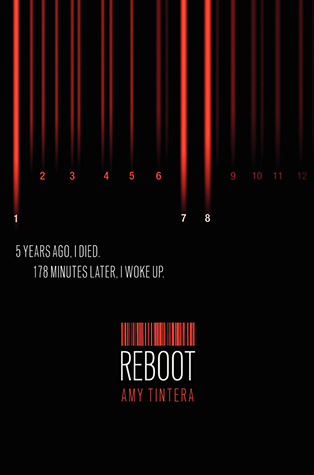
Reboot

Reboot by Amy Tintera     365 pages

Seventeen-year-old Wren rises from the dead as a Reboot and is trained as an elite crime-fighting soldier until she is given an order she refuses to follow


I’ve had this book on my to-read list for a while and now that I have a small fr
iend group book club, I’ve finally found the chance to do so and I’m glad I did. This book was a fun, action-packed read that is full of things I love: a bad-ass female main character, science-fiction/future setting, and an intriguing storyline.

That being said, I wasn’t wowed by this book. It was certainly enjoyable, but it had a few bits here and there that made this just a middle grade rating for me:

For one, I felt the romance was a bit rushed and sort of took over Wren’s bad-ass character style. I felt like she started the book as yes, a bit of a hard-to-like character, what with her enjoyment of chasing down humans and fighting them, incarcerating them, and/or killing them. But, I gave her leeway because she has been trained to do so since she was 12, an impressionable age. I like that she started breaking out of this shell once she meets Callum and realizes that she does have the capability to feel things (when up until this point she’s thought of herself as next-to being like a robot). I like that he helps her discover new things about herself, but I dislike that he so quickly falls for her (basically insta-love on his part) and that they go from begrudgingly friends to romantically involved. Suddenly Wren goes from being really in control of situations to being like most typical YA main characters: the boy becomes their whole center of being, from which the orient themselves and they suddenly become the incapable one in the relationship.

The only thing that saves it from being a total loss is that Wren is still mostly capable in the physical department: she is stronger (yes, partly because of her Reboot number), better equipped to save the day (and often is saving Callum’s butt), and she is often the one emotionally supporting Callum. I am glad that, though they are given an opportunity within the book, that Wren and Callum do not have sex (mostly because Callum would like for Wren to be more enthusiastic/on-board with it when the do). Many YA books these days seem to insist on having young, teenage couples have at least one sex-scene. While both Wren and Callum are virgins (and it’s stated in the book that Reboots frequently have intimate relations in the HARC facility), they know enough that they could do it, but choose not to. It’s a bit refreshing and it also gives them more time to get to know each other better and solidify their relationship (even though the both are clearly ready to throw their lives away for it – which was one of my issues with this couple).

I understand, when writing a YA romance, especially with teens, that things move quickly. Wren and Callum, however, seem to develop a bit of the Romeo/Juliet thing, more so on Wren’s side, where they don’t want a plan B in case one of them dies. Wren doesn’t want to think about any scenario in which Callum might die because if he does, their plans suddenly become pointless to her, as if her life will have no meaning after. I understand that Callum is the catalyst in her becoming more human and less robot-like, but it’s still irksome to see.

That brings me to my main issue with this book: Callum’s love for Wren is the main reason that Wren decides to break free of her bonds and escape. A relationship is the reason that the rest of the book becomes necessary because if she didn’t feel things for Callum and knew that he felt things for her, she never would have wanted to escape, would have continued living her life as a HARC slave. It’s disappointing, because Wren seems so awesome and competent, but I understand that Tintera is attempting to use her age and the length of her stay at HARC as the reason why Wren would never leave. But I say – write her character differently, then. I don’t like that she needs a love interest to be the reason for her to want to escape.

Right, so the good bits:

I like this world that Tintera has built: a sort-of post-apocalyptic United States, or more specifically Texas. Characters often refer to some Reboot vs. human war, which ended up destroying most things and which is the main reason why HARC exists. It sounds like an epic story and I enjoyed getting to read about this new United States, where children who get this disease KDH then come back as a weird kind of high-functioning zombie when they die. The whole minutes dead = how skilled a zombie you are is quite interesting.

I also quite like the tension between humans and Reboots – that most families are horrified by/don’t want to be around their undead children, that most humans are terrified of Reboots (mostly because of lies that HARC has fed the populace). I like the big bad company HARC and how it manipulates both the Reboots (telling them minimal information so they can use them as basically slaves that then further enforce their enslavement) and humans to be mistrustful of each other. If I end up reading the second one, I hope Tintera includes a plot of humans and Reboots breaking that cycle and learning to live alongside each other. In fact, I hope that’s one of the main plot points. I like that there are human rebels (yay, rebels!) who believe in a different world and attempt to rescue Reboots and take down HARC. I’m always in for a good underdog story.

All in all, the world is well built, the characters are pretty solid. Aside from me ragging on Callum’s and Wren’s relationship, I think Callum is a pretty cool dude (maybe a bit too good to be true), likable, kind, and super not into killing (like, my level not-into-killing, as in, I’d rather die than kill someone else not-into-killing). I think he and Wren balance each other well and they’re both good for each other – Callum helps Wren get in-touch with her feelings and Wren helps build Callum’s strength. I liked Ever, Wren’s Reboot friend, as well. Most of the other characters are a bit one-note, but they’re also not in the story very much.

The final conflict went a bit too well for my taste – the puzzle pieces all fell into place nicely for Wren, which didn’t leave much room for believability, but I still enjoyed the ride. I will probably end up reading the next book, just to see where things go and how Wren and Callum progress.  I would recommend this to teens looking for a good action-pact story and who like supernatural/sci-fi elements. This book, I think, could be of interest to boys and girls, which is a plus in its favor.

Wednesday, May 28, 2014

The Darkest Minds

Cover image for The darkest minds / Alexandra Bracken.The Darkest Minds by Alexandra Bracken, 488 pages

Mix one part Steelheart, one part Fallout 3 and one part Legend, and well... you still don't really have The Darkest Minds, but you're getting in the right ballpark. This is dystopia, except things haven't completely fallen apart, this is X-men where powers are just one step more believable, this is an outbreak story, but... not really.

It's pretty amazing that in today's age of YA dystopian saturation (particularly trilogies involving love triangles), that a book squarely in that wheelhouse can feel this fresh. For once, it feels like the author is not simply parroting the same basic rules and story structures from other similar novels, but instead had her own story to tell. Whereas many of the recent dystopian novels feel like they're checking off ingredients on a list, The Darkest Minds doesn't really care if it follows the rules or not, nor how it gets typecast. If you ignore it because of its contemporaries, you're doing so at your own peril, because you're missing out on a really standout book.
 
I shouldn't oversell it though. If this genre of YA doesn't appeal to you, The Darkest Minds isn't going to change your mind. But if the genre hasn't entirely burnt you out, then this is a bit of a gem in the rough.

The biggest problem here, is likely not Bracken's fault at all. There's quite a few grammatical and spelling errors that somehow slipped through the cracks during the editing process. Like... a surprising enough amount that it can feel a bit unfinished.

Also Ruby, the protagonist, is not nearly as cool as Suzume. Fact.


And SLPL doesn't have the sequel even thought it's already been released, so I had to buy it myself, boo. Wink, wink, nudge, nudge YS staff

Sunday, December 29, 2013

Year of Wonders

Year of Wonders by Geraldine Brooks, 308 pages.


Based on the plague infection of the village Eyam in 1666, this historical novel offers a horrific telling of life without modern medicine. Told from the perspective of the town rector's housemaid Anna, a vivid picture is painted of how quickly plague demolished the human body, and how desperate people became to try to rid the town of the disease. Everything from witchcraft to flagellation is tried as a means to ward off the plague. If you got it, you had two options: a barber-surgeon, or the local Gowdie family, with their herbs and concoctions. Typically, neither option worked. Every week at church, it is obvious how many have fallen, as the occupied seats keep dwindling. The rector has a revelation that God wants them to suffer so that others will not have to. So, the town quarantines itself and becomes cut off from the rest of society. No one goes in, no one goes out. This decision isn't necessarily the best idea, however.
Historical fiction is a favorite of mine, as I love history but hate reading dry, boring facts and memorizing dates, so it's a good compromise. This book not only gives you a look into the living conditions of the time, it gives you a look at the life of a housemaid and servantry.
This book is an interesting read, just be sure to have a dictionary close by, as she uses much terminology relevant to the time, which involves many words well outdated. Unless, of course, you've got a broad 15th century vocabulary.
P.S. the ending is CRAZY!!!

Thursday, December 19, 2013

The Stand graphic novels


The Stand graphic novels by Roberto Aquirre-Sacasa, 872 pages

The Stand graphic novels are a reproduction of The Stand by Stephen King. There are six parts; Captain Trips, American Nightmares, Soul Survivors, Hardcases, No Man’s Land, and The Night has Come.
The first novel introduces a plague called Captain Trips, or superplague that is killing 99.4% of the human population. It is also 99.4% transferrable so it spreads very fast. The people that end up being immune to it are the ones that the rest of the graphic novels will be about. I foolishly began reading this during flu season and when it is describing all the symptoms of the outbreak, I was noticing how many staff members and patrons also had the same symptoms. I also don’t recommend reading this after breakfast unless you have a strong stomach. The graphic detail of people’s deaths and some of the gory imagery could be too much for some.

By the second book most of the people that the flu is going to kill are dead or dying. Next comes an explosion of murders, suicides and accidents that lead to more of the population dying. The second book also has the survivors seeking for answers to not only what happened, but to the weird dreams they have all been having. Some of the dream sequences are quite vivid and are made to prey on people’s fears. While I found them to confusing at times, they are some of the best drawn imagery in the series.
Throughout the next four books they are able to place a name on the horror in their dreams; Randall Flagg. There is also a genuine good presence that people can dream about named mother Abigail. Flagg and Abigail are reaching out through the dreams and trying to get people to come to their side. Flagg represents greed and hate. Abigail stands for freedom and faith. Eventually everyone either goes to Las Vegas to join up with Flagg, or to Boulder to join up with Abigail. This leads to a massive buildup and confrontation between the two forces in a classic good vs. evil showdown.
The entire graphic novel set is very well illustrated and well written. Like all the Stephen king rewrites they were released in comic form first and the combined into collections. So each graphic novel contains around five comics, or thirty or so comics for the series. At the end of each collection is the cover art from the comics, along with rejected cover and comic sketches and even some examples of recoloring since the comic. Each collection also gives a brief introduction that explains what happened previously in case you forgot. There are also maps and story timelines to further the readers understanding. If you like Stephen King's work, and can handle the gore, The Stand is worth a read.


Wednesday, December 11, 2013

The Dog Stars by Peter Heller

The Dog Stars by Peter Heller, 320 pages

My best friend recommended this book a year ago, and I finally got around to reading it. Actually, I listened to the first part of it, then read the rest. It is written in a way that is a little hard to follow: choppy, stream of consciousness sentence fragments throughout and no clear "he said she said" dialogue. Listening to the first part made it easier to follow since the person narrating it distinguished separate voices for the characters.
The book is set sometime in the future, 9 years after the flu and blood disease began to ravage humankind. Most everyone that's left is sick. Not Hig and Bangley. They've set up a camp near the mountains in Colorado. They have secured the perimeter. Hig flies his Cessna and patrols. Bangley mans the watchtower and is a good shot. A really good shot. Hig has a more sensitive side. He won't shoot unless it's absolutely necessary. Hig's wife was taken by the disease but not his faithful canine companion named Jasper. Dog really is Hig's copilot.
One day while Hig is out patrolling well outside the perimeter, he gets a communication from an airport. It sticks in his mind for years. Someone else might be out there that's still untouched. He has to find out. So he goes. Then the story really begins. And it's worth the confusing dialogue to read.