First Boredom, Then Fear: The Life of Philip Larkin by Richard Bradford, 263 pages
This blog is the home of the St. Louis Public Library team for the Missouri Book Challenge. The Missouri Book Challenge is a friendly competition between libraries around the state to see which library can read and blog about the most books each year. At the library level, the St. Louis Public Library book challenge blog is a monthly competition among SLPL staff members and branches. For the official Missouri Book Challenge description see: http://mobookchallenge.blogspot.com/p/about-challenge.h
Tuesday, January 13, 2026
First Boredom, Then Fear
Friday, November 7, 2025
White Eagle, Red Star
White Eagle, Red Star: The Polish-Soviet War 1919-20 by Norman Davies, 278 pages
Saturday, October 18, 2025
Fascism in Spain
Fascism in Spain: 1923-1977 by Stanley G Payne, 479 pages
Monday, September 22, 2025
Stoner
Stoner by John Williams, 278 pages
Monday, July 24, 2023
Short Timers
The Short-Timers by Gustav Hasford, 180 pages
Tuesday, June 13, 2023
Chiang Kai-Shek
Chiang Kai-Shek: China's Generalissimo and the Nation He Lost by Jonathon Fenby, 505 pages
Thursday, June 8, 2023
Storm of Steel
Storm of Steel: from the Diary of a German Storm-troop Officer on the Western Front by Ernst Junger, translated by Basil Creighton, 284 pages
Tuesday, March 8, 2022
Stalin's War
Stalin's War: A New History of World War II by Sean McMeekin, 666 pages
Thursday, March 18, 2021
The Last Garden in England
The Last Garden in England by Julia Kelly 368 pages
Author Kelly employs one of my favorite plot devices, in this, her third novel: dueling timelines. Most writers use only tow, but Kelly has stretched her writing skills by having three timelines: present day, 1944 and 1907. She does a wonderful job in keeping the characters individualized with the descriptions, but I had a hard time with their voices---all three sounded similar. This caused an occasional problem for me as I sometimes forgot whose story was being told. However, the descriptions of the times and other characters involved held ground me.
The first plotline/character we meet is Emma. Her firm has been hired to restore the garden to Scotland’s Highbury House to its original grandeur. The garden hasn’t been maintained and is grossly overgrown.
The second character is Venetia Smith in 1907. She was hired by the original owners to design the garden in the formal English style. She lays it out in a series of “rooms,” different areas for different emotions…like the Children’s Garden, The Poet’s Corner, the Winter Garden, etc. Interesting enough, Venetia is based on a real-life designer, one that Emma holds in the highest esteem.
The third plotline is 1944. Actually there are three women in this section: Highbury House’s mistress and its cook plus a “land girl,” come to work the land since all the men were off to war.
Three generations of women plan and care for the garden, each with her own story. I found Venetia’s story the most compelling. In the early 20th century there were not many women who owned a business. Second, I found the discovery of Venetia’s original plans in the present day the highlight of the novel. It had the most tension and the most excitement.
The Last Garden in England is touted as for fans of Kate Morton’s novel, The Lake House, but I don’t feel it even comes close. The tension was sporadic, and I still don’t understand the title. Therefore, The Last Garden in England receives 3 out of 5 stars in Julie’s world.
Thursday, January 28, 2021
The Forgotten Home Child
The Forgotten Home Child by Genevieve Graham 384pages
Fans of Christina Baker Kline’s Orphan Train will love this latest novel from Genevieve Graham. This story is also about the relocation of children, much like what happened here in in America between 1854 and 1929. This story, however, is how the British relocated destitute children to Canada between 1869 and 1948. During that time it is estimated that more than 120,000 children between the ages of three and eighteen were taken from England’s streets and orphanages, or given up by their parents, and sent to Canada to be taken in by whoever would give them a home. Many were abused and neglected as there was no checks and balances systems to ensure they were well cared for. Graham based this novel on those children.
This story is framed by ninety-seven-year-old Winny, who was once one of those children. In 2018, her granddaughter drops the box when she is helping Winny move and a lifetime of memories tumble out.
Then the story goes back to 1936, which is the setting for the majority of the story. It follows Winny, Jack, his sister Mary, and two brothers, Edward and Cecil. The little band of five is all they have in the world to call their family.
Upon their arrival in Canada, they are split up---Jack, Edward and Cecil going to one farm while Mary and Winny are also split up. Life is hard on the farms, the people entrusted with the youngsters treat them less than they do their animals. The live for the day when they can all be together again and make a home of their choosing.
At Winny’s new home, if she doesn’t finish her chores before the supper scraps are thrown out, the dogs get to eat while she goes to bed hungry. She is forced to sleep in the barn, but thank heavens for the sheep or she would freeze to death in the deep cold of a Canadian winter. At the farm where Mary has been sent, she is repeatedly raped by her “master.” The boys are worked like mules and are often beat for the tiniest of infractions.
Much like Baker Kline’s Orphan Train, readers will get to know
all five of the children intimately, but Winny takes the lead. This is a tale
of loss, turbulence, resilience, second chances, adaptability, and courage. Be
prepared to not get anything else accomplished once you start this wonderfully
woven tale.
The Forgotten Home Child receives 6 out of 5 stars in Julie’s world.
Friday, November 27, 2020
From the Terrace
From the Terrace by John O'Hara, 897 pages
Born to an alcoholic mother and a father who had spent all his love on a son who died too young, Raymond Alfred Eaton grew up in a cold home with a cold future - one day he would inherit the family steel mill and live out his days as the biggest fish in the small pond of Port Johnson, Pennsylvania. The larger world beckoned, however, and after a spell at Princeton he chose instead to seek his fortune on Wall Street and to serve his country in Washington, DC. Along the way he struggles to maintain his integrity and reputation in the boardroom, the war room, and the bedroom. His failure is an American tragedy.Tuesday, July 21, 2020
British in India
Thursday, July 2, 2020
Liberty, Equality, and Fraternity
Tuesday, June 30, 2020
Three Faces of Fascism
Saturday, February 29, 2020
Suspect
Tuesday, January 21, 2020
Shining Path
Tuesday, December 3, 2019
Father Coughlin
Tuesday, November 19, 2019
Auden and Christianity
Tuesday, September 24, 2019
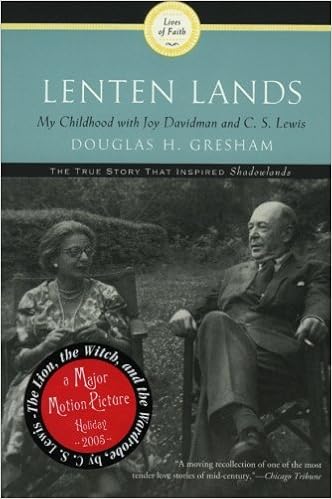
Lenten Lands
Lenten Lands: My Life with Joy Davidman and CS Lewis by Douglas H Gresham, 213 pages