Showing posts with label Wall Street. Show all posts

Friday, November 27, 2020

From the Terrace

From the Terrace by John O'Hara, 897 pages

Born to an alcoholic mother and a father who had spent all his love on a son who died too young, Raymond Alfred Eaton grew up in a cold home with a cold future - one day he would inherit the family steel mill and live out his days as the biggest fish in the small pond of Port Johnson, Pennsylvania.  The larger world beckoned, however, and after a spell at Princeton he chose instead to seek his fortune on Wall Street and to serve his country in Washington, DC.  Along the way he struggles to maintain his integrity and reputation in the boardroom, the war room, and the bedroom.  His failure is an American tragedy.

John O'Hara, once considered to be a major American writer - even a potential Nobel Prize winner - is mostly forgotten today.  A mere two years after its publication, From the Terrace was made into a "major motion picture" starring Paul Newman and Joanne Woodward, but it is no better remembered than the novel.  If this is unjust, it is hardly surprising, as From the Terrace is today as redolent of its own moment in time as its descriptions of life in the first half of the twentieth century are reflective of those eras, particularly its prurient obsession with sex.  On the other hand, it is a remarkably complex page-turner.

Saturday, July 20, 2019

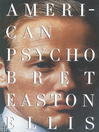
American Psycho

American PsychoAmerican Psycho by Bret Easton Ellis, 399 pages

Patrick Bateman is certainly a wealthy Wall Street executive.  He is probably an undiagnosed schizophrenic.  He may be a serial killer.

Reading American Psycho is an unpleasant experience.  Of course, there are the detailed descriptions of grisly, sadistic violence, much of it of a sexual nature, but equally dreadful are the extensive descriptions, at some point during each of Bateman's encounters, of the designer fashions everyone is wearing, often accompanied by similarly elaborate descriptions of brand name electronics and popular music.  American Psycho is often described as a satire on the '80s, or Wall Street, or both, but is not nearly so narrow.  Bateman and his circle could be displaced with only minor adaptations to contemporary LA or DC - indeed, the presence of Donald Trump as Bateman's idol offers a tempting invitation to any exceptionally dull filmmakers with access to the movie rights.  It is even easy to imagine a alternate version of the novel following a Dennis Rader-like figure living quietly in the suburbs.  Bateman's curse is not wealth or Reaganism, but boredom.  He attempts to escape from his superficial world through increasingly frenzied acts of transgression, but they only compound his problem.

Unfortunately. the same superficiality characterizes the novel itself.  It is based around a gimmick - vapid investment banker is a crazed killer, only he's so boring that no one notices - and although Ellis pushes it as far as he can, it only goes so far.

Friday, June 14, 2019

Bonfire of the Vanities

Image result for The Bonfire of the VanitiesThe Bonfire of the Vanities by Tom Wolfe, 659 pages

Sherman McCoy imagines himself a Master of the Universe, spending his days making multi-million-dollar bond trades, or, as his wife puts it, collecting golden crumbs.  Larry Kramer is an Assistant District Attorney in the Bronx, Jewish by birth but Irish by vocation, his heavy caseload and meager pay compensated for by fantasies of power and virility.  Peter Fallow is a reporter for the City Light tabloid, struggling to stay sober long enough to write a story that will justify his continued employment.  All of them are desperately trying to find, keep, and increase their place somewhere in the heap of humanity that is 1980s New York, the capital of the world.  In their persons, the worlds of finance, politics, and the press collide, though in the end their defeats seem to possess more dignity than their victories.

In 2007, The New York Times published a retrospective on Wolfe's debut novel in which it crowed that "the New York of 'Bonfire,' to a degree that might well have shocked people in 1987, no longer exists."  It is true, of course, that street crime in New York is far below the flood crest of the '70s and '80s, but street crime - as opposed to the fear of street crime - plays only an incidental part in The Bonfire of the Vanities, and the last decade has certainly witnessed a resurgence of social unrest and tribalism, complemented by an outrage culture endemic to social media and epidemic in the press, so that we seem more than ever to be living in Bonfire's jungle.  For proof, one need only compare the treatment of Sherman McCoy by a fictional tabloid with the treatment of the Duke Lacrosse players by the actual New York Times.  The same Qoheleth who informs us that "all is vanity" also reminds us that "there is nothing new under the sun."

Monday, March 28, 2016

Too Big To Fail

Cover image for Too Big To Fail by Andrew Ross Sorkin, 539 pages

Too Big To Fail is the definitive journalistic account of the financial crisis of 2008. as seen through the eyes of the bankers and brokers as they tried desperately to find a solution to the problems they themselves had created.  Their efforts range from the almost heroic - in one thirteen hour workday, Treasury Secretary Hank Paulson was involved in no fewer than sixty-nine phone calls and meetings - to the comic - an AIG vice president hustling through the streets of New York carrying a briefcase stuffed with $14 billion in bonds - to the entirely absurd - several dozen Goldman Sachs traders reacting to the news that the UK had imposed a moratorium on short-selling their company's stock by rising to their feet and singing "The Star-Spangled Banner".  Sorkin, who covered the meltdown for The New York Times, goes into truly impressive, almost overwhelming detail about the events of September 2008.

The book is badly organized at times - Sorkin first tells the story of John Thain's overhaul of the New York Stock Exchange, then his life story up until became CEO of NYSE, and then continues with his later leadership of Merrill Lynch.  This further confuses a narrative already burdened by hundreds of characters and dozens of companies and government agencies.  Sorkin also - whether through journalistic objectivity or simple myopia - seems blind to the absurdity of some of the situations he describes, like AIG's scramble to ensure that the brokers who lost 5 billion dollars of the company's money wouldn't leave for their competitors.  Perspective is easy to lose - Sorkin is so engaging in his description of the titanic struggle to save Wall Street that it is easy to forget that even the failures wound up wealthy far beyond most people's imagining.

Too Big To Fail is a tremendous accomplishment within the limits it sets for itself.  The story of what happened as the 2008 crisis climaxed is covered exhaustively.  How it happened, how it affected ordinary people, and what it ultimately cost is outside its scope - for that, we must turn to books like Madrick's Age of Greed, Stockman's The Great Deformation, or Barofsky's Bailout.  The occasional mention of how the unfolding of the crisis might affect ordinary Americans only serves to underscore how little such concerns matter on the highest levels of our political and economic systems.