Showing posts with label 1980s. Show all posts

Saturday, July 20, 2019

American Psycho

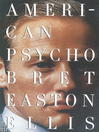
American PsychoAmerican Psycho by Bret Easton Ellis, 399 pages

Patrick Bateman is certainly a wealthy Wall Street executive.  He is probably an undiagnosed schizophrenic.  He may be a serial killer.

Reading American Psycho is an unpleasant experience.  Of course, there are the detailed descriptions of grisly, sadistic violence, much of it of a sexual nature, but equally dreadful are the extensive descriptions, at some point during each of Bateman's encounters, of the designer fashions everyone is wearing, often accompanied by similarly elaborate descriptions of brand name electronics and popular music.  American Psycho is often described as a satire on the '80s, or Wall Street, or both, but is not nearly so narrow.  Bateman and his circle could be displaced with only minor adaptations to contemporary LA or DC - indeed, the presence of Donald Trump as Bateman's idol offers a tempting invitation to any exceptionally dull filmmakers with access to the movie rights.  It is even easy to imagine a alternate version of the novel following a Dennis Rader-like figure living quietly in the suburbs.  Bateman's curse is not wealth or Reaganism, but boredom.  He attempts to escape from his superficial world through increasingly frenzied acts of transgression, but they only compound his problem.

Unfortunately. the same superficiality characterizes the novel itself.  It is based around a gimmick - vapid investment banker is a crazed killer, only he's so boring that no one notices - and although Ellis pushes it as far as he can, it only goes so far.


Friday, June 14, 2019

Bonfire of the Vanities

Image result for The Bonfire of the VanitiesThe Bonfire of the Vanities by Tom Wolfe, 659 pages

Sherman McCoy imagines himself a Master of the Universe, spending his days making multi-million-dollar bond trades, or, as his wife puts it, collecting golden crumbs.  Larry Kramer is an Assistant District Attorney in the Bronx, Jewish by birth but Irish by vocation, his heavy caseload and meager pay compensated for by fantasies of power and virility.  Peter Fallow is a reporter for the City Light tabloid, struggling to stay sober long enough to write a story that will justify his continued employment.  All of them are desperately trying to find, keep, and increase their place somewhere in the heap of humanity that is 1980s New York, the capital of the world.  In their persons, the worlds of finance, politics, and the press collide, though in the end their defeats seem to possess more dignity than their victories.

In 2007, The New York Times published a retrospective on Wolfe's debut novel in which it crowed that "the New York of 'Bonfire,' to a degree that might well have shocked people in 1987, no longer exists."  It is true, of course, that street crime in New York is far below the flood crest of the '70s and '80s, but street crime - as opposed to the fear of street crime - plays only an incidental part in The Bonfire of the Vanities, and the last decade has certainly witnessed a resurgence of social unrest and tribalism, complemented by an outrage culture endemic to social media and epidemic in the press, so that we seem more than ever to be living in Bonfire's jungle.  For proof, one need only compare the treatment of Sherman McCoy by a fictional tabloid with the treatment of the Duke Lacrosse players by the actual New York Times.  The same Qoheleth who informs us that "all is vanity" also reminds us that "there is nothing new under the sun."

Saturday, March 2, 2019

Life for a Life


Life for a Life by Lynda McDaniel    339 pages


In this first book in the Appalachian Mountain mystery series, readers are introduced to Della Kincaid and Abit.


Della has left Washington, D.C., looking for a new start. She spotted a for sale sign on a boarded up store as she took the long way back to D.C. after a week’s vacation in the Black Mountains. A former investigative reporter and newly divorced, Della was looking for a quiet, more predictable life.


At first, the local townspeople weren’t too keen on the new arrival, with the exception of Abit, a fifteen-year-old boy with an unspecified mental deficiency. His dad had taken him out of school because he was “a bit slow.” Now he just hangs around the house.


But when Della reopens the small grocery store, Abit begins to hang around, sitting in a rickety chair on the porch. Slowly, Della and Abit become friends. Della begins to offer him odd jobs around the store.


One afternoon, Della and her dog, Jake, go on a picnic where they discover a dead girl. Enter the sheriff who is stereotypical of all small town sheriffs. When a suicide note is found in the girl’s purse, the sheriff considers it an open-and-closed case of suicide.


Della’s reporter’s instinct kicks in, and she begins her own investigation. She calls on old friends back in D. C. and even enlists the help of her now-unemployed ex-husband.


The story takes place in the late 1980s, making it a combination historical mystery and cozy-bordering-on procedural mystery. Della and Abit take turns narrating the story. At first, I didn’t think I was going to like the story. The cover isn’t appealing; I would not have picked it up if I saw it on a bookstore shelf. (The author invited me to review the book, in case you’re wondering.) It took a while to get into Abit’s dialect, but McDaniel pulls it off. Still it got old fluctuating between Della’s correct grammar and Abit’s vocabulary and punctuation. That is the main reason  Life for a Life” receives 4 out of 5 stars in Julie’s world.


Thursday, March 2, 2017

Meeting Rozzy Halfway

Meeting Rozzy Halfway by Caroline Leavitt   294 pages

I first learned about author Caroline Leavitt from an article in the January/February 2017 issue of Bookmarks magazine. Her novels sounded like books I would enjoy so I decided to give her a try.

This is her first novel, published in 1980. It deals with two sisters, Rozzy and Bess, who are as different as night and day. Rozzy is a dark beauty and the oldest by four years. Bess is fair. Despite their age difference, they are close and need each other as if they were identical twins.

By the time Rozzy is ten years old, she hears voices, has vivid fantasies moments of disorientation. She is diagnosed as psychotic, and that diagnosis dooms their family.

A compelling read, this is the struggle of sisters, trying to desperately trying to hang onto each other until a shattering conclusion takes readers on a gasping ride to the finish.

The story did start to drag near the end. It seemed like the same scene was replayed over and over, using different words. That’s why Meeting Rozzy Halfway receives 4 out of 5 stars in Julie’s world.


Saturday, December 10, 2016

My Journey Through War and Peace: Explorations of a Young Filmmaker, Feminist, and Spiritual Seeker

My Journey Through War and Peace: Explorations of a Young Filmmaker, Feminist, and Spiritual Seeker by Melissa Burch   208 Pages

Melissa Burch’s story is based on her experiences as a freelance journalist during the Afghan War. When she was only 21 years old, Burch, and her cameraman, was on her to become the first journalist to capture the mujahedeen rebellion against Soviet invaders on tape.

The book opens with Burch sleeping a dirt floor with seven heavily armed Afghan soldiers, ranging from 19 to 20 years old. The tales of journey through Afghanistan will cause the hair on your arms to stand on end. The relentless heat, hunger and fear never left her. The hiding from the Russian soldiers was perilous and terrifying.  She must have covered the entire country either on horseback, motorbike or foot.  I felt her pain as she described a march through the rocky, mountains with Afghan soldiers

There was on anecdote where she and he soldiers were hiding when the Soviets were passing by. They had no sooner left the safety of the deserted compound, than it was blown up. 

One of the things that surprised me about Burch’s time is Afghanistan was that she was never raped. A lone woman traveling with many men had to be vulnerable. Not to say that she didn’t take up with one of the leaders, but it seemed more mutual consent.

My favorite parts of the book were after her return to the States. Maybe it was because I could relate more to that experience.

I approached Burch’s memoir with a bit of negativity. Earlier this year I had tried to read Malala Yousfzai’s I am Malala. I was prepared to be pulled into to that story, but I didn’t past page 50. I was a little afraid that I might experience the same issue with My Journey Through War and Peace: Explorations of a Young Filmmaker, Feminist, and Spiritual Seeker. But from the opening scene that I described earlier, I was hooked. Although places were a little choppy, but it is riveting.


I give My Journey Through War and Peace: Explorations of a Young Filmmaker, Feminist, and Spiritual Seeker 5 out of 5 stars.

Wednesday, June 29, 2016

No Country for Old Men

Cover image for No Country for Old Men by Cormac McCarthy, 309 pages

Llewelyn Moss is a poor man living in a small Texas town who happens across a satchel containing two million dollars in drug money.  Like a fairy tale gift, the satchel is also cursed, in this case with Anton Chirguh, out to retrieve the cash and kill anyone who impedes or even inconveniences him.  Pursuing them both, and trying to make sense of it all, is the protagonist, aged Sheriff Bell.

The entire novel has an apocalyptic tint, a sense of virtues gone sour, of a world abandoned by God and running down towards some squalid, preordained end.  Both Moss and Chirguh stubbornly refuse to ever quit, and this leads directly to their respective fates, but the kindly Bell lacks that fortitude.  It is difficult to believe that the author of Blood Meridian means us to take seriously the notion that the world has become that much worse (certainly Chirguh, as terrifying as he is, is no Judge Holden), and certain revelations about the past of the Sheriff and his family reinforce the impression that Bell may be fooling himself by thinking the past was any better than the present.  There may be some hope for the future, after all, presented by the end.  Two boys headed in different directions suggest the possibility of choice, and that the path the world is on (if it is on a path, and not in a place) is perhaps not inevitable, but if that is so, it is one of the few times in the novel anyone seems to have a choice, as the logic or illogic of events push and pull them onward and downward.  Perhaps some of that is the result of the power of McCarthy's writing, which here as elsewhere has an intensity that holds the reader captive and fixes the story firmly in the memory.