 Hidden
Figures by Margot Lee Shetterly 368 pages
Hidden
Figures by Margot Lee Shetterly 368 pages
Showing posts with label Race Relations. Show all posts
Showing posts with label Race Relations. Show all posts
Monday, June 10, 2024
Hidden Figures
I
cannot remember the last time I said a movie was better than the book. I am
saying it now about Hidden Figures though. So much better. My
book club selected this title, but after three evenings and only getting to
page 25, I knew this one wasn’t for me. And because I didn’t want to go
to book club without some knowledge of the book, I listened to the Audio CD. It
was easier to listen to than to read, but I still found it BORING!
My
biggest complaint is that the book didn’t focus on the women. Its focus was the
history of race relations in the aerodynamics industry from World War II through
the Space Shuttle Program. It was interesting, but I wanted to know more about
the women the book highlighted (Katherine Johnson, Dorothy Vaughn and Mary Johnson).
And while their stories are woven into the text, they aren’t centerstage. And
that is a shame. The stories of these courageous and intelligent women had been
buried for so long, it was a miracle that their accomplishments became known
before they passed away.
However,
the movie took those random bits of real life and turned them into a
fascinating and enlightening movie.
In
the book, there wasn’t a reason to turn the page; nothing compelling was written---except
for the small sections on the women. The movie got off to a slow start, for me,
but soon picked up to warp speed, keeping me on the edge of my seat.
It’s
obvious that a lot of research went into this story. It is well done though. Therefore,
for the book, I give it 2 stars and for the audio gets 3 stars. However, the
movie receives ten out of 5 stars in Julie’s world.

Thursday, May 21, 2020
Small Great Things

Small Great Things by Jodi Picoult 470 pages
Racism is not black and white. It is not simply a matter of what is or is not; it is a matter of degree. The story follows Picoult’s tried-and-true formula: The first half of the book presents a social, ethical, moral dilemma, and the second half is a legal courtroom thriller. In this case, a white baby dies in a hospital, the victim of an infant disorder that kills. His parents are white supremacists who have made clear that they do not want an African American nurse to touch their child. When the disorder creates a situation where the child is about to die, the black nurse, along with everyone else available, fights valiantly but unsuccessfully to save the little one. The nurse is blamed for the death, as supposed retaliation for her treatment by the racist parents, and is charged with murder.
As expected, I’m always struck by Picoult’s mastery of characterization and dialogue. Her deft writing ability makes this a page turning, fast moving thriller that grips the reader in the first few pages and literally does not let up until the final pages. Picoult develops the characters and provides backstory throughout the narrative. Switching perspectives between the three leading first person narrators, we are presented with a kaleidoscope of complicated issues that is narrowed down into a judge and jury decided outcome.
Although Small Great Things is predictable in its poignant, thought provoking modern morality play about active and passive racism in our society, the most compelling and passionate argument was the defense of the topic and a plea to society from the author at the end of the story. If you read nothing else, flip to the back and join her crusade.
Posted by: Regina C.
Thursday, October 31, 2019
Blended
 Blended by Sharon Draper, 308 pages
“Piano-prodigy Isabella, eleven, whose black father and white
mother struggle to share custody, never feels whole, especially as racial
tensions affect her school, her parents both become engaged, and she and her
stepbrother are stopped by police.” I wasn’t
completely expecting how this story was going to go but I loved it. I’m sure that plenty of kids can relate to
Izzy’s story and even kids who haven’t had her experiences can sympathize with
her troubles. She’s an extremely likable
and relatable character. I would highly
recommend this for older elementary kids.
Monday, July 22, 2019
Gateway to Equality

Gateway to Equality:
Black Women and the Struggle for Economic Justice in St. Louis by Keona K.Ervin, 269 pages
Ervin frames the book with two
national protests in which black women in St. Louis organized an effective
worker strike in 1933 and a renters strike in 1969. Before and between those
major successes, Gateway to Equality identifies the backgrounds and passions of
about a dozen major female organizers in St. Louis who had national experience
and impact. The book highlights major justice work in the twentieth century and
the central roles of female St. Louis activists during this time.
Before cell phones and text messages, hundreds of women organized a strike across different plants because their wages were unlivable at $4.60 per week and had been lowered six times. Despite the general conceptual and organizational divide between church and communist perspectives, the women combined insights, organizing and emotions in their leadership. They organized to focus on issues of survival and justice, and to include rather than isolate different perspectives.
Gateway reviews movements where women led in CORE and Southern Tenant Farmers Union; organized strikes for garment workers; organized boycotts and strikes for jobs against a defense contractor, banks, drug stores and neighborhood shops; ran effective campaigns for city and state political positions; created fair housing legislation; wrote reports on Missouri prisons; and organized unions.
In 1969 black working-class women led thousands of public-housing tenants from Pruitt-Igoe, Carr Square, Vaughn and Cochran developments in a strike against St. Louis Housing Authority (SLHA). The substance of their strike was an expression of dignity and a public demand for respect: the public needed to know that working women who made $75 a month in wages could not afford to pay $55 per month to house, feed, clothe and transport themselves and their children. They and their supporters carried signs that read “Sure Fire Riot Control—Lower Rent,” “March Now—Eat Later,” “Make the Roaches Pay Rent Too!” They demanded lower rents, increased representation on housing board commissions, improved maintenance, better pest control and police protection, improved utility services and financial transparency of the SLHA. Their protest was covered by national news, drew from a rich history of organizing by black women, gained almost all of its objectives, and influenced local, state and national housing policies.
Keona Ervin’s Gateway to Equality is important justice history, women’s history, and St. Louis history.
Before cell phones and text messages, hundreds of women organized a strike across different plants because their wages were unlivable at $4.60 per week and had been lowered six times. Despite the general conceptual and organizational divide between church and communist perspectives, the women combined insights, organizing and emotions in their leadership. They organized to focus on issues of survival and justice, and to include rather than isolate different perspectives.
Gateway reviews movements where women led in CORE and Southern Tenant Farmers Union; organized strikes for garment workers; organized boycotts and strikes for jobs against a defense contractor, banks, drug stores and neighborhood shops; ran effective campaigns for city and state political positions; created fair housing legislation; wrote reports on Missouri prisons; and organized unions.
In 1969 black working-class women led thousands of public-housing tenants from Pruitt-Igoe, Carr Square, Vaughn and Cochran developments in a strike against St. Louis Housing Authority (SLHA). The substance of their strike was an expression of dignity and a public demand for respect: the public needed to know that working women who made $75 a month in wages could not afford to pay $55 per month to house, feed, clothe and transport themselves and their children. They and their supporters carried signs that read “Sure Fire Riot Control—Lower Rent,” “March Now—Eat Later,” “Make the Roaches Pay Rent Too!” They demanded lower rents, increased representation on housing board commissions, improved maintenance, better pest control and police protection, improved utility services and financial transparency of the SLHA. Their protest was covered by national news, drew from a rich history of organizing by black women, gained almost all of its objectives, and influenced local, state and national housing policies.
Keona Ervin’s Gateway to Equality is important justice history, women’s history, and St. Louis history.
Friday, June 14, 2019
Bonfire of the Vanities
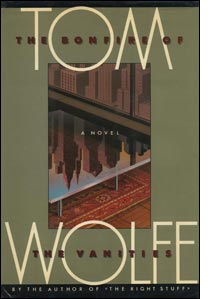 The Bonfire of the Vanities by Tom Wolfe, 659 pages
Sherman McCoy imagines himself a Master of the Universe, spending his days making multi-million-dollar bond trades, or, as his wife puts it, collecting golden crumbs. Larry Kramer is an Assistant District Attorney in the Bronx, Jewish by birth but Irish by vocation, his heavy caseload and meager pay compensated for by fantasies of power and virility. Peter Fallow is a reporter for the City Light tabloid, struggling to stay sober long enough to write a story that will justify his continued employment. All of them are desperately trying to find, keep, and increase their place somewhere in the heap of humanity that is 1980s New York, the capital of the world. In their persons, the worlds of finance, politics, and the press collide, though in the end their defeats seem to possess more dignity than their victories.
In 2007, The New York Times published a retrospective on Wolfe's debut novel in which it crowed that "the New York of 'Bonfire,' to a degree that might well have shocked people in 1987, no longer exists." It is true, of course, that street crime in New York is far below the flood crest of the '70s and '80s, but street crime - as opposed to the fear of street crime - plays only an incidental part in The Bonfire of the Vanities, and the last decade has certainly witnessed a resurgence of social unrest and tribalism, complemented by an outrage culture endemic to social media and epidemic in the press, so that we seem more than ever to be living in Bonfire's jungle. For proof, one need only compare the treatment of Sherman McCoy by a fictional tabloid with the treatment of the Duke Lacrosse players by the actual New York Times. The same Qoheleth who informs us that "all is vanity" also reminds us that "there is nothing new under the sun."
Monday, December 31, 2018
The Parker Inheritance
 The Parker Inheritance
by Varian Johnson, 331 pages
The Parker Inheritance
by Varian Johnson, 331 pages
“Twelve-year-old
Candice Miller is spending the summer in Lambert, South Carolina, in the old
house that belonged to her grandmother, who died after being dismissed as city
manager for having the city tennis courts dug up looking for buried
treasure--but when she finds the letter that sent her grandmother on the
treasure hunt, she finds herself caught up in the mystery and, with the help of
her new friend and fellow book-worm, Brandon, she sets out to find the
inheritance, exonerate her grandmother, and expose an injustice once committed
against an African American family in Lambert.” This was a great
story. Kids who like realistic fiction,
mysteries, or puzzles, will love it.
Wednesday, November 21, 2018
Eloquent Rage
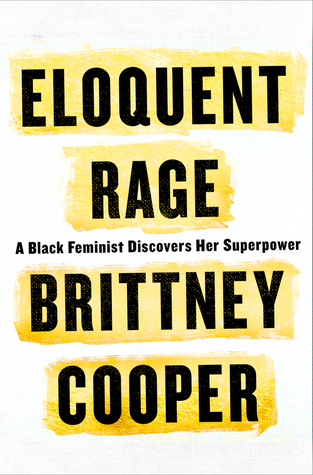
Eloquent Rage by Brittany Cooper 288 pages
From Goodreads:
So what if it's true that Black women are mad as hell? They have the right to be. In the Black feminist tradition of Audre Lorde, Brittney Cooper reminds us that anger is a powerful source of energy that can give us the strength to keep on fighting.
Far too often, Black women's anger has been caricatured into an ugly and destructive force that threatens the civility and social fabric of American democracy. But Cooper shows us that there is more to the story than that. Black women's eloquent rage is what makes Serena Williams such a powerful tennis player. It's what makes Beyonce's girl power anthems resonate so hard. It's what makes Michelle Obama an icon.
Eloquent Rage keeps us all honest and accountable. It reminds women that they don't have to settle for less. When Cooper learned of her grandmother's eloquent rage about love, sex, and marriage in an epic and hilarious front-porch confrontation, her life was changed. And it took another intervention, this time staged by one of her homegirls, to turn Brittney into the fierce feminist she is today. In Brittney Cooper's world, neither mean girls nor fuckboys ever win. But homegirls emerge as heroes. This book argues that ultimately feminism, friendship, and faith in one's own superpowers are all we really need to turn things right side up again.
My Review:
I learned a lot while reading this book. Cooper brought a lot of new things (for me) to the table. I would have loved to read this in a class setting, to have other folks to talk about it with to better digest what I read. As I read it on my own, I have some things I can take away with it, and I'll certainly mull over other things, but I feel like I lacked the educational rigor to understand some of the concepts she brought up. Otherwise, it's a lot to chew on, but I'd recommend it because Cooper's intelligent delivery is worth reading through. You'll definitely learn something and perhaps have a new perspective.
From Goodreads:
So what if it's true that Black women are mad as hell? They have the right to be. In the Black feminist tradition of Audre Lorde, Brittney Cooper reminds us that anger is a powerful source of energy that can give us the strength to keep on fighting.
Far too often, Black women's anger has been caricatured into an ugly and destructive force that threatens the civility and social fabric of American democracy. But Cooper shows us that there is more to the story than that. Black women's eloquent rage is what makes Serena Williams such a powerful tennis player. It's what makes Beyonce's girl power anthems resonate so hard. It's what makes Michelle Obama an icon.
Eloquent Rage keeps us all honest and accountable. It reminds women that they don't have to settle for less. When Cooper learned of her grandmother's eloquent rage about love, sex, and marriage in an epic and hilarious front-porch confrontation, her life was changed. And it took another intervention, this time staged by one of her homegirls, to turn Brittney into the fierce feminist she is today. In Brittney Cooper's world, neither mean girls nor fuckboys ever win. But homegirls emerge as heroes. This book argues that ultimately feminism, friendship, and faith in one's own superpowers are all we really need to turn things right side up again.
My Review:
I learned a lot while reading this book. Cooper brought a lot of new things (for me) to the table. I would have loved to read this in a class setting, to have other folks to talk about it with to better digest what I read. As I read it on my own, I have some things I can take away with it, and I'll certainly mull over other things, but I feel like I lacked the educational rigor to understand some of the concepts she brought up. Otherwise, it's a lot to chew on, but I'd recommend it because Cooper's intelligent delivery is worth reading through. You'll definitely learn something and perhaps have a new perspective.
Monday, November 19, 2018
God, Harlem USA
 God, Harlem USA: The Father Divine Story by Jill Watts, 178 pages
No doubt, many motorists were surprised by the news, proclaimed from the sides of buses travelling the highways of 1930s America, that "Father Divine is God!" Those who knew that the Reverend Major Jealous Divine, born George Baker, was a diminutive son of former slaves living in Harlem were likely even more shocked. Yet at the height of his ministry Father Divine headed a network of "International Peace Missions" spanning the country, was courted by politicians including New York mayor Fiorello Laguardia and the Communist Party USA, and was worshiped as God incarnate by tens of thousands of Americans, both black and white. His story is a strange and little known part of American religious and cultural history.
While earlier studies of Father Divine's life and ministry concentrated on politics and sociology, Watts understands the primacy of the theological, although her own politics visibly shape her account - humorously, she is openly appreciative of Father Divine's declaration that, being God enfleshed, he was not an American, but critical of his (more consistent) statements that, for the same reason, he was not an African-American. Not only does she correct widely accepted factual errors (Divine was born and raised in Maryland, not the Deep South), she places his teachings (including his claim to divinity) in the wider context of both early twentieth century African-American religious and social currents and the New Thought "positive thinking" movement. Unfortunately, her descriptions and analysis seem too heavily dependent on her study of Father Divine's own publications, rarely (perhaps because of a lack of other sources) going beyond a superficial recounting of this version of events. Even when she knows that these publications are untrustworthy (at one point she estimates that they claimed Divine commanded a following at least two orders of magnitude larger than even a generous estimate of his actual number of devotees), she continues to cite them with few caveats. This, combined with the amorphous nature of Divine's theological and political beliefs, makes for frustrating reading.
Tuesday, July 31, 2018
Dear Martin
 Dear Martin by Nic Stone, 210 pages
“Justyce McAllister is
a good kid, an honor student, and always there to help a friend--but none of
that matters to the police officer who just put him in handcuffs. Despite
leaving his rough neighborhood behind, he can't escape the scorn of his former
peers or the ridicule of his new classmates. Justyce looks to the teachings of
Dr. Martin Luther King Jr. for answers. But do they hold up anymore? He starts
a journal to Dr. King to find out. Then comes the day Justyce goes driving with
his best friend, Manny, windows rolled down, music turned up-- way up, sparking
the fury of a white off-duty cop beside them. Words fly. Shots are fired.
Justyce and Manny are caught in the crosshairs. In the media fallout, it's
Justyce who is under attack.” All I
really want to say is, read this book. I
can’t believe how well it’s put together and how well the Justyce is developed
so that you are really inside his head the whole time. Even the pieces that are not his thoughts
feel like you’re experiencing them from his perspective. This may be the most powerful book I’ve read
all year. I will be giving it to any
teens who want realistic fiction.
Monday, April 30, 2018
The Hate U Give
 The Hate U Give by Angie Thomas, 444 pages
Starr attends a mostly white private school but lives in a poor
black neighborhood. One night she goes
to a party with one of her friends in the neighborhood. A fight breaks out involving guns and she
quickly leaves with another friend, Khalil.
One the way home they are pulled over and, during the course of the
interaction, Khalil is shot and killed by the officer. Starr, who never really recovered from seeing
another friend of hers killed in a drive by a few years before is left reeling
from this death. She wants to help
Khalil get justice but she is afraid to speak up because of retaliation and
because she is afraid that people will not understand. This was an amazing book. The characters are fantastic and very
real. I couldn’t put this book down because
I really wanted to know what happened next.
Every teen should read this book.
Wednesday, February 7, 2018
The Sellout
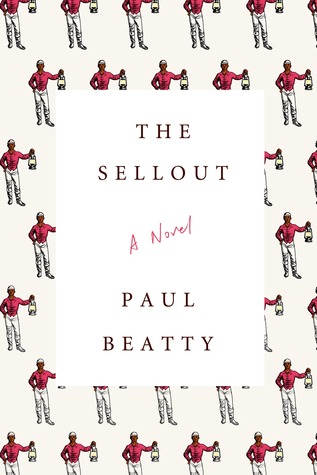
The Sellout by Paul Beatty 304 pages
The black narrator, Bonbon, grew up in a “disappeared” L.A. suburb, once an “agrarian ghetto” called Dickens, where he was subjected to his father’s sociological, and abusive, experiments about race. Despite his father’s attempts to indoctrinate him into ‘black’ thinking, Bonbon is ultimately also called the Sellout because his character, although himself an African-American, does not espouse African-American stereotypes, he just doesn’t get the ‘black’ thing. As a grown man, Bonbon discovers one day that his town has ceased to exist, and he sets about to rectify the situation. He elicits help from his friend, Hominy, the last surviving member of TV's Little Rascals (he was Buckwheat’s understudy). Help is really not the appropriate term as Hominy insists on being enslaved and Bonbon suffers through his role as massa. Part of the solution to making Dickens visible is to reintroduce segregation, first on buses, then in the schools. As one can imagine, imposing voluntary slavery and apartheid onto an American community eventually causes a legal nightmare, and the case ends up in the Supreme Court.
This novel is a daring satire about race relations in contemporary America. Nothing is sacred - politics, pop culture, the media's portrayal of African-Americans - so many aspects of U.S. life are targeted and turned upside-down by Beatty's razor-sharp musings. This book is often very funny, and full of ideas and snipes at deserving targets, but not an easy book to read if you are easily offended. The plot is clearly ridiculous, but it does allow a very full discussion of race - the stereotypes, the archetypes, and array of attitudes from subtle to extreme.
Posted By: Regina C.
Monday, January 29, 2018
Why I'm No Longer Talking To White People About Race
Why I'm No Longer Talking to White People About Race by Reni Eddo-Lodge 249 pages
 In 2014, award-winning journalist Reni Eddo-Lodge wrote about her frustration with the way that discussions of race and racism in Britain were being led by those who weren't affected by it. She posted a piece on her blog, entitled: 'Why I'm No Longer Talking to White People About Race'. Her words hit a nerve. The post went viral and comments flooded in from others desperate to speak up about their own experiences. Galvanised by this clear hunger for open discussion, she decided to dig into the source of these feelings. Exploring issues from eradicated black history to the political purpose of white dominance, whitewashed feminism to the inextricable link between class and race, Reni Eddo-Lodge offers a timely and essential new framework for how to see, acknowledge and counter racism.
In 2014, award-winning journalist Reni Eddo-Lodge wrote about her frustration with the way that discussions of race and racism in Britain were being led by those who weren't affected by it. She posted a piece on her blog, entitled: 'Why I'm No Longer Talking to White People About Race'. Her words hit a nerve. The post went viral and comments flooded in from others desperate to speak up about their own experiences. Galvanised by this clear hunger for open discussion, she decided to dig into the source of these feelings. Exploring issues from eradicated black history to the political purpose of white dominance, whitewashed feminism to the inextricable link between class and race, Reni Eddo-Lodge offers a timely and essential new framework for how to see, acknowledge and counter racism.| A quick read on why intersectionality is important, especially as it pertains to social justice causes, like feminism. Important points are made about why all voices must speak up when it comes to anti-racism. |
Monday, January 15, 2018
Bad Feminist
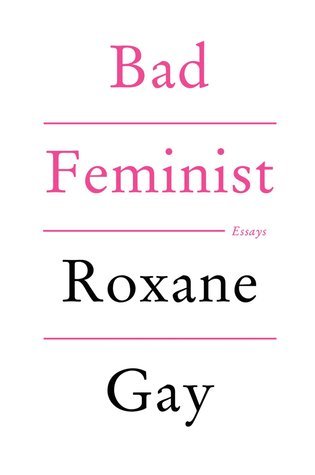
Bad Feminist by Roxane Gay (4 Stars, paperback, 320 pages)
Bad Feminist is a collection of compulsively readable essays. Roxane Gay is extraordinarily keyed into popular culture. You will see takes on all of the talking points you might expect from a black woman cultural maven publishing in 2014: Girls, The Hunger Games, Daniel Tosh, Orange is the New Black, “Blurred Lines”, Fifty Shades of Grey, The Help, Django Unchained, 12 Years a Slave, Tyler Perry, Fruitvale Station, Twitter, Abortion, Trayvon Martin, the Boston Marathon Bombing. Some of the topics are older - Flavor of Love, Chris Brown, Twilight, and an adorable obsession with Sweet Valley High - but no less relevant to the conversations she is having. With each of these topics, she takes a look at why they are so popular or so controversial or both, and plainly states what frustrates her about them.
The through-line of the piece examines the standard of perfection required by women, whether they are in the public eye or not. She acknowledges that you can love something and still have significant problems with it. I sometimes feel pressured to disavow a book (or a film, or a celebrity, or a fast food chain, or a political position) entirely if she/he/they/it has a flaw. This is essentially her position with feminism itself - it’s flawed as an ideology and a movement because it’s led by people, and people are flawed. But that doesn’t mean you throw away the principle of equal treatment. You don’t have to abandon feminism entirely because you like pink or you shave your legs or you dance to Robin Thicke’s music. The cultural caricature of feminism is a ridiculous barrier designed to prevent people from embracing a movement that should honestly be a no-brainer.
These essays were released at different times in many different publications, so sometimes the overall effect is a little disjointed if you’re reading it straight through like I did. The essays were ordered very well - her personal life stories were a fairly gentle introduction, lending some effective foreshadowing for events in her life described later, and seeding references to cultural touchstones she dives into with more detail later. There’s an immense focus on popular culture throughout the book, and you will be a little lost if you have not seen or read the media she is reviewing. You can still follow her point, though. Overall, it was well worth reading. I would suggest taking your time with it.
Friday, October 27, 2017
Trouble The Water
 Trouble The Water by Frances O’Roark Dowell, 278 pages
“In the segregated south of Kentucky in
1953, twelve-year-olds Callie, who is black, and Wendell, who is white, are
brought together by an old dog that is clearly seeking something or someone,
but they not only face prejudice, they find trouble at a haunted cabin in the
woods.” This was a
fascinating combination of realistic fiction, historical fiction, and ghost story. I think this falls heaviest on the historical
fiction side and would probably lean towards giving it to kids who like that
genre but I think it could have wider appeal.
Monday, December 5, 2016
The Bronx Is Burning
 Ladies and Gentlemen, the Bronx Is Burning: 1977, Baseball, Politics, and the Battle for the Soul of a City by Jonathan Mahler, 339 pages
In 1975, New York City, in many ways the capital of the modern world, teetered on the brink of collapse. The bankrupt city government was refused a federal government bailout, sanitation workers held a ten day strike during which garbage piled up on the sidewalks, and laid off policemen rioted, shutting down the Brooklyn Bridge during rush hour. The city bounced back in '76, serving as the focal point for the nation's bicentennial celebrations, hosting a successful Democratic National Convention, and cheering the Yankees into the World Series. The subsequent sweep of the Yankees by the unstoppable Big Red Machine might have served as an omen for '77.
As author Mahler chronicles, the momentous events of 1977 represented the convergence of a series of trends. Rupert Murdoch's New York Post continued to change New York's media landscape. Disco broke big, while punk grew in the East Village and hip hop conquered the Bronx. Pudgy postman David Berkowitz terrorized the city as the ".44 Caliber Killer" and then as the "Son of Sam", killing 6 and wounding 7 in a series of random shootings that lasted twelve months. A cascading series of failures in the city's power grid led to a blackout in mid-July that plunged the entire city into darkness, triggering widespread looting and arson. Most obviously, the future of the city was weighed in the Democratic primary for mayor, which pitted incumbent technocrat Abe Beame against irrepressible radical Bella Abzug, opinionated loudmouth Ed Koch, and political Hamlet Mario Cuomo. Yet for Mahler, the great story of '77 is the Yankees' championship season, throughout which manager Billy Martin fought his own personal demons as well as team owner George Steinbrenner and brash slugger Reggie Jackson.
Mahler's account is written in a readable, straightforward documentary style, but the material is loaded with a symbolic importance far greater than the bare facts. It is to the author's credit that he does not force interpretations onto these facts. The Martin-Jackson feud can be seen as representative of an insecure, unhinged white establishment trying desperately to deny the legitimate achievements of rising blacks, or as locally-rooted working class ballplayers being eclipsed by mercenary free agent superstars, or neither, or both. The Son of Sam murders certainly evoked the horror of urban anonymity (even as the discotheques promised the pleasures of that same anonymity), but also involved the hype of sensationalistic journalism. The result is genuinely poetic, both a revelatory history and a love song to the city and its legendarily outsized personalities.
Monday, November 30, 2015
Black Dove White Raven
 Black Dove White Raven by Elizabeth Wein, 357 pages
Emilia Menotti and Teodros Dupre' lived in the United States with
their mothers, who did air shows until Teo's mother, Delia, known as Black
Dove, was killed in a freak accident. Delia's dream was to move to
Ethiopia, where Teo's father was from before he died, because in Ethiopia, Teo
would not have the same stigma that he did in the U.S. Rhoda, who was
lost without Delia, was determined to live her dream, so, within a few years,
she moved herself, Em, and Teo to Ethiopia. Teo and Em had always been
raised as though they were brother and sister and Teo and Rhoda though of each
other as mother and son. But when trouble invades Ethiopia, the fact that
they have no legal relationship becomes a problem, along with the fact that
Teo's father was Ethiopian, which binds him more closely to their laws.
Em and Teo have always written stories featuring themselves as White Raven and
Black Dove but Em isn't sure if she can come up with a way to help Teo.
Written alternately from Em's and Teo's points-of-view, this story chronicles
their lives from the time they are about five, until they are sixteen, but
concentrates most heavily on the time they spend in Ethiopia. The ending
of this book takes place during the time that was a prequel to WWII, when Italy
was attacking Ethiopia, a part of history that I really didn't know anything
about. I really liked this story and I think that teens who like
historical novels, especially about civil rights, and like a little bit of
adventure will want to read it.
Saturday, August 15, 2015
Go Set A Watchman

Go Set A Watchman by Harper Lee, 278 pages
Tiger already reviewed this so I'm not going to spend any time on
plot. I'm just going to say that I liked it. I read it aloud to
someone who loved it. I thought there were some flaws but I thought
that a lot of the flaws could have been fixed by a good editor, so
I was a little disappointed that some of that wasn't fixed but I
liked the story and I wasn't bothered by the whole "Attiucs is a
racist" storyline. I understand why Lee was concerned about it being
published and it probably could have and would have been more polished if she
had intended to submit it for publication but overall I still enjoyed it.
Tuesday, May 26, 2015
Lies We Tell Ourselves

Sarah is one of ten African American students integrating at
Jefferson High School. Nearly the entire
white population at school is upset and horrified at this prospect. The governor shut down the schools and was
able to keep them closed until February, so no one started school until the
spring. Sarah and the other students are
faced with bullying and harassment every single day. Of course, Sarah believes in what they’re
doing but it’s very hard to go back and face it every day. To further complicate life for Sarah, there
is one white girl, Linda, who is vehemently against desegregation. Sarah and Linda are forced to work together
on a project and the two girls constantly battle about the subject but also
come to realize that in another situation, they might actually be able to be friends,
or even more. This was an excellent
story that I would highly recommend to any teens interested in books about
issues or history and civil rights.
Thursday, April 16, 2015
How It Went Down

Told from multiple perspectives, this is the story of Tariq,
gunned down in his own neighborhood after leaving a store. Some people claim he was carrying a gun, some
people say he was unarmed. The media is
having a field day, and it appears that the police believe that Tariq is at
fault and have let the shooter, Jack, go.
Although it isn’t stated the book is clearly inspired by recent events
and many teens have seen or can relate to the type of events in this book. It was gripping and realistic and one I would
recommend to many high school age teens.
Subscribe to:
Posts (Atom)