Showing posts with label Kenneth H.. Show all posts

Wednesday, January 31, 2018

The Storied Life of A.J. Fikry

The Storied Life of A.J. Fikry by Gabrielle Zevin (5 stars, audio, 260 pages) 

The Storied Life of A.J. Fikry shows the life that happens in between all the book reviews. Foul-tempered A.J. Fikry is the reclusive bookseller at Island Books, far removed from the world. He has very specific preferences in his reading material, and will brook no argument as he scares away the vendors who come a long way to visit him. In fact, he would hate this book. His wife died, his store is in a sales slump, and his “pension” vanishes overnight, so all he wants to do is drink himself to death. An unexpected surprise promises to breathe life into this exhausted shell of a man.

As a librarian and book reviewer, I am surely the intended reader of this book, and what can I say except that it worked. The literature reviews at the beginning of each chapter, mostly for short stories, set a perfect tone. The author demonstrates clever knowledge of the book business, with funny and true book banter. Potential complaints against it include: too sappy, too gimmicky, too neat. I liked all of those qualities, though. I essentially told my wife the whole story as it progressed, and she was invested in even the second-hand telling. This is a funny, touching story with characters that feel real. It’s familiar, perhaps even too cliched, but it’s still a short and entertaining read that I enjoyed immensely.   

Monday, January 29, 2018

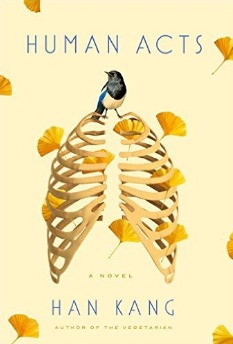
Human Acts

Human Acts by Han Kang (3 stars, 226 pages, paperback) 

This novel tells several perspectives of the events and aftershocks of the 1980 Gwangju Uprising in South Korea. It starts off following a boy, Dong-ho, looking for his friend among the bodies of those slain by the military. The following chapters run with the perspectives of other characters introduced in the first chapter, taking place up to 33 years after the event itself. More and more heartbreaking details about the events of one fateful day reveal themselves as the story goes on.  

There’s a good chance you never knew this happened. (Even if you were tuned into world news in 1980, the only American newspaper carrying coverage of this event on Newsbank was the Christian Science Monitor.) Maybe you never knew that South Korea even had dictators at all. I sure didn’t. The book struggles with difficult themes of death and whether a culture or even just a person can recover from atrocity. And I really mean struggles. I’m not certain the author (and/or translator) knew 100% what she wanted to say.


This was a difficult book to read. Every new chapter brought with it the realization of who we were following and what they were going to tell me, and I would moan and say aloud “Please no!” Whatever it was I was afraid of did not fully manifest, though. I was never reduced to a puddle of sorrowful tears, like I was expecting. The language was brutally beautiful and evocative, but somewhat scattershot. I was always left a little unsure how to feel. But then, this is a very difficult theme to write effectively about, and not a theme I seek out, so I don’t really fault the author (and/or translator). Ultimately, this is a troubled, difficult exploration of grief.

Tuesday, January 23, 2018

The Punch Escrow

The Punch Escrow by Tal Klein (3 stars, paperback, 356 pages) 

In the year 2147, many of the problems plaguing humanity have been ended by scientific advancement and corporate leadership. Air pollution and diseases are things of the past, and everybody has unique digital implants that provide all the services of your smartphone inside your head. War is a thing of the past - corporations took over instead of countries in the wake of The Last War. Under the auspices of the powerful company International Transport, teleportation using a process called the Punch Escrow is the safest, fastest, and cheapest mode of transportation. Joel Byram’s somewhat distant wife Sylvia is a hotshot scientist with IT, working on highly-classified projects. Joel’s only marketable skill is his ability to trick AIs, which he uses to make spending cash and patch cybersecurity holes. Inevitably, something goes wrong in this world of technological wonder and corporate authority, and Joel must do what he can to right the wrongs and return his life to what passes for normal.

This book is essentially a humorous hard science fiction longform analysis of the Teletransportation Paradox. (You may remember this from criticism of Star Trek’s transporters.) This is an offshoot of the Theseus Paradox, and Klein enjoys diving into other philosophical conundrums like the Trolley Problem, leaving much to enjoy for the philosophy enthusiast.

For my part, I had fun, and it read really quickly. The science fiction and philosophy was a little hard for my tastes, and plenty of it went right over my head. We didn’t see Joel speak with Sylvia about Julie, and that felt really important to me. This book did not feel like it was setting up for a sequel, but the ending leaves little doubt that one is intended.


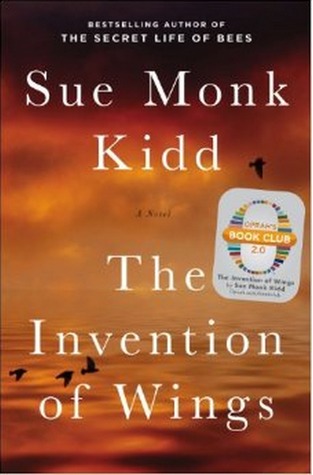
The Invention of Wings

The Invention of Wings by Sue Monk Kidd (3 stars, audio, 384 pages)

This novel follows the dual narrative of Sarah Grimke and one of her family’s slaves, Handful. It takes place in Charleston, South Carolina in 1803 when Handful is given to Sarah as a birthday present, and spans the next several decades as the women age, both together and apart. Both women have ambition for anything but what they have. Kidd takes on not only slavery, but also women’s rights.

I appreciate that the book did not try to catalog the more visceral bodily horrors of slavery. That’s the route seen often in books or films on the topic, and while it has a place, it gets a disproportionate share of the coverage. While there is certainly punishment in the novel, it primarily happens off-page. Instead, the book focuses on the mental horrors inflicted by slavery - the day-in, day-out tedium of knowing there’s no hope for change. This is echoed in Sarah’s helplessness in response to her social station, and magnified by a speech impediment. Kidd takes care to not entirely conflate the plight of slaves and the plight of women, however, having Handful openly mock Sarah for trying to commiserate.

The author’s approach was realistically told. So many novels are built around high-impact events that change everything. In this book, very little changed. Even after the important events - punishments, scandals, deaths - everything reverts to normal for the next several years. This mirrors the conflicts confronted by Sarah and Handful. As they push to change their corners of the world, the world’s resistance to change pushes back, smothering them in turn.

At the same time, the decades-long scale of the book tired me. The story might be better told if it were shorter. Large swaths of Sarah’s tale felt irrelevant, like the scandals involving Sarah’s father and suitor, or her endless time with the Quakers. Now, I did not know that this was a fictionalized account of actual people. I caught some name dropping with Lucretia Mott and Theodore Weld, but the Author’s Note actually surprised me a bit. (To be fair, if I had looked at the book in any detail instead of just grabbing one at random, or if I had been curious enough to Google some names, I would have known this sooner.) Knowing that the author was trying to stick close to history may have helped me look past some of the boring bits. I’m not convinced I should, though. 


I would have liked to see more of Sarah engaging with her life’s work by the end, instead of some of the earlier irrelevant stuff. Handful’s story was solid throughout, but I similarly would have liked just a little more from her at the end and seen her life past that point. The voice acting of Jenna Lamia and Adepero Oduye was superb.

Monday, January 15, 2018

Bad Feminist

Bad Feminist by Roxane Gay (4 Stars, paperback, 320 pages) 

Bad Feminist is a collection of compulsively readable essays. Roxane Gay is extraordinarily keyed into popular culture. You will see takes on all of the talking points you might expect from a black woman cultural maven publishing in 2014: Girls, The Hunger Games, Daniel Tosh, Orange is the New Black, “Blurred Lines”, Fifty Shades of Grey, The Help, Django Unchained, 12 Years a Slave, Tyler Perry, Fruitvale Station, Twitter, Abortion, Trayvon Martin, the Boston Marathon Bombing. Some of the topics are older - Flavor of Love, Chris Brown, Twilight, and an adorable obsession with Sweet Valley High - but no less relevant to the conversations she is having. With each of these topics, she takes a look at why they are so popular or so controversial or both, and plainly states what frustrates her about them.

The through-line of the piece examines the standard of perfection required by women, whether they are in the public eye or not. She acknowledges that you can love something and still have significant problems with it. I sometimes feel pressured to disavow a book (or a film, or a celebrity, or a fast food chain, or a political position) entirely if she/he/they/it has a flaw. This is essentially her position with feminism itself - it’s flawed as an ideology and a movement because it’s led by people, and people are flawed. But that doesn’t mean you throw away the principle of equal treatment. You don’t have to abandon feminism entirely because you like pink or you shave your legs or you dance to Robin Thicke’s music. The cultural caricature of feminism is a ridiculous barrier designed to prevent people from embracing a movement that should honestly be a no-brainer.

These essays were released at different times in many different publications, so sometimes the overall effect is a little disjointed if you’re reading it straight through like I did. The essays were ordered very well - her personal life stories were a fairly gentle introduction, lending some effective foreshadowing for events in her life described later, and seeding references to cultural touchstones she dives into with more detail later. There’s an immense focus on popular culture throughout the book, and you will be a little lost if you have not seen or read the media she is reviewing. You can still follow her point, though. Overall, it was well worth reading. I would suggest taking your time with it.

Friday, January 5, 2018

The girl in the road

The Girl in the Road by Monica Byrne (4 stars, hardback, 323 pages) science fiction, pirate, survival

 Separated by thousands of miles and more, two troubled women undertake epic flights from danger, marked by curious similarities. Meena flees an assassination attempt in India by planning to cross the Trail, a “Blue Energy” bridge that spans the Arabian Sea. In performing this illegal and dangerous act, she hopes to enter Ethiopia and find out who killed her parents. Mariama flees slavery as a child, joining a caravan bound for Ethiopia as well. She comes under the wing of a woman she calls Yemaya. Each of these women are recovering from trauma - there is something that they are not telling us. The journeys build to a compelling series of shocking revelations and conclusions.

 The setting is rich, incorporating the cultures of India and Africa in the near future. Tantalizingly attainable aspects of the future are peppered throughout; things like automated cabs, inclusive legislation, perfect birth and STI control, universal translation devices,  and the very Road that Meena walks. It inhabits and flavors the world, but does not overwhelm it. This isn’t the classic science fiction, with lasers and spaceships. It’s the more contemplative breed found in the worlds of Ursula K. LeGuin. The flexibility of the genre creates a particularly intriguing locale in which to place an essentially human journey.

Byrne has a great sense of literature. The joy in this book is in the journey, in learning new details to slowly uncover a more accurate portrait of the world’s reality. Even if you don’t like every aspect of the characters presented - and you won’t - the slowly unraveling story of the past made it well worth the investment for me.

This is one of those novels that’s hard to talk about without spoilers, and spoilers would harm the expertly crafted narrative. Meena and Mariama were exceedingly well-developed, and their story arcs were perfect, but the actions of a couple of important side-characters seemed off-the-mark. We were left with a massive disruption to the setting that, though it wasn’t without foreshadowing, felt disconnected from the action of the novel. While I applaud Byrne for using non-western characters, I do wonder how their often-unflattering depictions are perceived in the cultures of Africa and India. Despite these misgivings, the well-scripted discovery of the plot made this an excellent read.

Wednesday, December 20, 2017

Hidden Figures

Hidden Figures by Margot Lee Shetterly (3 stars, paperback, 271 pages)

Hidden Figures tells the story of how black women worked to become engineers, computer programmers, managers, and other revolutionary figures in the organization that became known as NASA, located out of Langley in Virginia. Featured are Dorothy Vaughan, one of the first black women in a supervisory role there; Katherine Johnson, famous for calculating John Glenn's landing site; Mary Jackson, who earned the title of Engineer; and Christine Darden, representative of the next generation. While the story keeps returning to these four, the book examines the career arcs of many different women, black and white, to accurately chronicle this time from a perspective that we rarely see in popular culture - hence, hidden figures.

The story starts during World War 2, when Dorothy Vaughan began working for NACA as a "West Computer", and stretches all the way to the 80s and 90s, when the main characters retire. The bulk of the story occurs during the Space Race in the late 50s and 60s, with the contributions of these women in achieving orbital flight and the moon landing the climax of the book. The book also examines the racial backdrop of a segregated Virginia and the Civil Rights movement at the time. (Did you know the Little Rock Nine and Sputnik took place one month apart, with the latter driving the former from the headlines?) While Langley was reasonably integrated for its time, the surrounding area was fighting pitched battles over education.

The book is immensely well-researched and for all that, not entirely dry. It did feel (and take) a lot longer to read than the 270-some pages indicated. It had some awkward writing. While the background information was good to have, and the people are wonderful, I didn't quite feel that the primary action in the book - people going to work and doing their jobs - was all that notable. For all of her honors and awards, Katherine Johnson seems to feel the same way. Therefore, the most interesting thing about this book, to me, is what it implies. That all around the country during this time, every single industry was being revolutionized in the same way. Black people and women were cracking into management ranks, outperforming white men, and gaining titles they never could before.

And I want to hear about more of them now!

Thursday, November 30, 2017

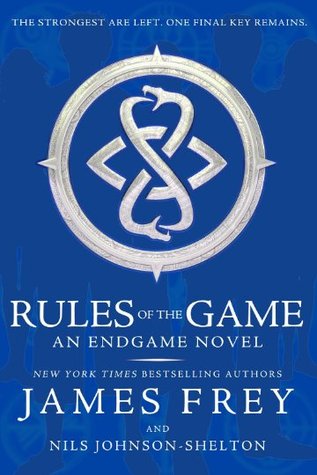
Rules of the Game

Rules of the Game by James Frey and Nils Johnson-Shelton (3
 stars, hardback, 327 pages)

This book is the third and final chapter of the Endgame Trilogy.
 Over the course of this series, twelve teenage representatives of the bloodlines of ancient civilizations compete in a life or death struggle to find and unite three keys and win salvation for their line. As this book begins, seven players are still alive with one very close to winning. The rules have changed, though, and their purpose for playing is not the same as it was when they started.

I loved the rapid pace of the action, and the apocalypse theme.
 (I think “disaster science fiction” is closer to describing this book than the “dystopia” people like to bandy about.) I was very invested in the arc of the characters, which is why I just had to finish the series. Unfortunately, this book has significant
 weaknesses. These included the introduction of new characters to keep track of in a series driving towards a necessarily apocalyptic conclusion. Nori’s role was so small as to make me wonder why they even bothered introducing a character. Jenny’s role was so important that it should have been played by somebody with whom we were more familiar. Stella’s role in this book was as a mere plot device. The conclusion was weak, little more than a deus ex machina thinly disguised as a celebration of an ancient belief.

The biggest problem with the book is the why - what the Makers wanted to get from all of this. They conducted this genetic bloodlines thing that spanned all of human civilization, and planted these tools for the players to gather them at the right time and… do what with it? kepler 22b was obviously lying to the players and the lines about their survival, but I don’t think we ever learned what the aliens got out of the whole deal. Maybe their motive was discussed at some point in the second book that I’ve forgotten, but their stakes were not sufficiently clear to me. I’m not alone in this, as several other reviewers express the same reservation. I guess their motives were supposed to be arcane and unknowable, but it weakened the story dramatically. Perhaps Baitsakhan was right in the first book when he said “This is Endgame. There is no Why.” This is interesting/nihilistic as a philosophical idea, but pretty annoying if it’s the only motivation for an otherwise fascinating book series.

Rules of the Game is a mediocre conclusion to a series with a fascinating premise and a strong beginning, but I appreciated it anyway. I may have liked the third book more if the events of the second book were fresher in my memory.

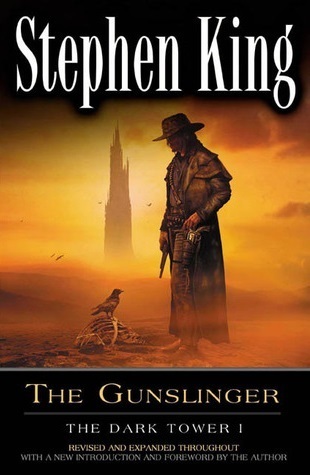
The Gunslinger

The Gunslinger by Stephen King (2 stars, audiobook, 231 pages)
 Tag: character’s name (arguably, anyway - I guess his name is Roland, but the book calls him The Gunslinger 90% of the time)

The Gunslinger Roland Deschain is a hardscrabble western hero-type, tracking the mysterious sorcerer he calls the Man in Black across an endless desert. The Gunslinger must find him and learn what he knows about a place called The Dark Tower, while also protecting the young man named Jake, who comes from a very different world.

I liked the worldbuilding, language, and mythology, and it’s fun to see the Gunslinger’s influence in a large swath of popular culture. I liked the Gunslinger’s flashbacks, especially to his coming of age. The demons and mutant creatures gave a compelling glimpse into the hazards of this desolate world, not to mention the fascinating Man in Black himself. What I didn’t like was the plot. The slow, plodding, philosophical pace did nothing for me this time through a King novel. I was not invested in the Gunslinger’s quest, I didn’t know why I should care about the Dark Tower, and the characters evoked very little emotion in me. I’m not even remotely curious about what happens next. It seemed to be written well enough, and I certainly liked several parts of it, but it does not hold my interest. This series was just not intended for me, and I’m fine to leave it at that.

I listened to the audiobook version. The narration by George Guidall was flawless, but it was not enough to invest me in the story.

Friday, November 24, 2017

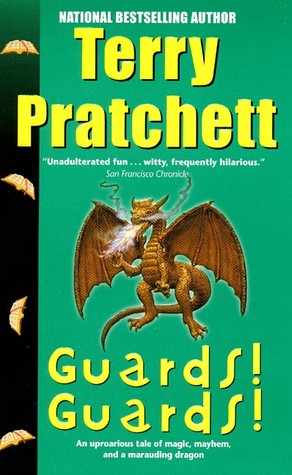
Guards! Guards!

Guards! Guards! by Terry Pratchett (4 stars, paperback, 403
Captain Vimes of the Ankh-Morpork City Watch has seen better days, and so has his institution. There are only three members left when Carrot Ironfoundersson, a plucky new recruit, journeys to the city from Dwarven lands with a willingness and drive to protect and to serve. Meanwhile, the city is having a bit of a dragon problem, and the orange, most-definitely-not-a-monkey Librarian of Unseen University discovers he is missing a book. Can Vimes reconcile the fate and purpose of the City Watch and solve the mysteries?

I think I figured out what I like about Terry Pratchett’s Discworld novels, aside from the obvious humor. These novels aren’t tightly-plotted page-turners, not really. They’re meandering, stubborn, and the pace sometimes slows to a trickle as the wide cast of characters debate and philosophize on an extended spoof of some aspect of life or literature. They’re messy, a bit all over the place. The books wrap up generally happy, with the right people coming out better off, but you can never guess exactly how. These books don’t read like novels - they read more like it would happen in real life (for an optimist, at least). Pratchett finds ways to simultaneously spoof tropes, play them straight, and shatter them into a million pieces. He writes with an excellent grasp of humanity, and these novels are more true to life than anything in the comedy fantasy genre has any right to be.

This book is no different. I appreciated Vimes’s origin story, so to speak, and of course I love the Librarian and Lord Vetinari. I will definitely be reading more books in the City Watch line.

Monday, November 6, 2017

All My Darling Daughters


All My Darling Daughters by Fumi Yoshinaga (3 stars, paperback, 206 pages) 
 
I wanted my book club to read a manga in the traditional style to keep them on their toes. Yoshinaga examines the Japanese attitudes to relationships, be they lovers, friends, or family. At the center of the book is Yukiko’s relationship with her mother, but the book spirals outward to take you through defining moments in the lives of their friends and family as well, always with a focus on the women. It gave me a sense of the cultural mores in Japan, and the kinds of problems women face with regards to familial expectations and daily life. It draws a lot of attention to the expectations of emotional labor on women.

The book is flexible in moving backwards and forwards in time, and the illustrations are beautifully-composed. They do get simplistic when the characters are angry or surprised, a trait this book shares with other manga. I had to go back and forth a bit to confirm the identities of some characters, or try to figure out what they had to do with the characters already introduced.

Overall, the book was a tenderly-told analysis of womanhood in Japan. It had some resonant emotional high points, but I just don’t think the book will stick with me for long.

Tuesday, October 31, 2017

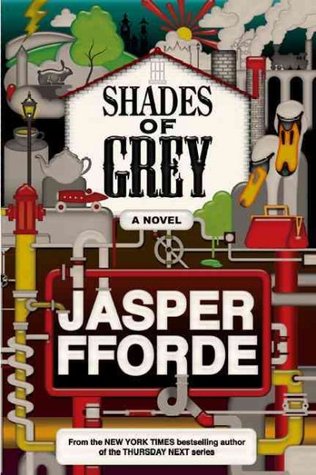
Shades of Grey

Shades of Grey by Jasper Fforde (4 stars, 390 pages, paperback)

This is a fascinating and hilarious book. In this world, possibly a distant future after Something Happened, people have limited color perception. Society is based on the works of Albert Munsell, color scientist and inventor of the Munsell Color System.What colors you can see determine your caste in society, and how much of your colors you can see influences your rank. Purples are at the top of society (aside from the almost-unheard of people who can see all colors), while the unfortunate Greys can see little color and form the working class. Color forms the basis of medical care, drugs, employment, last names, and pretty much every aspect of their lives.

Eddie Russett is a Red. As the story opens, his father has been sent to the town of East Carmine to fill in as relief swatchman - a doctor, who heals people with color swatches. Eddie tags along as a punishment - officially, he’s conducting a chair census. The book follows him as he navigates new friendships (and crushes), marriage contracts, the will of the collective, and the dangers of lightning. Along the way, he learns some things about his society, and of course, about himself.

Fforde has achieved an epic feat of imagination and world-building. The dystopia exists somewhere on the spectrum between teen fiction and classic Orwellian sci-fi, but it’s all dealt with in the deadpan humor of an expert satirist. It drags a bit in the middle when the plot stalls, but the comedy and creativity kept me coming back.

It’s the first of a planned series. You can tell the story is not done, but the book has a reasonably bittersweet conclusion. If you’re allergic to unfinished stories, maybe you should hold off, but there’s no clear indication that the next books are coming anytime soon. Personally, it’s well worth the read for the world-building alone.

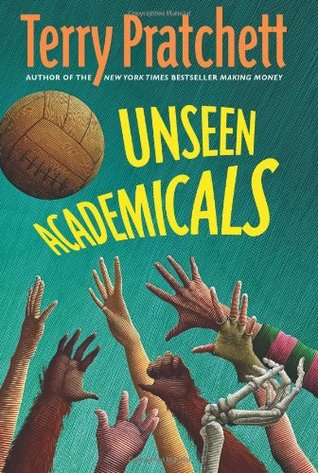
Unseen Academicals

Unseen  Academicals by Terry Pratchett (4 stars, Audio, 400 pages)

This is one of many installments in Pratchett’s venerable Discworld Series. Foot-the-ball dominates the streets of Ankh-Morpork, threatening livelihoods and ending lives. Archchancellor Ridcully and the staff of Unseen University are compelled by Lord Vetinari to refine and redirect the game into, it turns out, something that looks familiar. There are many other plot threads as well: reluctant hero Trevor Likely’s romance with aspiring model Juliette; Ridcully’s rivalry with an upstart university; Glenda Sugarbean’s need to control her surroundings; and the identity of the exceedingly helpful Mr. Nutt.

So it’s all about the Football (Soccer to Americans), but... it’s not, really. A major theme in this book is that Football is about the Shove - the all-consuming crush of the crowd in their pursuit to participate in the street version of the game. And it’s all the Shove. Whether it’s the roar of the crowd’s approval or the relentless desire to get ahead in life, it all comes back to this. Anyway, for non-sports fans who love Pratchett, there’s much more to this than the sports talk, and if you’re still worried, there’s only
 the one game.
All your favorite familiar Discworld characters make an appearance. (Vetinari and the Librarian are mine.) The book is a light-hearted romp down the streets of Ankh-Morpork, and a fun send-up of sports culture, academic culture, modeling culture, pretty much every kind of culture there is, and even some that don’t quite exist. Though your understanding of the city would surely be enhanced by reading some of the other books, don’t feel like you have to read them.  This book stands alone well. I think the three main characters - Trevor, Glenda, and Nutt - are all original to this book.

Friday, October 27, 2017

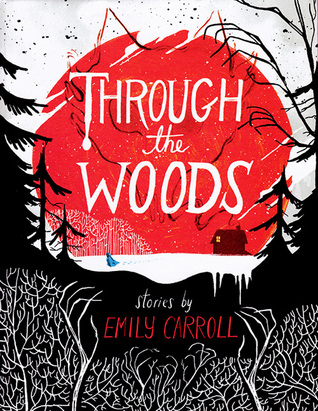
Through the Woods

Through the Woods by Emily Carroll (4 stars, hardback, 208 pages)

The Library was cold.
The Library is often cold.
And I shivered.
But not because of the temperature.
There was a strange chill in my bones.

It came from the Woods.
(Most strange things do.)

This graphic not-novel tells five short horror stories,
 bookended by an introduction and conclusion. The stories are quite chilling, and the illustrations serve well to amplify the effect. I can hardly open the book for consultation during this review without my local temperature falling 15 degrees. Each story
 takes place in or around the Woods.

I found myself wishing for just a little bit more with each
 of the stories. I know, I know - less can be so much more when it comes to gothic horror. Some of the stories just fell flat to me because I couldn’t understand what was going on, or the story concluded a touch too soon. The on-point illustrations still did
 evoke that sense of spine-tingling horror that is so prized this time of year, without being gross or explicit. His Face All Red was a perfect tale that made the whole book well worth the read.

Wednesday, October 25, 2017

Gerald’s Game

Gerald’s Game
by Stephen King (4 Stars, paperback, 445 pages)

This book would be a great antidote to those under the spell of 50 Shades of Grey. Bondage games may lose some of their attraction if you have this narrative in the back of your mind. Jessie’s husband Gerald handcuffed her to the bed in the pursuit of his sexual pleasure, then he did her the inconvenience of dying of a heart attack. This occurs in the remote Maine backwoods on a vacation, so there’s no help coming.  What follows has some graphic survival horror, but the bulk of the novel is the deep introspection of a woman wondering how she got here, and how she can go forward. Jessie has some unresolved psychological trauma that combines with the stressful circumstances to create a whole cast of characters out of this claustrophobic setup.

Going in I was unsure how I would like all of that introspection, but King deals expertly in building suspense even through the sections where the physical world is quiet. A combination of shifting perspectives, inner dialogue, and relevant flashbacks built immense characterization of the players in the story and held my interest. He also deals much more sensitively than I expected with Jessie’s situation. A few of King’s novels depict women whose behavior is clearly based on male fantasies, but Jessie has much greater agency than that, and is a very strong character. Altogether, this book was riveting and well-told. I did have some difficulty understanding what the room looked like, which is unfortunate, considering the importance of the setting.

I did not know there was a new Netflix Original film when I started reading this book. It has really put me in a directorial frame of mind, so I hope to get a chance to watch it soon.

If you are bothered by purposeful, detailed mutilation, like with surgery, this may not be the best read.

Monday, October 23, 2017

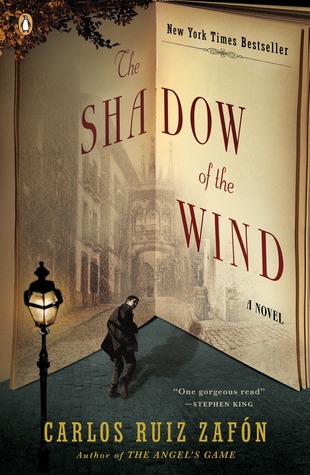
The Shadow of the Wind

The Shadow of the Wind by Carlos Ruiz Zafón (paperback, 3 Stars, 487 pages) 

This book is about the way literature has of transfixing you, and how you can get so wrapped up in a story that you infuse it with your own life. It is literature about literature. Daniel Sempere traces down the mystery of why books by one Julian Carax are disappearing, and in the process, gets drawn into an epic, sordid tale.

My response to this book fluctuated. There were many stretches where the endless narrative would fail to hold my interest, and I would get distracted every half-page. Then there were many moments where I was breathlessly caught in the drama and the pages flew by. I congratulated myself on identifying the antagonists well ahead of the reveal, but found myself quite surprised by the twists it took to get there.

Daniel, the main character, was a blank slate who made some shall-we-say poor choices in the name of youth. The people he surrounded himself with were endlessly fascinating, and I liked getting glimpses of their lives, and deaths, in order to better see the tapestry of their lives. I didn’t care much for Fermin, but I was quite attached to Daniel’s father. I was slightly bothered by the fact that the various narrators sometimes couldn’t have had access to the information they imparted. I was more bothered by the fact that the women in the novel were almost entirely defined by their relationships with men, and had few other characteristics. Daniel's mother didn't even have a name!

Ultimately, though it was long and taxing on my atrophied attention span, it was a worthwhile experience. It really made me care about connecting the dots of an ancient mystery in a foreign land. The book wraps you in wings of language, and concludes itself quite neatly. I doubt I will read the other books in the series, though.

The Spy

The Spy: A Novel of Mata Hari by Paulo Coelho (audio, 3 stars, 208 pages) 

This brief novel tells the story of the important points in the life of the exotic dancer Mata Hari. I was unfamiliar with the story of Mata Hari when I started reading this book. I had only heard the name, and associated it with exoticism. Listening to it, it really seemed like Mata Hari was in the car with me telling her story. The story was brief, and slightly confusing due to the author’s tendency to gloss over years at a time. The language was beautiful, and did a good job of telling the story of a woman ahead of her time. Whether or not that’s the life Mata Hari had doesn’t matter as much for a fiction title, though it’s clear the author is using her life to make his own philosophical point.

The third part of the novel soured it for me, as the new narrator mansplained Mata Hari’s mistakes to her. On the plus side, I guess she didn’t have to listen to it. The book would have been much stronger if it was all her own perspective. Still, the first two parts were pretty interesting.

The Price of Justice

The Price of Justice by Marti Green (audio, 1 star, 272 pages) 

In The Price of Justice, defense lawyer Dani Trumbull is enlisted to prove the innocence of a death row inmate when somebody else confesses to the crime. It’s not as easy as it sounds, nor is it nearly so straightforward.

This book was pretty bad. Apparently it’s part of a series, but in its favor, it stands alone well. It didn’t hinder my understanding of the novel, but I will not read more of them. There were a lot of elements that didn’t really contribute anything to the book - I suppose if I were to see these characters again in the context of the series, they could.

Though the premise was reasonably interesting, the characters were flat. The situations were over-explained, and the author had a serious case of “Show Don’t Tell” as the characters thoughts and feelings were merely repeated rather than demonstrated. The nonprofit described in the book is terribly mismanaged, as Dani really should not have taken this case. Her comments about the wrap-up of the case made me roll my eyes out of their sockets.

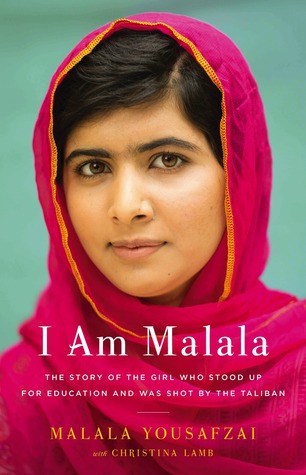
I am Malala

I Am Malala: The Story of the Girl Who Stood Up for Education and Was Shot by the Taliban by Malala Yousafzai, Christina Lamb    (Paperback, 3 stars, 327 pages)


Malala Yousefzai, a young education activist, tells her story. She is an amazing person who has been put into some really tough situations and responded well to the pressure. Being shot in the head and surviving to continue her education activism is a great headline. Unfortunately, it seems like this book was made largely to capitalize on that headline. She says she doesn’t want to be known as the girl who was shot by the Taliban, but the book’s very subtitle undermines her. I think the creative control of this book got away from her, and it’s this disjointed message that my rating reflects.

I think Malala’s personal recollections are fascinating to delve into, especially when she justifies her perspective, and her response to would-be assassins is simply breathtaking:

“Like my father I've always been a daydreamer, and sometimes I'd imagine that on the way home a terrorist might jump out and shoot me on those steps. I wondered what I would do. Maybe I'd take off my shoes and hit him, but then I'd think if I did that there would be no difference between me and a terrorist. It would be better to plead, "OK, shoot me, but first listen to me. What you are doing is wrong. I'm not against you personally, I just want every girl to go to school.”

The background of Pakistani and Taliban conflicts is very helpful in the context of the book, and I didn’t find it to be too distracting. I see criticisms that she paints Islam and Pakistan in unfavorable light. I feel like her love for her religion and country is on full display. Ultimately, I just was not excited by the book. Malala’s life perspective is excellent, but the book is only alright. Also, her father seems legit crazy - but if that’s the demeanor one needs to take to raise strong women who stand up for their beliefs, maybe we could all learn from him.

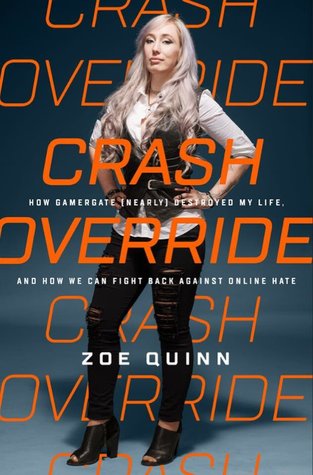
Crash Override

Crash Override: How Gamergate (Nearly) Destroyed My Life, and How We Can Win the Fight Against Online Hate by Zoe Quinn (Hardback, 5 stars, 256 pages)

This important book is part memoir, and part instruction manual for the digital age. Zoe Quinn tells a story of harassment by an ex that went way off the deep end, ultimately sparking an insane reaction from internet scumbags in a controversy known as “Gamergate”. Many people who spoke up, whether for Quinn or for reason itself, became targets of a vicious online hate campaign with real-life effects. But you likely know all this by now, as a denizen of the internet.

What I like most about this book is that Quinn uses her experience to educate, and not to entertain. She makes clear the terrible consequences of harassment, but does not dwell on the details. Quinn provides steps to take if you are the target of such a campaign, as well as actionable solutions to move forward as a culture. She started a nonprofit, Crash Override, dedicated to helping victims of online harassment. She describes how we need to work to change the norms in government, law enforcement, and technology to ensure what happened to her does not happen to other people. This is not my usual reading material, but was very worthwhile. It has something to help everybody - including, I suspect, the many people willing to rate this one star without even looking at it.

Quinn also has a great Twitter account, well worth following. That’s where I heard about the book.