Showing posts with label Essays. Show all posts

Friday, October 23, 2020

Can't Even: How Millennials Became the Burnout Generation


Can't Even: How Millennials Became the Burnout Generation by Anne Helen Petersen  276 pages

"While burnout may seem like the default setting for the modern era, in Can’t EvenBuzzFeed culture writer and former academic Anne Helen Petersen argues that burnout is a definitional condition for the millennial generation, born out of distrust in the institutions that have failed us, the unrealistic expectations of the modern workplace, and a sharp uptick in anxiety and hopelessness exacerbated by the constant pressure to “perform” our lives online. The genesis for the book is Petersen’s viral BuzzFeed article on the topic, which has amassed over eight million reads since its publication in January 2019." (courtesy of Goodreads)

I thought this was an interesting read, but I sometimes found it frustrating --- lots of pointing out that there are problems, but no proposed solutions. I also felt like there was a lot of generalizing, which was sometimes irritating. As someone who is Generation X, I'm not immune from the pressures the author notes in this book due to how I was raised to think about work. And the way the book comes off, it's as if the author only thinks it's Millennials who get burned out . . . which isn't true at all.

It's an interesting overview of work, workplaces and other things. However, definitely a read that made me alternate between finding it interesting and finding it really annoying.

Wednesday, September 30, 2020

Calypso


Calypso by David Sedaris   272 pages


I love David Sedaris' books.  I find his last book and this one a little darker than his prior ones, though still absolutely hilarious.   The man can find the funny in anything.  In this one, he talks about his and his boyfriend, Hugh's house in Sussex, the beach house he bought for the family to share on the North Carolina coast, his sister Tiffany's suicide and how his sister Amy had a session with a psychic who channeled their mother and their sister Tiffany and the strangely spot on information she gleaned.    There are loads more topics Sedaris shares his ingenuos wit and humor on,  how his boyfriend's mother contradicts everything he says, "Oh that didn't happen!" and funny phrases heard when the family is together that they adopt as their own and use every chance they get in conversations with one another.   Such funny stuff I want him to continue sharing his views with the world because I love his stories so much.   I would recommnend this and every book by David Sedaris to middle-schoolers on up.   Some things are a little abover their grade level, but, so funny they might as well learn.    10 Stars in the reading galaxy.

Dress Your Family in Corduroy and Denim by David Sedaris


 Dress Your Family in Corduroy and Denim by David Sedaris  257 pages

David Sedaris is one of my most favorite authors.   His take on life is the  stuff behind the closed door in your house with all that junk hiding that he throws open the door and tells everything about with such wit and truth.   He could make the telling of anything funny and does it with such joie de vivre.   He can find a funny way of sharing anything and often does so with his family as his topics, or his lover, or basically anyone and anything including being the butt of his own jokes in such a hilarious way, I hate to come to the end of his books.   He is fabulous!  No matter what he is talking about the story comes out in such a way that you will find yourself laughing out  loud.   Be it tales of his younger brother, Paul, who out of all the siblings turned out to be a redneck but may just have the most normal family life of them all.   From giving directions to a Norwegian group of seniors while at the same time trying to eradicate a mouse, to the fellow who while David was cleaning his house insisted on David letting him take his blood sugar to so many other stories.  David lifts up the rug to show all the stuff that has accumulated there then stops to discuss the stories attached to each,, all of which are worthy of a stand-up routine on Comedy Central.   Bravo, David Sedaris for another wonderful book.   Yes, I recommend this book to middle-schoolers on up.   Even the iffy parts are funny and not as bad as you might think.  Another best seller for David Sedaris.


 - Shirley J.

Monday, November 18, 2019

Present Concerns

Present Concerns by C. S. Lewis                    Hardcover: 108 pgs.


This book is a collection of Lewis's essays, almost all written for newspaper and magazine publication.  The author writes about current events of 60-80 years ago, so it would seem they could hardly be called "present concerns."  But in another sense, as editor Walter Hooper explains in his introduction, the subject matter Lewis wrote about is indeed "present" with us today, for in discussing then-current news, he gives timeless wisdom, as true today as it was in World War II or the Cold War, when Lewis wrote about it.

In applying this wisdom to his own time, Lewis is very philosophical (as in all his non-fiction).  Obviously, this kind of writing isn't for everyone--for many, it can be sleep-inducing!  But this book gives the reader small doses of Lewis's philosophizing.  Instead of a whole tome on one subject, in this book, the author leaps from subject to subject, treating each topic in no more than a few pages.  As a result, this anthology may be a good introduction to Lewis for those who have never read his non-fiction.

Unlike his other works, these writings aren't mainly concerned with theology and literature (though these subjects are often touched on).  One theme in several of the essays is equality and democracy.  Befitting his identity as a citizen of England (and that country's constitutional monarchy), he believed things that we Americans (who live in a republic) may disagree with.  Here are some interesting quotes that may be controversial on this side of the Atlantic:
  • "Democracy demands that little men should not take big ones too seriously; it dies when it is full of little men who think they are big men."
  • "Equality (outside mathematics) is a purely social conception.  It applies to man as a political and economical animal.  It has no place in the world of the mind."
  • "Where men are forbidden to honour a king they honour millionaires, athletes, or film-stars: even famous prostitutes or gangsters.  For spiritual nature, like bodily nature, will be served; deny it food and it will gobble poison."
I found this book hard to understand in some places.  Even though Lewis wrote about timeless truths in talking about current issues, it was still hard to understand some of what he talks about without knowing more about the then-current events.  The editor shed some light on some of these events, but not enough, in my estimation.

At the same time, there are many great truths that can be gleaned from the parts that are understandable, which still includes most of the book.  For example, in the first essay, "The Necessity of Chivalry," Lewis defines in a different and more relevant way than I have heard before what chivalry is and shows why it is so necessary to civilization.  The best essay may be "On Living in an Atomic Age".  Lewis wrote it during the Cold War, when fears of nuclear war were at their zenith.  Using reason, the author makes his readers see that the specter of nuclear war only reminds us of the necessity of the spiritual world (including God) and the bankruptcy of naturalism.  For these and other examples of Lewis's sanity and amazing insight, Present Concerns earns 3 out of 5 stars in my book (⭐⭐⭐).

Monday, October 22, 2018

The Best American Essays 2017

The Best American Essays 2017 edited by Leslie Jamison & Robert Atwan     336 pages

From Goodreads:

“The essay is political—and politically useful, by which I mean humanizing and provocative—because of its commitment to nuance, its explorations of contingency, its spirit of unrest, its glee at overturned assumptions; because of the double helix of awe and distrust—faith and doubt—that structures its DNA,” writes guest editor Leslie Jamison in her introduction. From the Iraqi desert to an East Jerusalem refugee camp, from the beginnings of the universe to the aftermath of a suicide attempt, the genetic makeup of the eclectic and electric selections in The Best American Essays 2017 “thrill toward complexity.”

This was my first time reading a collection of essays by different people. I've read essays before, but ones that were written by one person, perhaps all centered on a particular topic. So this was new to me. Here are my thoughts on the subject:

I'm not really sure what the definition of an essay is, because based on the wide variety that is in this book, it seems like essays can be anything - thoughts on a subject of interest, personal stories, thoughts on a specific person (famous or not). When I had to write essays in school, they were a far cry from this, so I didn't really know what to expect with each new essay.

What I can say is, when I read reviews of other essays collections, Roxane Gay's, for example, I saw a lot of people complain about a lack of argument or break down of a topic into an argument. Now having read this collection (of the supposedly BEST essays in 2017) I can say that most essays do not make it clear what the argument is. In fact, most just seem to be a discussion, with the author's personal thoughts about the subject. So I think most people have the same problem as me and don't really know what an essay is (outside of a school context).

That being said, I enjoyed a lot of the essays in this book. Jamison did an excellent job of choosing a wide range of subjects and authors, whose topics were all over the map, including racism, abuse, addiction, and grief. Some of my favorites were "White Horse," "The Cost of Living," "If I Only Had a Leg," and "The Reader Is the Protagonist." These stories really drew me in and showed fascinating glimpses into the lives of people competently different from me.

I would recommend this or other collections in this series to those who enjoy slice of life narratives. They may be essays, but they are also stories, and you get very close to the author, they're showing you their brain working through something very intimately. 

Friday, September 21, 2018

Squirrel Days

Squirrel Days by Ellie Kemper     256 pages

There comes a time in every sitcom actress’s life when she is faced with the prospect of writing a book. When Ellie Kemper’s number was up, she was ready. Contagiously cheerful, predictably wholesome, and mostly inspiring except for one essay about her husband’s feet, My Squirrel Days is a funny, free-wheeling tour of Ellie’s life—from growing up in suburban St. Louis with a vivid imagination and a crush on David Letterman to moving to Los Angeles and accidentally falling on Doris Kearns Goodwin.


I was so excited to see this book on NetGalley – I knew I had to read it. As a self-proclaimed Office and Unbreakable Kimmy Schmidt fan, and as a St. Louis native, I knew I had to read Kemper’s book. And I am so glad I did!

Kemper’s humor comes across in her writing so well. I giggled constantly while reading this book. Each chapter tells of a different experience or memory from Kemper’s life and she is very open and honest in her writing. She includes a disclaimer in the beginning of the book that her stories will be embellished – and there are plenty of moments where you can see this in action, and it gives the work an artful storytelling quality that I quite enjoyed, because really, everyone remembers things differently than how they happened. Kemper uses this to channel her humor and creates a scene that almost feels like you’re reading the scene of a movie.

It was wonderful seeing all the bits and pieces that Kemper includes about St. Louis in her story. St. Louis is both a fairly large city and at the same like a small town (where you bump into people you know more often than not), so it often gets passed up when people consider major cities in the US. It was nice to get this little nod of recognition from Kemper. As she related bits about her childhood, I could easily picture the places she mentions and I got a little thrill every time.

It was also amazing to hear a little behind the scenes tidbits from the shows and movies she’s acted in, like getting a little Office trivia. It was very cool to see things from her perspective about a show that I’ve watched so many times. She actually lived some of it!

I would definitely recommend this to fans of the Office or Unbreakable Kimmy Schmidt. It’s also just a really funny book with lots of slice of life scenes that are made larger than life with Kemper’s humor and storytelling. A fun, quick read that’s worth picking up.

Monday, July 16, 2018

The Truth of Things

The Truth of ThingsThe Truth of Things: Liberal Arts and the Recovery of Reality by Marion Montgomery, 295 pages

In this book, collecting essays spanning four decades, Marion Montgomery argues that the modern world's rejection of transcendence has resulted in a wholesale flight from the Real into unreal abstraction.  In his view, the effects of this amputation of the spirit, brought about by an unholy alliance of pragmatism and narcissism, have been exacerbated by the decline of the academy as the result of its alienation from the community, brought about by the growth of specialization and a rootless cosmopolitanism all the more provincial because it is blind to its own provincialism.  This has led in turn to a "justice" divorced from truth and thereby distorted into injustice, with all human interaction reduced to postmodern power politics, the natural particularity of gifts denounced in favor of a artificial consumerist egalitarianism, the existing person displaced by the abstract individual, the actual community by the fictitious society.

Without proposing a definite program for reform, Montgomery does offer some hope for those who continue to see the value of ordered thought in relation to truth, and who therefore feel keenly the modern spiritual disease as a source of unease.  At the heart of his proposed recovery of reality is a cultivation of personhood through a reconnection with the human experience as distilled in the thought, literature, and art of the past, but ultimately predicated on a reverence for Being.  To carry out this vital task, Montgomery insists that the postmodern multiversity, shattered by specialization, ought to be reunited by a commitment to higher education - "higher" not because more difficult but because more profound, taught by teachers rather than technicians.

Wednesday, May 23, 2018

Shrewed: A Wry and Closely Observed Look at the Lives of Women and Girls

Shrewed: A Wry and Closely Observed Look at the Lives of Women and Girls by Elizabeth Renzetti  304 pages

"Why are there so few women in politics? Why is public space, whether it’s the street or social media, still so inhospitable to women? What does Carrie Fisher have to do with Mary Wollstonecraft? And why is a wedding ceremony Satan’s playground?"

These are just a few of the questions that acclaimed journalist Elizabeth Renzetti addresses in this collection of essays. Her decades of reporting on feminist issues show here; she has a wry and sharp sense of humor and there were a lot of essays that I found thought-provoking (and also funny).  She makes observations on current politics, but also examines how life was back when her mother was working.  Basically, it's a look at how far women have come . . . and how far we have to go.  I liked this book a lot and found it a great companion to other books I've read, including Bad Feminist by Roxane Gay.

Monday, May 7, 2018

Not That Bad

Not That Bad: Dispatches from Rape Culture -- introduction by Roxane Gay and contributions from multiple authors    350 pages

In this anthology, Roxane Gay collects both original and previously published pieces that "address what it means to live in a world where women have to measure the harassment, violence, and aggression they face, and where they are “routinely second-guessed, blown off, discredited, denigrated, besmirched, belittled, patronized, mocked, shamed, gaslit, insulted, bullied” for speaking out."

There are a range of topics and experiences covered here, all of them very personal, even as some address wide-reaching issues (like the rape epidemic in the refugee crisis). Because these are personal essays, I think that some pieces will resonate more with readers than others. However, I felt that all pieces were thought-provoking and discussion-provoking, especially if this was read and discussed in a group setting.

Monday, April 9, 2018

Moments of Vision

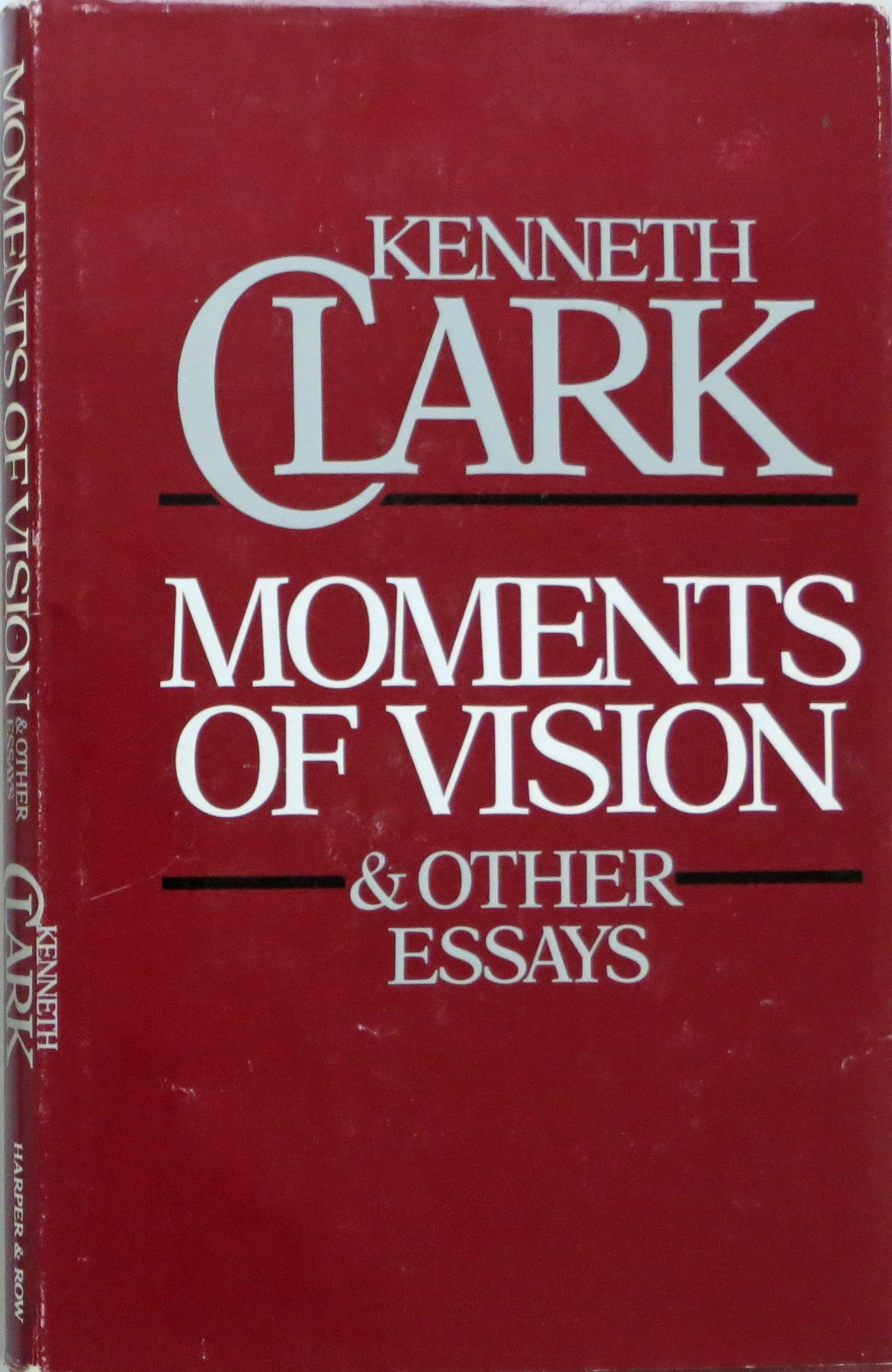
Image result for Moments of Vision and Other Essays Clark, KennethMoments of Vision and Other Essays by Kenneth Clark, 180 pages

Moments of Vision collects a number of essays by the renowned critic Kenneth Clark, presenting his views on different aspects of art and art criticism.   By "vision" he does not mean the experiences of the mystic (indeed, he highlights how often those have been themselves influenced by artistic representations) but the experience of seeing a physical object (artistic or natural) with heightened clarity.  The appreciation and creation of art are connected - in each case, the object calls to something within us, and thus becomes a part of us.  Not that Clark reduces the aesthetic to the purely intellectual - to the contrary, he considers the experience of beauty as always primarily sensual.

Clark writes without any of the obscurity with which too many specialists surround themselves.  Nor are his insights confined to the visual arts - he also considers literature and the art of criticism itself.  Indeed, perhaps the finest essay is the final one, in which he writes movingly of the situation of the artist (and, by extension, the critic) in old age.

Saturday, March 31, 2018

The View From The Cheap Seats


The ViewFrom The Cheap Seats by Neil Gaiman, 522 pages
“An inquisitive observer, thoughtful commentator, and assiduous craftsman, Neil Gaiman has long been celebrated for the sharp intellect and startling imagination that informs his bestselling fiction. Now, The View from the Cheap Seats brings together for the first time ever more than sixty pieces of his outstanding nonfiction. Analytical yet playful, erudite yet accessible, this cornucopia explores a broad range of interests and topics, including (but not limited to): authors past and present; music; storytelling; comics; bookshops; travel; fairy tales; America; inspiration; libraries; ghosts; and the title piece, at turns touching and self-deprecating, which recounts the author's experiences at the 2010 Academy Awards in Hollywood.” I enjoyed this collection of essays and nonfiction.  Gaiman is a great writer and I may have liked this better than some of his fiction, which is twisted and difficult sometimes.  I’ve read a handful of these pieces before, but only a few and it didn’t spoil my enjoyment.  I would recommend this to people who like Gaiman and to people who really enjoy literature.

Don't Call Me Princess

Don't Call Me Princess: Essays on Girls, Women, Sex, and Life by Peggy Orenstein   400 pages

This collection of essays by Peggy Orenstein covers about three decades of her writing. Her essays are sometimes funny, but she has some sharp observations about girls' and women's progress (or lack thereof). She writes about miscarriage and motherhood, sex, breast cancer, and the princess culture.  While I didn't absolutely love each essay, there were some I had read before and enjoyed and I also discovered some new essays. I appreciate that while I may not agree with everything Orenstein writes, she's pretty much on point with my thinking on a lot of things.


Monday, March 19, 2018

Liberal Imagination

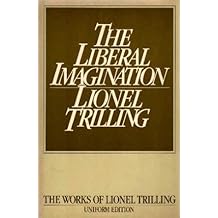
Image result for The Liberal Imagination Essays on Literature and SocietyThe Liberal Imagination by Lionel Trilling, 284 pages

The Liberal Imagination is Lionel Trilling's seminal collection of essays, not originally connected but here identified as more or less strongly expressing a common theme, tracing the shape of the liberal approach to literature.   Trilling's "liberalism" is the American variety of the '40s and '50s, which he minimally defines as "a ready if mild suspiciousness of the profit motive, a belief in progress, science, social legislation, planning, and international cooperation".  The literature he considers is dominated by the form of the novel, which he considers as fundamentally an exploration of social class conflict.

It is interesting how much of the book involves Trilling wrestling with his touchstones, especially Freud, struggling to find a way to reconcile their influence with the value he places on humanism and the imagination.  Although he is firm in his refusal to subordinate literature to philosophy, however, he sometimes seems close to considering it a mere lagniappe to the right politics.  Balanced against this temptation are his active intellect and his always evident love for literature.

Saturday, March 3, 2018

Beauty Will Save the World

Beauty Will Save the WorldBeauty Will Save the World: Recovering the Human in an Ideological Age by Gregory Wolfe, 257 pages

In this collection of essays, Gregory Wolfe confronts two interconnected cultural problems.  The first is political - most modern art is nihilistic, which is both a cause and a consequence of the fact that most conservatives reject modern art wholesale.  The second is religious - serious Christian artists are likely to find their faith derided by the secular establishment, while, at the same time, their work will not be accepted by the "Christian" counterculture unless it is trite and simplistic.  Advocating for an imaginative traditionalist conservatism that traces its genealogy back to Burke, Wordsworth, Coleridge, and Eliot, Wolfe seeks both to encourage artists and convince conservatives and Christians to expand their understanding of modern art.

The early chapters of Beauty Will Save the World are unfortunately repetitive, as the reader is treated to similar arguments and litanies of creative worthies in the different essays.  As the book moves into considerations of the works of individual artists, however, it becomes more interesting, and the final essays are the best in the collection.  It is no accident that these are studies of the thinkers who have had the most immediate impact on Wolfe himself - the entire collection is strikingly personal in a way that is somewhat surprising but entirely fitting.

Monday, February 12, 2018

Superstition of Divorce

The Superstition of Divorce by GK Chesterton, 150 pages

In this collection of essays Chesterton brings his legendary wit and commonsense to bear against one of the most pernicious superstitions of our highly superstitious age - the bizarre belief that the natural bonds of duty and devotion between a man and a woman, as formalized in marriage, can be dissolved by magical words pronounced by a court.  The danger of this superstition, in Chesterton's view, is the threat it poses to the family, the essential and paradigmatic form of human community and the chief bulwark against both anarchy and tyranny.  Supported by the powers of commerce and the state, wielding the abnormal as a weapon against the normal, advocates of easy divorce demand the respectability of marriage while denying the very elements that make marriage worthy of respect.  In his usual charming, rambling way Chesterton contends that the superstition of divorce depends upon the substitution of the banal servility of mere contract for the romantic, creative freedom of the vow.

Monday, January 15, 2018

Bad Feminist

Bad Feminist by Roxane Gay (4 Stars, paperback, 320 pages) 

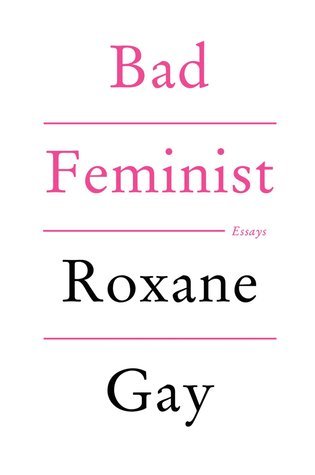
Bad Feminist is a collection of compulsively readable essays. Roxane Gay is extraordinarily keyed into popular culture. You will see takes on all of the talking points you might expect from a black woman cultural maven publishing in 2014: GirlsThe Hunger Games, Daniel Tosh, Orange is the New Black, “Blurred Lines”, Fifty Shades of GreyThe HelpDjango Unchained12 Years a Slave, Tyler Perry, Fruitvale Station, Twitter, Abortion, Trayvon Martin, the Boston Marathon Bombing. Some of the topics are older - Flavor of Love, Chris Brown, Twilight, and an adorable obsession with Sweet Valley High - but no less relevant to the conversations she is having. With each of these topics, she takes a look at why they are so popular or so controversial or both, and plainly states what frustrates her about them.

The through-line of the piece examines the standard of perfection required by women, whether they are in the public eye or not. She acknowledges that you can love something and still have significant problems with it. I sometimes feel pressured to disavow a book (or a film, or a celebrity, or a fast food chain, or a political position) entirely if she/he/they/it has a flaw. This is essentially her position with feminism itself - it’s flawed as an ideology and a movement because it’s led by people, and people are flawed. But that doesn’t mean you throw away the principle of equal treatment. You don’t have to abandon feminism entirely because you like pink or you shave your legs or you dance to Robin Thicke’s music. The cultural caricature of feminism is a ridiculous barrier designed to prevent people from embracing a movement that should honestly be a no-brainer.

These essays were released at different times in many different publications, so sometimes the overall effect is a little disjointed if you’re reading it straight through like I did. The essays were ordered very well - her personal life stories were a fairly gentle introduction, lending some effective foreshadowing for events in her life described later, and seeding references to cultural touchstones she dives into with more detail later. There’s an immense focus on popular culture throughout the book, and you will be a little lost if you have not seen or read the media she is reviewing. You can still follow her point, though. Overall, it was well worth reading. I would suggest taking your time with it.

Saturday, December 23, 2017

Slouching Towards Bethlehem

Slouching Towards BethlehemSlouching Towards Bethlehem by Joan Didion, 238 pages

Slouching Towards Bethlehem collects a series of Joan Didion's short essays from the 1960s, covering subjects from Alcatraz to Howard Hughes to the CPUSA, but mostly herself and triple-faced California - LA, San Francisco, and Sacramento.

The title essay relates the author's experiences exploring Haight-Ashbury during the Summer of Love, which exemplifies her overarching (but not overpowering) theme of the emptiness at the heart of '60s America, an emptiness so profound that even those who feel it - like those San Francisco hippies - lack the words to describe it or the means to escape it.  Yet the most remarkable piece may be "On Morality", in which she diagnoses American post-War social fragmentation, not as the result of a lack of morality, but the surfeit of it - innumerable competing individual moralities each demanding validation.

Thursday, October 19, 2017

Bad Feminist

Bad Feminist by Roxane Gay     320 pages

In these funny and insightful essays, Roxane Gay takes us through the journey of her evolution as a woman of color while also taking readers on a ride through culture of the last few years and commenting on the state of feminism today. The portrait that emerges is not only one of an incredibly insightful woman continually growing to understand herself and our society, but also one of our culture.

There are so many good things to take away from this book. I love how Gay frames feminism in a personal way, how its okay to be a "bad" feminist, that everyone is human and has things they need to work on. Feminism also isn't this concrete set of rules, a right and wrong feminism. Too often, people are afraid to label themselves as feminists because they don't subscribe to purportedly "feminist" musts (i.e. no shaving your legs, man-hating, aggressive, etc). 

It's important to love yourself and to work on how you approach the world to try and be better and it's okay if you fail. We can love the things we love - recognize whether they aren't feminist - and work on trying to change those things, and ourselves, so that we can live in a world where we don't have to worry about whether or not something is misogynistic or made for men because we'll be living in a world where that isn't the automatic thing or the norm. It will be a long fight, but we can do it - and we shouldn't sit by complacently and let these things happen, either. 

Monday, September 18, 2017

No Kidding

No Kidding: Women Writers on Bypassing Parenthood edited by Henriette Mantel    248 pages

This collection of essays by various writers tackles the topic of not having children. Whether their reasons have to do with courage, health issues, apathy or something else, each essay gives insights into each woman's decision.

Admittedly, when I picked this up, it was because the title made me curious.  I didn't realize that the women writers would mostly be writers in the field of comedy. After a few essays, I felt like this wasn't quite the book I had been hoping for, and most of the time, I didn't find the essays that funny. Some of them were more interesting than others, but I felt there was some repetition and I wish there had been more variety in the authors.

Monday, August 7, 2017

I'll Take My Stand

I'll Take My Stand: The South and the Agrarian Tradition by 12 Southerners, 385 pages

The twentieth century was a time in American history when virtually everyone in a position of power or influence - from Ivy League intellectuals and Washington politicians to the members of the local Chamber of Commerce - sought an answer to the problems created by "progress" in more and more "progress", a faster and faster race to the bottom of the spiral of their neverending war with nature.  In such a time, the "backwardness" of the South became an advantage.  I'll Take My Stand, first published in 1930, collects twelve essays that cut deeply against the prevailing grain, calling for an anti-industrial counter-revolution and a reconnection with the land.  In complimentary but not identical ways the authors sought the development of more human ways of living, emerging from their own integral humanism, an awareness that a truly human life cannot be founded on mechanism with culture added, but must begin with a humane foundation.

Any book rooted in the Old South must face the issue of race, and it is here, unsurprisingly, that I'll Take My Stand has its greatest problems.  Generally, blacks are treated as invisible, or worse, as the unwitting dupes of Northern interests.  The history of slavery is revised so as to absolve the South of all moral responsibility, with the Civil War cast as a simple power struggle between centralizing Northern interests and the provincialist South.  Fortunately, the authors' racial attitudes (which some of them, at least, later revised), although distracting, do not effect the power of the book's central arguments.  Those are of interest to anyone who shares in the perpetual hope that intelligence may yet conquer greed.