Showing posts with label Education. Show all posts

Monday, January 23, 2023

"Peach Blossom Spring" by Melissa Fu


Peach Blossom Spring by Melissa Fu

400 pp

Peach Blossom Spring covers the years 1938-2005 in the lives of a family.  The story starts in China during the war with Japan (the early days of WWII) and follows his wife and son as they travel through China to meet his brother to find safety from the Japanese bombers.  Meilin (the wife) has a valuable scroll that her husband took in trade so that she and he could have their own business someday.  She uses this scroll to tell her son stories through much of the book.  Meilin and her brother-in-law and his family come together for some time, but when one of the nieces dies, Meilin is blamed and she decides to sever ties.  They make their way to other parts of China eventually coming to settle in Taiwan.  Her son goes to school and is a good student.  He goes through high school and college in Taiwan, but gets the opportunity to go to the US for his master's degree.  Meilin sees her brother-in-law while she is working at a party and gets him to help her son qualify to go to the US.  The story then mainly follows the son who takes the Americanized name Henry when he goes to the US.  Henry eventually marries an American woman and they have a child named Lily.  The story they follows Lily after she goes to college, but has brief interludes with Henry and Meilin.

This was an excellent story.  I particularly liked the stories from the scroll that were native to China. There is also a part set in St. Louis since the woman the son marries family is from here. The author is a woman with a background from China and the US Southwest, but who lives in Great Britain now.  Were I to give it stars, it would definitely make four our of five for me.


Thursday, November 8, 2018

Coddling of the American Mind

The Coddling of the American MindThe Coddling of the American Mind: How Good Intentions and Bad Ideas Are Setting Up a Generation for Failure by Greg Lukianoff and Jonathan Haidt, 269 pages

It is free-speech activist Greg Lukianoff and social psychologist Jonathan Haidt's contention that Western (and especially American) society has developed profound misunderstandings of human realities which are not only empirically false but positively harmful.  They condense these into three great untruths - that adversity is psychologically damaging, that feelings are the most reliable guide to what is right, and that people can be sorted into those who are fundamentally good-intentioned and their enemies.  As a consequence, young people are being encouraged to remain emotionally fragile, irrational adolescents who view anyone who disagrees with them as irredeemably evil.  Not only does this tend to reduce public discourse to grievance-fueled shouting matches, it also produces a mass of disconnected, immature, desperately unhappy individuals who lack even the basic resources necessary to understand the causes of their unhappiness.

The greatest risk for a book of this sort is that it will only contribute to, rather than ameliorate, the culture of outrage.  Thankfully, Lukianoff and Haidt are not partisan firebrands, and while readers of every political persuasion will likely find cause for anger in their analysis, they should also find reasons for self-reflection on their own complicity in our anti-cultural spiral into unreality, which extends far beyond the gloomy groves of academe.

Monday, October 29, 2018

The Year of Our Lord 1943

The Year of Our Lord 1943The Year of Our Lord 1943: Christian Humanism in an Age of Crisis by Alan Jacobs, 206 pages

Samuel Johnson famously quipped that when a man knows he is to be hanged, it "concentrates his mind wonderfully."  For Christian thinkers in Europe and America, the catastrophe of the Second World War wonderfully concentrated their minds on the problem that liberal democracy could not, on its own, provide a convincing account of human nature to rival those proposed by fascist and socialist ideologies.  In The Year of Our Lord 1943 Alan Jacobs explores the disparate ways a number of disparate philosophers and poets, including Jacques and Raissa Maritain, TS Eliot and Simone Weil, CS Lewis and WH Auden, sought to rectify that deficiency.  Despite substantial differences, their thoughts all focused on culture and education, not only their necessity but also their limitations - indeed, all were insistent that any education which sought to contribute to the building up of the human person must preeminently be an education in limits and ends.

Jacobs perceptively highlights both the sympathies and antipathies among his subjects.  He is clear about his own biases, or is possibly simply unable to resist the occasional editorial comment, and those biases do not prevent him from being fair to those with whom he disagrees.  It is from this attitude that he is able to conclude with the observation that, at a point in history when the technical appears to have vanquished the human, Christians can find comfort and inspiration in their faith that history is itself ruled, not by a process, but by a Person.

Monday, July 16, 2018

The Truth of Things

The Truth of ThingsThe Truth of Things: Liberal Arts and the Recovery of Reality by Marion Montgomery, 295 pages

In this book, collecting essays spanning four decades, Marion Montgomery argues that the modern world's rejection of transcendence has resulted in a wholesale flight from the Real into unreal abstraction.  In his view, the effects of this amputation of the spirit, brought about by an unholy alliance of pragmatism and narcissism, have been exacerbated by the decline of the academy as the result of its alienation from the community, brought about by the growth of specialization and a rootless cosmopolitanism all the more provincial because it is blind to its own provincialism.  This has led in turn to a "justice" divorced from truth and thereby distorted into injustice, with all human interaction reduced to postmodern power politics, the natural particularity of gifts denounced in favor of a artificial consumerist egalitarianism, the existing person displaced by the abstract individual, the actual community by the fictitious society.

Without proposing a definite program for reform, Montgomery does offer some hope for those who continue to see the value of ordered thought in relation to truth, and who therefore feel keenly the modern spiritual disease as a source of unease.  At the heart of his proposed recovery of reality is a cultivation of personhood through a reconnection with the human experience as distilled in the thought, literature, and art of the past, but ultimately predicated on a reverence for Being.  To carry out this vital task, Montgomery insists that the postmodern multiversity, shattered by specialization, ought to be reunited by a commitment to higher education - "higher" not because more difficult but because more profound, taught by teachers rather than technicians.

Monday, May 15, 2017

Out of the Ashes

Out of the AshesOut of the Ashes: Rebuilding American Culture by Anthony Esolen, 193 pages

Anthony Esolen's examination of our current cultural collapse casts it as the consequence of a wholesale flight from reality - a preoccupation with what we can make of things which blinds us to the nature of things as they are.  The only cure, then, is a renewed commitment to truth - truth about good and evil, beauty and ugliness, human nature and the nature of the world around us.  That means confronting what he calls the "higher cant", the slogans, propagated with unprecedented power by the modern media and educational establishments, which serve to replace thinking.

As is frequently the case with Esolen, his contagious enthusiasm and far-ranging interests are accompanied by a lack of organization and focus, a combination which is alternately thrilling and frustrating.  It is easy to dismiss much of what he writes as tendentious - an unrealistically bucolic vision of the past contrasted with a rhetorically denigrated present.  Yet it is only possible to do so consistently from within the same narcotic cloud of unreality he seeks to disperse - his central argument is as reflexively simple as asserting that children ought to have childhoods, educators ought to educate, art ought to be beautiful, and that we should be defined more by the homes we build than by the work we do.

Monday, January 16, 2017

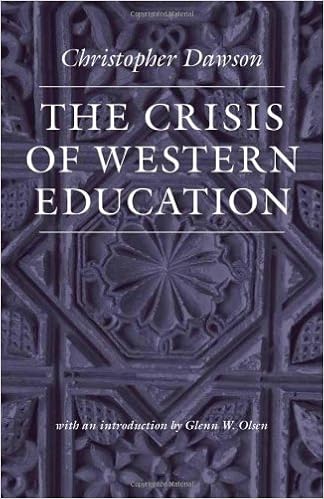
Crisis of Western Education

https://images-na.ssl-images-amazon.com/images/I/51W6W2Q8%2BkL._SX322_BO1,204,203,200_.jpgThe Crisis of Western Education by Christopher Dawson, 246 pages

According to the esteemed cultural historian Christopher Dawson, Western education in the middle of the twentieth century was in the throes of a crisis of a type that has occurred before - in late Scholasticism, in Alexandria in late antiquity, and in Constantinople near the end of the first millennium, amongst other times and climes.  The difficulty lies in a shift in the academy towards a focus on techniques rather than the handing down of a humanistic tradition, a concentration on the manipulation of things rather than an understanding of things, of cleverness rather than wisdom.  The danger he perceives is the supremacy of the technocrat who (in the words of John Murray) "knows everything... about the organization of all the instruments and techniques of power that are available in the contemporary world - and who, at the same time, understands nothing about the nature of man or about the nature of true civilization."  The cure he prescribes is the introduction of courses of study engaging with the Western tradition, unified as the study of Christendom.

Monday, October 10, 2016

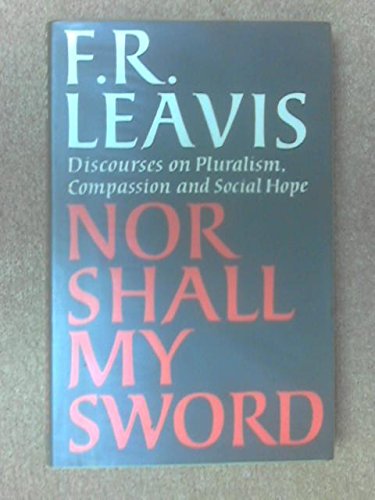
Nor Shall My Sword

Nor Shall My Sword: Discourses on Pluralism, Compassion, and Social Hope by FR Leavis, 228 pages

In 1959, CP Snow delivered his famous and tremendously influential lecture The Two Cultures and the Scientific Revolution, in which he excoriated the standard bearers of the "traditional culture" for their ignorance of science.  This was coupled, he claimed, to an ingrained hostility to science on the part of writers and artists dating back to the Romantic movement at least.  By the mid-twentieth century, however, the supreme benefits of science and technology should be apparent to all, and the arts ought to be the handmaiden of science rather than its enemy. 

FR Leavis explicitly renounces any reactionary or Luddite agenda.  He is not urging a return to some bucolic pre-industrial past.  At the same time, he is insistent that, while technology certainly has made great strides towards satisfying man's material needs, the greatest needs of human beings are not material.  In Snow's claims for the priority of science he senses a "spiritual Philistinism" leading to "cultural disinheritance".  Only through a creative engagement with the humanist tradition can genuinely humane solutions be found to human problems.  This, however, requires a sense of continuity between past and present, a sense which ought to be inculcated by the universities, whose function is precisely to serve as creative centers.  To do otherwise is to reduce the university to a technical school and to expose society to the hubris of the enlightened ignoramus, leading to a future in which humanity is imperiled by mechanism, and personality extinguished by technocracy.

Nor Shall My Sword is a collection of lectures and essays on these themes.  Unfortunately, at times Leavis becomes rhetorically overheated, lowering himself to personal criticism of his opponents - his own repeated insistence that this is fully justified only highlights the problem.  Oddly, the introduction, where the author places this book in the context of his overall body of work, is the most difficult part - after that, Leavis is writing in a persuasive mode, because Nor Shall My Sword is not an academic treatise, but a battle cry.  This is both its strength and its weakness.

Wednesday, July 6, 2016

The Classical Heritage

The Classical Heritage and Its Beneficiaries: From the Carolingian Age to the End of the Renaissance by RR Bolgar, 393 pages

In this book Bolgar attempts to summarize the development of education in the classics from the late antiquity through to the Reformation.  This is largely the story of how classical education was adapted to fit the needs of successive eras, which in practice meant the long struggle to reconcile the pagan past with the Christian present.  Bolgar contends that the classical heritage is not only of historical interest, but that it can be adapted to today's needs as it was to yesterday's.  Indeed, writing in 1954, he fears that the decline of classical education in favor of technical training will result in a generation with a radically truncated idea of human nature, giving rise to a narrowness of outlook and cultural stagnation.

Even under the best circumstances, it would be a daunting task to survey the reception of ancient literature and thought over a thousand year span.  And the actual circumstances are far from ideal - records of how schools operated are few, and most of those are prescriptive rather than descriptive.  Bolgar is himself quite open about the fact that his study is incomplete.  That he was able to succeed to the remarkable extent that he did is a testament to the power of a lifetime of experience as a student and teacher.

Wednesday, March 9, 2016

Mismeasure of Man

Cover image for The Mismeasure of Man by Stephen Jay Gould, 424 pages

The Mismeasure of Man was first published in 1981, then expanded and republished in 1996 as a response to the scandalous success of The Bell Curve.  It is a testament to the strength of Gould's work that a book published thirteen years before The Bell Curve can plausibly be advertised as "The Definitive Refutation to the Arguments of The Bell Curve", and it helps that a major part of Gould's thesis is that the claim of some scientific basis for racial prejudice is one that recurs again and again over the course of the last two centuries.

The specific target of Gould's critique is the concept of intelligence as something measurable, heritable, and unchangeable.  More generally, he argues that the interpretive dimension of scientific inquiry renders it deeply vulnerable to the biases of its practitioners.  He begins with a history of attempts to quantify human intelligence (and, after Darwin, evolutionary progress) through physical measurements including craniometry and anthropometry.  He then describes the development of the modern regime of standardized IQ testing from its French roots to its American apostles.  Throughout, he demonstrates how the biases of generations of researchers manipulated and twisted the data - sometimes consciously but more often unconsciously - to fit their assumptions about race and intelligence, demanding that public policy be determined on the basis of "settled science" no matter how "unappetizing".

Gould is generally affable and entertaining, although he sometimes tries too hard - most readers will understand that the Spanish were not always honest in their relations with indigenous Americans without a rhetorical question about Pizarro's trustworthiness.  Still, given the often technical mathematical nature of the book, every attempt at humor is welcome even if it occasionally fails.

Self-confessedly, Gould had a political purpose in writing the book.  Because of that, he tends to pass over the progressive politics of many of his key subjects from the nineteenth and early twentieth centuries, leaving the impression that their scientific racism was the product of atavistic, possibly unconscious, reactionary impulses.  This is somewhat ameliorated by a brief passage explaining the appeal of Lombrosian morphology to the post-Enlightenment progressive desire to radically restructure society along supposedly scientific lines, but the passage is easily lost after pages of insinuation which seem to suggest, for example, that Henry Goddard, one of the leading American proponents of eugenics, was a conservative elitist instead of a progressive technocrat concerned that the "unfit" must be managed lest they "clog the wheels of human progress."

There has not been another surge in scientific racism since the aftermath of the publication of The Bell Curve, at least outside of some fetid corners of the "Dark Enlightenment".  Perhaps it is only a matter of time.  But Gould's work raises other pressing questions as well.  To what extent can scientific objectivity, especially in the social sciences, be trusted and used to shape public policy?  How reliable are more recent attempts to explain intelligence through biology, or criminality through abnormal brain activity?  If it was Cyril Burt's work, now known to be fraudulent, that solidified the claims of psychology to be a "real science", where does the debunking leave the social sciences?  And given the ubiquity of standardized testing and our seemingly ever-increasing dependence upon it as a method of evaluating students and teachers, doesn't the conclusion that IQ is an illusion strike at the heart of the modern mythology of meritocracy?

Thursday, November 12, 2015

Memoirs of a Happy Failure

Cover image for Memoirs of a Happy Failure by Alice von Hildebrand with John Henry Crosby, 184 pages

As a teenager, Alice Jourdain and her sister fled Belgium for America, just ahead of the German invasion.  The experience helped to convince her of the reality of evil and the necessity of an uncompromising defense of objective truth.  While working as a shelver at a library, she discovered the works of her future husband, Dietrich von Hildebrand, a brilliant philosopher who had fled Germany after the Nazi takeover and Austria after the Anschluss and was now teaching in New York.  She began teaching at Hunter College, and remained there for decades, confronting entrenched ignorance, malicious persecution, and a succession of intellectual fashions, joyfully fighting the long defeat.

At its heart, Dame von Hildebrand's memoir, like her life, is a testament to the idea that education does not - can not - have any purpose without the foundation of a belief in objective truth.

Monday, October 5, 2015

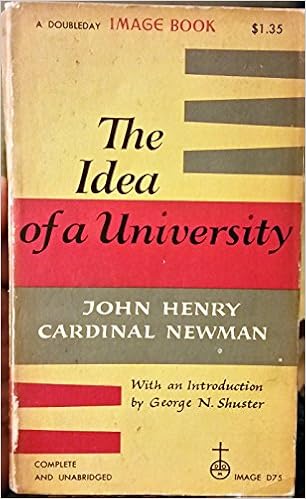
Idea of a University

The Idea of a University by Bl John Henry Newman, 464 pages

The author adapted these essays from a series of lectures he delivered in Dublin between 1854 and 1858.  During this period, Newman was struggling to establish the Catholic University of Ireland, a labor which naturally prompted sustained reflection on the nature and purpose of the university.

For Newman, the university is grounded in the unity of truth.  All branches of learning - physical sciences, philosophy, the arts, theology, law, medicine - take their places in the university as complementary parts of the greater whole.  Without the influence of the other fields, any one discipline is sure to go astray, and too great a specialization by the student produces a stunted man.  More than arguing for a certain concept of a university, he argues for an integral humanism that is truly Catholic.

Saturday, June 27, 2015

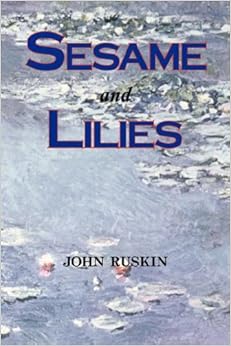
Sesame and Lilies

Sesame and Lilies by John Ruskin, 204 pages

This book collects three lectures by the master.  The first, "Of Kings' Treasuries" is on the subject of how to read and treasure books.  The second, "Of Queens' Gardens", contains the author's reflections on the proper education of girls.  The third, "The Mystery of Life and Its Arts", is a manifesto of aestheticism and the Social Gospel.

Ruskin is, as always, more of a passionate rhetor than a consistent systematic thinker.  His ideas are sometimes bizarre - he supported a set of sartorial laws restricting certain kinds of clothing to certain classes.  Other ideas are now out of fashion - his plans for suburban garden cities.  His central themes, however - the importance of beauty, the necessity of charity, and the moral benefits of work - are what make his work immortal.

Monday, June 15, 2015

Dictatorship of Virtue


"Multiculturalism" is a fighting word.  To its advocates, it denotes an openness to new ideas and the lived experiences of others.  To some of its detractors, it represents a dangerous denial of key values which built and sustain Western civilization.  Bernstein, a journalist with long experience in China, has a deeper criticism - he asserts that "multiculturalism" is itself an ideology rooted in Western thought, an ideology that is, in fact, just as closed to alternatives to itself as any other.  What multiculturalists see as a refusal to privilege any particular culture, Bernstein sees as an opposition to all cultures, an anti-culture.

Starting from his own generally conventionally progressive worldview, the author explores an impressive taxonomy of thought crimes through an extensive collection of anecdotes.  In the twenty years since this book was written, the term "multiculturalism" has been largely replaced by its successors, "diversity" and "inclusion".  At one point the author mocks a scholar who dredged up a stale outrage from an old magazine, now many of the outrages catalogued appear in the same stale light.  Yet Bernstein's central critique remains not only perceptive, but prophetic.

Saturday, January 10, 2015

Malala Yousafzai And The Girls Of Pakistan


This is a nonfiction book for young readers about the efforts of Malala Yousafzai to bring education to girls in Pakistan and all over the world.  She has won a Nobel Peace Prize for her efforts, the youngest person ever to do so at seventeen.  This is very simply told but covers all of the basics: her early life and desire to go to school, speaking out for girls’ rights to education, being shot by the Taliban and her subsequent recovery, and her continuing efforts since.  Although simply told, it will help younger readers understand something about the dangers people face and their struggles and give them a basic knowledge of Malala’s life and goals.  A simple solid effort that will benefit and be of interest to younger readers.