Showing posts with label music. Show all posts

Tuesday, August 17, 2021

Fiery Angel

The Fiery Angel: Art, Culture, Sex, Politics, and the Struggle for the Soul of the West by Michael Walsh, 224 pages

On one level, The Fiery Angel is Michael Walsh's celebration of the power of art and storytelling, of how they shape us and our future.  On another, it is an argument for the heroic ideal he believes is central to Western culture and civilization.  Walsh is well aware that the heroic tends to shade into the luciferian, indeed he sees this as a positive - Western man is never comfortable with the status quo and acknowledges no limits except those which he places on himself.  This is a vision that Walsh believes is threatened by the rising forces of leftism and Islam, each of which finds the concept of the heroic threatening for ideological and theological reasons.

Walsh leaps quickly from topic to topic and idea to idea in a way that is equal parts thrilling and disorienting.  It isn't clear whether this is deliberate - a little reflection reveals how thin is his distinction between the idea of progress he advances and the progressive definition he deplores, as well as how consistently his archetypal superman served as a cautionary tale rather than a model to be imitated in the premodern West, and especially how it is precisely the rejection of limits that has led us to our present crisis.  If his overall vision seems lacking, however, the passages where he discusses music are notable for their depth of thought and feeling.

Friday, August 6, 2021

Real Music

Real Music: A Guide to the Timeless Hymns of the Church by Anthony Esolen, 274 pages

It is a truth rarely acknowledged that the Christian liturgy is at the center of the Western artistic tradition.  Both the fine and the practical arts developed as the handmaids of the Mass.  It can be argued that the seemingly undeniable decline of art over the course of the past few centuries is directly connected to the divorce of aesthetics from the sacred, and it is inarguable that this same divorce has impoverished the Church and resulted in much of what is seen, said, and sung being banal and second-rate.  It is under these conditions that Anthony Esolen invites us to consider the great hymns of the past, from the Protestant as well as Catholic tradition, and to appreciate their continuing power.

Esolen is a professor of English and not of music, which is reflected here in his concentration on poetry rather than melody.  Balancing this somewhat, the physical book includes a CD with performances of some relevant hymns by the St Cecilia Choir of Chicago's St John Cantius Church.  Despite the connection to St John Cantius, the book is not primarily a liturgical prescription, and Esolen is generally too preoccupied by the beauty of the hymns he is discussing to spend much time denigrating more recent compositions.  Instead, the book has the character of a devotional, exploring in a surprisingly moving way what these songs tell us about the Divine and our relationship with Him.

Saturday, May 29, 2021

Margreete's Harbor

Margreete’s Harbor by Eleanor Morse 384 pages

This quiet novel of dementia, aging, family and music is perfect for fans of Anne Tyler, Alice Munro and Elizabeth Strout. Set on the coast of Maine, the seasons play almost as an important role as the characters. The novel begins in 1955 and runs through the late 1960s.

The opening scene illustrates the mild dementia that thrice-widowed Margreete is experiencing. In the first scene, Margreete forgets a frying pan on the stove and almost burns her house down, but luckily, only the kitchen is damaged. She calls her daughter, Liddie, in Michigan to tell her what has happened.

That the cue that Liddie needs to know that it is time: Margareete cannot live alone any longer. Either she comes to live with them or go to an old folk’s home. Margreete refuses to move, so Liddie and her family (husband Harry; children Bernie and Eva) pack up their lives and move across the country.

“Margreete’s Harbor” is about family and how people learn to live together. As I said earlier, it is a quiet, character-driven story that ebbs and flows much like the ocean that isn’t far away.

The story hits upon some of the major historical events of the time (Vietnam, JFK and MLK assassinations, desecration) that touch Margreete’s family, along with individual crises of infidelity, coming out, identity, unexpected pregnancy and betrayals.

Each chapter kept me captivated by workings of Margreete’s family and how they negotiated…or not…what life threw at them. I really enjoyed this novel. It was hard to put down, and I was sad when it ended.

 “Margreete’s Harbor,” receives 5 out of 5 stars in Julie’s world.


Tuesday, September 22, 2020

The Blossom and the Firefly

The Blossom and the Firefly by Sherri L. Smith    320 pages

 This blurb from the dust jacket is what drew me to this novel: “Japan 1945. Taro is a talented violinist and a kamikaze pilot in the days before his first and only mission. He believes he is ready to die for his country . . . until he meets Hana. Hana hasn't been the same since the day she was buried alive in a collapsed trench during a bomb raid. She wonders if it would have been better to have died that day . . . until she meets Taro.”

Hana is 15 years old; Taro is 17. The war is starting to wind down with Japan not on the winning side.

Hana is one of the local school girls who work at the airbase. Their job is to support and companionship to the latest batch of kamikaze pilots.  The girls cook, wash and mend their clothes, talk with them, and when it’s time to takeoff, the wave goodbye with cherry blossoms.

Hana has watched her heart; she has never even learned any of their names…that is until Taro arrives from training.

Both are musicians, Hana plays the koto while Taro plays the violin.  They are instantly drawn to each, which makes both of their jobs very difficult.

 I haven’t read any novels before that were from the perspective of Japanese young adults.  For me, the plot dragged and there was little tension. Every time I ran across a Japanese word, I was pulled out of the story.  Much to my chagrin, when I finished the book, I found a glossary in the back.  If I had known it was there, my feelings might be different. Alas, “The Blossom and the Firefly” receives 2 out of 5 stars in Julie’s world. 


Thursday, May 21, 2020

Me

Me by Elton John 374 pages

Did the man have an editor? Do differences between American and British English extend to grammar and punctuation? These are not rhetorical questions - the writing of this autobiography was so sloppy that it distracted from the content throughout. However, I believe this is an authentic, entertaining life story heavily written by the man himself. His wry observations and self deprecating comments made me literally laugh out loud  and shed a few tears on more than a few occasions. Don’t get me wrong, I am an Elton John fan, but ultimately, this is another celebrity story: miserable suburban childhood, early musical failures, sudden meteoric success, sex, drugs and dodgy financial advisers, and eventual redemption through marriage, parenthood and activism.
Posted by: Regina C.  

Friday, July 19, 2019

Sounds like Titanic

Sounds like Titanic: a memoir by Jessica Chiccehitto Hindman, 250 pages

Summary from Goodreads: "A young woman leaves Appalachia for life as a classical musician—or so she thinks.
When aspiring violinist Jessica Chiccehitto Hindman lands a job with a professional ensemble in New York City, she imagines she has achieved her lifelong dream. But the ensemble proves to be a sham. When the group “performs,” the microphones are never on. Instead, the music blares from a CD. The mastermind behind this scheme is a peculiar and mysterious figure known as The Composer, who is gaslighting his audiences with music that sounds suspiciously like the Titanic movie soundtrack. On tour with his chaotic ensemble, Hindman spirals into crises of identity and disillusionment as she “plays” for audiences genuinely moved by the performance, unable to differentiate real from fake."

The summary is pretty good but I have a problem with one part of it and the memoir is more complicated than what is in the summary. I don't agree that the Composer was gaslighting his audiences. I think he was sincerely trying to entertain and help people. 

By the time Hindman joined the ensemble and went on the tour that is at the center of the book she already knew that she wasn't the greatest violin player and had changed her major to Middle East studies. She wanted to become a journalist after 9/11 but found it hard to get a job. She stuck with the ensemble as a way to make ends meet. She also deals with mental illness. 

Overall, I would characterize the book as a young woman trying to find her way in the world. I appreciated her perspective on 9/11 and the aftermath. I would recommend this book to those people that like biographies and memoirs.

Monday, December 31, 2018

All Summer Long


All Summer Long by Hope Larsen, 170 pages
“Thirteen-year-old Bina faces her first summer without her best friend, Austin, who has left for soccer camp.” So, I clearly like realistic graphic novels.  This is a great story about friendship and growing up.  Kids who like graphic novels and realistic fiction will enjoy this a lot.

Thursday, September 27, 2018

Miles and Me


Miles and Me by Quincy Troupe   189 pages

I picked this nonfiction piece as my August selection to meet my 2018 New Year’s resolution. As I was pondering what titles to add the list in December 27, I grabbed this one off the shelf. I’ve like jazz music, but I have to admit that I’m extremely knowledgeable about it. I was aware that Miles Davis is one of the greatest of all time.

As I started to flip the pages, I landed on the title page, where lo and behold, was an inscription to me, personally, from the author. It was dated 10/7/06. I must have picked it up at a booksigning, probably at St. Louis’ best indie bookstore, Left Bank Books, but I have absolutely no recollection of the event. So I figured it was time to read this little gem.

The book is about Troupe and Davis and their collaboration on a book, “Miles: The Autobiography,” that was published in 1989.

In the first chapter of Troupe’s memoir, “Meeting Miles,” Troupe pulls no punches telling about their rocky start and how Davis was not an easy many to get along with. In fact, he as a snob, a jerk ad used the most awful language. With that kind of drivel spewing from his mouth, no wonder he hid behind dark sunglasses most of the time.

In the second chapter, “Up Close and Personal,” the two men become friends. Miles is hard to be friends with. He’s really just a jerk who can play the trumpet. I can’t say that I would even have like to have met the man after reading this book. I was struck about how much Davis hated how black he was and wondered if that didn’t contribute to his orneriness.

The third chapter is about the music. I won’t say I can recognize a Davis piece when I hear it, but Troupe’s musical criticism seems right on. Of course, I would have no real clue if Troupe was accurate or not. The final chapter is about the last few years of Davis’s life (he died on 1991) and his legacy.

“Miles and Me” receives 4 out of 5 stars in Julie’s world.

Thursday, May 3, 2018

Echo


Echoby Pam Munoz Ryan, 587 pages
“Lost in the Black Forest, Otto meets three mysterious sisters and finds himself entwined in a prophecy, a promise, and a harmonica--and decades later three children, Friedrich in Germany, Mike in Pennsylvania, and Ivy in California find themselves caught up in the same thread of destiny in the darkest days of the twentieth century, struggling to keep their families intact, and tied together by the music of the same harmonica.” I loved each of the stories individually.  The character development was phenomenal.  I also loved how they intertwined and came together.  I didn’t want this book to end, despite its length.  Any child who likes fantasy and historical fiction will love this book, and any child who likes either will probably also want to read it.

Saturday, March 31, 2018

Coco: A Story About Music, Shoes, and Family

Coco:  A Story About Music, Shoes, and Family by Disney-Pixar        Audio Book:  5 hours, 36 minutes     Hardback Book: 256 pages       

Miquel dreams of being a musician like his hero, Ernesto  de la Cruz, but, because his great-grandfather left his great-grandmother to go play guitar for the world, his mother won’t let him.   The family lives together in the same house and no one since Grandmother Coco has been able to sing or dance or play music because it leads to heartbreak and reminds them of great-grandfather’s leaving.   The family trade is making shoes and that is what Miguel is expected to do, too.   Miguel feels like he will die if he cannot play music and has secretly collected bits and pieces of musical instruments from the square where he shines shoes (until he is old enough to learn how to make shoes)  by taping these odd bits and pieces together he has fashioned a version of a guitar for himself.    He collects photos, video tapes  albums, any memorabilia he can find depicting Ernesto de la Cruz.     Happily dreaming among his treasures of one day playing guitar for the world.   Sadly his mother comes across him playing music on his make-shift guitar one day and breaks it!   He feels as though she has pulled his heart from his chest and screams at her he does not want to be a part of the family any more!   Be careful what you wish for…when the Mexican celebration Dias de los Muertos  (Day of the Dead) comes, like Alice down the rabbit hole – Miguel is about to find out what can happen when wishes come true.     A good story, I enjoyed it, very well told.    I’m glad I know the story – now – I want to see the film.    Very good story.    This would be good for a class studying different cultures and countries.    Enjoyable story for young and old.

Wednesday, January 17, 2018

Paris in the Present Tense

Paris in the Present TenseParis in the Present Tense by Mark Helprin, 394 pages

Jules Lacour has lived a life fenced in by tragedy.  As a child, both of his parents were shot in the street in front of his eyes during the last days of the German occupation.  He was raised by genealogically and emotionally distant relatives.  He served in the French army in Algeria.  He enjoyed decades of marriage to a woman he loved with all his heart, only to lose her to a long illness.  His career as a cellist and composer, while comfortable, has brought him neither recognition nor wealth.  He has a daughter, with whom he has a good relationship, but who does not and will never understand him.  His only grandson is slowly dying, in a France where their Jewish people are rapidly disappearing.  Jules loves France, loves Paris, loves his family, loves his few remaining friends, loves music, loves his students.  He is quick to love and loyal to what he loves - to what has gone before - loyal to death and beyond.

Helprin deftly manages shifting between genres including satire, crime drama, and romance.  The setbacks and betrayals Jules continues to suffer throughout the novel are contrasted with his continual attention to - and devotion to - beauty, creating a portrait of a life and a world that are far from perfect and yet infinitely precious.

Thursday, September 21, 2017

The Haters

TheHaters by Jesse Andrews, 325 pages


“For Wes and his best friend, Corey, jazz camp turns out to be lame. It's pretty much all dudes talking in Jazz Voice. But then they jam with Ash, a charismatic girl with an unusual sound, and the three just click. It's three and a half hours of pure musical magic, and Ash makes a decision: They need to hit the road. Because the road, not summer camp, is where bands get good. Before Wes and Corey know it, they're in Ash's SUV heading south, and The Haters Summer of Hate Tour has begun.” I liked this book and I think that a lot of teens might like it also, if they like books that talk about real life.  I didn’t like the end as much as I liked the rest of the book, mostly because I like my stories more wrapped up than this was, but the ending made sense, even if I wasn’t as pleased with it.

Friday, June 30, 2017

Anatomy of a Song

Anatomy of a Song by Marc Myers             Audiobook: 9 hours, 30 minutes   Hardback Book: 336 pages                    

I always enjoy learning the details behind songs I like, how the song came to be,  what the inspiration was, and what was the artist thinking when they wrote a particular verse?    Always enlightening and always entertaining to me.    The 45 songs mentioned in this book settled some real mysteries for me.    One of my all time favorite songs, “Time After Time,” by Cyndi Lauper such a touching song beautifully sung.    The video will leave you in tears.    So many people could relate that it was a huge hit for her.    I was so glad to learn that the song was not about a devastating breakup in her life per se but a union between her and fellow songwriter Rob Hyman who were tossing around lyrics and melodies and came up with it.   The girl could turn a phrase and Rob Hyman wasn’t bad either, originally it was written as a bouncy happy tune.   I cannot even imagine the song as a happy tune but I would love to hear that version.   So many great songs mentioned throughout this book and how some of the sound effects were stumbled upon think the intro to Steppenwolf’s “Magic Carpet Ride” and how many happy accidents occurred that were so good they were left in like the bleed through previous recording of Led Zepplin’s “Whole Lotta Love” that is often mistaken for an echo track but is actually an accident that sounded so cool on the playback they left it in.   How R.E.M. who are fom Georgia took a southern phrase, “Why that’s about to make me lose my religion!” and turned it into a #1 hit for the group, “Losing My Religion.”   I was relieved to find it was not someone questioning their faith but a play on how something is about to make you cuss or swear.    You will learn about songs by the Rolling Stones, Janis Joplin, the Neville Brothers, the Dixie Cups, the Edwin Hawkins singers, Johnny Winter,  Stevie Wonder, Aretha Franklin, John Fogarty, Jim Morrison, artists all over the charts what an excellent journey this was and for all of you trivia buffs you will learn a treasure trove of info here.    While the book discusses 45 songs, it also discusses artists that did the songs, wrote the songs, played on the songs and how the songs relate to other artists who have performed them.    George Clinton, Miles Davis and an eclectic star studded galaxy are mentioned that will empower you with so much new information to share you will be delighted that you read this one.   You will also gain insight into the personalities of so many artists, be they musicians, singers and/or writers it is a pleasant plunge behind the scenes where fans don’t get to go but now they can know what it was like to be there.    Excellent book.

Wednesday, June 21, 2017

This is Your Brain on Music

This is Your Brain on Music: The Science of a Human Obsession by Daniel J. Levitin, Paperback book: 322 pages


Levitin is a musician and neuroscientist who runs the Laboratory for Musical Perception, Cognition, and Expertise at McGill University. He starts off by giving a primer on musical terms such as pitch, rhythm, tempo, contour, timbre, loudness, reverberation, meter, key and melody.
Levitin catalogues the multiple parts of the brain that are involved in processing sound in general, music specifically and playing music. Part of music involves the expectation that it will follow an expected pattern although in order for us to be interested the composer has to break the pattern - but only to a degree. We find the pattern to be boring but if strays to far from the pattern then we can lose interest as well. He discusses the possible mechanisms behind our amazing ability to remember tunes. He describes why music is able to cause changes in our moods. He explores what makes an expert musician. He answers the question of why we like what music we like. A study found that music that is heard while we are in the womb can influence what we like a year after being born. There are no definitive answers but he provides possible reasons that humans evolved the ability to make music.
This book was published in 2006 so this could have changed since but I found this fact about our ability to process sound to be interesting: "Grouping principles - by timbre, spatial location, loudness, and so on - help to segregate them, but there is still a lot we don't know about this process; no one has yet designed a computer that can perform this task of sound source separation."

I found this to be a fascinating read and would recommend it to anyone that is interested in music whether the person is a musician or not. It may also interest those who like science, the brain or psychology. While he is a scientist, he writes in an accessible manner. There are some times when he names drops scientists he has met such as Watson and Crick and musicians such as Joni Mitchell but he does it in a way that doesn't come off as annoying.

Sunday, May 8, 2016

The City Baker's Guide to Country Living

The City Baker's Guide to Country Living by Louise Miller.  352 pages.  On sale in August, 2016 (I read an e-galley of this book)

Talented pastry chef Olivia Rawlings admittedly didn’t make the best decision in her love life, but it takes an accident with a flambéed dessert to force her into a major life change.  With nothing to lose, she flees to a small town in Vermont to be near her best friend and she takes a job at a small inn.   However, she soon discovers that even though the town is small, the world that she has known is about to get much bigger.

This book made me hungry, not only for apple pie that Olivia keeps baking (and describing), but it also made me want to live in the small town of Guthrie.  Louise Miller’s writing is descriptive enough to imagine Olivia in this setting, smell her pastries baking, and hear the music in the story.  I found I became quickly immersed in the story, and it was hard to close the book at night and leave Olivia.   Even though I found I could anticipate parts of the story, it didn’t keep it from being an enjoyable read (and there were a few surprises along the way).   I feel that Miller has captured the essence of a great character, and put her in a setting that could easily feel like home to many readers.

Thursday, February 18, 2016

Rhythm Ride: A Road Trip Through The Motown Sound

Rhythm Ride: A Road Trip Through The Motown Sound by Andrea Davis Pinkney, 166 pages

This book follows Motown from its very beginning through today.  The book discusses the founder, Berry Gordy, in his childhood and early life and goes on to discuss the various groups that made up the sound of Motown.  Some of the early groups, like The Miracles, with Smokey Robinson, and The Marvelettes get a lot of attention in this book, as does singer, Mary Wells.  But lots of other singers and groups also get mention, like Stevie Wonder, Diana Ross and the Supremes, and The Jackson 5.  The book also talks about the Civil Rights movement and how Motown affected and was affected by the turmoil going on during that time.  Pinkney is an excellent writer and the book is informative and entertaining.  There was at least one spot where the names being mentioned in a group didn't seem to work quite right.  The group members were listed and then a different person, not mentioned in the original list, was said to have left the group, which was a little confusing.  Despite this flaw, overall I really enjoyed it and kids who are interested in African American history will want to read this.

Monday, February 1, 2016

Spirit of Gregorian Chant

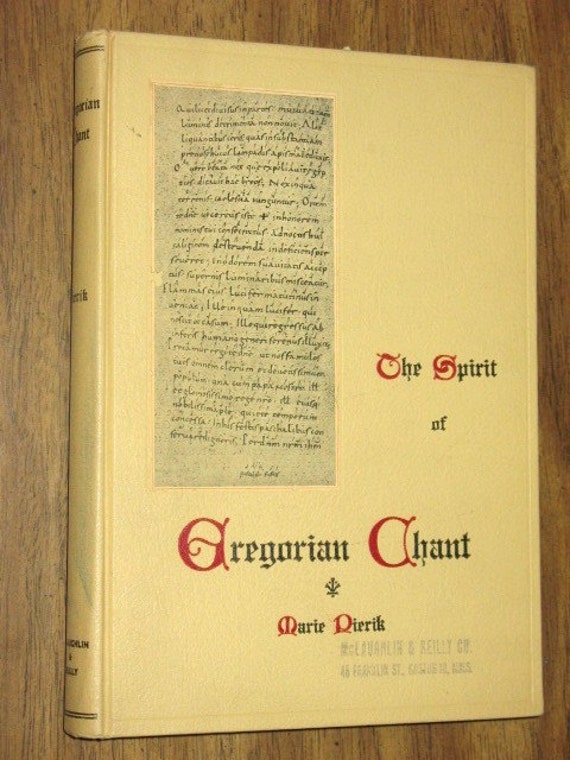
The Spirit of Gregorian Chant by Marie Pierik, 202 pages

The Spirit of Gregorian Chant is an introduction to the history, notation, and performance of Gregorian chant, with brief asides on Ambrosian and Mozarabic chant.  Author Pierik is very much a disciple of the school of Solesmes, the famed French monastery which did so much to recover traditional forms of monasticism and liturgy in the late nineteenth and early twentieth centuries.  This does lead to what some casual readers might see as a fussy purism which must stifle any kind of artistic creativity, but others will perceive is connected to Pierik's recognition of the vital connection between chant and the liturgy in which and for which it developed.  This is the key to the "spirit of Gregorian chant" - that it has as its purpose the adoration of God and not personal accomplishment.

Wednesday, December 16, 2015

Modernism


Modernism is an amorphous category with many definitions.  It is reasonable to argue that it should not be used as a label at all, having too little meaning.  Peter Gay argues that it does have a meaning, and that the cultural movement by that name has a coherent past, and possibly a future.

Unfortunately, he fails to establish this convincingly.  The subject is too large and the book too small.  Gay never explicitly defines modernism, vaguely describing it as a set of attitudes involving the search for total independence of artistic expression, the resulting rejection of history and tradition, the quest for inwardness, and an unwavering hostility towards the bourgeois masses.  Understandably, he chooses to break the subject down into subsets - painting, literature, music, architecture, film - and discuss each individually, but in practice this lack of a unitary narrative produces repetition and confusion, as when the story of the birth of Dada is told twice, once under painting and once under drama.  Not that this is avoided within the chapters, either - Waiting for Godot is summarized in the discussion of the Theater of the Absurd and again in the very next paragraph when introducing Beckett as an author.

Nor is Gay consistent in his definitions.  Repeatedly the reader is told that Modernism transcends politics and morality, but views that violate certain norms - Strindberg's virulent misogyny, for example - are nonetheless presented as definitely outside the Modernist pale.  Worse, despite the obvious ways in which modernism, with its rejection of real history, tradition, and morality, its cult of novelty, obsession with progress, and hatred of the unenlightened masses, prepared the way for totalitarianism, and the fact that many of the modernists who, in Gay's own words, "were proclaiming an overwhelming need for, and prophesied the coming of, a New Man in a culture that seemed naked without ideals", found that New Man in Nazi Germany, Fascist Italy, and especially in the Soviet Union, the modernist celebrations of those regimes are treated as secondary to the dictatorships' hostility to modernist art.  True, Knut Hamsun's support of Hitler is thoroughly discussed and justly condemned, but Picasso's enthusiasm for Stalin and Kim Il Sung is not mentioned at all.

There are a few positives.  Gay's account of the importance of artistic middlemen - dealers and brokers, publishers and directors - in the development of art that, by its very nature, had to fight for an audience, could be the seed of a good book, but it is not this book.  Near the end, when criticizing Pop Art and celebrating Gehry's Bilbao Guggenheim, Modernism becomes more interesting, but it is too little, too late.

Overall, the treatment of individual figures is superficial, and the treatment of great themes hopelessly muddled.  Modernism does not succeed in compellingly describing either small details or the big picture.

Tuesday, July 28, 2015

Year Zero

Year Zero by Rob Reid, 357 pages

Cover image for Aliens love music, but are dreadfully untalented at creating it. When they discover human music they become addicted and quickly begin downloading every piece they can find. It isn't until after they've done this that they realize they've just committed the biggest copyright violation since the Big Bang, and that the resulting fines is enough to bankrupt the universe. Their natural plan is to destroy the Earth, however Carly and Frampton decide to recruit Nick Carter, a music lawyer who is on the brink of being fired to arrange licenses and avoid disaster. Nick now has forty-eight hours to save humanity, find a way to keep his job, all while hopefully wowing the hot girl who lives down the hall from him.

The plot was fun and over the top, and the story was overall hilarious. I would definitely recommend this book to fans of Douglas Adams, and similar science fiction authors.

Friday, April 24, 2015

Nick & Norah’s Infinite Playlist

Nick & Norah’s Infinite Playlist by Rachel Cohn & David Levithan, 183 pages


Nick and Norah meet one night at one of Nick’s band’s shows.  They are both recovering from relationships that have recently ended.  When Nick’s ex, Tris, shows up, he asks Norah to pretend to be his girlfriend.  Norah complies, and thus begins a long night of Nick and Norah getting to know each other, mostly through music related situations.  This was actually a pretty good book.  It’s short and has a lot of musical references but not so much that the book becomes horribly dated, especially since there are a lot of references to bands that don’t really exist.  This has been a fairly popular book with teens.  While I’m not going to say that I loved it, I understand the appeal and I liked it pretty well.