Showing posts with label England. Show all posts

Tuesday, January 13, 2026

First Boredom, Then Fear

First Boredom, Then Fear: The Life of Philip Larkin by Richard Bradford, 263 pages

Philip Larkin is generally accepted as one of the greatest English poets of the latter half of the 20th century.  The publication of his collected letters in 1992, unfortunately, led to a chorus of denunciations due to his outspoken heretical views on matters of race and gender.  First Boredom, Then Fear is Richard Bradford's attempt to correct the record, casting Larkin's racism and xenophobia as consciously exaggerated in his letters and incidental to his poetry.

Certainly, Bradford treats his subject with respect.  His book is a literary biography in the best sense, illuminating the poetry through the life of the poet.  This is somewhat difficult with Larkin, who was, as Bradford notes, uncomfortable with anything that revealed too much of himself.  In Bradford's telling, even Larkin's closest friend could only say, "He didn't keep half his life in compartments."  And yet, paradoxically, this was the same poet who "spoke so candidly to his readers." 

Some readers, exposed to the candid Larkin, are likely to agree with those who saw in him the embodiment of "an undergraduate attitude perpetuated into adult life."  Like all artists, Larkin was a man of his time and place, and for him that was England in a particularly silly season.  Seen from this perspective, his commitment to an accessible, popular poetry and his lifelong fascination with the permanent things take on a value diminished but not extinguished by his chronic inability to commit himself.

Monday, October 6, 2025

Life of Robert Southwell

The Life of Robert Southwell, Poet and Martyr by Christopher Devlin, 324 pages

Born into a well-connected family in England in the middle of the sixteenth century, as a teenager Robert Southwell, possibly under the influence of recusant relations, converted to Catholicism and departed to the Continent where he could practice his faith freely, beyond the reach of Protestant persecution.  Attracted, like many devout young men of the time, to the Society of Jesus, he entered the Jesuits after an initial rejection and became first a student and later a professor at the English College in Rome.  He left behind this position to become a missionary in his homeland, where he managed to minister to the Catholic community for several years before finally being cornered, captured, tortured, and executed.  Southwell's poetry, much of it written while in hiding, would serve as an inspiration to Shakespeare, Jonson, Donne, and Hopkins, among others, while his holy life and martyrdom led to his canonization in 1970, 14 years after this biography was published.

In the author's note that begins this biography, Christopher Devlin connects Southwell with St Edmund Campion, the illustrious Jesuit scholar and martyr of the preceding generation, and refers readers to the "brilliant study" of Campion by Evelyn Waugh.  Just as Southwell lived happily in the shadow of Campion, so Devlin writes in the shadow of Waugh.  While Devlin cannot match Waugh's literary genius, he compensates with thorough scholarship, something sorely needed when the historical record is so fragmentary.  

Wednesday, September 10, 2025

Cardinal Manning

Cardinal Manning: A Biography by Robert Gray, 327 pages

Henry Manning did not set out to become a clergyman.  Financial pressures forced him away from a promising future in law and politics into a clerical career in the Church of England.  He did not set out to become a Catholic.  A long process led him from his upbringing in the heart of Evangelical piety into a more grounded, apostolic faith, and only a genuine crisis of conscience drove him out of Anglicanism.  Having become Catholic, however, and a Catholic priest, he did set out to take a leading position in the Catholic Church in England.  Conscious of his own considerable gifts, he was not reluctant to use them to guide the Church and society in the direction he thought best.

In his own time, Manning was highly esteemed.  Although his conversion cost him many of those dazzling friendships he had made in his youth, his tireless efforts for the working classes of England won for him an admiration far broader and no less genuine.  This was enhanced by his emaciated appearance, which seemed to be a visible record of long decades of prayer and fasting - Chesterton recalled seeing him in his cardinalatial robes looking like "a ghost clad in flames."  Subsequent generations were not so kind.  Comfortable secular scoffers had Lytton Strachey's infamous hackiograpy, which depicted Manning as an ambitious hypocrite.  Among Catholics, Manning's troubled relationship with St John Henry Newman caused his reputation to decline even as that of Newman grew.

Robert Gray's biography, then, is an important recovery.  For Gray's even-handed account of Manning's life, thought, and work reveals a man who was, indeed, ambitious and driven, yet fully aware of these tendencies in himself and determined to fight against them and, where possible, bend them towards good.  In the end, the reader is likely to echo the sentiment of the author, "if Henry Manning is not saved seventy times seven times, God help the rest of us."

Wednesday, August 2, 2023

Traveller's History of Oxford

A Traveller's History of Oxford by Richard Tames, 298 pages

There are a number of great universities in the world - at least two in England alone - but Oxford has a mystique all its own.  A great deal of this derives, of course, from its nine centuries of accumulated history, the people who studied and taught there and the traditions they fostered or defied.  This is the focus of A Traveller's History of Oxford, an introduction to both the university and the city presented as a journey through time a well as space.

The author, Richard Tames, is a proud graduate of the other university, which gives him an outsider's objectivity.  Unfortunately, while his snarky tone is amusing for a time, it sours and becomes tiresome long before the end.  This is aggravated by inconsistencies and basic errors - claiming, for example, that the putative author of The Screwtape Letters is Satan himself instead of Uncle Screwtape, or implying that Latin was a language unknown beyond the clergy before referring to it as "universally accessible" a few pages later.  Still, for those looking for an unconventional guidebook that focuses on the development of the place rather than whatever tourist spots happen to be hot at the moment, this book may be indispensable.

Monday, July 31, 2023

Winchester Cathedral Close

Winchester Cathedral Close: Its Historical and Literary Associations by John Vaughan, 275 pages

This is not a history of the cathedral itself, but of the monastic enclosure that surrounded it for centuries prior to the Reformation, elements of which survive to this day.  John Vaughan, a resident canon in the early years of the 20th century, follows these traces through to his own time, covering not only the buildings but also the flora and fauna of the cathedral precincts, as well as the scriptorium and the library collection.

Vaughan's intimate knowledge of his surroundings breathes a special vitality into what might otherwise be a very dry work, at times suggesting the sweet odour of contemplation that once incensed the air here.  Few, perhaps, will care about details of the alterations to the undercroft, but anyone looking for a testament of love of place will be enchanted.

Saturday, July 29, 2023

Story of Canterbury

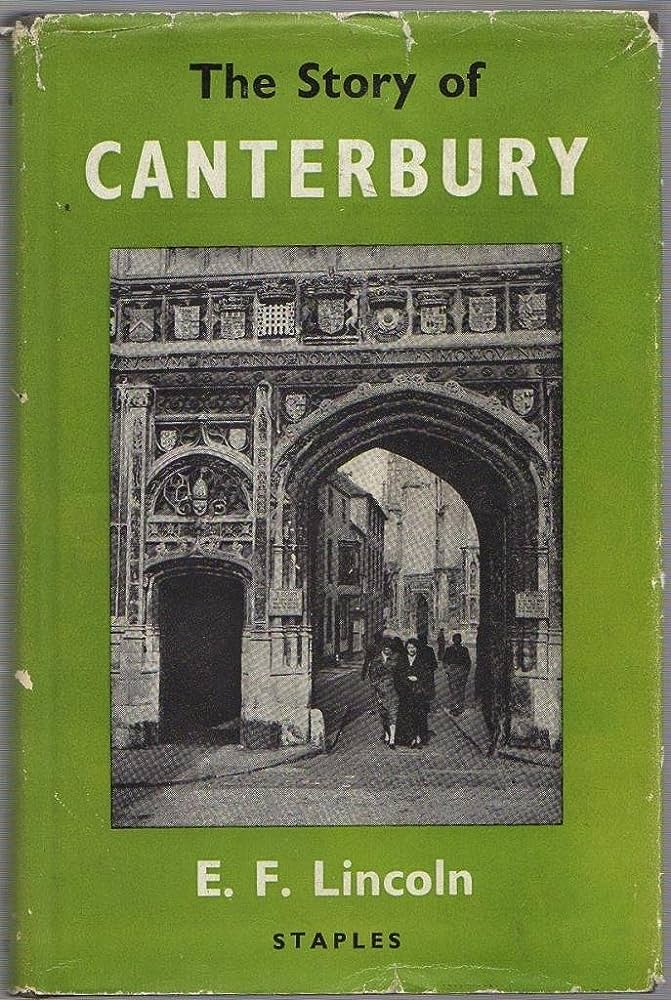
The Story of Canterbury by EF Lincoln, 156 pages

The Story of Canterbury is a brief history of the development of the city from the Cantii Gauls to the postwar years, through its time in the Roman province of Britain, the capital of the Kentish kingdom, the seat of the primate of England, a famed center of pilgrimage, a haven for Huguenot refugees, and a modest center of trade struggling to find a balance between past and future.  It is an interesting story simply and appealingly told, though with the inevitable Whiggish slant.

If the natural center of the story is the shrine of St Thomas, the focus of so much of the city's late medieval life, towards the end another shrine appears, that of the Invicta locomotive that first pulled a train from Canterbury to Whitstable, after a procession through the town center amid the pealing bells of the Cathedral and the cheers of great throngs of people.  Rarely has the unquiet ghost of Henry Adams been more invisibly and profoundly present.

Saturday, June 17, 2023

City of Bath

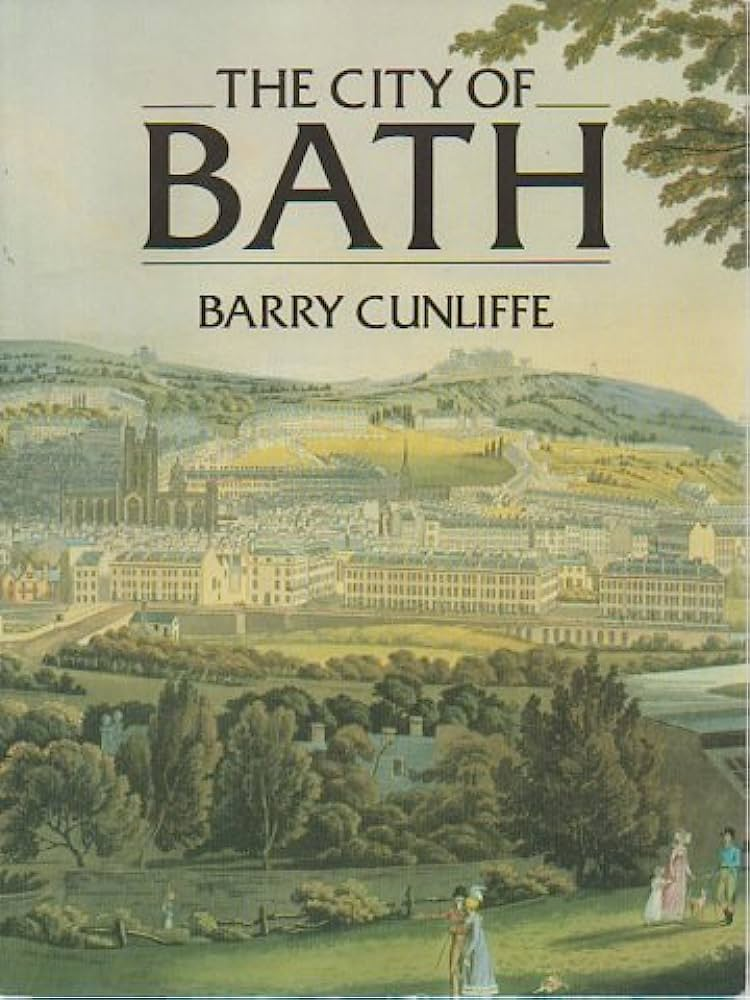
The City of Bath by Barry Cunliffe, 175 pages

Not to be confused with the seat of Steuben County, the city of Bath in Somerset has been occupied since the Romans built a public bath and temple over the hot springs in the first century AD.  Through the following millennia its fortunes rose and fell, becoming in turns home to a magnificent abbey, a site of royal coronations, a sleepy backwater, a fashionable (and later unfashionable) resort, a headquarters for the Royal Navy, and a tourist town.  It is its Georgian phase, as its 18th century magnificence turned increasingly shabby in the 19th, that it is best remembered today, largely through the novels of Jane Austen.

Barry Cunliffe surveys the material history of the city throughout its lifetime, charting the changing buildings and streets.  Those hoping for a history of the people are likely to be disappointed, for Cunliffe doesn't even waste much time with anecdotes about major figures.  Those who prefer unadorned facts, on the other hand, are likely to be pleased, although perhaps even they would appreciate a master map somewhere among the many fine illustrations.

Saturday, April 29, 2023

The Last Heir to Blackwood Library

The Last Heir to Blackwood by Hester Fox 336 pages


Readers can always count on author Hester Fox for a quietly eerie novel, and her latest doesn’t quite live up to the abilities she has shown in other works.


Twenty-three-year-old Ivy Radcliffe is alone in the world. She lost her brother and father in the Great War and her mother succumbed to the Spanish Flu. She is shocked when she is summoned to a solicitor’s office for the reading of the will of the late Lord Hayworth, someone with whom she is unfamiliar. Turns out, he was Ivy’s father’s third cousin, and the last of the Hayworth line.


It took the solicitor a while, but they finally connected Ivy to Hayworth, and with that knowledge, she inherited his Lordship’s estate, Blackwood Abbey, located on the Yorkshire moors.


When Ivy arrived, the sprawling mansion was in disrepair, yet the servants who took care of her ancestor were still there. I don’t recall in how long the period was between the Lord’s death and Ivy’s arrival, but it cannot have been overlong since they were still there. The mansion is dark and depressing, attributed to its gothic vibes.


Almost immediately, Ivy is bored. She knows no one and there is little for her to do. On an afternoon outing to the local bookstore, she meets Sir Arthur Mabry. He discloses the existence of a magnificent library housed in the crumbling abode, and that he would love to get a chance to see it.


The conversation leads Ivy to wonder what she isn’t being told, especially if there are parts of the   house where she is told she cannot investigate. But a library! Ivy loves to read and makes it a priority to discover its contents.


The library is magnificent, but strange things happen there…footprints in the dust that lead to a solid wall without another living creature present is only one example. Still, Ivy isn’t scared away. Until the night of the storm.


I had a tough time piecing this novel together. I didn’t understand what the Prologue has to do with the rest of the story. Even after I finished the book and re-read it, it did not seem to tie in. I am afraid this is one of those stories that the author knew and understood but was unable to draw the picture for the reader.


 The Last Heir to Blackwood receives 3 out of 5 stars in Julie’s world.


Saturday, February 18, 2023

The Mitford Affair

The Mitford Affair by Marie Benedict 352 pages

I have not previously read a lot about the six Mitford sisters, but I’ve known who they are. Six girls/women who grew up and in the highest of the early part of the 20th century English society.  While each sister had her distinct personality, they were a tight-knit clan. They thought and did exactly as they pleased; rules be damn! Sometimes, it was hard to tell them apart. Especially on the first few chapters where readers are introduced t their nicknames for each other; I had a terrible time keeping them straight!

Author Marie Benedict, one of my favorites by the way, takes on three of the sisters as life in England was rapidly changing. This novel focuses on the period from 1932 to 1941.  Benedict gives us the loves and the lives of three of those sisters (Nancy, Diana and Unity). But don’t worry, the other three (Pamela, Jessica and Deborah) so show up from time to time, especially in the first few chapters.

Fans of Benedict’s know that this will be another character-driven novel, so plot seekers don’t bother.

Diana and Unity are estranged from the rest of the family due to their ties and fascination with Fascism and Nazism.  Diana has an affair with the leaders of the British Union of Fascists and ultimately leaves her husband for the man. Unity has gone to Munich to supposedly study the German language, but becomes so enamored of Adolph Hitler that she stalks him until she becomes part of his inner circle. Historians are unsure of whether she was one of his mistresses, but Benedict gives enough evidence to support that she did.

Nancy has gained fame her own way by writing novels, some of which are still in print today. I did see a collection available online that contains all eight. Nancy has the role of peacekeeper and tires to ease the stress between Diana and Unity and the rest of the family.

Besides the crisp prose, there are two things that really stood out in this novel. First, each chapter is dated and readers get to know what each of the women was up to on each date. Second, Diana and Unity’s chapters were told from a third person point of view while Nancy’s was in first person. I found this jarring as I read. Still “The Mitford Affair,” receives 4 out of 5 stars in Julie’s world.

Wednesday, July 13, 2022

Girls of Slender Means

The Girls of Slender Means by Muriel Spark, 176 pages

When the Jesuit priest Nicholas Farringdon is martyred in Haiti, he is remembered with fondness by the girls of the May of Teck Club, a boarding house for young women making their way in London.  Those girls, now women, grew to know him in the closing months of the War not as a priest or even a believer, but as the aspiring anarchist poet who once spent a night with Selina on the roof.  His acquaintance with the girls of the Club, it turns out, changed his life profoundly in ways none of them intended or could foresee.

The Girls of Slender Means is a beautiful novel that is exactly as long as it needs to be.  The obvious comparison is to Graham Greene, although Spark's novel is lighter and more feminine, without, however, becoming either superficial or sentimental.

Wednesday, May 18, 2022

The Wedding Dress Sewing Circle

The Wedding Dress Sewing Circle by Jennifer Ryan 432 pages

In today’s world, we think we know about supply shortages due to covid. However, what we are experiencing today is nothing like the Europeans experienced during World War II. Shortages are at the heart of Jennifer Ryan’s latest novel, in particular wedding dresses.

Three female protagonists help tell the story of the women on England’s Homefront as they band together to help each other through the war years. The novel is set in Aldhurst Village and London

Readers are first introduced to Grace Carlisle. Daughter of the local Vicar, Grace is a shy, quiet young girls, helping however and whenever she can. She is engaged to a vicar from another village. Throughout the novel, Grace comes to realize that she is marrying Lawrence for all the wrong reasons. With the wedding not far off, Grace tries desperately to mend her late mother’s wedding dress that has been eaten by moths and mites.

Cressida Westcott is a well-known fashion designer in London. She is a workaholic, never marrying or having children. During the Blitz, Cressida’s home and design house are victims of the Nazi planes, leaving her homeless and without a source of income. She has no choice but to go to her ancestral home in Aldhurst Village, where her only niece and nephew reside. Will they take her in? Or are they like their father, Cressida’s brother? A hate-filled old goat.

The third protagonist is Cressida’s niece, Violet Westcott. With all the men away at war, aristocrat Violet is sure she will wind up a spinster, unable to make a suitable match with a titled man. Then Violet’s conscription letter arrives. She is in despair at the boring uniform.

Cressida goes to the village sewing circle. A group of women meet every week and sew together. Grace goes for help with her mother’s dress. Cressida goes to teach the women some basic sewing skills, and Violet goes for want of anything else to do.

This circle is where the wedding dress for every bride is born. The village women donate their dresses while Cressida contacts her old clients to donate theirs, and a movement is born. The idea of a white dress for every bride is true. Be sure to read the author’s notes for the scoop on how dresses for brides grew and grew, eventually with the United States participating,

I enjoyed reading “The Wedding Dress Sewing Circle.” It interesting, but not riveting; therefore “The Wedding Dress Sewing Circle” receives 4 out of 5 stars in Julie’s world.


Saturday, May 7, 2022

Disraeli's Reminiscences

Disraeli's Reminiscences by Benjamin Disraeli, 148 pages

During the 1860s, Benjamin Disraeli, with the best part of his career still ahead of him, began jotting down notes towards a future autobiography that, as things turned out, was never actually written.  The notes survive, however, in this loosely arranged series of brief anecdotes and scraps of narrative.  

Some of the bits and pieces are amusing, and the personality of Disraeli shines through clearly.  Those hoping for insight into his life or the political and social world he inhabited are likely to be somewhat disappointed, however, especially since, as the editors take care to note, the author was hardly above embroidery and invention.

Saturday, October 24, 2020

The Clockmaker's Daughter

 The Clockmaker’s Daughter by Kate Morton    496 pages

I love Kate Morton novels. They are nice and thick with a mystery that spans generations.  I love to snuggle down in my favorite reading chair. I waited until October to read her latest, mainly because of the opening sentence: “We came to Birchwood Manor because Edward said it was haunted.”  What a perfect line for late fall with Halloween just weeks away! And one sentence in the dustjacket blurb (“Tensions simmer, and one hot afternoon a gunshot rings out.”). I was ready to stay up all night, expecting to be so engrossed I couldn’t stop reading. 

As I read further into Chapter 1, I was thrilled to discover that one of the narrators was a ghost.  How cool was that!? The ghost was not identified nor was its paragraphs, but those were easily discernible.

The first part of the book took place in 2017, when archivist Elodie Winslow discovered a satchel and sketch pad belonging to 19th century artist Edward Radcliff. Part One was wonderful.

But then I reached Part 2. The ghost was still there, but new characters appeared. I had no idea what was going on. Yet I read, and read, and read. But to my disappointment, it didn’t make sense. It was like a different story set in the same place.

It took me another week to finish this novel.  It did comeback around, but by then I was so confused about Morton’s plotlines, that I turned the last page in utter disappointment. Well, all writers have one book that is a dud, and this is it for Morton.  Fingers crossed that her next one will live up to her talent.

 “The Clockmaker’s Daughter” receives 2 out of 5 stars in Julie’s world. 


Friday, May 22, 2020

The Secrets of Love Story Bridge


The Secrets of Love Story Bridge by Phaedra Patrick 336 pages

 At first, I thought this story took place in Paris, as I’m familiar with the bridge where couples place locks to symbolize their love. Never been there, but I’ve heard about it.  However this contemporary story takes place in a suburb of London, Upchester.

Former architect Mitchell Fisher now spends his days cutting locks off the infamous “love story” bridge. The bridge is now more famous than ever since a famous boy-band, Word UP, filmed a video for their latest hit there.

Mitchell hates the job, but it’s a job that can give him more time with his 10-year-old daughter, Poppy.  She’s his only ray of sunshine in a life that if grief-consumed after the death three years earlier of his wife, Anita. Mitchell cannot forgive himself not being able to get to the hospital in time after Anita’s accident. 

One afternoon, Mitchell sees a young woman in a bright yellow dress fall over the bridge into the icy river waters below. Thanks to his quick thinking, he is able to save her, and somehow connects with her, although when he gets to shore, she is whisked off to a hospital.

Enter Liza, Poppy’s music teacher, Liza, who sees the dramatic rescue on the news. That woman in the yellow dress is her sister, Yvette---a sister who has been missing for over a year. Mitchell, Liza and Liza’s family join forces to find her. Mitchell, subconsciously, feels that although he couldn’t save Anita, maybe he can save Liza’s family.

“The Secrets of Love Story Bridge” is a sweet read. It’s one of those books you know it’s going to end happily ever after. Perfect for the beach or the need to escape during the 2020 Coronavirus pandemic.

 “The Secrets of Love Story Bridge” receives 4 out of 5 stars in Julie’s world.

Thursday, January 9, 2020

Lady Clementine

Lady Clementine by Marie Benedict 336 pages

Fans of Melanie Benjamin’s “The Aviator’s Wife” and Paula McClain’s “A Paris Wife” are going to love Marie Benedict’s latest novel, “Lady Clementine.”

Clementine is the wife of former British Prime Minister Winston Churchill. One of the many things I learned about is that the pronunciation of her name rhymes with “Josephine.”

When Clemmie and Winston first meet, it is love at first sight. She becomes his “Cat” and he her “Pug,” and they refer to their children as their “kittens.” It is a sweet love story set among the backdrop of two world wars and countless other strifes. They marry in 1908.

Readers will get to know a Winston Churchill as we have never known him before: sensitive, insecure, a neglected child that lurks below the surface, a man who depends on his wife in so many ways, especially politics. In the political arena, Clemmie often reminded me of Mary Todd Lincoln. It was heartbreaking to read. Clemmie shares those same traits and experiences. He suffered from fatherly neglect and an overprotective mother; she from motherly neglect and and absent father. And if the rumors were true, the father she barely saw wasn’t her father at all. But when they are with each other, they find they can be their true selves.

Winston admires Clemmie for her assertiveness, her willingness to speak her mind and to learn about the politics he so greatly enjoys. The novel is written in first person from Clementine’s point of view, but Winston is rarelu out of the picture. it is truly a novel about the woman behind the man.

We watch Clemmie struggle with her alcoholic and promiscous mother, with her own motherhood as she lacks maternal instincts, with the ups and downs of her most unusual marriage, the death of a child, Winston’s adoration of his mother, her need to prove herself worthy in everything she does, and the feelings of failure that haunt her.

A remarkable story of a remarkable woman that history, or at least American-told history, has chosen to virtually forget. That’s a shame. Therefore,  “Lady Clementine” receives 6 out of 5 stars in Julie’s world.

Friday, October 18, 2019

Sybil

Image result for sybil disraeliSybil, or, The Two Nations by Benjamin Disraeli, 431 pages

Benjamin Disraeli's spiritual sequel to Coningsby follows Charles Egremont, younger brother of Lord Marney, who as a newly elected Member of Parliament abandons the family home after an argument with his brother.  By chance Egremont becomes intimately acquainted with the working class Walter Gerard, his daughter Sybil, and their crusading journalist friend Stephen Morley.  He soon comes to understand the plight of the English workers, to share the Gerards' Cobbett-inspired view of history, and to desperately love the saintly Sybil.  In a nation increasingly torn by civil strife, however, it seems that it will take more than love to bridge the class divide.

If Coningsby at times suggested a masculine Austen, Sybil foreshadows Gaskell, Dickens, and even Zola.  The major shortcoming of the novel is its protagonist, Egremont, who is never as interesting as the supporting characters and who nearly disappears as the climax approaches.  His dullness is compounded by Disraeli's heavy reliance on narration, so that, for example, we are told of the rousing speech Egremont delivered on the floor of Commons but do not see it, nor the immediate reaction to it, which is much like if we were told about Darcy's letter to Elizabeth without actually being allowed to read it.

Wednesday, October 16, 2019

The Dollmaker


 The Dollmaker by Nina Allan    416 pages
 Now that it is full-on fall in Missouri, it’s the perfect time to luxuriate in a gothic novel. Nothing said creepy to me like the cover of Nina Allan’s “The Dollmaker.” It’s a story of a dwarf and a woman in a mental institution, both you are avid doll enthusiasts.

I noticed that Allan didn’t use the politically correct term “little person” for Andrew Garvie, which seemed to add to its creepy-factor. Since he was a child, Andrew has been fascinated by dolls. He collects them, he creates them, and he gives them life. He seems to be alone in the world, which adds a deeper element to his connection with the dolls.

One of the things Andrew looks forward to is the monthly arrival of a collector’s magazine. He pours over its pages the moment it arrives. He even reads the personal ads. They are mostly from other collectors wanting to buy or sell a certain type of doll. That is until he comes across the ad from Bramber Winters.

The two begin to correspond and grow closer and closer. It doesn’t even phase Andrew that Bramber has lived most of her life in an institution.

After much correspondence, Andrew decides that the they should meet.  He makes plans, without telling Bramber, to visit her.Andrew goes by train and makes many stops along the way at various musuems in small towns. He also carries with him a book of fairy tales by Ewa Chaplin, also a dollmaker.

Andrew’s travels and letters to Bramber are interspersed with Ewa’s stories. Turns out, Ewa is a real-life figure, but I couldn’t find much about her on the internet. A blurb about Ewa as an Author’s Note could have put it in perspective for me. I don’t understand why the author placed those stories within the novel. It seemed, to me, like a way to ease the eeriness that I felt reading Andrew and Bramber’s letters, but I felt they had no revelance on the story.

Andrew and Bramber’s meeting was not at all what I expected, which is a good thing. I won’t give my impression of the ending as I don’t want to cloud others’ opinions.   “The Dollmaker”  receives 4 out of 5 stars in Julie’s world.

Friday, October 11, 2019

Poppy Redfern and the Midnight Murders


 Poppy Redfern and the Midnight Murders by Tessa Arlen    320 pages
When I read a mystery, I don’t often try to figure out who-dun-it.  For me, it’s more fun to be as surprised…or shocked…as the other characters in the story.  This one had me guessing until Poppy figured it out. The clues were there along, foreshadowing the name of killer, but I missed it completely.

It’s summer 1942. The English village of Little Buffenden has mostly felt the war in the availability of food, gasoline, etc. They havne’t been subjected to bombings like the Londoners have, but the town is on high alert. Especially since the Redfern family home and adjoining farmland have been confiscated by the War Office. The Americans have come to help the British win the war and the farmland has been converted into an airstrip.

As Little Buffenden’s  Air Raid Warden, Poppy and her little dog, Bess, have the night shift. As Poppy and Bess, joined by Sid, who was 4F, make their rounds reminding their neighbors about the proper utilization of blackout curtains.

The village is split 50-50 on how they feel about the arrival of the Americans. The young women are excited to see young men their age, as all the eligible men in Little Buffenden are fighting at the front. The shopkeepers, especially the pub owners, are glad to have the men spending their money.

Then, Doreen turns up dead, found in the middle of the night in the churchyard. Speculation runs high that one of the Americans is to blame. A few weeks later, Ivy Wantage is also killed.  The villagers are on edge, and they begin to fight amongst themselves over speculation of who is too blame. Surely, not one of them as the murders only after the Americans arrived.

Poppy begins her own investigation , learning the secrets the villagers want to stay hidden---like the unliked Audrey who is also attacked, and the villager who has found a way to sneak onto the airbase.

There is an enormous cast lis. Almost too many to keep track of…who is a suspect and who can be discounted is a chore. But still I enjoyed this Book 1 in a new series (A Woman of WWII Mystery).  “Poppy Redfern and the Midnight Murders”  receives 4 out of 5 stars in Julie’s world.

Tuesday, September 17, 2019

Confessions of a Recovering Environmentalist and Other Essays

Confessions of a Recovering Environmentalist and Other Essays by Paul Kingsnorth, 284 pages


Kingsnorth is English and England plays a part in several of his essays. In fact, the political mood that ended up leading to England voting to leave the EU (although he doesn't talk about Brexit) is talked about several times.

Through the essays we find out how he became an environmentalist and decided he didn't want to be one anymore. It isn't that he no longer cares about the Earth and how it is treated. Rather, he has broken ranks with what environmentalists believe. He believes civilization will collapse at some point and we are better off preparing for what comes after. Environmentalists see this as giving up. Even more scary to him is the possibility of us surviving in a world that is devoid of nature and the wild.

Kingsnorth does not say that he has answers. He presents alternative explanations and possible paths to explore.

Kingsnorth has a bleak and pretty unique viewpoint. People who care about the environment are likely to find this book depressing. Despite that, I would recommend it and consider it worthwhile reading.

Tuesday, August 27, 2019

Coningsby

Image result for Coningsby disraeliConingsby, Or, The New Generation by Benjamin Disraeli, 420 pages

The first novel in the trilogy that continues with Sybil and ends with Tancred, Coningsby is the story of the young aristocrat Henry Coningsby and his circle as they seek a place for themselves and their ideals in the political and social worlds of England as the Georgian era gives way to the Victorian.  As in most of Disraeli's novels, the characters are often slightly disguised fictionalizations of actual people he knew.  Fortunately, Disraeli knew a great many interesting people.  Unfortunately, he never learned the art of showing rather than telling, and large sections of the novel are filled by character biographies and political journalism.

Early on in Coningsby, it is noted that in the debating society at Eton it was forbidden to choose contemporary issues as subjects, but it was child's play to find analogues in past eras.  For analogues to the present, Disraeli offers this: "Coningsby found that he was born in an age of infidelity in all things, and his heart assured him that a want of faith was a want of nature."  The party which he might expect to offer him a home is run on "Concessionary, not Conservative principles" according to which, "while forms and phrases are religiously cherished ... the rule of practice is to bend to the passion or combination of the hour."  In such an environment, it takes a hero to assert that "there are still great truths, if we could but work them out; that Government, for instance, should be loved and not hated, and that Religion should be a faith and not a form."