Showing posts with label Fiction. Show all posts

Monday, September 22, 2025

Stoner

Stoner by John Williams, 278 pages

When William Stoner left his parents' small farm to attend the University of Missouri, he never expected that he would be spending the rest of his life there.  By chance he discovers in Archer Sloane's English course a love of literature and poetry he had never known he possessed.  It is a love that remains with him all his life, through disappointments in his career, his romances, his marriage, and his fatherhood.  It is, in the end, the pattern of all his loves, and the one love to which he remains most true.

John Williams, who taught at the same university for a time, is clearly at ease describing familiar places and personalities.  This gives his writing a powerful realism, so that the novel is genuinely moving without being sentimental.  The flap of the first edition describes Stoner as "a man who is clearly out of keeping with his times," and if the lackluster sales of the book upon its publication bear this out, its subsequent rediscovery suggests that Stoner, like Sloane before him, is of a type that exists in all times.

Thursday, August 7, 2025

Leopard

The Leopard by Giuseppe Tomasi di Lampedusa, translated by Archibald Colquhoun, 320 pages

Don Fabrizio, Prince of Salinas, would be perfectly content ruling over his large family, amusing himself with his mistress, indulging in his passion for astronomy, playing with his dog, and watching over his hereditary estates with benevolent indifference.  Unfortunately for him, history has other plans, as Garibaldi's revolutionaries lay siege to Palermo, with Fabrizio's own nephew, the dashing Tancredi, joining them in their effort to overthrow the monarchy.  Even in the security of his country estate at Donnafugata, the prince has to reckon with his eldest daughter Concetta's love for Tancredi and his nephew's growing affection for the bourgeois beauty Angelica.

The Leopard is a masterpiece.  It is not a dramatic novel - most of the major external conflicts are resolved without struggle or comment.  The real drama is social, historical, psychological, and, in the end, metaphysical.  Despite the sentimentality of its characters, it is a remarkably unsentimental work.  There is much to attract us in the passing world of the Sicilian nobility, but the novel does not romanticize them.  CS Lewis famously remarked that there is no "magic about the past.  People were no cleverer then than they are now; they made as many mistakes as we.  But not the same mistakes.  They will not flatter us in the errors we are already committing; and their own errors, being now open and palpable, will not endanger us."  So it is with The Leopard - the novel unfolds for the reader a universe of values which overlaps but significantly diverges from those of liberal modernity and allows him to judge between them.

Monday, July 24, 2023

Short Timers

The Short-Timers by Gustav Hasford, 180 pages

"The Marines are looking for a few good men."  So the young man we know only as Joker enlists.  He soon learns more.  "The Marine Corps does not want robots.  The Marine Corps wants killers.  The Marine Corps wants to build indestructible men, men without fear."  If he never quite reaches that ideal, he pursues it, never alone, but always in the company of his fellow Marines, through the narrow hell of boot camp on Parris Island and the wider hell of war on the banks of the Perfume River.  "I understood that my own weapon could do this dark magic thing to any human being.  With my automatic rifle I could knock the life out of any enemy with just the slightest pressure of one finger.  And, knowing that, I was less afraid."

The Short Timers is no doubt best known as one of the two semi-autobiographical novels on which the film Full Metal Jacket is based (the other being Dispatches by Michael Herr).  The book is significantly different from the film - more brutal, more repetitive, and also more obvious.  Questions of credibility arise at certain points - how many Stars and Stripes photojournalists dabbled in cannibalism?  Perhaps more than one might think, but at times the reader will be very conscious that this is a novel and not a direct factual account, a problem that is compounded by some surreal sequences and others which are ambiguously unreal.  If the writing is uneven, however, there are certainly more than enough unforgettably visceral passages to justify the trouble.

Friday, May 26, 2023

Song of Bernadette

The Song of Bernadette by Franz Werfel, translated by Ludwig Lewisohn, 575 pages

Poor Bernadette Soubirous, gathering firewood in the dump at Massabielle, has a vision of a beautiful lady praying the Rosary.  The mysterious Lady asks her to return regularly.  Despite her efforts to keep her visions a secret, word soon gets out, dividing the townsfolk into believers and skeptics.  More ominously, the local authorities move against her, fearing that the sophisticates of Paris will write them off as backwards and superstitious.  In time all resistance will be overcome by that gentle Power which will transform humble Lourdes into the Lady's kingdom and little Bernadette into a saint.

Franz Werfel wrote The Song of Bernadette to fulfill a vow he made while fleeing the fall of France.  It is a novel, not a biography, and is therefore obviously fictionalized, but Werfel's inventions are largely confined to reasonable extrapolations and the creation of ancillary characters as commentators on events.  These last rarely interact with the main characters, inhabiting a social and intellectual world far removed from that of the Soubirous family.  At the same time, their thoughts on the seemingly inexplicable events, their vain attempts to psychologize or mythologize the unexpected - and mostly unwelcome - irruption of the miraculous into their personal worlds, is perhaps the most profound part of the novel.  Perhaps this is because Werfel himself is amongst their company, attempting to more subtly smooth the sharp edges of reality.

Wednesday, July 13, 2022

Girls of Slender Means

The Girls of Slender Means by Muriel Spark, 176 pages

When the Jesuit priest Nicholas Farringdon is martyred in Haiti, he is remembered with fondness by the girls of the May of Teck Club, a boarding house for young women making their way in London.  Those girls, now women, grew to know him in the closing months of the War not as a priest or even a believer, but as the aspiring anarchist poet who once spent a night with Selina on the roof.  His acquaintance with the girls of the Club, it turns out, changed his life profoundly in ways none of them intended or could foresee.

The Girls of Slender Means is a beautiful novel that is exactly as long as it needs to be.  The obvious comparison is to Graham Greene, although Spark's novel is lighter and more feminine, without, however, becoming either superficial or sentimental.

Thursday, July 7, 2022

Cry Wolf

Cry Wolf: A Political Fable by Paul Lake, 215 pages

After the farmer died, the animals of Green Pastures Farm managed to keep things going.  It wasn't always easy - they couldn't reach the fruit on the higher branches of the trees, and the mouths of lambs proved to be poor substitutes for hands when it comes to milking cows - but the community managed to come together under the Laws left by the farmer and not only survive, but thrive, even defeating an invading bear.  Until, that is, more sympathetic outsiders present themselves, and the clever owl uses the magic of words to bring down the laws and plunge the farm into a spiral of chaos from which it may not recover.

Cry Wolf is a straightforward reimagining of Animal Farm, not only updated for the 21st century - as if such a thing was necessary - but with a revised set of anthropological assumptions, so that it bears little more than a conceptual resemblance to Orwell's original.  Where it does more deeply echo Orwell is in Lake's awareness of the power of words, particularly as they are defined and redefined so that they become tools for confusion rather than communication, and in the ease with which slogans can evoke the power of sentiment to overthrow reason.  What Lake most memorably adds is his exposure of late modern decadence, particularly the unwarranted conviction that a very precarious situation is, in fact, the natural state of things, the unmerited confidence that any disruptions are merely manageable exceptions, and the baseless belief that there are no higher desires than comfort and peace.

Thursday, February 17, 2022

The Liz Taylor Ring

 “The Liz Tylor Ring” by Brenda Janowitz  384 pages 

If y’all follow my reviews, y’all know that I’m often drawn to a book by its title and cover. Well, let me tell you, this book has both: an awesome cover and an equally awesome title. While I might not be the biggest Elizabeth Taylor fan, I am a huge fan of Old Hollywood glamor. 

There are two alternating timelines in this wonderful novel: 1968-69 and present day. It doesn’t even matter that Liz Taylor plays a tiny role in the novel. 

In 1968, Lizzie Morgan starts to date Ritchie Schneider. Lizzie’s parents are against the match as Ritchie dated Maggie, Lizzie older sister, several years prior. But no one can keep Lizzie and Ritchie apart. Their loves grows deep and passionate. This timeline follows the couple’s relationship through both the good and the bad, but the fire cannot be extinguished…even after a nine-month separation. 

The separation is where the ring comes into the picture (no pun intended). To facilitate the end of their separation, Ritchie buys Lizzie an 11-carat, flawless diamond ring, much like the one Richard Burton bought for Elizabeth Taylor, but much smaller (Liz’s was 33- carats.). The ring has disappeared and each of their three children is sure they know what happened to it. 

The oldest, Abby, and her husband, Gary, work in the clothing story that Ritchie founded. Its survival can be attributed to Abby’s creative ideas and marketing skills, taking the store into the 21st century. “Addy was sure (the ring) had been stolen, back in 2008.” 

The middle child, Nathan, is having a domestic problem of his own. He isn’t sure he wants to be married to Diego any more. “Nathan is convinced that Lizzie, her Alzheimer’s rapidly progressing, placed it in Ritchie’s casket when he died in 2015.” 

The youngest is Courtney, twelve years younger than Abby and Nathan. Abby is jealous of Courtney, and Nathan seems indifferent. She has even bigger problems than her old siblings. Courtney knows “for a fact the ring had been gambled away in the fall of 2006.” 

The siblings are contacted by a bank in the Cayman Islands. Ritchie had a secret safety deposit box. The three fly down, unsure of what, if anything, they will find. And to all three’s astonishment, the ring is in the box. And yes, it is real. Each sibling has definite ideas of what should be done with it that wildly contradicts the others. 

This was an easy read, a quick “beach read” if I may, about family relationships. “The Liz Taylor Ring” receives 6 out of 5 stars in Julie’s world.


Tuesday, January 11, 2022

A World Lost

A World Lost by Wendell Berry, 151 pages

Andy Catlett was nine years old when his favorite uncle and namesake was shot and killed.  The murder left a void in little Andy's life, family, and community, a powerful absence strongly felt but unspoken.  As the decades pass and Andy becomes a man, he explores this loss in many dimensions, even as he gradually comes to recognize that he will never really know why his uncle died.

A World Lost is short, powerful, and mysterious.  Mysterious not because it is a whodunnit - the identity of Uncle Andrew's killer is never in doubt - but because it touches on deeper mysteries, mysteries involving the human person and the nature of sin.  Berry does not try to solve these mysteries, he tries to understand them, and that begins with accepting that they cannot be solved.  Who Uncle Andrew was is ultimately a question just as unanswerable - and infinitely more wonderful - as the questions surrounding his murder.

Thursday, October 21, 2021

Crime and Punishment

 Crime and Punishment by Fyodor Dostoevsky, translated by Constance Garnett, 484 pages

"...a fantastic, gloomy business, a modern case, an incident of to-day when the heart of man is troubled, when the phrase is quoted that 'blood renews,' when comfort is preached as the aim of life.  Here we have bookish dreams, a heart unhinged by theories.  Here we see resolution in the first stage, but resolution of a special kind: he resolved to do it like jumping over a precipice or from a bell tower and his legs shook as he went to the crime."

It is difficult to imagine a better description of Crime and Punishment than that which Dostoevsky offers through the voice of one of his own characters, especially as the form - a prolonged monologue - is how much of the novel's action unfolds.  Raskolnikov is a failed student languishing in late nineteenth century St Petersburg, possessed by the notion that he can, by a single decisive act, break totally with the past and enter a realm of absolute freedom.  What he slowly and painfully discovers is that that realm is found in an entirely different direction, at the end of a radically different path, than he imagined.

It is difficult to say anything new about Crime and Punishment.  Obviously, it is not for everyone.  It is dreary and disorienting and merciless towards the reader.  Just as obviously, it is a work of genius, an incredible artistic achievement as well as an antidote to much of the existentialist sophistry that followed in its wake.

Sunday, October 3, 2021

Mazes and Monsters

Mazes and Monsters by Rona Jaffe, 329 pages

They are four very different people.  Jay Jay is an eccentric child prodigy with wealthy parents who dreams of becoming an actor.  Daniel is a computer genius who is, contrary to stereotype, exceedingly handsome and successful with women.  Kate is an aspiring writer whose father traded in her mother for a younger model.  Robbie should be so lucky - his parents never stop fighting, and the older brother he idolized ran away from home years ago and hasn't been heard from since.  They all have a couple of things in common - they are all undergraduates at Grant University, and they all share a passion for the role-playing game Mazes and Monsters.  In the game, they can be whatever they want to be: popular, a hero, a fighter, a savior.  For one of them, however, the game will slowly take over his life, and what he thought was an innocent escape will turn into a nightmare he cannot escape.

When it is remembered at all, Mazes and Monsters is remembered today as part of the '80s Satanic panic and for its TV movie adaptation starring a young Tom Hanks (as well as Wendy Crewson, who went straight from it to Skullduggery), making it the equivalent of Reefer Madness for gamers.  Not that there's any Satanism in Mazes and Monsters - Jaffe is far too sophisticated to worry about such things.  Her focus is on the psychodramatic dimension, connecting the players' invention of their characters to their self-invention in college, their confrontations with fictional monsters to their struggles with the burdens of social and parental expectations.  

The book would be more interesting if it was a lurid tale about a diabolical game that seduces players and drives them mad - as it is, Jaffe ultimately blames no one and nothing for what happens.  The kind of irony and insight Judith Rossner used to examine the New York singles scene and connect it to larger social trends in Looking for Mr Goodbar is entirely absent here - not that Jaffe falls short, but that she doesn't even try.  Young people will go to college, it seems, and some will be exceptional but most of them will be ordinary, there they will study, party, and fall in and out of love, most of them will move on to dull futures, others will have bright futures, and some will simply fall apart entirely, more frequently into drugs and sex than into fantasy role-playing games, but that's just the way it is.  Not only does the book avoid both social commentary and exploitative chills and thrills, it also avoids any kind of subtlety.  Jaffe continually drops large paragraphs of exposition detailing personal histories and explaining precisely how a character feels, the dialogue often serving merely to link one expository paragraph to another.  Mazes and Monsters may be "a far-out game," as one character famously puts it, but Mazes and Monsters is a bland, pointless waste of time.

Wednesday, September 15, 2021

Terror

The Terror by Dan Simmons, 766 pages

The year is 1848.  Over a hundred men are spending their second winter trapped in their two ships, HMS Erebus and HMS Terror, off the coast of King William Island.  They are surrounded by ice, wind, and darkness.  They are running low on food, rum, and coal.  Worst of all, they are being hunted by a preternatural creature strong enough to tear a man in half and clever enough to sneak onto the very decks of their ships.  Nearly as mysterious is the young Esquimaux woman the crew call Lady Silence, who may or may not know something about these men and their fates, but whose tongue was bitten off at the root by someone or something long ago. 

The Terror falls prey to some of the cliches of historical fiction.  There's an extended passage in which a character expounds on the as yet unpublished theories of Darwin with which he is implausibly (though not impossibly) familiar, and Simmons only barely avoids turning his Inuit into noble savages.  The monster, being an unstoppable killing machine with an unknown origin and purpose, is unavoidably reminiscent of similar figures in Simmons' science fiction novels.  In another novel the monster would be a center of tension, something that can be directly faced and overcome in a way that cold and darkness cannot, but Simmons establishes fairly early on that nothing the sailors can do will more than temporarily inconvenience the creature.  When answers are provided, it is in the form of an exposition dump that could have been copy-pasted from some alternate universe's Dictionary of Inuit Mythology.  Nor do the characters provide much interest, for while a few are genuinely memorable, they have little to do except suffer through hundreds of pages of detailed descriptions of frostbite and scurvy, and the reader is invited to suffer alongside them.

And yet.

The final hundred pages are compelling in a way they could not have been without the long tale of thwarted adventure and dreary survival that preceded them.  It could perhaps have been more artfully done, but that it was done at all is a marvel and a gift.

Thursday, August 19, 2021

I Am Charlotte Simmons

I Am Charlotte Simmons by Tom Wolfe, 676 pages

She is Charlotte Simmons, the valedictorian of her high school in the tiny Appalachian town of Sparta, North Carolina, with qualifications impressive enough to earn her a full scholarship to elite DuPont University.  Having long held herself aloof from the squalid debauchery of her hillbilly peers as a result of both her Momma's uncompromising religious moralism and her academic mentor's elevated vision of the life of the mind, Charlotte is wholly unprepared for the sophisticated decadence she finds at DuPont.  The present life of her peers is the reckless pursuit of pleasure in preparation for their future pursuit of wealth and power, and Charlotte is alone and far from home.  Who is Charlotte Simmons?

Wolfe began his career as a novelist late in life, after having already made himself famous as a journalist and cartoonist.  It is precisely his sharp observations that power his writing, although it is his connected determination to always present these observations squarely, without sensationalism but also without flinching, no matter how sensitive the topic, which is his most valuable trait.  Wolfe's deep satire is not caricature or parody, but a revelation of the absurdities we ordinarily fail - or refuse - to notice.  Meanwhile, I Am Charlotte Simmons is surprisingly moving, with it being much easier to become emotionally invested in Charlotte's choices and fate than in those of Sherman McCoy.  Unfortunately, the book does fall apart somewhat about two-thirds of the way through, as though Wolfe knew the ending he wanted to get to but had to derail the story to get it there, although even here there are moments worth remembering.

Tuesday, July 13, 2021

Nothing Lasts Forever

Nothing Lasts Forever by Roderick Thorp, 188 pages

The time is the late '70s.  Joe Leland is a retired New York City detective and World War II vet visiting his big-shot corporate daughter in LA.  The Christmas party at his daughter's office, high in the skyscraper headquarters of the Klaxon corporation, is even more festive this year, thanks to a massive deal with the Chilean dictatorship that has just been finalized.  Leland isn't terribly impressed by the deal, but he is impressed by the murderous German terrorists, led by the psychopathic Anton Gruber, who expertly seize control of the building and take the partygoers, including Leland's daughter and grandchildren, hostage.  Slipping away in the confusion, he wages a one man war against the terrorists, using elevator shafts and air conditioning ducts to stay one step ahead of his enemies, his only uncertain allies the police outside.  The same police now laying plans for a frontal assault on the terrorists, plans that put Leland and his loved ones in the middle of the crossfire.

Nothing Lasts Forever is, of course, the novel that became Die Hard.  Obviously, many things changed in the adaptation - most obviously some of the names, the age of the protagonist, turning the terrorists into thieves, and switching an estranged daughter for an estranged wife.  Much is the same - the friendly police sergeant (although here a much younger man), the prickish police captain, a terrorist enraged when his brother is the first to die, extended conversations between hero and villain over the radio.  One of the greatest differences, however, is that the novel is entirely focused on Leland.  Scenes in the film featuring secondary characters greatly aided their development, but in the novel that is all missing.  This is most obvious in the case of Anton, who despite being a smart and canny adversary lacks the dangerous charm of Hans, even setting aside that he doesn't have the advantage of being portrayed by Alan Rickman.  This also adds to the second great difference, the '70s grimness of the novel, which becomes more a test of Leland's endurance than of his inventiveness.  Nor is all his suffering physical, for not only do the novel's more progressive terrorists include a number of women, but events will prove that everyone, including Leland himself, is deeply morally compromised.

On its own, Roderick Thorp's novel is a fine diversion with vague aspirations to be something more.  The connection to Die Hard adds an entire other level of interest, providing material for hours of reflections on storytelling choices, the differences between novels and film, shifting social mores, the excellence of Alan Rickman, and the patience of long-suffering wives.

Friday, June 11, 2021

Finding Mrs. Ford

Finding Mrs. Ford by Deborah Goodrich Royce 404 pages

I have to admit, I thought Finding Mrs. Ford was going to be about Henry Ford’s wife. Don’t know where I got that; there is nothing on the cover that even remotely suggests that. It doesn’t matter---once I started this wonderful novel, I couldn’t put it down.

Mrs. Susan Ford, no relation to Henry that is mentioned in the book, lives a privileged life. She is wealthy, has a stepson whom she adores (and who adores her), a beautiful home, money and staff to take care of her and her home.  Living the good life takes little doing on her part.

Thirty-five years have passed since the events of 1979, and now that past has come to call. She must pay for the life she led then. And for what she did. The FBI knocks on her door and asks about a man named Sammy Fakhouri. An Iraqi with ties to ISIS, he is arrested on his way to see Susan, although Susan was not expecting him.

Jump back to the summer of ‘79. Susan was a college co-ed, a rather studious and quiet young woman. She meets the out-going and sassy Annie. The two become best friends, although they could not be more different. They had a summer job, but when an opportunity arises to work as a waitress in a disco, both jump at the opportunity—Annie more so than Susan.

The disco is a gross, shady place where there is more going on than music, dancing, getting high and drinking. It’s a place were extremely powerful men hangout. Susan gets romantically involved with Sammy. But in 2014, Susan is wondering why he’s coming to see her.

The novel is broken into two parts: Part One focuses on Susan while Part Two focuses on Annie. There is a major twist right at the point where Part One transitions to Part Two---a stunner for sure. Not one that I saw coming.

“Finding Mrs. Ford” receives 5 out of 5 stars in Julie’s world.


Wednesday, February 17, 2021

The Plague

The Plague by Albert Camus, translated by Stuart Gilbert, 308 pages

This book is set in Oran, a coastal town in North Africa. The narrator of the book isn't revealed until the end.

The bubonic plague breaks out in the town and everyone is slow to react. Eventually, protective measures are taken in stages. The town is quarantined. The disease is passed through fleas but later becomes airborne. 

People who were visiting the town are trapped there, unable to get back to their loved ones. As a doctor tries to create a serum, people come together to fight the plague the best they can.

In Camus's Absurdist philosophy the world is meaningless and people have three alternatives. One is suicide, the second is religion or spirituality and the third is acceptance and finding your own meaning. You can see how this relates to characters in the book and what Camus thinks.

In some ways the book mirrors current events involving Covid-19 but it is different in some ways too. Circumstances may have changed but human nature hasn't. That much is true. It means there are some lessons we can draw but it also means we may not be able to totally change the outcome.

As a novel I don't give it a great review but I give it a good review as a chronicle of how people react to a disease run rampant and Camus's philosophy laid out in fiction.


Friday, November 27, 2020

From the Terrace

From the Terrace by John O'Hara, 897 pages

Born to an alcoholic mother and a father who had spent all his love on a son who died too young, Raymond Alfred Eaton grew up in a cold home with a cold future - one day he would inherit the family steel mill and live out his days as the biggest fish in the small pond of Port Johnson, Pennsylvania.  The larger world beckoned, however, and after a spell at Princeton he chose instead to seek his fortune on Wall Street and to serve his country in Washington, DC.  Along the way he struggles to maintain his integrity and reputation in the boardroom, the war room, and the bedroom.  His failure is an American tragedy.

John O'Hara, once considered to be a major American writer - even a potential Nobel Prize winner - is mostly forgotten today.  A mere two years after its publication, From the Terrace was made into a "major motion picture" starring Paul Newman and Joanne Woodward, but it is no better remembered than the novel.  If this is unjust, it is hardly surprising, as From the Terrace is today as redolent of its own moment in time as its descriptions of life in the first half of the twentieth century are reflective of those eras, particularly its prurient obsession with sex.  On the other hand, it is a remarkably complex page-turner.

Monday, October 26, 2020

Strong Motion

 Strong Motion by Jonathan Franzen, 508 pages

This was Franzen's second novel. Much of novel centers around the Hollands. Louis, his father Bob, his mother Melanie and his sister Eileen.

Louis has moved to Boston for a job at a radio station. Soon after, his grandmother dies from an earthquake and his mom inherits a house and shares in a chemical company named Sweeting-Aldren. Louis discovers that money does strange things to people. His new girlfriend Renee is a seismologist and she finds information that implicates Sweeting-Aldren in causing the earthquake and others. 

The plot also includes a Christian fundamentalist church that is protesting abortion clinics. 

I would say this book is uneven. There are parts of it that are very good but other parts that are lacking. The plot is intriguing and Franzen does an excellent job writing his characters. Much of the novel is about people and what drives them but there is no real exploration of why Melanie is so obsessed with the inheritance. The biggest other shortcoming is that almost all but one of the women are written in a negative light. Despite its shortcomings, I would still recommend this book to fiction readers. 

Tuesday, August 18, 2020

Sisterland

 Sisterland by Curtis Sittenfeld, 400 pages    

The book is set in St. Louis, mostly during 2009. Kate and Violets are twins who have 'senses'. Kate

rejects her senses while Violet embraces hers. Kate just wants to live a normal married suburban life. That goal is challenged when, after a small earthquake, her sister Vi predicts that there will be a much bigger earthquake on the local news.

The story blows up gaining a lot of local and national coverage. Vi doesn't know when but Kate gets a feeling about a certain date in the next couple of months. As the date approaches Kate doubts whether she will be right but prepares anyway. Along the way she grapples with relationship with her sister, her childhood and family history. 

The author lived in St. Louis and the local references rang true to me. Sittenfeld leaves the reader in suspense and throws in some twists for good measure. I didn't find the exploration truth and belief to be that strong. I would recommend this as a good (but not great) fiction read, especially if you want something set locally. 


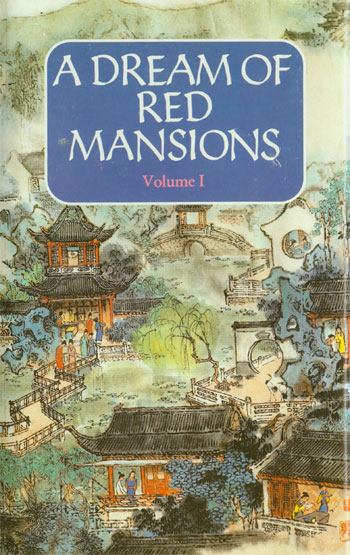
Dream of Red Mansions

A Dream of Red Mansions (3 Books) | Chinese Books | Literature ...A Dream of Red Mansions (Volume I) by Cao Xueqin, translated by Yang Hsien-Yi  and Gladys Yang, 599 pages

A Dream of Red Mansions, alternatively titled Dream of the Red Chamber or The Story of the Stone, follows the lives of a group of young people growing up among the aristocracy of 18th century Peking.  At the center is Pao-yu, born with a piece of jade in his mouth which is, unbeknownst to him, a sentient stone from the heavenly realms and the key to his destiny.  Surrounding Pao-yu are dozens of cousins and servants, all living, loving, eating, drinking, working, studying, brawling, and generally amusing themselves in the luxurious shadow of the imperial court.

A Dream of Red Mansions is one of China's "Four Great Classical Novels".  In its entirety, it consists of 120 chapters, the first 80 of which were written by Cao Xueqin and the last 40 completed by others after his death.  The 1978 Foreign Languages Press edition conveniently divides it into three volumes of 40 chapters each, but burdens it with a barbaric Maoist introduction.  Casual readers are likely to be frustrated by the sheer number of characters and the lack of a strong, unified plot, unless they are enchanted by the rich setting, elegant characters, and natural interplay of the physical and spiritual.

Friday, August 7, 2020

Campusland

CampuslandCampusland by Scott Johnston, 323 pages

There is perhaps no more comfortable place than an elite American university.  This is certainly true of Devon, where English professor Ephraim Russell's biggest worry is beating out a rival for tenure and freshman Lulu Harris frets over being on the cover of a magazine and finding bedmates who meet at least some of her standards.  It is a fragile idyll, however, and it is about to be turned upside down by the ambitions of an activist grifter and an imperious diversity commissar.  

Campusland reads like a combination of an artless Bonfire of the Vanities and a version of the movie PCU where the wacky band of misfits has been pushed to the periphery.  The result, while entertaining, is unsatisfying, as the novel makes a dramatic tonal shift as the climax approaches and Kafka is suddenly swapped with National Lampoon.