Showing posts with label science. Show all posts

Sunday, April 28, 2024

Cahokia Jazz


Cahokia Jazz by Francis Spufford 464 pages


I love this novel so much that I am going to claim that it will be one of the must-reads of 2024!


What Amazon says:  Francis Spufford’s Cahokia Jazz inhabits a different version of America, now through the lens of a subtly altered 1920s—a fully imagined world full of fog, cigarette smoke, dubious motives, danger, dark deeds. And in the main character of Joe Barrow, we have a hero of truly epic proportions, a troubled soul to fall in love with as you are swept along by a propulsive and brilliantly twisty plot.

On a snowy night at the end of winter, Barrow and his partner find a body on the roof of a skyscraper. Down below, streetcar bells ring, factory whistles blow, Americans drink in speakeasies and dance to the tempo of modern times. But this is Cahokia, the ancient indigenous city beside the Mississippi living on as a teeming industrial metropolis, filled with people of every race and creed. Among them, peace holds. Just about. But that corpse on the roof will spark a week of drama in which this altered world will spill its secrets and be brought, against a soundtrack of jazz clarinets and wailing streetcars, either to destruction or rebirth.


What I thought of it: This novel has it all! I was captivated by the opening scene that sets a harrowing stage of what is to come to the heartbreaking last scene. Part alternate history, part noir thriller, part mythology legends, with science, jazz, crime, mob scenes and the KKK all thrown in to make a highly readable novel.


Cahokia Jazz is a complicated, complex, easy to follow and fabulous novel. Therefore, it receives 6 out of 5 stars in Julie’s world.


Friday, June 3, 2022

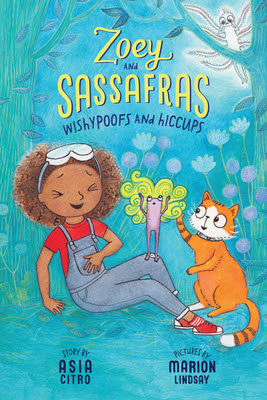
Zoey and Sassafras: Wishypoofs and Hiccups

Zoey and Sassafras: Wishypoofs and Hiccups (Book 9 in a series) by Asia Castro; illustrated by Marion Lindsay 96 pages

I look forward to new adventures in the life of Zoey and her beloved orange cat, Sassafras. In this educational and fun series, the duo helps magical creatures who seek their assistance with whatever problem they are experiencing. So far, Zoey, and her mom, have been able to help through science.

I love books that focus on science for girls. My step-granddaughters, who are now 6 and 4, love Zoey also. The oldest seems especially attracted to science.

In this episode, Pip the talking frog shows up at the barn with a long, luxurious head of curly green hair. He has come to Zoey for help as he has no idea of how he got it. The trio retrace Pip’s steps into the forest.

Something is amiss in the forest. All their friends are having problems. Tiny, the large unicorn, has shrunk, the monster twins and stuck together, Pip begins to lay eggs and all the characters from the other books have shown up with a problem.

Fortunately, readers are introduced to a new character, a wishypoof floating in the air! When the trio first encounter her, she is crying. She believes she is the cause of all the changes in the forest, but more important she has the hiccups and doesn’t know how to get rid of them!

I thought that this would be the chance for Zoey to conduct several scientific experiments. In all honestly, she does have one that she works with on with her mom. But when it fails, all she does is ask the other creatures how they get rid of hiccups.

I was disappointed in this latest adventure. There was little science. I was heartbroken that there weren’t any at-home experiments for readers. We barely saw Zoey use her scientific methods and her Thinking Goggles. Therefore, “Zoey and Sassafras: Wishypoofs and Hiccups” receives 1 out of 5 stars in Julie’s world.


Thursday, April 29, 2021

Unleashed


 Shirley J.     Juvenile Fiction        Science Fairs/Young Inventors


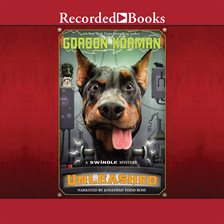
Unleashed by Gordon Norman (Book #7 in the Swindle Series)   208 pages

When their school is invited to participate in a science fair everyone expects Griffin Bing to be the first to sign up - his father is a serious inventor so naturally everyone expects Griffin to follow in his Dad's footsteps, everybody except Griffin that is.   Gordon has no interest in the competition but when his arch nemesis and arrogant bully, Darren Vader, taunts him into a competition to see which of them will win and force the other to get up in the lunchroom in front of everybody and make a speech about how great the winner is - well!   Griffin plans to enlist the help of his science geek friend Melissa only to find out Melissa has signed up to compete herself which causes a big hoorah between them escalating into a girls vs. boys match.   Griffin is stuck trying to talk his dad into helping her, but, his Dad makes it clear he will help but he won't DO the project.   And then new crabby neighbor, Mr. Hartman ("Heartless" the kids call him) moves in and stops the gang from taking a short cut through his yard.     And what is he  up to squirreling away building materials and boxes of groceries?  Things get way out of hand and surveillance becomes the word of the day enlisting Ben's ferret, "Ferret-Face," to do search and rescue missions.    A cute story that can stand alone in it's own right.   I would recommend this story to 4th graders on up.

Sunday, January 31, 2021

The Book of Moods


 The Book of Moods: How I Turned My Worst Emotions Into My Best Life by Lauren Martin 256 pages

Summary from Goodreads: Five years ago, Lauren Martin was sure something was wrong with her. She had a good job in New York, an apartment in Brooklyn, a boyfriend, yet every day she wrestled with feelings of inferiority, anxiety and irritability. It wasn't until a chance encounter with a (charming, successful) stranger who revealed that she also felt these things, that Lauren set out to better understand the hold that these moods had on her, how she could change them, and began to blog about the wisdom she uncovered. It quickly exploded into an international online community of women who felt like she did: lost, depressed, moody, and desirous of change.


Inspired by her audience to press even deeper, The Book of Moods shares Lauren's journey to infuse her life with a sense of peace and stability. With observations that will resonate and inspire, she dives into the universal triggers every woman faces -- whether it's a comment from your mother, the relentless grind at your job, days when you wish the mirror had a Valencia filter, or all of the above. Blending cutting-edge science, timeless philosophy, witty anecdotes and effective forms of self-care, Martin has written a powerful, intimate, and incredibly relatable chronicle of transformation, proving that you really can turn your worst moods into your best life.

And here's what I thought: This book had some interesting insights, but I sometimes grew really tired of the author. Her reactions to things sometimes seemed really overwrought to me and as a result, I didn't usually identify with her and sometimes found I was pretty unsympathetic. But, it was interesting to read about how she learned about the science of brains and emotion to better understand herself, and how she could change her reactions.  I think just about every daughter I know can identify with the trigger that a random comment from your mom can have on your mood. And understanding how emotions work with your brain, and how you can then understand and control your reactions and stress levels, was interesting.  But, I often felt like I wasn't quite the audience for this book (maybe too old?).  

Wednesday, December 23, 2020

Zoey & Sassafras: Bips and Roses

Zoey & Sassafras: Bips and Roses (Book 8 in the series) by Asia Citro; illustrations by Marion Lindsay  96 Pages

My step-granddaughters, especially the five-year-old, love this series about a girl who loves science!  That alone makes my heart sing.

Zoey and her cat, Sassafras, eagerly await the next time the doorbell rings in the barn because that means that a magical creature that lives in the woods behind their home needs help!  Today was their lucky day---the doorbell rang. Well, they hate that there is a problem, but they love to solve problems. When they open the door, there stands Pip, a talking frog whom Zoey’s mother first befriended years and years ago.

Pip tells them that the hippogriff babies are in danger! Magical grasshopper have swarmed through the forest and eaten almost all the roses.  The hippogriff babies need the magical roses. On the roses leaves, bips, or tiny bugs that are as cute as a button, become the hippogriff babies’ first food, which helps them grow their wings.

Pip, Zoey and Sassafras must come up with a way to restore the rosebushes so that the hippogriff doesn’t become extinct.

I was a little disappointed in this book. It didn’t seem to have many experiments at the end of the story as in the previous stories, and the story seemed rushed---not as fleshed out as the previous books. Still, it was filled with magical creatures, science and animals. Therefore, Zoey & Sassafras: Bips and Roses receive 4 out of 5 stars in Julie’s world.


Monday, January 20, 2020

Zoey and Sassafras: Grumplets and Pests; Book 7

Zoey and Sassafras: Grumplets and Pests---Book 7 by Asia Citro; illustrations by Marion Lindsay  96 pages

The latest Zoey and Sassafras (and I hope not the last) story brings back most of the characters that we have seen in the previous six books. 

The story opens with Zoey and her cat, Sassafras, “desperately hoping we’ll hear our barn doorbell.”  That doorbell isn’t a regular doorbell!  It means that a magical creature need help, and Zoey and Sassafras love to use science to help their old and new friends.

Bugs have invaded Zoey’s mom’s kale garden. They are everywhere and there are so many of them that Zoey fears they will never be able to get rid of them. Their old friend, Pip, is hanging out near the garden, but he’s rather grumpy today. He isn’t much help, but Zoey’s mom helps figure out what kinds of pests have moved in.

As Zoey and Sassafras make their way through the woods, encountering all their old friends---the merhourses, Gorp and friends, Tiny and friends--- everyone is grumpy. Zoey realizes that  something else is happening in the forest. Using her scientific background, and help from Pip, she discovers that Grumplets are behind the bad moods. And together they make a plan to banish the grumpiness.

Another fun story for the team of Citro and Lindsay that makes science fun for kids!  Zoey and Sassafras: Grumplets and Pests---Book 7” receives  5 out of 5 stars in Julie’s world.

Saturday, August 31, 2019

Gravity's Century

Gravity's Century by Ron Cowen      Audio Book:  4hrs, 57 mins        Hard Back Book:  192 pages              

Highly readable and understandable book    What sounds like Sheldon, Raj, and Leonard ought to be extrapolating on is actually relayed in laymen's terms and told by Ron Cowen as if a bunch of friends are out sharing good times and quantum theories but this time we all get it.  He breaks down Einstein's theory of relativity so well, not to mention the laws of gravity, teachings of Aristotle, Galileo, Newton, Einstein, Hawking and even shares that black holes while still scary monsters do eventually shrink and dissipate (but how long ie. millenia does that take?).   Eyes to the skies folks there is a black hole in the Milky Way Galaxy in the  Sagittarius Constellation - it is the weirdest looking thing this giant black hole setting there right in the middle of the galaxy (that we are in) that has a gravatational pull that is four MILLION times greater than that of the SUN!   So many phenomenal things you will learn from this book.   Gravity bends light, folks as Einstein figured out in 1919 during a solar eclipse - today with better technology and equipment scientists ie.  The Event Horizon Telescope and radio dishes connecting scientists all around the earth will allow scientists to prove Einstein's theory all the more - yeah, guys, seriously please do keep a watch on that black hole in our galaxy - that is very scary science reality not science fiction.    Lots of good information about how gravity is really the key to understanding the universe.   Well done, Ron Cowen.   Highly recommend this book to all who are space curious, to students because this opens such seemingly difficult topics up in totally mind-blowing simplicity!  We could all get it if everyone picked this book up.  Great breakdown of quantum mechanics and quantum physics.   Gravity has so much more to do with everything than we have considered.  Unique and enlightening.   A gem.

 - Shirley J

Friday, July 19, 2019

Good to Go

Good to Go: What the Athlete in All of Us Can Learn From the Strange Science of Recoveryby Christie Aschwanden, 302 pages

Aschwanden is a science writer for FiveThiryEight. She is a former high level athlete and stays active with running, cycling and cross country skiing.

Aschwanden investigates whether recovery products and services work. Unfortunately, when you examine the evidence, most of it indicates that the products and services don't provide a benefit or it is inconclusive. A lot of the studies aren't rigorous enough.

Even if they are presented with the lack of proof, those that use these products are unlikely to stop using them because of the perceived benefit. The placebo effect is certainly a confounding factor.

Based on all the information Aschwanden provided there are four things that I took away from this book. Good nutrition is important and can be obtained from a balance diet. You don't need drinks or supplements. The proper amount of sleep is vital to recovery. Overtraining is detrimental to recovery. Lastly, exercising too much while you are sick can have long lasting consequences.

I enjoyed this book and would recommend it to athletes, people who exercise a lot or those interested in science.

Wednesday, April 17, 2019

Consciousness

Consciousness: Confessions of a Romantic Reductionist by Christof Koch, 181 pages

As the title, more so the subtitle suggests this books is about consciousness but also about Koch's career in neuroscience and his personal life.

This quote explains the romantic reductionist part of the subtitle: "...reductionist, because I seek quantitative explanations for consciousness in the ceaseless and ever-varied activity of billions of tiny nerve cells, each with their tens of thousands of synapses; romantic, because of my insistence that the universe has contrails of meaning that can be deciphered in the sky above us and deep within us."

Koch spends a certain amount of time telling the reader what consciousness isn't but not a lot defining what it is.

Francis Crick was a mentor to Koch. He worked with him for years on the question of consciousness. Part of their work involved trying to narrow consciousness down to a certain part(s) of the brain. 

At the beginning of the book, Koch gives a brief summary of his life until he started working with Crick and then he sprinkles parts of his personal life throughout.

There were some interesting factoids and ideas in this book but I was left disappointed because Koch doesn't add anything significant to the question of consciousness and I ended up not liking him as a person.


Saturday, February 23, 2019

Zoey and Sassafras: Books 3, 4 and 5


Zoey and Sassafras, Books 3, 4, 5 by Asia Citro, illustrated by Marion Lindsay    285 total pages

I love these little books aimed at children ages 6 to 10 because they feature a girl using science to solve problems. American cultural has made significant improvements in breaking glass ceilings since the 1960s, but we still have a long way to go. It’s books like these that will help overcome stereotypes and, hopefully, lead more girls into fields that don’t rely on beauty or body type.

Each book is basically the same format, and yet is it not: a magical creature shows up at the barn behind Zoey’s house with a problem. Zoey’s mother has been helping the wide range of creatures for years, and now Zoey, along with her best friend, Sassafras the cat, gets to help too. She has Thinking Goggles (protective eye wear) that she wears to help her think…and without realizing protecting her eyes…and a journal where she keeps all her scientific notes.

The difference between each of the books is the scientific approach Zoey must figure out to use, Sometimes she needs to do some investigation, other times research, and other times she must run experiments.

In Book 3 “Merhorses and Bubbles,” the story opens with Zoey and Sassafras creating a tool to use to see the mayfly babies who live in the water. I love this!  Parents and caregivers learn how to duplicate this tool before they’ve reached page ten. But when Zoey heads to the stream, she isn’t able to find any stream bug babies anywhere. Then Pip, her mother’s old friend and a talking purple frog shows up, alerting Zoey that the merhorses are in danger of starving to death. Zoey must use her research and investigative skills to learn why the stream no longer has any insects and how to fix it. “Merhorses and Bubbles” receives 5 out of 5 stars in Julie’s world.

In Book 4 “Caterflies and Ice,” two of tiny caterflies (wait until you read their descriptions; they are so cute!) ring the barn’s magical doorbell needing help. An unexpected spring snowstorm has created danger for the caterflies’ eggs. They are trapped in a cave behind a frozen waterfall.  Zoey knows she must hurry to save the unhatched babies. When her first attempt fails, she relies on her experimental skills to solve the problem. “Caterflies and Ice” is a little less captivating, receives 4 out of 5 stars in Julie’s world.

In Book 5 “The Pod and The Bog,” Pip the purple, talking frog, returns with a glowing rainbow stone.  Pip explains that it’s a seed pod from a magical plant. Zoey and Sassafras have been watching and recording the growth of a pea plant.  Zoey must use her research and experimental skills determine what the pod is. Tension rises as experiment after experiment fails. “The Pod and The Bog” receives 5 out of 5 stars in Julie’s world.


Tuesday, January 15, 2019

How to Invent Everything

How to Invent Everything: A Survival Guide for the Stranded Time Traveler by Ryan North     437 pages

From Goodreads:


What would you do if a time machine hurled you thousands of years into the past . . . and then broke? How would you survive? Could you improve on humanity's original timeline? And how hard would it be to domesticate a giant wombat?

Don't worry: in How to Invent Everything, bestselling author and time-travel enthusiast Ryan North has figured out the answers to those four questions - and more - just for you. This guide contains all the science, engineering, mathematics, art, music, philosophy, facts, and figures required for even the most clueless time traveler to build a civilization from the ground up. Your new world will be one in which humanity matured quickly and efficiently, instead of doing what we did (i.e., spending 200,000 years stumbling around without language, thinking disease was caused by weird smells, and living completely oblivious to the fact that tying a rock to a string would unlock navigating the entire world).

Review:


This book is hilarious and useful! North has accomplished an amazing feat of compiling "how-tos" on basically everything for making a civilization, all in the guise of helping out a stranded time-traveler. It's great, a bit of a read, but it's worth it for the snippets of humor and the constant dragging of humanity for how long we took to invent things.

Sunday, November 4, 2018

The Revolutionary Genius of Plants

The Revolutionary Genius of Plants by Stefano Mancuso    240 pages

From Goodreads:

Do plants have intelligence? Do they have memory? Are they better problem solvers than people? Plant Revolution—a fascinating, paradigm-shifting work that upends everything you thought you knew about plants—makes a compelling scientific case that these and other astonishing ideas are all true. 

Every page of Plant Revolution bubbles over with Stefano Mancuso’s infectious love for plants and for the eye-opening research that makes it more and more clear how remarkable our fellow inhabitants on this planet really are. In his hands, complicated science is wonderfully accessible, and he has loaded the book with gorgeous photographs that make for an unforgettable reading experience. Plant Revolution opens the doors to a new understanding of life on earth.

My Review:

This book was fascinating. I learned so many things about plants and about the people who study them. Mancuso makes a compelling case for the intelligence of plants, showing the many ways scientists have discovered qualities in plants previously only thought to belong to the animal kingdom. Plants can in some ways "see," "think," and "remember" things and truly do have the ability to learn and react like humans or animals. I really am glad I picked this book up and I highly recommend it to anyone - it's short, informative, and so interesting.

Sunday, September 23, 2018

Guilty Robots, Happy Dogs

Guilty Robots, Happy Dogs: the Question of Alien Minds by David McFarland, 252 pages


The question of alien minds is a tough one. What is the starting point? McFarland approaches it by considering what it means for a human to have a mind.

To this end, he looks at whether robots and animals have intentionality and beliefs, intelligence and autonomy. He considers each issue from several philosophical viewpoints but lets the reader decide what he or she thinks is best. He also uses examples of robots in action, looks at animal behavior and studies done with animals.

In the end, since we don't know what animals are or are not thinking, it may be impossible to decide if animals do have minds.

The title and subtitle are very attractive but the substance is lacking. He brings up some good questions and has some good thoughts but it was a slog when it didn't need to be and didn't provide enough insight. I was hoping for more from this book so I can't recommend it.
.

Tuesday, August 21, 2018

A Brief History of the Philosophy of Time

A Brief History of the Philosophy of Time by Adrian Bardon, 185 pages

BBardon indicates that the three main categories of theories about the nature of time are idealism, realism and relationism. Idealists don't think time is real while realists do and relationists believe time is a way of relating events.

Bardon begins with the Greeks. Aristotle believed that time is a measure of change and hence was a relationist. He then talks about Parmenides and Zeno who didn't believe in the reality of time. They were idealists. Their view throws a wrench into our everyday beliefs about time. He comes back to that idea multiple times.

Next he dives into Locke and Kant who were also idealists. After that comes Newton (a realist) and the opposing views of Leibniz. Einstein's theory of relativity introduces the concept of space-time which had a big effect on current theories about time.

In further chapters, he considers whether time really passes, if time has a direction, if time travel is possible, how the theories of time effect freedom and whether time does have a beginning and end.

In creating his account of the philosophy of time Bardon doesn't just refer to philosophers. He provides input from psychologists and scientists as well.

I really liked this book. At times, I saw how the ideas might be hard to wrap your head around. In spite of this, as much as possible, Bardon was able to make this a somewhat accessible topic. In the end, Bardon probably leaves us with as many questions as answers but that is ok.

Friday, June 15, 2018

The Radium Girls

The Radium Girls: The Dark Story of America's Shining Women by Kate Moore     496 pages

The Radium Girls fully illuminates the inspiring young women exposed to the "wonder" substance of radium, and their awe-inspiring strength in the face of almost impossible circumstances. Their courage and tenacity led to life-changing regulations, research into nuclear bombing, and ultimately saved hundreds of thousands of lives.


Wow, wow, wow. This story is powerful! Fate brought Kate Moore to this story and thank goodness it did because she has done a great service to woman's history by bringing this story back into the light. This was not a story I was familiar with at all - not even in my periphery - and so with each page, I became more and more incensed at the horrors these women suffered at the hands of ruthless, unfeeling businessmen and their corporations who couldn't be bothered to care about the health and safety of their female workers.

The sheer amount of time Moore spent on this story shows - in her author's note she mentions coming to America to visit with the families of the radium girls and their grave sites, the countless hours of library research, reading everything she could of what the actual women themselves wrote. This book was amazingly researched and delves deeply into the history of the women's lives before and after, not just focusing on the court cases that made them famous. All the key figures are given their due time and it was fascinating to hear so many first-hand accounts of not just the families of these women, but the women themselves, remarking on what was happening to them and how the felt.

Needless to say, I would highly recommend this book to anyone. It's an important story in American history and these women did so much to secure workplace safeties that our modern world enjoys as well as offering themselves up to science for future studies done to better understand radioactive substances and what they can do to the human body.

Though this work is a piece of non-fiction, it's narrative quality makes it a real page-turning story that you only wish was fiction. The devastating illnesses these women suffered make you wish you could go back in time and warn them. This story truly moved me to tears.

I listened to the audiobook of this story, which was well read and I enjoyed listening to it. 

Thursday, May 17, 2018

Searching for Stars on an Island in Maine

Searching for Stars on an Island in Maine by Alan Lightman                     Audio Book:  5 hours, 15 mins.       Hardback Book:  240 pages             

Alan Lightman is a physicist so when he goes out in the dark to ponder the stars in the night sky, one would think he would muse on the astro-physics end which he does from time to time, but, he also waxes lyrical on the simplistic beauty he sees and why he loves living on a small island in Maine so much.    His words bring the reader to a place where you can picture yourself sitting on a blanket on the ground, hearing crickets as you stare up at a vast sky chock full of stars and planets and ponder how it all began.    He talks about the Big Bang Theory, when and how it evolved, he talks about mankind and discusses religion and how some scientists believe in God because of the natural order of things and the intricacy of how every living thing is made up of such facets of phenomenal amounts of working parts that had to have some divine plan or certainly intervention elsewise how could they work together like they do?   Lightman himself leans toward the scientific but gives fair share to his friends and collegues who are Christinas.    He tends toward belief but the scientist in him can’t dismiss the desire for irrefutable, tangible, provable facts, though he does understand that belief is a matter of faith (Jesus to [doubting] Thomas, ‘blessed are those who have not seen yet still believe.”)   He talks about Gestalt psychology,  he talks about Vincent Van Gogh and how his famous work, “Starry Night,” which is said to have been based on the view from his window in the asylum he signed himself into, has been proven that the sky could not have looked like that on that date, however, the planet Venus is depicted and likely would have been visible at that time from his window.    Seems like Starry Night is a reaching into the cosmos to me, as though Van Gogh felt all the activity swirling around him in the sky so far away and he just put everything in it he felt was there or knew to be there whether he could see it or not.   Looks like the milky way, the planets and the expansion of the universe happening all at once and Van Gogh was clairsentient enough to absorb it and wanted to show it.    When I look at this painting I hear  “A Night on Bald Mountain,” playing in my thoughts.   Maybe Lightman did, too.   A lot of busy things going on so much so you experience a sense of motion though it is standing still.   The book is lyrical and poetic like sitting with a friend and talking about whatever comes to mind in a pleasant, calm outdoor setting.   I understand why he likes that island in Maine so much and how like a balm to the soul (which he also discusses) it is to have such a serene place to go muse about everything in the world and in the universe.   Very good book, I like how he covers so many topics so effortlessly and he takes the reader right along for the ride.   His range of subject matter is massive, oh yes, he covers matter, atoms,  plancks and quarks, and tells of experiments done on each and the bits of his own body mush he has put under a microscope and was amazed by all the miniscule things he found there.   He even prognosticates on where humans are headed in the future and how people 100 years ago predicted where the human race would be today and how many predictions for much later have already been achieved early in this century.   He talks about how mankind is moving away from interaction and leaning more and more on social interaction via the internet rather than face to face.  Is man racing toward a solitary existence only texting other humans in the great cyberspace of out there.    Science will have to study if that is a good or bad thing.    He also divines that one day people will be able to link their brains directly to the internet and speed up their access to instant information.   He forecasts people being able to pick up foreign languages faster and even being able to get the many variations in how words are pronounced and the various sounds are made by speaking the languages of other lands.   He also expects that instant access to the internet and one’s brain will create instant information and intelligence to thrive.   He makes other projections too that are fascinating and a little  disconcerting.      Good read, though again, the way he writes is so calming it almost lulls you but the gist of the info he is ahring will bring you right back to attention mode.   Deep stuff here, but, good stuff you will be glad to know.   Good book.

Saturday, March 31, 2018

Monsters And Mold


 Monsters AndMold by Asia Citro, 96 pages
“A girl, Zoey, and her cat, Sassafras use science experiments to help a monster with a problem.” The Reading Pays author donated the second book in the series for us to give away as well.  The second book is very similar to the first, and I’d recommend it for early elementary childrens.

Dragons And Marshmallows


Dragons AndMarshmallows by Asia Citro, 96 pages
“A girl, Zoey, and her cat, Sassafras, use science experiments to help a dragon with a problem.” This is one of this spring’s Reading Pays books.  It’s perfect for 2nd and 3rd grade and I like that it has a science base.  It’s a very simple story but it’s cute and not too sweet.

Wednesday, February 21, 2018

Origin

Origin by Dan Brown, 461 pages 

This is the fifth book that stars Robert Langdon. This time it is set in Spain. The formula is much the same involving Robert solving a mystery along with a female companion while being chased. The Catholic Church is involved along with the royal family of Spain. Religion in general is also a theme. This one does not involve as much interpretation of symbols.

Edmond Kirsch is a former student of Robert's who has become rich through technology. He has a major discovery to reveal to the world that has implications for all religions. Before revealing his discovery to the world he reveals it to three prominent religious leaders but vows them to secrecy.

Kirsch is going to present this discovery to the world at the Guggenheim museum in Spain and has invited Robert along with about three hundred other people. During his presentation, he is assassinated. Now it is up to Robert to reveal his discovery before whoever killed Kirsch can stop him. One of the religious leaders  is a Catholic bishop. Signs point to him being behind it or possibly someone in the royal family. Of course, there are some twists.

It is formulaic but I still found it a quick and enjoyable read. It got me interested in exploring the work of William Blake and Antoni Gaudi.

Forgiveness Is Really Strange

Forgiveness Is Really Strange by Marina Cantacuzino and Masi Noor. Art by Sophie Standing. 64 pages.

In this slim volume, Cantacuzino and Noor give us an overview of how we experience forgiveness--what it takes to forgive and why we choose to withhold it. They use first-hand accounts from people around the world to illustrate grievances on a personal and national level, and they also delve into the biological functions and repercussions of forgiveness. This is only scratching the surface, but it is a lovely introduction to a deep subject. I loved the artwork provided by Standing to enhance the information--she uses a mellow palette that suits the book perfectly. It appears this is a series of sorts, with titles on trauma, anxiety, and pain, I look forward to reading them all.