Showing posts with label nature. Show all posts

Tuesday, September 3, 2019

Poetry of Nature

The Poetry of NatureThe Poetry of Nature: Edo Paintings from the Fishbein-Bender Collection by John T Carpenter and Midori Oka, 201 pages

In 2012 Estelle Bender and T Richard Fishbein contacted the Metropolitan Museum of Art in New York about donating the extensive collection of Edo era Japanese paintings the couple had acquired over the previous three decades.  The consummation of that gift was the occasion for this 2017 exhibition, although sadly Fishbein had died in the interim.  

As the title suggests, Fishbein and Bender, who began their collection in search of decorations for their New York City apartment, favored nature painting, which has long been a popular genre for Japanese artists.  Natural subjects are also very accessible - appreciating the beauty of the crows on the cover, for example, does not require any knowledge of their significance in Japanese culture or the ways in which the artist both echoed and deviated from previous depictions.  Yet such understanding certainly deepens the appreciation, especially given the rich allusive tradition of Japanese painting and the inclusion of poetry on many of the pieces.  Indeed, the most fascinating theme of the catalogue is how the Three Perfections - painting, poetry, and calligraphy (themselves three-quarters of the Four Gentlemanly Accomplishments, with the addition of board gaming) - were integrated by the Edo era artists.

Sunday, November 4, 2018

The Revolutionary Genius of Plants

The Revolutionary Genius of Plants by Stefano Mancuso    240 pages

From Goodreads:

Do plants have intelligence? Do they have memory? Are they better problem solvers than people? Plant Revolution—a fascinating, paradigm-shifting work that upends everything you thought you knew about plants—makes a compelling scientific case that these and other astonishing ideas are all true. 

Every page of Plant Revolution bubbles over with Stefano Mancuso’s infectious love for plants and for the eye-opening research that makes it more and more clear how remarkable our fellow inhabitants on this planet really are. In his hands, complicated science is wonderfully accessible, and he has loaded the book with gorgeous photographs that make for an unforgettable reading experience. Plant Revolution opens the doors to a new understanding of life on earth.

My Review:

This book was fascinating. I learned so many things about plants and about the people who study them. Mancuso makes a compelling case for the intelligence of plants, showing the many ways scientists have discovered qualities in plants previously only thought to belong to the animal kingdom. Plants can in some ways "see," "think," and "remember" things and truly do have the ability to learn and react like humans or animals. I really am glad I picked this book up and I highly recommend it to anyone - it's short, informative, and so interesting.

Friday, February 9, 2018

Semiosis

Semiosis by Sue Burke. 333 pages.

When Earth's environmental and political problems have become too extreme, a group of scientists, longing for a better world, turn to space for a planet that may be habitable for humans. The scientists wake up after nearly 200 years (cryogenically frozen, of course) to find Pax, a planet much like Earth. Only, Pax is much older, and as a result, the plant life has had more time to evolve...and possibly develop a kind of sentience. What follows is a saga of this small colony fighting to survive in an environment that can be both hospitable and hostile at once.

While it is not revealed in most teasers I have read, I don't think it is much of a spoiler to reveal that each chapter in Semiosis is written from a different point-of-view throughout the generations that inhabit Pax. This leads to some incredible storytelling where we, the readers, have a broader knowledge of how events and alliances have unfolded, but such knowledge isn't always as apparent to the characters. I wasn't sure I was going to get into this book at first, but when I caught on to this structure by the second chapter, I was hooked. Semiosis brings up some really interesting implicit commentary on culture heritage, ownership, and the passage of a collective knowledge. It was a thrilling read, with definite suspense and horror elements peppering the plot. Following these characters--humans and plants--for so long garners a lot of attachment, and I was on the edge of my seat 'til the end wondering how (or even if) anyone would make it. A fantastic read and one I just may return to in the future.

Tuesday, December 26, 2017

American Wolf: A True Story of Survival and Obsession in the West

American Wolf: A True Story of Survival and Obsession in the West by Nate Blakeslee     320 pages

Before men ruled the earth, there were wolves. Once abundant in North America, these majestic creatures were hunted to near extinction in the lower 48 states by the 1920s. But in recent decades, conservationists have brought wolves back to the Rockies, igniting a battle over the very soul of the West.

With novelistic detail, Nate Blakeslee tells the gripping story of one of these wolves, O-Six, a charismatic alpha female named for the year of her birth. Uncommonly powerful, with gray fur and faint black ovals around each eye, O-Six is a kind and merciful leader, a fiercely intelligent fighter, and a doting mother. She is beloved by wolf watchers, particularly renowned naturalist Rick McIntyre, and becomes something of a social media star, with followers around the world.

But as she raises her pups and protects her pack, O-Six is challenged on all fronts: by hunters, who compete with wolves for the elk they both prize; by cattle ranchers who are losing livestock and have the ear of politicians; and by other Yellowstone wolves who are vying for control of the park's stunningly beautiful Lamar Valley.


An exceptional read. I was fascinated by the story that's been unfolding for most of my life without knowing that it's happening. The reintroduction of wolves into Yellowstone was such a necessary step, and yet the fight to protect these same wolves should they leave the park's boundaries is a seemingly never-ending battle. There are those who wish to protect their livestock, there are those who simply hate wolves, and there are those who like to trophy hunt - and this mixture of types led to a politicizing of a seemingly non-complicated decision to allow an animal to return to the lands it was driven from by humans (through poisoning, over killing, etc.). It just goes to show that where man has taken hold of the wilderness, nature has to fight to prove it's worth to be there - and only through the fight that other humans provide. Where would the wolves of Yellowstone be without the voices of those wolf-watchers, biologists, and environmentalists?

It was hard reading this book because there were so many instances of death - many at the hands of humans. But nature is brutal and sometimes cruel and wolves are no exception. Yet Blakeslee manages to capture their lovable side, their playfulness, and their majesty. It seems impossible to me that humans can look at these magnificent creatures and see only a brutish animal that needs to be killed. I dislike, very much, big game hunting, especially when there is so much to prove that it is bad for the environment, bad for the ecosystem of these national parks and beyond. I loved how in-depth this book went to show how these wolves contributed to a regrowth of balance in the environment of Yellowstone, and many times in unsuspected ways.

I wish there was an insert with images of these wolves. I would have loved to look at them as I read about them, but Blakeslee, with the help of notes from the many wolf-watchers who contributed their information to this book, does an excellent job of describing the wolves, their different natures, their lives. It was such a great read. I honestly would recommend this to anyone. It's worth seeing a slice of life outside of urban settings, especially in a place that is almost exactly the same as it's been since before people began populating North America.
 

Monday, April 25, 2016

Sabbaths

Sabbaths by Wendell Berry, 96 pages

Sabbaths, a collection of poems written between 1978 and 1986, continues Berry's familiar pastoral themes with an emphasis on rest, patience, and the sacredness of the world,

     The world as it was given for love's sake
     The world by love and loving work revealed.

As might be expected with works composed over the better part of a decade, the quality is somewhat uneven.  This validates the author's observation that, in the writing of a poem as in the culture of a field as in the nature of a man

     Wrong was easy; gravity helped it.
     Right is difficult and long.

And the first step, in art as in labor as in life, is to

     ... pray for clarity to see,
     not raw sources, symbols, worded powers,
     but fellow presences, independent, called
     out of nothing by no word of ours,
     blessed, here with us.

Thursday, April 16, 2015

Island of the Blue Dolphins

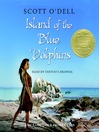
Island of the Blue Dolphins, by Scott O'Dell, 184 pages

Cover image for Island of the Blue DolphinsThese are going to be speed entries, because it has been awhile since posting and I'm trying to make up for it.  Okay, Island of the Blue Dolphins was a book that I really enjoyed as a child, and it is available on Overdrive as an audiobook.  (You'll notice this is a theme for a bunch of the books I will post.) Karana is a young girl, left alone on the island by a series of unfortunate occurrences.  She has to learn how to survive, all the while deciding for herself what traditions she may need to reevaluate.  What I liked about this book is that it is one of those My Side of the Mountain sort of young-person-surviving books, but with the main character being a young indigenous woman.  Good for any young woman looking for a strong female character.  Spoiler: Bad for any one who gets all weepy when the dog dies.