
Showing posts with label British Literature. Show all posts
Showing posts with label British Literature. Show all posts
Saturday, June 17, 2023
Circus of Wonders
When
Jasper Jupiter (not his real last name), was a child, he dreamed of someday
being an important person that others admired. One of his favorite dreams was
owning a circus. Toby, his younger, slower brother, shared his dream. It was
what kept them sane during their stint in the Crimea War (1853-1856).
After
their service, each man was haunted by what they had seen and done. They were
especially disturbed by the accidental death of Jasper’s best friend. The
brothers began to form their circus, travelling the United Kingdom in search of,
what Jasper believed would set their show apart—human oddities. Victorian England
was fascinated by the bearded lady, the trapeze artists, the lions, and other
wild animals.
As
they rambled along, they set their circus up in small towns, making a decent living.
One evening, they discovered a young girl, Nell, swimming in the ocean. A shy
youngster, Nell’s body was splotched with brown birthmarks. Jasper wants her
for his show! He purchases Nell from her father for twenty pounds.
Jasper
re-creates Nell as Nellie, Queen of the Sun and Moon. Thanks to Toby’s
engineering skills, he creates a harness that allows Nellie to soar above the
crowds. The crowds cheer and applaud, and Nellie Moon becomes the toast of London,
even enticing Queen Victoria to attend the show. This was quite the feat as the
Queen had not attended a public event since the death of Prince Albert in 1961.
But
nothing lasts forever, and eventually Nellie Moon is no longer a star. As Jasper
continues to look for new acts, disaster awaits.
I
really enjoyed the novel. I have only begun to scratch the surface of this
richly layered novel. It is an intricate tale of exploitation,
human dignity and the right to self-determination. My issue with the novel is
that when flashbacks to the Crimea war occurred, they were jarring and left me slightly
confused for a few minutes. Therefore, Circus of Wonders receives 4 out of 5
stars in Julie’s world.

Tuesday, January 15, 2019
Lady Susan
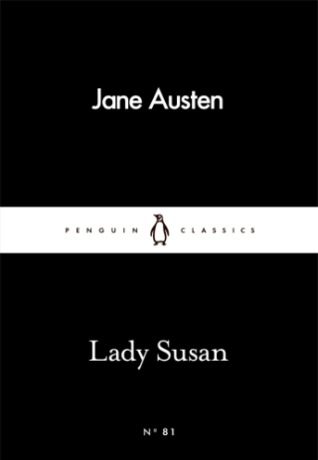
From Goodreads:
Of what a mistake were you guilty in marrying a Man of his age! - just old enough to be formal, ungovernable and to have the Gout - too old to be agreable, and too young to die.'
The scheming and unscrupulous Lady Susan is unlike any Austen heroine you've met in this fascinating early novella.
Review:
| I highly enjoyed this book and it has so many things to recommend itself to readers: it’s short and sweet, it’s witty and humorous, and most of all the story and characters are strong. Austen is a masterful writer and this book, though not one of her most well-known works, definitely deserves attention. I definitely recommend this book. If you’re looking for a short, sweet summer read, this one definitely hits the spot. |
Monday, November 5, 2018
This House is Haunted
This House is Haunted by John Boyne 304 pages
From Goodreads:
 1867. Eliza Caine arrives in Norfolk to take up her position as governess at Gaudlin Hall on a dark and chilling night. As she makes her way across the station platform, a pair of invisible hands push her from behind into the path of an approaching train. She is only saved by the vigilance of a passing doctor.
When she finally arrives, shaken, at the hall she is greeted by the two children in her care, Isabella and Eustace. There are no parents, no adults at all, and no one to represent her mysterious employer. The children offer no explanation. Later that night in her room, a second terrifying experience further reinforces the sense that something is very wrong.
From the moment she rises the following morning, her every step seems dogged by a malign presence which lives within Gaudlin’s walls. Eliza realises that if she and the children are to survive its violent attentions, she must first uncover the hall’s long-buried secrets and confront the demons of its past…
My Review:
The creepy atmosphere and the unanswered questions really set the spooky tone for this story. Following Eliza Caine, who i
s seemingly dropped into a completely blind into a manor full of secrets, you, the reader, are as desperate as she is to get to the bottom of the strange and treacherous happenings at Gaudlin Hall. With this story, Boyne parodies Dickens's style of story writing - slow paced, a bit creepy with a tinge of scary, and a cast of odd and mysterious characters embody the work. I loved ever bit of it - it's a ghost story, but one that slowly reveals itself. It's no thriller, and yet it still manages to keep you on the edge of your seat. I loved how each layer is peeled back carefully and in such a way that only bits and pieces of the story reveal themselves at a time. Yes, I was able to come to some conclusions earlier on than their reveal, but I didn't mind - the writing and the narrator, Eliza, are so well put together.
The one thing that really disappointed me was the ending - I understand why Boyne decided to leave the book on that particular note, but I didn't care for it. Perhaps it won't bother anyone, but for me, it was unsatisfactory.
While not scary, I enjoyed reading this through the month of October. It has spooky elements and it very much inhabited the spirit of spooky ghost stories. I'd highly recommend it to anyone looking for a ghost story wrapped up in an historical era drama.
From Goodreads:
1867. Eliza Caine arrives in Norfolk to take up her position as governess at Gaudlin Hall on a dark and chilling night. As she makes her way across the station platform, a pair of invisible hands push her from behind into the path of an approaching train. She is only saved by the vigilance of a passing doctor.When she finally arrives, shaken, at the hall she is greeted by the two children in her care, Isabella and Eustace. There are no parents, no adults at all, and no one to represent her mysterious employer. The children offer no explanation. Later that night in her room, a second terrifying experience further reinforces the sense that something is very wrong.
From the moment she rises the following morning, her every step seems dogged by a malign presence which lives within Gaudlin’s walls. Eliza realises that if she and the children are to survive its violent attentions, she must first uncover the hall’s long-buried secrets and confront the demons of its past…
My Review:
The creepy atmosphere and the unanswered questions really set the spooky tone for this story. Following Eliza Caine, who i
s seemingly dropped into a completely blind into a manor full of secrets, you, the reader, are as desperate as she is to get to the bottom of the strange and treacherous happenings at Gaudlin Hall. With this story, Boyne parodies Dickens's style of story writing - slow paced, a bit creepy with a tinge of scary, and a cast of odd and mysterious characters embody the work. I loved ever bit of it - it's a ghost story, but one that slowly reveals itself. It's no thriller, and yet it still manages to keep you on the edge of your seat. I loved how each layer is peeled back carefully and in such a way that only bits and pieces of the story reveal themselves at a time. Yes, I was able to come to some conclusions earlier on than their reveal, but I didn't mind - the writing and the narrator, Eliza, are so well put together.
The one thing that really disappointed me was the ending - I understand why Boyne decided to leave the book on that particular note, but I didn't care for it. Perhaps it won't bother anyone, but for me, it was unsatisfactory.
While not scary, I enjoyed reading this through the month of October. It has spooky elements and it very much inhabited the spirit of spooky ghost stories. I'd highly recommend it to anyone looking for a ghost story wrapped up in an historical era drama.
Wednesday, October 17, 2018
Rebecca
Rebecca by Daphne du Maurier 441 pages
 From Goodreads:
The novel begins in Monte Carlo, where our heroine is swept off her feet by the dashing widower Maxim de Winter and his sudden proposal of marriage. Orphaned and working as a lady's maid, she can barely believe her luck. It is only when they arrive at his massive country estate that she realizes how large a shadow his late wife will cast over their lives--presenting her with a lingering evil that threatens to destroy their marriage from beyond the grave.
My review:
This book is a roller coaster of emotions. It's dark, it's a bit creepy/insidious, it has an air of the mysterious and disturbing. I was thoroughly engrossed, especially because this book provides a slow build to a rather late climax, and the falling action is so full of tension that you can't put it down.
I didn't like any of the characters - so it's out of character for me to be rating this book so high. But the writing is well crafted, the story is so strong, it grips you. I absolutely hated the narrator and her weird infatuation with a man who is twice her age, her longing for him and her willingness to put up with basically anything so long as she can remain his wife. I hated Maxim, the worst kind of snobby, wealthy Man with a capital M. He babies his wife, he definitely doesn't love her, and he's so obsessed with image, he literally doesn't care about anybody. I also hated Rebecca, but only in the way that she's presented by everyone (who knows what she was really like because everyone who describes her has a different bias - she literally has no voice, she's just a symbol, throw any context on her you want because it can't be called wrong). Perhaps the only person I didn't hate was Frank.
In the end, read this book for its writing - the symbolism, the mirroring, the cyclical story-line. The characters feel very much like caricatures, but they are very intense and fascinating in their own way. I can see why this book is considered a classic. I very much respect du Maurier's writing and her book should definitely be considered more than just a "romance" story (if you can call it romance, it's one-sided, whatever, I hated the romance).
From Goodreads:The novel begins in Monte Carlo, where our heroine is swept off her feet by the dashing widower Maxim de Winter and his sudden proposal of marriage. Orphaned and working as a lady's maid, she can barely believe her luck. It is only when they arrive at his massive country estate that she realizes how large a shadow his late wife will cast over their lives--presenting her with a lingering evil that threatens to destroy their marriage from beyond the grave.
My review:
This book is a roller coaster of emotions. It's dark, it's a bit creepy/insidious, it has an air of the mysterious and disturbing. I was thoroughly engrossed, especially because this book provides a slow build to a rather late climax, and the falling action is so full of tension that you can't put it down.
I didn't like any of the characters - so it's out of character for me to be rating this book so high. But the writing is well crafted, the story is so strong, it grips you. I absolutely hated the narrator and her weird infatuation with a man who is twice her age, her longing for him and her willingness to put up with basically anything so long as she can remain his wife. I hated Maxim, the worst kind of snobby, wealthy Man with a capital M. He babies his wife, he definitely doesn't love her, and he's so obsessed with image, he literally doesn't care about anybody. I also hated Rebecca, but only in the way that she's presented by everyone (who knows what she was really like because everyone who describes her has a different bias - she literally has no voice, she's just a symbol, throw any context on her you want because it can't be called wrong). Perhaps the only person I didn't hate was Frank.
In the end, read this book for its writing - the symbolism, the mirroring, the cyclical story-line. The characters feel very much like caricatures, but they are very intense and fascinating in their own way. I can see why this book is considered a classic. I very much respect du Maurier's writing and her book should definitely be considered more than just a "romance" story (if you can call it romance, it's one-sided, whatever, I hated the romance).
Thursday, September 6, 2018
Good Omens
Good Omens: The Nice and Accurate Prophecies of Agnes Nutter, Witch by Terry Pratchett and Neil Gaiman 412 pages
 According to The Nice and Accurate Prophecies of Agnes Nutter, Witch (the world's only completely accurate book of prophecies, written in 1655, before she exploded), the world will end on a Saturday. Next Saturday, in fact. Just before dinner.
So the armies of Good and Evil are amassing, Atlantis is rising, frogs are falling, tempers are flaring. Everything appears to be going according to Divine Plan. Except a somewhat fussy angel and a fast-living demon—both of whom have lived amongst Earth's mortals since The Beginning and have grown rather fond of the lifestyle—are not actually looking forward to the coming Rapture.
And someone seems to have misplaced the Antichrist . . .
According to The Nice and Accurate Prophecies of Agnes Nutter, Witch (the world's only completely accurate book of prophecies, written in 1655, before she exploded), the world will end on a Saturday. Next Saturday, in fact. Just before dinner.So the armies of Good and Evil are amassing, Atlantis is rising, frogs are falling, tempers are flaring. Everything appears to be going according to Divine Plan. Except a somewhat fussy angel and a fast-living demon—both of whom have lived amongst Earth's mortals since The Beginning and have grown rather fond of the lifestyle—are not actually looking forward to the coming Rapture.
And someone seems to have misplaced the Antichrist . . .
| This was an interesting read - it took me a while to get into it and get used to the format of the book. If you're not a fan of constantly switching pov, then you might want to skip this, because there is a large cast of characters and many of them get at least a little portion of the text from their perspective. In this way, it was a bit tricky remembering people as you read the book, especially if they were just a minor character and they popped up early in the book and many not again until much later. In this way, I think the movie of this book might actually be a better format for this kind of story. It will be easier to remember characters, for one, but also the humor that Pratchett and Gaiman employ might come off better told from actual people than being read on a page. The humor was another thing that made it difficult for me to absolutely love this book. I guess since I'm not British, some of the humor just went over my head. Also, because I'm not as familiar with certain customs or companies that were either real and mentioned or parodied, it didn't come off as funny to me, per say. There were also lots of references and playing off of Biblical subject matter, and since I did not grow up learning Biblical subject matter, a lot more might have gone over my head. However, there were some pretty funny bits and I did enjoy a good portion of the book. All in all, it was fun read, but it didn't roll along easily for me. I definitely read it in chunks. I would recommend it, but only to people who I think this humor would go over well with. |
Saturday, June 23, 2018
Mercury
Mercury: An Intimate Biography of Freddie Mercury 368 pages
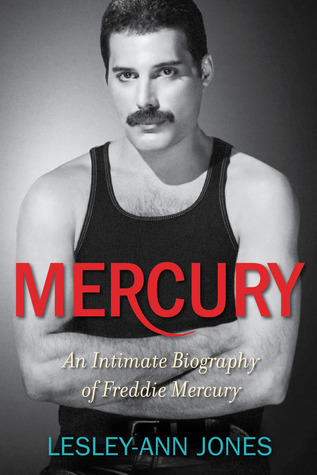 As lead vocalist for the iconic rock band Queen, Freddie Mercury’s unmatched skills as a songwriter and flamboyant showmanship made him a superstar, and Queen a household name. But few people ever really glimpsed the man behind the glittering faÇade.
Mercury was the first major rock star to die from AIDS. Now, twenty years after his death, those closest to him are finally opening up about this pivotal figure in rock n’ roll. With unprecedented access to Mercury’s tribe, rock journalist Lesley-Ann Jones has crafted the definitive account of Mercury’s legendary life. Jones details Queen’s slow but steady rise to fame, and Mercury’s descent into dangerous, pleasure-seeking excesses. Jones doesn’t shy away from Mercury’s often colorful lifestyle—this was, after all, a man who once declared, “Darling, I’m doing everything with everyone.”
In her journey to understand Mercury, Jones traveled to London, Zanzibar, and India—talking with everyone from Freddie’s closest friends, to the sound engineer at Band Aid (who was responsible for making Queen louder than the other bands), to second cousins halfway around the world, an intimate and complicated portrait emerges. Meticulously researched, sympathetic yet not sensational, Mercury offers an unvarnished, revealing look at the extreme highs and lows of life in the fast lane.
A decently written biography about a legendary rock singer. Jones' extensive interviewing reveals the thoughts and feelings of figures surrounding Freddie, with occasional quotes from the artist himself. Jones also interjects her own thoughts and feelings into the mix, which is fine. The book has follows a basic chronological order, paralleling Freddie's early life, his time with Queen, and his solo projects. No stone is left un-turned. While the writing isn't necessarily compelling, it covers important moments Freddie's life and it is pretty complete as far as information about him and those he was close to.
I would recommend it to any Queen fan or those curious to know more about the personal life of the fairly mysterious Freddie Mercury.
As lead vocalist for the iconic rock band Queen, Freddie Mercury’s unmatched skills as a songwriter and flamboyant showmanship made him a superstar, and Queen a household name. But few people ever really glimpsed the man behind the glittering faÇade. Mercury was the first major rock star to die from AIDS. Now, twenty years after his death, those closest to him are finally opening up about this pivotal figure in rock n’ roll. With unprecedented access to Mercury’s tribe, rock journalist Lesley-Ann Jones has crafted the definitive account of Mercury’s legendary life. Jones details Queen’s slow but steady rise to fame, and Mercury’s descent into dangerous, pleasure-seeking excesses. Jones doesn’t shy away from Mercury’s often colorful lifestyle—this was, after all, a man who once declared, “Darling, I’m doing everything with everyone.”
In her journey to understand Mercury, Jones traveled to London, Zanzibar, and India—talking with everyone from Freddie’s closest friends, to the sound engineer at Band Aid (who was responsible for making Queen louder than the other bands), to second cousins halfway around the world, an intimate and complicated portrait emerges. Meticulously researched, sympathetic yet not sensational, Mercury offers an unvarnished, revealing look at the extreme highs and lows of life in the fast lane.
A decently written biography about a legendary rock singer. Jones' extensive interviewing reveals the thoughts and feelings of figures surrounding Freddie, with occasional quotes from the artist himself. Jones also interjects her own thoughts and feelings into the mix, which is fine. The book has follows a basic chronological order, paralleling Freddie's early life, his time with Queen, and his solo projects. No stone is left un-turned. While the writing isn't necessarily compelling, it covers important moments Freddie's life and it is pretty complete as far as information about him and those he was close to.
I would recommend it to any Queen fan or those curious to know more about the personal life of the fairly mysterious Freddie Mercury.
Saturday, March 31, 2018
The Remains of the Day
The Remains of the Day by Kazuo Ishiguro 245 pages
 This is Kazuo Ishiguro's profoundly compelling portrait of Stevens, the perfect butler, and of his fading, insular world in post-World War II England. Stevens, at the end of three decades of service at Darlington Hall, spending a day on a country drive, embarks as well on a journey through the past in an effort to reassure himself that he has served humanity by serving the "great gentleman," Lord Darlington. But lurking in his memory are doubts about the true nature of Lord Darlington's "greatness," and much graver doubts about the nature of his own life.
This is a masterpiece of prose. Ishiguro is so skilled at writing narrative fiction, his characters always so thoughtful and philosophical. And yet, somehow as you read it, it doesn't get boring or too meandering. This book has almost no plot, and yet I found I didn't mind that. This book is essentially the musings of an English butler, looking back on moments in his life that could be considered "turning points," all brought about by the news that an old acquaintance might be free to return to her post.
Each moment in the past brings to light more and more of Mr. Stevens' character, and you slowly get a sense of who he is as a person and it also brings into focus aspects about himself that he appears not to see, or is trying to persuade the reader he is not/does not feel, and yet you know he is/does. I love how all of this can be conveyed just through Mr. Stevens' own inner thoughts and recollection, but put in tandem with his remembrances of conversations he held in the past. Is he a reliable narrator? Perhaps, but it is obvious he does not know his own heart, or is trying to reject possible feelings or ideas because it would make his life unbearable.
The ending itself is so perfect and things come together in such a bittersweet way. I'll just share one quote that really is one of the most beautiful things I've read:
"Perhaps, then, there is something to his advice that I should cease looking back so much, that I should adopt a more positive outlook and try to make the best of what remains of my day. After all, what can we ever gain in forever looking back and blaming ourselves if our lives have not turned out quite as we might have wished?" p. 244
I would recommend this book to anyone who loves realistic fiction, especially fiction that touches on historical - certain events of WWII are mentioned. This is classic English literature at its best.
This is Kazuo Ishiguro's profoundly compelling portrait of Stevens, the perfect butler, and of his fading, insular world in post-World War II England. Stevens, at the end of three decades of service at Darlington Hall, spending a day on a country drive, embarks as well on a journey through the past in an effort to reassure himself that he has served humanity by serving the "great gentleman," Lord Darlington. But lurking in his memory are doubts about the true nature of Lord Darlington's "greatness," and much graver doubts about the nature of his own life.This is a masterpiece of prose. Ishiguro is so skilled at writing narrative fiction, his characters always so thoughtful and philosophical. And yet, somehow as you read it, it doesn't get boring or too meandering. This book has almost no plot, and yet I found I didn't mind that. This book is essentially the musings of an English butler, looking back on moments in his life that could be considered "turning points," all brought about by the news that an old acquaintance might be free to return to her post.
Each moment in the past brings to light more and more of Mr. Stevens' character, and you slowly get a sense of who he is as a person and it also brings into focus aspects about himself that he appears not to see, or is trying to persuade the reader he is not/does not feel, and yet you know he is/does. I love how all of this can be conveyed just through Mr. Stevens' own inner thoughts and recollection, but put in tandem with his remembrances of conversations he held in the past. Is he a reliable narrator? Perhaps, but it is obvious he does not know his own heart, or is trying to reject possible feelings or ideas because it would make his life unbearable.
The ending itself is so perfect and things come together in such a bittersweet way. I'll just share one quote that really is one of the most beautiful things I've read:
"Perhaps, then, there is something to his advice that I should cease looking back so much, that I should adopt a more positive outlook and try to make the best of what remains of my day. After all, what can we ever gain in forever looking back and blaming ourselves if our lives have not turned out quite as we might have wished?" p. 244
I would recommend this book to anyone who loves realistic fiction, especially fiction that touches on historical - certain events of WWII are mentioned. This is classic English literature at its best.
Monday, March 26, 2018
Charmed Life
Charmed Life by Diana Wynne Jones 218 pages
 Cat doesn't mind living in the shadow of his sister, Gwendolen, the most promising young witch ever seen on Coven Street. But trouble starts brewing the moment the two orphans are summoned to live in Chrestomanci Castle. Frustrated that the witches of the castle refuse to acknowledge her talents, Gwendolen conjures up a scheme that could throw whole worlds out of whack.
--
Cat doesn't mind living in the shadow of his sister, Gwendolen, the most promising young witch ever seen on Coven Street. But trouble starts brewing the moment the two orphans are summoned to live in Chrestomanci Castle. Frustrated that the witches of the castle refuse to acknowledge her talents, Gwendolen conjures up a scheme that could throw whole worlds out of whack.--
| This book reminded me a lot of other fantasy novels I read as a child - especially Dealing with Dragons. It has a similar style of writing and the way magic is handled, and characters that are a bit quirky or off in some way. I enjoyed how this book is so matter of fact about the world it explores that you just sort of take everything in and you just have to accept that that's the way it is. I will say, for the whole book, all I could think about was how much I hate Gwendolyn. I hated her through the whole thing and the entire time I was hoping she'd finally get what's coming to her. I can't say whether or not she does, but I'm just putting it out there - if you read this book, be prepared to read about one of the most insufferable characters ever written. This book is rather fun, for the most part. It's light fantasy, light magic (even though it's about magic). It definitely feels a bit surface level on the whole, so hopefully the other books in the series bring more bite to them. The book itself gets wrapped up quite quickly (in just the last few chapters), where most of the book is spent not really providing any directional plot, just a bunch of sequential events in the life of the Chant siblings. In this case, I would not recommend it to any struggling readers - there is not enough oomph to propel anyone through the story, you just kind of have to like the writing style and be vaguely interested in finding out how it will end up. I will read the rest of the series, though, as I am intrigued by the idea of Chrestomanci. |
Monday, January 29, 2018
Why I'm No Longer Talking To White People About Race
Why I'm No Longer Talking to White People About Race by Reni Eddo-Lodge 249 pages
 In 2014, award-winning journalist Reni Eddo-Lodge wrote about her frustration with the way that discussions of race and racism in Britain were being led by those who weren't affected by it. She posted a piece on her blog, entitled: 'Why I'm No Longer Talking to White People About Race'. Her words hit a nerve. The post went viral and comments flooded in from others desperate to speak up about their own experiences. Galvanised by this clear hunger for open discussion, she decided to dig into the source of these feelings. Exploring issues from eradicated black history to the political purpose of white dominance, whitewashed feminism to the inextricable link between class and race, Reni Eddo-Lodge offers a timely and essential new framework for how to see, acknowledge and counter racism.
In 2014, award-winning journalist Reni Eddo-Lodge wrote about her frustration with the way that discussions of race and racism in Britain were being led by those who weren't affected by it. She posted a piece on her blog, entitled: 'Why I'm No Longer Talking to White People About Race'. Her words hit a nerve. The post went viral and comments flooded in from others desperate to speak up about their own experiences. Galvanised by this clear hunger for open discussion, she decided to dig into the source of these feelings. Exploring issues from eradicated black history to the political purpose of white dominance, whitewashed feminism to the inextricable link between class and race, Reni Eddo-Lodge offers a timely and essential new framework for how to see, acknowledge and counter racism.| A quick read on why intersectionality is important, especially as it pertains to social justice causes, like feminism. Important points are made about why all voices must speak up when it comes to anti-racism. |
Monday, October 30, 2017
Murder on the Orient Express
Murder on the Orient Express by Agatha Christie 212 pages
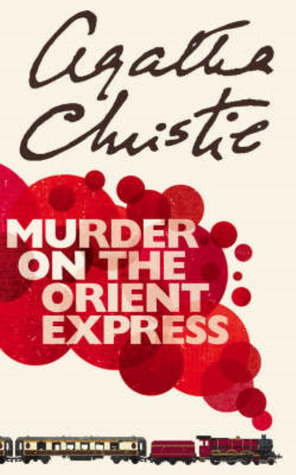 Just after midnight, the famous Orient Express is stopped in its tracks by a snowdrift. By morning, the millionaire Samuel Ratchett lies dead in his compartment, stabbed a dozen times, his door locked from the inside. One of his fellow passengers must be the murderer.
Isolated by the storm and with a killer in their midst, detective Hercule Poirot must find the killer amongst a dozen of the dead man's enemies, before the murderer decides to strike again...
A truly thrilling mystery. I absolutely love Agatha Christie - her characters are so dynamic and interesting and she spares no detail. Detective Poirot is amazing and such a fun character to read. His methodical, calm methods are mesmerizing and I would come back to this book again and again. I highly recommend it to anyone who loves a good whodunit.
Just after midnight, the famous Orient Express is stopped in its tracks by a snowdrift. By morning, the millionaire Samuel Ratchett lies dead in his compartment, stabbed a dozen times, his door locked from the inside. One of his fellow passengers must be the murderer.Isolated by the storm and with a killer in their midst, detective Hercule Poirot must find the killer amongst a dozen of the dead man's enemies, before the murderer decides to strike again...
A truly thrilling mystery. I absolutely love Agatha Christie - her characters are so dynamic and interesting and she spares no detail. Detective Poirot is amazing and such a fun character to read. His methodical, calm methods are mesmerizing and I would come back to this book again and again. I highly recommend it to anyone who loves a good whodunit.
The Castle of Otranto
The Castle of Otranto by Horace Walpole 125 pages
 Considered the first "Gothic novel," Walpole's story takes place in the Castle of Otranto, where its prince struggles to keep his title and the castle while fighting against an ancient prophecy. Supernatural elements occur and mayhem ensues.
This story was so crazy. I chalk it up to the time it was written (1764). It was very heavy-handed with the religious content - almost every character wished to quit their mortal life and go to heaven, there were extreme caricatures - all the women were totally and completely subservient to their husbands/fathers. Example: the main character, Manfred, wants to divorce his wife so he can marry the girl he was about to marry to his son, who's death opens the novella. His wife, Hippolita, is completely cool with it because she totally loves him and only wishes the best for him and she'll just become a nun and pray for her husband and daughter's good health and wait for her death. Like, seriously, Hippolita and her daughter both want to become nuns and pray until they die, even when their lives are seriously crappy and it's totally not their fault, but they'd never speak against their husband/father.
Honestly, this work feels much too dated for me to really appreciate. The Gothic aspects of the novella were really cheesy - portrait ghosts and overly large swords, helmets, and arms/feet appearing out of nowhere, but really they just represent Heaven's displeasure at Manfred still clinging to his castle.
Considered the first "Gothic novel," Walpole's story takes place in the Castle of Otranto, where its prince struggles to keep his title and the castle while fighting against an ancient prophecy. Supernatural elements occur and mayhem ensues.This story was so crazy. I chalk it up to the time it was written (1764). It was very heavy-handed with the religious content - almost every character wished to quit their mortal life and go to heaven, there were extreme caricatures - all the women were totally and completely subservient to their husbands/fathers. Example: the main character, Manfred, wants to divorce his wife so he can marry the girl he was about to marry to his son, who's death opens the novella. His wife, Hippolita, is completely cool with it because she totally loves him and only wishes the best for him and she'll just become a nun and pray for her husband and daughter's good health and wait for her death. Like, seriously, Hippolita and her daughter both want to become nuns and pray until they die, even when their lives are seriously crappy and it's totally not their fault, but they'd never speak against their husband/father.
Honestly, this work feels much too dated for me to really appreciate. The Gothic aspects of the novella were really cheesy - portrait ghosts and overly large swords, helmets, and arms/feet appearing out of nowhere, but really they just represent Heaven's displeasure at Manfred still clinging to his castle.
Monday, October 2, 2017
The Mirror Crack'd from Side to Side
The Mirror Crack'd from Side to Side by Agatha Christie 351 pages

In Agatha Christie's classic mystery, The Mirror Crack'd from Side to Side, a fatal dose of poison meant for a glamorous movie star fells her ardent admirer instead--and Miss Marple is there to unmask a murderer.
I absolutely love Agatha Christie and this story was pretty good. Not my favorite, but still. I always try to guess who the murder is, but I usually get it wrong. This time, however, I got it right - partially!
In Agatha Christie's classic mystery, The Mirror Crack'd from Side to Side, a fatal dose of poison meant for a glamorous movie star fells her ardent admirer instead--and Miss Marple is there to unmask a murderer.
I absolutely love Agatha Christie and this story was pretty good. Not my favorite, but still. I always try to guess who the murder is, but I usually get it wrong. This time, however, I got it right - partially!
Friday, September 15, 2017
M is for Magic
 M is for Magic by Neil Gaiman 260 pages
 This book is a collection of fantasy/supernatural stories that Gaiman wrote for various magazines and in other published places that he then compiled in this volume as a tribute to Ray Bradbury (in the same vein as Bradbury's "R is for Rocket" collection of short stories). Each story features a different tale of mischief, magic, and a small amount of, if not horror, some creepiness.
I highly enjoyed this read. The stories were unique, fairytale-like, and imaginative. I particularly liked the stories "Chivalry," which was about an old lady who buys the Holy Grail from a pawn shop and is subsequently visited by Sir Galahad, and "October in the Chair" which is a story about stories, with each month of the year taking turns to tell a story to the rest.
Gaiman's writing is always sure to delight me. He is a brilliant storyteller and I particularly liked reading his short stories. He crafted them so well, it was the perfect amount of plot, character building, and scene setting. I would highly recommend this book to adults as well as teens - but not to any younger readers as adult themes are explored.
Subscribe to:
Posts (Atom)