Showing posts with label Latin America. Show all posts

Tuesday, January 21, 2020

Shining Path

The Shining PathThe Shining Path: Love, Madness, and Revolution in the Andes by Orin Starn and Miguel La Serna, 355 pages

On Christmas Eve, 1980, a group of rebels invaded the home of a well-off sugar farmer in a remote canyon in the Peruvian Andes.  The guerrillas dragged the landowner to a nearby chapel where they tortured him to death, leaving "Long Live the People's War" spray-painted on a farmhouse wall.  He was the first to die in that war, launched a few months earlier by a sect of Maoist revolutionaries calling themselves the Peruvian Communist Party but invariably referred to in the foreign press by the more romantic name Shining Path.  Their barbaric struggle would drag on for over a decade and leave over 70000 dead, roughly half killed by the Shining Path themselves, the other half split between the regular army and village militias.  

It is difficult to write a history of a guerrilla insurgency, which by its very nature is fluid and avoids decisive battles.  It is even more difficult without reliable sources from within the movement.  Starn and La Serna attempt to overcome these difficulties, and paint a broader picture of Peru in the last decades of the twentieth century, by concentrating on the personal stories of those touched by the conflict, from slum activist Maria Elena Moyano to novelist and presidential candidate Mario Vargas Llosa to policeman Marco Miyashiro to peasant militiaman Narciso Sulca.  As a result, those who expect either a thorough history or an exploration of the inner workings of the insurrection are likely to be disappointed.  They are unlikely to be bored, or to soon forget some of the unexpected people and places introduced.

Sunday, June 7, 2015

Love in the Time of Cholera

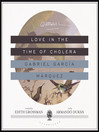
Cover image for Love in the Time of CholeraLove in the Time of Cholera, by Gabriel Garcia Marquez, 348 pages

Florentino Ariza has always been in love with Fermina Daza, but she marries a rich doctor, instead.  Over the course of 50 years, or so, they both live separate lives, but never leave the consciousness of the other.  There are many characters and many side-stories, but the ultimate tale is that of a love that grows and matures over that time into something different, but just as rich, and the ending is the reward for keeping all of the characters straight.

Wednesday, April 22, 2015

Art of Political Murder

Cover image for The Art of Political Murder: Who Killed the Bishop? by Francisco Goldman, 357 pages

In April of 1998, the Recovery of Historical Memory Project, a group within the Archdiocese of Guatemala City's Office of Human Rights, published a massive work entitled Guatemala: Never Again, documenting decades of human rights abuses during the country's civil war.  Two days later, Bishop Juan Gerardi, the chief architect of the report, was found bludgeoned to death in his garage.  The police centered their investigation on a priest who shared the rectory with the bishop, speculating that the bishop had caught the priest in the midst of some sexual misdeeds.  Others theorized that Gerardi had run afoul of local gangs or uncovered evidence of embezzlement by prominent ecclesiastics.  The victim's own human rights investigators, meanwhile, conducted their own independent investigation, following leads that implicated powerful figures in the Guatemalan military.

Part history of Latin American oppression and corruption, and part true crime thriller, The Art of Political Murder is both informative and interesting.  Goldman spent much of his childhood in Guatemala, and his easy familiarity with the country, its language and customs grants the book an added layer of authenticity.  His judgement is, perhaps, a bit less sure - a serious problem when reporting on a case with minimal physical evidence, unreliable witnesses, and surrounded by rumor and gossip.  While Goldman seems certain of his conclusions, readers may find themselves more doubtful.

Saturday, October 4, 2014

Violence of Love

The Violence of Love by Oscar Romero, compiled and translated by James R Brockman, SJ, 206 pages
 
Cover image for The violence of love / Oscar Romero ; compiled and translated by James R. Brockman.In 1977, Ven Oscar Romero became the Archbishop of San Salvador.  Initially, his appointment was welcomed by the Salvadoran oligarchy, but after the assassination of his friend Fr Rutilio Grande he became a dynamic voice for change in a country divided by massive economic inequality and bloody civil war.  As a result, he was assassinated by a paramilitary death squad while saying Mass in 1980.
 
The Violence of Love is a selection from Romero's writings and sermons, edited in such a way as to turn them into a sort of poetry.  Although it is not difficult to imagine this approach decontextualizing and deforming a body of work into something unrecognizable, that is not the case here.  Especially interesting is that the selections, although divided into chapters with thematic titles, are nonetheless arranged in strict chronological order.  This allows the reader to grasp both the development and the continuity in Romero's teaching from his installation as Archbishop to the sermon he gave immediately prior to his assassination.  It is unfortunate that there is nothing here from the first sixty years of his life, as opposed to the last three, but since this is not a biography the flaw is forgivable.
 
Fr Brockman concentrates the wisdom and power of Romero's teaching, neglecting neither his love of God nor his love of neighbor, resulting in a work that is simultaneously enlightening and inspiring.

Wednesday, September 17, 2014

Caminar

Caminar by Skila Brown, 193 pages


Caminar is a novel in verse. I’ve noticed that many “difficult” subjects in juvenile lit often get the novel in verse treatment (the dust bowl in Karen Hesse’s Out of the Dust and displacement/immigration/the Vietnam War in Thanhha Lai’s Inside Out and Back Again both pop to mind). The starkness and minimalism of the language in these books allows students to fill-in and imagine situations that they’re emotionally and developmentally ready for without going into minute detail about the horrors of war, death, depression, etc.

The subject matter in Caminar is definitely difficult. The book is set in a small Mayan village in Guatemala in 1981 during the Guatemalan Civil War. Prior to reading Caminar, I was largely unfamiliar with this war, and unaware of the Mayan Genocide committed by the Guatemalan government. The author doesn’t delve into the politics of the war, but focuses on the protagonist’s experience before, during and after his town is attacked by government soldiers. I’d recommend Caminar to advanced upper elementary students and middle school students who are interested in history – though the text may be sparse, the emotional impact is heavy.