Showing posts with label Terrorism. Show all posts

Saturday, February 29, 2020

Suspect

The SuspectThe Suspect: An Olympic Bombing, the FBI, the Media, and Richard Jewell, the Man Caught in the Middle by Kent Alexander and Kevin Salwen, 334 pages

On July 27th, 1996, Richard Jewell, a former sheriff's deputy doing security work during the Olympic Games, noticed a suspicious package under a bench in Atlanta's Centennial Park.  The bomb squad was summoned and Jewell joined his coworkers in attempting to clear people from the area.  Less than half an hour later, the bomb inside the package exploded, killing two people and injuring dozens more.  Within days, the press was reporting, based on leaks from within the FBI, that investigators had determined that Jewell had planted the bomb himself.  Tom Brokaw told millions of Americans that there was "probably" already sufficient evidence to arrest and prosecute Jewell.  Three months later, the FBI officially announced that it had, in fact, never had any real evidence to tie Jewell to the bombing, its focus on him having been driven by their belief that he fit the "profile" of a lone bomber, this despite the fact that the FBI knew early on that he couldn't have carried out the bombing alone.  As Kent Alexander and Kevin Salwen report, Richard Jewell's guilt had been a "convenient myth" - it had given the FBI a suspect, the media a story, and the Olympics a chance to move on.  That it had almost destroyed Jewell was a small price to pay.

If their book is a cautionary tale, it is not, however, a polemic.  Alexander and Salwen write in a way that is factual, compelling, and deeply personal, not surprising in that both were tangentially involved in the story and knew many of the players, Alexander as a US Attorney and Salwen as an editor for the Wall Street Journal.  It would be a hard heart indeed which is not moved by their account of the later years of Kathy Scruggs, the reporter who broke the Jewell story, and it is even possible to feel a grudging admiration for Eric Rudolph, the actual bomber, who spent over five years as a fugitive in the Carolina mountains, sleeping in caves and surviving only on what he could catch or scavenge.  Perhaps the greatest insight the book can give is into the direction of the massive power of the federal government and public opinion by ordinary, imperfect people just trying to do their jobs.

Tuesday, January 29, 2019

Night School

Night School: Book 21 in the Jack Reacher series by Lee Child     Audio Book: 13 hours, 7 mins.     Paperback Book: 496 pages             

I’ve heard of Jack Reacher, I think some years ago I watched a film with Tom Cruise playing the part of Jack Reacher, but, this is the first book with Jack Reacher as lead character I have experienced and I am now a fan of Jack Reacher.    I’m usually not big on spies nor espionage stories but this one intrigued me although I didn’t realize I was #21 in a series, but, this is surely a stand alone story as I imagine they likely all are, though, the reader probably picks up a good bit of background on John Reacher with each succeeding tome.   Mr. Reacher seems like a pretty fun guy, I like his sense of humor a lot.   And his assistant is like the Army’s Wonder Woman.    The story starts off with Mr. Reacher receiving accolades and a(nother) medal that morning then he is assigned to attend Night School that same evening.  He is wondering why Night School?   But goes along with his orders.   When he gets to class there are 2 other agents there.   One from the FBI and one from the CIA.   It seems the Government ie. the President wants a cooperative mission between the Army which Jack Reacher is a highly placed special operative in and the other two agencies being the FBI and CIA.    The President wants them all to play nice, work together, share information that each has specific access and specialization in and find a loose cannon who sources have alerted that Jihadists are working with to buy a hundred million dollars worth of “something,” and the Jihadists are willing to pay the price for whatever it is.     The mission is to find out who has whatever it is for sale then find out what in particular are they selling?    The story keeps the reader’s attention from beginning to end.   It is fascinating how the info is tracked between all of the agencies and how much can be accomplished with all of the contacts at each agency’s disposal.   Jack Reacher is this strong presence yet very down to earth and witty who will drop to his favorite thing – street fighting – with very little provocation.    Jack Reacher is a very likeable character someone you would be able to have a beverage with and a few laughs before he had to go fight bad guys and save the world.   This story takes the reader along from Langley, Virginia to Jalalabad, Afghanistan to some very miltant cells of Reichers working toward raising the 4th Reich in Germany and are not at all shy about their anti-Semitic tendencies.   Searching and researching for who, what and when goes global with stop offs in Kiev, Ukraine, Saudi Arabia and other global hot spots for arms dealing.    It really is a good well told story and I enjoyed getting to know the character Jack Reacher.    Lots of possibilities as to what is going on and author Lee Child swoops you up in all the action and carries you right along as if you are decked out in full armour to face any faction lurking in the shadows, sand dunes, or at the local bar or bistro.    Excellent story telling here.   I think I might just check this series out, I like Jack Reacher.    I would definetly recommend this series to anyone who likes Mission Impossible type stories, military stories, spy,  suspense, iintrigue or an open mind to be introduced to something you might never check out on your own, but might find Lee Child’s writing to your taste.   I would not have sought this story out.    I was just browsing when I came across it and decided to check it out.   I’m glad I did.    It is a worthy story.    I highly recommend it.

 - Shirley J.

Saturday, August 18, 2018

Mind for Murder

A Mind for MurderA Mind for Murder: The Education of the Unabomber and the Origins of Modern Terrorism by Alston Chase, 372 pages

In 1969, Harvard-educated mathematics professor Ted Kaczynski left his job at the University of California at Berkeley and moved into a one room cabin in the backwoods of Montana without running water or electricity.  In 1996, FBI agents arrived at the same cabin to arrest him for a series of bombings spanning twenty years, bombings which killed three and injured two dozen more.  These victims were the casualties of Kaczynski's personal war against technological civilization, as explained in his manifesto, Industrial Society and Its Future.  

To many in the media in the aftermath of Kaczynski's arrest, he was simply insane, despite his rationale for terror being far more lucid than those of his future prison mates Ramzi Yusef and Timothy McVeigh.  This was compounded by Kaczynski's lawyers, who - over his public protests - pursued an insanity plea as his best hope of avoiding the death penalty.  According to Alston Chase, however, this was a fundamental misunderstanding of both Kaczynski and his worldview, which was rooted in the modernist angst cultivated at Harvard in the '50s.  In contrast to the popular image of the quixotic romantic, the Ted Kaczynski that Chase reveals was a rational ideologue, and therefore not a passionate enthusiast but a cold-blooded, calculating killer.

Chase's greatest strength is potentially his greatest weakness.  He also attended Harvard in the '50s, also experienced profound alienation there, also took up a teaching position (as a professor of philosophy), and also eventually withdrew to live a quiet, simple life in Montana (albeit, in his case, with his family).  As a result, he has the advantage of a unique sympathetic understanding of Kaczynski, but this comes with the temptation to overwrite Kaczynski's story with his own.  Chase treats Kaczynski's life as representative of their generation, finding the "origins of modern terrorism" in the postmodern disenchantment with Enlightenment.  For this reason, he spends a remarkable amount of time considering the life and career of Henry Murray, a Harvard psychology professor whom he positions as the avatar of the sadistic, technocratic system and the rival of Kaczynski's ruthless anarchist in the battle for the spirit of the age.  Whether or not this is entirely convincing, it certainly is compelling.

Wednesday, August 1, 2018

Faith and Treason

Faith and TreasonFaith and Treason: The Story of the Gunpowder Plot by Antonia Fraser, 295 pages

In the early morning hours of November 5th, 1605, a man going by the name of John Johnson was arrested in a rented cellar filled with gunpowder beneath the House of Lords.  Johnson, whose real name was Guido "Guy" Fawkes, was a devout Catholic and a soldier who had fought for the Spanish in Flanders.  Under torture, he confessed to being part of a small conspiracy of English Catholic gentlemen who, angered by King James' refusal to grant toleration to Catholics and despairing of help from Catholic monarchs abroad, had concocted a plot to blow up Parliament with the King and most of the royal family inside, then abduct the princess Elizabeth and, by marrying her off to a suitable continental prince, reestablish the Catholic monarchy.  In the hands of the British government, the Gunpowder Plot was recast as a wide-ranging conspiracy hatched by the Jesuits and implicating virtually every recusant family in England.  As such, it not only became the excuse for immediate renewed persecution, but its legend became a vital part of English identity, justifying future anti-Catholic pogroms like the Popish Plot and the Gordon riots, with the result that it would not be until the nineteenth century that Catholics in England would enjoy the same rights granted to Protestants in France in the sixteenth.

At least, such is the story as Antonia Fraser convincingly tells it.  The story of the Powder Treason, befitting its place in the English psyche, has been told and retold from perspectives ranging from that of King James himself in the immediate aftermath to latter day conspiracy theorists who believe that the entire plot was nothing more than a government invention.  Fraser's narrative (which in the author's native land bore the subtitle "Terror and Faith in 1605") aligns with more recent experiences, notably the Reichstag fire, another seemingly real terroristic act by a desperate individual seized upon by opportunists in positions of power.  Her compelling account focuses attention on the lives and motivations of the conspirators as well as the innocents caught in their web, and ends by, as the prosecutors of the conspirators boasted they had done, bringing to light deeds done in darkness, with the awareness that some of those dark deeds were done by those who fancied themselves lightbringers.

Thursday, April 27, 2017

Nine, Ten

Nine,Ten: A September 11 Story by Nora Raleigh Baskin, 197 pages

"Relates how the lives of four children living in different parts of the country intersect and are affected by the events of September 11, 2001."  I was affected by this book more than I expected to be.  I didn't lose anyone personally but, like the rest of the country, I was stunned and horrified by the terrorist actions that day.  Kids who like realistic fiction will like this story.  This isn't really for kids who like disaster stories as it focuses more on the lives of the kids and less on the actual tragedy.  Kids who are the right age for this book would not have been alive yet when it happened which will probably make the impact less than it was on me.

Wednesday, October 5, 2016

ISIS

Cover image for ISIS: Inside the Army of Terror by Michael Weiss and Hassan Hassan, 361 pages

Within the last decade and a half, the Islamic State, known variously as the Islamic State in Iraq and Syria (ISIS) or the Islamic State of Iraq and the Levant (ISIL) or Daesh, has evolved from the start-up terrorist organization Jama'at al-Tawhid wal-Jihad (JTJ) into the subordinate group Al-Qaeda in Iraq and finally into a quasi-state controlling an area the size of West Virginia and somewhere between 3 and 8 million people with an army possessing highly advanced military equipment.  More notably for those outside ISIS' zone of control, the group has proclaimed itself the restoration of the global caliphate, has received pledges of fealty from other radical groups in Africa, Arabia, Southeast Asia, and the Caucasus, and has shocked the world with slickly produced propaganda videos featuring mass beheadings of non-Muslims and people being burned alive in cages, the execution of homosexuals by throwing them off rooftops and the demolition of cultural antiquities thousands of years old as idolatrous ties to the pagan past.  In the process, despite being denounced by Muslim authorities including even their former sponsors in Al-Qaeda, ISIS has emerged as both a major source of assistance and the premier source of inspiration to Islamic terrorists around the world.

The subtitle of this study of ISIS, Inside the Army of Terror, seems a bit exaggerated - most of the book is a view from outside.  The authors do give a solid history of the development of ISIS, explaining how a Jordanian thug became the seed from which ISIS grew, helpfully irrigated by Al-Qaeda, Iran, and Syria, sprouting in the aftermath of the US invasion of Iraq, fed by defecting Baathist officials and thriving on (wholly justified) Sunni fears of Iran-backed Shiite pogroms in Iraq and Alawite oppression in Syria.  The authors are clear about the barbarism on all sides of the civil wars in the region, of which ISIS' atrocities are the epitome rather than the exception.

There are a few minor problems.  The authors occasionally contradict themselves - discussing the ISIS presence in Libya, they cite the transfer of fighters from the elite Al-Battar battalion as an indicator of the country's importance to ISIS, but later they reveal that the breakup of Al-Battar was due to concerns about the battalion's loyalty.  More disappointingly, they never deal with specifics of ISIS' religious ideology.  Their explanation of the opportunistic reasons for much of ISIS' local support is interesting, especially given what it reveals about the successes and failures of anti-ISIS strategies and the hidden fragility of the caliphate's position.  Yet it is not political opportunism that has drawn tens of thousands of eager recruits from around the world to the Syrian desert, and it is not mere opportunism that has convinced established terrorist groups such as Boko Haram and Abu Sayyaf to pledge their loyalty to these upstarts.  Weiss and Hassan spend time explaining how the ISIS ideology developed, how it is spread, and why it is deceptive, but the book would have benefited greatly from a detailed account of what it is - without it the book falls prey into the postmodern journalistic myopia which reduces everything to power politics.

Thursday, April 14, 2016

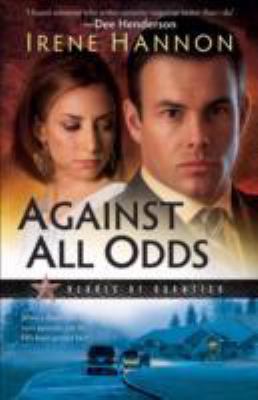
Against All Odds

Against All Odds by Irene Hannon, 334 pages

This is the first book in the Heroes of Quantico series.  Monica Callahan, who has been estranged from her father, David, for most of her life, finds his world crashing into hers abruptly.  David is negotiating a hostage situation with a group of terrorists and they have made a threat against Monica.  David has managed to get FBI protection for her in the form of Evan Cooper and his partner.  Monica is reluctant to cooperate, but as she and Coop get to know each other, a mutual attraction begins to develop.  And through their conversations, Monica even starts to consider the possibility of forgiving her father, assuming that she can get through the current crisis alive.  This was a fairly typical Christian romance story but Hannon is a good writer and I enjoyed this book as much as I've enjoyed her others.

Wednesday, February 17, 2016

American Terrorist

Cover image for American Terrorist: Timothy McVeigh and the Oklahoma City Bombing by Lou Michel and Dan Herbeck, 388 pages

On April 19, 1995, three tons of nitromethane explosives packed into the back of a Ryder truck were detonated outside the Murrah Federal Building in Oklahoma City, instantly demolishing over half the building and killing 168 people, wounding hundreds more.  The bomb was built, placed, and detonated by Timothy McVeigh, a decorated veteran of Desert Storm who had become convinced that the US government was preparing for a war against its own people.  April 19 was a double anniversary, of the battles of Lexington and Concord that began the American Revolution, and of the fiery end of the siege of the Branch Davidian compound in Waco, Texas two hundred years later, which McVeigh saw as emblematic of a new tyranny.  How an all-American kid from upstate New York grew into a soldier in a one man war against the federal government is the subject of American Terrorist, written by a pair of journalists from Buffalo with unequalled access to the McVeigh family.

Their account makes it clear that McVeigh was not, himself, the victim of injustice at the hands of the government.  To the contrary, American Terrorist reveals his remarkable attempts to provoke authorities - from flatly refusing to return extra money erroneously paid to him during his military service to speculating about whether he could shoot down a police helicopter with a flare gun in the presence of a man he knew was an undercover cop to trespassing at Groom Lake - without consequences.  Only with the bombing would he become, in his own eyes, the martyr he always wanted to be, sacrificing himself for The Cause.

One issue that the authors are unable to settle concerns McVeigh's attitudes on race.  McVeigh himself, while in prison, denied being a racist, and a number of witnesses support him on this.  Yet he did, at one point, join the Klan, he was cited while in the Army for using racial slurs, he associated with white supremacists such as those at Elohim City, and he was fixated on the virulently racist novel The Turner Diaries, to the point that he handed out copies like an evangelist might hand out Bibles.  Perhaps, as he claimed, the racial slurs were just locker room talk, his mail order KKK membership was a mistake, and the Elohim City and Turner Diaries connections were the result of a shared anger with the US government and not a shared racist ideology.

This reflects the major question surrounding this book - as reliant as it is on McVeigh's own account, to what extent can we trust McVeigh?  Surprisingly for a true crime book, in this case the subject comes across as quite candid - after all, McVeigh wanted people to know what he had done and why.  Michel and Herbeck communicate this effectively, and their tale of McVeigh's road to mass murder reveals more than about their subject than he intended.

Thursday, February 11, 2016

Truth Or Die

Truth Or Die by James Patterson & Howard Roughan, 383 pages

Disbarred attorney Trevor Mann thinks his life might be finally falling into place until his girlfriend, Claire Parker, is murdered.  Claire was a reporter and, although the murder appeared to be random, Trevor suspects that it has to do with one of her protected sources.  Trevor sets out on a dangerous mission to locate Claire’s source and uncover the truth about her murder.  The only problem is, he may end up dead himself.  I felt like some parts of this story felt a little rushed or disjointed or unclear.  It was a little more difficult to red than some of Patterson’s books.  Overall though, it was a good, compelling story, and most of it became clear by the end.  Most of Patterson’s fans will probably be pretty satisfied.  I’m not sure it would be my first choice to hand to someone who just liked the genre but wasn’t already reading Patterson’s books.

Thursday, April 30, 2015

The Eye Of Minds

The Eye Of Minds by James Dashner, 310 pages


Michael and his two bets friends, Bryson and Sarah. Have only met in the virtual world.  They spend most of their time there, gaming.  They have a great time too, until the government comes to Michael with a proposition that he won’t be allowed to refuse.  A gamer named Kaine has apparently created a piece of code called the Mortality Doctrine which could end not only the VirtNet world but the real world as well.  The government wants Michael and his friends to find Kaine and stop him.  Although their first encounter with Kaine leaves them shaken and worried that Kaine might be capable of killing them, they decide to press on and stop him before it’s too late.  This was a pretty decent beginning to a new fantasy series that teens will probably enjoy.

Thursday, December 18, 2014

On A Clear Day

On A Clear Day by Walter Dean Myers, 244 pages


I honestly didn’t enjoy this book a lot.  Maybe the knowledge that this would be Myers’s last book spoiled it for me.  This is a story told in a not too distant future, of a world that has basically been taken over by technology and a conglomerate of corporations called the C-8.  They control the food production, energy resources, media, money, etc.  Most people live in gated communities, some better than others, but the people who are worst off are simply living on the streets.  Some people are part of gangs, trying to get by.  Dahlia is a girl who has been approached by a small group of older teens and young adults who want to help put a stop to C-8’s activities.  The group is idealistic and has good ideas but is that enough when dealing with something as large as the C-8?  The idea behind this story was really good but the execution fell a little flat for me.  The characters seemed kind of one dimensional, especially the more peripheral characters.  I didn’t feel like it was Myers’s best work, but fans of his other books and fans of dystopian stories may want to check out this book.

Tuesday, September 30, 2014

Afterworlds by Scott Westerfeld

http://slpl.sdp.sirsi.net/client/catalog/search/results?qu=&qu=TITLE%3Dafterworlds+&qu=AUTHOR%3Dwesterfeld+Afterworlds by Scott Westerfeld                              599 pages

This is Westerfeld’s newest book.  For people familiar with his previous books, this book is very different.  This is the story of Darcy, who, during her senior year of high school wrote a novel, which has been purchased and will be published in another year.  Darcy was paid a large advance and her plan is to defer college for at least a year and spend the next year in New York doing the rewrites for her book and writing the sequel, which has also been purchased.  Her parents, although not thrilled, agree, and Darcy is off to New York.  The story is told in alternating chapters between Darcy’s story of moving to New York, writing, finding love, and learning about life, and the story she is writing, about a girl who has a near death experience when terrorists attack the airport and then finds that she can see ghosts and travel to their world.  It’s possible to just read Darcy’s story or her book, if one of the stories doesn’t appeal, but both stories are awesome and there are some parallels that are fun to see, like when Darcy learns a new word, the word finds its way into the story she’s writing.  I think that a lot of teens would like this book, including fans of Westerfeld, but they should be prepared for the differences between this and his previous books.

Thursday, August 21, 2014

All I Love and Know

All I Love and Know by Judith Frank
422 Pages

Daniel Rosen's twin brother and his wife are killed in a terrorist bombing in Israel.  The couple had put in the their will that Daniel and his partner Matt would become the legal guardians of their two children Gal and Noam if they died.  While on the surface a story of gay rights, family and Israeli/Palestinian relations, the book is more a study of how grief affects families and relationships. At times politically polemic, the book examines the relationship between Gal, Matt and Daniel and seems to find a true voice in their struggles to come to terms with the tragedy.

I would give this book three stars out of five, mainly because the relationships seem forced and the voice of Gal is far older than the six years her character is supposed to be.