Showing posts with label Islam. Show all posts

Sunday, November 25, 2018

Wisdom's Journey

Wisdom's Journey: Living the Spirit of Islam in the Modern World by John Herlihy, 237 pages

This book is partly about Herlihy's conversion to Islam but mostly him telling the reader why Islam is great and the parts of the faith.

He begins by describing Mystery and the choice to deny or confront it. He is critical of science and the shallowness of many in the modern world. He goes on to talk about accepting the faith and the details of the parts of it.

Herlihy provides information on the three distinct sources of knowledge which are the Quran, virgin Nature and humans themselves. He also covers virtues, prayer as ritual and the Hajj.

It was illuminating to some degrees. The partial description of his conversion and his personal experience with the religion were good. On the other hand, there were some aspects of the religion I was expecting him to talk about but were absent. He makes no mention of the place of women in Islam. Nor does he touch on Sunnis versus Shiites. For multiple reasons, I would not recommend it as the best source to gain knowledge of Islam.

Sunday, September 23, 2018

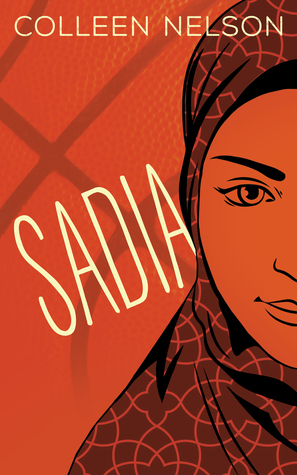
Sadia

Sadia  by Colleen Nelson    235 pages

This YA book is not part of SLPL’s inventory, but should be considered as an addition. This book follows Sadia, a Muslim teenager whose family has immigrated to Canada from Syria, having left the country before total collapse and chaos. Sadia struggles with all things inherent in teenage lives – peer pressure, crushes, friends, school work, sports – with a complicating layer of being a minority in a foreign country. Sadia is not conflicted about her religion, but struggles with the inconveniences of wearing a hijab when playing basketball, an issue that is one of the subplots. In another subplot, Sadia is also confused about the change in her best friend, Nazreen, who “de-jabs” behind her parent’s backs, and struggles to fit into main stream society in terms of dress and behavior. Sadia is somewhat resentful that she has to act as translator and guide to Amira, a recent refugee from Syria, a task that highlights her Muslim-ness when she wishes it weren’t so obvious, in yet another subplot. Indicative of teenage lives, there is a lot going on in this story that covers a year-in-the-life of its characters, and the author tries to touch on predictable and controversial issues.
Posted by:   Regina C.  

Sunday, July 1, 2018

Philosophy in the Islamic World

Philosophy in the Islamic World: A Very Short Introduction by Peter Adamson, 133 pages

Adamson notes in his introduction that the reason for his title is that Christian, Jewish and Islamic thinker contributed to philosophy in the Islamic world which has at times included Spain.

Per the name of the book, this book isn't very deep and while it is supposed to cover up to current time it is mostly focused on ancient times. Islamic philosophy began around the 8th century AD and was heavily influenced by Greek philosophy and science.

Adamson starts by talking about the most important period. He gives an overview of significant philosophers along with the year they died and important ideas. Further chapters focus on specific subjects that were debated.

It is notable that Islamic philosophy, in contrast with Latin Christendom, doesn't distinguish between theology and philosophy. Some Islamic philosophers saw limits to reason while others didn't.

Some Islamic philosophers believed that God created the world and then ceded control while others think that God still controls the world and sometimes chooses to change it. As with some Christian philosophers, some Islamic philosophers attempted to use logic to prove there is a God (a creator).

Other notable subjects Islamic philosophers focused on include eternity, knowledge, ethics and politics.

Even though this book isn't long there is a lot crammed into the pages. I felt it was a good overview and would like to read about some of the subjects further at some point in the future.

Friday, April 21, 2017

From the Ruins of Empire

From the Ruins of EmpireFrom the Ruins of Empire: The Intellectuals Who Remade Asia by Pankaj Mishra, 310 pages

In From the Ruins of Empire Pankaj Mishra examines the careers of three prominent Asian intellectuals from the end of the nineteenth and the beginning of the twentieth century, all of whom struggled with the cultural, economic, and military dominance of the West - not only as such power was deliberately, oftentimes violently, exercised, but also as the uncritical embrace of the mechanistic, utilitarian Western worldview by modernizing elites in their homelands.  Each of the three represents a third of non-Russian Asia - itinerant journalist Jamal al-Din al-Afghani for the Islamosphere, scholar and activist Liang Qichao for the Sinosphere, and Nobel laureate Rabindranath Tagore for the Subcontinent.  Each sought freedom for his people, but also a form of modernity that preserved the values of his own culture.

It is possible to go on at great length about the problems of perspective in this book, problems that are only somewhat excused on the grounds that the perspective is that of the subjects.  Understandably, in writing about anti-colonialists Mishra concentrates on the negative impact of colonialism on Asian nations and cultures, but at times he oversimplifies to the point that he falsifies - even a casual reading of Finkel's Osman's Dream (which Mishra cites in his bibliography) demonstrates that the problems of the Ottoman Empire were not only - or even primarily - the result of Western imperialism.  That the reality was somewhat more complicated than Mishra's default narrative of Asians fighting for liberty from Western injustice is implied in the fact that both al-Afghani and Liang were persecuted by their native governments, and both took refuge in the oppressive, racist West - the only one of the three who was consistently safe in his homeland was Tagore, who lived under British rule (and was celebrated in the West, lecturing to packed halls and winning the Nobel Prize for Literature in 1913).

It is possible, again, to go on at great length about the problems of perspective in From the Ruins of Empire, but to do so would obscure the very real value of the book.  Beginning in the eighteenth century, the great civilizations of Asia were confronted with the reality that they were not, after all, the center of the world or of history.  How they adapted not only helps explain the world of today, it also has lessons to teach the West as it begins to discover the same truth.

Saturday, April 1, 2017

Osman's Dream

Osman's DreamOsman's Dream: The History of the Ottoman Empire by Caroline Finkel, 554 pages

Osman was an obscure fourteenth century Turkish emir who ruled a small territory in northwestern Anatolia wedged between the Byzantines and the other Turkish principalities.  From their palace in Constantinople, Osman's descendants would rule over an empire stretching from Algeria to the Persian Gulf and from Hungary to Yemen, laying claim to the title of caliph, the head of all the Muslim ummah.  For centuries the Ottoman sultans shaped the history of the world, and their story, from the rise of Osman to the fall of Abdulmecid II, is the subject of Caroline Finkel's ambitious history.

Westerners have long regarded the Turks as exotic barbarians on the doorstep of Europe, and this perspective has been reflected in the historiography - a problem Finkel explicitly aims to correct, although it is true that she seems to consistently err in the opposite direction.  Oddly, considering that goal, this is very much a political and military history.  The opening chapters present a bewildering bombardment of names and places, but narrative threads quickly emerge to bring coherence.  Some might not appreciate how little the Ottomans were concerned with the West in the early centuries of their empire.  Others might be surprised at how closely early modern Ottoman history paralleled that of European nations: the strong national leader in the sixteenth century, the interminable struggles with national debt and the problems of increasing urbanization in the seventeenth, the religious and cultural retrenchment in the eighteenth, the mad scramble to modernize in the nineteenth, darkness and horror in the twentieth.  Certainly, Finkel's book will be appreciated by anyone looking for light in what is traditionally a shadowy corner of modern history.

Wednesday, October 5, 2016

ISIS

Cover image for ISIS: Inside the Army of Terror by Michael Weiss and Hassan Hassan, 361 pages

Within the last decade and a half, the Islamic State, known variously as the Islamic State in Iraq and Syria (ISIS) or the Islamic State of Iraq and the Levant (ISIL) or Daesh, has evolved from the start-up terrorist organization Jama'at al-Tawhid wal-Jihad (JTJ) into the subordinate group Al-Qaeda in Iraq and finally into a quasi-state controlling an area the size of West Virginia and somewhere between 3 and 8 million people with an army possessing highly advanced military equipment.  More notably for those outside ISIS' zone of control, the group has proclaimed itself the restoration of the global caliphate, has received pledges of fealty from other radical groups in Africa, Arabia, Southeast Asia, and the Caucasus, and has shocked the world with slickly produced propaganda videos featuring mass beheadings of non-Muslims and people being burned alive in cages, the execution of homosexuals by throwing them off rooftops and the demolition of cultural antiquities thousands of years old as idolatrous ties to the pagan past.  In the process, despite being denounced by Muslim authorities including even their former sponsors in Al-Qaeda, ISIS has emerged as both a major source of assistance and the premier source of inspiration to Islamic terrorists around the world.

The subtitle of this study of ISIS, Inside the Army of Terror, seems a bit exaggerated - most of the book is a view from outside.  The authors do give a solid history of the development of ISIS, explaining how a Jordanian thug became the seed from which ISIS grew, helpfully irrigated by Al-Qaeda, Iran, and Syria, sprouting in the aftermath of the US invasion of Iraq, fed by defecting Baathist officials and thriving on (wholly justified) Sunni fears of Iran-backed Shiite pogroms in Iraq and Alawite oppression in Syria.  The authors are clear about the barbarism on all sides of the civil wars in the region, of which ISIS' atrocities are the epitome rather than the exception.

There are a few minor problems.  The authors occasionally contradict themselves - discussing the ISIS presence in Libya, they cite the transfer of fighters from the elite Al-Battar battalion as an indicator of the country's importance to ISIS, but later they reveal that the breakup of Al-Battar was due to concerns about the battalion's loyalty.  More disappointingly, they never deal with specifics of ISIS' religious ideology.  Their explanation of the opportunistic reasons for much of ISIS' local support is interesting, especially given what it reveals about the successes and failures of anti-ISIS strategies and the hidden fragility of the caliphate's position.  Yet it is not political opportunism that has drawn tens of thousands of eager recruits from around the world to the Syrian desert, and it is not mere opportunism that has convinced established terrorist groups such as Boko Haram and Abu Sayyaf to pledge their loyalty to these upstarts.  Weiss and Hassan spend time explaining how the ISIS ideology developed, how it is spread, and why it is deceptive, but the book would have benefited greatly from a detailed account of what it is - without it the book falls prey into the postmodern journalistic myopia which reduces everything to power politics.

Wednesday, May 11, 2016

Submission

Submission by Michel Houellebecq, translated by Lorin Stein, 246 pages
Cover image for

Submission is the story of Francois, a professor at the Sorbonne specializing in the work of JK Huysmans.  He is a comfortable hedonist, a man who likes good food and enjoys a succession of girlfriends primarily drawn from the ranks of his students.  He is somewhat aware that there should be more to life than mere enjoyment, with both his beloved Huysmans and his own aging flesh constantly reminding him, but any change would require commitment - a conversion - and that he cannot make.  At least, not until an Islamist victory in the French elections puts the choice in starker terms, and Francois discovers that far from being incompatible with his yearnings for material comfort and security, submission may in fact be the key to a safe domesticity that fulfills his strongest desires, as limited as they are.

Houellebecq's novel is ambiguous in an intriguing rather than a frustrating manner.  His near-future history is reasonably plausible, at least in its broad outlines.  His Frenchified Islam is vague in its tenets - none of the newly converted Muslims seem to have any reluctance to consume alcohol, nor is it clearly explained where all these now polygamous men are going to get their supply of willing wives.  Most of all, the author's own attitude towards his protagonist's thoughts and actions is unclear - Francois is not nearly as autobiographical a creation as Huysmans' Durtal.  The result is an engrossing portrait of postmodern life, open to multiple interpretations.

Wednesday, January 20, 2016

Averroes

Averroes: A Rationalist in Islam by Roger Arnaldez, 128 pages
Cover image for

Ibn Rushd, known to the West as Averroes, was a Spanish Muslim of the 12th century.  Preeminent among the falasifa, Averroes, more than anyone else, was the key transmitter and interpreter of Aristotle for medieval Europe - as Aristotle became known as "The Philosopher", Averroes became "The Commentator".  His works are largely responses to Avicenna (Ibn Sina), whom he considered mistaken in his interpretation of Aristotle, and to al-Ghazali, with whom he disagreed on the relationship between faith and philosophy, but his own works were not widely read within the Islamic world.

Arnaldez denies that Averroes advanced the concept of "double truth" - that there are two truths, one of faith and another of philosophy, which are equally true but also irreconcilable - which was a central issue in controversies over his works in the West.  Rather, Arnaldez attempts to demonstrate how Averroes' career as a jurist shaped his overall attitude towards reason and revelation.  Similarly, Arnaldez demonstrates that Averroes did not hold to the other view most commonly associated with him, that of the unicity of the intellect, that all human beings share the same rational soul.

Averroes is an excellent synopsis of the work of one of the world's greatest philosophers.  It could easily have been twice as long - at times it becomes quite dense and readers might have benefited from more background on medieval Islamic philosophy and culture.  Averroes was many things - doctor, lawyer, philosopher, Muslim - and Arnaldez remarkably manages not to slight any aspect of his life and writings.

Saturday, August 16, 2014

The Garden Of My Imaan

The Garden Of My Imaan by Farhana Zia, 230 pages

Aliya is a girl who is trying to figure out what it means to be Muslim in America, and it what it means to be growing up in general. She has some friends, both non-Muslim friends at school and some Muslim friends at her Sunday school. Her Muslim friends observe different levels of their faith. For example, some of them wear head scarves all of the time, while Aliya only wears one for prayers. Some of them observe halal food traditions very strictly and others don’t. Some of the girls her age are planning to fast for Ramadan but Aliya isn’t sure she’s ready. Aliya really likes on boy at school but he doesn’t seem to realize she even exists. But another boy is always bullying her. Then another Muslim girl, Marwa, starts at Aliya’s school. Marwa seems very confident about who she is and doesn’t let anyone bully her. And everyone expects Aliya to be her friend just because they are both Muslim. Aliya kind of likes Marwa, but she has her own life and if she hangs out with Marwa they might stand out and Aliya wants to fit in. But Aliya kind of wishes she could be more like Marwa and not care so much what other people think. A really nice coming of age story that a lot of later elementary school girls could relate to.