There are No Children Here: The Story of Two Boys Growing Up in the Other America by Alex Kotlowitz 323 pages
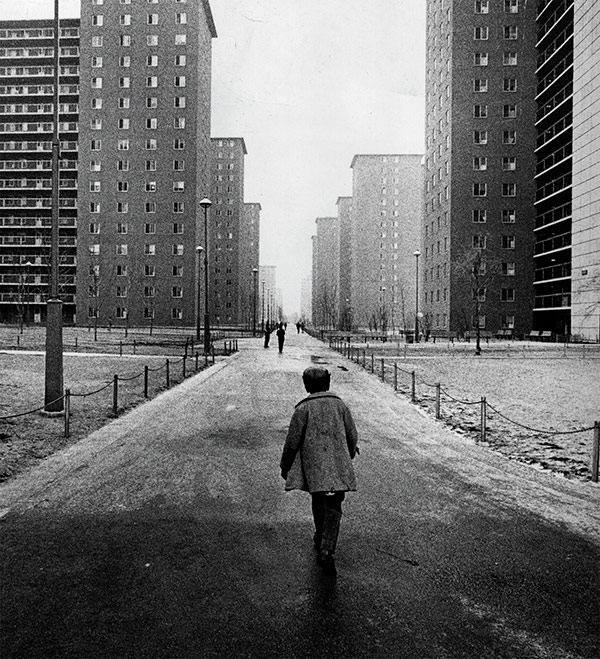
Alex Kotlowitz spent three years with Lafayette and Pharoah, and their family and friends, and wrote this book based on his numerous interviews, discussions and reflection. The boys lived with their family in the Henry Horner Homes public housing in Chicago, and this account shows how they struggled to survive in a dangerous and inhospitable environment.
Beyond the story of the two boys, this is an exploration into urban youth in society, where children as young as thirteen are engaged in violence, drug dealing and gangs. It's also a view into the horrible living conditions in the Henry Horner Homes, showing how the Chicago Housing Authority failed the families living there. The City officials were no better, corrupting the budget intended for the betterment of the building occupants. The police were also not always looking out for the welfare of building residents. All of the factors combined meant that these boys were growing up in an environment where they had almost no chance of successful futures. The near constant trauma means that children age quickly, becoming emotionally scarred and understanding that death is a near presence where they live.
However, Kotlowitz does find hope here, showing that if children are given a chance and support, that they can succeed. Pharoah in particular is an example of this, taking school seriously and studying hard.
The title of the book comes from a quote from Lafayette and Pharoah's mother, LaJoe, who said, "But you know, there are no children here. They've seen too much to be children."
I found this book to be a very moving read. As I have been reading more about the Chicago public housing projects, it has been particularly compelling to read people's accounts of their lives in these buildings. Reading this book, set over a period of time when I was in high school, made me extremely aware of just how different my life was from that of these two boys. Living in a suburb of Chicago, with parents who worked in the city, I was aware of the public housing projects. I remember reading about them in the newspaper, seeing reports of crimes, and driving past the buildings with my family on our way to somewhere in the city. However, until I started reading more recently about these buildings and about the history of public housing, I had no idea of the extent of how awful the living conditions and violence were. I appreciated that Kotlowitz gives an epilogue at the end of the book and also that he used money from the sales of this book to not only set up a trust fund for the two brothers and some of their friends, but he sent the two boys to private school.
If you'd like to know more about the Henry Horner Homes, I included a link above. There is also this sobering article from the New York Times, titled "What it's like to be in Hell." While the Henry Horner Homes were not the largest public housing project (an honor that goes to the Robert Taylor Homes, which stretched for 2 miles), it was one of the most troubled and violent projects.
This blog is the home of the St. Louis Public Library team for the Missouri Book Challenge. The Missouri Book Challenge is a friendly competition between libraries around the state to see which library can read and blog about the most books each year. At the library level, the St. Louis Public Library book challenge blog is a monthly competition among SLPL staff members and branches. For the official Missouri Book Challenge description see: http://mobookchallenge.blogspot.com/p/about-challenge.h
Showing posts with label public housing. Show all posts
Thursday, January 31, 2019
Wednesday, January 23, 2019
Blueprint for Disaster
Blueprint for Disaster: The Unraveling of Chicago Public Housing by D. Bradford Hunt 392 pages
This book examines the well-intentioned but misguided policy decisions that paved the road to failure for Chicago's public housing projects. When the projects were originally designed, replacing dangerous slum buildings, they were seen by some as a great solution for housing. People were on waiting lists just to be able to get into one of the buildings. But what went wrong? That's what Hunt examines here, looking at the history of public housing in Chicago.
I found this to be a really fascinating read, coming from the Chicago area. Hunt spares no detail in explaining how projects like the Robert Taylor Homes and Cabrini-Green projects were doomed to failure from the very beginning, but how administrators weren't deterred by these problems. Hunt also explains how the very high ratio of children to adults meant that there would be social disorder, which would be further exacerbated by the design of the high-rise buildings. That was something I had not learned about before, and I found it made perfect sense. The combination of multiple elements like design flaws, this unbalanced ratio, and a lack of funding would have doomed these projects even if the Chicago Housing Authority (CHA) had not been so poorly run. The CHA was, in fact, so poorly run that the federal government eventually stepped in to take care of things. The CHA is still a huge mess, even years after these tall public housing buildings have been torn down.
St. Louis' Pruitt-Igoe homes are mentioned briefly because that project suffered from some of the same issues and flaws as the Chicago projects. I did watch the DVD of The Pruitt-Igoe Myth after finishing this book, and it was a really interesting film. Comparing St. Louis and Chicago, there were a lot of differences, but many similarities. At least St. Louis had the sense to realize that Pruitt-Igoe was not working and tore the buildings down after a relatively short period of time, unlike Chicago. One detail that I kept coming back to was how large the Pruitt-Igoe housing development was, especially when the area was shown at a distance. However, these paled in comparison to the Robert Taylor Homes in Chicago, which were 28 buildings and which spanned two miles. Yes, two miles --- it felt like those buildings went on forever.
Definitely an interesting book, especially when combined with the DVD about the project in St. Louis.
This book examines the well-intentioned but misguided policy decisions that paved the road to failure for Chicago's public housing projects. When the projects were originally designed, replacing dangerous slum buildings, they were seen by some as a great solution for housing. People were on waiting lists just to be able to get into one of the buildings. But what went wrong? That's what Hunt examines here, looking at the history of public housing in Chicago.
I found this to be a really fascinating read, coming from the Chicago area. Hunt spares no detail in explaining how projects like the Robert Taylor Homes and Cabrini-Green projects were doomed to failure from the very beginning, but how administrators weren't deterred by these problems. Hunt also explains how the very high ratio of children to adults meant that there would be social disorder, which would be further exacerbated by the design of the high-rise buildings. That was something I had not learned about before, and I found it made perfect sense. The combination of multiple elements like design flaws, this unbalanced ratio, and a lack of funding would have doomed these projects even if the Chicago Housing Authority (CHA) had not been so poorly run. The CHA was, in fact, so poorly run that the federal government eventually stepped in to take care of things. The CHA is still a huge mess, even years after these tall public housing buildings have been torn down.
St. Louis' Pruitt-Igoe homes are mentioned briefly because that project suffered from some of the same issues and flaws as the Chicago projects. I did watch the DVD of The Pruitt-Igoe Myth after finishing this book, and it was a really interesting film. Comparing St. Louis and Chicago, there were a lot of differences, but many similarities. At least St. Louis had the sense to realize that Pruitt-Igoe was not working and tore the buildings down after a relatively short period of time, unlike Chicago. One detail that I kept coming back to was how large the Pruitt-Igoe housing development was, especially when the area was shown at a distance. However, these paled in comparison to the Robert Taylor Homes in Chicago, which were 28 buildings and which spanned two miles. Yes, two miles --- it felt like those buildings went on forever.
Definitely an interesting book, especially when combined with the DVD about the project in St. Louis.
![]() |
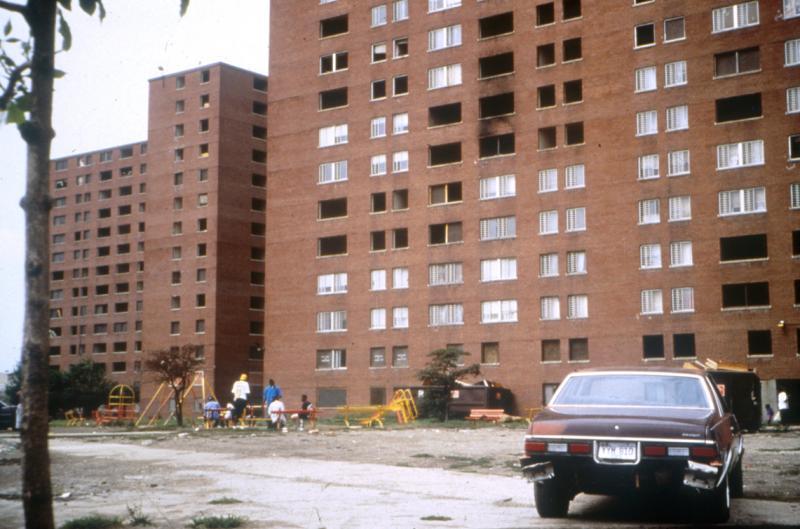
| Image of Robert Taylor Homes in Chicago |
Saturday, January 5, 2019
High Rise Stories: Voices from Chicago Public Housing
High Rise Stories: Voices from Chicago Public Housing edited by by Audrey Petty and Peter Orner 304 pages
This book is a series of first-person accounts of living in the different iconic Chicago public housing projects, including the Robert Taylor Homes, Cabrini-Green and Stateway Gardens. The Executive Editor's note in the book explains that the narratives are the result of extensive oral history interviews with 26 men and women from Chicago over the course of 2 1/2 years.
I found this book to be a very interesting read, as I am from the Chicago area and lived in different neighborhoods in Chicago, including one near the Jane Addams Homes. I have read other books about Chicago's public housing so it nice to get the viewpoints through these narratives. While many people associate "public housing" with words like "awful" and "horrifying," when many of these buildings were built, they weren't that bad. And while conditions did deteriorate and the gang activity increased over the years, these buildings were still where a lot of people found homes and formed communities. These narratives underscore all of that, which I feel is important.
This book has a foreword, introduction and the Executive Editor's note, as well as appendices about the timeline of housing and civil rights in Chicago, as well as a glossary, information on high rise architecture, and more.
This book is a series of first-person accounts of living in the different iconic Chicago public housing projects, including the Robert Taylor Homes, Cabrini-Green and Stateway Gardens. The Executive Editor's note in the book explains that the narratives are the result of extensive oral history interviews with 26 men and women from Chicago over the course of 2 1/2 years.
I found this book to be a very interesting read, as I am from the Chicago area and lived in different neighborhoods in Chicago, including one near the Jane Addams Homes. I have read other books about Chicago's public housing so it nice to get the viewpoints through these narratives. While many people associate "public housing" with words like "awful" and "horrifying," when many of these buildings were built, they weren't that bad. And while conditions did deteriorate and the gang activity increased over the years, these buildings were still where a lot of people found homes and formed communities. These narratives underscore all of that, which I feel is important.
This book has a foreword, introduction and the Executive Editor's note, as well as appendices about the timeline of housing and civil rights in Chicago, as well as a glossary, information on high rise architecture, and more.
Tuesday, November 20, 2018
Purging the Poorest
Purging the Poorest: Public Housing and the Design Politics of Twice-cleared Communities by Lawrence Vale 428 pages
This book focuses on the 75-year history of public housing and the struggle to house what have been called the "deserving poor." Focusing on two cities, Atlanta and Chicago, Vale looks at how in the 1930s, both demolished their slums (or a designated slum) and established some of the United States' first public housing. Decades later, these same two cities led the way in clearing public housing. These are what Vale terms "twice-cleared" communities and this book examines the history of these two cities' housing projects: Chicago’s Cabrini-Green and Atlanta’s Techwood /Clark Howell Homes. The author also delves into how design politics affects the issues of architecture and urbanism and how those affect policy.
Coming from the Chicago area, I know a fair amount about public housing in that city, including Cabrini-Green, so I was curious about this book. It's fairly academic in nature and admittedly, I was more interested in the section about Chicago. I remember when the Cabrini-Green development was dismantled and how it felt momentous, at least on the outside, because those buildings had been such a solid part of the landscape in that neighborhood that it was difficult to imagine that they hadn't always been there. I appreciated that the author took a direction of examining how design affected the politics of public housing. This wasn't a book I'll be picking up for a re-read, but it had some interesting parts to it.
This book focuses on the 75-year history of public housing and the struggle to house what have been called the "deserving poor." Focusing on two cities, Atlanta and Chicago, Vale looks at how in the 1930s, both demolished their slums (or a designated slum) and established some of the United States' first public housing. Decades later, these same two cities led the way in clearing public housing. These are what Vale terms "twice-cleared" communities and this book examines the history of these two cities' housing projects: Chicago’s Cabrini-Green and Atlanta’s Techwood /Clark Howell Homes. The author also delves into how design politics affects the issues of architecture and urbanism and how those affect policy.
Coming from the Chicago area, I know a fair amount about public housing in that city, including Cabrini-Green, so I was curious about this book. It's fairly academic in nature and admittedly, I was more interested in the section about Chicago. I remember when the Cabrini-Green development was dismantled and how it felt momentous, at least on the outside, because those buildings had been such a solid part of the landscape in that neighborhood that it was difficult to imagine that they hadn't always been there. I appreciated that the author took a direction of examining how design affected the politics of public housing. This wasn't a book I'll be picking up for a re-read, but it had some interesting parts to it.
Tuesday, February 27, 2018
High-Risers: Cabrini-Green and the Fate of American Public Housing
High-Risers: Cabrini-Green and the Fate of American Public Housing by Ben Austen 400 pages
The Cabrini-Green public housing was one of the more famous public housing in the United States. While not the only public housing in Chicago, Cabrini-Green had the most notorious reputation. Built in the 1940s in an area that had previously been a deteriorating slum, Cabrini-Green grew to 23 towers and a population of 20,000 (although that number could be debated) that was packed onto 70 blocks. Typical of Chicago, this area was just blocks from one of Chicago's most expensive neighborhoods, the Gold Coast (where the high rises actually had some similar elements of construction). For many people who lived in Cabrini, it was home, even as it became synonymous with crime and the failure of government. By 2011, every one of the high rise buildings had been razed and the families dispersed. In this book, Ben Austen tells the story of Cabrini-Green, but also tells the story of public housing in America, Chicago politics, government politics, and more. He includes personal accounts of people who lived in these buildings, following their lives through the years.
I found this book to be beautifully written and absolutely fascinating. Growing up in the Chicago area and living in several Chicago neighborhoods in my 20s, I was very familiar with Cabrini-Green, as well as the other public housing projects in Chicago. These particular high-rises, visible as you drove down Lake Shore Drive, were foreboding looking, even on a sunny day. It was hard to imagine that any of these buildings had ever looked nice or had been good places to live. The reputation of the buildings was absolutely horrible, as well, making the name "Cabrini Green" synonymous with danger, crime, and awfulness. If you mention the name Dantrell Davis to people in Chicago, or "Girl X," anyone of a certain age will know what you're talking about. I remember Cabrini-Green. I remember Girl X. I remember feeling nervous when I was driving by this housing project. I remember being nervous when a family member started working in the 600 W. Chicago Avenue building, basically right across the street. Their employer said things like, "Don't worry. Just walk on the one side of the street," as if somehow, there was a protective barrier to keep everyone safe. I also remember when the decision was made to tear these buildings down. There was a sense of relief, but also a sense of sadness. And worry for where these people would go, because these buildings were homes. Just because these buildings were in bad repair and bad condition didn't mean that the people didn't deserve somewhere to live.
I really appreciated how the author delved into the history of not just these buildings, but of public housing in general (and even mentions the Pruitt-Igoe buildings in St. Louis). This is the really ugly history of Chicago, and Chicago politics. I admit I am proud to be from Chicago, but I also admit that I am not proud of some of Chicago's history (and even what happens there now). The author, however, doesn't focus on the ugliness. Instead, you have the cold reality and the awfulness, but you also have the balance with the stories of people who lived in these buildings. They raised their families there, worked hard, supported their community, and believed in the potential of what could be. I had a hard time putting this book down, and would suggest it to readers who are interested in this view of history (even if they don't know much about Chicago). If you are familiar with Chicago's history, I'd encourage you to pick up this book. You may find it brings up some memories you had forgotten, and may bring up some emotion, too. It's history that shouldn't be forgotten.
The Cabrini-Green public housing was one of the more famous public housing in the United States. While not the only public housing in Chicago, Cabrini-Green had the most notorious reputation. Built in the 1940s in an area that had previously been a deteriorating slum, Cabrini-Green grew to 23 towers and a population of 20,000 (although that number could be debated) that was packed onto 70 blocks. Typical of Chicago, this area was just blocks from one of Chicago's most expensive neighborhoods, the Gold Coast (where the high rises actually had some similar elements of construction). For many people who lived in Cabrini, it was home, even as it became synonymous with crime and the failure of government. By 2011, every one of the high rise buildings had been razed and the families dispersed. In this book, Ben Austen tells the story of Cabrini-Green, but also tells the story of public housing in America, Chicago politics, government politics, and more. He includes personal accounts of people who lived in these buildings, following their lives through the years.
I found this book to be beautifully written and absolutely fascinating. Growing up in the Chicago area and living in several Chicago neighborhoods in my 20s, I was very familiar with Cabrini-Green, as well as the other public housing projects in Chicago. These particular high-rises, visible as you drove down Lake Shore Drive, were foreboding looking, even on a sunny day. It was hard to imagine that any of these buildings had ever looked nice or had been good places to live. The reputation of the buildings was absolutely horrible, as well, making the name "Cabrini Green" synonymous with danger, crime, and awfulness. If you mention the name Dantrell Davis to people in Chicago, or "Girl X," anyone of a certain age will know what you're talking about. I remember Cabrini-Green. I remember Girl X. I remember feeling nervous when I was driving by this housing project. I remember being nervous when a family member started working in the 600 W. Chicago Avenue building, basically right across the street. Their employer said things like, "Don't worry. Just walk on the one side of the street," as if somehow, there was a protective barrier to keep everyone safe. I also remember when the decision was made to tear these buildings down. There was a sense of relief, but also a sense of sadness. And worry for where these people would go, because these buildings were homes. Just because these buildings were in bad repair and bad condition didn't mean that the people didn't deserve somewhere to live.
I really appreciated how the author delved into the history of not just these buildings, but of public housing in general (and even mentions the Pruitt-Igoe buildings in St. Louis). This is the really ugly history of Chicago, and Chicago politics. I admit I am proud to be from Chicago, but I also admit that I am not proud of some of Chicago's history (and even what happens there now). The author, however, doesn't focus on the ugliness. Instead, you have the cold reality and the awfulness, but you also have the balance with the stories of people who lived in these buildings. They raised their families there, worked hard, supported their community, and believed in the potential of what could be. I had a hard time putting this book down, and would suggest it to readers who are interested in this view of history (even if they don't know much about Chicago). If you are familiar with Chicago's history, I'd encourage you to pick up this book. You may find it brings up some memories you had forgotten, and may bring up some emotion, too. It's history that shouldn't be forgotten.
![]() |
| One of the Cabrini-Green buildings |
Subscribe to:
Posts (Atom)