Showing posts with label teen angst. Show all posts

Tuesday, October 2, 2018

Five Feet Apart

Five Feet Apart by Rachael Lippincott     288 pages

"Stella Grant likes to be in control—even though her totally out of control lungs have sent her in and out of the hospital most of her life. At this point, what Stella needs to control most is keeping herself away from anyone or anything that might pass along an infection and jeopardize the possibility of a lung transplant. Six feet apart. No exceptions.

The only thing Will Newman wants to be in control of is getting out of this hospital. He couldn’t care less about his treatments, or a fancy new clinical drug trial. Soon, he’ll turn eighteen and then he’ll be able to unplug all these machines and actually go see the world, not just its hospitals.

Will’s exactly what Stella needs to stay away from. If he so much as breathes on Stella she could lose her spot on the transplant list. Either one of them could die. The only way to stay alive is to stay apart. But suddenly six feet doesn’t feel like safety. It feels like punishment.

What if they could steal back just a little bit of the space their broken lungs have stolen from them? Would five feet apart really be so dangerous if it stops their hearts from breaking too?"


This was such a beautiful love story, told from the perspective of two teenagers with Cystic Fibrosis. Will and Stella couldn't be more different in their outlook on life, him wanting to stop treatment and life life to the fullest while he still can, she trying to hold everything together to get better so she won't hurt the people she loves. But when they meet, slowly they change each other for the better and they find love where they didn't expect it.

I found both Stella and Will to be well rounded characters and I liked them both. They both seemed believable and earnest in their feelings and the why of their feelings was explained well. I also felt that the relationships with side characters was strong, mostly between Stella and Poe. There was a feeling of real time spent together, their routines and inside jokes helped show just how much the knew and loved each other. Not much time was spent with other friend characters, like Stella's school friends or Will's friends, but the story was not long, so there wasn't much time to include these.

I think the parents were believable as well, though I do think it was a bit too good to be true for Stella's parents to <spoiler> have gotten back together so easily and quickly after Stella's long transplant</spoiler>. I do like that the parents were there and involved, rather than just being props to make the story move along.

I kept wondering how the story would end, since the prospect of CF being terminal suggests that one or both characters could die at any time. I am glad that the author didn't create a magical/unbelievable recovery for Will or made it so that both characters actually could be together in the way they wanted, as this would have taken away from the reality that this book is trying to convey. The ending is bittersweet, but also ambiguous in a hopeful way. Stella's and Will's stories are not quite over and you, the reader, are left to imagine what you think might happen to them.

Lastly, I very much enjoyed the author's decision to provide a very real portrayal of the lives of people with CF. I think many stories don't handle illnesses well, or attempt to use illness as a quirk to create a compelling or unique romance and end up using the illness as a tool or don't present it in an accurate way, thus showing that the inclusion of illness in the story is just to make it novel or provide a tragic reason that the two leads cant be together - I’m looking at you, Everything, Everything! From the way this book was written, really lovingly, I could tell that the author wanted to provide a positive story for those who have CF, that accurately represented their lives, and that would make them seen by the rest of the world. At no point in the book did I feel like CF was just a story tool or was used to add heightened drama. It was very real, eye opening, and moving.

I would highly recommend this story and I am very glad I read it. Anyone who loves teen romance stories or who want to read a book with compelling, well written characters should read this book.

Thursday, August 30, 2018

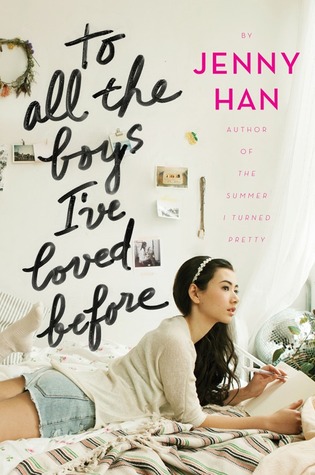
To All the Boys I've Loved Before

To All the Boys I've Loved Before by Jenny Han

What if all the crushes you ever had found out how you felt about them… all at once?

Sixteen-year-old Lara Jean Song keeps her love letters in a hatbox her mother gave her. They aren’t love letters that anyone else wrote for her; these are ones she’s written. One for every boy she’s ever loved—five in all. When she writes, she pours out her heart and soul and says all the things she would never say in real life, because her letters are for her eyes only. Until the day her secret letters are mailed, and suddenly, Lara Jean’s love life goes from imaginary to out of control.


What can I say about this book other than that it is disappointing because it wasn’t even close to what I was expecting? If you look at the cover, if you read the book description, all signs point to YA Romance. But that’s where it gets you: there is no romance.

Some might protest: “Oh no, there’s the romance between Lara Jean and Peter!” or “Lara Jean and Josh!” But I say, “NO.” This is not romance. For one thing, a fake relationship does not translate to romance. Even when Lara Jean and Peter <spoiler>admit that they like each other</spoiler> that does not really equal romance. And nothing comes of it anyway. For another, you can’t even count Josh – he’s a periphery and nothing happens <spoiler>and don’t even count the fact that he surprise kisses Lara Jean and she sort-of kisses him back before breaking it off.</spoiler>. NOT ROMANCE.
What this book is really is just a hint, a tease, to get you to read the next book. The beginning says: buckle up, the characters are circling each other in a “will they/won’t they”! The middle says: nothing remotely romantic is happening, only wistful day-dreaming about romantic things. The end says: PSYCH! No romance, just a could-have-been and now it’s over, but IS IT???!!!

Now I have to read the next book to see where that takes me – and to figure out why in bloody heck there’s a THIRD book. Why is this love story a series? I couldn’t figure it out before I read this book and now I know why. Because, most likely, the romance won’t happen till somewhere by the end of the second book, but probably not until the third book. Is it worth the struggle? I’ll say yes, because this book is a light, easy read.

Proceed with caution if I haven’t warned you off yet: Lara Jean is not the greatest head to be inside. As if her name weren’t cutesy enough, Lara Jean is such a “baby girl” that she reads more like a 13 year old. This is perpetuated by her continuous use of the titles, “Mommy,” and “Daddy,” for her parents. I’ve never met anyone above the age of 10 who calls their parents mommy and daddy. It was really freaking weird and I could not get over it. Lara Jean also has no life – she hangs out with her sister(s) and her dad and she goes to school. The only other person she sees more is Josh (because he freaking lives next door!). She has a sort-of girl friend, Chris, but that doesn’t really count because a) they don’t hang out at school and b) Chris only pops up every once in a while or calls Lara Jean. They don’t frequently see each other enough to call them best-friends.

And then, of course, there’s Peter. The “love interest.” I say it in quotes because <spoiler>their relationship is based on a contract</spoiler> but also because there is absolutely no chemistry between Lara Jean and Peter. In fact, Peter is very much still hung up over his ex-girlfriend throughout the book. Even when he says he likes Lara Jean, I sort of don’t believe him because I just don’t see any proof of that in the text and that’s either the author’s fault or Peter is just a really terrible person. But I think, it’s actually kind of both.

I’m going to go on a side-tangent here (feel free to skip to the bottom for my final say on this book): Neither Peter, nor Josh, are good romantic choices for Lara Jean.

I’ll start with Josh because the reason is really short: he’s her sister’s ex-girlfriend. Even if the author might in future write a scene where Margot says, “Lara Jean, I really am completely over Josh and I don’t even care that you and he are in a relationship, in fact, go you! I’m your biggest fan and supporter,” I would not be down with this relationship. For one, <spoiler>Margot breaks up with Josh and clearly still has feelings for him. And he for her. I don’t really buy the whole, “Lara Jean why didn’t you say something before because actually I love youuuu,” thing. In fact, it makes Josh an even bigger creep because he seems to be in love with Margot and Lara Jean interchangeably. If I were Lara Jean (or even Margot, to be honest) I’d be constantly worried about who Josh is thinking of when he kisses me/does anything romantic with me</spoiler>. Secondly, Josh and Margot <spoiler>had sex</spoiler>. If I knew that about my sister and the guy I have a crush on, I think any feelings would immediately be doused. Just no.

Now, Peter. First of all, Peter is still into his ex, a girl he’s on/off dated for all of high school and some of middle. If that doesn’t spell trouble, I don’t know what does. Secondly, Peter continually treats Lara Jean badly. He continually makes fun of her, picks fights with her, and has very little to say positively about her. He’s also extremely vain/selfish, a fact which Lara Jean CONTINUALLY brings up. If she can see it, I don’t know why Peter becomes attractive to her because that seems a bit problematic, especially given her romantic notions. After a certain point in the book, Lara Jean starts saying, “He’s really not like that,” or “He’s actually a nice guy,” or something to that effect. What I want to know is, how has she come to this conclusion? Even though a good percentage of the book is her and Peter hanging out, I don’t really see him change at all from her initial perception of him: he’s a bro, he’s vain, etc. Either Han is just not good at showing character development or she wrote Lara Jean to be just like all the other girls Lara Jean complains about when in connection to Peter: Peter’s a charmer and he makes every woman fall in love with him. Which means that no, he’s not actually nicer than people thought, not as self-involved as everyone thought, he’s just really good at conning people. I’m leaning towards this one a little bit because Lara Jean often says things like, “If Peter asks, I’ll probably do it,” as in, Peter can convince her to do things she normally wouldn’t do. If that’s how it is, then no – Peter is a terrible choice for a boyfriend.

Final thoughts:

So, ultimately, this book is a giant tease – it hints at romance, doesn’t deliver, and then expects you to read the next book to find out. Also, both love interests are terrible and Lara Jean is so babyish it’s hard to imagine anything romantic happening with her in a way that wouldn’t be creepy because she seems like a 13 year old. It’s a fast read – mostly because I kept trying to get to the good part, but it never happened. Will I read the next one? Probably, because it’ll probably be just as quick. I know I might be setting myself up for more disappointment, but at least it will be over quickly. I don’t know who I’d recommend this to.

Thursday, July 5, 2018

It Only Happens in the Movies

It Only Happens in the Movies by Holly Bourne     416 pages

Audrey is over romance. Since her parents' relationship imploded her mother's been catatonic, so she takes a cinema job to get out of the house. But there she meets wannabe film-maker Harry. Nobody expects Audrey and Harry to fall in love as hard and fast as they do. But that doesn't mean things are easy. Because real love isn't like the movies...

The greatest love story ever told doesn't feature kissing in the snow or racing to airports. It features pain and confusion and hope and wonder and a ban on cheesy clichés. Oh, and zombies... 


A part of me wishes that this book ended differently, but a different part of me knew it could only end the way it did and I'm glad Bourne chose to end it that way. The story is a beautiful monument to what is wrong with stereotype romance films and how, on the whole, these stereotypes warp society's way of experiencing love, expecting certain things, giving up others, letting things happen because love is the end goal.

Is love a choice or a feeling? When this question gets put to Audrey, she feels one way, but by the end, she recognizes that it isn't what she initially thought. Her character development is so strong in this book - I absolutely loved reading her. She begins the novel with a torn up heart - suffering from a teen, school romance gone sour - and on top of that, her own parents' bitter divorce has gotten much worse because her childhood home is being forcibly sold by her father to pay for his new family's lifestyle. Swearing off love, Audrey doesn't expect to fall into another relationship again, especially when it appears to come from the most stereotypical of sources. Harry's character is everything you'd expect out of a teen romance movie. Bourne did an excellent job, though, of building him into something that you could see Audrey accepting, the kind of guy who, despite being warned off by many, she falls for. Thus the romance ensues.

But Audrey's cinema class offers her an opportunity to explore what is wrong with Hollywood romances and to look at her own relationships with a critical eye. The book is full of amazing, stereotype-smashing scenes that really just make me love Audrey more. And the cast of characters is great, bringing the humor, the love, and the support that Audrey needs. This book wasn't what I expected it to be and so I understood why 
(view spoiler).

So yeah, a very well written book - despite my being unsatisfied with the end (it's not warranted, but as a rational human being I can accept it. I just like my romances to be...different). I would definitely put this in an anti-valentine display - Audrey's cinema project alone is a great example of anti-valentines protest. But I'd also recommend it just so people can read a genuinely well written female character. Audrey is flawed, but she is also strong, capable, and feeling. She makes mistakes but she also owns up to them and she does her best to be better. She tries. And I love her for it.

Monday, July 2, 2018

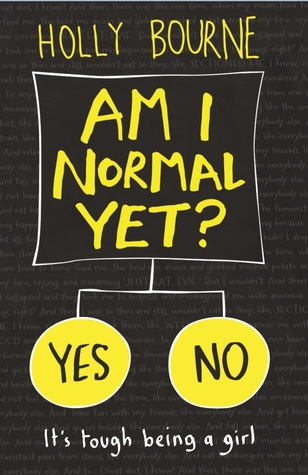
Am I Normal Yet?

Am I Normal Yet? by Holly Bourne     434 pages

All Evie wants is to be normal. She’s almost off her meds and at a new college where no one knows her as the girl-who-went-crazy. She’s even going to parties and making friends. There’s only one thing left to tick off her list…

But relationships are messy – especially relationships with teenage guys. They can make any girl feel like they’re going mad. And if Evie can’t even tell her new friends Amber and Lottie the truth about herself, how will she cope when she falls in love?


Wow, this book was a roller coaster of emotions to read. Evelyn, or Evie, is just starting to lower her medication to combat her OCD symptoms. Wanting to experience a "normal" teenage life, she begins to make new friends and perhaps experience real romance for the first time. Except her symptoms start creeping back - only this time, Evie's not willing to admit they're back, afraid that she'll disappoint her family, that her new friends will find out and not want to be around her to deal with mental issues, that she will be "mental" for the rest of her life.

Bourne did such a good job conveying the struggles someone might go through with this mental illness, drawing out the problems in our society with stigmas about mental illness, society's casual use of mental illness buzzwords, like "OCD" or "crazy," without realizing how much such casual use of these words might hurt those with actual illnesses. With the character of Evelyn, Bourne is able to bring a light to this issue while still constructing a teenage character with real teenage problems that traditional YA books attempt to highlight. Evie gets crushes, she has family problems, she worries about what her friends might think, all issues tackled in many YA novels. While highlighting mental illness, Bourne does not let it define Evie's character, still showing her in the same light as any other YA-driven novel.

This story was so compelling - I felt things very deeply while reading Evie's character, and I especially enjoyed how feminism became a rallying cry for her and her friends, who start their own "spinster" club, to take back the word spinster and perhaps bring about a new, enlightened way of living in a world full of benevolent as well as blatant sexism. While the type of feminism discussed isn't as intersectional as I'm sure some would like, it is still an important component that most YA books do not even attempt to touch, so I applaud Bourne for bringing the topic of feminism, as how teen girls experience it, in this book.

The narration was so witty and the cast of characters all felt well rounded and real. I am so happy I finally got a chance to read this book and I will definitely be recommending it to everyone.

Saturday, September 30, 2017

Feral Youth

Feral Youth by Shaun David Hutchinson, Brandy Colbert, Suzanne Young, Tim Floreen, Justina Ireland, Alaya Dawn Johnson, Stephanie Kuehn, E. C. Myers, Marieke Nijkamp, and Robin Talley    310 pages


At Zeppelin Bend, an outdoor education program designed to teach troubled youth the value of hard work, cooperation, and compassion, ten teens are left alone in the wild. The teens are a diverse group who come from all walks of life, and they were all sent to Zeppelin Bend as a last chance to get them to turn their lives around. They’ve just spent nearly two weeks learning to survive in the wilderness, and now their instructors have dropped them off eighteen miles from camp with no food, no water, and only their packs, and they’ll have to struggle to overcome their vast differences if they hope to survive.

Did it live up to the blurbs on the book - specifically the ones that caught my attention and made me want to give it a shot - i.e. "inspired by the Canterbury Tales," and the cover, let's be honest, is so beautiful and really fits my aesthetic - not really. I can see no connection that would warrant saying it's inspired by the Canterbury Tales other than that there are a whole bunch of people who are going somewhere and tell stories along the way - but kinda not really. 

The premise is a bit forced - the "narrator" suggests a storytelling contest for $100 dollars and, surprisingly, these disparate teens who seem to hate everything and each other, decide to go along with it. Their journey is a forced journey - they're in a "boot camp" of sorts for teens who broke the law in one way or another, and they've been prepped to survive in the woods and are then dumped in the middle of the woods, WITH NO COMPASSES, a flare gun that doesn't work, a knife, and sleeping bags. What kind of program thinks this is a good idea to let teens loose in the middle of the woods and expects them to get back at all, let alone unharmed? They weren't even given food!

I call B.S. on that whole business. The stories are loosely meant to explain why each teen is at the "camp" but mostly each story - and I mean all of them - is met with extreme doubt and bluff-calling. No one believes anyone's story is the "truth" and the beginning of the book contains a premise by the narrator about "what is the truth, anyway? You don't know my truth, you only know what you want to believe," and, "we're teens - no one believes us or wants to or understands us!!!" Okay, I get it. Teens are misrepresented all the time, misunderstood, yada yada. I was a teen. I work with teens. They're not all that mysterious. 

Now, the stories - some I liked, some I hated, some were straight up strange. The only story I really liked ended in a brutal murder, so I hope that teen's story wasn't actually true. Either way. This book was bizarre, at best, and does it's best to capture the unique teen experience, presenting a diverse cast of teens and their stories, attempting to address current issues, like woman's rights, minority rights, rape, etc. Some of the authors were successful in that regard, some not so much.