Showing posts with label Dominicans. Show all posts

Tuesday, June 11, 2019

Fra Angelico

Fra AngelicoFra Angelico: San Marco, Florence by William Hood, 123 pages

William Hood remarks that Bl Fra Angelico enjoyed an advantage rare among Renaissance artists - as a Dominican friar, he worked exclusively for the Order and therefore never had to worry about finding new commissions.  His frescoes for the cloister of San Marco have an advantage as well, remaining in their original context despite the transition of the building from convent to museum, a process completed by the departure of the last friars in 2014.  In addition to detailing the techniques employed, Hood carefully explicates the relationships of the frescoes to one another, to the daily life of the convent, to contemporary movements within the Order of Preachers, and to the political realities of Renaissance Florence, considerably enlarging the reader's understanding of the painter's radiant work.

Friday, June 29, 2018

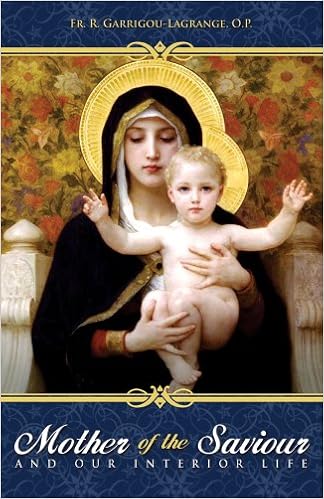
Mother of the Saviour

Image result for The Mother of the Saviour and Our Interior Life Garrigou-Lagrange, ReginaldThe Mother of the Saviour and Our Interior Life by Fr Reginald Garrigou-Lagrange, OP, translated by Bernard J Kelly, CSSP, 338 pages

Mother of the Saviour is both an examination and a celebration of the Mother of God - neither purely devotional nor purely intellectual, it uses devotion to draw us into deeper understanding and the intellect to draw us into deeper devotion. Fr Garrigou-Lagrange carefully proceeds with a theological inquiry into the Church's teachings, revealing the grounding of the Marian dogmas in the reality of the divine maternity and the mystery of human participation in the work of God.

Saturday, March 31, 2018

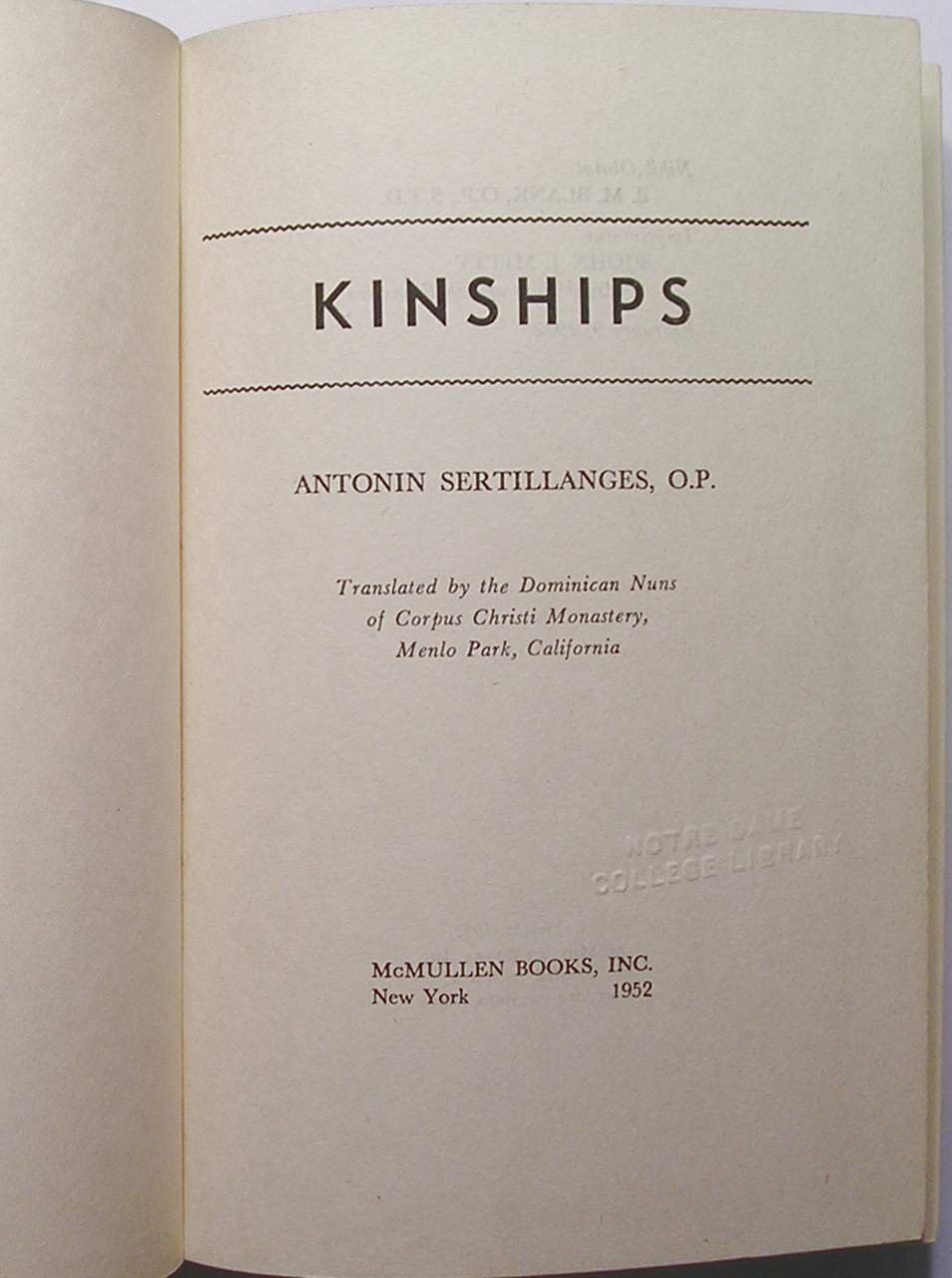
Kinships

Image result for Kinships SertillangesKinships by Antonin Sertillanges, OP, translated by the Dominican Nuns of Corpus Christi Monastery, Menlo Park, California, 234 pages

In considering the nature of the world and the moral order, Fr Sertillanges never forgets that it is a natural order animated by love.  Kinships reflects on that love and the response it demands, for it is nothing less than the charity of Christ, a love of "renunciation and generosity", not self-indulgence.  It is in this light that he reflects on the bonds of religion and society, not as chains that enslave, but as our means of escape from selfishness.

Whether read on its own or in conjunction with Recollection and Rectitude, Kinships is involving, if a bit uneven.

Wednesday, March 28, 2018

Rectitude

Image result for Rectitude SertillangesRectitude by Antonin Sertillanges, OP, translated by the Dominican Nuns of Corpus Christi Monastery, Menlo Park, California, 244 pages

If "recollection" is the awakening of the mind to the order of the world, "rectitude" is the orientation of the will into harmony with that order.  The word Fr Sertillanges returns to again and again in these reflections is "integrity", by which he means, not merely "uprightness", but the disposition of every part of the whole human person according to the hierarchy of values.  This right order of the soul is built on a foundation of humility - humility, which is strong where pride is weak.  Sin disorders the soul and disintegrates the personality.

The meditations in Rectitude seem generally stronger than those in Recollection, although this is probably primarily the result of a tighter thematic focus.

Monday, March 26, 2018

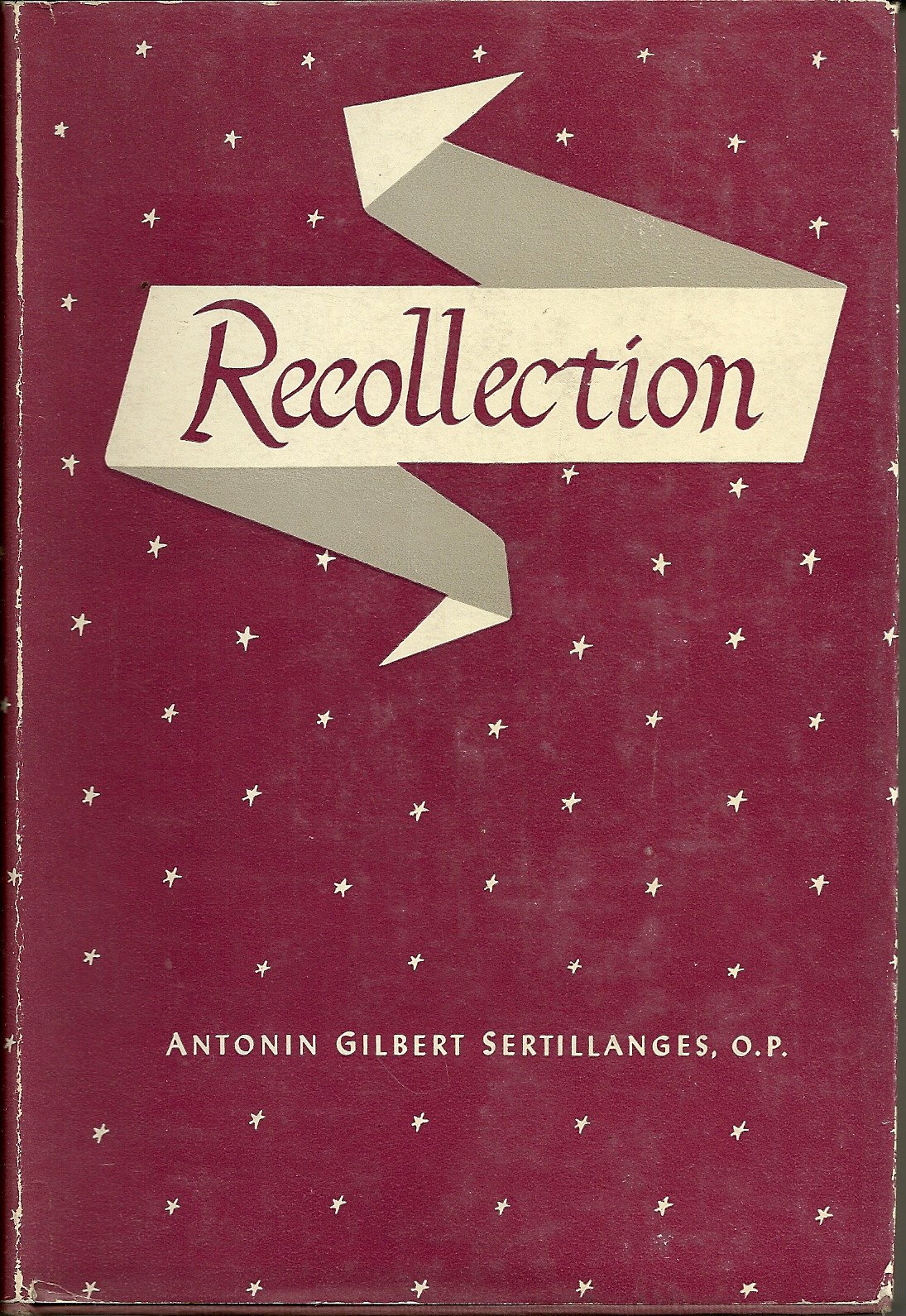
Recollection

Image result for Recollection SertillangesRecollection by Antonin Sertillanges, OP, translated by the Dominican Nuns of Corpus Christi Monastery, Menlo Park, California, 235 pages

In this collection of reflections Fr Sertillanges seeks to summon the reader to recognition of the reality of the world and his own place in it, to the human condition in all its high dignity and abject wretchedness.  To do so, he calls upon his own wide learning, including quotes and allusions from sources from Aquinas to the Zend-Avesta.  Life, he tells us, must be understood and lived in the light of eternity.  The recognition of a reality by which we are produced and which we cannot reproduce demands a response.

Recollection is often excellent but becomes thin in places, despite the book's high purpose and the author's considerable erudition.

Monday, February 5, 2018

Light of Christ

The Light of ChristThe Light of Christ: An Introduction to Catholicism by Thomas Joseph White, OP, 302 pages

In The Light of Christ, Fr White introduces readers to the fundamentals of the Catholic faith, beginning with the Church's teaching on the complementarity of faith and reason and progressing through the nature of God, the Incarnation, the Church, and the moral and spiritual life.  White not only explains the teachings themselves, but explicates their origins and, most importantly, demonstrates how they cohere.

The Light of Christ is not an apologetical work, nor a catechetical one.  It is too intellectual for casual readers, too basic for studious Catholics.  For those seriously interested in acquiring a basic understanding of the Church without being proselytized, however, it may prove to be a Godsend.

Monday, April 24, 2017

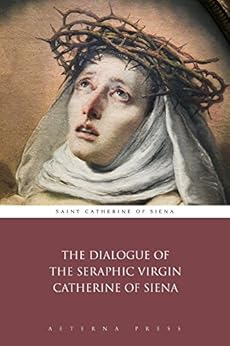
Dialogue of St Catherine of Siena

The Dialogue of the Seraphic Virgin Catherine of Siena, Dictated by Her, while in a State of Ecstasy, to Her Secretaries and Completed in the Year of Our Lord 1370, Together with an Account of Her Death by an Eyewitness by St Catherine of Siena and others, 344 pages

The full title of the Dialogue is most of the context provided in this edition - the brief introduction is primarily concerned with the spiritual state of Italy, Christendom, and the saint rather than a true biography of the author or commentary on the text.  That text is a transcription of conversations St Catherine had while in an ecstatic state with the first two Persons of the Trinity.  None of the voices - those of God or that of the saint - ever descends into the kind of babbling emotionalism popularly associated with ecstasy - they speak clearly, rationally, and, on the part of God, with a commanding authority.  There is not even a trace of self-aggrandizement - St Catherine is not interested in her status as the mouthpiece of the Almighty, but with how she - and we - can draw closer to Him.  The result is an eminently practical guide to the spiritual life, showing "clearly in each state the means of cutting away imperfection and reaching perfection, and how the soul may know by which road she is walking and of the hidden delusions of the devil and of spiritual self-love."

Saturday, October 29, 2016

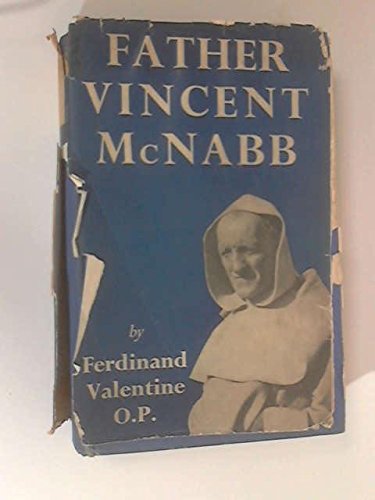
Father Vincent McNabb

Father Vincent McNabb, OP: The Portrait of a Great Dominican by Ferdinand Valentine, OP, 414 pages

Father Valentine's book was never intended as a comprehensive biography of his former teacher and fellow Dominican, but rather as an outline of his life and a collection of primary sources, particularly those gathered from Fr McNabb's own family.  Nearly half of the 414 pages are devoted to a collection of letters from McNabb, primarily to family members, disclosing much of the author's personality but rarely touching upon his public views.  As such, those looking for a detailed record of McNabb's work as a Catholic apologist or social reformer will be disappointed.  At the same time, as a brother in religion of his subject, Valentine brings to his study a special understanding, and this is further supplemented by the personal material.  The result is an intimate though uneven portrait of the man behind the work, the conflicts that drove him, and the loves that sustained him.

Wednesday, May 7, 2014

Commentary on De Trinitate

http://www.loomebooks.com/images/cat/DSC07569.JPGCommentary on De Trinitate by St Thomas Aquinas, translated by Rose Emmanuella Brennan, SHN, 197 pages (from The Trinity and the Unicity of the Intellect)

This is, as the above suggests, a commentary by St Thomas Aquinas on St Boethius' theological tract on the Trinity (De Trinitate).  Aquinas uses the scholastic format usually associated with his writings ("It seems that..." but "On the contrary..." and "Furthermore...").  Aquinas uses Boethius' text as a primer on subjects ranging from the division of human knowledge into three principal categories (physics, mathematics, and metaphysics) to the nature of God Himself.

It is safe to say that this is a book with limited appeal.  It is thoroughly excellent on its own terms, but few readers - even among those with an interest in theology or Boethius - will care about most of the issues Aquinas treats in this work.  Many of the articles pack more meaning than entire books by lesser authors, but their subject is often some obscure point of epistemology or ontology.  For those with an interest in Aquinas or scholastic philosophy more generally, this is a work by the Angelic Doctor.  Others may want to skim the articles for subjects of interest to them.