Wednesday, April 6, 2016

March Totals!

Congrats to Dennis M, who read the most books and pages and earned the most points in March! The winner of March's random drawing is Krista R -- we'll be contacting you shortly about your prize. Thanks for blogging!
 
March Stats:
BloggerBooksPagesPoints
Dennis M133,96217
Jen O123,80913
Jason S113,49411
Krista R93,2519
Julie E-C82,1548
Molly P37373
Steve J14651
TOTALS5717,87262

Tuesday, April 5, 2016

Because

Because by Jack A. Langedijk       388 pages

I was invited by the author’s press people to read/review Because. Sounded great. When it arrived in the mail, I was more than a little skeptical. If I had seen this on a bookshelf, I would have passed it by. The cover art is confusing, the title is boring and weird (that lowercase “b” really threw me off), and the back cover text didn’t pull me in.

Then, I started reading. The first 23 pages were bad. I had no idea what was happening. Thank God for my 50-page rule (I almost always give a book 50 pages before I say it’s not for me).By the time I reached page 50, I realized that those first pages merely had a badly placed flashback.

And by the time, I reached page 50, I was hooked on Robert and his story. Robert, real name Roberto Sanchez, had a great life: He gave workshops to at-risk kids; he climbed mountains—and had climbed the most difficult ones, including Mt. Everest; he had a loving and supportive wife, and a beautiful daughter. He was “on the top of the world,” physically and psychologically.

Then, the avalanche happened. He was trapped beneath six stories of snow and ice. He was rescued, obviously, but lost both legs. How does a man go from being active and fit, to no longer being able to do the things he loved? It’s hard that’s for sure.

Robert’s story weaves between past and present, not necessarily in that order. Langedijk does a great job in naming each chapter so readers can figure out what’s happening. For the past, Langedijk also weaves in the stories of how the other three members of Robert’s climbing party (not including the guides) came to be in that group. Troy, Nancy, and Phillip are fascinating, well-developed characters. I was especially taken with Troy, and I think other readers will find him one of their favorite characters also. The author also weaved in Robert’s sessions with a counselor.

For the present story, Lanfedijk provides a linear story that culminates in heartbreak and happiness. Toward the end, the story became a little preachy and got a little old. But by the end, I was once again riveted with Robert’s plight.


I give Because 4 out of 5 stars.

Monday, April 4, 2016

The Dungeoneers

The Dungeoneers (Dungeoneers, #1)The Dungeoneers, by John David Anderson, 448 pages
Colm is one of many mouths that his parents have to feed- and as hardworking and well-intentioned as they are, Colm knows that they are struggling.  So he tries his hand at pick-pocketing, and it turns out that he is very gifted at it.  His father is less than happy to find the pile of gold that Colm proudly brings home, though, and declares that the only honest thing to do is turn him into the magistrate.  But a stranger offers to pay the fines in return for Colm accompanying him and learning the trades of a rogue.  What follows is an adventure that I can only describe as Hogwarts for D&D fans.  And if that sentence just got you excited, then I think that we could be friends.  This is a series with some potential, and one that I will be keeping an eye on.

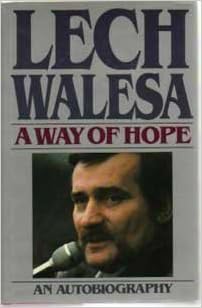
Way of Hope

A Way of Hope: An Autobiography by Lech Walesa, 311 pages

Lech Walesa was an electrician in the Gdansk shipyards who became a leader in the labor struggles around which Solidarity coalesced.  Two years after the publication of the English edition of A Way of Hope, Solidarity would force the collapse of the Communist government in Poland, the first domino in the collapse of the Warsaw Pact and ultimately the USSR itself.  At that time Walesa would become the first democratically elected President of postwar Poland.  Part of the interest this book holds is that it was written in the midst of the struggle, when the outcome was anything but clear.

The book was originally published in a French translation of the Polish manuscript, being banned in the author's native land.  The style is clumsy and awkward, but this only enhances the evident honesty of the book.  Scenes of chaos, such as the riots during the 1970 strike, are remembered as a confused jumble of impressions, not smoothed out into a clear narrative.  Frequently reminiscences from friends and family are interposed, simply dropped right into the middle of a chapter, but these help round out the portrait of the man and his time, often revealing more about the author than the sections he wrote himself. 

The book presents Walesa as a very human figure, entirely fallible and often out of his depth, whose greatest virtue seems to be his sheer mulish stubbornness.  It is difficult to read A Way of Hope without thinking of Havel's greengrocer, the ordinary man who simply refuses to continue to be complicit in a lie.  Indeed, Walesa's status as a worker was self-confessedly part of his success - the workers instinctively distrusted the intellectuals in the movement but accepted him as one of their own, supporting him in spite of the inevitable missteps and setbacks.  The book is clear, too, about his greatest assets - Walesa "was strong because he spoke the language of truth", and, as he said of Bl Jerzy Popielusko, he was determined "to answer evil with virtue."

Saturday, April 2, 2016

Crisis of Modernity

Cover image for The Crisis of Modernity by Augusto del Noce, translated by Carlo Lancellotti, 306 pages

The first English translation of major essays by one of the most perceptive Italian philosophers of the "short twentieth century", The Crisis of Modernity focuses on the great moral struggle of that period - for and against Marxism and Fascism, revealed here as mirror images, revolutionary ideologies that happen to point in opposite directions.  For del Noce, each is an expression of modern gnosticism - the belief that the world as it exists is irredeemably wicked, and must be replaced with an entirely new creation belonging to some mythical future or past.  The consequence of the empty triumph of Marxism, he argues, is late modern nihilism, a soulless technocracy focused entirely on production and consumption.

Del Noce maintains that philosophy is implicit in all human activity, though it often requires a philosopher to give it voice.  The result is a concentration on the philosophical underpinnings of historical trends and movements.  He diagnoses the modern era as a continuous expression of the ideology of progress as liberation from every limitation, and therefore the abolition of tradition and elimination of community, and therefore the desecration of the sacred and the de-humanization of man.

Thursday, March 31, 2016

Extras

Extras by Scott Westerfeld, 399 pages

“Extras, the final book in the Uglies series, is set a couple of years after the "mind-rain," a few earth-shattering months in which the whole world woke up. The cure has spread from city to city, and the pretty regime that kept humanity in a state of bubbleheadedness has ended. Boundless human creativity, new technologies, and old dangers have been unleashed upon the world. Culture is splintering, the cities becoming radically different from each other as each makes its own way into this strange and unpredictable future . . .  One of the features of the new world is that everyone has a "feed," which is basically their own blog/myspace/tv channel. The ratings of your feed (combined with how much the city interface overhears people talking about you) determines your social status--so everyone knows at all times how famous they are.  As Scott Westerfeld explored the themes of extreme beauty in the first three Uglies books, now he takes on the world's obsession with fame and popularity. And how anyone can be an instant celebrity.”  This book was really good.  I think it was my favorite out of this series, actually.  The more Westerfeld books I read, the more I understand the hype.  

Earth Flight

EarthFlight by Janet Edwards, 365 pages

“Jarra never wanted to be a celebrity. All she ever wanted was to gain some respect for the people left on Earth: the unlucky few whose immune system prevents them from portaling to other planets.  Except now she's the most famous Earth girl in the universe - but not everyone in the universe is happy about it, nor the fact that she has found love with a norm. Jarra's actions have repercussions that spread further than she ever could have imagined, and political unrest threatens to tear apart the delicate balance of peace between humanity's worlds.  On top of everything, the first alien artifact ever discovered appears to be waiting for Jarra to reveal its secrets. But to do so, she must somehow find a way to leave Earth - or else the alien artifact will be lost forever. Is there a way for Jarra to travel to another planet? Or is her destiny only to look to the stars - but never to reach them?”  I loved the finale to this series.  These books just kept getting better in my opinion.  This series is a must for teen science fiction fans.

Earth Star

Earth Star by Janet Edwards, 287 pages

In this sequel to Earth Girl, Jarra is once again called upon to help save the Earth from possible destruction.  When an alien sphere appears in the sky above Earth, Jarra and her boyfriend, Fian, are drafted into the military so that they can help with the crisis from a historian standpoint.  Jarra's status as Handicapped but from a military family makes her uniquely qualified to assist with what the military has in mind.  The situation is extremely dangerous, as no one knows if the sphere is hostile and it has not responded to any communication efforts.  If a peaceful solution cannot be reached, the governments may decide to take aggressive action, which could easily end up with the destruction of Earth.  I think I liked this book better than the first and can't wait to finish the third book also.  I would definitely recommend this series to teen science fiction fans.

Mr. Lemoncello's Library Olympics

Mr. Lemoncello's Library Olympics by Chris Grabenstein, 278 pages

This book is a sequel to Escape from Mr. Lemoncello's Library, which was a great book.  I wouldn't have thought it possible, but the sequel is at least as good as the first book.  In this story, many kids throughout the country are angry that they didn't have a chance to play in the first set of library games so Mr. Lemoncello has begun a new competition and teams of middle schoolers will have the chance to compete in the Library Olympics.  The winners will get a free ride to the college of their choice.  Kyle and his friends are excited to have a chance to compete again but Kyle is nervous about what will happen if they lose.  This book is full of fun puzzles and plenty of action.  I would highly recommend it to almost any kid who enjoys reading at all.

Unlikely Warrior: a Jewish Soldier in Hitler’s Army


The title really says it all about this book.  Although he was up front about his Jewish status, Georg was recruited into the Nazi army.  This book recounts his story, partially from letters he wrote to his parents while serving.  While difficult to read at times, this was a pretty amazing account that I think would have both adult and teen appeal.  I’ve always been fascinated with this time period in history and I think this is a good addition to current offerings.

Palace of Lies

Palaceof Lies by Margaret Peterson Haddix, 355 pages

“Desmia and her twelve sister-princesses are ruling Suala together at last, a united front. The kingdom seems to have finally gotten its happily ever after, but Desmia, trained by a lifetime of palace intrigue, is not so sure. She desperately wants to believe all is well, but she can't help seeing danger around every corner.  And then the unthinkable happens, and Desmia's worst fears are confirmed. Now, without the support of the sister-princesses she's grown to rely on or the trappings of royalty that have always convinced people to listen to her, Desmia must find the courage to seek out the truth on her own terms-and to determine the course of two kingdoms.”  I think the conclusion was my favorite book in this series.  This is very enjoyable and a must-read for fans of the fairy-tale retellings.

Stephanie Plum Series books 9-19


These books represent volumes nine through nineteen of the Stephane Plum Mystery series by Janet Evanovich.
Cover image for So, as you can probably tell, I am quickly blowing through this mystery series. It helps that all of the books are light, quick reads with little bits of humor thrown in. If you don’t know about this series, it follows the life of Stephanie Plum, who might be one of the most klutzy, yet still somehow successful bounty hunters in the world. Though she certainly is living the motto “if at first you don’t succeed…” To complicate her life even further, she is so hopelessly stuck in a love triangle, that even she has no idea who to choose. Add in the explosions, dead bodies and comic relief and you get nice easy read.
Cover image for The only problem I have with the series is its repetitiveness. It seems that once Evanovich found the right “formula” to consistently sell books and make the bestseller list, she just repeats it over and over again. Every book will have the following; dinner with the parents, at least one destroyed car, Stephanie and Lulu getting knocked over by an escaping fugitive, lots and lots of eating and food, and Ranger coming to Stephanie’s rescue. Don’t get me wrong the formula works, but I would love to see this series expand beyond this.
If you need something that passes the time and does not require too much focus or deep thinking you can certainly give this series a try, but I would recommend starting at the beginning.

Six of Crows

Cover image for Six of Crows by Leigh Bardugo, 465 pages

Six dangerous (to varying degrees) teenage criminals team up and hatch a plot to infiltrate an impenetrable fortress and rescue (or kidnap? or murder?) a high-value prisoner, for glory and huge amounts of cash.

This ranks up there with The Raven Cycle as one of the best, most interesting YA series I've read - certainly the best ones still in progress. That's not to say that it's perfect, but most of my criticisms are minor and spoiler-heavy.

The characters are diverse and well-defined, the action is over-the-top and exciting, the world itself is creative and complex. It tackles themes of prejudice and unhealthy (to varying degrees) relationships with a deft touch. While it occasionally succumbs to a "Summer blockbuster" mentality, there's so much to like that even with my minor complaints, it's still a huge success. Highly recommended - I'm already anxiously awaiting the sequel.

Notorious RBG

Notorious RBG: The Life and Times of Ruth Bader GinsburgNotorious RBG: the Life and Times of Ruth Bader Ginsburg, by Irin Carmon and Shana Knizhnik, 240 pages

One of the Read Harder challenges that someone introduced me to this year was to read a biography, which is not a genre in which I typically dabble.  So I think I typed in something like "not+terrible+biographies" or "biographies+when+you+don't+like+biographies," and this one came across my path.  It was an interesting read, for a few reasons. 

The main reason is that Justice Ginsburg is, simply put, awesome.  She is incredibly smart, and put up with some ridiculous patronizing in the days when a woman had to be 20 times better than a man in order to be considered to be his legal clerk.  She was one of those women balancing professional and personal life before it was considered possible.  She was a pioneer for equal rights- angered when they were referred to as "women's" rights.   I found her logic and methods to be fascinating and brilliant; if you need to convince a panel of nine men that equal rights are important, she realized that you had to frame it around men.  This meant that many of her "women's rights" cases were arguing against laws that were unfairly beneficial to women.  Because equal means equal, regardless of partisanship or trends.  And her dissent at the 2013 Shelby County v. Holder decision (the one that basically threw out the Voting Rights Act) was just brilliant: "like throwing away your umbrella in a rainstorm because you are not getting wet." Basically, I'm excited to know more about this pretty amazing woman. 

But a couple of other notes... I had no idea when I started this that it was was actually based on a fan-created Tumblr page dedicated to Supreme Court Justice Ruth Bader Ginsburg.  So there's alot of fan art and comics and general whimsy throughout about a lady who is pretty notoriously straitlaced, which is delightful.  But if you're reading this on your phone, you may have a really hard time actually looking at said art; also because of the digital version, the formatting was outright bizarre- there would be an excerpt from a Ginsburg dissent, and then paragraphs later what turned out to be the author's notes about a bolded sentence in the paragraph.  Very frustrating, actually- especially because it took a long time to even figure out that was what was occurring. 

Wednesday, March 30, 2016

Living in Truth

Living in Truth by Vaclav Havel, edited by Jan Vladislav, 294 pages
This collection of essays was published in 1986, on the occasion of the author receiving the Erasmus Prize for his "opinion that every human being must personally bear his or her responsibility" and his opposition to "all threats to a humane culture".  In the included writings, Havel defies a "revolutionary ideology in which the ideal of man's total liberation has a central place" but whose anthropology imagines man as a "creature whose only aim is self-preservation", and therefore brings about "the gradual erosion of all moral standards, the breakdown of all criteria of decency and the widespread destruction of confidence in the meaning of values such as truth, adherence to principles, sincerity, altruism, dignity, and honour."  He advocates instead a society of voluntary associations which respects the private sphere of individual conscience.

The Havel revealed in these essays is not a political figure, if "political" refers to a programmatic approach to concrete issues and specific problems.  He is, rather, a cultural, social, and ultimately moral critic.  This is consistent with his characterization of the "dissident" as simply an individual who affirms that certain values are worth suffering and, potentially, dying for.  His dissent is therefore not limited to the peculiarities of communist Czechoslovakia, but extends to the West and the twenty-first century as well, for he rejects both the faceless power of impersonal technocracy and the cynicism that is the natural result of the wreck of utopianism.

Living in Truth also includes tributes to Havel from literary figures including Samuel Beckett, Milan Kundera, Arthur Miller, and Tom Stoppard.

Tuesday, March 29, 2016

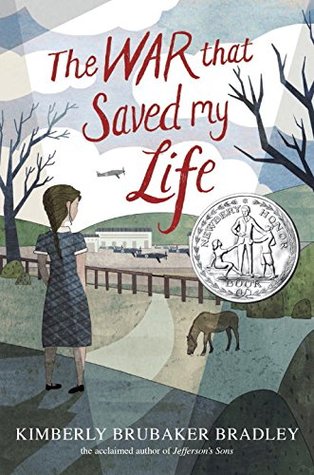
The War That Saved My Life

The War That Saved My Life, by Kimberly Brubaker Bradley, 316 pages
The War that Saved My Life
Ada is a young girl living with her mother and little brother in a one room apartment in London, and it's only months before England enters WWII.  The plan is to send many of the children of London away to the countryside, with the expectation that the city will be bombed by Germany.  But for Ada, this means that her brother will be sent away- not her.  Why?  Because she has never been allowed outside the apartment due to having a clubfoot that her mother says made her unlovable and evil and she would only disgust anyone who met her.

Record scratch.

Yikes- reading children's books with prominent child abuse, both mental and physical, is not something I enjoy doing.  But I will say this- the abuse is never, ever treated as a convenient plot point, or something that some fresh air in the country fixes; it's treated like the wound that it is- one that will never go away, but with the right kind of love, can become a scar one day.

I found myself raging alongside Ada at her mother, society and the world, but also frustrated with her for continuing to love her mother, and then frustrated at myself for victim-shaming a make-believe character.  It's a children's book, and one that I really feel could enter the canon of classics, but I did not find it easy to read. And I think I mean that in a really good way.

Ashley Bell

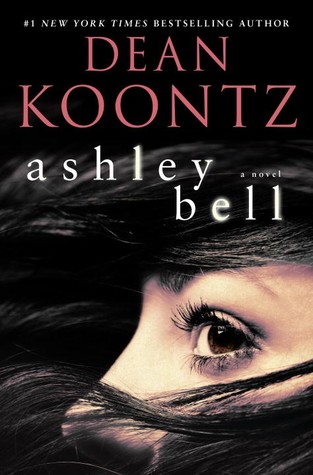
Ashley Bell by Dean Koontz     560 pages

Bibi Blair think she's having a stroke at the young age of twenty-two.  When she gets to the hospital, she gets the bad news that she's dying from inoperable brain cancer.  However, two days later, she's cured.  But how?   Obsessed with the idea that her life has been spared so that she can save someone else named Ashley Bell, Bibi sets off on a journey unlike any other.   There are dark forces at work, fast in pursuit of Bibi, who has to untwist a long trail of mysteries to reach Ashley.

It's been a long time since I read a book by Dean Koontz, but this one has been getting a lot of good reviews.   And, when I saw an extra copy on the New Books shelf, I felt it was a sign.   I found the book to be quite good, and wound up whipping through it pretty quickly.  It's what I like to think of as dark psychological suspense, with a bit of a supernatural feel.  What I really enjoyed was that there is a big twist a little more than halfway through the book which makes you question some of what you just read, and wonder what is really happening in the story.  Personally, I like it when I'm not sure if I can trust a main character, so I was happy that there was this big twist.   I also liked the main character; she's fierce, but she has a sense of humor, and I liked her determination to face up to her fears, even when things seemed overwhelming.

So, a definite thumbs-up to this book (and I'll be looking forward to the next one from Koontz).

Monday, March 28, 2016

The Ocean at the End of the Lane

The Ocean at the End of the LaneThe Ocean at the End of the Lane, by Neil Gaiman, 181 pages

There's this special category of book- the kind that is short and seemingly simple; if you read it just for the surface story, you may think "Well, wasn't that a weird little tale," and report back to the book club group that you just don't "get" fantasy.  But... if you let yourself spend some time in it, you realize that it's far richer than that.  In this simple tale, a man returns to his childhood town for a funeral, and reflects on fantastic memories of his youth.  But if you spend a little longer in the story, you'll read about loss of innocence, the question of whether we'll think our lives were worth it when we reach the end of them, and what it means to be lonely.  And despite how that sounds... you leave the story with a sense of hope.  I thought this was simply beautiful.

In conclusion: I just can't quit you, Neil.  You pulled me in with Sandman, and lost me with American Gods.  You won me again with Marvel, 1602, but made me say "meh," with The Sleeper and the Spindle.  Do I just like your graphic novels?  No, because I loved Good Omens.  Was that primarily Terry Pratchett?  I just don't know!  Reveal your mystery to me- what is it about you that I like alot when I like it and dislike alot when I don't?  You beautiful, silent enigma, you!

Too Big To Fail

Cover image for Too Big To Fail by Andrew Ross Sorkin, 539 pages

Too Big To Fail is the definitive journalistic account of the financial crisis of 2008. as seen through the eyes of the bankers and brokers as they tried desperately to find a solution to the problems they themselves had created.  Their efforts range from the almost heroic - in one thirteen hour workday, Treasury Secretary Hank Paulson was involved in no fewer than sixty-nine phone calls and meetings - to the comic - an AIG vice president hustling through the streets of New York carrying a briefcase stuffed with $14 billion in bonds - to the entirely absurd - several dozen Goldman Sachs traders reacting to the news that the UK had imposed a moratorium on short-selling their company's stock by rising to their feet and singing "The Star-Spangled Banner".  Sorkin, who covered the meltdown for The New York Times, goes into truly impressive, almost overwhelming detail about the events of September 2008.

The book is badly organized at times - Sorkin first tells the story of John Thain's overhaul of the New York Stock Exchange, then his life story up until became CEO of NYSE, and then continues with his later leadership of Merrill Lynch.  This further confuses a narrative already burdened by hundreds of characters and dozens of companies and government agencies.  Sorkin also - whether through journalistic objectivity or simple myopia - seems blind to the absurdity of some of the situations he describes, like AIG's scramble to ensure that the brokers who lost 5 billion dollars of the company's money wouldn't leave for their competitors.  Perspective is easy to lose - Sorkin is so engaging in his description of the titanic struggle to save Wall Street that it is easy to forget that even the failures wound up wealthy far beyond most people's imagining.

Too Big To Fail is a tremendous accomplishment within the limits it sets for itself.  The story of what happened as the 2008 crisis climaxed is covered exhaustively.  How it happened, how it affected ordinary people, and what it ultimately cost is outside its scope - for that, we must turn to books like Madrick's Age of Greed, Stockman's The Great Deformation, or Barofsky's Bailout.  The occasional mention of how the unfolding of the crisis might affect ordinary Americans only serves to underscore how little such concerns matter on the highest levels of our political and economic systems.

Friday, March 25, 2016

Life of Christ

The Life of Christ by Fulton Sheen, 658 pages

In The Life of Christ, Archbishop Sheen walks step by step through the Gospels, from the Annunciation to the Ascension.  The whole enterprise is rooted deeply in Scripture, with hardly a paragraph that does not include a corresponding passage from the Bible taken from Msgr Knox's beautiful translation.

Sheen's retelling focuses on the unity of the Gospel story, emphasizing the connections between the various events as the narrative moves forward.  In Sheen's reflections, the entire life of Christ - indeed, all of human history - is one long Way of the Cross, a continuous act of sacrifice, revelation, and redemption.  Behind the shadow of the Cross, however, the light of the Resurrection is always present.