Thursday, December 27, 2018

THE MAN WHO INVENTED CHRISTMAS

The Man Who Invented ChristmasThe Man Who Invented Christmas: How Charles Dickens's A Christmas Carol Rescued His Career and Revived Our Holiday Spirits by Les Standiford

241 pages

Reviewed by Rae C.

This is a great book filled with tidbits about Dickens and how he came to write "A Christmas Carol."  The book points out how this story changed Christmas celebrations.  For example, it was celebrated, and some people did have trees, and a few wealthy people sent out early versions of Christmas card, but this story created the culture of what we now consider to be a traditional Christmas.  And before this story, the goose was the star of the Christmas dinner, not turkey.

This story was also much influenced by Dickens trips to Manchester, an industrial city with a lot of poverty.  This was during the time that Karl Marx and Frederick Engels were writing the Communist Manifesto in Manchester.  A lot of interesting tidbits about Dickens economic and political viewpoints, especially that Dickens was not a socialist/Marxist.

Also there was quite a bit about how influential Dickens was even during his times.  His books sold more in the British Isles than many of our NY Times bestsellers sell today.  Also a lot about how much he had to fight piracy and bad rip offs of his books, and never received a penny for any of his books sold in other countries. And there is an alternate story about how his life ended, quite Dickensian really, at his young lover's house, not his home.  

If you like Dickens, A Christmas Carol, Victorian traditions and history, or just a good read, I recommend this book.  If you love Dickens and/or "A Christmas Carol", this book is a necessity!

THE MOOR

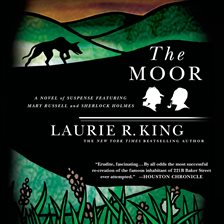
The MoorThe Moor by Laurie R. King 


10 audio discs (11 hr.) (319 pages)

Reviewed by Rae C.

From SLPL Bibliocommons:
Young Mary Russell (A Monstrous Regiment of Women, St. Martin's, 1995) drops everything to join husband Sherlock Holmes in Devonshire, where the pair investigate an ancient family curse near the scene of The Hound of the Baskervilles published some 20 years earlier. The forbidding moor nearby provides them both danger and inspiration.

This is my favourite in the series so far- not only do we return to the scene of Holmes' most famous case, but Rev. Sabine Baring-Gould is not only a character, he is the reason Sherlock and Mary are there, and King writes Baring-Gould into the original Baskerville case.  I'm sure much of this is because Baring-Gould's real life grandson is a known as Holmes authority and wove his grandfather's legacy into Holmes fictional biography.  I also loved that the Moor itself was a character, or almost a character.  Mary spends a good deal of time reading Baring-Gould's books about the Moor and its inhabitants.  This book is rich in Dartmoor lore, legend, and folk.  And it is a smashing good mystery!  Have some thickly tannic Yorkshire Gold tea with cream and sugar while you read about Mary and Holmes out trudging around the Moor in rain and fog and mud for the perfect enjoyment of this book!  Even if, like me, you are listening on audiobook and drinking tea out of your 21st century travel mug while you speed down an asphalt highway at 70 miles per hour!  You won't notice the miles or the minutes going by.  And I have to mention again how much I love the narrator!  She is perfect, and will forever be Mary Russell to me!

PS- There is a comment on Bibliocommons about this book that says that Baring-Gould was Protestant and therefore would not refer to the Madonna as "mother of God".  This is incorrect and misses the difference between the Anglican church and other Protestant churches.  Baring-Gould most certainly did refer to Mary as "mother of God".  The later Protestant reformation was about whether Priests or God had authority over sin.  The early split between Rome and the Anglican church was about who would have authority over the King: God (meaning the King) or the Priests.  The Anglican church has more in common with Rome than Luther.


THE HANDBOOK FOR AMERICANS

The Handbook for Americans

The Handbook for Americans

Out of Many, One : A Book to Benefit the People


Reviewed by Rae C.

This is a great little handbook- perhaps intended for those studying for citizenship; but I think all Americans would benefit from reading this.  It is exactly moderate, middle of the line, the things that anyone would agree are the common story and ideals of this country.  Of course, liberals will probably find it too conservative, and conservatives will find it too liberal.  But it is complete, concise, and has the most important elements, while being mostly inclusive.  One glaring omission is a representation of the Native Americans.  Elizabeth Cady Stanton and Sojourner Truth are represented in speeches, but no Native Americans.  This seems like the books one oversight. However, very worth reading and an excellent resource!

Saturday, December 22, 2018

The Woman in the Lake

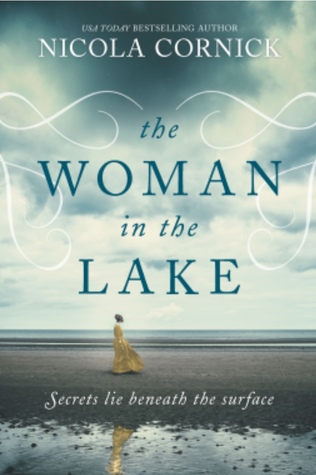
The Woman in the Lake by Nicola Cornick     320 pages

From Goodreads:

London, 1765

Lady Isabella Gerard, a respectable member of Georgian society, orders her maid to take her new golden gown and destroy it, its shimmering beauty tainted by the actions of her brutal husband the night before.

Three months later, Lord Gerard stands at the shoreline of the lake, looking down at a woman wearing the golden gown. As the body slowly rolls over to reveal her face, it’s clear this was not his intended victim…

250 Years Later…

When a gown she stole from a historic home as a child is mysteriously returned to Fenella Brightwell, it begins to possess her in exactly the same way that it did as a girl. Soon the fragile new life Fen has created for herself away from her abusive ex-husband is threatened at its foundations by the gown’s power over her until she can't tell what is real and what is imaginary.

As Fen uncovers more about the gown and Isabella’s story, she begins to see the parallels with her own life. When each piece of history is revealed, the gown—and its past—seems to possess her more and more, culminating in a dramatic revelation set to destroy her sanity.

My Review:

I was invested in this book right out of the gate. It was so interesting and the back and forth between past and present was really cool and intriguing. 

I loved the mystery that was threaded throughout the story. The bizarre nature of the gown and what it might be capable of was such a subtle threat and the suspense that was paired with it really moved the story along.

I thought the characterization was really strong in the three main women. There was good depth built for each and they each have their own personal quirks that differentiate them from each other. I think what I like most is that each woman is strong in their own way and they are each the hero of their own story.

Overall it's a really nicely structured mystery historical fiction and I highly recommend it.

The Road

The Road by Cormac McCarthy     241 pages

From Goodreads:

A father and his son walk alone through burned America. Nothing moves in the ravaged landscape save the ash on the wind. It is cold enough to crack stones, and when the snow falls it is gray. The sky is dark. Their destination is the coast, although they don’t know what, if anything, awaits them there. They have nothing; just a pistol to defend themselves against the lawless bands that stalk the road, the clothes they are wearing, a cart of scavenged food—and each other.

My Review:

This book is not for me. It's a post-apocalyptic/dystopian world built around two characters, a father and son, as they make their way through the ruins of America looking for...I don't really know what. They don't know what. It's cold, it's desolate, it's nearly hopeless, and ultimately not a lot happens.

I'm sure that many people have found some sort of deep meaning in all this, but to me it was the same situation played out over and over again: traveling, running out of food, almost dying of starvation, finding a magical store of previously unfound food, rinse and repeat. Sure the father and son discussed the morals of good and bad, McCarthy explores the idea of what mankind will become if left to their own devices, but it was done in such a boring way!

I probably would have put this book down after the first few pages, but I am counting this book as my "Oprah Winfrey Book Club Book," for Book Riot's Read Harder Challenge, so I had to get through it. And I did. I just didn't enjoy it. Read it if you're into slow-paced, thought-driven prose and bleak dystopian landscapes

There There

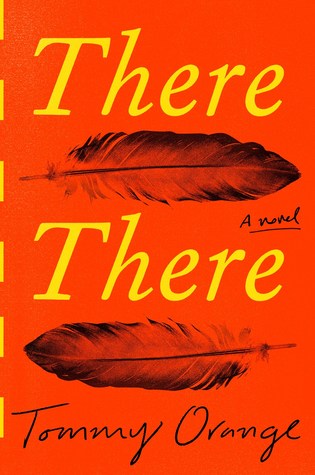
There There by Tommy Orange     294 pages

From Goodreads:

There There is a relentlessly paced multigenerational story about violence and recovery, memory and identity, and the beauty and despair woven into the history of a nation and its people. It tells the story of twelve characters, each of whom have private reasons for traveling to the Big Oakland Powwow. Jacquie Red Feather is newly sober and trying to make it back to the family she left behind in shame. Dene Oxendene is pulling his life back together after his uncle’s death and has come to work at the powwow to honor his uncle’s memory. Opal Viola Victoria Bear Shield has come to watch her nephew Orvil, who has taught himself traditional Indian dance through YouTube videos and has come to the powwow to dance in public for the very first time. There will be glorious communion, and a spectacle of sacred tradition and pageantry. And there will be sacrifice, and heroism, and unspeakable loss.

My Review:

I didn't really know what I was getting into when I started this book, but wow it sure took me places.

Things I liked: the dichotomy that Orange explores about being Native, being mixed race, of having ancestors who owned this land and some who took that land away. I loved the different ways he explored this topic through the lens of so many people with such different backgrounds. I also loved how all these characters struggled with the feeling of "acting Indian" because it feels like a trope now, just one more thing that White culture has taken away. This struggle is then met with Orange's discussions on how Indians have evolved, that they can be Urban and still Native.

Things I didn't like: the multiple view points. I know I said I liked seeing all the different perspectives, but I also don't like reading so many perspectives. It's hard for me to keep them all straight, and since only a small amount of time is given to each person, it made it harder for me to remember the intricacies of each character. I also had a hard time getting into the way the story organically grew out of nothing and then ended right at the climax. It was a strange build to a story, one that I could see the outline of, but it also didn't really help keep me invested. I didn't like how sudden the ending was and I'm still trying to wrap my head around what it all meant, which in a way is a good thing, because that means the story has stuck with me, but in a way it's bad because I don't feel I'm likely to get any answers.

I would recommend this story because it's a hard-hitting one from a Native voice and it demands to be heard. It's sad and it's hopeful and it'll make you sit up and pay attention. Orange has a commanding voice in this book and I think it really reached me. So dig into it if you can.

Dare Mighty Things

Dare Mighty Things by Heather Kaczynski     377 pages

From Goodreads:

Seventeen-year-old Cassandra Gupta’s entire life has been leading up to this—the opportunity to travel to space. But to secure a spot on this classified mission, she must first compete against the best and brightest people on the planet. People who are as determined as she to win a place on a journey to the farthest reaches of the universe. 

Cassie is ready for the toll that the competition will take; the rigorous mental and physical tests designed to push her to the brink of her endurance. But nothing could have prepared her for the bonds she would form with the very people she hopes to beat. Or that with each passing day it would be more and more difficult to ignore the feeling that the true objective of the mission is being kept from her.

As the days until the launch tick down and the stakes rise higher than ever before, only one thing is clear to Cassie: she’ll never back down . . . even if it costs her everything.

My review:

This book was interesting because it's a futuristic setting, which I don't come across very often. Humanity is capable of genetically modifying humans before their bore (designer babies) and has landed a man on Mars. Though the NASA still suffers insufficient funds and there's still a general lack of space exploration - until this competition, which Cass luckily get's nominated for.

I enjoyed Cass's narrative - she is hard working, determined, and yet still relatable. She struggles with homesickness, with feeling too nerdy at times and at others not ne
rdy enough, and difficulties with making friends. I liked seeing her progression through this book as she comes to understand her fellow competitors better and, even further, relates to them and befriends them.

The plot is pretty steady, hardly dragging and once the mission begins, Kaczynski really kicks it into high gear. The sci-fi is pretty soft, so I think most readers will be able to enjoy the book even if they aren't big sci-fi fans. The book follows a pretty clear trajectory that, while predictable, is still intriguing and doesn't give away everything at once. While I knew certain outcomes early on, I was still pleasantly surprised but other little twists. Though it ends on a bit of a cliff-hanger (this book is a duology), it still manages to wrap itself up so that it doesn't rely too heavily on what comes in another installment of the series.

I am definitely going to read the follow up book and I would highly recommend it to space-buffs and YA readers alike. There is some minor romance, but it's not the central plot (it barely factors in the book) and much more emphasis is placed on Cass and her growth. It's very much a woman-power book and I appreciated that.

Thursday, December 20, 2018

COLONIAL ST LOUIS: BUILDING A CREOLE CAPITAL

COLONIAL ST. LOUIS: BUILDING A CREOLE CAPITAL by Charles E. Peterson 
69 pages

Reviewed by Rae C.

If you are interested in history generally, or the specifics of land distribution and uses, types of buildings and building materials, this is a great book.  Be sure to read the footnotes, a lot of information is in the footnotes.

If you are interested in just the French roots of St. Louis this is a little too much detail, a lot of inventories -types of nails used, lumber specifications- etc.  But I did enjoy it.  The "Creole Capital" is so called because of the layout of the streets and the use of French measurements and city planning, and much is styled on New Orleans.  A lot of tidbits about Chouteau and what sort of house he lived in.  There is mention of slaves, of early trades, of the original common use pastures.

It's only 69 pages, but it is so dense with information that it took me several months to read, and I often had to go back and re-read portions, especially the footnotes.

Tuesday, December 18, 2018

The Lost Girls of Paris


The Lost Girls of Paris by Pam Jenoff   384 pages

From the author of “The Orphan Train” and several other novels come another story set in the World War II era, Pam Jenoff.  She takes another small, forgotten true story from the war and creates a real-page turner that often left me breathless.

The story opens in 1946, Manhattan. Cutting through Grand Central Station on morning, Grace Healey stumbles upon an abandoned suitcase, battered and worn.  No one seems to be around to claim it. Grace takes it upon herself to open it, looking for some sort of identification. There is a word, Trigg, scrawled on the side. In addition to the normal items that would be contained in a suitcase, Grace finds the photographs of twelve young women who appear to be in their very late teens or early twenties. The only identifying marks on the photos are first names, which Grace assumes are the women’s names.

Then the story jumps back to London, 1943. Eleanor is heading up a division of Special Operations Executive (SOE), a British operations organization designed to conduct espionage, sabotage and aid the local resistance movements in occupied Europe.

Eleanor’s job is to recruit and train young women to go undercover in France to transmit radio correspondence between London and France, particularly in the outskirts of Paris. Eleanor has selected twelve young women for the job.

The story weaves back and forth between Grace, determined to learn who the women are and what happened to them, and Eleanor has the group’s leader, and one of the girls, Marie.

I was disappointed that readers only get to know Marie intimately and another operative, Josie, superficially. Some of the other girls’ names were mentioned, but not all. I understand that it would have been too confusing, and too lengthy, to try to write about all twelve. Still, it was a wonderful read, compelling, and each story reached toward its climax, I found myself gasping at twists I didn’t expect. I want to give  The Lost Girls of Paris” 5 out of 5 stars, but the lack of information about the other ten girls forces me to give this novel 4 out of 5 stars in Julie’s world.


Until Proven Innocent

Until Proven InnocentUntil Proven Innocent: Political Correctness and the Shameful Injustices of the Duke Lacrosse Rape Case by Stuart Taylor Jr and KC Johnson, 405 pages

On Monday, March 13, 2006, some members of the Duke Men's Lacrosse team held a party at an off-campus house rented by several of their teammates.  The highlight of the evening was to be a performance by a pair of strippers, but one of the dancers arrived inebriated and unable to perform.  An angry scene ensued, ending with the sober entertainer, Kim Roberts, hauling her drunken colleague, Crystal Mangum, whom she had not met prior to that evening, to her car.  Shortly thereafter, Roberts approached police at a local supermarket, complaining that Mangum refused to leave her car.  Finding Mangum incoherent, the policemen called for an ambulance to transport her to a hospital.  Once there, Mangum told concerned health care workers several wildly different accounts of the night's events, converging on the claim that she had been raped by multiple men at the party.  Although Mangum was inconsistent on a wide range of important elements - the number of attackers, their descriptions, Roberts' role - and although her story was contradicted by testimony from Roberts and the team members, as well as physical, DNA, photographic, and electronic evidence, three members of the team would eventually be charged with rape.  The others would see their season cancelled, their coach fired, and themselves threatened by protesters, denounced by professors, and labelled as racist rape-enablers by The New York Times and CNN.

Yet the main villain of the story, as told by Taylor and Johnson, is not Mangum, but District Attorney Mike Nifong.  For Nifong, a white man in the midst of a desperate three-way election battle in which his opponents were a woman and an African-American, Mangum's story represented an ideal opportunity to appeal to women and minorities.  Once set on this course, the prosecutor was determined to continue to pursue the case even if it required the concealment of exculpatory evidence.  The secondary villains are those activists and media figures who, driven by an ideology of racial and sexual resentment, aided and abetted the injustices committed against these young men.  Finally, the authors are deeply critical of the Duke administration's inability to offer even a qualified defense of their students in the face of the angry mob, allowing outrage to trump evidence.

Taylor and Johnson, both of whom reported on the case as it unfolded, carefully detail the story at every stage of its development.  Their intimate understanding of the personalities involved is clear, and it allows them to prioritize the personal over the political, but unfortunately this also leads to some apparent personal animus against certain figures.  There is also a certain amount of necessary repetition - as lies are repeated over and over with slight variations, so too the truth must prove as tireless as the lies.

Monday, December 17, 2018

The City in the Middle of the Night

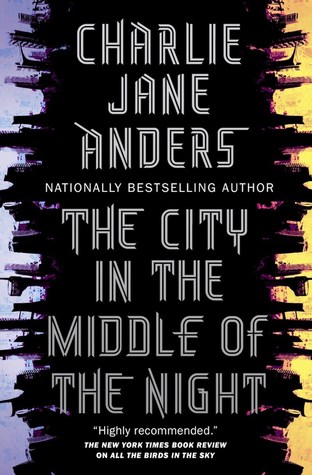
The City in the Middle of the Night by Charlie Jane Anders  Due out February, 2019. I read a galley   368 pages

"Set on a planet that has fully definitive, never-changing zones of day and night, with ensuing extreme climates of endless, frigid darkness and blinding, relentless light, humankind has somehow continued apace -- though the perils outside the built cities are rife with danger as much as the streets below.

But in a world where time means only what the ruling government proclaims, and the levels of light available are artificially imposed to great consequence, lost souls and disappeared bodies are shadow-bound and savage, and as common as grains of sand. And one such pariah, sacrificed to the night, but borne up by time and a mysterious bond with an enigmatic beast, will rise to take on the entire planet--before it can crumble beneath the weight of human existence."

This is the summary from Goodreads, which I felt would be a much better summary than one I could come up with on my own.  This is a complex story with shifting perspectives, where there's an intricate balance between the storylines and some of the characters. The style of the writing reminded me a little of China Mieville, where you drop into a story where nothing is explained and you just figure it out as you go along. I didn't mind that, but it took me a bit to adjust to it. I kept feeling like I was missing details, only to realize that none had been given --- so if you start out with that mindset, it's a little easier.

I really liked this book and found it interesting and thought-provoking. I found the characters compelling, even when I didn't necessarily like or understand them, and I really liked how Anders creates this planet and then uses that to drive a lot of the culture and how the different cities' people interact with each other. 

The catalog copy for this book reads, "January is a dying planet—divided between a permanently frozen darkness on one side, and blazing endless sunshine on the other. Humanity clings to life, spread across two archaic cities built in the sliver of habitable dusk. And living inside the cities, one flush with anarchy and the other buckling under the stricture of the ruling body, is increasingly just as dangerous as the uninhabitable wastelands outside."  The idea that people are able to have any existence at all on this planet is amazing --- and it's clear that resources are stretched thin.  It's an imaginative way to drive a story, and I found Anders' writing to be fluid and compelling.  I haven't read any of the author's other books, but I'm curious to pick up another now after reading this one.

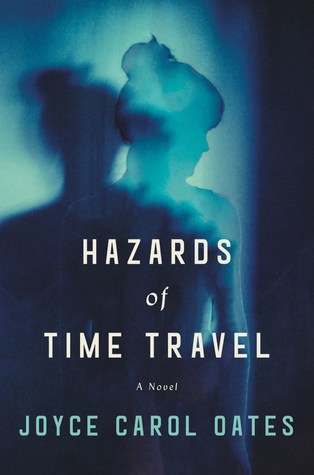
Hazards of Time Travel

Hazards of Time Travel by Joyce Carol Oates  324 pages

When Adriane decides to test the limits of her tightly controlled world, she is punished by being sent back in time to a region of North America, "Wainscotia, Wisconsin" that existed 80 years before. Warned that she cannot hint at the future, or step out of bounds in any sense of the word and sent to Wainscotia with a new name and identity, Adriane is on the path of "rehabilitation." However, when she senses someone else in Wainscotia may also be an exile, she decides to risk everything to make a connection with him.

I found Oates' vision of a future world to be quite scary, but also within reason to imagine (which is, in itself, kind of scary). The way that Adriane exists in her own world, she is obviously trying to fit within all of the rules and restrictions, but you can tell that something in her is naturally rebelling. When she is exiled back in time, you can't tell if some of her concerns about where she is and the people around her is due to paranoia, or actual risk. And then, you start to question if anything is really how she believes it to be.  This is an interesting and, to me at least, a sad story.

Thursday, December 13, 2018

Annelies


Anneliesby David R. Gillham     416 pages

In David R. Gillham’s new novel, after “City of Women,” he asks the question: What if Anne Frank had survived the Holocaust?

A single answer would not be possible, since had this been true, there are a million possibilities. Every time I think about that question, my mind hums with scenarios.

In this work, Gillham spends a little over the first half of the book reimagining the Frank’s family life in Amsterdam. He gives us a fictional account of the family’s interaction and takes a long look at their life they had while they were in hiding in secret rooms of her father’s business. The fear they felt was palpable. When the family is betrayed, my heart broke again for those who endured the Nazi brutality. Readers get to tag along as the family of four, and their friends, endure the cattle cars that took them to their living hells.

The second third of the story takes place after Anne is reunited with her father, Otto (the only true survivor of the atrocities). Anne is seventeen and very angry. This section of the book takes place mostly in 1946 as Anne, Otto, Otto’s new bride, and the friends who hid them try to adjust to life after the war.

Anne is very sensitive to and conscious of the number tattooed on her forearm. She covers it with powder and long sleeves. It’s hard to watch Anne as she feels the guilt for having survived when her mother and sister did not.

Through it all, Anne writes.  She writes before the Nazis arrest and deport her family to the concentration camps. She writes when she returns to the liberated Amsterdam. The betrayal that she feels when she learns that the thin sheets of paper she had been writing before the arrest and been found and saved by one of those who tried to protect her family.

Then the story jumps to 1961. Readers get a small glimpse into her life, but mostly that section is Anne answering fan letters from young girls.

I was extremely disappointed in this novel. I expected Gillham to imagine the adult Anne and what she may have done with her life. Instead, most readers’ basic knowledge of Anne’s history is rehashed. The writing and plot are well done, but since Gillham didn’t deliver on his promise, Annelies” receives 2 out of 5 stars in Julie’s world.


YOU ARE A BADASS AT MAKING MONEY

You Are A Badass at Making MoneyYou Are A Badass at Making Money by Jen Sincero   269 pages


https://slpl.bibliocommons.com/item/show/1379216116

Reviewed by Rae C.

This is straight up motivation for pursuing your dream.  It's 269 pages of hilarious, well-written, and concise cheer-leading.

I think women that want to start their own businesses (or write or paint, etc) will love this book, whether they are new to manifestation and prosperity thought, or solidly schooled.  This book is fun to read!  And Sincero has lots of solid advice, outlines, and stories and testimonials from clients.

I enjoyed it so much I am going to read her other two books!

Conspiracies

Conspiracies by F. Paul Wilson, 11 hrs., 33 min., 317 pages

This is the third book in the Repairman Jack series. Jack's screening process has evolved with the times. He now screens through e-mail and voicemail. Technology is also making it harder to stay under the radar.

He is working two cases, both of which he has taken on reluctantly. One involves a brother trying to help his sister who is a victim of domestic abuse. Jack usually doesn't get involved in those kinds of cases but commits to at least investigating. As he feared things get complicated.

The other one is the main case. A man's wife has gone missing right before she is about to reveal a major discovery that explains conspiracy theories. Through mysterious means she has contacted her husband and told him that Jack is the only one that can help. Is someone trying to prevent her from revealing her findings or is something else going on? And is this case somehow related to events in Jack's past?

There were parts of this book that I liked but I wasn't satisfied with the reveal and the ending. Overall, I liked this book the least of the first three books in the series. It could be that the horror/supernatural element is not my favorite.

Wednesday, December 12, 2018

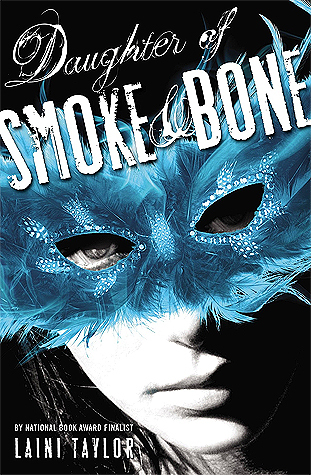
Daughter of Smoke and Bone - audiobook

Daughter of Smoke and Bone by Laini Taylor. Audiobook 10 discs, (422 pages)

I had previously posted about my re-read of this book, which I enjoyed. I needed something new to listen to in the car on my commute, so I thought I'd try this book on audio.  It made for a completely different experience.

The reader was very good, giving character's unique voices and accents, which I really liked. What I found, though, was that I actually didn't like the voice of Karou.  And I noticed something else: when I read this book, the language and writing style seemed to flow and I found it beautifully written. When I listened to it, however, it felt . . . a bit overwrought. I noticed there was more emotion when listening to it, almost to the point where it felt too dramatic. Everyone is pretty, so thin and attractive. Karou's emotions are so intense. Some of the action sequences are very dramatic. Listening to the book being read intensified the feel of the story, to the point where I didn't really enjoy it.

I realize that this is probably due to the fact that I am not a young adult -- and that's who this book is written for. If I were a younger reader and listening to this book, I'd be all over it (and loving reading the book, too).  However, the fact that I'm noting how some of the writing comes across to me as overly dramatic probably underscores the fact that I am an adult who does remember being a teenager, complete with emotional mood swings, but who doesn't experience those emotional mood swings any longer.  Thank goodness.

So, an interesting experiment, but I won't listen to the other 2 books in the series (and might not re-read them again right now, either).


The Golden Child

The Golden Child by Wendy James  352 pages

Beth Mahoney blogs about her life with her husband and two daughters, painting a picture of a busy, happy life. Originally from Australia, they've been living in New Jersey (US) for the last ten years. When Beth's husband has a job relocation back to Australia, the move couldn't have come at a more perfect time: Charlotte, Beth's youngest daughter, has been accused of being the ringleader of a group of girls whose bullying has landed another child in the hospital.

Once they settle in Newcastle, the family settles into their new life, with the girls attending a prestigious all-girls school. Popular Charlotte, however, is soon being accused of again bullying a classmate, this time to the point of the other girl's suicide attempt. Charlotte denies she's at fault, but the bullied child's parents are seeking retribution. Beth, caught between what her husband and mother-in-law believe, and her wish to believe her own child, is forced into an impossible situation.

I liked this book, which felt very realistic. You get Beth's perspective, mainly, although throughout the book are pages from someone's online blog (and it's not Beth's), which lends another perspective on the story. I found myself sympathizing with Beth and feeling that Charlotte was a nasty little girl, while at the same time wondering about Beth's other daughter and what impact this was all having on her. I also sympathized with the mother of the girl who attempts suicide, although she's not necessarily a likable character.

This book has a steadily increasing, almost relentless pace, and I found myself eager to find out what was going to happen at the end. I found the book very satisfying and, without revealing any spoilers, will say that there is a reveal of something which I found very surprising.

The Odyssey of Homer

The Odyssey of Homer by Yuri Rasovsky          Audiobook: 8 hours         334 pages     

     A few months ago, after trying to decide what book to read next, I settled on an ancient classic— a book that people have loved for thousands of years (and one of the oldest stories of Western civilization).  I was hoping that I, too, would enjoy it.

     What I checked out isn’t exactly the epic poem written by Homer, however; it’s not even a book I could actually read.  Rather, it’s a radio play that I listened to on audiobook— but it follows the story described in the ancient poem.  Odysseus is a Greek king who fought valiantly in the Trojan War, but is prevented from sailing home to his beloved wife due to the anger of Poseidon, god of the sea.  Instead, he and his men are forced to wander the seas for ten years, enduring terrors such as being captured by the hideous monster Cyclops.  Odysseus also faces temptation in the form of the beautiful, but deadly, song of the Sirens (mythological creatures that are half-woman, half-bird) and the enticement of another female, Calypso, who imprisons him and offers to make him her immortal husband.  Meanwhile, back at home in Greece, Penelope, Odysseus’ wife, faces her own temptation as she endures the harassment of a rowdy, lawless group of men who vie for her affections.  They’re also gradually eating her out of house and home.  Finally released by Calypso, Odysseus arrives home in the end, wreaks bloody vengeance on the suitors and reunites with his faithful wife.

More interesting than the story itself to this history lover were the discussions of classical scholars at the end of each disc in which they explained the culture of Homeric times.  The society described in the play reminded me a little of the Old Testament— there was a lot of emphasis on hospitality to strangers and again and again you hear people and gods referred to not only by their given name, but also their father’s name (e.g. “Odysseus, son of Laertes”; “Athena, daughter of Zeus”).  Genealogy was apparently as important to the Homeric Greeks (called “Achaeans” in the story) as it was to the ancient Jews.  Since I’m somewhat familiar with the Old Testament, these characteristics made the book seem interesting and somewhat familiar to me.  A huge difference between the Old Testament (and modern Western culture) and Homeric culture, however, is polytheism: the Greeks’ worship of many gods.  It isn’t just that they worshipped more than one God, it’s that their gods are so different than our modern conception of the Deity.  Their gods don’t seem to be exemplars of any kind of morality (on the contrary, they’re sometimes petty and mean), but essentially fallible humans who happen to have supernatural abilities.  The main gods in the story are Poseidon, who is Odysseus’ vindictive enemy, and Athena, Odysseus’ staunch ally.  Poseidon makes Odysseus and his men’s lives pretty miserable, while Athena uses her power to help Odysseus finally get home and take vengeance on the suitors.

     I like a lot of action in what I read (or listen to, in this case) but there wasn’t much of it in most of the story.  The audiobook is divided into eight episodes, one per disc, but the only action-packed ones are discs 4, 5 and 8; the rest of the story is rather slow.  Still, it kept my attention enough that a few times I forgot to make turns I needed to make as I listened to it while driving, so rapt was my attention on the story.

I was hoping I would enjoy this story, since it’s a classic, and I did to some extent.  I initially didn’t like it very much, but the story grew on me.  I also find Odysseus’ virtues of good leadership, perseverance and resourcefulness admirable.  But I wish there had been more action and found the world of the Homeric Greeks (especially their conception of deity) hard to relate to and therefore to appreciate.  In sum, I’d say The Odyssey is a fairly good story, but not one of my absolute favorites.

 - John W.

Sunday, December 9, 2018

The Paris Diversion

The Paris Diversion by Chris Pavone  373 pages  I read a galley - book is due out May 2019

American expat Kate Moore has started a normal day in Paris, dropping her kids at the international school, doing some shopping, etc. Across the city, tech CEO Hunter Forsyth is annoyed that his police escort has just left and, even worse, he has no cell service.  On the nearby rue de Rivoli, Mahmoud Khalid climbs out of a van and makes his way into the crowded plaza of a museum, setting down his briefcase and taking off his windbreaker.  To reveal what looks like a bomb vest.  

What do these three people have to do with each other?  All is revealed in this follow-up to The Expats, a story which I found filled with so many twists and turns that it was, at times, tricky to follow.  There are multiple viewpoints in this story, which can make it hard to keep track of unless you sit down and just power through this book (which I would done, had it not been for the fact that I had to go to work).  Kate is still our main character, but there are other important characters here with storylines that intersect.  And while a few of those characters are annoying (cue Hunter Forsyth), they're all interesting, intriguing or compelling.  How they all tie together is revealed, bit by bit as you move through the story.  Add to that action sequences worthy of a Jason Bourne movie and you have a completely enjoyable book.

I had really liked The Expats, so I was excited when I got my hands on a galley of this book. I also really liked how I couldn't tell how all of the characters and the plots were tied together until there was a small reveal --- I like that I was kept guessing.  I also enjoy the character of Kate Moore. She has a good head on her shoulders and she doesn't seem to rattle easily, thinking on her feet and making quick decisions without looking back.

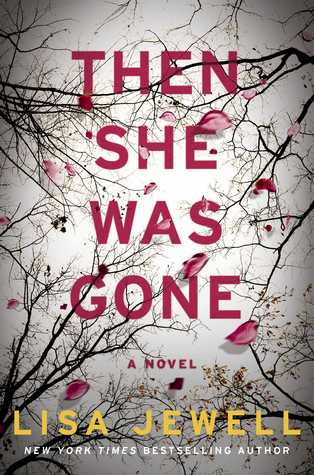
Then She Was Gone

Then She Was Gone by Lisa Jewell    359 pages

When Ellie was fifteen, her whole life was ahead of her and everything seemed perfect. And then, in the blink of an eye, she was gone.  It's now been ten years since Ellie disappeared but her mother, Laurel, has never given up hope of finding her. And then one day, a charming stranger named Floyd meets Laurel and sweeps her off her feet. Before long, she's staying overnight at his house and getting to know his daughter, nine year-old Poppy, who is an unusual child. She's also the spitting image of Ellie.

Is Laurel imagining a connection? What happened to Ellie? And is Floyd hiding something he knows?

This book kept me on the edge of my seat, which I really liked. A few times, I thought I knew what was happening or what was about to happen, but there were some twists I didn't see coming. I found the book to be atmospheric and the characters to be interesting and sympathetic. There's a lot of emotion in this story, as you would expect, and I found Laurel to be well-written character; she comes off as realistic, so at times, you wonder if she's jumping to conclusions just because she's been living with the grief of losing Ellie for so many years.  Good story, quick read.

Ghosted

Ghosted by Rosie Walsh   337 pages

"Seven perfect days. Then he disappeared. A love story with a secret at its heart."

Sarah's life has been in a sort of holding pattern until she meets Eddie and feels an instant connection to him. And it's mutual, as though Eddie has been waiting to meet her. Sarah's never been so certain of anything in her life so when Eddie leaves for a long-booked vacation and promises to call her, she doesn't doubt him. However, he doesn't call. In fact, it seems like he's dropped off the face of the earth. Sarah's friends are telling her to forget about him, but she can't --- she knows something must have happened to him.

As it turns out, something has happened. And it also turns out that some of the things that Sarah and Eddie didn't share with each other over those amazing seven days has something to do with what has happened.

I really enjoyed this book. It was a bit of a slow start and I found myself agreeing with Sarah's friends that maybe she should just forget about this guy. And then the pace started picking up and I found myself agreeing with Sarah that maybe there was something behind Eddie's lack of communication.  Before I knew it, I was hooked on the story and turning the pages nonstop.

That's not to say the book is not without flaws. There are a few threads running through the main storyline that could have been thinned out. Sarah's relationship with her ex-husband and his new girlfriend was played up a bit more than I felt necessary.  And, is the ending believable?  Well, does it matter?  I found this an enjoyable read and was satisfied by the end.

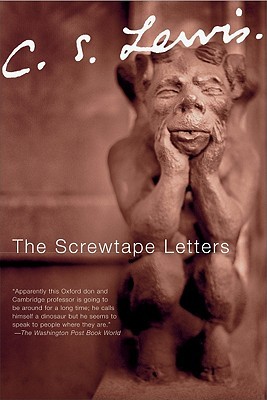
The Screwtape Letters

The Screwtape Letters by C. S. Lewis      Paperback: 211 pgs.       

     This inventive and witty satire consists of letters purportedly written by a demon named Screwtape, offering advice on how best to ensure the damnation of a human soul.  Though it is an old book— Lewis wrote it (and it is set) during World War II— it is just as relevant to a 21st century audience as to those who read it over 75 years ago.  What shines through the most to me is Lewis’ amazing wisdom and insight into human nature and the nature of good and evil.  Lewis sees through temptations into the core issues involved and then explains it all to us through the pen of the fictional Screwtape.  It is therefore an excellent source for Christians to go to for knowledge of the real devil’s strategy and tactics.  The only major temptation missing here, as Christian writer Steve Farrar points out, is the attempt to keep people from studying the Bible.  We never see Screwtape urge his nephew to keep his “patient” (the man he’s tempting) from God’s Word— yet this is surely a major part of the devil’s strategy in real life.

     The edition I read also includes a speech by Screwtape, called “Screwtape Proposes a Toast,” written in 1959.  Lewis imagines here what Screwtape would say at a graduation ceremony of demons about to go out on their first assignments.  Lewis, through the mouth of Screwtape, explains the dangers of excess in democracy (resulting in evil and injustice), especially in our educational system.  Lewis even posits an interesting theory of why the United States fell behind the Russians at the beginning of the Space Race in the late 1950’s.

     One thing to keep in mind when reading this book is the “demonic” authorship.  What Screwtape loves, Lewis means us to hate; what the demon hates, we should love; what he thinks is good, we should abhor and vice-versa.  Also, demons aren’t exactly known for telling the truth, so in a few cases, Screwtape’s descriptions and judgements may not be entirely accurate.  Nevertheless, Lewis has made Screwtape’s observations mostly very accurate, so as to explain truth through the demon’s pen.  Not that Christians (let alone non-believers) are likely to agree with everything Lewis says.  I certainly don’t, but my disagreements with him are very few and far between.  To me, this is still one of the greatest books I’ve ever read; a great guide to truth, temptation, human nature, good and evil, and even reason.  I highly recommend it!

 (posted for John W.)

Saturday, December 8, 2018

Devil's Share

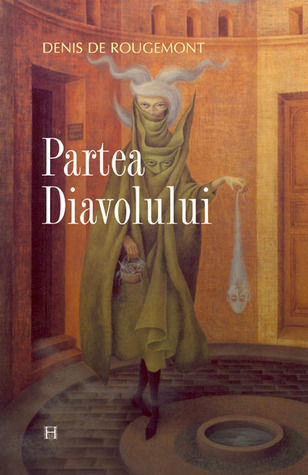
Related imageThe Devil's Share by Denis de Rougemont, translated by Haakon Chevalier, 189 pages

"Over dessert we agreed: what democracies in general, and America in particular, most lack is belief in the Devil."  This is, according to Denis de Rougemont, a serious problem, since the Devil is the Prince of Lies and therefore Lord of Unreality, and he begins his seduction by making himself seem unreal.  De Rougemont observes that in the modern West sin, like everything else, is mass-produced.  The gigantism of modern society allows for the efficient escape of the individual from responsibility.  Thus, by careful gradualism, Satan reduces persons to damned things.

As the book was written in France in the 1940s, it is not surprising that Hitler features prominently - it is more surprising that de Rougemont recognizes the peril in using Hitler's evil to deny our own.  Indeed, it is precisely in his recognition of the connection between the Germans' "necessary" desire for Lebensraum and the romantic's surrender to the "vital" demands of his own passions that he has proven most prescient.

MANIFESTING MADE EASY

Manifesting Made EasyManifesting Made Easy: How to Harness the Law of Attraction to Get What You Really Need by Jen Mazer  223 pages

https://slpl.bibliocommons.com/item/show/1381379116


Reviewed by Rae C.

This is a great book whether you are already familiar with The Law Of Attraction (LOA) or a newby.  It is clear, concise, and handles some of the more challenging aspects of positive thought and manifestation, such as "thinking positively but feeling negative about a situation" and forgiveness as a path to manifestation.

My problems with this book are the same that I have with all of the LOA gurus: it would be nice to hear from people who have become wealthy, successful, healthy, and happy, and NOT because they became LOA gurus!

Also, most of these books are written by and for middle class white people, and there is often a real lack of understanding in applying LOA to people that very desperately need to manifest the basics, have difficulties to overcome that are outside the scope of the status quo experience, and/or are in a state of mind where the power of positive thinking is very difficult to access.

LOA has worked for me, but remains a challenge, so I am always glad to find a new resource.  Recommend to anyone with an interest in changing their circumstances by changing their mindset!

Friday, December 7, 2018

THE WRITER'S LITTLE HELPER

The Writer's Little HelperThe Writer's Little Helper by James V Smith  199 pages

https://slpl.bibliocommons.com/item/show/1200677116

Reviewed by Rae C.

I'm going to have to buy this book.  I've been writing for 30 years, and in that time I have not sold anything to a major publisher or publication.  (Or a screenplay to a studio.)  I've written several novels, about 30 short stories, two screenplays, a comic book script (for a series, not just one issue), a lot of poetry, and numerous articles for small magazines.

I've expressed myself and followed my own path. I've watched many stories similar to mine get published. I want to write something that more than 20 people want to read, so I really needed this book!

This book might seem gimmicky, but it's not.  For example, Flesch Kincaid scores. As a secretary I've used this tool for business documents, but after reading this book I'm going to use it on all my future manuscripts.  Best sellers should be easy to read!  And the author has compiled many helpful checklists and outlines for story structure and plotting.

Recommended to any writer in a slump, that is aiming for a bestseller- or at least a sale with a major publisher.

Thursday, December 6, 2018

The Paragon Hotel


The Paragon Hotel by Lyndsay Faye   432 pages

In this beautifully written novel, the Paragon Hotel is based on Portland, Oregon’s, Golden West Hotel, which was a haven for people of color, mainly African Americans, from 1906 to 1931. Author Faye says in the Historical Note that the descriptions she uses of the hotel is as accurate as she can make them. She did a great job, as I felt I knew the place inside out.

At the core of this novel is racism. I found is horrifying to learn that in the 1844, prior to statehood, Oregon’s Legislative Committee did its best to make the territory exclusively white. History shouldn’t surprise me, but it does. Oregon was “the only state of among the fifty ever to explicitly deny blacks the right and live and work there.” Since the NOW sections of the novel take place in 1921, this denial is most apparent. The THEN sections of the story provide the backstory that helps the reader understand the blacks’ plight.

Alice “Nobody” James is on the run from the New York Mafia with a bullet wound in her side. She boards a train bound westfor Portland. She is very sick by the time she arrives. She befriends Max, the black porter who takes pity on her, and takes her to the Paragon, a haven for “small and increasingly besieged black population.” The fact that Nobody is white makes them uneasy. Most of the residents like, or at least interested in Nobody, but not everyone.


Still, Nobody fits right in. That’s her super power, to be able to remain totally forgettable no matter what situation she finds herself in. She makes friends with most of the residence, especially cabaret singer Blossom Fontaine, who reminded me a lot of The Lady Chablis from “Midnight in the Garden of Good and Evil.”

As Nobody heals, a young boy goes missing. As the search progresses more and more dirty little secrets come to life.

This book is complex with its dualing timelines and threads of  mental illness, the Mob, racism, love, friendship, secrets, romance---all set against the backdrop of a hotel exclusively for people pf color. Faye has a wonderful writing style. Nobody’s language is dead-on for a gun moll. It isn’t forced whatsoever. Faye has the ability to take tired old clichés and similes and make them new and bright. I wish I had marked some of them.

 The Paragon Hotel” receives 5 out of 5 stars in Julie’s world.


Wednesday, December 5, 2018

THE MORTAL WORD

THE MORTAL WORD by Genevieve Cogman
The Mortal Word
433  pages

https://slpl.bibliocommons.com/item/show/1423249116#

Reviewed by Rae C.

The fifth book in the Invisible Library series, and the best one so far!

There are multiple worlds, and in each there are different levels of technology (order, ruled by Dragons) and magic (chaos, ruled by The Fae).  Each earth has different versions of the same stories, reflecting the different development and history of that particular world. 

The Library exists at the center of all the worlds, and is outside of time.  By collecting the different versions of stories, the Library keeps the worlds bound together.  Also Librarians are able to speak The Language, and therefore in each world have a power different from either Fae or Dragon.  The Language is a pure command, the essence of all earth languages on all the different versions of earth. For example, if a Librarian commands water to boil in The Language, the water will boil.

There is an ongoing conflict between Dragon and Fae, and neither species can tolerate too much of the other. So Fae suffer in the order of Dragon worlds. And Dragons lose strength in chaotic Fae worlds filled with magic and Story.  (The Fae themselves are dominated by Story.  In fact, sometimes they are bound by the rules of the Story and/or their characters.  Both this book and The Masked City display this feature of Fae power.)

In this book there is a peace conference underway between Dragon and Fae, and the Librarians are officiating.  The main protagonist, Irene Winters, is currently Librarian in Residence in a world that is steampunk, and at roughly the 1920's in its timeline. One of her companions is a real life Sherlock Holmes, named Peregrine Vale.  (In some worlds Sherlock Holmes is not just a story.)  Her other companion is a Dragon Prince, Kai Strongrock.

All three of them are summoned to the top secret peace conference after a Dragon is murdered.  The conference and peace in all the worlds is in jeopardy.  Like the other four books, this is a great adventure, with "unguessable" twists and turns.  Cogman always has something up her sleeve!

I especially enjoyed the interim with Vale's POV.  This is the first time there has been a POV other than Irene's.  My understanding is this series grew partly out of the author's love of Sherlock Holmes (as well as Dungeons and Dragons), so to have Vale highlighted was a treat! In fact, Irene's name was chosen from Irene Adler in Conan Doyle's "Silk Stocking." Cogman did a good job of recreating a solid Sherlock Holmes in an unfamiliar world ruled by Fae and Dragons, and powered by ether.

The alternate Paris the story is set in retains all of the history of our worlds' Paris, and includes a very exciting scene in the Grand Guignol.  And the added spectacle of the Blood Countess, Elizabeth Bathory, running the show.

Kind of sorry I finished it so fast because now it is another long year of waiting for book six!!!

An Unwanted Guest

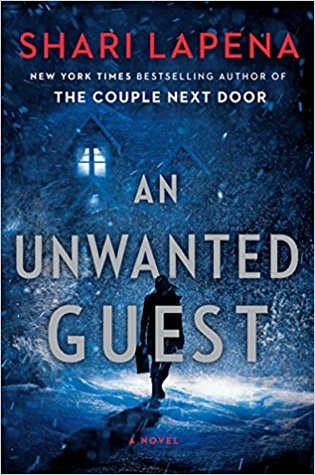
An Unwanted Guest by Shari Lapena   290 pages

This is a perfect closed-room murder mystery.  The setting is a beautiful remote lodge in upstate New York, where the winter snow may blow, but it's cozy inside. At least, until the first dead body is discovered.

Mitchell's Inn is cozy and a perfect place for a relaxing (and maybe romantic) weekend getaway. When the weather gets worse and the power goes out, the guests settle in for a day or two, sure that the fireplaces will keep them warm and they'll stay snug and cozy. However, when a body is discovered at the bottom of the stairs, everyone is upset. When the second body is discovered, panic sets in. Can the guests and innkeepers discover who is picking off people, apparently one by one, before help arrives?

I really enjoyed this book and whipped through it. There's a nice cast of different characters, some with their own secrets and agendas, and the shifting perspectives made for a good complement to the steady pace. I wasn't able to figure out who the murderer was until the end, which I liked. There's also a small twist at the end that was a nice little bonus. 

Native Tongue


Native Tongue by Carl Hiaasen          Audio Book:  15 hours, 45 minutes        Mass Market Paperback: 481 pages           

Francis X. Kingsbury has a personal vendetta against Walt Disney and wants very much to one-up Walt Disney World in Florida with his own similarly themed park “The Amazing Kingdom of Thrills.”    Kingsbury refers to Mickey Mouse as the rat and does his best to come up with amusements and wonders of his own to draw the tourist trade away from Disney to his own hackneyed knockoff.    In this other side of the looking glass bizzaro world Kingsbury goes the cheap route on everything and “creates”  wondrous creatures to “astound” the world like coloring two voles’ tongues blue in order to fictionalize a rare endangered creature called the Mango Blue-Tongued vole, why there are only two left in the world…yeah…that isn’t his only spectacular find but these two RARE creatures are stolen then tossed into other vehicles going by and later one is shot by an officer of the law while “saving” some tourists from an infestation!   The story is a really good one with lots of quirky characters, good people with bad tendencies and bad people with guilty consciouses.    Never get between an elderly woman with a cause and her goals to achieve victory for that cause or mayhem will ensue.   Kind hearted women with phone-sex jobs and desires to give great performances over the phone to their clients.   One woman especially strives to become a successful writer of phone porn scripts there are tie-ins all over the place between the amusements going on at the park and amusements going on everywhere it seems.    I really liked this read, all of the characters are well fleshed out (no pun intended) and I liked them all (yes, even the sleazy ones are funny).    A good book,  a fun read.    The reader will never look at theme parks for their face-value alone again.   I highly recommend this book – some adult situations so event though there are animals and theme parks there are some very violent scenes described so no recommendation for kiddies on this one only adults.  Good book, I do recommend it.   It has a lot of surprises in it.    Good story.

The Complete Chi’s Sweet Home Part 4

The Complete Chi’s Sweet Home Part 4 by Konami Kanata          Paperback Book:  480 pages                          

I love Chi so much I cannot get enough of her and apparently I am not the only person in the world who feels that way.    Chi has a following on Facebook, Twitter, Tumblr and Instagram, too.   What a sweetie pie she is.    I am already looking forward to following her next adventure.    In this book, Chi remembers her Momma and her siblings, she learns how to control her claws when playing with or jumping on other cats during play times, and she has to decide whether to stay with the Yamadas who are moving to France or to stay with her Momma and siblings.   So many things happening.   Does she go and leave her friends Blackie and Cocchi and having just reunited with her cat family, should she stay with them or leave them for her human Yamada family?   So many decisions for a little kitten to make.    Gut wrenching stuff here.   It may be a juvenile graphic novel but Konami Kanata has a great ability to move the reader so much emotionally that Chi’s world draws you in so deep, Chi’s hurts and joys become the reader’s.     Chi endears herself more to me with each book.   The books in this series really twist the reader’s heart and the situations Chi gets into are very real and makes one pause to think what might I do if I were her?    The stories make you very protective over this little kitten.    There is one scene with Chi and her mother that will make you holler, “Oh no!!!   No!!!! NO!!!!!  NO!!!!! I won’t tell you what it is, so I don’t spoil it for you, but this is such a good book, I can’t praise it enough.    I love you, Chi.    See you again in Chi’s Sweet Home Part 5.  Yes,  I highly recommend this book and the whole series.

Tuesday, December 4, 2018

Josephine Baker's Last Dance

Josephine Baker's Last Dance by Sherry Jones

I was attracted to this biographical novel simply for its subject: Josephine Baker. I knew a little about her. An African-America woman, she left the Jim Crow-era America and was singing and dancing in Paris’s nightclubs by the time she was sixteen. That’s about it. Readers get an insightful and well-researched novel about Baker---singer, dancer, movie star, French Resistance member during World War II and Civil Rights activist---that is at times slow, at times despairing yet a fascinating story of a groundbreaking woman, well before her time.

The story starts off in Paris, in April 1975. Josephine doesn’t know if, but readers get a glimpse of her final performance. Then the story skips ahead to her childhood in St. Louis. She is considered an ugly child. Her mother, a bitter woman, forces her to work for the neighbors by the time she is seven years old, making only a pittance, none of which Josephine ever sees. Life was so incredibly difficult that Josephine tries to blot it from her mind and tells anyone who might ask that she is from New Orleans. It’s heartbreaking to read about the line of abusive people in her life, from both her parents to every man she seems to meet.

By 1915, young Josephine has a new employer, one that treats her like a person, not an animal. But her security doesn’t last long. By 1919, she has spent two years singing, dancing, playing instruments with the Jones Family Band. 
The story continues to recount her time in Paris. Sometimes it drags a bit as the tediousness of her life in the theater evolves. The World War II breaks out, and Josephine wants to do her part.  She joins the French Resistance. I didn’t feel this section was deep enough, but maybe there isn’t enough documentation or evidence out there to make it more compelling.

It doesn’t matter though, I enjoyed this book thoroughly, couldn’t put it down. That’s why  “Josephine Baker’s Last Dance” receives 5 out of 5 stars in Julie’s world.

Monday, December 3, 2018

SLPL November 2018 totals

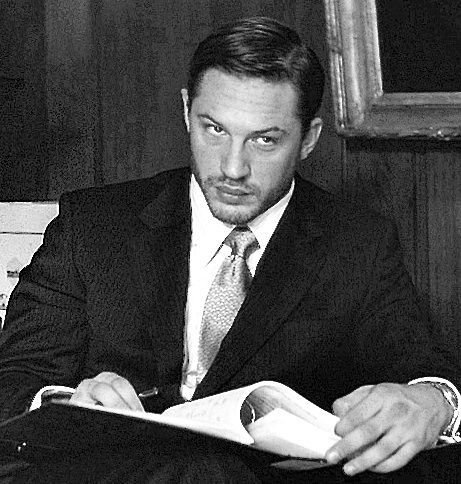
Tom Hardy reads, obviously impressed by our team...
The SLPL team this month did our best to keep up our reading.

8 people
read 61 books
for a total of 17,191 pages

Not too bad -- and we're already moving on to logging our December reads!!  

Shirley J. was November's Super Reader, logging 5977 pages. Jen O. was the runner-up, clocking in at a healthy 4240 pages.