Wednesday, April 20, 2016

Father of Route 66

Father of Route 66: The Story of Cy Avery by Susan C Kelly.  288 pages.   not held at SLPL.

While you've most likely heard of Route 66, did you know there was one man who was the main force behind creating this road?    This biography of Cy Avery takes us from his beginnings as a farmer and teacher, to his careers as an oil man and politician.   While the focus is on Avery, the book also provides in-depth information on how, as the need for good roads (i.e., not deep, mud-filled paths) developed, how people who had the vision for roads and highways worked with the U.S. government to make these dreams into a reality.

I picked up this book as part of a project I'm involved with, and came to it with no knowledge of Cy Avery at all, and only a bit of knowledge about the creation of Route 66 and the U.S. highway system.    It was interesting to read about this man, who was very passionate about not only roads, but also providing access to water in Tulsa, Oklahoma.   There was more to Avery than Route 66, as well; he stood up to the Ku Klu Klan, and developed plans for a municipal airport.    Admittedly, I sometimes found the book a bit dry, although it was rich in detail.   However, the author brings so much information to this biography that it was easy to get a clear picture of not only Avery, himself, but of the United States in that time in history.

I don't know if I'd include this in with biographies I'd suggest to all readers, but if you're interested in Route 66, or how some of the national roads came into existence, then it's definitely one to read.

Tuesday, April 19, 2016

Jane Steele

Jane Steele by  Lyndsay Faye.   432 pages.

Like the heroine Jane Eyre, Jane Steele suffers at the hands of her aunt and a schoolmaster.  And like, the other Jane, she winds up as a governess in a house owned by a mysterious man.  The one big difference between the two Janes is that when Jane Steele flees bad situations, she leaves behind corpses.

Admittedly, it's been a while since I read Jane Eyre, so this "gothic re-telling" seemed pretty fresh (although I would at points remember parts of the original book).    I actually felt like this story was more of a "gothic inspiration," and liked that our heroine was much darker than the original Jane.  Jane Steele is aptly named; I felt like she was someone who might appear pliant on the outside, but whose inner core is pure steel.   She defies the expectations of girls of her day, and instead, isn't afraid to take matters into her own hands (and get blood on said hands).   Admittedly, I would have liked a bit more of the story spent either at boarding school or on the streets of London, since I felt like once Jane became a governess, the story felt like it slowed down a little (and got a bit muddled, as well).    However, I liked this fresh story --- and have already suggested it to some of my readers who have asked for Jane Eyre off the library shelves.

The Last One

The Last One: A Novel by Alexandra Oliva.  304 pages (expected publication July, 2016.  I read an e-galley of this book).

This book begins with a reality TV show where 12 contestants are sent into the woods to face a series of challenges (some together, some alone).  Cut off from society, the contestants don't know anything about what is happening in the real world -- until one of them stumbles across something awful.  However, she assumes it's all part of the game . . . or is it? 

I thought this was an interesting way to tell a story, where there is a reality show going on at the same time that something horrendous is happening in the real world.   There are two perspectives, basically --- we have the outside narration of what is happening on the show, and then the direct point of view of one character.  I liked how I wasn't sure who the main character was (she could be any one of the reality show contestants at first), and even though I had started to figure it out, it took a while for it to be completely clear.   I also liked how it was easy to be as confused as the main character was.  What I mean is, when she comes across something and is convinced it's part of the game, I had some doubts.  However, it's hard to know in this book if the producers for the show would (or could) go as far as she thinks they do, so a lot of things start to sound plausible.

It's tricky to talk about the book without giving a lot of the plot away, but I can say that it has a pretty good pace, which increases as the story unfolds.  The main character is compelling, and because the story doesn't give too much away, the reader is left to figure out things (more or less) as some of the characters do.   Clever way to tell a story.

Monday, April 18, 2016

Empire of Imagination

Cover image for Empire of Imagination: Gary Gygax and the Birth of Dungeons & Dragons by Michael Witwer, 242 pages

It is hard to describe how mythical a figure Gary Gygax was for gamers who grew up in the '80s.  Gygax was tied to TSR, the publishers of Dungeons & Dragons, in the same way that Steve Jobs was tied to Apple - in the public imagination, the two were impossible to separate.  Although other RPG publishers like Steve Jackson at Steve Jackson Games or Kevin Siembieda at Palladium were also strongly identified with their brands, TSR's flagship line was synonymous with the hobby itself, like Kleenex and tissues - nerdy kids were "playing D&D" even if they were really playing Cyberpunk 2020 or Call of Cthulhu.  And then, quite suddenly, he was gone, ousted from control of the company, and then, with AD&D Second Edition, gone from the books as well.  Rumors and gossip whispered of bruised egos and financial mismanagement.  Gygax spent a decade on the margins of gaming before eventually transitioning into the respected role of founding father.  The story of how Dungeons & Dragons was created, how it grew under Gygax's care, and how he eventually lost control of it is the central story of Empire of Imagination.

Witwer uses a unique writing style.  Each chapter is only a few pages long, and begins with a vignette, more or less fictional, then places the vignette into the broader biographical context.  For example, Witwer does not describe Gygax's increasing problems in his career as an insurance adjuster, some of them related to his preoccupations with gaming, climaxing in his firing - instead Witwer describes Gary arriving on the front porch of his family home, jug of wine in hand, contemplating how to tell his wife that he has been let go, then backtracks to describe his problems at work and finally summarizes his attempts to deal with his new situation.  This creates numerous problems in addition to being annoying in repetition - in the chapter describing the breakup of Gygax's first marriage, some of the blame is placed on his "escalating use of cocaine", which is the first and last time this cocaine use is mentioned.  Some of these problems raise questions about the depth of Witwer's research, with most of the material seemingly culled from printed interviews of Gygax.  Possibly as a result, Witwer treats Gygax's attempt to deny Dave Arneson royalties on AD&D as at least possibly legitimate, and doesn't mention that, in addition to the ongoing legal feud with TSR, Gygax's Dangerous Journeys was hopelessly unfashionable at the time of its release, a dice-, statistics-, and rule-heavy game at a time when White Wolf's Storyteller system, with its emphatic emphasis on drama and playacting rather than die-rolling and rules, was the new cool kid in the neighborhood.  More seriously, major conflicts, notably that between Gygax and Lorraine Williams, which resulted in Gygax leaving TSR, become incomprehensible.  Some of his may not be Witwer's fault - there may not be any clear facts about the rift between Gygax and Williams, only conflicting accounts - but there has to be something more substantive than vague allegations that Williams was overheard making disparaging comments about gamers and a belated acknowledgement that Gygax may have publicly insulted her at a convention.

There are good things about Empire of Imagination - Witwer is excellent when it comes to retelling amusing anecdotes.  It is fun to relive Gygax's childhood exploration of an abandoned mental institution armed with a flashlight and a hatchet.  It is gratifying to learn that silly fantasy names have been a part of D&D from the beginning - characters in Gygax's first campaign already had names like "Ahlissa" and "Robilar".  Unfortunately, the entire book is built on anecdotes.  The result is a work that is easy enough to read but provides little real insight into its subject.

Saturday, April 16, 2016

Easter 1916

Cover image for Easter 1916: The Irish Rebellion by Charles Townshend, 359 pages

One hundred years ago, a small force of armed men (and a surprisingly large number of women auxiliaries) seized control of the center of Dublin on Easter Monday and proclaimed the birth of the Irish Republic.  The British authorities, at first taken entirely by surprise, soon responded vigorously, and within a week the rebels were dead, under arrest, or in hiding.  The surviving ringleaders were almost all executed as traitors to the King.  But many Irish continued to recognize the Republic as the legitimate government of Ireland, and the Easter Rising became the inspiration for a guerrilla war which led to independence - though not as a republic - five years later.

A history of the Rising is difficult for a number of reasons.  The near-mythic status of the Rising as the founding event of Irish Independence and the subsequent prominence of participants like Michael Collins and Eamon de Valera clouded the memory of what actually happened even for people who were there.  Furthermore, the secrecy surrounding the planning of the insurrection and the subsequent deaths of everyone involved in that planning leave unanswered key questions - most importantly, whether the planners understood at the outset that the Rising had no real chance of success, and therefore whether it was a doomed struggle or blood sacrifice.

Townshend is fully cognizant of these difficulties, manages to overcome many of them, and is candid when they are insurmountable.  One of his central concerns is placing the Easter Rising into the broader context of World War I.  Obviously, for the Irish nationalists "England's difficulty" was "Ireland's opportunity", but this created tremendous pressure among nationalists who believed it was "now or never", and splintered the nationalist movement between those who believed in a self-governed Ireland within the UK and the republicans who demanded total separation.  The War also aggravated the economic differences between Ireland and England, while the simultaneous establishment and suspension of Home Rule eviscerated the moderates' support, and the continuing threat of mass conscription not only contributed to the radicalization of the populace but also the Catholic clergy who supported Pope Benedict XV's calls for peace.  Perhaps most important historically, the War conditioned the British response to the Rising, transforming the perception of it from a primarily Irish affair into an attack on the UK as a whole in collusion with her continental enemies.  The result was a broad crackdown that further weakened the moderates and strengthened the republicans.

Overall, Townshend is remarkably successful in balancing the many revisionist views on the Rising and its key figures, and is commendably willing to admit that some facts are unknown and some will never be known.

Friday, April 15, 2016

The Lost

Cover image for The Lost by Sarah Beth Durst, 350 pages

For a great plot synopsis, see Krista's review: here.

The Lost has three fairly distinct acts, with (sadly) each one being slightly worse than the last. It starts out very strongly, with a legitimately creepy tone and an interesting setting. It's hard to pull off creepy - especially for extended lengths of time - and The Lost does the best job of it that I've seen recently. It changes pretty quickly to a survival story - well written, and bringing more complexity to the characters - but the transition is a bit jarring. It would have been amazing to maintain the creepy atmosphere while moving into survival territory, but it... doesn't. Eventually the narrative changes again (though when and how is spoiler-y). While it's categorized as an adult novel, the author's YA roots show through pretty plainly - there's only three male characters with any real story relevance, and two of them are over-the-top handsome men with (inexplicable?) crushes on the main character.

I should emphasize that I really did like the book, even in the final act. It just lost (pun intended) a lot of its impact as it went on.

Thursday, April 14, 2016

Giant Days, vol.1

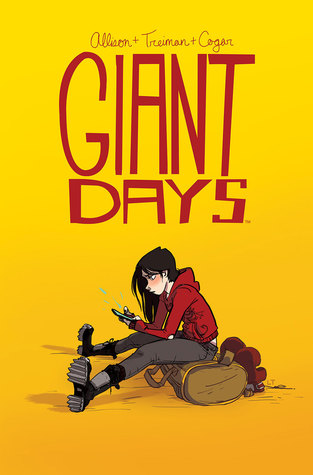
Giant Days, Vol. 1Giant Days, vol. 1, by John Allison, ill by Lissa Treiman, 128 pages

Susan, Esther and Daisy are vastly different, but that doesn't stop them from being the best of friends in this weird new world called college dorm living.  Is... that enough? Because that's kind of all there is to this.  It's not bad- it's like watching a 30-minute sitcom.  There are some cute parts, some laughs, and some heartfelt/"real" moments of friendship and forgiveness.   Totally worth reading if it's laying around and you're looking for something light. 

The Alley

The Alley by Eleanor Estes, 283 pages

I love almost all of Estes's books and this one is no exception.  I thought I had read all of her books and am surprised that I missed this one until now.  Connie loves living on the alley in Brooklyn, where all of the kids play together and almost everyone gets along and follows the rules.  Connie's life is just about perfect until the day that her house is burglarized.  The burglars get away with many of their valuables but to make the situation worse, Connie's mother is sure that the first two policeman on the scene are responsible for the disappearance of her diamond ring.  Connie and her friend, Billy, decide to try to follow up on clues themselves, because they don't believe the police are doing their job.  They hope to prove who the burglars are, including exposing the two corrupt policeman.  This is a great book for kids who enjoy old-fashioned realistic stories.

See Jane Run

See Jane Run by Hannah Jayne, 272 pages

Riley Spencer is a normal teen with overprotective parents until the day she finds a birth certificate for Jane Elizabeth O’Leary, a girl about a year older then her, hidden in Riley’s baby book.  Afraid of the possible answers she might find, Riley is determined to find out the truth about Jane and herself, no matter the cost.  This was an intriguing thriller for teens and I would recommend it as a good solid read.  Unfortunately, this was an advance copy and the Library does not own a copy of it at this time.

The Last Present

The Last Present by Wendy Mass, 246 pages

This is actually the last book in the Willow Falls series and I haven't read the first three.  Nevertheless, it was a fun read and I have decided to go back and read the other ones.  In this book Leo and Amanda, who are best friends, have discovered that they will have the ability to go back in time in an attempt to save their friend, Grace, who has fallen into what appears to be some sort of coma.  Angeline, who has orchestrated other oddities on their and others of their friends' birthdays, has also found a way to orchestrate this.  With little instruction but a lot of ingenuity, Leo and Amanda will probably succeed, but find out that what they are doing may not be in Grace's best interests after all.  I definitely liked this book well enough to read others by the author and would recommend it to kids who like fantasy and magic.

Against All Odds

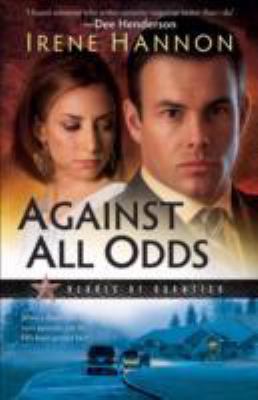
Against All Odds by Irene Hannon, 334 pages

This is the first book in the Heroes of Quantico series.  Monica Callahan, who has been estranged from her father, David, for most of her life, finds his world crashing into hers abruptly.  David is negotiating a hostage situation with a group of terrorists and they have made a threat against Monica.  David has managed to get FBI protection for her in the form of Evan Cooper and his partner.  Monica is reluctant to cooperate, but as she and Coop get to know each other, a mutual attraction begins to develop.  And through their conversations, Monica even starts to consider the possibility of forgiving her father, assuming that she can get through the current crisis alive.  This was a fairly typical Christian romance story but Hannon is a good writer and I enjoyed this book as much as I've enjoyed her others.

Wednesday, April 13, 2016

Dead Wake: The Last Crossing of the Lusitania

Dead Wake: The Last Crossing of the Lusitania by Erik Larson   480 Pages

Erik Larson’s latest book provides me with my second reason why she has no desire to ever, ever take a cruise. The first was all the books I’ve read on the Titanic.
Like Larson, I knew a bit about the sinking the luxury liner Lusitania, but after reading his book, I realize that my knowledge was skimpy at best, embarrassingly wrong at worse. I had always thought that the sinking of the Lusitania and other ships carrying American citizens is what propelled the United States into the Great War. Wrong. President Woodrow Wilson was a cool cucumber after the boat sunk, with the loss of life reaching a total of 1,198 of the 2,000 souls who were on board.
The ship left New York bound for Liverpool, England, on May 1, 1915. She was sunk by a torpedo form the German U-20 on May 7. When she sailed from New York harbor, she was booked to capacity. “This was, according to the New York Times, the greatest number of Europe-bound passengers on a single vessel since the year began.” Rather remarkable given that the war had been raging for ten months.
Larson gives reader lots of background information. I admit to discovering more about the politic of both Germany and the U.S., more about U-boats, and more details about the Lusitania than I ever though I would. Larson is an expert at narrative nonfiction that pulls readers into the story.
And while he is adept at making some boring topics interesting, his true success comes into his details about people. The U-20 commander, Schwieger, was a cold-blooded SOB. He didn’t think twice about sinking boats of all sizes, even those carrying large number of women and children. His main goal on each mission was to put as much tonnage as he could on the bottom of the world’s oceans and seas. The Lusitania’s captain, William Thomas Turner, was a credit to his position. I think I would have like him.
The parts of the book that I enjoyed most were the one about the passengers. Readers get to know several of the passengers. Larson paints vivid pictures of life aboard the liner.
The entire book leads up to the moment that a U-20 torpedo strikes the boat. The horrendous details that follow are enough to give readers nightmares. The sinking read much like the Titanic sinking: people jumping from the ship, the lifeboats (there were enough) not functioning properly, the debris that littered the ocean surface after the boat dropped below the waterline. To me, the most horrifying scenes were the people floating upside down in the water. They had put their lifejackets on incorrectly, thereby causing their heads to be forced underwater.

I give Dead Wake 4 stars out of 5. The details of the ships and the politics were a bit much for me. I think they could have been condensed somewhat. 

Roman Pilgrimage

Cover image for Roman Pilgrimage: The Station Churches by George Weigel, Elizabeth Lev, and Stephen Weigel, 401 pages

Across many cultures, across many eras, the concept of pilgrimage was and is highly esteemed.  The modern western worldview, with its flat earth where every point is interchangeable with every other, is the exception.  Yet large numbers of people still travel to places like Compostela, Jerusalem, and Rome (not to mention Mecca, the Ganges, and Gettysburg), seeking something greater than themselves.  In addition to physical pilgrimages, there also exist chronological ones - Lent, for example, or Ramadan.  Combining the physical and the temporal, in the past few decades students and faculty at the Pontifical College of North America have revived the traditional medieval Lenten pilgrimage to the "station churches" of Rome.  It is this practice, both ancient and new, which is the subject of Roman Pilgrimage.

George Weigel, noted papal biographer (Witness to Hope) and Catholic commentator (Evangelical Catholicism), weaves together the station, the Mass readings, and the readings from the Divine Office for each day into a reflection that walks the reader one day at a time down the road of Lent and beyond, through Easter Week to Divine Mercy Sunday.  This is supplemented with architectural, artistic, and historical commentary on each station by Elizabeth Lev, author of The Tigress of Forli.  A generous sprinkling of gorgeous pictures of Rome's historic churches, taken by Stephen Weigel, tie the whole together, along with maps tracing the pilgrimage routes through the Eternal City.  The result is a spiritually, intellectually, and aesthetically rich guide to "the ultimate pilgrimage" - from Holy Thursday through Good Friday and Holy Saturday to Easter Sunday - through death into new life.

Monday, April 11, 2016

Masters of Mannerism

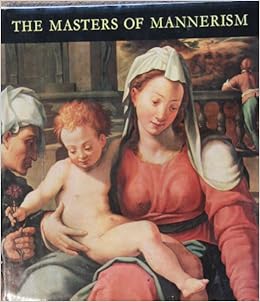
The Masters of Mannerism by Marianne Haraszti-Takacs, translated by Eva Racz, 121 pages

Like many historical artistic styles, Mannerism was categorized and named centuries after its time by critics who held it in contempt.  Mannerism occupies the transitional period as the strict order and harmony of the Italian Renaissance was imitated and adapted throughout Europe, even as this style shaded into the expressive exuberance of the Baroque.  For strict classicists, the sixteenth century turn away from Renaissance ideals of balance and proportion could only be the hallmark of decadence.  On the other hand, artists who wallowed in decadence tended to regard Mannerism as overly intellectual and artificial.

Haraszti-Takacs' aim, beyond showcasing the collection at the Budapest Museum of Fine Arts, is to demonstrate that Mannerism was an innovative, intelligent, expressive style worthy of respect - a simple task when artists like El Greco and Parmigianino are brought under the Mannerist umbrella.  Unfortunately, the lackluster reproductions of the works being discussed severely detracts from the book's value.

Friday, April 8, 2016

Treatise on the Love of God

Treatise on the Love of God by St Francis de Sales, translated by Dom Henry Benedict Mackey, OSB, 555 pages

This work was written as a sequel of sorts to the author's legendary work Introduction to a Devout Life.  While that work was addressed to the spiritual beginner Philothea, this one has as its ideal reader the mature Theotimus, able now to digest real food.  Yet although it is, as Dom Mackey writes, "an immense mass of instruction, dogmatic and moral, on the science of the love of God", it is also eminently practical, with St Francis well aware of the difficulty in distinguishing between love of God and certain forms of self-love that disguise themselves as piety.

In St Francis' anthropology, man is a loving creature, that is, a creature whose nature is to love, and the only question is:  What will he love?  Being made for love, man becomes like that which he loves, so that his love can raise him to heaven or confine him to hell.  Finally, man can only find satisfaction in the love of Love Himself.  St Francis finds nothing worthwhile without love, for him, supernatural charity is the root and crown and bond of natural virtue.  As a result, the smallest acts, done in love, can be worth more than the greatest triumphs of calculation.

The book was first published in 1616, and, as was the style in 17th century France, the saint frequently employs elaborate poetic metaphors - comparing the appetites to a falcon that must be hooded to be pacified, or the devil to a mother bird which leads predators astray by feigning vulnerability, only to take off and leave him empty-handed once they are thoroughly lost.  This may grate on readers who prefer a more straightforward contemporary style.  Likewise, some readers will find St Francis' usage of the scientific knowledge of his day jarring - as when he describes pearls as being formed by drops of dew taken in by the oyster.  To those with even a little charity such minor annoyances will not detract from the wealth of wisdom contained in this masterpiece on the spiritual life.

Thursday, April 7, 2016

Took

Took by Mary Downing Hahn, 264 pages

When Daniel’s family moves to West Virginia from Connecticut, he and his sister, Erica, are very upset.  Neither of them wanted to move.  They have trouble making friends at school and even the teachers don’t seem to like them.  Their parents argue all of the time or refuse to spend any time together at all.  And Daniel and Erica are worried when the kids at school tell them awful stories about how a girl who lived in their house, Selene, disappeared 50 years.  She was Erica’s age and everyone says she was kidnapped by Old Auntie, a witch who lived in the area.  Daniel is afraid for Erica, who isn’t acting like herself.  She is withdrawn, afraid of the dark, says she hears voices whispering her name, and spends all of her time talking to her doll, Little Erica.  Some people in town have urged him to watch out for his sister, but he isn’t sure if he can keep her safe.  A really great scary story for kids, I will almost always recommend Hahn’s books and this is no exception.

Bayou Magic by

Bayou Magic by Jewell Parker Rhodes, 239 pages

Maddy is spending the summer on the bayou with her grandmother.  She's a little scared because she's from New Orleans and has lived her whole life in the city and her four older sisters, who have all spent a summer on the bayou, have come back with stories about how awful it was.  But when Maddy gets there she sees how beautiful the bayou is and how much like her grandmother she is and she enjoys spending time there.  She also sees how magical it is.  Literally.  And she will need that magic to save the bayou from destruction when an accident happens and causes a major oil leak.  This is a really good realistic fantasy story for kids.

The Island of Dr. Libris

The Island of Dr. Libris by Chris Grabenstein, 242 pages

I liked the books about Mr. Lemoncello better than this book but this one was also pretty good.  Billy is spending the summer at a beach house with his mother, who is writing her dissertation.  Billy's dad is staying at their apartment.  Billy doesn't like that they are spending the summer apart but he's making the best of it.  During the summer strange things start happening.  As Billy starts reading some of the books in the house, the characters from the books start to appear on an island across from the house.  Billy begins to have adventures with Hercules, Robin Hood and Maid Marian, and the Three Musketeers, just to name a few.  As more characters come to life, the events on the island start to spin out of control and Billy isn't sure if he and his friend, Walter, can fix some of the problems.  And if Billy can't figure out how to fix the problems on the island, how can he possibly begin to fix his real life problems?  This was a fun fantasy adventure withy enough real life thrown in to make it really interesting.  I would have liked to see a little more of the real villain in the story, but except for that, I thought it was a pretty satisfying read.

Wednesday, April 6, 2016

Treachery at Lancaster Gate

Treachery at Lancaster Gate by Anne Perry  288 pages

This book begins with an explosion in London that kills two policeman and seriously injuring three more.  At first, it seems to be the work of anarchists, but once Thomas Pitt, Commander of Special Branch, starts investigating, it seems that the motives are much more personal.  In fact, the bombing appears to be a calculated strike against the police.   As Pitt, and his former associate, Tellman, investigate, they reveal layers of corruption inside the police force, which puts them directly in the path of danger.

It's hard for me to believe that this is the 31st book in the Charlotte and Thomas Pitt series.  I read both the William Monk and the Pitt series by Anne Perry, and while I didn't enjoy the last Monk book, I did enjoy this newest Pitt.

I felt Perry did a good job with building the story, piece by piece, and increasing the pace (and sense of danger).   I wasn't sure of the explanation behind the bombings at first, and once it was revealed, that was only part of what was happening in the story.  I appreciate that Anne Perry knows her time periods quite well, and adds in real historical and political details.  I enjoy the characters, as well, and in this book (unlike in the last Monk story), Perry did not belabor the reader with too many details of backstory.  

That's actually an irritation I have with her books, now that they are well into the two series: she goes into way too much explanation and backstory for some of the characters.  For example, by the time I'm at #21 in a series, I don't need a long explanation of how Hester Monk was a nurse in the Crimean Wars (and on and on and on).   In this book, there's a long explanation of Tellman's relationship to Pitt; instead of a long paragraph, why not just a sentence that indicates that Tellman is a former colleague of Pitt?   Ugh.    I understand that if this is the first book you ever pick up, you might be curious, but even so, I feel there's too much of this backstory that happens.

But I digress.   This book was enjoyable, and a worthy addition to the series.

Growth in Holiness

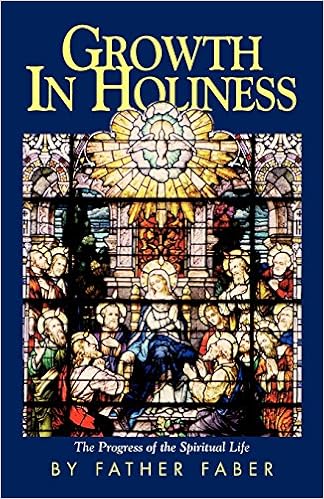
Growth in Holiness, or, The Progress of the Spiritual Life by Frederick William Faber, 494 pages

First published in 1854, Growth in Holiness is a handbook for the spiritual life.  It is the distillation of a lifetime spent personally pursuing holiness, studying those who received holiness, and serving as a spiritual director for others seeking holiness.  The result is a masterful synthesis of a deep reading of Scripture, a keen understanding of human nature, the treasury of the experience of the Church, and a wealth of personal experience, all related in a clear, readable style.

By twenty-first century standards, Fr Faber's teaching is hard and uncompromising - as it was by nineteenth century standards as well.  Particularly disagreeable to many will be his insistence on the value - even the necessity - of voluntary physical mortification.  Others may find strange his continuous assertion of the importance of having a spiritual director.  The first runs counter to the current tendency to view pain as an absolute evil, and the latter seems unthinkable to those for whom submission is identical with slavery.  In both cases, however, Faber is moderate and free from exaggeration, and it is when such a careful commentator departs from the conventional wisdom of the time that he is most valuable.