Showing posts with label Romanticism. Show all posts

Wednesday, December 24, 2025

Prelude

 The Prelude (1850) by William Wordsworth, 227 pages

...Thus I soothe
The pensive moments by this calm fire-side,
And find a thousand bounteous images
To cheer the thoughts of those I love, and mine.

The Prelude was intended by Wordsworth to be his autobiographical masterpiece.  Originally published in 1799 in two parts, it was expanded to fourteen books in 1805, and considerably revised before its final publication in 1850.  It was designed as the definitive statement of Wordsworth's sensibility, his pursuit of

That wish for something loftier, more adorned,
Than is the common aspect, daily garb,
Of human life.

Unfortunately, Wordsworth's passion led him to clasp the bloodstained hands of the French revolutionaries, and if he cannot disavow such friendships entirely, by 1850 he had at least gained the wisdom to criticize even his own excesses.

And thus, experience proving that no few
Of our opinions had been true, we took
Like credit to ourselves where less was due,
And thought that other notions were as sound,
Yea, could not but be right, because we saw
That foolish men opposed them.

While at the same time not rejecting the true instincts and education which nurtured those spiritual convictions.

Nature for all conditions wants not power
To consecrate, if we have eyes to see,
The outside of her creatures, and to breathe
Grandeur upon the very humblest face
Of human life.

And these deep feelings are best conveyed by the passages in which we enter into Wordsworth's relationship with the pastoral countryside of England.  However many times the poet's business takes him to Cambridge or London or Paris, there is always a tangible grace in the passages where he returns, in mind and body or in mind alone, to the nature that he loved.

There is no grief, no sorrow, no despair,
No languor, no dejection, no dismay,
No absence scarcely can there be, for those
Who love as we do.  Speed thee well!

Monday, September 14, 2020

Poems

Algernon Charles SWINBURNE / Poems 1925 | eBay

 Poems by Algernon Charles Swinburne, 231 pages

He offers his tithe.

     The sea gives her shells to the shingle,
          The earth gives her streams to the sea;
     They are many, but my gift is single,
          My verses, the first fruits of me.

Swinburne has been called the "last of the giants", and indeed he stands tall at the end of Romanticism and the beginning of Decadence, willing to be damned for love's spite or sake.

     But you would have felt my soul in a kiss,
          And known that once if I loved you so well;
     And I would have given my soul for this
          To burn forever in burning hell.

Death has closed the circle on Swinburne's world of flesh, but delight has not yet yielded wholly to disgust, nor heartache to horror.

     Is it worth a tear, is it worth an hour,
          To think on things that are well outworn?
     Of fruitless husk and fugitive flower,
          The dream foregone and the deed forborne?

Thursday, July 9, 2020

Mariner

MarinerMariner: A Voyage with Samuel Taylor Coleridge by Malcolm Guite, 430 pages

     It is an ancient Mariner
     And he stoppeth one of three
     'By thy long grey beard and glittering eye,
     Now wherefore stopp'st thou me?'

The initial idea behind The Rime of the Ancient Mariner was a Gothic trifle, a simple spooky ghost story that could be easily sold for quick cash, but Coleridge's genius rapidly shaped it into something more.  Since it first appeared as the opening poem of the first edition of Lyrical Ballads, the Rime, like the Mariner himself, has surprised and captivated readers with its poetic and prophetic power.  As Malcolm Guite explains in his study of the poem and its poet, the themes of sin and death, conversion and rebirth, played out as compellingly in the life of Samuel Taylor Coleridge as they did in his creation.

This is more than coincidence.  Rejecting approaches which separate Coleridge's early poetry from his later philosophical explorations, Guite describes his life's work as a concerted effort "to build a bridge between the dead but objective world of meaningless fact, on the one hand, and the world of rich subjective fancy with no claims to truth, on the other."  Coleridge found this bridge in Imagination, understood as that part of man which is closest to his Creator, and the faculty by which he begins to understand God's symbolic language of nature.  Human creativity is therefore an extension of the Divine, and it follows "that deep Thinking is attainable only by a man of deep Feeling, and that all Truth is a species of Revelation."

     He went like one that hath been stunned,
     And is of sense forlorn:
     A sadder and a wiser man,
     He rose the morrow morn.

Wednesday, May 23, 2018

Friendship

The FriendshipThe Friendship: Wordsworth and Coleridge by Adam Sisman, 429 pages

In 1798, the first edition of Lyrical Ballads was published anonymously.  Although it excited little interest at the time, it was to prove a turning point in the history of English literature.  A treasure-house containing works of genius including "The Nightingale", "Lines written a few miles above Tintern Abbey", and "The Rime of the Ancient Mariner", Lyrical Ballads was the product of an intense collaboration between William Wordsworth and Samuel Taylor Coleridge, during the course of which the two were continually in each other's (and Wordsworth's sister Dorothy's) company, so that the book is less a collection than a "poetic dialogue".  At that time, Coleridge was married with children, regularly preaching to Unitarian congregations, and had several poetic and journalistic achievements already behind him, while Wordsworth was a virtual unknown living a Bohemian lifestyle with his sister, separated by war from the illegitimate child he had fathered in France.  Two years later a second edition was published in two volumes, this time ascribed entirely to Wordsworth, who rounded out the collection with additional poems.  Wordsworth was now a stable, respectable family man, while Coleridge was in the midst of a personal, financial, and creative crisis, soon to abandon his family in pursuit of an unrequited love while progressively collapsing into the unromantic realities of opiate addiction.  When criticism and resentment met, the friendship fell apart, and neither writer was ever the same.

Adam Sisman tells the story of this remarkable literary partnership and personal friendship with an admirable sensitivity for the many layers of an extremely complex relationship.  Particularly, he does an excellent job of identifying the sympathies that united the irrepressible, undependable visionary Coleridge and the more reserved, more careful, and ultimately more talented Wordsworth.  At the same time, he largely refrains from imposing his own interpretation on events beyond what the evidence warrants.

Wednesday, February 7, 2018

Saul

Saul by Robert Browning, 45 pages

In Saul Browning portrays a moment in time.  The old king has been brought to the brink of the Great Mystery, and has shrunk back defeated, crushed by the immensity of the Divine.  The shepherd boy is brought to him, to soothe him, as he has before, with his gentle pastoral songs and psalms.  The young David, through Saul's dark despair, is likewise forced to contemplate the Sublime, but unlike Saul he finds the twist that turns life's tragedy into comedy.

     ...O Saul, it shall be
     A Face like my face that receives thee, a Man like to me...

Friday, December 15, 2017

Images of Eternity

Images of Eternity: Studies in the Poetry of Religious Vision from Wordsworth to TS Eliot by James Benziger, 272 pages

By the beginning of the nineteenth century, Deism had established itself as the intellectually respectable theological position.  Yet Deism, whatever its strengths as natural philosophy and usefulness as a compromise between hostile creeds, signally failed to satisfy man's emotional, moral, or aesthetic needs, or to explain the intimations of transcendence experienced in encounters with the sublime.

Images of Eternity is James Benziger's magnificent exploration of how the Romantic poets (and, to a lesser extent, their successors), despite being alienated from Christian orthodoxy, nonetheless employed "love and imagination" to break out of what Kant described as the realm of necessity into the realm of freedom.  Throughout, he emphasizes how their approach to the transcendent was influenced by Platonism as much, if not more than, straightforward Christianity, presenting a difficulty for many 20th century critics for whom the former was even more alien than the latter.

Wednesday, May 17, 2017

God's Architect

God's ArchitectGod's Architect: Pugin and the Building of Romantic Britain by Rosemary Hill, 498 pages

Augustus Pugin died in 1852 at the age of forty.  His brief career as an architect, which did not begin in earnest until the publication of his manifesto Contrasts in 1836, defined British architecture - and much else besides - in the Victorian era.  Indeed, as Rosemary Hill documents in her exhaustive - but at times exhilarating - biography, a direct line line runs from Pugin through Ruskin and the Rossettis to Morris and beyond.  In his quest to recreate the Gothic, Pugin founded workshops to meet the demand for fabric, woodwork, tile, and stained glass.  In her telling, Pugin was not merely an antiquarian or even an influential ecclesiastical architect, but a daring theorist with definite ideas of how the modern city could be tamed and made more humane.

God's Architect manages to interweave the public and private lives of Pugin, covering his professional projects - most famously his work on the Houses of Parliament, including the clock tower popularly (but erroneously) called "Big Ben" - and his often tragic personal life, complicated by his own uncompromising nature.  Hill compellingly follows the often troubled relationships between Pugin and his circle of "Romantic Catholics" with the Tractarians on the one hand and ultramontane Catholics on the other.  These connections are often neglected in histories of the Oxford Movement and its personalities, and while her account, viewed as it is through the prism of Pugin's career, is not entirely fair to some of the other individuals involved, it does make God's Architect a critical addition to our understanding of nineteenth century art and religion.

Wednesday, March 8, 2017

Triumph of Vulgarity

We live in a vulgar age.  Vulgarity celebrates youth and energy, demands authenticity, and exalts feeling and sensation as the essential components of the life fully lived.  Refinement, by contrast, values maturity, discrimination, silence, and contemplation.  Vulgarity is intrinsically egalitarian, while refinement is inescapably elitist.  According to Robert Pattinson, the hegemony of vulgarity in modern culture is the product of the ascendance of Romantic pantheism, where pantheism is understood as the religion of immanence.  The ritual music of Romantic pantheism - and its ultimate distillation - is rock 'n' roll.

Pattinson's judgement-free exploration of the cultural roots of rock finds in the triumph of rock music a headlong flight from reason and refinement into an irrational barbarism without inhibitions or limitations.  In his account, however, this is not the product of an invasion from without, but entirely a development from within Western culture, appropriating tools from other cultures.  He contends that the African-American roots of rock have been primarily used as a founding myth which exploits the African as a totem for the primitive.  Rock's early critics denounced the music as promoting "animalism and vulgarity", but, in Pattison's eyes, that was precisely what made rock so compelling - it provides an escape from the confines of civilization into a savage paradise where each man is the center of his own universe.

The book, like its subject, is full of energy, but somewhat ambiguous and sloppy.  Pattinson explicitly acknowledges the problem with citing works from a wide array of musicians with extremely varied styles, backgrounds, and worldviews.  Similarly, he recognizes that there is a refined as well as a vulgar Romanticism, and that the tradition includes transcendentalism as well as immanentism, but generally he uses all of these works indiscriminately.  On the other hand, he makes what seems to be a rather too definite division between the myth of the transgressive rocker and the supposedly much more mundane reality.  Finally, one might question whether his analysis still holds true in an era where hip-hop has eclipsed rock, although his case is bolstered by the manner in which the cults of Tupac Shakur and Biggie Smalls, like those of Kurt Cobain and Amy Winehouse, have joined those of Jim Morrison, Jimi Hendrix, and Janis Joplin - and Shelley, Byron, and Keats.

Wednesday, March 1, 2017

Jerusalem

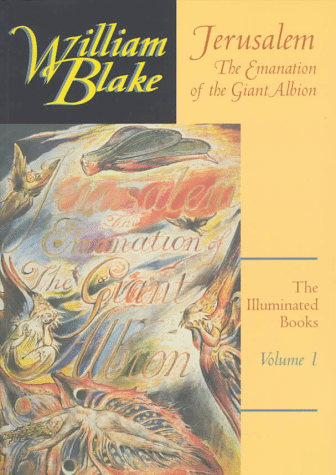
Jerusalem: The Emanation of the Giant Albion by William Blake, 297 pages


Madness and genius were never more closely allied than in the person of William Blake, who sought uncompromisingly

     To open the Eternal Worlds, to open the Immortal Eyes
     Of Man inwards into the Worlds of Thought.

A master engraver as well as a poet, Blake's illuminated books unite both talents in the exposition of his unique inner vision.  Indeed, as the introduction to the Blake Trust edition states, "Jerusalem is as epic in its range of graphic techniques as it is in its poetry", and this edition includes full color reproductions of the original's 100 pages, as well as a transcription of the text with notes and commentary, all necessary both to experience the full effect of Blake's work and to even begin to understand the uncanny processions of shadows and spectres and emanations.  The center of the epic is the giant Albion, who is simultaneously Adam and England, who, himself sickened, sickens the world.

     He hath leagued himself with robbers!  he hath studied the arts
     Of unbelief!  Envy hovers over him!  his Friends are his abhorrence!
     Those who give their lives for him are despised!
     Those who devour his soul, are taken into his bosom!

Albion's sons are simultaneously the tribes of Israel and the bishoprics of England, whom Blake portrays as descending into bestial idolatry

     Destroying by selfish affections the things that they most admire.

In Blake's mythopoeia art, science, politics, and religion combine in a delirious mixture, full of double meanings and unexpected associations.  Nineteenth century England becomes the biblical Babylon:

     The Walls of Babylon are the Souls of Men : her Gates the Groans
     of Nations : her Towers are the Miseries of once happy Families.
     Her Streets are paved with Destruction, her Houses built with Death
     Her Palaces with Hell & the Grave ; her Synagogues with Torments
     Of ever-hardening Despair squard & polishd with cruel skill
     Yet thou wast lovely as the summer cloud upon my hills
     When Jerusalem was thy heart's desire in times of youth & love.

If Blake condemns much of the modern world, he is scarcely less hostile to tradition, or any worldview which he sees as exalting reason over imagination, or law above grace.  Blake's mythic vision defines the cosmos in terms of coupled opposites, the state against the individual, matter against spirit, death against life.  And yet he always holds out hope for a reconciliation, or, at least, for conversion.

     For the Soldier who fights for Truth, calls his enemy his brother :
     They fight & contend for life, & not for eternal death!

Friday, February 24, 2017

Romantic Fairy Tales

Romantic Fairy Tales
Romantic Fairy Tales by Johann Wolfgang von Goethe, Ludwig Tieck, Friedrich de la Motte Fouque, and Clemens Brentano, translated by Carol Tully, 159 pages

Romantic Fairy Tales collects a series of original "artistic" fairy tales (Kunstmaerchen) written by some of the most celebrated German authors at the dawn of Romanticism between 1795 and 1817.  Goethe's Fairy Tale, also known as The Green Snake and the Beautiful Lily or simply The Tale, is a fantastic dream, lacking real characters or logic but full of magical creatures and seemingly arbitrary rules, any of which might represent something real or nothing at all.  Tieck's Eckbert the Fair is a moralistic fable on patience and desire, the story of a young runaway who finds herself living in an isolated cabin with an old woman and a magical bird who lays jeweled eggs.  Fouque's Undine tells the tragic tale of a gallant knight's love affair with the titular water nymph.  Finally, Brentano's The Tale of Honest Casper and Fair Annie is a story of death and honor featuring unfortunate lovers and a magical sword belonging to the local executioner.

All four stories are told with the mastery to be expected of such renowned authors.  Fairy Tale stands apart from the others in both content and style, just as Goethe's genius rises above the others, but the stories are all united in their vital sense of wonder and enchantment.

Friday, February 10, 2017

Atala and Rene

Atala and Rene by Francois-Rene de Chateaubriand, 96 pages

This book collects two famous short stories by Chateaubriand.  Atala is a tale told to the young Frenchman Rene by the elderly Natchez Chactas, relating how as a young man he was captured by the Muscogees and condemned to death by torture, but was saved by the love of the virtuous maiden Atala.  Rene is told by Rene to Chactas, explaining why he left behind the sister he loved to find a new home in the American wilderness.

Together, these two stories established Chateaubriand's reputation as France's answer to Goethe, but just as The Sorrows of Young Werther seems cliche after two centuries, so too Atala and, to a lesser extent, Rene.  Unlike Young Werther, however, Chateaubriand's stories appeal to a timeless standard to judge their protagonists.

Monday, January 30, 2017

Lyrical Ballads

https://images-na.ssl-images-amazon.com/images/I/51cKnr0NmwL._SX323_BO1,204,203,200_.jpgLyrical Ballads by William Wordsworth and Samuel Taylor Coleridge, 210 pages

Lyrical Ballads was first published in 1798, and its appearance marked the definitive emergence of the Romantic movement in English.  It is one of those rare books that actually changed the world - it is only a slight exaggeration to say that after Lyrical Ballads it became impossible to write poetry the way it had been written before.

     O reader! had you in your mind
     Such stores as silent thought can bring,
     O gentle reader! you would find
     A tale in every thing.

There is no distinction made within the book itself between the two authors, but apparently Coleridge only contributed four of the poems, although they include the immortal "The Rime of the Ancient Mariner" and "The Nightingale".  They are matched in well-deserved fame by Wordsworth's "Lines written a few miles above Tintern Abbey".  These are not diamonds in the rough, however, in a volume that includes works such as the amusing "The Idiot Boy", the harrowing "The Thorn", the touching "We are seven", the sardonic "The Last of the Flock", the poignant "Simon Lee, the old Huntsman", and the wonderful "Goody Blake and Harry Gill".

     Enough of science and of art;
     Close up these barren leaves;
     Come forth, and bring with you a heart
     That watches and receives.

Monday, March 14, 2016

Celtic Christianity

Celtic Christianity: Making Myths and Chasing Dreams by Ian Bradley, 232 pages

This is not a book about Celtic Christianity - the form of Christianity that thrived in Ireland and evangelized Scotland in the fifth and sixth centuries - but rather a book about the many attempts that have been made to claim and shape its legacy.  Indeed, near the end the author raises the question as to whether the label refers to any genuine subject at all, or whether "Celtic Christianity" only exists as a succession of constructions made by subsequent eras.

The book begins with the hagiographers of the seventh and eighth centuries, who idealized the not-so-distant past into a golden age as a way of both condemning and inspiring their own era, as well as promoting the preeminence of certain religious and political centers.  A succeeding Celtic revival arose in the first centuries of the second millennium, following the Norman conquest, as Britons, Normans, and Anglo-Saxons all sought to claim the blessings and legacies of the indigenous saints.  It was also during this era that the Arthurian mythos took shape.  When the Reformation was brought to Britain, Protestants appealed to the Celtic saints as indigenous, erastian Anglican or Presbyterian figures, with the otherwise much-maligned monks becoming a claim for the primitive simplicity of the British Church prior to Augustine's arrival in Canterbury.  In the Romantic era, the aura of mystery surrounding the Celts provided fertile ground for an idealized myth of the Druids, who in turn, it was imagined, transitioned into an equally idealized non-Roman Christian priesthood.  The syncretism of the Romantic approach - holding some legendary Druids as the pinnacle of natural religion awaiting only the Christian revelation to be perfected - has characterized "Celtic Christianity" in the popular imagination ever since.  The twentieth century saw some sober criticism by historians and an increasing tendency to view the subject in terms of contemporary social issues such as feminism and environmentalism.

Bradley is not only the author, but is himself one of the mythmaking dreamers, and as a result he tends to treat his subjects with considerable affection - perhaps too much, as he seems unwilling to actually judge any factual claims once he leaves the Middle Ages.  It is possible to question the discontinuity Bradley evidently sees between the "golden age" and his first two, medieval groups of mythmakers, a discontinuity which excises a considerable amount of traditional "Celtic" material but is necessary in order to provide room for certain alternative interpretations of what remains.  He especially perceives a contradiction between the popular image of St Patrick as the fearless evangelist of Ireland and the self-doubting figure revealed in the Confessio, the only writing of Patrick's which survives, but history is filled with individuals (and especially missionary saints, beginning with St Paul, who is clearly Patrick's model in the Confessio) who are both confident and self-effacing.  The sons of St Bernard used the Celtic tradition in the same manner as St Bede had centuries earlier, to urge a return to a stricter, simpler, "purer" form of monasticism.  Likewise, he asserts that the Arthurian legends are essentially non-Christian, which seems like a highly debatable claim.

Celtic Christianity gains energy and coherence when it begins its discussion of the Victorian fad for all things Celtic and the simultaneous Celtic Twilight movement, and the book might have been stronger if it had begun there (or shortly before) and focused exclusively on the modern era.  This, in turn, might have facilitated a clearer presentation of the different distinctive (though interacting) strains within the contemporary Celtic Christian movement - charismatics, New Agers, Western Orthodox, Anglicans, Welsh nationalists, etc.  Bradley is clearly passionate about his subject and an active participant in its development, but his unsuccessful efforts to shed light on the long-ago only serve to confuse matters in the here-and-now.  In the end, he concludes that enlisting the legends of Celtic Christianity in the service of social justice is preferable to medieval relic-collecting contests, which seems to suggest that politics is more important than the quest for holiness, a conclusion which the great saints of the past would surely have denied.  The true conflict is between seeing those saints as models to be imitated or as brand names to be exploited.

Wednesday, January 13, 2016

Return of Christian Humanism

Cover image for The Return of Christian Humanism: Chesterton, Eliot, Tolkien, and the Romance of History by Lee Oser, 165 pages

One of the three seems not to fit - Chesterton, the English fabulist who converted from Anglicanism to Catholicism, Tolkien, the English fantasist and all-but-cradle Catholic, and Eliot, the American Modernist poet who converted from Unitarianism to Anglicanism.  Of course, put another way, Eliot was only four years older than Tolkien, but Chesterton was fourteen years older than him.  Or it could be pointed out that while Chesterton flourished a short time before, during, and after the First World War and Eliot did his best work between the wars, The Lord of the Rings wasn't published until the '50s.  Yet none of them seem as out of place as Oser's untitled fourth subject, 19th century Deist critic Matthew Arnold.  Oser describes Arnold as having recognized a central problem for an agnostic humanism - an inability to balance the anarchic tendencies of romantic progressivism with the rigidity of neo-classicism.

According to Oser, the proof of that inability can be found in the exhaustion of the humanist tradition with Beckett and the anti-humanism that has subsequently ascended to power within the academy, with the collapse of the humanities as a consequence.  To rebuild it is necessary to embrace the "romance of history", which means meaningfully engaging with religion generally and Christianity particularly, especially the more-than-mere Christianity of the romantic reactionaries Chesterton, Eliot, and Tolkien.

Wednesday, September 2, 2015

Art of Spiritual Harmony

The Art of Spiritual Harmony by Wassily Kandinsky, translated by MTH Sadler, 112 pages

One of the foremost artists of the twentieth century, Wassily Kandinsky played a major role in the development of abstract painting in both his native Russia and in Germany, where he spent his most productive years and founded the Blaue Reiter school.  This short work contains Kandinsky's exposition of his thoughts on art in general and his method in particular.

Disdaining the merely material, Kandinsky embraces a Romantic spiritual heroism akin to that of Stephen Dedalus.  He seeks for painting the freedom from nature that the Romantics associated with music, the freedom to bring forth the vision of a semi-divine, Tolstoian inner self.  Unfortunately, this inner self opens upon the abyss.  Kandinsky's ideas are to art what Madame Blavatsky was to religion, his "pyramid to heaven" ultimately a tower of Babel.

Friday, June 5, 2015

Christina Rossetti

The Poetical Works of Christina G Rossetti (Volume II) by Christina G Rossetti, 231 pages

Christina Georgina Rossetti was born in London in the early 19th century.  Her parents were Italians, deeply literary and socially connected with the early Romantics.  One of her brothers was the Pre-Raphaelite painter and poet Dante Gabriel Rossetti.

Rossetti's poetry is very much in the Romantic tradition, filtered through and intensified by the Pre-Raphaelite aesthetic. The simplicity and charm of her verse only accentuates its beauty, and it does not exclude wrestling with questions of transcendent meaning.

Although this volume of her works did not contain some of her best known poems ("Goblin Market", "In the Bleak Midwinter"), there are plenty of gems - especially remarkable is "Monna Innominata", a set of feminine responses to the love poems of Dante and Petrarch.

Friday, December 19, 2014

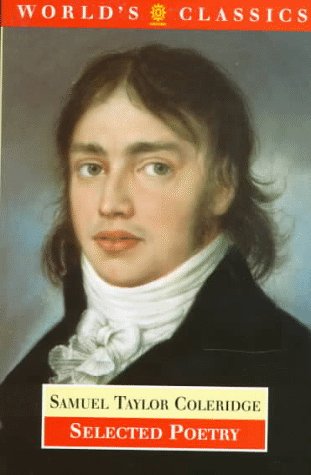
Selected Poetry

Selected Poetry by Samuel Taylor Coleridge, 153 pages

Throughout his poetic career, Coleridge was compared to and overshadowed by Wordsworth, and it's not difficult to understand why.  Especially in his earlier poems, Coleridge's use of deliberately antique (even for its time) language detracts rather than adds, and he seems to have often left promising projects unfinished, perhaps as a result of his personal struggles.  Unfortunately, as he matured his productivity correspondingly slackened.  Still, he gave us "The Rime of the Ancient Mariner", "Christabel", "Kubla Khan", and "The Nightingale", as well as other works of enduring beauty and power.  Like his most famous poem, however, his poetry as a whole is ultimately haunted by what might have been.