Monday, December 14, 2015

Winter

Winter (The Lunar Chronicles, #4)Winter (the Lunar Chronicles #4), by Marissa Meyer, 824 pages

Finally- a conclusion to The Lunar Chronicles!  Princess Winter, the scarred step-daughter of the evil Queen Levana, is viewed as such a threat to the throne that the Queen finally orders her murdered.  I think we know the story of Snow White enough to know how that one plays out.  But in addition to that storyline, we have Cinder, the cyborg-mechanic-secret-lost-princess, rallying the planet for a revolution to overthrow Levana; Prince Kai, in love with Cinder but marrying Levana out of duty to Planet Earth; Scarlet and Wolf, who never seem to get a break; Cress and Thorne, who make me roll my eyes to a painful degree with the amount of non-communication they seem to do; and the people of Luna, who get slightly more character development than they did in previous books (but it's still not alot).  This book wasn't life-changing, but there was a theme throughout the book that really spoke to me: "Broken isn't the same as unfixable."  I think that represents all of the characters and the storyline pretty well. 

In God We Trust: All Others Pay Cash

In God We Trust: All Others Pay CashIn God We Trust: All Others Pay Cash, by Jean Shepherd, 264 pages

So, I've probably seen The Christmas Story enough for several lifetimes, but it still has this powerful, gravitational pull of nostalgia that sucks me in every time I see it.  The movie was based on several of the stories from within this work- most notably, that of the infamous Red Ryder BB gun Christmas and "the old man's" major award.  The pictures that Jean Shepherd paints with his words are instantly recognizable to people of all ages- even if you never sat in front of an old-time radio, waiting to hear the secret message from Little Orphan Annie, we've all had that moment where we realized that one of our childhood loves was actually an instrument of commercialism.  And there are stories within that are not in the movie- stories of penny candy, the town lake that got condemned, or the blind date that made me cringe all over with a sense of shared sympathy.  There is some outdated (potentially offensive) slang in a couple of spots, but overall it was a fairly enjoyable read. 

What Did You Eat Yesterday? vol. 1

What Did You Eat Yesterday?, Volume 1What Did You Eat Yesterday?, vol. 1, by Fumi Yoshinaga, 200 pages

This is a mash-up of three types of manga that I thought worked really well together- slice-of-life, gay romance, and food.  Combining those three distinct genres made for a really subtle work that didn't feel like any specific one of the genres.  Shiro and Kenji appear to be pretty different- Shiro is a hard-working, serious, closeted lawyer, while Kenji is a fun-loving, openly gay hairstylist.  But what matters the most is that Shiro loves to cook elaborate, thoughtful Japanese dishes and Kenji loves to eat them.  The story here is not much of anything, being a slice-of-life, but there are recipes throughout that sound delicious and it offers a sort of fascinating glimpse into a section of contemporary Japanese culture.

Saturday, December 12, 2015

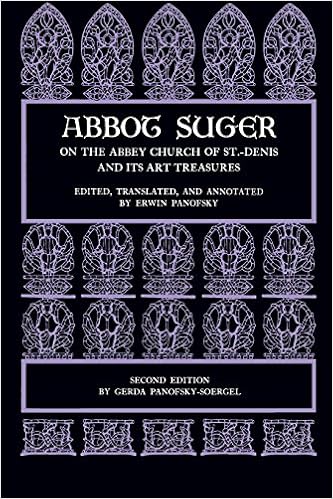
On the Abbey Church of St Denis

On the Abbey Church of St Denis and Its Art Treasures by Abbot Suger, translated by Erwin Panofsky, 87 pages

The renovation of the Abbey of St Denis in the Ile de France, undertaken in the 12th century by Suger, the powerful and influential abbot, friend and advisor to kings and popes, is widely considered to mark the birth of Gothic architecture.  Aside from the considerable expense of the work, Suger faced two major obstacles - the antiquity of the original building and the corresponding reverence in which it was held, and the contemporary Cistercian reform movement with its uncompromising spokesman St Bernard of Clairvaux, implacably hostile towards displays of wealth and opulence.  These two sources of opposition inspired Suger to write multiple explanations of his work, which simultaneously serve as celebrations and defenses.

Panofsky cannily notes that there is no difference for Suger between his own glory and his glorification of the abbey, the two are indissolubly wedded together in his mind.  This marriage, in turn, has as its purpose the greater glory of God.  Suger utilizes the mystical hierarchies of Pseudo-Dionysius, then believed to be identical with the St Denis buried at the abbey, to justify the aesthetic splendor of his renovations, but he is just as proud of his improvements to the abbey's landholdings and finances as its architecture and decoration.

Max the Brave


Max the Brave by Ed Vere   32 pages

A cute book for Preschoolers through Grade 2.

Max is very brave, very black kitten who chases mice. Problem is, Max doesn’t know what a mouse looks like. So off he goes in search mouse. Since this is such a short book, I don’t want to be a spoiler. You’ll just have to read it to find out what obstacles get in Max’s way.


I give Max the Brave 5 out of 5 stars.

Amish Christmas at North Star


Amish Christmas at North Star: Four Stories of Love & Family by Cindy Woodsmall, Mindy Starns Clark and Emily Clark, Amanda Flower, and Katie Ganshert   400 pages

These four novellas are interrelated in that they revolve around four babies all born during a 2000 blizzard in North Star, Pennsylvania, to Amish couples. Midwife Rebekah Schlabach delivers the babies at her birthing center; just her and the new mothers-to-be. It was quiet a night.  All went well and the babies became known as Rebekah’s Babies. The years passed. It’s now 2015.

In the first novella, Guiding Star, author Katie Ganshert gets the ball rolling. Englischer Chase Wellington discovers an article about the babies in his mother’s attic. It seems that one of the babies and her mother disappeared shortly after she arrived. Chase is a freelance reporter and decides to investigate what happened to them.

In the second story, Mourning Star,Eden is a single woman working at her parents’ creamery, Dutch Village Fudge. Every day Isaac Yoder comes in to satisfy his sweet tooth. Eden and Isaac become friends; that’s all since he’s so much older. But when Isaac is killed by one of the horses he boards at his stables, Eden has a gut feeling it wasn’t an accident.

The third novella, In the Stars, Kore Detweiler isn’t Amish. He was ready to join the community, but after the third of Rebekah’s babies, Savilla Beiler, rejects him, he moves to Virginia. However, when he grandmother takes a fall and doesn’t regain consciousness right away, the family fears the worst. Kore heads home. He knows he will run into Savilla, but isn’t sure he can control his emotions.

In the final novella, Star of Grace, Andy Danner wants nothing to do with the North Star community after Nellie isn’t ready to marry him. He moved to Mississippi and prefers to stay there for the rest of his life. However, his younger brother Sam misses him. A lot. Andy agrees to come him if Sam earns the money to buy a ticket.

All the stories were well done. There isn’t a lot of tension in any of them. But readers usually know that when they pick up a book like this. Still, the stories have all the qualities necessary for a good story: good plot, a little romance, some mystery, and a moral. And since all take place at Christmas, it was a heartwarming read.

I give Amish Christmas at North Star 3 out of 5 stars. A nice read; nothing really special.

I received this book from Blogging for Books in exchange for this review.


Thursday, December 10, 2015

Tricky Twenty-Two

Tricky Twenty-Two by Janet Evanovich, 292 pages

This is another typical Stephanie Plum novel.  Stephanie is chasing the criminals who have skipped out on their bonds with her sidekick, Lulu.  One of her skips is a college student nicknamed Gobbler.  Through Gobbler, Stephanie finds out that there might be some shady dealings with the faculty and staff on campus.  In addition, Stephanie has been helping Ranger with a bodyguard assignment, which ends up relating to three different murders.  Just to top off Stephanie's week, Joe broke up with her.  Of course, Stephanie's cars end up being totaled, or blown up, or filled with geese, which only adds to the hilarity.  I thought this book was pretty funny.  I laughed out loud a couple of times and I enjoyed this addition to the series.  I wouldn't say it's the best one, but it was fun and anyone who likes the series or humorous fiction will enjoy it.

The Flinkwater Factor

The Flinkwater Factor by Pete Hautman, 249 pages

This was a bizarre but fun book.  There are what seems to be several different stories in this book that all come together in the end.  Flinkwater is a place where several geniuses live.  They work for ACPOD, which creates robots.  Several people become comatose, apparently from watching the same computer program, a talking dog appears in town and Ginger, the main character, finds out more about the Sasquatch in town than she thought possible.  Ginger, along with the boy she wants to marry, Billy, and another friend, Myke, set out to solve the problems in Flinkwater before Homeland Security tries to take them in as terrorists.  His book is actually pretty funny and has some fun real science and also some fake science.  One of the great things about it is that at the end Hautman talks about what is real, potentially real soon, and fake.  This is a good one for kids who like realistic science fiction.

A Plague of Unicorns

A Plague of Unicorns by Jane Yolen, 186 pages

The unicorns have been eating the golden apples at Cranford Abbey as long as anyone can remember.  The current abbot is determined to get rid of them and is willing to try almost anything, except allow women into the abbey, despite the fact that a maiden's touch is said to calm the unicorns.  When a small boy, James, who is also the duke's son, is sent to the abbey to learn, he begins to come up with a plan.  Of course, he's only a boy and the abbot may not listen to him but James may be able to prove that being small and curious can be a benefit.  I liked this book and kids who like fantasy will probably like it also.

All Four Stars

All Four Stars by Tara Dairman, 273 pages

This may have been one of my favorite books of this year.  Gladys is eleven and the thing she loves most in the world is to cook.  Unfortunately, her parents do not support her interest so Gladys has been cooking on the sly for the past few years.  Even more unfortunately, they come home early at the exact moment that she has a small problem with her crème brulee and the curtains catch on fire.  Gladys's parents ban her from all cooking related things for six months.  Gladys's new teacher gives them an assignment to write about what they want to in the future.  With a little prodding, Gladys writes an essay about wanting to be a odd critic for the most prestigious newspaper in the country.  Her essay is chosen to be sent to that exact newspaper for their essay competition.  The results are hilarious and fabulous.  Combined with some of Gladys's reviews other various meals (mostly from her parent's kitchen), I laughed out loud more than once.  For kids who like realistic and humorous fiction, this is a must-read.

Wednesday, December 9, 2015

Unlearned Lessons of the Twentieth Century

Cover image for The Unlearned Lessons of the Twentieth Century: An Essay on Late Modernity by Chantal Delsol, translated by Robin Dick, 202 pages

As French intellectual Delsol diagnoses it, the crisis of late modernity is that a culture which has accepted the ideological premise that any limitation is a form of oppression has encountered the limits of its capacity to reshape reality to fit its desires.  In this telling, the catastrophic cost - in the hundreds of millions of lives lost, but also in the spiritual damage done to billions more - of the twentieth century's utopian schemes - not only Nazism and Communism but also liberal democracy - is secondary to the bare fact of the utter failure of those schemes to achieve their promised ends.  The rediscovery that man is inherently limited has led to a rejection of reality, a nihilistic reaction, and not even the triumphant nihilism of the past, but a cramped, craven nihilism.  The greatest tragedy is that the pervasive reductionist materialism of modernity even reduces the quest for solidarity into the mere impersonal reallocation of resources, whether through voluntary philanthropy or taxation and social spending.

Delsol's primary concern is with the damage the acids of modernity inflict upon the modern world's hardest won and most cherished insight - the inherent dignity of every human person.  The impoverished worldview of late modernity, she claims, cannot long sustain a belief in human dignity against its own instrumentalist ideology which is perpetually tempted to view people as means rather than as ends.

Sunday, December 6, 2015

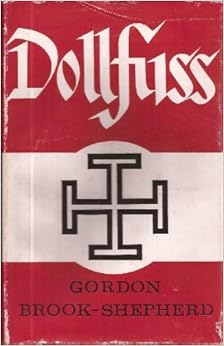
Dollfuss

Dollfuss by Gordon Brook-Shepherd, 284 pages

In 1932, Engelbert Dollfuss, until then a little known government minister and agrarian reformer, accepted the office of Chancellor of Austria.  In 1933 he closed Parliament and outlawed the Marxist and Nazi parties, leading to a brief civil war between government-backed militias and socialist paramilitaries which climaxed in the use of artillery to reduce socialist strongholds in the working class suburbs of Vienna.  In 1934, after a little over a year of dictatorial rule, he was murdered during a coup attempt by Austrian Nazis.

Shepherd firmly situates Dollfuss' public career in the context of the particular problems of his time and place, only briefly surveying his life before becoming Chancellor in order to devote the bulk of the book to the labyrinthine politics of interwar Austria.  In this account, Dollfuss' primary aim - and his legacy - was the cultivation of a distinct Austrian identity which was independent of the departed Habsburgs and resilient enough to resist the pan-Germanism which animated both the far right and far left.

Friday, December 4, 2015

Prison Angel

Cover image for Prison Angel: Mother Antonia's Journey from Beverly Hills to a Life of Service in a Mexican Jail by Mary Jordan and Kevin Sullivan, 225 pages

Mary Clarke had her share of ups and downs in her life.  Her father struggled to make ends meet in the Great Depression, but founded a stationary company in time for World War II, becoming successful enough that the family moved into a mansion in Beverly Hills.  Wealth could not buy happiness, of course, and in adulthood Mary struggled through two failed marriages.  Increasingly, she became involved with charitable work, and it was there that she found her vocation.  At the age of 50 she sold her house, donned a homemade habit, and began full-time work at La Mesa prison outside Tijuana, Mexico.  A year later she moved into the prison permanently, living in a cell, ministering to the prisoners, and acting as a mediator between the inmates and authorities.  Working tirelessly to improve living conditions, promote peace, and inspire others to repent and forgive, she became known to guards and prisoners alike as "La Mama".

The authors make much out of Mother Antonia's two divorces in order to create space between her and the Church, despite the close cooperation between her and the local bishops in both San Diego and Tijuana and the personal blessing of St John Paul II.  They follow the common journalistic practice of casting "church rules" as arbitrary limits that are inherently oppressive.  At times the book, in the process of humanizing the convicts at La Mesa, comes perilously close to sanitizing them, a mistake which diminishes the true nature of Mother Antonia's work, casting her as a social worker in a habit rather than a minister of repentance and reconciliation.  In the end, however, the authors' literary skill and the force of their subject's personality overcome these handicaps to present a lively portrait of a woman who heard God's call late in life, but responded to it with her whole heart.

Thursday, December 3, 2015

The Nightingale

The Nightingale by Kristin Hannah   440 pages
In love we find out who we want to be.
In war we find out who we are.
FRANCE, 1939
These are the first words on the dust jacket and truly sum up this marvelous novel.

Vianne Mauric lives in a quiet village outside Paris with her husband, Antoine, and their eight-year-old daughter. Antoine has been called into service, but no one in the village believes that the Nazis will invade. Well, we know how that turned out.

Vianne’s younger sister, Isabelle, is eighteen, rebellious and searching for passion. When the young man she falls head-over-heels in love with betrays her, she vows to take an active part in freeing France from the Nazis.

In this incredible story, readers have a chance to witness “an intimate part of history seldom seen: the women's war. The Nightingale tells the stories of two sisters, separated by years and experience, by ideals, passion and circumstance, each embarking on her own dangerous path toward survival, love, and freedom in German-occupied, war-torn France--a heartbreakingly beautiful novel that celebrates the resilience of the human spirit and the durability of women. It is a novel for everyone, a novel for a lifetime.”

Author Hannah made me feel like I was in France, both trying to eek out a living as Vianne was doing or joining the Resistance with Isabelle. I had trouble putting this book and was sad when it ended.


I give The Nightingale six out of five stars. Of the 65 books I’ve read this year, The Nightingale is one of the best.

One to Go

 
One to Go by Mike Pace  365 pages

Tom Booker is in a hurry to pick up his daughter from her mother’s. Not only has he promised to take her to the Air and Space Museum, but if he doesn’t show up reasonably soon, he will catch seven kinds of grief from his ex-wife.

As he is crossing Memorial Bridge, he is texting his ex-wife. His car drifts into on-coming traffic and as it crashes into a mini-van, he realizes that his daughter, three of her friends, and his ex-sister-in-law are the van’s occupants.  When he awakens, the crash site has frozen in time. A young, yuppie couple approach Tom to make a deal. They will rewind time and let his daughter live, but he must agree to provide five souls, one every two weeks, in exchange for the van’s occupants to live. 

Tom quickly agrees, not fully understanding what he has committed to do. When he awakes again, he feels what happened was a hallucination. Only when his ex-sister-in-law is brutally murdered does he realize what he has done. He isn’t a killer and doesn’t even know how to go about planning a murder, much less four more.

Tom’s moral quagmire is at the heart of this fast-paced, absorbing novel. I was on the edge of my seat from the opening scene to the last page. Author Pace could have gotten away with having only four occupants in the as by the time the fourth soul was delivered to Satan’s representatives, Tom’s quandaries were starting to get a bit predictable. Some nice twists at the end involving a priest made for a satisfying ending.

I do have two things to criticize. First is the cover. The dust jacket gives the appearance that the book is to a legal thriller, but that’s far from the case. If I had seen the book in a bookstore, I probably would have passed. Yeah, I judge a book by its cover. Second is the genre. The dust jacket is lists the genre as thriller but it’s more paranormal suspense or supernatural than thriller.


Still, One to Go was a heart-stopping read, that I would give six out of five star, if I could. Highly recommend it. 

Waiting for Tomorrow

Wishing for Tomorrow by Hilary McKay, 273 pages

This is a sequel to A Little Princess by Frances Hogdson Burnett.  It has all of the characters from the original book, pretty much, except that Sara, the heroine of the first story, is only present in letters that she is sending to Ermengarde.  Ermengarde misses Sara terribly, but is hurt that she didn’t share the magic with her, and doesn’t really return her letters.  Her hurt almost causes her what would be one of the biggest regrets of her life.  We also get to see Lavinia, who was kind of a bully, grow into herself, and Lottie, who was barely out of babyhood, grow up quite a bit.  Even Miss Minchin, who was definitely the villain in the previous book, turns out to be not so awful in this book.  It’s not a bad story, but there’s very little conflict, compared to the last story, so it’s not really that interesting.  Kids that really want to know what might have happened next will get some satisfaction from this story but I wouldn’t recommend it to anyone else.

November Totals!

Don't forget -- Ugly Holiday Sweater Day @ SLPL
is December 16th!
Congrats to Ed W, who read the most pages and to Jason S, who earned the most points in November! The winner of November's random drawing is Molly P -- we'll be contacting you shortly about your prize. Thanks for blogging!

November Stats:
BloggerBooks PagesPoints
Ed W176,23617
Jason S175,40029
Krista R103,78710
Dennis M143,06517
Julie E-C51,3895
Molly P49904
Melissa M13911
TOTALS6821,25883

Orbiting Jupiter

Orbiting Jupiter by Gary D. Schmidt, 183 pages

Jack’s new foster brother, Joseph, is a little scary.  They say he tried to kill a teacher and that he has a three month old daughter, even though he’s only thirteen.  But Jack isn’t scared of him.  When Joseph helps to milk the cows, they trust him and besides that, Jack can see something in Joseph.  He isn’t sure what, but he knows that Joseph needs a safe place.   Little by little Joseph starts to trust his new family and starts to share some of his story with them.  As Joseph’s story unfolds, Jack and his family become more determined to help him.  This is an excellent story about a pair of boys who are just trying to make their way in the world.  Teens who like realistic fiction will really like this book.

Carry On

Carry On by Rainbow Rowell, 522 pages

Ed reviewed this book really recently so I’m not going to waste time with plot.  I will say that I liked this book pretty well.  However, if I hadn’t read Fangirl by this author I would have been asking myself why this author was bothering to write a Harry Potter knockoff.  That being said, I still thought it was a fun book, interesting enough to want to know how it turned out in the end but I don’t think this is her best book either.

Wednesday, December 2, 2015

Arrogance of Humanism

Cover image for The Arrogance of Humanism by David Ehrenfeld, 269 pages

Humanism, as defined somewhat idiosyncratically by Ehrenfeld, is the belief that human reason can solve every problem, and human powers can transcend all limits.  In this sense, the vast majority of Americans, left and right and center, are humanists.  The West as it emerged from the Enlightenment is a humanist culture increasingly exclusively, through the long nineteenth century, focused on technical and technological solutions to the world's ills.  This has only been strengthened by the unprecedented success of this approach, ushering in the wealthiest era in human history.  As the twentieth century waned, however, it was already being perceived that human ingenuity was beginning to find its limits, and that the Western way of life was becoming increasingly unsustainable.

Ehrenfeld, an ecology professor, casts the crisis of late modernity as a tragedy of hubris.  Human societies are only susceptible to so much engineering, solutions to increasingly narrow problems create new problems that compound each other, systems become increasingly complex and therefore increasingly brittle.  The true costs and dangers are hidden by a quantitative approach that ignores the qualitative entirely and creates a false sense of security and control.

Ehrenfeld saw little hope at the time of this book's publication in 1978 of any systemic change.  At the end, the best hope he could offer was that some Gollum might take the Ring into the fire at the cost of only a finger.

Monday, November 30, 2015

Higurashi Massacre Arc

Higurashi when they cry Massacre Arc volumes 1-3 by Ryukishi07, 1472 pages (3 books)

Cover image for At last we get an explanation to the series, but don't expect me to tell you what it is. Read the books, or come and ask me. But I can say that every book, except this one follows a set of rules that govern the murders and violence. If you have read multiple arcs in this series you can guess what some of them are, but since they do not give much, if anything, away I can explain some here. The first rule is that eventually someone will get overly paranoid of their friends and try to kill them all. The second rule is Rika always dies in 1983. There are a couple others, but they hint at events in the books, and are not as general.


There is a lot of talk of destiny and overcoming it in this arc, and I thought, maybe even hoped that this would be the end, that this time things would be different. They had already overcome so much that destroyed their friendship before but I did not see the end coming. It is one of those ends that you close the book, let out some swear words and quickly pick up the next arc.

Even though it takes quite awhile to build up to this explanation, some 4000 pages or so, I now think that it was worth it. Yes it was slow there in the middle, but this arc more than makes up for it. I do wish the books would stop getting thicker and thicker. Seriously this series started at like 200 pages per book and has now grown to nearly 500. And the next arc is even thicker!

Six of Crows

Six ofCrows by Leigh Bardugo, 465 pages


This book was amazing.  I liked it better than Bardugo's original series and I liked that pretty well.  A group of thieves from Ketterdam are planning to break into the Winter Palace and release a prisoner.  This prisoner has the formula for a substance that enhances Grisha's powers incredibly, but also leaves them addicted and shortens their lives as much as it enhances their powers.   This group, led by Kaz, should never be able to accomplish their task.  The White Palace is impenetrable.  But, led by the promise of untold the wealth the group is willing to try.  Each person has their own reasons and though some of them seem to hate each other they somehow manage to work together.  I really enjoyed the character development and the action in this book.  It was really terrific and teens who like fantasy will enjoy it.

The Rest Of Us Just Live Here

The Rest Of Us Just LiveHere by Patrick Ness, 317 pages

This book was an odd combination of realistic fiction and fantasy.  Most of the book is about this group of friends, with regular problems.  This is told from the perspective of Mike.  He and his sister, Mel, have both had some problems since their mother's big campaign for lieutenant governor.  Mel developed an eating disorder and nearly died while Mike developed a severe problem with OCD.  Mike is hopelessly in love with another friend, Henna, whose dad is a preacher and whose mom is a podiatrist and who plan to take her on a mission to Africa for the summer right after graduation.  Mike's best friend, Jared, is gay.  He's also part god.  And this is where some of the fantasy creeps in.  Every few years something bizarre and strange happens in their town that the adults never acknowledge but the teens all know is supernatural.  The group they call the Indie kids are always at the heart of it and at the beginning of each chapter we get a synopsis of what's happening with that story.  Jared being part god is part of one of those strange occurrences.  This might be my favorite book by Ness so far and I've liked all of them pretty well.  Something about the mix really appealed to me and he really made me care about these characters.  I would highly recommend this for almost any teen, but definitely for fans of realistic fiction and fantasy.

To All The Boys I've Loved Before

To All The Boys I've Loved Before by Jenny Han, 355 pages

Lara Jean keeps a stash of love letters.  They aren't letters she's received, but letters she's written, to boys that she's had crushes o.  She writes them to help get over the crush.  She has one that she wrote to her sister's boyfriend, Josh.  Lara Jean is a year younger than Josh, and he fell for her older sister, Margot.  Now Margot is going to college in Scotland and she's broken up with Josh.  Lara Jean is terrified that she won't be able to get along without Margot.  Margot has always been in charge since their mother died and now Lara Jean feels responsible for her father and little sister, Kitty.  Suddenly, Lara Jean's world is turned upside down when her letters start turning up in the hands of the boys they were written to.  This is a really well written story about family and teen angst, and first loves.  Teen girls who like realistic fiction will probably love this book.

Higurashi when they cry Atonement Arc

Higurashi when they cry Atonement Arc volumes 1-4 by Ryukishi07, 944 pages (4 books)

Cover image for Finally something different with this series! Well kind of. Someone still goes crazy and tries to kill everyone, but this time, this time everyone SPOILERS SPOILERS SPOILERS! You can try to mouse over those words all you want but nothing will happen. There is literally no way for me to say how much different this arc is without really giving too much away.

So instead I will hark on one of the big defining moments of the books. Nearing the climax of this arc two students find themselves locked in deadly combat. With a metal bat and a machete. On top of the schools roof. While numerous adults and police officers look on without doing anything to save or stop either one. Instead they are even convinced by another student to let them fight. Seriously? Maybe that kind of stuff happens all the time in Japan but I could not help but laugh at the silliness of it.

Anyways there is such a change from the usual books I thought this might be the end. But alas not so much. Everything still fades to black at the end. The next arc doesn't sound too promising for this young group of students either. Stay tuned for my review of the Massacre Arc, immediately following this post. Or would it be before this post, since I will post it afterwards...

Murder House

Murder House by James Patterson & David Ellis, 451 pages

Jenna Murphy is a detective who was forced out of her job in New York.  She's come to the Hamptons where her uncle Langdon, the police chief, has given her a job.  A murder case comes up immediately but no one will let Jenna work the case.  In fact, they emphatically tell her to stay out of it.  On her own time, Jenna investigates anyway and uncovers several other murders that she believes are related.  Unfortunately, her endeavors could put her in a lot of hot water.  Every day it looks more like she is risking her job, her freedom, even her life.  This was a pretty good story.  The beginning was a little confusing and slow, I thought.  The story was kind of convoluted too.   But at the end, I still liked it overall.  Fans of murder mysteries and Patterson will probably enjoy this book.

No Such Person

No Such Person by Caroline B. Cooney, 246 pages

Miranda and her older sister, Lander, are watching a couple of boys water skiing on the river when a barge comes along and runs down the skier.  Miranda, who was watching through binoculars, is sure that the driver put the skier in the barge's way on purpose.  Lander refuses to believe it and when the driver, Jason, comes ashore, Lander goes with him to the police station.  She and Jason start dating.  Lander is smitten.  A few days later, a man is found shot in the woods.  Lander is nearby, alone, with the gun that killed him.  This book switches between Lander and Miranda's point-of-view.  Lander isn't sure what happened and isn't speaking to the police because she's afraid that she might have fired the shot that killed the person.  Miranda doesn't believe that her sister could have done this and is sure that Jason is responsible.  She sets out to prove it.  This was a good, somewhat suspenseful, mystery story.  It was really compelling and I didn't want to put it down.  This is a good pick for teens who like mysteries and mild thrillers.

Backlash

Backlash by Sarah Darer Littman, 325 pages

Lara has suffered from depression since junior high.  Now in high school, she is getting her life on track.  She has some good friends, she just made the cheerleading squad, and she's starting to feel a little bit better about herself.  Then a boy starts chatting with her online.  Christian is sweet and funny and seems to think that she is really pretty.  He's even hinted at asking her to his school's dance.  Then he posts something horrible to her public wall on Facebook, telling her she's a terrible friend, that he'd never want to go to the dance with her, and that the world would be better off without her.  So, Lara tries to kill herself.  The rest of the book is about the aftermath of her attempted suicide.  Told from the points of view of different people, including Lara, her younger sister, Sydney, Lara's former best friend and neighbor, Bree, and her younger brother, Liam, each person tells the story through their own eyes.  I thought this was a terrific story about online bullying and every teen should read it.  Teens who like realistic fiction will want to read this.

Black Dove White Raven

Black Dove White Raven by Elizabeth Wein, 357 pages

Emilia Menotti and Teodros Dupre' lived in the United States with their mothers, who did air shows until Teo's mother, Delia, known as Black Dove, was killed in a freak accident.  Delia's dream was to move to Ethiopia, where Teo's father was from before he died, because in Ethiopia, Teo would not have the same stigma that he did in the U.S.  Rhoda, who was lost without Delia, was determined to live her dream, so, within a few years, she moved herself, Em, and Teo to Ethiopia.  Teo and Em had always been raised as though they were brother and sister and Teo and Rhoda though of each other as mother and son.  But when trouble invades Ethiopia, the fact that they have no legal relationship becomes a problem, along with the fact that Teo's father was Ethiopian, which binds him more closely to their laws.  Em and Teo have always written stories featuring themselves as White Raven and Black Dove but Em isn't sure if she can come up with a way to help Teo.  Written alternately from Em's and Teo's points-of-view, this story chronicles their lives from the time they are about five, until they are sixteen, but concentrates most heavily on the time they spend in Ethiopia.  The ending of this book takes place during the time that was a prequel to WWII, when Italy was attacking Ethiopia, a part of history that I really didn't know anything about.  I really liked this story and I think that teens who like historical novels, especially about civil rights, and like a little bit of adventure will want to read it.

Escape From Mr. Lemoncello's Library

Escape From Mr. Lemoncello's Library by Chris Grabenstein, 291 pages

After more than a decade with no library in town, the new library is planning its grand opening.  Kyle, along with eleven other kids in his grade have won the chance to have a lock-in at the new library and get a preview before the actual opening.  Kyle is excited because the man who paid for this library, Mr. Lemoncello, is a huge gaming mogul.  He is the creator of almost all of Kyle's favorite games.  The kids have a lot of fun at the lock-in but find out the next day that the real game has just started.  They have 24 hours to find a way out of the library.  The first person to succeed will win a fantastic prize.  Then the real fun begins.  This is a fun book with several puzzle games that the readers can figure out along with the characters.  I really enjoyed it and would recommend it to any kids who like realistic fiction or figuring out puzzles and mysteries.

Bits & Pieces

Bits & Pieces by Jonathan Maberry, 577 pages
This is a compilation of several different stories about several of the characters that we have met throughout this series.  We get to see some more of Tom and Benny's story from the First Night.  We also get some new stories about how some other people survived, or didn't survive First Night.  One story is about Rachael who was at a ComicCon when the plague hit.  We see how she survived in the first story about her and we get some ore of her story later, when different people's stories converge.  Although it was sad, I liked the story about Jack, who is dying of cancer when First Night hits.  His mother, father, uncle, and twin sister are all bitten during a huge storm, right before the levees break and a wall of water starts heading their way.  This was a good collection of stories and teen zombie story fans will enjoy this addition to the series.

Higurashi when you cry Eye Opening Arc

Higurashi when you cry Eye Opening Arc volumes 1-4 by Ryukishi07, 752 pages (4 books)

Cover image for In all reality this review should have gone in with the previous review of this series. It follows the same byline: retelling the same story, but with a different character going mad and trying to kill all of their friends. In all honesty I am getting tired of it. The only thing that keeps me reading this series is the fact that the story changes just enough with the different madnesses to keep it interesting, and for what I am hoping is going to be a big payoff when everything is explained at the end.


This arc was a little more gruesome than others, there was a lot of torture. It was made all the more horrifying as it is friends torturing other "friends".

X

X by Sue Grafton, 403 pages

“Perhaps her darkest and most chilling novel, it features a remorseless serial killer who leaves no trace of his crimes. Once again breaking the rules and establishing new paths, Grafton wastes little time identifying this sociopath. The test is whether Kinsey can prove her case against him before she becomes his next victim.”  I loved this book.  I’m not sure that I’ve disliked any of Grafton’s books so far, but this one was excellent.  Mystery livers and fans of this series won’t be able to put this book down.  I’m really going to be sad when she finishes this series.

History in English Words

History in English Words by Owen Barfield, 218 pages

A living language is not something manufactured, it is grown gradually over the course of centuries, with layer upon layer of accretion.  By digging back into those linguistic strata of the past, Barfield tells us, we can recover some sense of how the people of previous ages lived and thought.  Likewise, this linguistic archaeology can reveal the full significance of the words we use today.

History in English Words is nothing more or less than a journey through The Oxford English Dictionary with a particularly erudite guide.  Doubtless, more recent scholarship has invalidated some of Barfield's work, first published in 1926, but the main structure has enough redundant supports that losing a few here or there barely constitute a weakening of the whole.

Two if By Sea

Two if by Sea by Jacquelyn Mitchard
448 Pages
March 2016


"Just hours after his wife and her entire family perish in the Christmas Eve tsunami in Brisbane, American expat and former police officer Frank Mercy goes out to join his volunteer rescue unit and pulls a little boy from a submerged car, saving the child’s life with only seconds to spare. In that moment, Frank’s own life is transformed. Not quite knowing why, Frank sidesteps the law, when, instead of turning Ian over to the Red Cross, he takes the boy home to the Midwestern farm where he grew up. Not long into their journey, Frank begins to believe that Ian has an extraordinary, impossible telepathic gift; but his only wish is to protect the deeply frightened child. As Frank struggles to start over, training horses as his father and grandfather did before him, he meets Claudia, a champion equestrian and someone with whom he can share his life—and his fears for Ian. Both of them know that it will be impossible to keep Ian’s gift a secret forever. Already, ominous coincidences have put Frank’s police instincts on high alert, as strangers trespass the quiet life at the family farm.

The fight to keep Ian safe from a sinister group who want him back takes readers from the ravaged shores of Brisbane to the middle of America to a quaint English village. Even as Frank and Claudia dare to hope for new love, it becomes clear that they can never let Ian go, no matter what the cost. A suspenseful novel on a grand scale, Two If by Sea is about the best and worst in people, and the possibility of heroism and even magic in ordinary life."


A real mess of a book.  I hope that some serious editing occurs before it is actually printed.  There are so many things going on, a Tsunami,  Magical children, sinister strangers, romance, and horseback riding.  Mitchard doesn't maintain a consistent plot line and the book needs to shed some of the elements to become more coherent. 

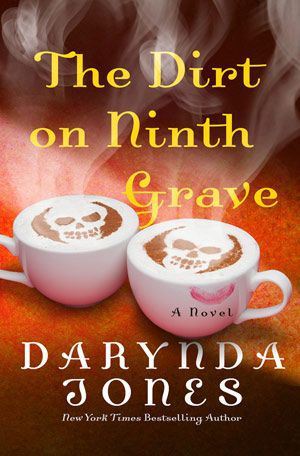
Dirt on the Ninth Grave

Dirt on the Ninth Grave by Darynda Jones
336 Pages

"In a small village in New York lives Jane Doe, a girl with no memory of who she is or where she came from. So when she is working at a diner and slowly begins to realize she can see dead people, she's more than a little taken aback. Stranger still are the people entering her life. They seem to know things about her. Things they hide with lies and half-truths. Soon, she senses something far darker. A force that wants to cause her harm, she is sure of it. Her saving grace comes in the form of a new friend she feels she can confide in and the fry cook, a devastatingly handsome man whose smile is breathtaking and touch is scalding. He stays close, and she almost feels safe with him around.

But no one can outrun their past, and the more lies that swirl around her—even from her new and trusted friends—the more disoriented she becomes, until she is confronted by a man who claims to have been sent to kill her. Sent by the darkest force in the universe. A force that absolutely will not stop until she is dead. Thankfully, she has a Rottweiler. But that doesn't help in her quest to find her identity and recover what she's lost. That will take all her courage and a touch of the power she feels flowing like electricity through her veins. She almost feels sorry for him. The devil in blue jeans. The disarming fry cook who lies with every breath he takes. She will get to the bottom of what he knows if it kills her. Or him. Either way."


The series continues strongly after the direction change which occurred in the eight book. 

Fifth House of the Heart

Fifth House of the Heart by Ben Tripp
390 Pages

"Asmodeus "Sax" Saxon-Tang, a vainglorious and well-established antiques dealer, has made a fortune over many years by globetrotting for the finest lost objects in the world. Only Sax knows the true secret to his success: at certain points of his life, he's killed vampires for their priceless hoards of treasure.

But now Sax's past actions are quite literally coming back to haunt him, and the lives of those he holds most dear are in mortal danger. To counter this unnatural threat, and with the blessing of the Holy Roman Church, a cowardly but cunning Sax must travel across Europe in pursuit of incalculable evil--and immeasurable wealth--with a ragtag team of mercenaries and vampire killers to hunt a terrifying, ageless monster...one who is hunting Sax in turn."


I thought this was an excellent entry into the realm of vampire fiction with some unique twists that sets it apart from other vampire tales but doesn't totally discount them.   I especially liked "Sax" as a character. 

The Muralist

The Muralist by B.A. Shapiro
337 Pages

 "When Alizée Benoit, a young American painter working for the Works Progress Administration (WPA), vanishes in New York City in 1940, no one knows what happened to her. Not her Jewish family living in German-occupied France. Not her arts patron and political compatriot, Eleanor Roosevelt. Not her close-knit group of friends and fellow WPA painters, including Mark Rothko, Jackson Pollock, and Lee Krasner. And, some seventy years later, not her great-niece, Danielle Abrams, who, while working at Christie's auction house, uncovers enigmatic paintings hidden behind works by those now famous Abstract Expressionist artists. Do they hold answers to the questions surrounding her missing aunt?

Entwining the lives of both historical and fictional characters, and moving between the past and the present, The Muralist plunges readers into the divisiveness of prewar politics and the largely forgotten plight of European refugees refused entrance to the United States. It captures both the inner workings of New York's art scene and the beginnings of the vibrant and quintessentially American school of Abstract Expressionism. "


I enjoyed this book and it's portrayal of the abstract art movement in the United States.  I think the book would have been stronger had the author concentrated on just one aspect instead of including the struggle of the Jews coming to America at the outbreak of war in the plot. 

Against the Country

Against the Country by Ben Metcalf
328 Pages

"Against the Country is a gift for fans of Southern Gothic and metafiction alike. Set in the Virginia pines, and overrun with failed parents, racist sex offenders, cast-off priests, and suicidal chickens, this novel challenges literary convention even as it attacks our national myth--that the rural naturally engenders good, while the urban breeds an inevitable sin.

In a voice both perfectly American and utterly new, Ben Metcalf introduces the reader to Goochland County, Virginia--a land of stubborn soil, voracious insects, lackluster farms, and horrifying trees--and details one family's pitiful struggle to survive there. Eventually it becomes clear that Goochland is not merely the author's setting; it is a growing, throbbing menace that warps and scars every one of his characters' lives.

Equal parts fiery criticism and icy farce, Against the Country is the most hilarious sermon one is likely to hear on the subject of our native soil, and the starkest celebration of the language our land produced. The result is a literary tour de force that raises the question: Was there ever a narrator, in all our literature, so precise, so far-reaching, so eloquently misanthropic, as the one encountered here?"


The style of the writing is very hard to get into but once you read for awhile you discover the snarkiness of the author in his relating of childhood in the country.  However, the language is so stilted and dated readers will tire of struggling to understand the point of each chapter or essay, especially when there isn't any point.  


Saturday, November 28, 2015

Was Hinduism Invented?

Cover image for Was Hinduism Invented?  Britons, Indians, and the Colonial Construction of Religion by Brian K Pennington, 189 pages

There have been extensive debates amongst scholars as to whether the religion known as "Hinduism" exists in continuity with precolonial Indian religion or whether it is an ahistorical construct built by imperialist action and colonial reaction.  According to the latter account, British governors, ethnographers, and missionaries opposed an ideal philosophical, spiritual, "pure" Hinduism to an existent superstitious, worldly, "corrupt" complex of indigenous sects and beliefs.  This concept was seized upon and internalized by Indian modernizers and nationalists.  Pennington rejects this narrative out of hand, noting that it does not do justice to the sincere beliefs of Hindus past and present who maintain that their beliefs and practices are continuous with the precolonial era, and fails to appreciate the extent of discontinuity and development present in every religious tradition.

The bulk of the book is taken up by a discussion of three journalistic sources.  The first is a British missionary publication and the second a British scientific journal, both concentrating on the subcontinent.  Pennington attempts to use these to show how British perceptions of Hinduism were shaped by domestic attitudes, particularly concerning class and Catholicism, and how the encounter with Hinduism affected those attitudes in turn.  The third source is a traditionalist Hindu newspaper from 19th century Calcutta, which he uses to demonstrate how Indians reacted to British criticism of their religion, particularly in the strong assertion of Hindu identity.  He also attempts to use these discussions to contribute to the ongoing debate concerning the nature of the relationship between scholarship, the religions it studies, and the practitioners of those faiths.

Pennington's own preconceptions sometimes creep in at the sides, as when he declares that Willliam Wilberforce could not have genuinely cared about the British lower classes because his politics were insufficiently progressive.  At times it appears that traditionalist and modernist might be better descriptors than the progressive and conservative labels he uses, which have political meanings that do not necessarily overlap with their theological meanings, creating confusion he is obviously aware of but seems unable to escape.  Then there is the epilogue, when in a desperate bid for moral equivalency he conjoins the murder of a missionary by Hindu nationalists to the publication of an insensitive anti-Hindu tract by the Southern Baptists, an offense compounded rather than excused by his immediate denial of any such equivalence.  Still, all in all, the worst thing about the book is its length, far too short for an adequate treatment of such a fascinating subject.

Friday, November 27, 2015

You're Making me Hate You

Cover image for You're Making me Hate You by Corey Taylor, 243 pages

What you see above is only the shortened, for everyday use title. The full title is:
You're making me hate you : a cantankerous look at the common misconception that humans have any common sense left. In its extended form you get a pretty good idea what the book is about. For those that do not know, Corey is the lead singer in the band Slipknot and also Stone Sour. He apparently is also a novelist, seeing as how this is his third book.
 
When I picked up this book I did not make the connection that this was the same Corey Taylor from Slipknot. I blame it on the lack of a mask/makeup rather than my ignorance. It wasn't till he mentioned his time with the band that I made the connection. Not that it matters much. I certainly am not more inclined to read books by famous people, but I do tend to avoid them slightly more than normal. I blame it on how awful some are.
 
I tend enjoy books that rant about life. Books that make you take a hard look at society and think how the heck did we end up like this. I especially like them if they can do it in a humorous way. You're Making me Hate You manages to do just that. I mean he certainly hit on some of my pet peeves with humanity: walking next to someone so you block the path and do not move so people can go around you, check. Sauntering across the street and blocking traffic as the light changes, check. Thinking the world revolves around you, check. I could go on, but it is just easier to tell you to go read the book. So go read the book.
 
 Parental advisory note: there is a fair amount of cussing in this book.