Showing posts with label Post-apocalyptic. Show all posts

Wednesday, September 25, 2019

Trail of Lightning

Trail of Lightning by Rebecca Roanhorse, 287 pages


Summary from Goodreads: While most of the world has drowned beneath the sudden rising waters of a climate apocalypse, Dinétah (formerly the Navajo reservation) has been reborn. The gods and heroes of legend walk the land, but so do monsters.

Maggie Hoskie is a Dinétah monster hunter, a supernaturally gifted killer. When a small town needs help finding a missing girl, Maggie is their last—and best—hope. But what Maggie uncovers about the monster is much larger and more terrifying than anything she could imagine.

Maggie reluctantly enlists the aid of Kai Arviso, an unconventional medicine man, and together they travel to the rez to unravel clues from ancient legends, trade favors with tricksters, and battle dark witchcraft in a patchwork world of deteriorating technology.

As Maggie discovers the truth behind the disappearances, she will have to confront her past—if she wants to survive.

Welcome to the Sixth World.
 

It has won a Locus Award and was nominated for a Nebula and a Hugo. I wanted to like this book but I couldn't and can't recommend it although I am sure some people would. The powers were cool and the setting seemed good. The problem was that there wasn't enough world building. The characters had promise but Maggie was especially lacking. I won't be reading the next book in the series.

Monday, February 26, 2018

The Lord of California


Lord of California, Andrew Valencia, 284 pages


Shortly before her fourteenth birthday, Ellie Temple’s father dies, and she discovers a horrible secret: he has four other families and has been using them to commit land fraud on a massive scale. The five widows and their children (ranging from two to 17 years old) get together and set up a cooperative farm, but tensions rise and their past threatens to catch up with them.

I was disappointed by this book. I felt like the premise had so much promise – these five women, forced together, coping with their trauma and their wildly different methods of raising children, must become a family and defy the patriarchal notions of the new Republic of California (oh yes, this is post-apocalyptic, though it has little to no payoff). Unfortunately, Valencia squanders that potential and opts to tell a run-of-the-mill story about an abusive father. By the end of the book, the families have grown and come together, but we don’t actually get to see any of that happen. Instead we get lengthy flashbacks of Mr. Temple’s misogynistic extemporizing about the roles of men and women in the household. One gets the feeling that Valencia wanted to write a character-driven drama but wasn’t quite up to the task of actually writing dynamic characters or making them grow.

I could write paragraphs more about the story I would’ve told and the way I would’ve used the setting and given circumstances (the story is told from three points of view, and only the first (Ellie’s) is worth using), but I’ve already spent more time on this review than this book deserves. Lord of California would be good in a creative writing workshop, exploring different, better plots that could have come out of the given circumstances, but isn’t so good for pleasure reading.

Monday, February 19, 2018

Mortal Engines


Mortal Engines, Philip Reeve, 296 pages


London is hunting again, making its way across what was once Europe on a headlong dash to who-knows-where, hardly pausing to snap up smaller towns along the way, and 15-year-old Tom Natsworthy, Assistant Historian, Third Class, is delighted. Is it not natural that town should eat town, and Municipal Darwinism spread across the globe? But when he interrupts an assassination attempt on Head Historian Thaddeus Valentine and is cast out of London along with the would-be murderer, the horribly scarred Hester Shaw, he must question everything he thought he believed in.

The trailer for the upcoming movie adaptation came out a fewweeks ago, and I knew I had to re-read one of my favorite YA novels of all time. It’s a dark, but hopeful, satire of consumerism, patriotism, and warfare, set thousands of years after the old, mad American Empire bombed itself and much of the rest of the world into oblivion – the Sixty Minute War. The worldbuilding is perhaps my favorite part of the book, and it’s usually how I describe Mortal Engines when recommending it to friends: massive Traction Cities rumbling across the land, leaving churned mud in their wake; patched-together airships with crews of sky pirates trading relics of long-dead civilizations, such as idols of Mickey and Pluto, the animal-headed gods of old America; the Shield-Wall of Batmunkh Gompa sheltering the Anti-Traction League, or “Mossies” (as in, a rolling stone gathers no moss); the terrible spectre of Grike, the Resurrected Man, with his metallic screech of a voice, the last remnant of the Lazarus Brigade. Mortal Engines is a masterpiece. I highly recommend it, and I hope that the movie does it justice.


NB: Many reviews call Mortal Engines steampunk. It's not steampunk – there's no steam engines. Just like Mad Max, it's more appropriately called dieselpunk.

Friday, February 16, 2018

Our Dark Duet


Our Dark Duet, Victoria Schwab, 510 pages, audiobook length 10:32:00


After her father’s death and the fall of his regime, Kate has fled to Prosperity to hunt new kinds of monsters. August has been thrust into a leadership role in the Flynn Task Force and struggles to suppress his humanity as his brother’s voice whispers in his ear. Sloane, once thought dead, has survived and taken over half of Verity with the aid of Alice, a monster born of Kate’s act of violence. The war has come to a stalemate, until Kate stumbles across a brand-new monster that sows chaos wherever it goes.

As I read this book I kept repeating to myself: “Negative character development is still character development.” But no matter how much I reminded myself of that, there’s only so much bleakness I can handle, and this book really pushed the limits. I’m honestly having a hard time writing this review because I am so glad to finally be done. Kate spends most of the book fighting against a supernatural murderous rage that wells up inside her; August is a hollow shell, and the more he feeds, the hollower he becomes; Sloane of course is a blood-soaked nightmare; and I am so tired. Dear reader: call it quits after This Savage Song and pretend there’s a happy-ever-after in this world.

Thursday, February 1, 2018

Shards and Ashes

Shards and Ashes, ed. Melissa Marr & Kelley Armstrong, 369 pages


This is a collection of short stories, all of a dystopian or post-apocalyptic bent. They are of varying quality, and some definitely felt like they were meant to tie in to larger works, which is in my opinion usually a mistake in a short story collection. Additionally, several of them felt like they hurried through their plot – “Pale Rider” by Nancy Holder in particular felt rather disjointed, which admittedly may have been deliberate given the nature of the story (time is falling apart due to a magical intrusion) but came across as just rushed and sloppy. However, some of them were quite good. I enjoyed “Hearken” by Veronica Roth tremendously, set in a world full of bioterrorist attacks, where Hearkeners can listen to the songs of people’s lives or deaths, though I found the pseudoscientific explanation for this ability somewhat lacking and wish Roth had just glossed over that aspect entirely.

Wednesday, January 31, 2018

This Savage Song

This Savage Song, Victoria Schwab, 427 pages, audiobook length 10:09:00


Verity is a city of monsters. Every act of violence casts a shadow, and these shadows stand up and walk. And kill. Kate Harker’s father rules one half of the city, where people pay for safety, and August Flynn’s parents rule the other half, where people fight for it. But August is a monster himself, the rarest kind, a soul-eater, who can pass for human, and he’s been tasked with spying on Kate at her new school. As the frail truce beween the Harkers and Flynns threatens to collapse, the two teenagers attempt to unravel the secrets that threaten not only their lives and their city, but their souls.

I enjoyed this book quite a lot. Schwab is skilled at taking simple concepts and building a compelling story out of them: though the plot was fairly straightforward and at times even predictable, that’s not necessarily a bad thing, especially when written with the skill that the author brings to the table. There were a few minor points that strained my suspension of disbelief, though. There is a scene where the school counselor gives Kate anxiety medicine with no prescription, just hands over a bottle of pills, which I found completely ridiculous, especially as it has no payoff with regards to either the plot or her character arc. However, generally I thought this book was well-written and enjoyable, and I look forward to reading the sequel.

Wednesday, January 17, 2018

A Meeting at Corvallis: Emberverse Book III

A Meeting at Corvallis, S.M. Stirling, 497 pages, audiobook length 23:07:05


On March 17, 1998, at 6:15 EST, all advanced technology in the world stopped working – nuclear power, gunpowder, electricity, internal combustion engines, steam engines, all mysteriously dead, causing mass chaos and death from starvation and disease. In Dies the Fire, the first book in the Emberverse series, the Pacific Northwest began to reform into several new nations – the Bearkillers, led by the Bearlord Mike Havel, the Clan Mackenzie, led by the Witch Queen Juniper Mackenzie, and the Portland Protective Association, led by the tyrannical Lord Protector Norman Arminger. Ten years later, things have stabilized – the cannibal Eaters have mostly been wiped out, and there are no more mass dyings, but the nations are at each other’s throats. Arminger threatens the uneasy peace, and only the capture of his daughter has kept him at bay – but for how long?

Stirling’s exploration of how ordinary people react to extraordinary times is both charming and chilling in turn – the Clan Mackenzie, for example, is a neopagan utopia, where the folk live in harmony with the land and each other, whereas the Protectorate is a feudal dictatorship characterized by mistreatment and exploitation of the serfs who farm the lands. It’s difficult to tell if Stirling sees feudalism as inevitable and advantageous or merely a simple way of decentralizing government in an era without high-speed travel or communication, and in the long run the series probably suffers for this confusion – there is a strong running theme of the importance of a powerful leader to the development and improvement of a society. The books make an effort at diversity (one major and several supporting characters are gay, and there are a couple people of color, as well as a good number of powerful women), and as such probably deserves the tag of "diverse reads", but they aren’t always written with the care and tact one would hope for, something that unfortunately gets much worse as the series progresses onwards from this point.

It’s difficult to know whether to recommend this book. The concept of ancient technologies re-engineered with modern sensibilities is certainly fascinating, especially to this blogger – Arminger especially is often hampered by his devotion to purely historical methods, ignoring advances in engineering and social structuring even when they would benefit him, and the Bearkillers blend old and new with startling effect – but the frequent graphic violence (and in Dies the Fire, sexual violence) and mishandling of diversity issues certainly bear considering before starting this series.

Thursday, January 4, 2018

The Knowledge


The Knowledge by Lewis Dartnell, 340 pages


In The Knowledge, Lewis Dartnell attempts to write a basic, bare-bones instruction manual for how to rebuild civilization from the ground up, in the event of a world-ending catastrophe, starting with agriculture and working up to radios, advanced chemistry, and navigation.

Unlike many post-apocalyptic how-to guides, this book is not intended to be a survival manual per se – it lacks critical detail, serving more as a surface-level introduction to various concepts essential (or at the least useful) for the development of human civilization, jump-starting “the Reboot” and leapfrogging over centuries of slow progress. Dartnell spends less than one chapter on survival techniques for immediately after a collapse, but the book doesn’t suffer for it.

Where The Knowledge really shines is its exploration of simple chemistry using the most basic of technologies, then using that simple chemistry as a gateway to access more complicated and elaborate chemical and industrial processes. For example, wood ash can be easily processed into potassium carbonate, which be added to boiling fats to produce soap, to vinegar to help fix dye into cloth, or to fields to help fertilize them. With some more slightly more complicated chemistry, it even helps produce the materials for simple photography.


The main issue with The Knowledge is that it is too short by half. Dartnell obviously cannot give a summary of every piece of knowledge necessary for modern civilization, but he barely touches on some absolutely critical technologies (there is only a single mention of plumbing for sanitation, which omission completely boggles the mind), and completely ignores many simple intermediary technologies that would be easily achievable by a “rebooting” society (such as simple solar devices like the solar water heater, or many pedal-powered tools invented in the late 19th and early 20th century). Perhaps a sequel is in order.

Wednesday, July 12, 2017

A Canticle for Leibowitz

A Canticle for LeibowitzA Canticle for Leibowitz by Walter M Miller, Jr, 334 pages

St Isaac Leibowitz was one of the scientists who made Armageddon possible, and hoped that it would never become actual.  When human folly unleashed unimaginable destruction, he took shelter from the aftermath in a secluded monastery, emerging to found a religious order dedicated to preserving whatever could be preserved.  Down through the centuries, the spiritual sons of Leibowitz dare to defy both bloodthirsty simpletons and amoral sophisticates, barbarians who believe that by erasing history they can prevent it from recurring and barbarians who believe that their command of science makes history irrelevant.

A Canticle for Leibowitz is an adaptation and expansion of a series of short stories following the history of the Albertian Order of Leibowitz in the millennia following a devastating nuclear war.  One of the classics of science fiction, the heavy use of irony conceals one of the most compassionate and genuinely humane novels of the twentieth century.

Sunday, May 17, 2015

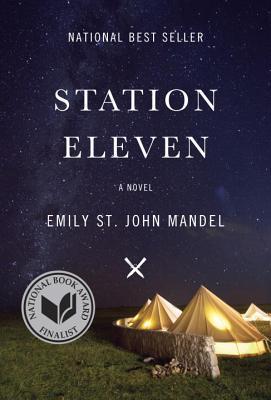
Station Eleven

Station ElevenStation Eleven, by Emily St. John Mandel, 336 pages

I remember hearing a lot of buzz about this book- and then, nothing.  But I finally got around to reading it, and I enjoyed it.  The plot is this: a super flu happens and most of the world dies; this is the interlocking stories of a few of the survivors and a few of the non-survivors.  The stories span a wide range of years and include a number of voices, so it's up to the reader to keep them all straight.  One of the voices is that of Kirsten, a young woman who was just a girl when the flu hit, and years later, she is a member of a traveling theater troupe, who offer Shakespeare to the post-apocalyptic communities.  I love the idea of art being essential- the troupe use a Star Trek line as their motto, which really sums up the whole book: "Because survival is insufficient." 

Thursday, February 26, 2015

Sunrise

Sunrise by Mike Mullin, 546 pages


This is the last book in the Ashfall series.  Readers should feel pretty satisfied that all loose ends are pretty much tied up.  Because the mayor of Warren is unwilling to admit that the town’s defenses are woefully inadequate, Alex and Darla decide to form their own community with the help of the people in their own home, the decide to move near the wind turbines in order to have a more efficient heating system, especially for the greenhouses that are necessary to food production.  However, as they build, they also start to expand.  People have begun to hear about their community and they are willing to take in anyone who is willing to work.  Alex begins to understand that leading large groups of people is more difficult than he could have ever anticipated and he still worries that one of the many groups of flensers or people from Stockton may try to attack.  This is an excellent end of the world survival story that will probably appeal especially to teen boys.

Tuesday, February 24, 2015

The Infinite Sea

The Infinite Sea by Rick Yancey, 300 pages


Cassie and her friends are trying to decide what to do.  They can try to hide and wait out the winter or set out and look for other survivors.  It’s hard to tell what might be the best course of action.  The Others clearly will not give up but no one knows what the next step should be.  The Others plan to exterminate the entire human race and no one knows how to stop them.  The best chance for survival was Evan Walker, but Cassie is afraid that he is dead.  Now the Others are using young children as bombs.  Something must be done, but what?  This is a compelling sequel to The 5th Wave and a good set up for more books to come.   Teens who like science fiction dystopian novels will enjoy this series.

Monday, December 22, 2014

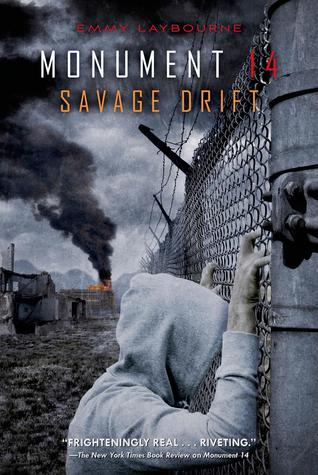
Savage Drift

Savage Drift, by Emmy Laybourne, 306 pages

Savage Drift (Monument 14, #3)In the final book of the Monument 14 trilogy, most of the kids have found themselves in a safe place in Canada.  But Josie is trapped in a Missouri prison for Type O's, Astrid is convinced the military has an unhealthy interest in her pregnancy, and Dean and Jake cannot stop fighting over Astrid's affections.  So another road trip begins. It's always nice to see an end to a trilogy that sort of feels like it could have ended at least one book ago, but this one felt way too tidy for my tastes.   This is a good read-alike for fans of post-apocalyptic fiction,though,  especially if you like Mike Mullin's Ashfall series.

Thursday, November 13, 2014

Love In The Time Of Global Warming

Love In The Time Of Global Warming by Francesca Lia Block, 230 pages


I have really liked a few of her books, but I don’t like all of Block’s stories.  This was one I didn’t like as well.  This is a kind of modern retelling of the Odyssey.  Pen has seen everything destroyed by the Earth Shaker.  She doesn’t know what has happened to her family and sets out on a journey to find them.  Along the way she meets companions who journey with her and they encounter monsters, sorceresses, giants and much more.  Everything in this story was just so odd it was hard for me to keep track of what was really happening.  It read pretty quickly, so I did finish it, and I felt the end redeemed the rest of the story a little bit, anyway.  Teens that like her other books will probably like this one.  Science fiction/fantasy lovers might give this book a try.