Saturday, February 4, 2017

The Half Life: A Short Story by Jennifer Weiner   AudioBook:  1 hour, 15 mins       E-Book 64 pages

Jennifer Weiner is a good writer.   This is a bitter sweet break up story.   A couple’s seemingly solid marriage implodes.  Piper and Tosh DeWitt seem to have it all and materialistically maybe they do but when it comes to really sharing emotional connections with one another they miss the mark.   Pipe is busy and focused on her career.    Tosh is going through emotional detachment after losing his teaching position.    Piper knows it will all be o.k.   She makes enough money to support them so she doesn’t give Tosh a hard time about looking for another position.    She is trying to be supportive by being understanding and giving him time to sort out what he wants to do.    Piper is preparing for a meeting she has to attend in Paris where she will observe the corporate culture at the location she is going to, then  evaluate how best to increase their efficiency by streamling jobs (and yes downsizing/firing some staff).   They have a young daughter Nola and the conversations they do have tend to be mostly about her.    Piper is preoccupied with her upcoming trip and Tosh seems to never be around when she wants to talk.   She feels they have been distant lately but hopes on her return they can sit down and talk about what Tosh is going through and reconnect with some quality time.   As she is going out the door to the airport Tosh throws some harsh comments her way and tries to give her a letter he insists she is not to read until she is on the plane.   She is frustrated he wants to vent now when she is obviously not able to give the time and thought to this discussion that it requires and assures him when she gets back her mother can keep Nola an extra day so they can have some time together just the two of them to talk.    Tosh is freaking out shouting for her to just read the letter once she is on the plane and it will explain everything he is going through.   She’s like, “No, we will talk when I get back.”       She is snatching and grabbing her stuff to dash to the taxi and doesn’t notice Tosh stuck the letter in her bag.   She finds the letter at the airport and it changes their lives forever.    Don’t want to spoil the story for you, but, if you are looking for a quick read or listen this is a descent one.    Like I said, bittersweet.     I want so much to tell you the rest of the story so read it so we’ll all know what happens.                                                                  

Journey to Carith

Journey to Carith: The Story of the Carmelite Order by Peter-Thomas Rohrbach, OCD, 366 pages

The Order of the Brothers of the Blessed Virgin Mary of Mount Carmel was founded in the twelfth century on Mount Carmel, biblical home of the prophet Elijah, who at one time was commanded by God to "Go, and hide yourself by the torrent of Carith, east of the Jordan."  The medieval Carmelites, claiming Elijah's legacy for themselves, took this as a commandment to pursue charity and remove themselves from the sinful world.  Journey to Carith follows their quest to fulfill this vocation across nine centuries, through the heights of holiness and the squalid swamps of decadence, while noting those flowers of Carmel that bloomed in the latter as well as the former.

Journey to Carith was first published in the mid-'60s, and it bears the marks of its era.  Rohrbach seems uncomfortable with contemplation as an end in itself, and is therefore a bit too eager to insist on its value as a complement to the active life.  Likewise, Rohrbach is decidedly rationalistic - he flatly declares that the story of Elijah's ascension into heaven on a fiery chariot is merely a metaphor for his death - although this is an asset when dealing with the early history of the Carmelites, as shrouded in legend as it is.  The greatest strength of Journey to Carith, however, is Rohrbach's understanding of the Carmelites not primarily as an institution but as a family of prayer extending down through the centuries.

Friday, February 3, 2017

Small Great Things

Small Great Things by Jodi Picoult.  470 pages

Labor and delivery nurse Ruth Taylor has more than 20 years experience.  So when she does a routine checkup on a newborn, she's not sure why she gets reassigned to another patient after a few minutes. As it turns out, Ruth has done nothing wrong. However, she is African-American and the parents are white supremacists who don't want Ruth to touch their baby.  The hospital complies with their request, but the next day, when the baby goes into cardiac arrest and Ruth is the only nurse there, she's faced with an impossible choice: defy the parents and hospital's orders, or stand by because she's been ordered not to touch the child?

What happens next results in Ruth being charged with a serious crime.  Her public defender, who is White, gives Ruth unexpected advice: not mention race in the courtroom.  Trying to keep her life as normal as possible, Ruth does her best. However, as the trial moves forward and threatens to become a media sensation, it might not be an easy choice to keep the mention of race out of the courtroom, after all.


I found this to be what I expected from Jodi Picoult: page-turning, readable, good character development, and a storyline that kept me intrigued. Picoult certainly didn't shy away from making the characters of the white supremacists feel very real (i.e. the language they use is very ugly). However, true to how she usually writes, the author made some interesting character development happen, for more than one character.  There are lot of things to think about in this book, and I found myself really thinking about some of the issues raised, and what some of the characters said in the story.  The author's note is pretty interesting, as well, since Picoult goes into why she wrote this book and the kind of research she did.   I found this book to be a good read, and pretty thought-provoking. Definitely a good book-group choice that I think would lead to some interesting discussion.

We have always lived in the castle

We Have Always Lived in the Castle by Shirley Jackson    Audio Book: 5 hours, 32 minutes     Book:  214 pages

Loved it!    I have been a fan of Shirley Jackson’s ever since I first read  “The Lottery,” in gradeschool. What a writer!    This book did not disappoint. Mary Catherine Blackwood narrates the story.    Her older sister Constance is the target of the town’s ire.    They live in a small town where everyone knows everyone else and any little bit of news flies through all the inhabitants like wildfire, especially if it is a juicy dirty little tidbit they can hold over someone’s head.    The Blackwood Family had been the richest in town and had been there for many generations.    They did not associate particularly much with the townspeople, staying reclusively to themselves in their house up their private road that was gated off from wandering folks trapsing across their property.    The Blackwoods were friendly enough and polite in all circumstances and dealings with the town folk they just chose to keep their own company other than going out for necessities like groceries.   Especially after the “incident.”     This is such a good read – I can’t recommend it highly enough.    It’s one of those stories you won’t want to put down.   Mary Catherine tends to live in her version of the world and doesn’t particularly walk comfortably in the confines of the town.     Constance is the embodiment of grace even when she is being scrutinized though MaryCat as she is called is very careful to try to protect her older sister, as Constance is a delicate lady.    Through in an Uncle in the beginnings of dementia (or is it?) a gold digging rude cousin who pops up out of the blue, prying neighbors, cruel children and unkind adults swirl it all around and see what rises to the top.   It is a most excellent brew.   Some might say a witch’s brew.    Oh read it!   You must!   It’s that good!

Where'd You Go, Bernadette

Where'd You Go, Bernadette by Maria Semple Audiobook 9 hours Book 330 pages

Where'd You Go, Bernadette
Bernadette is a suburban, Seattle mom whose only pleasure in life is her daughter Bee. She's a recluse who rarely leaves the house and has zero in common with the other moms. After getting straight As in school, Bee, who was promised anything she wanted in this event, decides she wants to go to Antarctica. This is Bernadette's nightmare and then a whole chain of hilarious and dramatic events follow which inevitably lead to Bernadette's disappearance and her daughter's journey to find her.

Since I listened to the audio version, I have to say this book was read very well by the narrator, Kathleen Wilhoite. The book itself was funny and Bernadette is truly a one of a kind character, however when speaking of her past the author did lay it on kind of thick. The daughter is a lovable genius but also a typical teenager in how she processes things and responds to people. The two of them make a pair that might make some mothers and daughters envious. This was an easy book to get through, the story pulled me in and I liked the characters. The middle part wasn't at all boring and the ending was satisfactory. I could see myself reading it again. I would recommend this book because it has the right amount of humor and emotion to be a good read.

Thursday, February 2, 2017

A Fine Line

A Fine Line by Gianrico Carofiglio  288 pages

I was excited to find this book, mainly because the setting is Italy. I don’t come across many fictional works that have been translated from its primary language of Italian. Howard Curtis, the translator, and as far as I can tell, did a wonderful job.

This book is a prime example of me getting caught up in one of the books aspect. Too late did I realize that A Fine Line is the fifth, and most, recent book in the Guido Guerrieri series. Guerrieri is everything that most defense attorneys in American literature are not: timid and courteous. The Financial Times said it best: “Where Phillip Marlowe would be knocking back bourbon and listening to the snap of a fist on jaw, Guerrieri prefers Sicilian wine and Leonard Cohen.”

He talks to himself and the punching bag hanging in the middle of his living room (he’s been boxing for decades and seems to be something of a hoarder). It’s that quality that makes dialogue hard to follow.; I never could figure out who he was talking to.

The basis of the plot is simple: Judge Pierluigi Larocca is the subject of corruption charges. He’s been accused of being bribed. Helping Guerrieri is a private

I think this is one of those series that has to be read in order. I had a hard time trying to figure out who was who. Of the 100 pages that I did read, the plot was hard to decipher and only made up about 20 of those 100 pages. The rest is bogged down in the law and the Italian legal system that is dry as dirt. I’m not even sure how private detective Annapaloa Doria, a motorcycle-riding bisexual, really fit into the story, other than the one time she help Guerrieri out by beating up a bunch of hoodlums with a baseball bat that she stores on her bike.

Needless to say, Gianrico Carofiglio’s A Fine Line wound up in the DNF (did not finish) pile.

This work receives 1 out of 5 stars in Julie’s world.

Wednesday, February 1, 2017

First off we want to welcome our two new bloggers Amanda and Ashley! They have already made quite the contribution with 3,800 pages between them. Their contributions also helped set a record amount of pages read this year with a total of 19,686! As you can see Shirley J. easily out read everyone, but the point totals were a little closer. Just a reminder to bloggers you get bonus points for books with one word titles and books with LBGT themes. For the one note books articles count, but subtitles do not.


Rise and Fall of Triumph

The Rise and Fall of Triumph: The History of a Radical Roman Catholic Magazine, 1966-1976 by Mark D Popowski, 233 pages

The Society for the Christian Commonwealth and its magazine Triumph were founded by a group of Catholic intellectuals connected to National Review who were increasingly frustrated by that publication's libertarian tendencies.  For the editors at Triumph, the Second Vatican Council did not constitute a surrender to the zeitgeist, but a renewed call to sanctify the world, a call which demanded a bold proclamation of Christian truths.  In their view, both conservative and liberal Catholics had sold their patrimony for the pottage of political ideology, for the modern West in general and the United States in particular were founded on the unstable ground of the Enlightenment.  This led them to promote a radical reconstitution of American culture, founded on the acknowledgement of Jesus Christ as the sovereign King of all creation.

The story of how Triumph pursued its seemingly quixotic quest is the subject of Mark Popowski's history.  For ten years the magazine defied seemingly every trend - cultural, political, and religious - while featuring an array of provocative thinkers including L Brent Bozell, Frederick Wilhelmsen, William Marshner, Warren Carroll, Russell Kirk, Christopher Dawson, Dietrich von Hildebrand, and Otto von Habsburg.  Popowski amply demonstrates how, despite its relatively short life and numerous eccentricities, the fearless assertiveness of the magazine helped it serve as a rallying point for Catholics who sought to transform the world, rather than letting the world transform them.

Tuesday, January 31, 2017

Sankarea 1-4

Sankarea Volumes 1-4 by Mitsuru Hattori, 704 pages
Sankarea follows the life of high school student Chihiro who loves anything zombie. From films to manga if it has zombies he is going to have a copy of it. This obsession goes as far as following an old manuscript to make a potion to bring things back to life. He manages to use it successfully on his deceased cat, but doesn’t know if he actually wants to continue using/making it. Enter Sanka, a girl who hates her family and has run away. She, seeing the potion is made from a poisonous plant drinks the potion, with no apparent adverse effects. That is until she falls off a cliff and comes back as a zombie.


Sankarea is definitively a romantic comedy or romcom. It has Chihiro falling in love with Sanka all the while trying to hide the fact that she is a zombie from the world and her family. Despite how cheesy most romcoms are, this one is actually quite well written and enjoyable. It is pretty graphic and certainly earned its teen rating. 

Cosplayers

Cosplayers by Dash Shaw, 111 pages

I went into this book knowing virtually nothing about it -- I needed something written by an author my age to fulfill a reading challenge category and went with this one because I like comics.  Based on the title and cover* I figured it was going to be something in the vein of Sam Maggs' The Fangirl's Guide to the Galaxybut ended up having much more in common with Daniel Clowes' Ghost World and all the ennui of a Chris Ware comic.  The book features seven loosely connected stories about two friends going to cons, comic shops, making videos for YouTube and generally farting around in the year after high school before going to college.  There's not much here about finding the perfect fabric for your Captain Marvel cosplay, but there's plenty about feeling listless and trying to figure out what makes you happy.  Which is fine by me -- I'd rather read about the latter than the former.

*I realized after the fact that it's published by Fantagraphics.  I would have drawn different conclusions if I'd noticed this sooner.

Illustrated Guide to Criminal Law

Illustrated Guide to Criminal Law by Nathaniel Burney, 335 pages

The Illustrated Guide to Criminal Law caught my eye for being one of the few graphic novels located in the Business, Government and Law room here at Central.  And since I have to constantly tell people I am NOT a lawyer anyways, I might as well learn more about criminal law. A small side not before I get into my review, while this book was sitting on my desk slowly being read, I had numerous coworkers not only inquire about the book, but also try to steal it away. So it must be a good book right?

The Illustrated Guide to Criminal Law is an illustrated guide to criminal law, there are no tricks or gimmicks. In the simplest of terms, this book will explain why we punish crimes, why there are varying degrees of punishment, and a couple of the common legal defenses. All the while it will have accompanying illustrations that not only help convey the concepts, but to add a little bit of humor as well.


If you are looking for a humorous book on criminal law, one in which you can learn something and have a good laugh, this is your book. If however, you are studying for the LSAT or want a serious examination into criminal law, give this a pass. 

Monday, January 30, 2017

Animals Speak

Animals Speak by Lila Prap         18 pages

What an interesting take.     The sounds that animals make in various parts of the world.    I thought this was too fun not to read.    Slovenian writer and illustrator Lilijana Praprotnik Zupancic who’s pen name is Lila Prap came up with the concept of what sounds animals make or at least how we humans interpret them in our various languages throughout the world.     Her premise is that animals do speak the language of the country they are born in just as humans do.    Maybe so.   Animals in other countries hear other languages so it is feasible that they interpret language/words in other countries and would not necessarily understand English terms in Scandinavia or Russian words in the Congo, but, Ms. Prap goes a step further in interpreting the sounds or the language of the animals themselves via the countries they are born in.    While a rooster makes the familiar to our ear Cock-a-Doodle-Do the rooster’s sound is interpreted om Swahili as KoKoliKooo.        Chickens in the United States language is interpreted as Cluck Cluck but in Romania chickens are said to say CotCoDac CotCoDac.   Frogs in the U.S. might sound like Ribbit Ribbit but in Italian it is Gra Gra.    Elephants in Greece are said to say Toyt Toyt  while in Poland it is Trata-Ta-Ta  while in Spain elephants say Prraaahhh!     Who knew our animals friends were as varied in their speech and sounds as humans can be?     Fun book, I highly suggest it for little ones.   A fun time for parents to bring the concept of different languages in to young minds in a joyous way!      There are loads of different languages listed here to say hello to some other species and make their day.

Lyrical Ballads

https://images-na.ssl-images-amazon.com/images/I/51cKnr0NmwL._SX323_BO1,204,203,200_.jpgLyrical Ballads by William Wordsworth and Samuel Taylor Coleridge, 210 pages

Lyrical Ballads was first published in 1798, and its appearance marked the definitive emergence of the Romantic movement in English.  It is one of those rare books that actually changed the world - it is only a slight exaggeration to say that after Lyrical Ballads it became impossible to write poetry the way it had been written before.

     O reader! had you in your mind
     Such stores as silent thought can bring,
     O gentle reader! you would find
     A tale in every thing.

There is no distinction made within the book itself between the two authors, but apparently Coleridge only contributed four of the poems, although they include the immortal "The Rime of the Ancient Mariner" and "The Nightingale".  They are matched in well-deserved fame by Wordsworth's "Lines written a few miles above Tintern Abbey".  These are not diamonds in the rough, however, in a volume that includes works such as the amusing "The Idiot Boy", the harrowing "The Thorn", the touching "We are seven", the sardonic "The Last of the Flock", the poignant "Simon Lee, the old Huntsman", and the wonderful "Goody Blake and Harry Gill".

     Enough of science and of art;
     Close up these barren leaves;
     Come forth, and bring with you a heart
     That watches and receives.

At Parade’s End

Parade’s End by Ford Madox Ford         Audio Book:  38 hours   Hard Back Book: 968 pages        

I enjoyed this audio book immensely.    It was off-putting to see the number of discs – 30!   But once I began to listen to the story and laugh out loud at times, I began to settle in for the long haul.   I found myself deeply enjoying Ford’s description of the times – pre WW1, during WW1 and post WW1 and the characters he introduces.    I was thinking this was Victorian sensibilities but I guess it would technically be considered Edwardian by that time frame.   The main character that everything is either about or that happens to or because of is Christopher Tietjens.  Christopher Tietjens is the son of a wealthy landowner and has grown up in priviledged English society with those oh so strict carry overs from Victorian times when one had to be just so and carry one’s self just so at all times and always be known for doing the correct thing regardless of the pain or emotional damage always doing the correct thing in society’s eyes might cause.     Christopher marries a woman who turns out to be a horrendous floozy, yet, bearing up for polite society’s sake, Christopher endures his wife, Sylvia’s, utter disdain for him and her wanton flaunting of her illicit affairs.    No matter how many times she commits adultery, Christopher will not divorce her nor drag her name through the dirt.     He even takes her back after she has a child that is likely not his.    He never says a word against her though his brother, Mark,  and his best-friend try constantly to get him to divorce her.    It just isn’t done is Christopher’s answer.   Not that it was against his religion, only that it was against polite society’s etiquette. Sylvia treats him so mean throughout but spoiler alert – you find out she was just trying to get a rise out of him to stand up to her, even punish her for her sins.    When he wouldn’t it made her hate him and disrespect him even more.   The hateful thing isn’t even bothered by the local priest chastising her for her huzzy ways.    She goads the priest and enjoys exchanging witty repartee with him over her actions.    And she and her mother are Catholics!   I have to admit I thoroughly enjoyed Sylvia and the priest’s conversations – they were hilarious.   At first Sylvia was funny in her dealings with Christopher but then she just got vile and evil toward the middle to end.    Even when Christopher was going off to war it didn’t matter a bit to her she still treated him badly.    Ford’s explanation of the war and what the soldiers were going through was brilliant.    He even broached the psychological effect all of it had on Christopher describing the deaths of men in his regiment or the awful wounds delivered through the bombing and snipers.      Through it all, Tietjens’ feelings were never of any concern to his superiors (one being his own godfather) and those who did not know or understand his circumstances were left to believe the lies being spread all over the world by Sylvia who said terrible things about him and his character which he never addressed nor denied to save face.    Tietjens was just too darn nice for his own good.     Every one in their social strata sided with Sylvia and thought him the bad guy.      Everyone including his father believed the worst about him.   His father commits suicide over some of the lies Sylva tells.    When Tietjens learns that his father thought so ill of his character that he believed Sylvia’s venomous lies that Christopher would actually do such debauchery as Sylvia’s lies conveyed, Christopher refuses to accept the money and property left to him in his father’s will.    Over the years, his brother, Mark tries to talk sense into him but Christopher won’t hear reason.   Pride goeth before a fall it is written.   Much more happens.   Sylvia’s child grows up, property rights are bandied about, Christopher’s brother does not want Sylvia taking over their family lands and Sylvia is up for anything that will discredit Christopher.    Come hell nor high water Christopher keeps a stiff upper lip.    Love enters for the brothers and twists come.    Independent women and confidant suffragettes.    Will anything ever change Christopher’s ideas?    Will Mark get his way?   Is there any hope for a bright future?    All this and more is answered but I don’t want to spoil it for you.    It was enjoyable and a real sense of what English life was for the different classes, their perceptions of one another, and the effects of the First World War on English life and how it affected the times and the future.    A good read.    
                     

Borderline

Borderline by Mishell Baker    400 pages

After Millie recovers from a failed suicide attempt which has left her an amputee, she gets an amazing second chance at life when the Arcadia Project reaches out to her.  A secret organization that polices the traffic in and out of a parallel reality that connects to faery, the Arcadia Project promises to be challenge for Millie.  For her first assignment, she's assigned to track down a missing movie star.  However, it soon becomes clear that this is no easy task, and as Millie starts to learn about the people connected to his disappearance, an entire conspiracy is revealed.

I admit it: this isn't the book for me.  I've read a fair amount of urban fantasy, and while this certainly has common elements of good urban fantasy, it just didn't really connect with me.  I found Millie to be an interesting character . . . but not all of the time. The supporting characters had potential, but frankly, I found I didn't understand them most of the time, and wound up just not really caring about them.  I appreciate that most of the characters were deeply flawed, and completely unapologetic about that, which was refreshing.  However, I just never felt a connection to them or to the story.

I can see where some readers would really enjoy this book, and how some of the characters would definitely resonate with some readers.  However, it just didn't resonate with me.

The Beverly Hills Organizer’s Home Organizing Bible

The Beverly Hills Organizer’s Home Organizing Bible by Linda Koopersmith          192 pages                                      

“Who wants a clean house?”    I used to love watching the show, “Clean House,” starring Niecy Nash on the Style Network on cable t.v.     Of course Host, Niecy made it fun along with Yard Sale Diva, Trish Suhr, Go To Guy, Matt Isemann and Designer Extraordinaire, Mark Brunetz.    The Reality TV series went to a different family’s home each week for 9 seasons (Tempest Bledsoe and a different cast took over the last few seasons) and would completely organize and clean the family’s house and redecorate to accommodate all their stuff.   They did such amazing things, organizing the chaos in people’s lives and Linda Koopersmith was the show’s organizer.    She did a phenomenal job.    I loved seeing the before and afters of how Linda Koopersmith could take a pile of somebody’ stuff and turn it in to this most exquisitely beautiful fully organized dazzling piece of art.   Sheer magic.   I wish I could do Mr. Spock’s Vulcan Mind Lock with her and gleen her skills.   In the dictionary under awesome there is probably a photo of her.     I have to wonder though, if Marie Kondo of the Kondomari folding method has ever seen the show.   Now, I am a big fan of Marie Kondo, too, and have read both of her books and watched some of her staff’s videos on YouTube and I applaud her folding method of folding clothes into rectangles/squares so you have less space taken up in drawers and see every item clearly rather than the old fold one item and pile it atop the another in a vertical stack which had almost zero visibility.    So it is interesting and may have nothing to do at all with one another but, back in the day,  Linda Koopersmith was doing the same folding and standing upright of clothing that Marie Kondo has made famous.    Linda Koopersmith was folding clothes into squares/rectangles so that they would stand up inside drawers for better use of storage space and all items of clothing could be clearly seen immediately when the drawer was opened and Linda Koopersmith was doing this back in 2003 on the show and prior to that in her own practice.    She also outlines it with color photos and full instructions in her book.     Maybe it was an idea that just came to Marie Kondo, who grew up on the other side of the globe and it was new to her, inspiration can bring the same idea to people in different places simultaneously it is possible (ie. Nikola Tesla and Gulielmo Marconi – radio idea) so it is not impossible, just curious.    And if they both arrived at the same conclusion for better placement and organizing, that, too ,is an awesome thing for both of them.    They are both great organizers.   And I would also like to do that Vulcan Mind Lock with Marie Kondo to glean her folding and organizing skills.    But,  I especially like how Linda Koopersmith explains her ideas for organizing then she maps the steps out to achieve it in numerical order and she includes step-by-step photos to help you come out with the same result.  Marvelous!   That is so helpful to be able to see what a person means – helps when the words don’t sink in to see what is meant in a photo.   I would love to see the old crew come back and revive the “Clean House” show someday and let Linda Koopersmith play an ever bigger role on camera showing her ideas, methods and before and afters and what made her decide to do things the way she did in each case.   She is a marvel.    I hope she writes more books.   Her ideas are outstanding.

The Secret Power of Spirit Animals and Unlocking the Truths of Nature

The Secret Power of Spirit Animals and Unlocking the Truths of Nature by Skye Alexander        272 pages    

An interesting book.   It speaks of the way animals,  also birds and insects,  can be sent to us in many forms to help us in life.    Animals can offer answers to tough questions and tough times in human’s life.    And, they can come in the form of our pets, or they can be animals we see along our journey in life either outside or in books on t.v. or in our dreams.    She sites examples from the Bible and  in history when animals brought special meaning or saved people or led them out of dire circumstances either literally or figuratively.        She sites how often in life a human will feel a special affinity with a certain creature.    Maybe they feel a bond between them or maybe they feel they have the characteristics of a certain creature.    Maybe they are going through something or trying to figure out something in their life or perhaps a change has been thrust upon them they don’t feel quite prepared for but they see a particular bird or mammal or reptile even a particular insect while mulling their situation.    The author says this is a sign.    It is a divine illumination the universe is offering to be seen and understood.    The universe is not going to shout “HEY!   DO THIS!”   That would not allow us free-will which is a privilege that has been given to us as part of our birthright.     But many times, sometimes many times in a day, signs will be given to offer help when we seek it.   That is where spirit animals come in, like in the vision quests of Native Americans or in the totem poles and totems worn by Inuit as well as in cultures from the beginning of time all around the globe that represent one’s personal spirit guide, if we look with open eyes and an open mind, animals can offer meanings that are right in front of us, we just had not realized.    Some people wear medicine bags or talismans with representations of animals that offer qualities we either aspire to or need.    The likeness of a bear for strength or a lion for courage, a wolf for closer family ties or loving relationships, a cheetah for speed, a butterfly for change and self-improvement are just a few of the symbolic meanings.   The book discusses the characteristics of many of the animals, birds and insects of the world in a list going from A-Z with in-depth detailed descriptions of the meanings shown both positive and negative meanings on our lives when these creatures are brought to us in some form.    There is always a reason the creatures both live and mythical are shown to us.   Everything we need to be our better selves can be derived from how animals often come to us in some way, in person, in pictures, representations, symbols, to help show us answers to life changes, problems or to help us know a path we need to be on.    Animals can be directly in our line of sight or maybe we have that déjà vu feeling from a dream of an eagle soaring above a canyon, could that canyon represent a deep problem we have been stressing over and the eagle represents our need to rise above what we see to seek answers from above or from outside the box?    Are we too grounded to see the answer that we need to look up to find?     The author suggests culling our thoughts and asking ourselves what is it I need to get through this?    Do I need to be cunning like a fox?   Find a picture of a fox and keep it near you to help you take on those qualities.    Are you stuck in a rut?    Take a walk around the Zoo and stop at the otter exhibit.   Otters will show you how to have a good time no matter where you are.    Need to be more aggressive?   Wear a scorpion pin, think about how they are small but mighty in their sting.    Our pets can be like familiars to us.    So close they too are like loving spirit guides who have our backs in all situations, giving unconditional love.   Like we learn to communicate with human babies we can learn the ways animals, birds and yes even insects communicate and discern the meaning they are trying to convey.    Again, meanings can be literal or symbolic and it is up to us to learn how to use this to divine the message presented for our betterment.   Like runes, I-Ching,, etc. animals can help us divine our future.   What is your totem animal telling you?     Might be worth checking out.    Good book.

The Littlest Bigfoot by Jennifer Weiner

The Littlest Bigfoot by Jennifer Weiner             Audio Book:  6 hours, 41 minutes     Book:   304 p

My favorite part of this book was the language of the the Yairn (Big Foot Tribe).     I love the way Jennifer Weiner brings the reader into their world and how since they are somewhat acclimated to humans and human speech, they have their own way of turning a phrase which I could listen to all day.     The actor Vincent Price has that same affect on me.    Some voices and some dialects and languages are just so mellifluous that they are so sweet and soothing to listen to they are like ear candy.      That is how Millie’s, the Littlest BigFoot of the title, speech is.    She has such a joy to her and a deep sense of herself and her surroundings plus a curiosity that borders on a cat’s and can take her to the edge sometimes in her desire to be like the No-Furs (humans).    Don’t you love that?   No-furs.    Perfect description of how other beings might see us, especially if they had more body hair than most humans like the Yairn do.    In Jennifer Weiner’s story, the Yairn have arrived in the 21st century along with the non-Yairn, they have figured out how to use a laptop and order things online from Amazon.   Not too shabby.    And, there is one television in their encampment in Old Aunt Yetta’s abode and she and Millie have become obsessed with the t.v. show, “Friends.”     Millie is also mesmerized by a singing talent competition show ala “American Idol,” or “The Voice” and she desperately wants to be able to compete on it one day and become a famous singing star.    Millie’s love for the No-Furs way of life is barely tolerated by the rest of the Yairn in the tribe.   They think it is dangerous to their way of life and to their camp.   She is only tolerated because her parents are the leaders of the group.   On the other side of the lake from the Yairn is an alternative lifestyle school run by a couple who open their arms to all students from every background, many of whom have been ostracized or bullied because of their lifestyles or their looks or their proclivities.    Some of the kids come from two Dad homes, or two Mom homes, they like their own gender, one girl has severe allergies, one girl loves to play with swords, every student has in some way been deemed “different” for one reason or another and Alice Mayfair, the other star of the book is heavy and has naturally curly unruly red hair.    Alice has been in so many different schools and is always made to feel she doesn’t fit in.     Her parents are rich and don’t spend a lot of time with her but do try to send her to the best schools each time something goes amiss and she is asked to leave.     Finally, an alternative school in the woods comes on the radar and at first she feels like this one is just more of the same when a thin, Barbie doll pretty girl comes to the school and gets all the boys hanging after her and she starts making fun of Alice for being so big.   Alice tries, but, there is no getting any peace with this girl in the picture.   She equates different with freak and gives all the students except for her minions a hard time for whatever it is about them that makes them unique.      The girl even cajoles Alice into sneaking out and going skinny dipping with her one night.   Alice so wanting to be accepted, does go, only to find the boys took her clothes and the other girl is in on it, is totally dressed and has a camera focused on Alice.   They all taunt her to come out of the water.    Finally she has to and they take her picture and put it up on Facebook.   They even photoshop a picture of a BigFoot  and put it next to her and make copies and they go all over the school grounds to every student.    Alice is humiliated.     The couple running the school find out and bring all parties together for a NO BULLYING lecture.    It doesn’t change things however and Alice begins spending more time alone down by the lake away from the others and that is how she and Millie end up meeting.   The story is funny and dear.   It speaks of how friendships can develop in all sorts of ways and how real friends are friends of the heart and come in all shapes and sizes and how coming from diverse backgrounds just makes life that much more interesting.    There is suspense and drama, battles of good versus evil, betrayal, wrongs and rights and a cliff-hanger ending that tells me this story would make a great film and has left room for the story to continue.    I want it to.

Life’s Too Short to Fold Fitted Sheets

Life’s Too Short to Fold Fitted Sheets: Your Ultimate Guide to Domestic Liberation by Lisa Quinn      168 pages                                                      
Ladies, grab a glass of champagne and enjoy this read, it is helpful and hilarious like spending time with your best friend and laughing your way through chatting about every thing happening in your life as well as housework while having cocktails.    You will come away from this book learning more ways to get things done by getting over rather than stressing about every minute detail.     There are many paths to the same destination and Lisa Quinn will get you there faster and saner than trying to be Martha Stewart, who is worthy of praise for all the fabulous things she can do, but, let’s face it, Martha has a staff to help her be perfect and frankly, we don’t.     I loved this book.    I reread it because I love it so much.    Lisa Quinn will have you laughing out loud to the point of tears she is so fabulous herself in her no holds barred straight talking way of presenting – here’s the job and now here is how we are going to take short cuts and get rave reviews while doing very little work on our parts.    She is not profane but she does use explicit LET’S GET REAL language which only helps to make her point in a colorful way.   I laughed so much while reading this book I sometimes had tears rolling down from laughter.    I love this lady.     She is smart.    She is savvy.    She knows of what she speaks and I love her tips for accomplishing amazing goals while using her term half-assing the work.     She is so knowledgeable whether she is discussing decorating, cooking, you name it.     Lisa Quinn has a way around all the hard work and has truly wonderful ideas on how to have a Martha Life while being Lisa, Shirley or you.     If Edwina and Patsy from Absolutely Fabulous wrote a book on helpful tips for home decorating, cooking and around the house helps – this would be it.    Loved it.   


Stalking Jack the Ripper

Stalking Jack the Ripper by Kerri Maniscalco  Audio Book: 9 hours, 26 mins     Book:   336 p.

Delicious story!   One of those books you can’t stop because you so want to find out what comes next.      The storyline has a female pursuing forensic medical studies in secret under the tutelage of her Uncle who is a doctor with perhaps a bit of a body snatcher side.    O.K. back in those days if a medical person wanted to really pursue anatomical studies one had to pay the grave diggers to provide a cadaver to work on not like today where cadavers are provided for medical students perusing.   So our heroine and her Uncle have a little Victor Frankenstein thing going on as for their nefarious provision of body parts to actually be able to take out and study.   Audrey Rose Wadsworth is a lady, high born who follows all the social norms of her upper class upbringing, around her father, but, like a superhero she leads a double life studying the forbidden in secret from her father and learning from her Sherlock Holmes like Uncle just how bodies behave when treated savagely.   i.e. The bodies they begin receiving are some of the ones savagely killed by the world’s first murderer to be considered a serial killer, a.k.a. Jack the Ripper.    Seventeen is such a tender young age to be assessing crime evidence in such close quarters, but, catching the brutal person doing this to these poor women becomes an obsession for Audrey Rose.    The girl is fearless!    She begins sneaking out to the areas the Ripper haunts and at night in Victorian times.    And alone.     It makes you want to say, Girl!   Are you out of your mind?    WHAAAAAAAAAAAAAAAAT?     It is an intriguing story and it will keep you on the edge of your seat all the way to the end.    And you won’t believe the end.   Oh my gosh.    Read this book!

Burn Unit: Saving Lives After the Flames

Burn Unit: Saving Lives After the Flames by Barbara Ravage  320 pages    book not owned by SLPL - got through ILL.

This book focuses on burn treatment (as of 2004 when the book was published), and draws on the history of burn treatment to explain current practices.  By using examples from history like the Cocoanut Grove fire in Boston, MA, as well as other disasters, and using two current burn cases, the author explains how treatment begins and then continues for weeks, months and even years, and how even though advances have been made, there is much to be learned about burn treatment. The author follows a team of staff at Massachusetts General Hospital, the leading burn treatment center at the time, and gives their perspectives on current treatment options.

I had picked this book up years ago and found it to be a fascinating read.  After reading about the Iroquois Theater Fire in Chicago, as well as the Our Lady of the Angels Fire, it's really interesting to read about burn treatment.  Understanding what happens with a burn, whether it's severe or not, and then all of the things that happen to the body, is interesting, and I found also lent another angle to my understanding of the fire disasters in history that I've read about.  I appreciate that the author takes an unflinching look at burn treatment, both from the standpoint of a patient as well as from the standpoint of medical staff.  It's also interesting that the author gives present-day information, but also draws in information from history, so you get an understanding of how some of the treatment options have progressed over the years.

The Charmed Children of Rookskill Castle


The Charmed Children of Rookskill Castle by Janet Fox                                   
Audio Book: 9 hours, 21 minutes     Book:   388 pages  


I truly enjoyed this story.   It is as if Janet Fox stirred, “The Turn of the Screw,” by Henry James,  “Flowers in the Attic,” by V.C. Andrews together and sprinkled in a little Harry Potter by J. K. Rowling for good measure.    Fun read, it has lovely twists you won’t expect which just add to the excellence of the story.    WWII in England was scary enough but being a child and being sent off to a spooky old castle in Scotland to stay in away from your parents with bombs going off during Adolph Hitler’s Blitzkrieg.    You will worry for their survival then all this gothic backdrop to boot brings in a background history of the place as being cursed.    It certainly seems so.   Is it ghosts?   Is it magic?  Is it Nazi spies?     So many avenues to consider during this wild time in history and this oh so nightmarish location.    And the people running the school and working for the school, let’s just say Delores Umbridge from the Harry Potter Books probably worked here before she left to bring Hogwarts to its knees.   I think all readers will be pleased with this book.    Well done, Janet Fox.

Friday, January 27, 2017

Merrie England

Merrie EnglandMerrie England: A Journey through the Shire by Joseph Pearce, 136 pages

Merrie England describes a trip through modern England in search of the eternal England, a quest for the country's "soil-soul", "the plush, solid ground of primal realities."  On foot and by train, Joseph Pearce travels from Norwich through Ely, Peterborough, and York to Lindisfarne, then west along the Scottish border to the Lake District and south along the Welsh border before cutting east to Oxford, London, and finally the shrine to Our Lady at Walsingham.  But Pearce does not travel alone, he takes with him Chaucer, Shakespeare, Wordsworth, Newman, Hopkins, Chesterton, Tolkien, and many others besides.  Though they may appear to be ghosts, they are in some ways more alive than anyone living today.

Pearce obviously takes a portion of his inspiration from the travel books of Hilaire Belloc (The Cruise of the "Nona", The Path to Rome), the subject of one of his well-received biographies, but he lacks Belloc's light touch.  Too often Pearce comes across as a lecturer rather than a convivial companion - he spends paragraphs excoriating post-industrial ugliness where Belloc would have dismissed it with a contemptuous wave of his hand and moved on to more interesting matters.  Likewise, Pearce's choice to make his traveler an anonymous "pilgrim", while it may heighten audience identification, wears out its welcome as the reader is repeatedly told what the pilgrim thinks and feels - a walk with Joseph Pearce would doubtless be more interesting than having Joseph Pearce describe a walk anyone might take.  Then, too, while there are numerous illustrations of places mentioned in the text, there is no map, a strange omission in a book partially inspired by Tolkien.

Stories

Stories: 100 of his most celebrated tales (with an introduction by the author) by Ray Bradbury.  912 pages

Ray Bradbury is one of my favorite authors, and when I saw this big collection of stories, I knew it would make for some good reading.  The stories here range all over the place, so there are scary stories, and poignant stories, stories that could be classified as science fiction --- you name it, and it's in here.  Bradbury chose the stories for this volume, which were published from the 1940s up to 2005.

To me, Bradbury's introduction to this book is just as pleasurable to read as one of the stories.  Here's an example: "I was so busy rushing headlong into the future, loving libraries and books and authors with all my heart and soul, was so consumed with becoming myself hat I simply didn't notice that I was short, homely, and untalented. Perhaps, in some corner of my mind, I did know. But I persisted - the need to write, to create, coursed like blood through my body, and still does."

I found that with this book, I would read a few stories, and then go on to something else, coming back and reading another few stories.  That way, the size of the book wasn't overwhelming and I could take my time and savor the stories I really liked.

Thursday, January 26, 2017

Orchestra of Exiles: The Story of Bronislaw Huberman. The Israel Philharmonic, and the One Thousand Jews He Saved from Nazi Horrors


I love the cover of this book---very dramatic with its string of barbed wire and Bronislaw Huberman playing his violin. I probably would have picked it up even if one of its authors, Josh Aronson, hadn’t had a book signing at the St. Louis Public Library. His presentation was wonderful.

I had never heard of Huberman until that night in January 2017. Aronson’s description of the great violinist birth reverberated in my soul. It seems that the elder Mr. Huberman had always dreamed of being a violinist. When his dream was thwarted, he decided that one of his sons would play. Immediately after Bronislaw’s death, his father looked at his hands and declared him a violinist.

Beginning when the lad was five or six years old, his childhood ended. His father demanded that he practice four to five hours a day. Luckily from him, Bronislaw was a prodigy. Be the time he was 14, he was playing concert stages around the world to great applause. He was making the money that his father demanded.

Bronislaw was a quirky, sickly little dude, but that didn’t stop his father from pushing him, and pushing him, and pushing him. Abuse takes many forms, and Bronislaw endured the verbal attacks of his father. But this is more than just a tale of child. It’s the story of how being that driven created its own dreams.

I think Bronislaw was a tad psychic. He felt that the Great War would happen and was sure that another one would occur. As he watched Adolph Hitler ascend in Germany, he keenly felt the upcoming horrors Hitler would impose on the Jews. Interestingly, Bronislaw considered himself first a violinists, second a Pole, and third a Jew.

As he watched Hitler deconstruct Germany’s culture. He vowed to create an orchestra in Palestine, a place where Jews were fleeing to at such an alarming rate that the world should have noticed that something evil was occurring in Germany.

Bronislaw worked tirelessly to get money, certificates, a rehearsal hall, and the musicians Hitler had fired get out of Germany. He pushed himself on world tours, speeches; he would do whatever it took to get someone to listen. He pushed himself to the brink of a breakdown several times before December 26, 1936, when the Israel Philharmonic Orchestra played its first concert in Tel Aviv, conducted by Maestro Arturo Toscanini.

One thing I didn't understand was how the number 1,000 wsa chosen. On opening night of the IPO, there were 71 musicians who had abandoned Nazi Germany. Not sure how the authors arrived at that figure, but Orchestra of Exiles: The Story of Bronislaw Huberman. The Israel Philharmonic, and the One Thousand Jews He Saved from Nazi Horrors is fascinating look at a story that had been largely forgotten, but shouldn’t be. This work receives 5 out of 5 stars in Julie’s world.

Can't We Talk About Something More Pleasant?

Can't We Talk About Something More Pleasant? by Roz Chast 228 pages

This graphic novel is about Roz and her parents. The whole thing is basically her telling us about her life with her hilarious parents from childhood all the way into adulthood. 

One of the things that struck me was how the drawing in this book was oddly spot on, her parents really did look like that. I got a real sense of the kind of person Roz was, and the kind of people her parents were. Knowing that it was all true made it enjoyable to read. I found myself being sad when her parents died and I felt her pain when they were being their usual idiosyncratic selves. Anyone who deals with parents, especially elderly ones, on a regular basis can relate to this book. It highlights the ways our parents can irk us but it also shows how much we love them despite the craziness and how much we miss it after they've gone. I would say her parents were as good as any characters that any author could make up. Her mother with her larger than life personality (not necessarily in good way) and her father and his fear of what seemed to be everything made for an enjoyable reading experience. Another great thing is that it's told in chronological order and isn't just a bunch of random experiences put in a book, it's an actual story. This felt like a friend telling another friend about life with her parents, I definitely recommend.

Wednesday, January 25, 2017

That Hideous Strength

That Hideous StrengthThat Hideous Strength by CS Lewis, 382 pages

The conclusion to CS Lewis' Space Trilogy brings the series back to Thulcandra, the Silent Planet, home of the Bent One, known to its inhabitants as Earth.  For the first time, Elwin Ransom is not the main character, though he is still a vital part of the story, his time in Perelandra has made him more than ever an image of Christ, the Fisher-King, the wounded but undying leader of Logres, keeper of the wisdom that came out of the West from the Numinor that was.  The focus now passes to a young married couple.  Jane Studdock is struggling, as newlyweds do, to come to terms with the changes marriage brings, trying to be a good wife without surrendering her independence while coping with a husband who is now less attentive (and who seems more ordinary) than he was when he was a suitor - she is also experiencing increasingly vivid and terrifying dreams that may be more than dreams.  Her husband, Mark, is working hard to do what, he believes, good husbands do - get ahead in the world.  He has already secured a spot among the progressive clique guiding the future of Bracton College, and he is even being considered for membership in the National Institute for Coordinated Experiments.  The N.I.C.E. is where the future of the world is being built, to join is to become one of the directors of human destiny, and the price for entry is merely his soul.

That Hideous Strength is a fictional exploration of Lewis' observations from The Abolition of Man with an overlay of Charles Williams' neo-Platonic mysticism.  The result resembles an urban fantasy equivalent of Brave New World.  Unlike Huxley, however, Lewis' talent for memorable characters fills his world with colorful figures including the sadistic policewoman Miss Hardcastle, a friendly bear named Mr Bultitude, and the reawakened wizard Merlin.  Combined with Lewis' customary intelligence and insight into human nature, this makes That Hideous Strength a very good book indeed.

Monday, January 23, 2017

Belloc

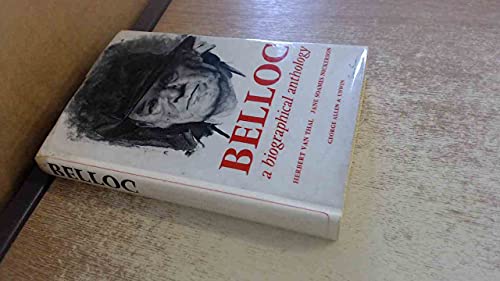
https://pictures.abebooks.com/isbn/9780048280046-us.jpgBelloc: A Biographical Anthology by Hilaire Belloc, edited by Herbert van Thal, 379 pages

This anthology collects snippets from only a few of the over 150 books Hilaire Belloc wrote during his eventful life.  The selection includes memoirs, fiction, history, biography, political commentary, and poetry, all the varied outpouring of Belloc's restless wit.  As a "biographical anthology", the book is arranged chronologically, and the editor has included notes before many of the entries containing biographic and bibliographic information.  The book does not omit some of Belloc's more controversial writings - a passage is included from The Jews as well as a letter from a trip to North Africa that is, at minimum, remarkably callous.

The greatest pleasure is Belloc's consistency - whether haranguing the rich, remembering a sailing trip through perilous waters, or discussing the character of Charles I, Belloc is always unmistakably Belloc.  To read him is to listen to an expert conversationalist talking late into the night, seasoning his anecdotes with good humor and unforgettable observations, and if the line between fancy and fact is often indistinct, that is only another part of his charm.

Pinned

Pinned by Sharon Flake 228 pages

Pinned is about two teenagers, Autumn and Adonis. Autumn is an almost illiterate wrestler who loves baking and Adonis. Adonis is a scholastically intelligent young man who has no legs. Autumn is determined to make Adonis her boyfriend, while he is determined not to be her boyfriend. Will they or won't they? This is their story.

The two main characters are enormously different, almost too different. Autumn is larger than life and Adonis keeps to himself. She loves everything and everybody, he could do without most people. I did (mostly) care about them, although I don't think they were necessarily written to be endearing, but it was hard to tell. They were very human in their flaws and desires, so I think that's what made me care about them.  Autumn basically had a good attitude but when she lost something important to her (no spoilers I promise), her sunny disposition disappeared and while her behavior shocked me, it reminded me about the volatility of the teenage attitude. Adonis was a typical intelligent introvert, but his disability added more to his character. As far as dialog goes, there were some inconsistencies, some big words Autumn sounded out and others she never even stumbled. Adonis never seemed to use contractions and that just didn't ring true, but I guess that was part of his character (I'm giving the benefit of the doubt). I didn't hate this book, but I didn't love it. There are some unresolved issues that I would have liked to have seen sewn up. It was a quick read, but I think more could have been done with the story because there was some pretty deep stuff in it. I think that it would possibly make a good series, because it leaves so many questions at the end. And thinking about it now, I kind of want answers.

The Jury

The Jury by Fern Michaels eBook 428 - read 382 (the rest is an excerpt from another book)

The Jury is Book 4 of the Sisterhood Series by Fern Michaels. The series is about a group of women that get revenge on those who have wronged them. It started because the legal system failed them, so they took the law into their own hands.

The thing about this book and the series is the writing isn't very good, but the stories themselves pull you in. I got invested in each character and cared what happened to them despite the terrible dialog. Michaels wrote boldly in this series, which dates back to the early 2000s, so boldly that it looks amateurish. It's like it's what people are thinking but don't want to say it because it might sound foolish, but it's true nonetheless. So my review of this book is, it was exciting but badly executed. If writing style is more important to you than plot this is not the book or series for you.


Saturday, January 21, 2017

Utopia Is Creepy

Utopia Is CreepyUtopia Is Creepy and Other Provocations by Nicholas Carr, 342 pages

The promise of the Digital Age, restated again and again, is the liberation of the individual human being from economics, politics, and even matter itself.  Yet according to Nicholas Carr the reality is "not transcendence but withdrawal", a liberation from society that leaves the individual isolated, trapped in a solipsistic hall of mirrors.  Utopia Is Creepy collects the best of Carr's RoughType blog as well as some aphoristic tweets and longer pieces.

Instead of a world in which economics have been transcended, Carr foresees a world in which every human interaction has been commodified, and every experience manufactured.  The difference between the resulting artificial culture and the old organic culture is analogous to the difference between learning to play a guitar and learning to play Guitar Hero.  Correspondingly, politics are impoverished as the soundbite gives way to the tweet, knowledge as the trivial becomes more and more indistinguishable from the profound, and humanity as personality is reduced to a data set.

Carr is no Luddite - to the contrary, he is very aware of the positive benefits of new technologies, but he is also aware of their limitations, and the limitations of the men who make them.  More importantly, he is conscious of their power to change our perceptions of ourselves and our relationships to others in unexpected ways.  The book has the flaws to be expected of any collection of blog posts - not only are some no longer topical, the reader may sometimes wish that Carr would elaborate on a point or draw out the consequences of his conclusions, only to be frustrated by the concessions to digital attention spans.  Yet the short pieces on diverse topics also provide an ideal vehicle for Carr's combination of insight and humor, which in turn makes Utopia Is Creepy pleasurable as well as provocative.

We were Liars

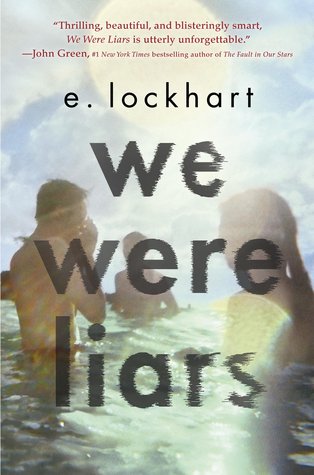
We were Liars by E. Lockhart      227 pages

The book took place during summers 15, 16, and 17. Our main character comes from a wealthy family who during the summers gathers on a private island off the east coast. Her and her cousins are all very close and have a great time during their summers together. When she comes back after missing summer 16 she begins asking questions about why she missed that summer and why everyone is behaving strangely. I kept having ah ha moments that would lead to oh no moments frequently during this book. I would consider this a suspense if not mystery novel. Be prepared to get emotional.

Friday, January 20, 2017

The Witching Hour

The Witching Hour by Anne Rice      1207 pages

Some people may say that Anne Rice is cliché’ thanks impart to the popularity of vampires in pop culture. However, Mrs. Rice also wrote a three part series about witches. The story begins in San Francisco and moves into New Orleans. A young woman moves to New Orleans after the death of her estranged mother. Her odd new family are happy to see her, for the most part, but are not too apt to tell her much about the family secrets. Fortunately for the readers the mysteries of the family are interwoven throughout the story and lead to some fantastical events and odd occurrences. There are references to God, the devil, witch craft, incest, inappropriate sexual relationships and dark themes. It is in my opinion Anne Rice’s best book.

Thursday, January 19, 2017

In the Springtime Everything is New All Over Again: A Dark Humor Short Story


In the Springtime Everything is New All Over Again: A Dark Humor Short Story by Esmerelda Q. Jones  26 pages

This short story has an unnamed narrator who is a writer. Based off a running joke with her (since they share a room) sister, the narrator names her protagonist Carl. The she spends the rest of the story coming up with the plot and plot twists for poor ol’ Carl.

I didn’t think it was funny, and it rubbed me the wrong way. Basically because it goes against the basic rule of fiction writing: Nothing is more boring than a character sitting around thinking and not acting. Granted this is a writer thinking, but it’s just as boring.


The one saving thing about this short story is just that: it’s short. That’s why I give In the Springtime Everything is New All Over Again: A Dark Humor Short Story 2 out of 5 stars in Julie’s world.