Thursday, February 11, 2016

Imposter

Imposter by Antony John, 307 pages

Seth is thrilled when he is offered a job as the star of a new movie.  He likes his new costar, Annaleigh, and he even gets to meet high-profile established movie stars, especially Sabrina Layton, who dropped out of the picture but is back in with a smaller role.  Seth is excited about the exposure and the money but something seems off about the picture.  Scandalous stories about Sabrina and her former co-star and ex-boyfriend, Kris Ellis, begin surfacing.  Someone appears to be stalking either Sabrina or Seth.  Seth has been receiving odd, vaguely threatening texts on a phone the studio gave him, a phone that only a select few have the number.  Seth can't shake the feeling that there is something wrong with the whole set-up.  I really liked this story.  This might be my new favorite novel by John.  I didn't find it quite as scary as I expect a thriller to be but the story was so good I didn't care about that part.  I would definitely recommend this to teens who like realistic fiction.

Dead Ice

Dead Ice by Laurell K. Hamilton, 566 pages

This is another typical Hamilton book: vampires, shapeshifters, witches and sex, with Anita Blake at the center.  The main story is about Anita trying to help the FBI with a case that seems to involve a necromancer that is capable of raising a zombie that appears to be human.  These zombies are being used in sex films and Anita and the FBI are determined to stop him.   Of course, nothing in Anita's world is ever simple, so this case becomes even more awful than she could have dreamed.  In between, she is trying to plan weddings and commitment ceremonies and work out politics in her world with the vampires and shapeshifters.  I liked the book.  I think that people who are fans of her books will probably enjoy it.  However, the people who were fans before all of the sex, who liked them because of the fantasy aspect and fell away because of the sex, definitely will not want to come back to this one.

Truth Or Die

Truth Or Die by James Patterson & Howard Roughan, 383 pages

Disbarred attorney Trevor Mann thinks his life might be finally falling into place until his girlfriend, Claire Parker, is murdered.  Claire was a reporter and, although the murder appeared to be random, Trevor suspects that it has to do with one of her protected sources.  Trevor sets out on a dangerous mission to locate Claire’s source and uncover the truth about her murder.  The only problem is, he may end up dead himself.  I felt like some parts of this story felt a little rushed or disjointed or unclear.  It was a little more difficult to red than some of Patterson’s books.  Overall though, it was a good, compelling story, and most of it became clear by the end.  Most of Patterson’s fans will probably be pretty satisfied.  I’m not sure it would be my first choice to hand to someone who just liked the genre but wasn’t already reading Patterson’s books.

Variable Star

Variable Star by Robert Heinlein & Spider Robinson, 318 pages

Joel thought he was planning to get married and go to school to study music.  Instead he ends up on a ship headed out to colonize a new planet.  Joe’s story is captivating and keeps getting more interesting when a disaster hits that could change everyone and everything.  I absolutely loved this book.  I would highly recommend it to anyone who enjoys science fiction or fantasy.  I have no idea how realistic the science is but the story is so good, I wouldn’t have cared had I known.

Wednesday, February 10, 2016

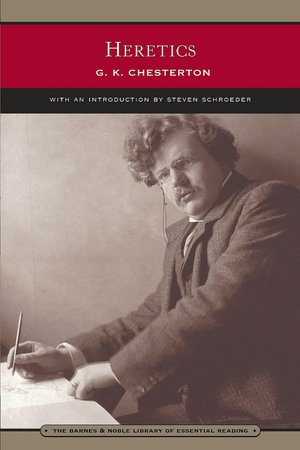
Heretics

Heretics by GK Chesterton, 305 pages

It might seem odd that Chesterton wrote Heretics before he wrote Orthodoxy, but it has been the case throughout history that right belief is usually discovered through an examination of wrong belief.  In this book Chesterton takes on all the fashionable thinkers of his own time with his customary blend of good humor, biting wit, and common sense.  Many of those thinkers are now forgotten - although there are exceptions such as Rudyard Kipling, HG Wells, and George Bernard Shaw - but their errors are more enduring than their memories.  Indeed, Chesterton even refutes errors that would not become popular until long after he was dead.

Chesterton's primary theme, threaded throughout the book, is that there is no such thing, in reality, as a materialist or a cynic - all men are ruled by ideas, and some of those ideas are wrong, and no idea is more wrong than the idea that ideas have no consequences.

Tuesday, February 9, 2016

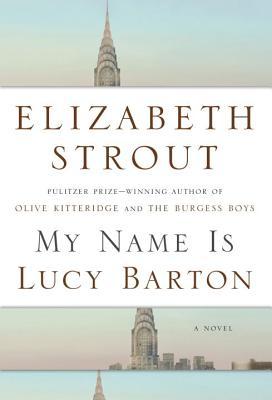
My Name is Lucy Barton

My Name is Lucy Barton by Elizabeth Strout    191 pages

This book begins with Lucy Barton, who is in the hospital, slowly recovering from what should have been a simple operation.   Her mother, to whom she hasn't spoken to in years, comes to see her, and winds up staying with her, in the hospital, for several days.   As the two of them talk, Lucy remembers her childhood, and feels a re-connection to her mother.   As the two of them talk, Lucy reflects on her troubled family, as well as her marriage and how she became a writer.

I found this to be an interesting, thoughtful book.   The language is sometimes pretty spare, but still evocative.   Lucy's relationship with her mother is pretty tenuous, so at first, it seems a little odd that her mother would come to visit her in the hospital, and then wind up staying for a few days.  But, as the two of them talk, and you get Lucy's perspective on her childhood, it seems to make sense (at least, as far as her relationship with her mother and her family is concerned).   Lucy's observations about her life were what struck me most.  At times, I found I'd pause and reflect on what I had just read, not just in perspective to the story I was reading, but generally, in relation to my own experiences.

Lucy's an interesting character.  We only get her perspectives; this is her story, so we don't know what her mother's feelings are, or whether Lucy's perceptions of her family, or her husband, are accurate.  But, this is an introspective story, where you are immersed in what Lucy is thinking about. I got a clear picture of her just from some of her observations, or reflections.    Example:  "And he looked at me then, and with real kindness on his face, and I see now that he recognized what I did not: that in spite of my plenitude, I was lonely.  Lonely was the first flavor I had tasted in my life, and it was always there, hidden inside the crevices of my mouth, reminding me."  (p. 41-2).

Reading this book was a little like reading some kinds of poetry.  I would read through some passages, and then reflect, and then keep going, but then go back over some of it in my mind, later.


Monday, February 8, 2016

Music and Ceremonies

Music and Ceremonies by Edith Sitwell, 44 pages

Music and Ceremonies was one of Dame Sitwell's last volumes of poetry published before her death in 1964 at age 77.  Unsurprisingly, the poems dwell on matters of aging and memory and death, but also spring and resurrection, and hope for a final harmony.

Sitwell's poems are interesting in part because, while they are formally excellent, they seem somehow artificial and uninspired, which may be why she is better known as a judge of poetry than as a poet in her own right.

Saturday, February 6, 2016

Cat's Eye

Cat's Eye by Margaret Atwood.  446 pages.

This story focuses on Elaine Risley, a painter who, at the beginning of the story, returns to Toronto for a retrospective show of her art.  This retrospective brings up issues from her past, most notably a relationship with several girls in her childhood.

This is one of my favorite books by Margaret Atwood, and one which I have read several times.   Like some of her other books, the story focuses on women and their relationships with other women.  The storyline here moves back and forth in time, so we have Elaine's current-day perspective on her life, but then she'll go back in time to take the reader through her childhood.

One of the things I have always especially liked in this book is that there is a mix of emotions in the story.  There is some wry humor, and some sadder parts, and it all feels very realistic.  I find that her characters resonate with me, and combined with the author's beautiful writing, it's easy to get caught up in the story.   I like how Elaine reflects on her childhood, but especially focuses on one girl, Cordelia.  In the beginning, their relationship is skewed in one direction, but later, when they encounter each other again, in high school, the relationship skews the other way.   The focusing, and then re-focusing on this relationship, is interesting.

Elaine says, in the third paragraph of this book, "But I began then to think of time as having a shape, something you could see, like a series of liquid transparencies, one laid on top of another.  You don't look back along time but down through it, like water.  Sometimes this comes to the surface, sometimes that, sometimes nothing.  Nothing goes away."   This story is very much like that, where things in Elaine's past come back up to the surface.  How she interprets those events and people comes through in her art.

Atwood's descriptions of Elaine's paintings are some of my favorite parts of this book.  By now, after having read this book many times, I can see some of them quite clearly in my head (even though these paintings do not actually exist at all in the real world).   For example, the painting "Our Lady of Perpetual Help," where Mary is seen trudging on a winter's night, with bags of groceries.  Or, Elaine's painting of two men (former lovers of hers) who are painting a seated woman; one man's canvas looks like an idealized woman, and the other man's canvas is filled with swirls of color . . . and the seated woman, draped, has a head that is a sphere of bluish glass.  

Atwood's observations of women relating to each other, especially at different times in their lives, makes this an interesting, introspective kind of story.   Personally, I like to re-read this book, then The Robber Bride, and then The Handmaid's Tale and enjoy all three together.

Flying Inn

The Flying Inn by GK Chesterton, 320 pages

First published in 1914, The Flying Inn takes place in an England where a combination of a moralistic progressivism and an Islamic fad have resulted in the closing of every public house in England.  A renegade pub owner and an Irish rebel take to the road with a barrel of rum and a wheel of cheese to satisfy a thirsty nation.

The conceit allows Chesterton to exercise both his poetic whimsy and satiric bite.  The novel is peppered with drinking songs celebrating the traditional joys of life, while the plot skewers politicians, socialists, capitalists, journalists, aesthetes, and religious enthusiasts.  As with most of Chesterton's fiction, the plot is vanishingly thin, little more than an excuse to bring his sane protagonists into contact with the wider world in all its insanity.

Thursday, February 4, 2016

January Totals!


Congrats to Jason S, who read the most books and pages and earned the most points in January! The winner of December's random drawing is Molly P -- we'll be contacting you shortly about your prize. Thanks for blogging!

January Stats:
BloggerBooksPagesPoints
Jason S205,29128
Jen O124,00012
Dennis M133,76316
Julie E-C82,5558
Molly P71,6867
Steve J14001
TOTALS6117,69572

Wednesday, February 3, 2016

Woman in Berlin

Cover image for A Woman in Berlin: Eight Weeks in the Conquered City: A Diary by Anonymous, translated by Philip Boehm, 261 pages

A revision of entries from a diary kept by an anonymous female journalist living in Berlin from April 20 to June 22, 1945,  A Woman in Berlin is a story of loss, horror, and survival in a situation unimaginable only a few years earlier, although the author is only too aware that Berlin is experiencing at the hands of the Russians what other cities experienced at the hands of the Germans.  In this personal account of the climax of the long nightmare that lasted from 1914 until 1989, there are many such instances of what the author calls "a logical reversal" - ill-fed German POWs laboring where starving Russian POWs had before, the loot of Germany carted off to Russia by the trainload, swastika flags cut up to make red flags to salute the conquerors.  As the diary begins, it is poignantly revealed how Berliners have regressed to prehistoric conditions - without electricity, telephones, or running water, huddled together in cavernous basements, scrounging for food and water, with only rumors for news, aware only of the immediately neighboring communities living similarly troglodytic existences.  The terrible chaos of the fall of the city follows, and it is as horrible as might be imagined - a time when the bodies of suicides were hurriedly buried in backyard gardens, injured horses were butchered by hungry mobs while still alive, and the number of times a woman had been raped became a subject of her small talk over ersatz coffee.  This is gradually replaced by a seeming return to normalcy, but the author's own personal life reflects the fact that some things are forever changed, which leads into the story of the effect of the war and its aftermath on the German psyche, a story at which this book only hints.

Although, as a result of its narrow timeframe, it only hints at the aftereffects of the war, the book is itself a notable part of that story.  It was first published in 1954 in an English translation in the US, and only after five years was a German-language edition produced by a Swiss publisher.  Not surprisingly, it was criticized by many who would have preferred to forget what they had done and endured, and a controversy ensued in the course of which the identity of the author was revealed against her wishes.  The author requested that the book not be reprinted until after her death, which occurred in 2001, leading to it becoming available again after decades as a rarity.

Monday, February 1, 2016

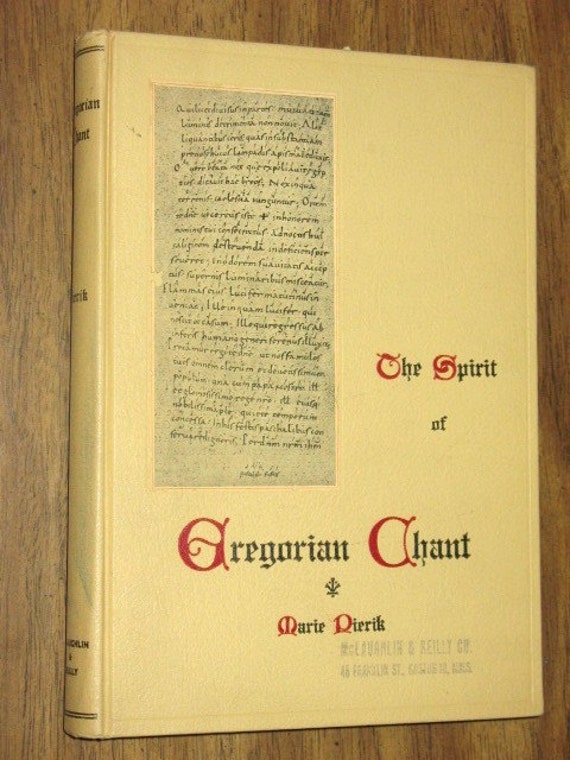
Spirit of Gregorian Chant

The Spirit of Gregorian Chant by Marie Pierik, 202 pages

The Spirit of Gregorian Chant is an introduction to the history, notation, and performance of Gregorian chant, with brief asides on Ambrosian and Mozarabic chant.  Author Pierik is very much a disciple of the school of Solesmes, the famed French monastery which did so much to recover traditional forms of monasticism and liturgy in the late nineteenth and early twentieth centuries.  This does lead to what some casual readers might see as a fussy purism which must stifle any kind of artistic creativity, but others will perceive is connected to Pierik's recognition of the vital connection between chant and the liturgy in which and for which it developed.  This is the key to the "spirit of Gregorian chant" - that it has as its purpose the adoration of God and not personal accomplishment.

Sunday, January 31, 2016

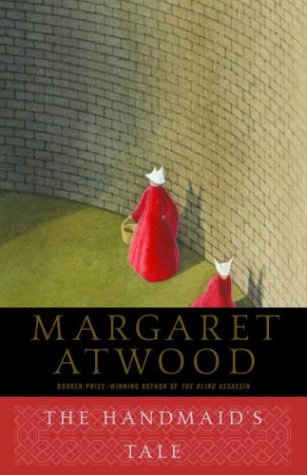
The Handmaid's Tale

The Handmaid's TaleThe Handmaid's Tale, by Margaret Atwood, 311 pages

Offred is the name given to the main character of this dystopian fiction. It's not her real name, of course, but when everything changed and women became little more than property to be "protected" by her society, her name became a label indicating what man she belonged to. Offred is a handmaid, which is a woman who serves as a vessel for infertile families.  She is basically no more than a sexual object, both reviled by most of society and recognized as a necessary role in an age of drastically declining birth rates.  This is a story that in its telling sounds like an impossibility, but it raises much to discuss regarding reproductive control, the dangers of being uninformed, radical and mainstream feminism, and institutional misogyny as perpetuated by both men and women. This is one of those "classics" that has earned the description.

You Don't Have to Like Me: Essays on Growing Up, Speaking Out and Finding Feminism

You Don't Have to Like Me: Essays on Growing Up, Speaking Out, and Finding FeminismYou Don't Have to Like Me: Essays on Growing Up, Speaking Out and Finding Feminism, by Alida Nugent, 218 pages

This collection of "essays" felt a little scattered and unpolished, but it did offer an interesting look at what younger feminists feel are the important issues of today. Several of her essays really rang true; including those addressing consent as a topic unaddressed in sex ed classes, and how difficult it can be for women to form meaningful friendships with other women. Nugent's heart is in the right place, even if she doesn't seem to have experience with all of the topics she discusses and sometimes lapses into contradictory statements.

Saturday, January 30, 2016

This is where it ends

This is Where it Ends by Marieke Nijkamp          282 pages

In 54 minutes, terror reigns as one student takes a school auditorium hostage.  

Told from four different viewpoints, some inside the auditorium, this story focuses on a horrific school shooting.   I found this to be a pretty quick read, although it left me with mixed feelings after finishing it.   So, I went on Goodreads to see what other readers thought.   As it turns out, I wasn't the only reader left feeling a bit disappointed.

One of the things I enjoyed about the book was that the characters were diverse.  I had expected this, since the author is an executive member of We Need Diverse Books.   It was a little surprising that there would be this amount of diversity in such a small school, but I didn't have a problem believing it.  What I didn't like was that I felt like the characters were a bit flat.  I understand that in the span of 54 minutes, you can't get to know them very well, but I felt like for a few of them, I was coming in after the book had already started, like I was supposed to know things about a character already.   And, I kept mixing up a few of the characters.  Considering how much diversity there is here, it should have been easier for me to tell them apart, or at least get a clearer picture of each of them in my head.

I think the biggest disappointment for me is that you don't get anything about the kid who is the shooter, other than general impression that he is "evil."  But, I had expected more.  Maybe his perspective at some point?  But when all you have is the perspectives from other students, it's hard to get a good picture.   Issues get brought up in the story, but they are just touched on, or barely mentioned at all.   Again, I understand that this is all supposed to take place in 54 minutes, but I felt there could have been more here to offer a reader.  


Friday, January 29, 2016

Twenty Seventh City

The Twenty Seventh City by Jonathan Franzen, 517 pages

Cover image for St. Louis, Missouri, is slowly falling off the map. Once hailed as the fourth largest it has fallen to twenty seventh. Crime is up, and businesses are fleeing for the county, or elsewhere. But the new police chief, named S. Jammu intends to fix all of that. But as crime figures drop a series of political terrorist attacks rock the city. Though she vows to find and stop these terrorist, people cannot help but notice the attacks seem to be helping Jammu more than hurting the city.
I read this book after hearing two coworkers talking about Franzen’s work. This piqued my interest and so I started at the beginning. At first I really liked this book. It used neighborhoods I am familiar with, and I could really picture the buildings and intersections as he mentioned them. But as the book went on, I became more and more frustrated with Franzen’s change of scenes. There was the classic blank line to let you know that he had hopped characters, but no introductory line to let you know to whom you were now reading about. Eventually this could be extrapolated from the text, but at times this took many paragraphs. I even caught myself skimming ahead to find out whose storyline I was in. If it wasn’t for this vagueness, I think the book would have been great, but as it is I can only call it good.
The Twenty Seventh City certainly merits reading, especially if you are from St. Louis or lived here long enough to know the area. It is sad to say, but I could easily see this book being played out today.

The Kate Daniels series, books 1 to 6

Magic Bites, Magic Burns, Magic Strikes, Magic Mourns, Magic Bleeds, and Magic Slays by Ilona Andrews, (6 books - 1669 pages)

Cover image for The Kate Daniels series takes place in a post-apocalyptic world that has, and is constantly ravaged by magic. Now this isn’t the fun kind of magic that you see in books like Harry Potter, this is wild magic. Magic that washes over the world in waves without any warning. Magic that stops technology, kills electricity and erodes buildings. With this apocalyptic onslaught comes various monsters, vampires, shapeshifters, and psychotic magic users. Kate’s job is to make sure the world doesn’t spiral further down the drain.

These books and this series, have quickly become favorites of mine. Not only do they feature a lot of action, some elements of steampunk, and well developed fantasy world, they also have a completely believable lead character. One that doesn’t have to survive by luck or rely on her friends, one that is willing to get the job done, sometimes in very gruesome ways.
I would highly recommend this series to everyone that has read anything fantasy by Kenyon, and want something with more action than lust.

Grammar of Assent

An Essay in Aid of a Grammar of Assent by Bl John Henry Newman, 492 pages

It is possible to divide this brilliant classic by Bl John Henry Newman into two intertwined halves, one philosophical, one apologetical, though in truth the two are mutually dependent.  Newman uses a proto-phenomenological approach to the key questions of epistemology, distinguishing between the calculations of deduction and the act of assent to propositions.  This latter forms the key component of every kind of belief, and its recognition serves as a defense against the acid of radical skepticism.  For Newman, truth is not understood as the result of cold calculations, but glimpsed through an "illative sense" analogous to the aesthetic sense, and then embraced by the will.  This returns the human person to the center of understanding, displacing the impersonal observer favored by modernity, and serves to reconnect Newman to the whole Western tradition going back to Athens and Jerusalem.

For most thinkers, A Grammar of Assent would be their masterpiece, but with Newman it must compete with his Essay on the Development of Christian DoctrineIdea of a University, and the Apologia Pro Vita Sua.  His mastery of the English language makes the book surprisingly readable despite its philosophical subject matter and chronological distance.

Thursday, January 28, 2016

Killer Pursuit

Killer Pursuit by Jeff Gunhus   350 pages

I discovered author Jeff Gunhus’ work in 2015 when I read his Night Chill and The Torment of Rachel Adams. Night Chill scared me so bad that I didn’t sleep for three days and still haven’t worked up the courage to read its sequel, Night Terror.

But now he’s turned to a new genre, the political thriller. In Killer Pursuit, the second in the Allison McNeil series, Gunhus takes on serial killers, FBI agents, and prostitutes in Washington, D.C.

High society call-girl, Catherine Fews, is brutally murdered in her Georgetown home. While Catherine is being dismembered, Allison is about to gun down another bad guy.

The D.C. detectives who are investigating Catherine’s death find not one, but two, cameras hidden in her bedroom walls. One is a traditional, security-like camera that has had its memory erased. The other is a highly sophisticated device that “is connected to the Internet through an encrypted connection…and no one knows who’s on the other end.” Hence the FBI’s involvement.

As the news of Catherine’s death travels through the city, many high profile politicians start to sweat, especially the man most likely to be the next President of the United States.

Because of the nature of the crime, the FBI Director asks Allison to run an off-the-record investigation. Seems this case is similar to the one in the first book, Killer Within, which justifies Allison’s probe. I haven’t read the first book. When Gunhus refers to that case, he does an excellent job in supplying the details the reader needs.

Killer Pursuit is a good read, not a great read, which is why I give it 4 out of 5 stars. It had a strong plot (the killer was a surprise). The writing was good, the pacing was excellent. The dialogue was natural and flowed well, and the characters were well-developed. However, there just wasn’t’ anything to set the novel apart from the hundreds that are already out there. 

The Testing Trilogy

Cover image for The Testing, Independent Study and Graduation Day by Joelle Charbonneau, (3 books - 945 pages)

This series was recommended to me while I was reading similar books like Hunger Games, Affinities, and one other I cannot remember right now. It is very much in that same vain. In a dystopia future, where the world has been ravaged by war, only the best and brightest are allowed to attend college, and establish themselves in good careers or politics. When Cia Vale and Tomas are selected from Five Lakes, the first candidates in many years, they are elated. Or at least Cia is until her father warns her of a sinister aspect of the tests.

I hate to say it, but the best thing about these books were how fast they read. Meaning I did not spend much time on them, allowing me to read something better. Now my opinion might be bias because I am not a young adult, the intended audience, and have read lots of books that have portrayed this story archetype better. I am not saying that this was all bad. It just seemed flat.