Monday, July 22, 2019

The War on Normal People

The War on Normal People: the truth about America's disappearing jobs and why universal basic income is our future
by Andrew Yang, 305 pages

Though Andrew Yang's first performance in the national democratic presidential debate may not have advanced him into the lead among candidates, this book sets makes the case that basic income should be a presidential debate topic. The central argument is clear and well made: the next technological advance into robotization will displace a much larger percentage of workers than the industrial revolution displaced. Less workers will be needed in many fields and income disparity will continue dramatically increase. In this inevitable future, a universal basic income would establish a base of economic survival for all, the means for maximize participate in the benefits of innovations, and the means to promote local educational-artistic-community entrepreneurship that would enrich persons, communities and nations.

Collective Courage


Collective Courage: a history of African American Cooperative Economic Thought and Practice  
by Jessica Gordon Nembhard, 311 pages.

Jessica Gordon Nembhard uncovers Black cooperative thought and practice in the United States: cooperation in farming, land, housing and grocery stores; these along with burial societies are the shared labor and economies that have been overlooked by historians but vibrant in the experience and oral traditions in many black communities. Collective economic organizing has contributed to the survival and prosperity of African Americans and their poor neighbors, but these have often been met with lynchings and death threats -- as in the case of the murdered owners of the Memphis grocery cooperative, and the accompanying death threat to Ida. B. Wells who left subsequently fled the city. Their collectiveity has been a courageous threat to the U.S. capitalistic economy that uses black labor and economic servitude to bolster profits. Rooted in collective experience, African Americans have also significantly contributed to visioning, theorizing and thinking about cooperative economies. And important book not only for history but also because black collective practices and theories are increasingly modifying, and may eventually help to replace, the present economic system.

Gateway to Equality


Gateway to Equality: Black Women and the Struggle for Economic Justice in St. Louis by Keona K.Ervin, 269 pages

Ervin frames the book with two national protests in which black women in St. Louis organized an effective worker strike in 1933 and a renters strike in 1969. Before and between those major successes, Gateway to Equality identifies the backgrounds and passions of about a dozen major female organizers in St. Louis who had national experience and impact. The book highlights major justice work in the twentieth century and the central roles of female St. Louis activists during this time. 

Before cell phones and text messages, hundreds of women organized a strike across different plants because their wages were unlivable at $4.60 per week and had been lowered six times. Despite the general conceptual and organizational divide between church and communist perspectives, the women combined insights, organizing and emotions in their leadership. They organized to focus on issues of survival and justice, and to include rather than isolate different perspectives. 

Gateway reviews movements where women led in CORE and Southern Tenant Farmers Union; organized strikes for garment workers; organized boycotts and strikes for jobs against a defense contractor, banks, drug stores and neighborhood shops; ran effective campaigns for city and state political positions; created fair housing legislation; wrote reports on Missouri prisons; and organized unions.

In 1969 black working-class women led thousands of public-housing tenants from Pruitt-Igoe, Carr Square, Vaughn and Cochran developments in a strike against St. Louis Housing Authority (SLHA). The substance of their strike was an expression of dignity and a public demand for respect: the public needed to know that working women who made $75 a month in wages could not afford to pay $55 per month to house, feed, clothe and transport themselves and their children. They and their supporters carried signs that read “Sure Fire Riot Control—Lower Rent,” “March Now—Eat Later,” “Make the Roaches Pay Rent Too!” They demanded lower rents, increased representation on housing board commissions, improved maintenance, better pest control and police protection, improved utility services and financial transparency of the SLHA. Their protest was covered by national news, drew from a rich history of organizing by black women, gained almost all of its objectives, and influenced local, state and national housing policies.

Keona Ervin’s Gateway to Equality is important justice history, women’s history, and St. Louis history.

Saturday, July 20, 2019

American Psycho

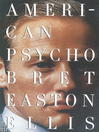
American PsychoAmerican Psycho by Bret Easton Ellis, 399 pages

Patrick Bateman is certainly a wealthy Wall Street executive.  He is probably an undiagnosed schizophrenic.  He may be a serial killer.

Reading American Psycho is an unpleasant experience.  Of course, there are the detailed descriptions of grisly, sadistic violence, much of it of a sexual nature, but equally dreadful are the extensive descriptions, at some point during each of Bateman's encounters, of the designer fashions everyone is wearing, often accompanied by similarly elaborate descriptions of brand name electronics and popular music.  American Psycho is often described as a satire on the '80s, or Wall Street, or both, but is not nearly so narrow.  Bateman and his circle could be displaced with only minor adaptations to contemporary LA or DC - indeed, the presence of Donald Trump as Bateman's idol offers a tempting invitation to any exceptionally dull filmmakers with access to the movie rights.  It is even easy to imagine a alternate version of the novel following a Dennis Rader-like figure living quietly in the suburbs.  Bateman's curse is not wealth or Reaganism, but boredom.  He attempts to escape from his superficial world through increasingly frenzied acts of transgression, but they only compound his problem.

Unfortunately. the same superficiality characterizes the novel itself.  It is based around a gimmick - vapid investment banker is a crazed killer, only he's so boring that no one notices - and although Ellis pushes it as far as he can, it only goes so far.

Friday, July 19, 2019

Good to Go

Good to Go: What the Athlete in All of Us Can Learn From the Strange Science of Recoveryby Christie Aschwanden, 302 pages

Aschwanden is a science writer for FiveThiryEight. She is a former high level athlete and stays active with running, cycling and cross country skiing.

Aschwanden investigates whether recovery products and services work. Unfortunately, when you examine the evidence, most of it indicates that the products and services don't provide a benefit or it is inconclusive. A lot of the studies aren't rigorous enough.

Even if they are presented with the lack of proof, those that use these products are unlikely to stop using them because of the perceived benefit. The placebo effect is certainly a confounding factor.

Based on all the information Aschwanden provided there are four things that I took away from this book. Good nutrition is important and can be obtained from a balance diet. You don't need drinks or supplements. The proper amount of sleep is vital to recovery. Overtraining is detrimental to recovery. Lastly, exercising too much while you are sick can have long lasting consequences.

I enjoyed this book and would recommend it to athletes, people who exercise a lot or those interested in science.

Sounds like Titanic

Sounds like Titanic: a memoir by Jessica Chiccehitto Hindman, 250 pages

Summary from Goodreads: "A young woman leaves Appalachia for life as a classical musician—or so she thinks.
When aspiring violinist Jessica Chiccehitto Hindman lands a job with a professional ensemble in New York City, she imagines she has achieved her lifelong dream. But the ensemble proves to be a sham. When the group “performs,” the microphones are never on. Instead, the music blares from a CD. The mastermind behind this scheme is a peculiar and mysterious figure known as The Composer, who is gaslighting his audiences with music that sounds suspiciously like the Titanic movie soundtrack. On tour with his chaotic ensemble, Hindman spirals into crises of identity and disillusionment as she “plays” for audiences genuinely moved by the performance, unable to differentiate real from fake."

The summary is pretty good but I have a problem with one part of it and the memoir is more complicated than what is in the summary. I don't agree that the Composer was gaslighting his audiences. I think he was sincerely trying to entertain and help people. 

By the time Hindman joined the ensemble and went on the tour that is at the center of the book she already knew that she wasn't the greatest violin player and had changed her major to Middle East studies. She wanted to become a journalist after 9/11 but found it hard to get a job. She stuck with the ensemble as a way to make ends meet. She also deals with mental illness. 

Overall, I would characterize the book as a young woman trying to find her way in the world. I appreciated her perspective on 9/11 and the aftermath. I would recommend this book to those people that like biographies and memoirs.

Drop Shot

Drop Shot by Harlan Coben, 310 pages

This is the second book in the Myron Bolitar series. Up and coming tennis star Duane Richwood is Myron's featured client in this book.

While Myron is watching one of Duane's matches at the US Open when he hears a gunshot. He goes to investigate and discovers that Valerie Simpson has been killed. She was a star professional tennis player but had a breakdown. She had recently had meetings with Myron and may have been trying to make a comeback.

Duane is somehow connected with Valerie but Myron doesn't know how and Duane starts acting strange. As Myron tries to figure out who killed her events from six years are dredged up and might be connected.

I listened to this as an audiobook and the narration was as excellent as the first book. I would recommend this book to people who like humorous mysteries. The humor is dry and there are some hard boiled parts as well.


Thursday, July 18, 2019

Deal Breaker

Deal Breaker by Harlan Coben, 339 pages


Myron Bolitar is a sports agent with a complicated back story. It is explored as book goes along but also leaves room for character development further in the series. Myron was a star basketball player whose career was ended by injury before he could make his NBA debut. He is also a lawyer who worked for the FBI in some capacity. Finally, he is a smartass and the story is told with wit.

His biggest client is a rookie NFL quarterback. Just as he is about to sign his contract things get complicated. There are signs that his girlfriend who is missing and presumed dead may still be alive. Bolitar is determined to find her if she is alive. 

I listened to this as an audiobook. I thought the narrator, Jonathan Marosz, did an excellent job. I thought his deadpan conveyed the humor well and was serious when needed.

Tuesday, July 16, 2019

Monastic Life at Cluny

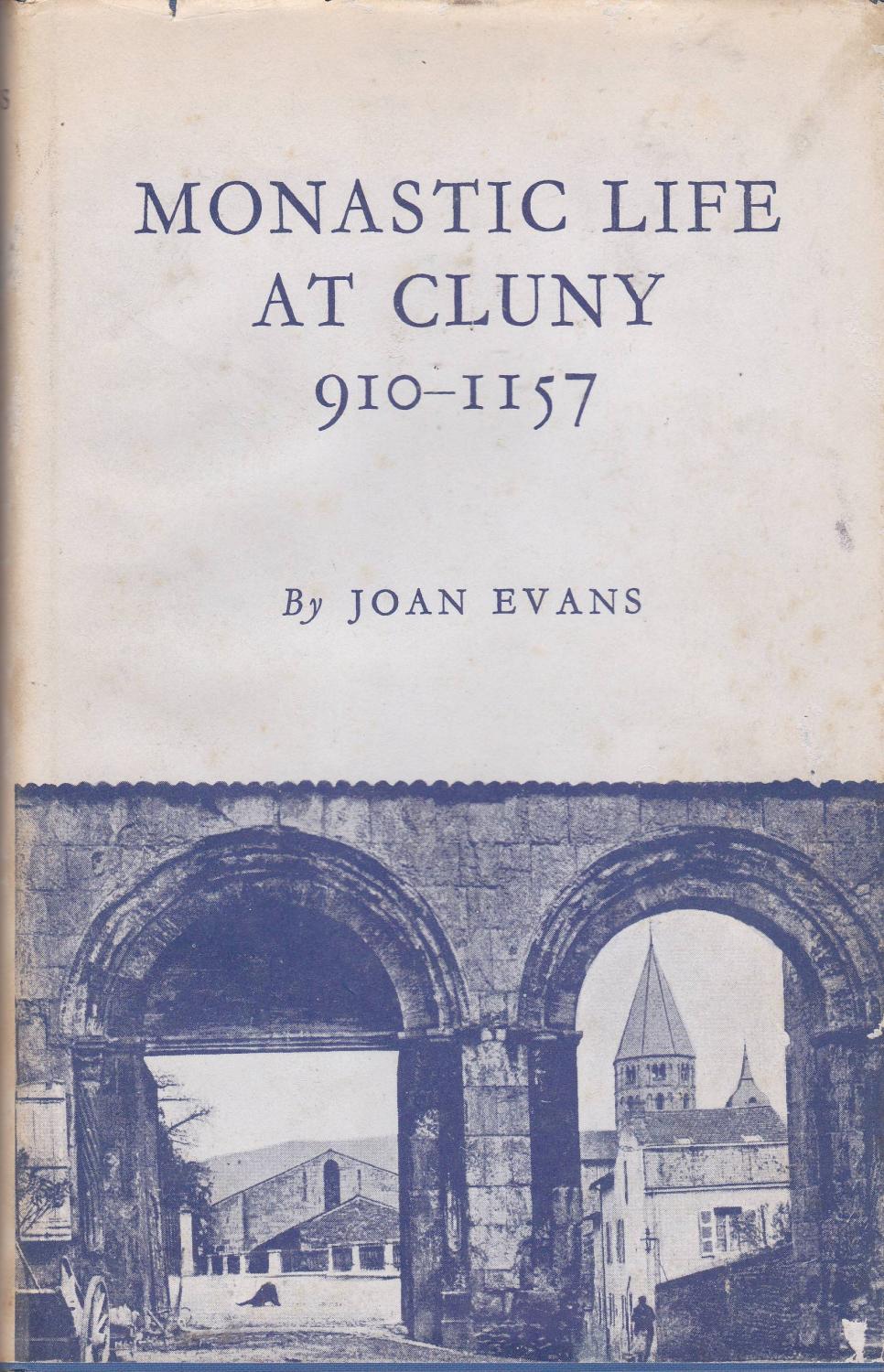
Image result for Monastic Life at Cluny joan evansMonastic Life at Cluny 910-1157 by Joan Evans, 130 pages

As Rome fell and the medieval world rose, Christian monasticism flourished.  As time passed, however, the same monasteries that served as fortresses of the faith fell into decadence and dissolution.  The Carolingian reform established the Rule of St Benedict throughout Western Europe, but the corruption was great and the workers few.  In 910 William of Aquitaine gifted a portion of his hunting preserve to the reforming abbot of Baume, St Berno, on which the monastery of Cluny was founded.  Adhering to strict interpretation of the Rule, dedicated to the celebration of the liturgy, and directly subject to the Pope, under a series of saintly abbots Cluny became the center of the 10th century monastic reform that ushered in the High Middle Ages.  

The Cluniacs were eventually overshadowed by the rise of the Cistercians, an eclipse which was perpetuated by posterity.  Joan Evans' short book does nothing to reverse this, indeed, it is barely interested with Cluny's role in the broader reform movement.  Instead, Monastic Life at Cluny is a more modest description of the history of the particular monastery of Cluny and the daily life of the monks.  It is no less valuable for that - it was through this life and for the sake of this life that the world-historical work of reform was carried out.

Sunday, July 14, 2019

Lock Every Door

Lock Every Door by Riley Sager    386 pages

Apartment sitting at The Batholomew sounds like a dream job, not only because Jules is broke and getting desperate. It's a beautiful apartment and the setting for her all-time favorite book. There are some strict rules that come with the job, like: No visitors. No disturbing the other residents. No spending a night away from the apartment. However, Jules doesn't think any of these will be a problem. And when she meets Ingrid, a fellow apartment-sitter, Jules thinks this might be the best job ever.

Until Ingrid goes missing. The night before, Jules thought she heard a scream and when she knocked on Ingrid's door, it was clear that Ingrid was terrified about something.  Now, Jules is determined to find out what happened to Ingrid and unravel the mystery of why The Bartholomew has such a sinister reputation.

This book has a great start, where Jules wakes up in a hospital, apparently having run right into traffic. As you go backwards and to when she gets the job as the apartment sitter, you start to think Jules is just being paranoid. And nosy. However, you can't shake the feeling that something really is wrong. What I did not see coming was the one reveal about 3/4 of the way through --- and no spoilers here.  I think if I went back and re-read, I might see some clues, though.  Definitely an entertaining, fast-moving read.

What My Mother and I Don't Talk About Fifteen Writers Break the Silence

What My Mother and I Don't Talk About: Fifteen Writers Break the Silence edited by Michele Filgate 288 pages

"Fifteen brilliant writers explore what we don’t talk to our mothers about, and how it affects us, for better or for worse. As an undergraduate, Michele Filgate started writing an essay about being abused by her stepfather. It took her more than a decade to realize what she was actually trying to write: how this affected her relationship with her mother. When it was finally published, the essay went viral, shared on social media by Anne Lamott, Rebecca Solnit, and many others. The outpouring of responses gave Filgate an idea, and the resulting anthology offers a candid look at our relationships with our mothers.

While some of the writers in this book are estranged from their mothers, others are extremely close. Leslie Jamison writes about trying to discover who her seemingly perfect mother was before ever becoming a mom. In Cathi Hanauer’s hilarious piece, she finally gets a chance to have a conversation with her mother that isn’t interrupted by her domineering (but lovable) father. André Aciman writes about what it was like to have a deaf mother. Melissa Febos uses mythology as a lens to look at her close-knit relationship with her psychotherapist mother. And Julianna Baggott talks about having a mom who tells her everything."   summary from Goodreads

I thought this was an interesting book. As with many collections of essays, I liked some more than others. However as a collection, the book is powerful. The mother-daughter relationship has been written about, by so many people, so much --- but this book also includes essays by sons, so that was refreshing.

Outspoken Why Women's Voices Get Silenced and How to Set Them Free

Outspoken: Why Women's Voices Get Silenced and How to Set Them Free by Veronica Reuckert 256 pages

Studies show that women's voices aren't being heard - at home, in public, or at work. Or, in the movies, either. When women speak up, they are seen as loud and pushy. Too much. If they're quiet, they're dismissed as too meek. And, no matter what, they are interrupted far often more than their male counterparts. In this book, the author, an award-winning former host at Wisconsin Public Radio, a trained opera singer and communications coach, takes women through the steps of recognizing the value of their own voice. She shows how women can communicate in meetings and around the dinner table and how to use their voices and be heard.

This book is entertaining and informative. The author clearly knows her material, and what I found interesting was her focus on the physical aspect of speaking, almost more than the psychological aspects. As a trained singer, she knows what is physically involved in speaking clearly and how suppressing the natural voice can actually cause physical pain.  So, if you are a woman understanding how to make your voice heard and get some steps on feeling more comfortable with your own voice, you might find this book very helpful.  What the author doesn't address as much is why women are viewed this way in our society, where they are seen as being better if they speak softly, or speak less.  But there's a lot to unpack there.

Animal Dreams

Animal Dreams by Barbara Kingsolver    342 pages

Codi Noline has returned home to Grace, Arizona to a job she's not she she wants and to confront a father who she isn't close to, but is worried about. Staying with her best friend, Codi meets Loyd Peregrina (well, she meets him again --- they dated a few times in high school) and comes face to face with her own past. Grappling with her past, her growing relationship with Loyd, and the battle to save Grace from an impending environmental catastrophe, Codi has plenty to deal with. Usually, she'd rely on her sister, Hallie, to get her through the tough times. However, Hallie has gone to Nicaragua, braving dangerous conditions to help farmers. Doing her best to stay, all Codi wants to do is run away.

I read this book about once every year, just to revisit it. I like the characters and their development, and how Kingsolver tells the story with some flashbacks, so you get an enhanced perspective on the story. I also enjoy how thoughtful the story is. Codi is struggling to reconcile her own past, now that she's in the town she grew up in, so there's conflict there. At the same time, there are the very realistic dangers of the environmental disaster that Grace is trying to avoid, as well as the danger that Codi's sister faces in Nicaragua. Loyd isn't here to save Codi but instead, makes her reconsider some of her past and how she sees her future. Each time I read this book it's a combination of revisiting somewhere familiar and also discovering things I hadn't noticed or remembered previously.

Collective Courage

Collective Courage: a history of African American Cooperative Economic Thought and Practice  by Jessica, 311 pages.

Nembhard reviews Black economic cooperation in farming, land, housing, grocery stores and; these and burial societies. These shared labor and economies have been overlooked by historians but have been crucial in the traditions, stories and experience of many black communities. Collective economic organizing has contributed to the survival and prosperity of African Americans but have often been met with local resistance, even death threats and lynchings -- as in the case of the murdered owners of the Memphis grocery cooperative, and the accompanying death threat to Ida. B. Wells who reported on the lynchings, was threatened and then fled the city to save her life. Black collectivity has been a courageous threat to the U.S. capitalistic economy that has otherwise used black labor and servitude to bolster profits. African Americans have also significantly contributed to visioning, theorizing and thinking about cooperative economies. Collective Courage is an important book not only for history but also because these collective practices and contemporary adaptations may eventually help to replace, the present exploitative economic system.

-- CraigSL

Whiskey in a Teacup

Whiskey in a Teacup: What Growing Up in the South Taught Me About Life, Love, and Baking Biscuits by Reese Witherspoon                 Audio Book: 2 hours, 50 mins        Hardback Book: 304 pages


Sweet book by Reese Witherspoon in which she talks about growing up in the South, how many ways a Southern woman can say, “Bless Your Heart” and the meaning of each,  how macaroni and cheese and cornbread are considered vegetables on restaurant menus in the south – carbohydrates are a food group – get used to it and how her grandmother told her to never wear sweat pants on an airplane – because it a privilege to get to ride in one so dress appropriately.   So many great Southernisms, Bettyisms (Reese’s mother) and Dortheaisms (her Grandmother).   She gives the reader tips on everything from shortcuts to entertaining, recipes and even how to hot roller your hair.   You will be like Pavlov’s dog salivating over the recipes she shares.  Omgosh!    Good eatin’!    She tells her stories in that bright and cheerful Reese Witherspoon way and you just know she is smiling that beautiful smile of hers because you are just thinking about and picturing what she is saying.   Fun read.   I totally recommend this book to everyone and get her Grandma’s recipes!   

 - Shirley J

Friday, July 12, 2019

Vestments and Vesture

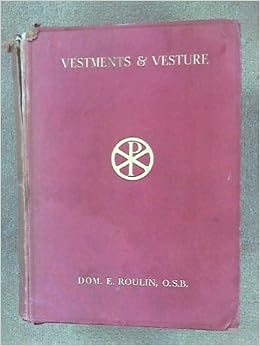
Image result for Vestments and VestureVestments and Vesture: A Manual of Liturgical Art by Dom EA Roulin, translated by Dom Justin McCann, 298 pages

This is less a textbook than a primer for priests and others involved in the design, purchase, and care of all kinds of liturgical clothes, from chasubles to purificators to banners.  The focus is less on their historical development than on their design and use, with a continuous emphasis on simplicity and good taste.

The French original was published in 1930, a time which seems far removed from the liturgical wars of today.  Yet Dom Roulin's sensible advice indicts both the tawdriness of so much contemporary work and the theatricality of some traditionalist overreactions, instead supporting a liturgical art which is "dignified, solid, and devotional."

Thursday, July 11, 2019

Haunting Paris


Haunting Paris by Mamta Chaudhry    288 pages
I was drawn to this novel because of the evocative cover. The photo begs readers to pick it up.  At first I thought it would be about World War II, and in some ways it is, as part of it takes place in 1942. But that part of the story is minor. The major part of the story takes place in 1989.

There are two main characters. First is Sylvie. She is mourning the death of her 30-plus year partner, Julien. As his desk is being moved, a letter falls out that sends Sylvie on a journey to discover what happened to his sister and one of her children who died at Auschwitz. They were caught up in the roundup of Paris's Jews who were then imprisoned in the Vel d'hiver in 1942. But the letter is rarely mentioned in the first half of the book. Instead readers are confronted with a long-drawn out background of Julien and Sylvie’s life together, the American couple who rent half of the apartment, others who live in the building and a rather stranger relationship with Julien’s wife and their children.

The second character is Julien’s ghost. He wanders the Paris streets, never really far from Sylvie. He can see and hear everything that is going on, but he is unable to intercede. I found his sections also too long and drawn out.

It would be different if the tension rose as readers watch Sylvie navigate the world of grief, but it plods along at roo slow a pace.  And that’s why “Haunting Paris” received 2 out of 5 stars in Julie’s world.


Wednesday, July 10, 2019

The Light Between Worlds

The Light Between Worlds by Laura E. Weymouth                 Audio Book:  9 hours, 30 minutes     Paperback Book:  384 pages              

At first I though, o.k. this is a Narnia knock-off, but then midbook it takes a different turn.   Instead of staying with the fantasy of the magical other life in the Woodlands, when war begins to rage in the Woodlands though they have spent 6 ½ years in the fantasy world they are sent back to their childhood selves in London to the time before they were allowed to enter the Woodlands.    Lots happens and a really good account of what it must have been like living in London during the dropping of the bombs from German planes.   Also a trip into the brokenness of a young girl’s mind when she finds she cannot cope with living in this world anymore asit is killing her.    She loses her adventuress spirit as she does her best to contend with boarding school life amid growing up a second time, being cut-off from the sister who had been more a mother to her as the bonds between her and her parents were fairly non-existent.   While the parents tried to save the children by bundling them off to relatives and friends evry chance they got to keep them safe, they also destroyed whatever bond there had been between the children and themselves.  The only thing the children could count on was moving to another locations and staying with people they hardly knew some who expected them to work for them others who tried to be understanding but they had no real ties to.   Escaping to the Woodlands made the children feel loved and cherished, but, even after all the time they spent there proving their metal they still were made to leave.   Like Alice down the rabbit hole then returning home once changed home is never home any more.  As the sisters do their best to make their way and their brother remains concerned but aloof, Ev, the youngest sister slips into a lethargy she cannot shake.  She stops eating, she loses weight, though her brother has a friend watch over her, who falls in love with her, nothing can ease the sorrow Ev undergoes having to stay in this world when the world she feels a part of is denied her.    She calls for the Guardian of that world to please let her return as he always said while they were living with him, “A Woodlanders heart will always find a way back home.”  But how?   It turned out to be a good story, more cerebral and bound by WWII, tea time and a family that just cannot find its way back together, though, the parents were caring they just didn’t know how to repair the gap they created with their children.    The fantasy world seemed like a place so many of us would love to visit and maybe stay in though it wasn’t without its evil, too.    I would recommend this book, I think it would be better received by those unfamiliar with the Narnia series by C.S. Lewis then there wouldn’t be that mental comparison going on, but, the story does go off in a different direction so readers can wonder which world would have been their choosing and if that world was actual or a means of dealing with the horrors of war?   A lot like Narnia.

  - Shirley J

Bite Me: A Love Story

Bite Me: A Love Story by Christopher Moore      Audio Book:  8 hrs., 3 mins     Paperback book:  352 pages                           

Hilarious story.   I laughed so much and got such a kick out of Abby Normal.   Again, I didn’t realize this was part of a series and I came in reading Book 3, this title, first.   I so thoroughly enjoyed Abby that I am going to read the entire series.     Abby is so ultra-fabulous in her speech, I cannot praise her enough.  She is young and free and her language is colorful and articulate and every time she threw in her catch phrase it just accentuated whatever topic she was on at the time so beautifully that I was cracking up laughing.   I cannot imagine a more perfect vampire who enjoys the nosferatu of it all to the max.  There is a huge (hairless) cat named Chet and a legion of vampire stray cats,  there are scientists who lab test rats and turn them vamp.   None of which sounds appealing necessarily but is so funny and fun, o.k. people occasionally get eaten but it is all part of the story and will make sense as you go.   I do suggest you start with book 1 of the series but honestly, this book stood on its own merit and was delightful.   Yes, yes, yes, I recommend this series for teens through all ages.   Maybe a bit blue for the tween set but so funny I adored it.     Do treat yourself to meeting Abby she is one of my favorite characters of all time.

 - Shirley J

Fail Until You Don’t: Fight, Grind, Repeat

Fail Until You Don’t: Fight, Grind, Repeat by Bobby Bones          Audio Book:  5hrs., 20 mins        Hardback Book:  224 pages              

A  look at the life of Bobby Bones, radio personality, comedian, and a highly motivational speaker who does TED talks sharing his experiences in life both positive and negative and how he tries to find both the positives and the lessons in the bad and how he doesn’t let them keep him down any longer than the time frame he allows himself to wallow in self-pity – 3 days tops – after that he is back in the saddle and going for the positive.    He admits that there are times when things are so devastating that you need to lick your wounds and hide out from everybody but he only allows so much time for that then it is time to shake the negativity and surround himself with positive people and experiences.   He talks a lot about growing up with a mother who was a drug addict and a father who vamoosed early on and was never there for him until after growing up he contacted him once and Pops did show up.   They didn’t hug or anything, just kind of shook hands awkwardly.   He was glad to see his Dad was still a kick-ass looking long-haired musician type on a motorcycle, but, they haven’t communicated since that one short visit.  Bobby describes himself as looking like a gangly Harry Potter.   He does make jokes the whole way through and seems like the kind of person you would really like to have for a friend.    He has a lot of good motivational things to say and has a good perspective on life.   He sometimes brings God into his talks while acknowledging other people’s higher power.   Apparently he has quite a huge following on his syndicated radio program (15 million+ listeners).    An enjoyable read/listen with lots of good ideas for getting back up on the horse and riding anywhere you want to go.   Lots of inspiration on dealing with the haters in the world, lots of good historical sharing of public figures their admitted failures and how many tries it took them to finally succeed.   First Bobby Bones climbs up out of the hole then he turns around and helps the next person out.   Good read.   I would recommend his book to anyone whether looking to be motivated or not.  He has a genuine down to earth way of viewing life and an enjoyable sense of humor he shares freely. 

 - Shirley J