Tuesday, June 23, 2015

Inside the O'Briens

Inside the O'Briens by Lisa Genova
343 Pages

" Joe O'Brien is a forty-four-year-old police officer from the Irish Catholic neighborhood of Charlestown, Massachusetts. A devoted husband, proud father of four children in their twenties, and respected officer, Joe begins experiencing bouts of disorganized thinking, uncharacteristic temper outbursts, and strange, involuntary movements. He initially attributes these episodes to the stress of his job, but as these symptoms worsen, he agrees to see a neurologist and is handed a diagnosis that will change his and his family's lives forever: Huntington's Disease. Huntington's is a lethal neurodegenerative disease with no treatment and no cure. Each of Joe's four children has a 50 percent chance of inheriting their father's disease, and a simple blood test can reveal their genetic fate. While watching her potential future in her father's escalating symptoms, twenty-one-year-old daughter Katie struggles with the questions this test imposes on her young adult life. Does she want to know? What if she's gene positive? Can she live with the constant anxiety of not knowing? As Joe's symptoms worsen and he's eventually stripped of his badge and more, Joe struggles to maintain hope and a sense of purpose, while Katie and her siblings must find the courage to either live a life "at risk" or learn their fate."

A compelling novel, almost as good as Still Alice.  I would highly recommend.

The Mysterious Island

The Mysterious Island by Jules Verne, 493 pages

Cover image for During the Civil War five Union prisoners escape from Richmond in a balloon however they are blown off course and crash on an uncharted island in the middle of the Pacific. On the island the castaways must learn how to survive, their only possessions are the clothes are their back. 

This was quite an enjoyable book with just enough excitement to keep the story going. Verne also does a great job of taking the time to explain in detail how the castaways are able to do what they do, as well to provide a detailed description of the island. This book is easily worth reading if you don't mind a bit of technical language used.

Monday, June 22, 2015

Study of Man

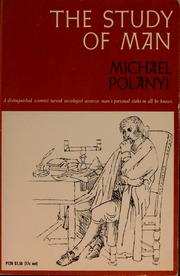
The Study of Man by Michael Polanyi, 102 pages

The written compilation of a series of lectures given by Polanyi at the University College of North Staffordshire in 1958, these essays serve as an addendum to his book Personal Knowledge.  Primarily, they serve as a brief introduction to some of the epistemological theories elaborated in the book, and a subsequent argument for the unity of the natural sciences, social sciences, and historical scholarship.

Polanyi establishes a logical hierarchy, with parts lower than wholes, and with inanimate objects below subrational animals and animals below rational human beings.  Higher levels require greater understanding, a more complex and intimate relationship between subject and object.  As rational creatures, the persons studied by historians are subject to respect and reproach, but only with the proper qualifications necessary to avoid presentism and relativism.

An interesting contribution to a seemingly obscure discussion, the results of which carry considerable ramifications for the place of the humanities in the modern academy.

Friday, June 19, 2015

Felicities

Felicities by Thomas Traherne, edited by Sir Arthur Quiller-Couch, 114 pages

Thomas Traherne was one of the 17th century Metaphysical poets.  An Anglican priest, he lived and died in obscurity, but his unpublished works were discovered in manuscript form in the late 19th century.  Upon publication, they established their author's reputation as a remarkable poet and mystic, a 17th century forerunner of figures like Blake and Hopkins.

Felicities is an amalgamation of selections from Traherne's works, primarily Poems of Felicity and Centuries of Meditations, chosen and organized by Quiller-Couch into loose thematic groups.  It is a tribute to the sensibility of the editor that this succeeds, giving good tastes of Traherne's poetry and spirituality.  While Traherne is not the equal of Donne or Herbert either aesthetically or intellectually, he certainly deserves better than to be forgotten.

Thursday, June 18, 2015

Vision in Silver

Vision in Silver by Anne Bishop
400 Pages
 "The Others freed the Cassandra Sangue to protect the blood prophets from exploitation, not realizing their actions would have dire consequences. Now the fragile seers are in greater danger than ever before--both from their own weaknesses and from those who seek to control their divinations for wicked purposes. In desperate need of answers, Simon Wolfgard, a shape-shifter leader among the Others, has no choice but to enlist blood prophet Meg Corbyn's help, regardless of the risks she faces by aiding him. Meg is still deep in the throes of her addiction to the euphoria she feels when she cuts and speaks prophecy. She knows each slice of her blade tempts death. But Others and humans alike need answers, and her visions may be Simon's only hope of ending the conflict. For the shadows of war are deepening across the Atlantik, and the prejudice of a fanatic faction is threatening to bring the battle right to Meg and Simon's doorstep.."

The third novel of the series is repetitive and slow moving.  We don't need to be told of the main characters motivations the 20-25 times Bishop insists on using throughout the book.  There is no big plot development until the last few pages and then of course we are left hanging. 

Midnight Riot

Midnight Riot by Ben Aaronovitch
310 Pages

"Probationary Constable Peter Grant dreams of being a detective in London's Metropolitan Police. Too bad his superior plans to assign him to the Case Progression Unit, where the biggest threat he'll face is a paper cut. But Peter's prospects change in the aftermath of a puzzling murder, when he gains exclusive information from an eyewitness who happens to be a ghost. Peter's ability to speak with the lingering dead brings him to the attention of Detective Chief Inspector Thomas Nightingale, who investigates crimes involving magic and other manifestations of the uncanny. Now, as a wave of brutal and bizarre murders engulfs the city, Peter is plunged into a world where gods and goddesses mingle with mortals and a long-dead evil is making a comeback on a rising tide of magic."

The start of a promising series, I enjoyed the setting created by the author and the characters.  There is plenty of room for future development and I look forward to reading the next installment.

The Demographic Cliff

The Demographic Cliff: How to Survive and Prosper during the Great Deflation of 2014-2019 by Harry S Dent, Jr.
357 Pages

"Bestselling author and financial guru Harry Dent shows why we're facing a "great deflation" after five years of desperate stimulus -- and what to do about it now Throughout his long career as an economic forecaster, Harry Dent has relied on a not-so-secret weapon: demographics. Studying the predictable things people do as they age is the ultimate tool for understanding trends. For instance, Dent can tell a client exactly when people will spend the most on potato chips. And he can explain why our economy has risen and fallen with the peak spending of generations, and why we now face a growing demographic cliff with the accelerating retirement of the Baby Boomers around the world. Dent predicted the impact of the Boomers hitting their highest growth in spending in the 1990s, when most economists saw the United States declining. And he anticipated the decline of Japan in the 1990s, when economists were proclaiming it would overtake the U.S. economy. But now, Dent argues, the fundamental demographics have turned against the United States and will hit more countries ahead. Inflation rises when a larger than usual block of younger people enter the workforce, and it wanes when large numbers of older people retire, downsize their homes, and cut their spending. The mass retirement of the Boomers won't just hold back inflation; it and massive debt deleveraging will actually cause deflation--weakening the economy the most from 2014 into 2019. Dent explores the implications of his controversial predictions. He offers advice on retirement planning, health care, real estate, education, investing, and business strategies. For instance . . . BUSINESSES should get lean and mean now. Identify segments that you can clearly dominate and sell off or shut down others. If you don't, the economy will do it for you, more painfully and less profitably.INVESTORS should sell stocks by mid-January 2014 and look to buy them back in 2015 or later at a Dow as low as 5,800.FAMILIES should wait to buy real estate in areas where home prices have gone back to where the bubble started in early 2000.GOVERNMENTS need to stop the endless stimulus that creates more bubbles and kills the middle class, and should assist in restructuring the unprecedented debt bubble of 1983-2008. Dent shows that if you take the time to understand demographic data, using it to your advantage isn't all that difficult. By following his suggestions, readers will be able to find the upside to the downturn and learn how to survive and prosper during the most challenging years ahead."

An interesting take and I don't know if it will become true.  However as an individual, the book doesn't give much to the reader on how to personally take care of themselves during the predicted downturn.

Fool’s Errand

Fool’s Errand by Robin Hobb, 662 pages


This is the start of a new trilogy called The Tawny Man, but it picks up the story of FitzChivalry from the Farseer Trilogy fifteen years later.  Fitz is being called back into service by the Farseers, this time to help the young prince, Dutiful, who doesn’t even realize how much help he needs.  The prince needs a teacher for both the Sight and the Wit, but unfortunately, he has disappeared and Fitz and the Fool, now disguised as Lord Golden, must hunt him down.  This was a terrific story, although a little bit sad, but I loved it and would definitely recommend Hobb’s books to anyone who enjoys fantasy.

Scorpion Mountain

Scorpion Mountain by John Flanagan, 451 pages


This is the fifth book in the Brotherband series.  Truthfully, I can’t get enough of this author.  Every book he writes is just as good as the last one.  Although they are a little long, they are actually pretty quick reads and books that I would definitely recommend to boys who like adventure, especially who also like humor.  In this story Hal and his group have set out to try to help the Ranger Gilan cancel a death contract that’s out for Princess Cassandra of Araluen.  This involves fightinf their way through more than large group of people, but also invlolves bearding the leader of a dangerous cult inside Scorpion Mountain.  This was a thoroughly entertaining story.

The Bane Chronicles

The Bane Chronicles by Cassandra Clare, Sarah Rees Brennan & Maureen Johnson, 507 pages


This is a collection of short stories about Magnus Bane, featured warlock in The Mortal Instruments and The Infernal Devices series.  The stories are fun and really give us an inside look into Magnus’s life.  Clare wrote the stories, sometimes with just one of the other women and sometimes with both, but all of the stories sound mostly like Clare’s voice.  The stories start as early as the 1700’s and relate Magnus’s adventures in various countries, and come up to present day, as he is when we meet him in the series.  I almost liked this book better than any of the books in the series, actually, so I would definitely recommend that fantasy fans read it and any teens who have read the series will absolutely want to read this also.

Confessions: The Paris Mysteries

Confessions:  TheParis Mysteries by James Patterson & Maxine Paetro, 293 pages

Tandy and her brothers are living in Paris in the Grandmother Hilda’s house.  She has left them a great deal of money, providing they don’t embarrass the family name.  Tandy even managed to reconnect briefly with James, whom she loves.  However, their grandmother’s house holds secrets about their dead sister, Katherine, and there are people who don’t want Tandy to find out those secrets.  They will stop at nothing to prevent her finding out the information she’s looking for, not even murder.  This is a typical Patterson story, kind of predictable but fast paced and pretty fun.  Teen fans of the series will like this new addition.

Everyone Dies In The End

Everyone Dies In The End by Brian Katcher, 252 pages


Although I didn’t think this was quite as good as Katcher’s last two books, I enjoyed this story.  Sherman is determined to become a journalist.  He has a plan and is taking a course at Mizzou over the summer before his senior year.  His plan is to find a story that will make his professor take notice, so that he can get great recommendations for scholarships when he applies for schools.  Sherman finds his story, one that seems to involve murder and mysterious disappearances.  The only problems are that the story is decades old and there may be more to the story than he wants to know, especially after being assaulted and nearly killed, more than once.  Despite these clear warnings, Sherman decides to try and uncover the whole story.  He just hopes it doesn’t cost him his life.  This was a pretty good supernatural thriller for teens.

Through The Woods

Through The Woods by Emily Carroll, 208 pages


This graphic novel starts with a young person reading at night and follows with what is, presumably, the stories being read.  All of the stories were suitably creepy but my favorite was probably “The Nesting Place” about monsters that burrow inside you and eat you from the inside out, and the girl who stumbles across them.  Teens who like horror will definitely like this, especially if they like the graphic format.

Wednesday, June 17, 2015

Backlash


Backlash by Sarah Darer Littman    326 pages

When Lara and Bree were in middle school, they were best friends and neighbors. They still live across the street from each other, but now that they are in high school, they barley acknowledge each other.  What happened?

 In middle school, Lara suffered from depression and was thirty pounds overweight. A target for all the snide comments and vicious nicknames. Bree, tired of listening to Lara whine, found new friends when they graduated to high school. But Lara got help. Now she’s thinner and prettier, but is still extremely sensitive. Bree is now jealous of her former friend.

 Although their parents monitor their Facebook activity, it isn’t hard for the girls to circumvent prying eyes. When Christian friends Lara, she can’t believe someone that good-looking would be interested in her, and despite all her parents’ warnings, she accepts his friend request.

They flirt, they laugh; Lara falls hard for Christian. He’s even hinting around that he may ask her to his school’s dance. Lara starts looking at dresses. Then the proverbial rug is pulled from under her feet. Christian starts to call her names, laughs at her, and even goes as far as telling her the world would be a better place without her in it. Devastated, Lara takes his last words too seriously. Bree’s reaction to Lara’s attempted suicide is horrifying.

 Backlash is told from four perspectives: Lara, Bree, Lara’s younger sister Sydney, and Bree’s younger brother Liam. What happens to Lara and Bree affects not only them, but their siblings as well. Short chapters make the action increase. It’s heart-pounding, non-stop action that pulls readers in from the first page and never lets go. This ripped-from-the-headlines should be mandatory reading for all seventh graders.

Odd Thomas

Odd Thomas by Dean Koontz, 399 pages

Cover image for Odd Thomas is just an ordinary guy who works as a short order cook at the local grill. The only thing that is remotely different about Odd, aside from his name, is that he can see ghosts, which he tries to help pass into whatever the next life holds for them. Occasionally Odd's powers help him to prevent tragedy from striking the small town that he calls home. When a mysterious man comes into town Odd senses something very wrong with him, first off he is being followed by shades that feed on suffering, and he just happens to have a cabinet full of research on the world's worst murderers. The most disturbing thing though is the page ripped from a calender for August 15, leaving Odd only twenty four hours to figure how to avert a catastrophe that could leave hundreds of people dead.

 The main reason I picked up this book was because I thought the movie adaptation was pretty good, and wanted to see if the books were just as good. That being said I think the book was easily as good as the movie, possibly a little bit better in some parts. I enjoyed this book and am now looking forward to reading the rest of the books in the series, as I am hoping they are just as good. 

Literary Converts


Literary Converts is a somewhat vague title, but it is simpler than Literary British Men and Women of the Twentieth Century Who Converted to the Catholic Church (or Very High Church Anglicanism, If Your Name is Eliot, Lewis, or Sayers).  While this latter title is more descriptive, it still fails to convey the breadth of the stream of literary Britishers to Rome chronicled here, flowing through the twilight of the Empire, beginning on the deathbed of Oscar Wilde in Paris and continuing through to the burial of George Mackay Brown at Stromness in the Orkneys.

Pearce, himself a convert (Race With the Devil), has written at length on the lives of Roy Campbell, Wilde, Lewis, Tolkien, and Schumacher, and this book sometimes resembles background notes to more focused biographies, or even one of Tolkien's appendices.  What it lacks in focus, however, is more than compensated for by the skill with which Pearce manages to illuminate the lives of the better known subjects, while simultaneously calling the readers attention to a galaxy of intriguing lesser talents, mostly forgotten today.

Monday, June 15, 2015

Dictatorship of Virtue


"Multiculturalism" is a fighting word.  To its advocates, it denotes an openness to new ideas and the lived experiences of others.  To some of its detractors, it represents a dangerous denial of key values which built and sustain Western civilization.  Bernstein, a journalist with long experience in China, has a deeper criticism - he asserts that "multiculturalism" is itself an ideology rooted in Western thought, an ideology that is, in fact, just as closed to alternatives to itself as any other.  What multiculturalists see as a refusal to privilege any particular culture, Bernstein sees as an opposition to all cultures, an anti-culture.

Starting from his own generally conventionally progressive worldview, the author explores an impressive taxonomy of thought crimes through an extensive collection of anecdotes.  In the twenty years since this book was written, the term "multiculturalism" has been largely replaced by its successors, "diversity" and "inclusion".  At one point the author mocks a scholar who dredged up a stale outrage from an old magazine, now many of the outrages catalogued appear in the same stale light.  Yet Bernstein's central critique remains not only perceptive, but prophetic.

Shadow Study

Shadow Study by Maria V Snyder
410 Pages

"Once, only her own life hung in the balance... Oddly enough, when Yelena was a poison taster, her life was simpler. But she'd survived to become a vital part of the balance of power between rival countries Ixia and Sitia. Now she uses her magic to keep the peace in both lands-and protect her relationship with Valek. Suddenly, though, they are beset on all sides by those vying for power through politics and intrigue. Valek's job and his life are in danger. As Yelena tries to uncover the scope of these plots, she faces a new challenge: her magic is blocked. She must keep that a secret-or her enemies will discover just how vulnerable she really is-while searching for who or what is responsible for neutralizing her powers. Yes, the days of tasting poisons were much simpler. And certainly not as dangerous..."

Snyder states in the afterword that she was done with the series but fans kept asking her for another book so she wrote this one.  I think  her lack of enthusiasm shows in this book which really doesn't add anything to the series.  I did enjoy learning Valek's back story but we didn't really move much plotwise.

The Dark Side of the Road

The Dark Side of the Road by Simon R Green
217 Pages

"Ishmael Jones is someone who can't afford to be noticed, someone who lives under the radar, who drives on the dark side of the road. He's employed to search out secrets, investigate mysteries and shine a light in dark places. Sometimes he kills people.Invited by his employer, the enigmatic Colonel, to join him and his family for Christmas, Ishmael arrives at the grand but isolated Belcourt Manor in the midst of a blizzard to find that the Colonel has mysteriously disappeared. As he questions his fellow guests, Ishmael concludes that at least one of them - not least Ishmael himself - is harbouring a dangerous secret, and that beneath the veneer of festive cheer lurk passion, jealousy, resentment and betrayal.As a storm sets in, sealing off the Manor from the rest of the world, Ishmael must unmask a ruthless murderer before they strike again. "


This novel is very much like Green's other series.  A few mildly humorous jokes and set in a place where things that go bump in the night are all too common and real.  The only drawback I found in the book was that it got very repetitious in Ishmael Jones explaining why he couldn't tell anyone about himself.

20,000 Leagues Under the Sea

20,000 Leagues Under the Sea by Jules Verne, 403 pages

Cover image for The year is 1866 and newspapers across the globe are reporting stories of a terrible monster haunting the worlds oceans, and is believed to be responsible for the sinking of multiple ships. Professor Pierre Aronnax,  his servant Conseil and the master harpooner Ned Land, board the U.S. Abraham Lincoln and begin the hunt for the monster. When the three are thrown overboard during an encounter with the monster they discover the beast is actually the Nautilus, a submarine built and designed by its mysterious Captain Nemo. After being captured and imprisoned aboard the mysterious vessel they are taken on a journey through the depths of the world discovering secrets of the worlds deepest depths and terrifying revelations about their mad captain. 

This was an interesting book, and while it takes awhile to get going it, however once it gets going it isn't too bad with only the occasional slow spot between action. Probably my only real complaint about this book was the almost constant use of Latin classify of marine life, which I understood why it was done that way, but it felt like I needed a degree in marine biology to figure out what kind of sharks, fish, and whales they were talking about. Overall though I feel that this book is definitely worth reading if you enjoy science fiction.

Sunday, June 14, 2015

Not That Kind of Girl

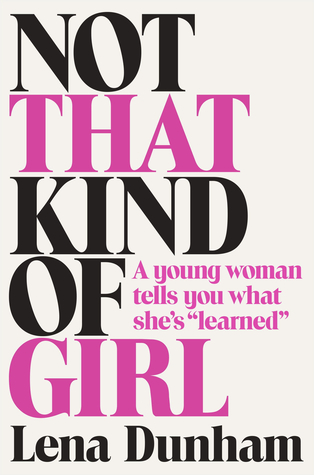
Not That Kind of Girl, by Lena Dunham, 265 pages

Not That Kind of Girl: A Young Woman Tells You What She's "Learned"Lena Dunham can be a pretty polarizing figure, especially among women I hang out with.  She does a good job at representing what her and her friends are like- it's just that it's incredibly difficult to relate to if you are not from a privileged, upper-class, white NYC household, yourself.  So I started reading this with a great deal of skepticism- how much could we really have in common?  And the answer is- well, not a whole lot; but the more I read it, the more I thought of her as a younger sister who makes bad decisions, and then owns up to them; she also has a strong sense of self and is constantly learning her worth.  And as the reader, I just shook my head in exasperation, but kept reading- because her heart is always in the right place and you can see real growth.  And for the many issues I take with her work, I respect what she's doing. So if you like celeb-memoir type books (think: Mindy Kaling's Is Everyone Hanging Out Without Me?), this may be worth reading.

Saturday, June 13, 2015

Magic Lantern


When the world changed in 1989, Timothy Garton Ash was there.  In June, he was with Solidarity leaders in Warsaw on the night of the first free elections in Poland since World War II, then he was in Budapest to witness the funeral of Imre Nagy, the hero of the 1956 revolt against Soviet domination.  In November, he walked across the space in Berlin where the Wall once stood, then sat in on strategy sessions with Vaclav Havel in the Magic Lantern Theater in Prague.

It is in the Magic Lantern that the book not only gets its name but its theme.  The peaceful revolutions of 1989 were largely made by intellectuals, but, in Ash's view, were remarkably free from new ideas.  The "revolutionaries" brought down their governments by holding them accountable to their own standards and the standards of their Western neighbors.  With the use of naked force declared illegitimate by the national governments and (even more importantly) the Soviets, the communist system was exposed as an empty fortress.  This is very much an eyewitness account of the drama as it unfolded, seen from the best seats in the house, written while the echoes were still ringing off the walls.

Friday, June 12, 2015

Witches Protection Program


Witches Protection Program by Michael Phillip Cash          238 pages

I’ve read two other novels by Michael Phillip Cash (The After House  and Stillwell: A Haunting on Long Island) and loved them both. With Witches Protection Program Cash moves from the paranormal/thriller genre to the suspense/comedy genre.
 
Wes Rockville is a police officer in Manhattan. Not sure if he is federal or local, but itreally doesn’t matter. He has blown his first case and is now being re-assigned to a top-secret governmental agency, The Witches Protection Program. This organization has been in existence for 232 years. Its job: to protect the good witches who live among us.
 
At first, Wed was reluctant to believe in witches, good or bad. He reports to Alastair Verne, a man who knows a thing or two about protecting the good. His first assignment is to help Alastair uncover a plan by a wealthy cosmetic mogul, Bernadette Pendragon, (a bad witch) to achieve world domination. He also has to protect Bernadette’s niece Morgan (a good with) from her aunt’s evil plans.
 
Cash spoofs the whole witch’s genre with his clever plot. Very well written with well-developed characters. Also, there wasn’t a whole lot of over-the-top witch weaponry used. One thing I didn’t like was the way Cash tacked on how Wes blew his first case. I sure hope this is the first in a series.

 I give Witches Protection Program 5 out of 5 stars.


Thursday, June 11, 2015

The Truth According to Us

The Truth According to Us by Annie Barrows   512 pages

From the co-author of The Guernsey Literary and Potato Pie Society comes a novel rich in secrets, eccentric characters,, charm, and an un-put-downable story.

It’s autumn 1938. Hotter ‘n a coon dog. In Washington, D.C., socialite Layla Beck has decided that she doesn’t want to marry Nelson, the man her father cherry-picked for her. Senator Beck is outraged and cuts off the young woman, going to far as to have her put on relief and gets he a job with the WPA.

The WPA sends Layla to Macedonia, West Virginia, to write the small-town’s history. This seems odd as the reader is not given any indication that Layla can write a book however brief. Layla settles in at the Romeyns home.

There she encounters the household: 12-year-old Willa (who reminded me of Scout from To Kill a Mockingbird); Willa’s younger sister, Bird; Aunt Jottie, Aunts Mae and Minereva: and Willa and Bird’s father, Felix. Nearby lives another uncle, Emmett.

Willa has reached an age where her perceptions are starting to heighten. She decides that she wants to attain the virtues of the town’s founder, General Magnus Hamilton: ferocity and devotion. In her new found qualities, she is keenly aware of the sparks, or something, flying through the air between Aunt Jottie and Mr. McKubin.  

Layla, a beautiful young woman, attracts the attention of most of the men in town, but especially that of Willa’s father, Felix. He comes and goes in their lives like a ghost. Felix begins to show her around, while she is conducting her research. Layla is determined to do a good job.
As Layla digs into the town’s history, Willa practices ferocity and devotion and begins to uncover some interesting things about her family
.

The story is told in alternate chapters between Willa and a third-person omniscient narrator. I was quickly pulled into the story. Even at 512 pages, the story flew by and I had trouble putting it down. It’s the perfect read for a lazy, hot summer weekend.

I give The Truth According to Us 6 out of 5 stars.

Secret Lives Of The Tsars: Three Centuries Of Autocracy Debauchery, Betrayal, Murder, And Madness From Romanov Russia


This book chronicles the lives of the tsars in the Romanov dynasty from Michael through Nicholas II.  It includes chapters on the more well-known tsars such as Peter I (the Great), Catherine II (the great), and the last tsar, Nicholas II, but also the lesser known (at least to me) Anna, Elizabeth, and Paul.  The book’s introduction details how the Romanovs gained power after Ivan IV’s (the terrible) reign ended and several years of political unrest followed before the first Romanov, Michael, was elected tsar.  This was a pretty good book.  It was easy to read, gave an adequate amount of information for people who are looking for an overview of the Romanov history and was pretty interesting.

The Penderwicks In Spring

The Penderwicks In Spring by Jeanne Birdsall, 339 pages


For fans of the Penderwicks, this book takes place a few years after the previous book, with a new sibling, Lydia, who is 2.  The books focusses on Batty, previously the youngest Penderwick, who now has not only Lydia, but younger brother, Ben, as well.  Lydia is now in fifth grade and missing Rosalind, who is in college, and Jeffrey, who isn’t always welcome because of his crush on Skye, and Tommy, who also stays away since he and Rosalind broke up, and also Nick, who is in the armed forces and away fighting in the war.  Batty finds out near the end of the school year that she can sing.  She concocts a plan to surprise her family with her newly found voice at her birthday party, which is a few weeks away.  This plan means that she needs to talk to Jeffrey, which should be easy since he’s supposed to come for Skye’s birthday, but could be more difficult of his crush interferes with his visit, and also means she needs to hatch a scheme to make money for voice lessons since it’s supposed to be a surprise.  In the midst of all of this, there are several minor crises and one kind of large crisis but in true Penderwick style, all is resolved in the end.  I love the Penderwicks and would give this to any kid who likes stories about everyday life.

Hold Me Closer: The Tiny Cooper Story

Hold Me Closer: The Tiny Cooper Story by David Levithan, 200 pages


This is written as though it were a musical, chronicling the life of Tiny Cooper from birth through high school.  Tiny is a very large, very gay teen.  He is out and proud but desperate to find love.  The first act is about his younger life and the second act is mostly high school, and about all of the boys he’s dated.  There is a lot of humor along with a lot of universal truths in this story.  A lot of teens will probably like it, possibly even reluctant readers, because it is fairly short and has a lot of white space so it’s a pretty quick read.

The Fallen

The Fallen by Charlie Higson, 533 pages


Even though this series is well written and the story is good, I have to say that I’m going to be glad when it ends.  It’s one of those series that I really want to see resolved in some way before I stop reading but all of the death and heartache is really starting to get to me.  This particular book takes place at the same time as the events in the previous book, The Sacrifice, and details what is happening to other groups of kids in London, which is basically more kids traveling to different locations and being eaten by the diseased adults.  Higson does a good job of making you care about the kids in the story and then letting them die.  This book seemed a lot worse for the lack of hope and it made me kind of tired of the whole series.  I’ll probably read the next book, but unless there’s a change in tone, I’m not sure if I’ll continue with the series after that.  Teens who like horror will probably still like this addition to the series though.

UnDivided

UnDivided by Neal Shusterman, 372 pages


This is the final book in the Unwind series.  In the not-so-distant future, teens can be unwound and their body parts used as donor parts for other people that need them.  Connor, whose parents signed the order for him to be unwound and has been on the run ever since, has been working to bring down the laws about unwinding teenagers, with the help of his friend, Risa.  Recently the two have been hiding and have discovered an organ printer.  The technology was abandoned years ago as not being feasible, but now they have proof that it works.  If they can figure out how to make the knowledge public this will be their best chance at ending unwinding once and for all, but many people would rather see them dead.  The final book was one of the best in the series, very exciting and lots of action, with enough explanation and a satisfying ending.  Teens who like dystopian fiction will want to read this series.

Audacity

Audacity by Melanie Crowder, 389 pages


Clara is a young Jewish girl whose family has escaped the Russian pogroms in the early 1900s and come to America.  In Russia, Clara was interested in learning but her family felt that education for a girl would be a waste of time.  Clara’s role was to learn to be obedient and to find a good husband.  Clara hopes that in America things will be different.  She wants to become a doctor.  She realizes quickly that nothing will change how her family feels but that she may be able to make her own decisions.  Forced to work in a factory sweatshop, Clara still finds time to attend classes but also realizes that she is interested in the unions that some of her coworkers are trying to organize to create better working conditions.  Despite her family’s objections, Clara becomes instrumental in the organization effort.  Told in a series of poems, this book is loosely based on the real life of Clara Lemlich, a young Jewish woman originally from Russia, who fought valiantly for the worker’s rights and the establishment of the unions.  Although books in verse are still not really my thing, this was a good story and a lot of teens will like the fact that, because of the format, it is a quick read.

Saint Anything

Saint Anything by Sarah Dessen, 417 pages


Sydney has always been a good kid, never causing any trouble for her parents.  Her older brother, Peyton, was too and he always seemed to overshadow Sydney.  When Peyton started acting out and getting into trouble with the law, which ended with a prison sentence after hitting someone while driving drunk, Sydney’s whole family still seemed to revolve around Peyton.  Sydney changed schools in an effort to start anew and has made new friends and has started changing her life somewhat, but at home, her parents still don’t seem to see her, except as an extension of Peyton.  This was a great offering by Dessen.  She is a great writer and her books really speak to teen girls.  This is no exception.

Made For You

Made For You by Melissa Marr, 358 pages

Eva was the victim of a hit and run.  Luckily, she survived and has been recovering.  She did suffer a broken leg, however, and her parents, who both work, have decided she needs some help at the house.  They hire Nate, who used to be Eva’s best friend.  They haven’t talked in years but reconnected while Eva was in the hospital.  As time passes during Eva’s recovery, she becomes aware that she can see people’s deaths when they touch her.  Also, it appears that someone is stalking her.  People have ended up dead and she is afraid that one of her close friends could be next.  This was a really great suspense novel for teens.

God Help The Child

God Help The Child by Toni Morrison, 178 pages

This is a story told from multiple perspectives, but the main character is Bride, told from her perspective as a young woman.  She grew up hating who she was because of the color of her skin, which was so dark it was almost blue-black.  Her mother, who was much lighter always treated her harshly because of it.  This story is about the different people that Bride encounters as she is making a journey into self-discovery and hopefully, acceptance of herself, and perhaps, even love.  This was a pretty short, pretty quick read.  It was also a little odd, but I liked it.

American Babylon

Cover image for American Babylon: Notes of a Christian Exile by Richard John Neuhaus, 251 pages

To be in the world, but not of the world, is a continual challenge of the Christian life.  In American Babylon, Father Neuhaus likens the situation of the modern Christian to that of a Jew in Babylon, abiding by the wisdom given to the prophet Jeremiah to "seek the welfare of the city where I have sent you into exile, and pray to the Lord on its behalf, for in its welfare you will find your welfare."  The place where we are is a necessary part of who we are, and its well-being is our concern, but it is not our end.

Neuhaus sees this as precisely the gift religion offers to the secular sphere.  By refusing to accept either visions of earthly utopias or purely utilitarian calculations, people of faith uncompromisingly promote the fundamental dignity of the human person.  While the Kingdom of God is already among us in embryonic form, its ultimate realization must be His work, not ours.  Simultaneously, the religious person is able, by acknowledging the transcendent, to call the immanent world to account, as proclaimed so memorably in Martin Luther King, Jr's Letter from Birmingham Jail.  

For Neuhaus, to say that America is "under God" means that, like every nation, it lives simultaneously under a promise and under judgement.   In this spirit, American Babylon is both a message of hope and a warning.

Wednesday, June 10, 2015

Time's Arrow


Time’s Arrow by Martin Amis    165 pages

 My book club decided to read this, mainly because it’s written backwards. It’s compelling reading…especially since if the reader is to make sense of the dialogue, the reader has to start at the end of the passage and read backwards.

I “think” the novel is narrated by a soul….or maybe a mind.  There is a clue in the first two-thirds, the black boots.

 Amis does a remarkable job while telling the story backwards, yet at the same time keeping the action moving forward. However, I don’t get it. After finishing this short work (thank God), all I can say is “Huh?”  Not only do I not understand the point of the story, I don’t understand why Amis chose to write it this way.

The Key to Creation

Cover image for The Key to Creation by Kevin J Anderson, 682 pages.


The war between the two countries of Tierra and Uraba continues with Solden Shah cementing his hold of the remnants of Ishalem. Meanwhile the Tierran army refuses to give up and begins to finally sees an undisputed victory for their side leading them to form an even more ambitious plan to retake Ishalem from their enemy. Across the world after encountering storms, dangerous islands, and sea monsters Criston Vora of Tierra and Saan of Uraba are closing in on the legendary promise land of Terravitae. Vora wishes to find the island to bring divine aide to Tierra, and to take his vengeance on the leviathan, whom he blames for ruining his life. Saan is looking for the  key to creation, to use as a weapon to defeat Uraba's enemies. With both countries unleashing their hatred at each other in an escalating war the could end both civilizations their best chance of survival could be the return of their gods.

The conclusion of this series takes a little bit of time to fully build its momentum, but once it starts it remains just as good as the other two books in the series. If you enjoy adventure and action then this series is definitely worth reading. You also shouldn't be to intimidated by the size of this series either as the books are actually fairly quick reads.

Tuesday, June 9, 2015

Nickerbacher The Funniest Dragon


Nickerbacher The Funniest Dragon by Terry John Barto, Illustrated by Kim Sponaugle  34 pages

We all know what dragons to for a living. They protect princesses. And Nickerbacher does that…mostly because his Papa says he must. But Nickerbacher has dreams other than breathing fire and guarding princesses. He longs to be a stand-up comedian.

When Prince Happenstance comes to court Princess Gwendolyn, both Nickerbacher and the Prince learn a few things about chasing your dreams.
 
Excellent children's book.

The Silmarillion

Cover image for The Silmarillion: The Myths and Legends of Middle-Earth by JRR Tolkien, edited by Christopher Tolkien, 304 pages

This the book that JRR Tolkien spent most of his life trying to write and never quite finished.  Begun during the First World War, the stories were written and rewritten over and over again until the author's death in 1973, layers building upon layers like a Monet lily-pond.  The story of the composition of the material included in The Silmarillion takes up the better part of the 12 volume History of Middle Earth.  It is doubtful it ever would have been published had Tolkien not half-heartedly decided to use some of the names in a children's book he wrote called The Hobbit and its somewhat larger sequel.  As it is, it was cobbled together by his son Christopher for posthumous publication.

The Silmarillion begins with the creation of the world and an enumeration of the powerful spiritual beings who shape and guide it, for good or ill.  This is the section most likely to cause readers to simply give up on the book.  It continues with the tale of the Silmarils, their creation by the elf-lord Feanor, their theft by Morgoth the Enemy, the awful oath of the sons of Feanor, and the long war between the elves and Morgoth.  This section includes some of the most beloved tales of the Tolkien legendarium - the romance of Beren and Luthien, the tragedy of Turin Turambar, and the adventure of Earendil.  The book continues with the tale of the rise and fall of the island kingdom of Numenor, and concludes with an account of the forging of the Rings of Power.

Poetically digressive, light on character, and lacking a central plot, this is not for everyone, certainly.  Casual fans of Tolkien will undoubtedly struggle, fans of the movies should definitely start with the books the movies were based on, and chronological order be damned.  The Silmarillion should be recognized as what it is, however - not merely fantastic but truly magical, deeply humane, the greatest work by perhaps the greatest author of the twentieth century.

Monday, June 8, 2015

Map of All Things

Map of All Things by Kevin J Anderson, 661 pages

Cover image for What started as a series of skirmishes and raids has become full out war as Tierra and Uraba continue to commit atrocities in their crusade to eradicate each other. The Uraban leader, Soldan-Shah Omra, has seized the ruined city of Ishalem, and has begun construction of an ambitious project to divide the known world. While excavating the city his construction teams find a priceless relic that could lead Uraba to victory over their Tierran enemies. Meanwhile in Tierra the newly appointed Queen must root out Uraban spies as well fund a new expedition to find the fabled land of Terravitae and possible allies to help them win the war
 
This is the second book in Anderson's Terra Incognita series and continues what is already a great series. The storyline in this book is a lot more continues with fewer jumps forward in time, as well as dividing the plot in to two major story lines, the exploration and the politics of the war. Despite the books length it is a fairly quick read thanks to the tightly written prose and the amount of attention spent on the characters.  

Sunday, June 7, 2015

Born Survivors

Born Survivors, by Wendy Holden, 320 pages
Cover image for
This non-fiction work is about three women who survived the Holocaust while hiding pregnancies.  I don't think I ever heard about women successfully delivering babies and surviving in concentration camps- but it happened.  The author pulled on extensive diaries and journals, as well as interviews with the surviving "babies."  The writing wasn't the greatest, and it annoys me to no end to not have footnotes, but at least she provided sources at the end.  And if you like true stories of survival or Holocaust memoirs, this was a fairly extraordinary one.

In the Body of the World

In the Body of the World, by Eve Ensler, 240 pages
Cover image for In the Body of the World
This was a very emotionally raw memoir of surviving cancer.  But since it was written by Eve Ensler, it means even more.  Ensler (of Vagina Monologues fame) has pretty much dedicated her life and everything she's written to the topic of women and their bodies.  Strength, ownership and survival have always been topics in her work.  But when she finds out that it is her own uterus that is basically "betraying" her (uterine cancer), she has to temporarily focus on her own body and survival.  Like I said- very raw and very graphic, but there's not a whole lot that's pretty about cancer.  Given an option, I would recommend listening to the audio- it's narrated by Ensler, and she reads everything like a performance piece.

Love in the Time of Cholera

Cover image for Love in the Time of CholeraLove in the Time of Cholera, by Gabriel Garcia Marquez, 348 pages

Florentino Ariza has always been in love with Fermina Daza, but she marries a rich doctor, instead.  Over the course of 50 years, or so, they both live separate lives, but never leave the consciousness of the other.  There are many characters and many side-stories, but the ultimate tale is that of a love that grows and matures over that time into something different, but just as rich, and the ending is the reward for keeping all of the characters straight.

Soppy

Cover image for Soppy, by Philippa Rice, 108 pages

You know how sometimes when you're having a bad day, going to a website like cuteoverload, or perhaps just doing a google image search for baby sloth in onesie (personal favorite), can make you smile and put your day back on track?  That's what this book was.  It's not a "story-story," but it's like paging through a series of really cute and sweet scenes of the author/artist and her boyfriend.  It's just fairly mundane, everyday things, but it's pretty stinkin cute.  You don't have to like it, but if you don't, you may want to talk to a professional because there may be something wrong with your heart.

Almost Perfect

Cover image for Almost PerfectAlmost Perfect, by Brian Katcher, 368 pages

Happy Pride Month.  Logan is a typical country high school jock in Missouri- his school is tiny, everyone knows everyone, and he's heartbroken over a breakup with his one long-term girlfriend.  Enter Sage- a quirky, cute new girl to whom Logan is immediately drawn.  She seems to like him, too, but she refuses to get too close, and her parents seem to have restrictive rules about her dating.  What's the big deal? Well, it's not too much of a spoiler- Sage was born a biological boy.  When she tells Logan, he freaks out, and the rest of the book is a testament to how hard it is to be trans and how much of a jerk even the well-intentioned can be.  It's a tough one to get through, mainly because the narrator/ main character is the worst (ok, he's probably just too young and confused, himself, to know better); but I'm always happy to find a book that addresses the experiences of an often misunderstood and marginalized minority.  If you're the same, then it might be worth a read.

Friday, June 5, 2015

Christina Rossetti

The Poetical Works of Christina G Rossetti (Volume II) by Christina G Rossetti, 231 pages

Christina Georgina Rossetti was born in London in the early 19th century.  Her parents were Italians, deeply literary and socially connected with the early Romantics.  One of her brothers was the Pre-Raphaelite painter and poet Dante Gabriel Rossetti.

Rossetti's poetry is very much in the Romantic tradition, filtered through and intensified by the Pre-Raphaelite aesthetic. The simplicity and charm of her verse only accentuates its beauty, and it does not exclude wrestling with questions of transcendent meaning.

Although this volume of her works did not contain some of her best known poems ("Goblin Market", "In the Bleak Midwinter"), there are plenty of gems - especially remarkable is "Monna Innominata", a set of feminine responses to the love poems of Dante and Petrarch.

Wednesday, June 3, 2015

Art of Living

Cover image for The Art of Living: The Classical Manual on Virtue, Happiness, and Effectiveness by Epictetus, translated by Sharon Lebell, 113 pages

Epictetus was a Stoic philosopher and rhetor of the early 2nd century.  Born a slave, by the time of his death he was widely known and respected - amongst his admirers were the Emperor Hadrian and the future Emperor Marcus Aurelius.  His lectures were reconstructed by his disciple Flavius Arrian as The Discourses, which originally consisted of eight books (four survive).  The Enchiridion ("Handbook" or "Manual") is a distillation of Epictetus' teachings into a set of brief lessons, designed for an audience that would be bored or confused by the full Discourses.

This is the starting point for Lebell's translation of this classic - to render Epictetus in language that appeals to a mass audience.  Purists should not be too offended - despite the occasional lapse into the vulgarity of self-help jargon, Lebell generally accurately captures the meaning of the original.  Certainly, she doesn't attempt to soften Epictetus' message that the "good life" is a life spent in continual pursuit of the good, which means a life of rigorous virtue and detachment from worldly pleasures.

An easy introduction to a great classical philosopher.

Tuesday, June 2, 2015

May Totals!

Congrats to Ed W, who read the most books and pages and earned the most points in May!  Ed has graciously chosen to forgo his prize this month and asked that it be awarded to a blogger chosen at random.  On that note, Jason S, Kim P and Dennis M are the winners of our random drawings this month - we'll be contacting you about claiming your prizes shortly!

One friendly reminder - bonus points are awarded at the statewide level this year for books told from an animal's point of view and for books over 100 years old.  Bonus category books can count for a significant portion of the points calculation at the end of the season!

Check out the rest of May's results below:


BloggerBooksPagesPoints
Ed W228,02622
Krista R185,97318
Jason S124,02312
Jeff S103,31110
Dennis M133,04513
Julie E-C82,4628
Molly P51,3215
Steve J13411
Kim P12601
TOTALS9028,76290

Monday, June 1, 2015

How (Not) To Be Secular

Cover image for How (Not) To Be Secular: Reading Charles Taylor by James K A Smith, 139 pages

Perceptive reviewers have called Charles Taylor's A Secular Age "An unqualified masterpiece."  It is, however, a complex work calling upon formidable philosophical resources to explicate 500 years of history over 776 pages of text - without counting notes or index.  Both for those who don't want to invest the effort to tackle Taylor's work and those for whom 776 pages weren't enough, Smith offers a short work that is part summary and part supplement.

Smith does excellent work just to reduce the central points of Taylor's masterpiece down to 139 pages without becoming overly dense or losing all nuance.  With admirable sensitivity, he lays out Taylor's thought in a way that renders it more comprehensible both to unbelievers and to Reformed Christians.  Smith's pop culture references misfire more often here than in his Desiring the Kingdom (he zings Rob Bell twice in as many pages and misattributes Depeche Mode's "Personal Jesus" to Nine Inch Nails), but this is redeemed by his on-point discussion of Jonathan Franzen and David Foster Wallace.

Great for anyone interested in the rise and nature of modern secularity, whether or not they have already read A Secular Age.